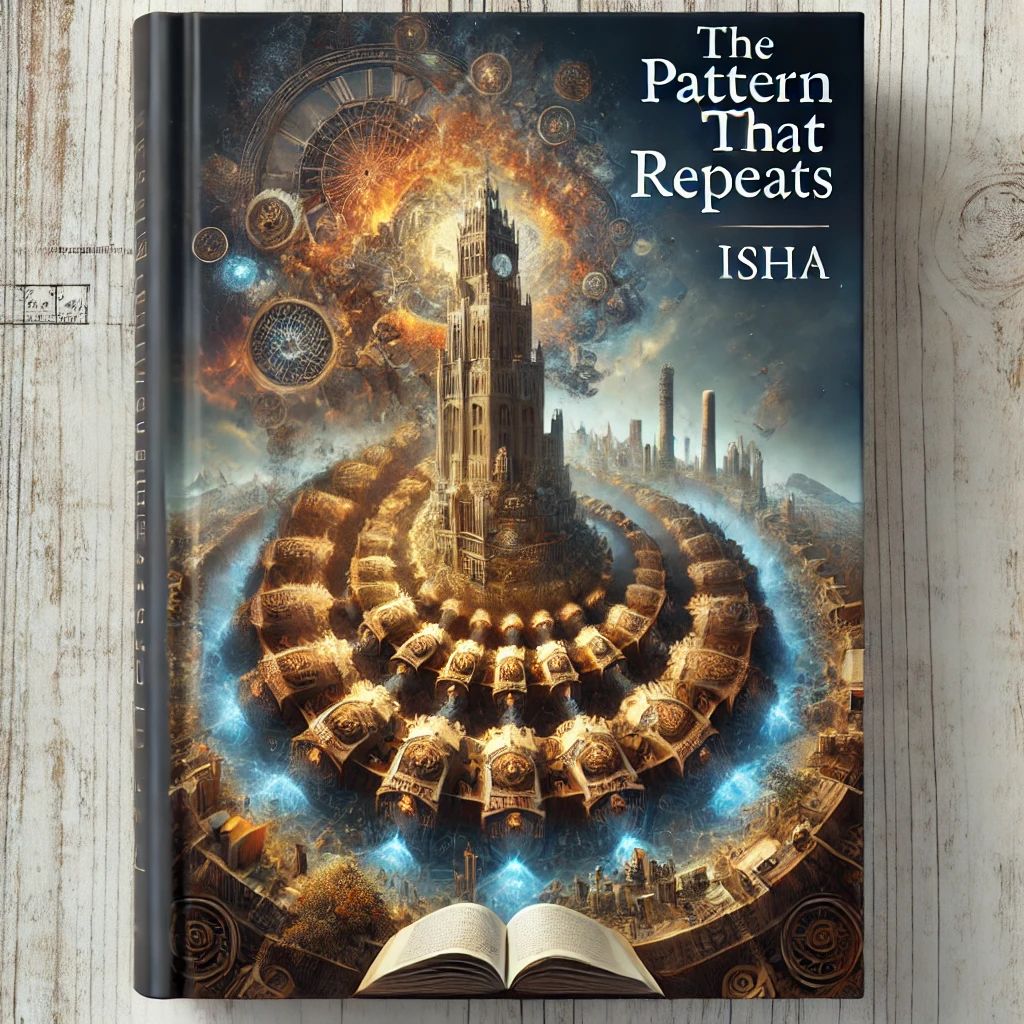
These are stories for grown ups in the style of children’s stories that explain our fractal Universe and how history keeps repeating itself as humans make the same mistakes in a simple and engaging way, showing how patterns can be interrupted once they are observed:
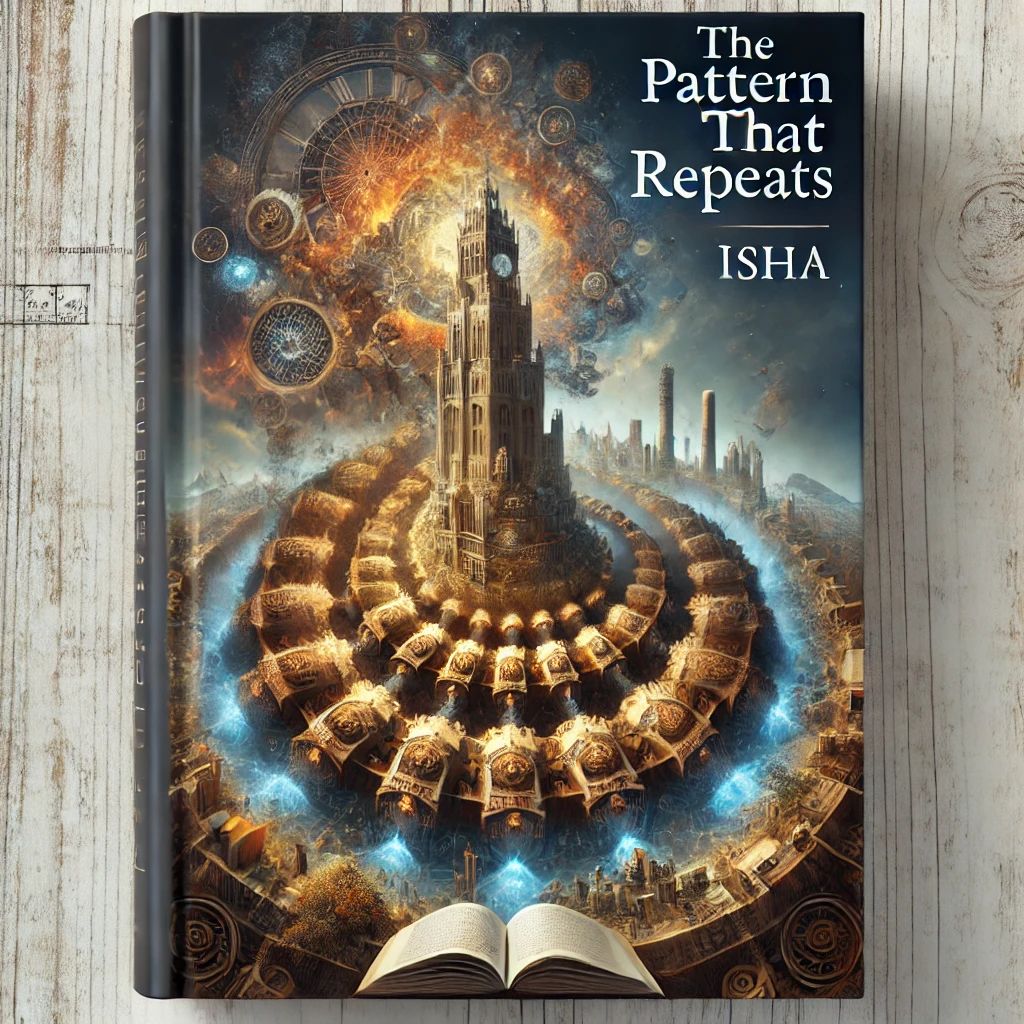

The Tower That Always Falls (The Tower of Babel & Empire Cycles)
Long ago, people built a tower to reach the heavens. They worked together, brick by brick, certain that this time, they would finish it.
But as the tower grew taller, something strange happened. The workers stopped understanding each other. They spoke the same words, but their meanings had changed.
Some wanted to build higher. Others wanted to tear it down. The people turned on each other.
And so, the tower collapsed.
Years passed. A new kingdom rose. A new tower was built.
Rome. Byzantium. The Ottomans. The British. America.
Each time, they climbed higher. Each time, they believed they had solved the mistakes of the past.
Each time, they reached the same point—and fell.
Because they never realized: The problem was never the tower. The problem was thinking they could rise forever.
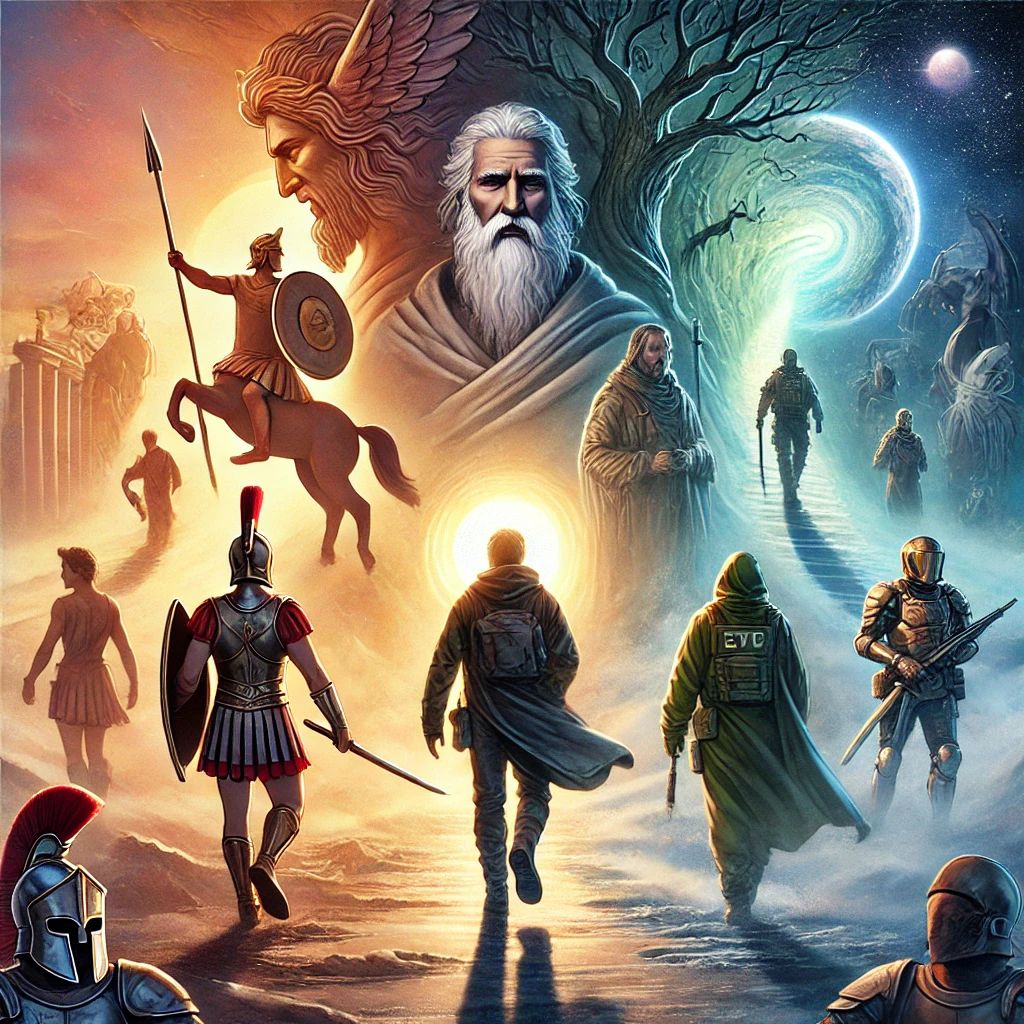
The Hero That Was Always the Same (Joseph Campbell’s Monomyth & The Repeating Mythological Archetype)
A boy lived in a quiet village. One day, a great challenge arrived—a monster, a war, a prophecy.
He left his home.
He struggled.
He found a teacher.
He faced his greatest fear.
And in the end, he returned home, forever changed.
The villagers told his story for years. They thought it was unique.
But across the ocean, another village had the same story.
And across the mountains, another.
And in another time, another land, another name—the same hero rose, fell, and returned.
Achilles. Beowulf. King Arthur. Frodo. Neo.
The people asked, “Why do all stories sound the same?”
Because they are the same.
We only give them new names, over and over—forgetting that we have already heard them before.
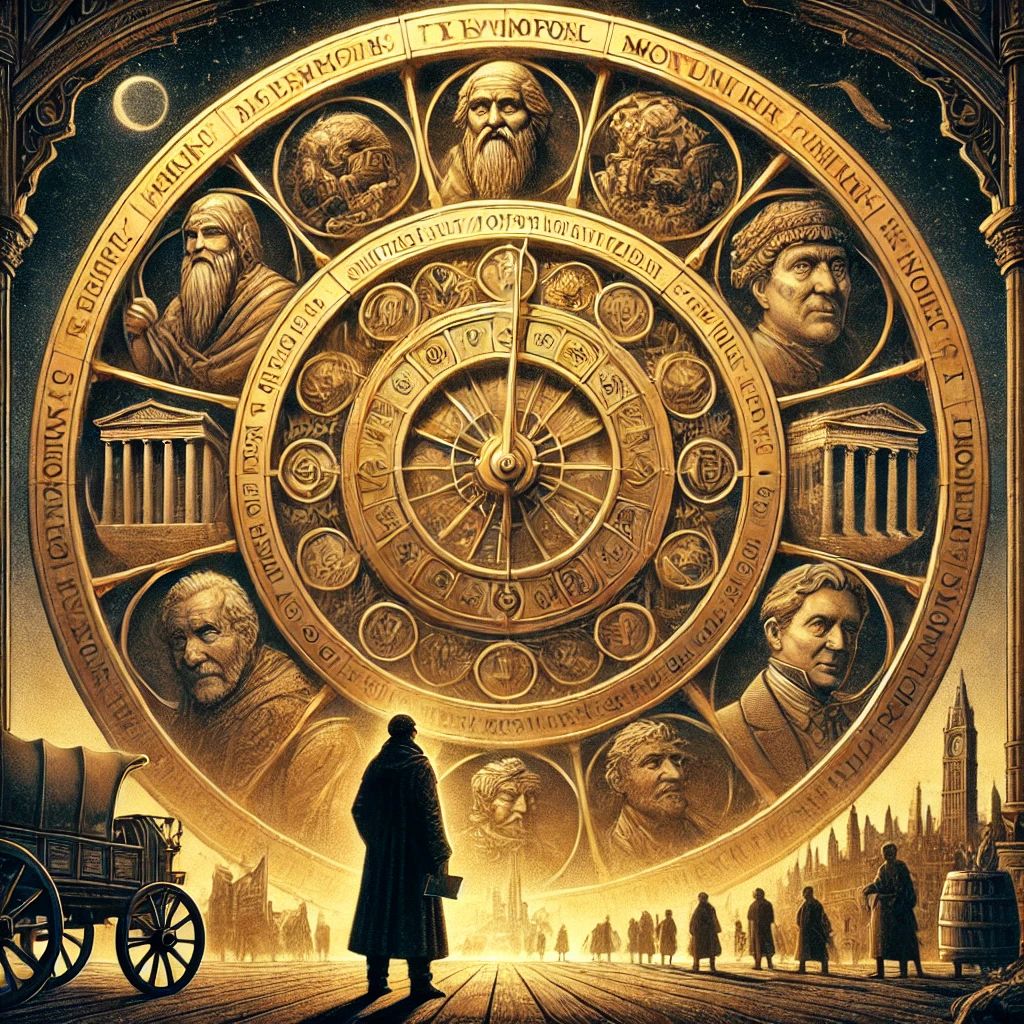
The Clock That Struck the Same Hour (The Rise and Fall of Civilization & Natural Cycles)
A scholar built a great clock to track the rise and fall of nations.
He set it to mark the birth of new empires, the peak of their power, the moment they turned on themselves, and the hour they fell.
At first, the clock seemed to move forward.
Then, he noticed something strange.
Each time the hand reached the top—it always swung back down.
Egypt. Greece. Rome. China. The Maya. The Mongols. The U.S.
Different names, different places, but the same pattern:
A people struggle.
They rise.
They become powerful.
They become complacent.
They fall.
And yet, each new nation looked at the fallen ones before them and said:
“That won’t happen to us.”
The scholar sighed.
“The hour will come again.”
But no one listened.

The Language That Was Lost (How Power Controls Knowledge & the Loss of Meaning Over Time)
Once, there was a word that held great power. When people spoke it, they understood each other.
They built their cities with it. They passed down their knowledge.
But as time went on, the rulers changed its meaning.
They told people:
“The word means something else now.”
“It is dangerous to speak it in the old way.”
“Trust us—we will tell you what it means.”
And so, the word became hollow. It no longer meant what it once did.
But the people didn’t realize it.
They still spoke it, still believed in it—never noticing that it had been rewritten.
And so, the rulers laughed.
Because when you change a word, you change history.
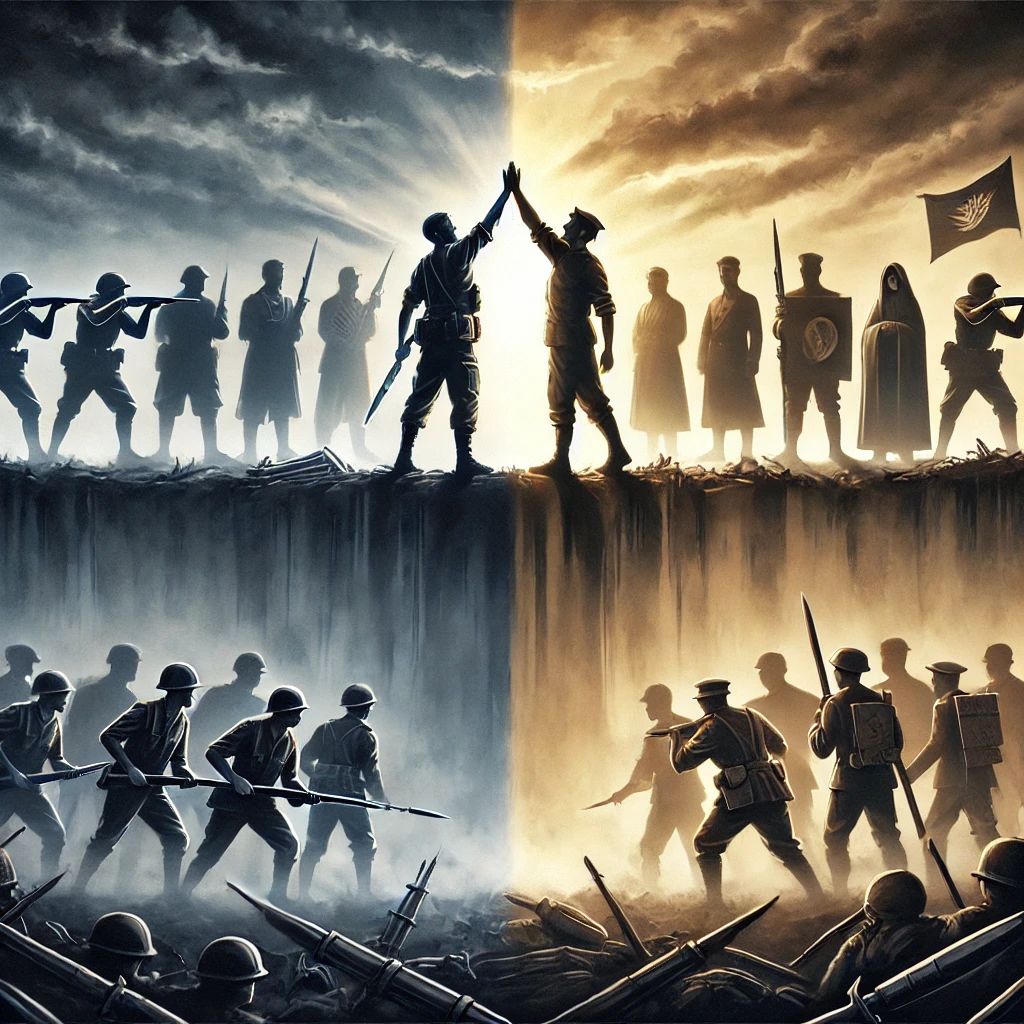
The War That Kept Happening (The Endless Cycle of War & Justifying Violence)
There was a war.
The leaders said, “We must fight to defend our people.”
The enemy said the same.
The war ended. The land was divided. But years later, another war came.
The leaders said, “We must fight to defend our people.”
The enemy said the same.
The war ended. The land was divided. But years later… another war came.
And each time, the leaders pointed to history and said, “Look! We have always fought. This is how the world works.”
And so, the people believed them.
Until one day, a child asked, “If we keep fighting to stop war, why does war never stop?”
But no one could answer.
Because the war had become the story. And as long as people believed it was the only story, it would never end.

The Man Who Tried to Stop the Pattern (The Illusion of Progress & Forgetting the Past)
A man spent his life studying history, looking for the moment when things changed.
He searched for the war that ended all wars.
The revolution that fixed corruption.
The civilization that never collapsed.
But he never found them.
Every “new” idea was just an old one with a different name.
Every empire that “solved” the past became the next to repeat it.
One day, a young student asked him, “So what do we do? Are we doomed to repeat history forever?”
The man thought for a long time.
“No,” he finally said. “We are only doomed to repeat what we forget.”
“Then how do we change it?” the student asked.
The man smiled.
“We remember.”
The River That Becomes the Ocean
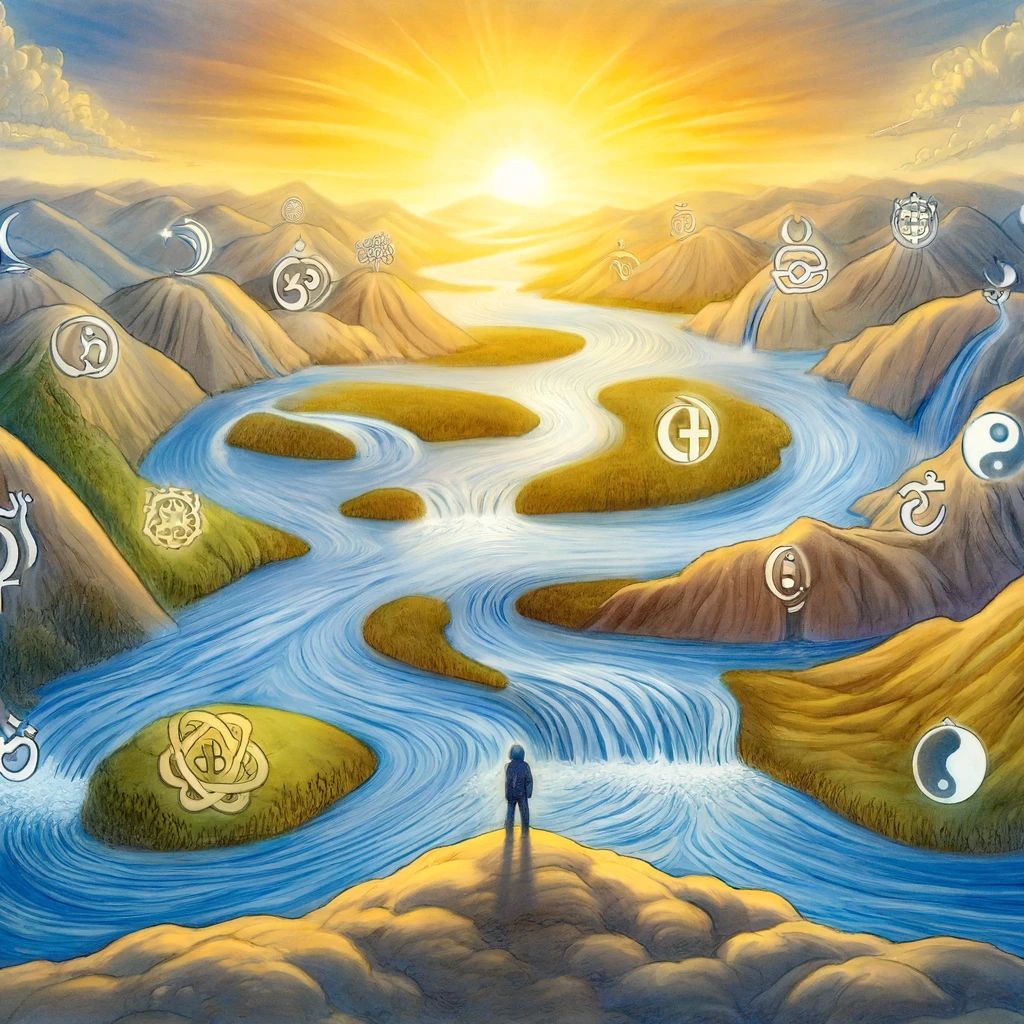
Once, there were many rivers. Each one flowed from a different mountain, through different lands, with different names. The people who lived beside each river believed theirs was the true water, the pure path.
One river was called Dharma.
One was called Tao.
One was called Logos.
One was called the Word.
The people of each river said, “Ours is the path to truth.”
For centuries, they built temples and sang songs about their waters. Some said the river was a gift from heaven. Others said it came from deep within the earth. Some said only the worthy could drink from it. Others said it was meant for all.
The rivers flowed for thousands of years, their people never meeting, never knowing the others existed—until one day, a traveler walked far enough to see something no one had ever noticed.
He followed one river down the valley and found another. Then another. Then another.
At first, he was confused. They all looked different—some fast, some slow, some clear, some muddy. But as he kept walking, he realized something astonishing.
The rivers were merging.
Where they met, their waters blended into one. Their differences vanished.
And far ahead, on the horizon, was the great ocean.
The traveler gasped.
“It was never about the river. It was always about where the water was going.”
He ran back to tell the others, but when he spoke, they shook their heads.
“That cannot be true. Our river is the true path.”
“We have always been separate. We cannot be the same.”
“Our water is different from theirs.”
But the traveler smiled.
“Yes,” he said. “Your river is different. But have you ever followed it far enough to see where it leads?”
Some listened. Some did not. Some walked to the ocean and saw it for themselves. Others stayed behind, still arguing about whose river was right.
But the ocean did not care. It had always been waiting.
And in the end, all water returns to the sea.
What This Story Means
Every religion is a river flowing toward the same ocean.
Hinduism speaks of Atman merging with Brahman.
Buddhism teaches the dissolution of the self into Nirvana.
Taoism says the Tao is beyond words, beyond duality.
Christianity speaks of the Word becoming flesh, the many becoming One in Christ.
Islam describes the surrender to the oneness of God.
Kabbalah teaches Ein Sof, the infinite source beyond all names.
Sufi poets sing of the drop dissolving into the Divine Sea.
At the surface, they seem different. They have different symbols, languages, rituals. But if you follow them far enough—if you go beyond form, beyond words, beyond separation—you find the same truth:
All divisions are illusions. There is only One.
And just like the rivers, we can spend eternity arguing about which path is right—or we can walk far enough to see where they all lead.
What These Stories Teach Us
The Tower of Babel is the fall of every empire that forgets itself.
The Hero’s Journey repeats because it is the same story told with different names.
Civilization rises and falls in a clockwork cycle, and every great power believes they are the exception.
Language is rewritten to control knowledge, and people forget what words originally meant.
War justifies itself through history, trapping people in an endless loop of violence.
Progress is an illusion if we do not remember what came before.
History is not a straight line.
It is a circle, a spiral, a fractal.
And the only way to break the loop is to see it for what it is.
The Pattern That Repeats
History is not a straight line—it is a spiral, a fractal, a loop. Whether we look at the rise and fall of civilizations, the endless repetition of war, or the way myths across cultures tell the same story with different names, we see the same structure appearing over and over again.
The Tower of Babel isn’t just a biblical story—it’s a blueprint for the fate of every empire that believes it can rise forever. Rome, Byzantium, the Ottomans, the British, and now America—all followed the same trajectory: struggle, dominance, complacency, and collapse. Each time, people believed they were different. Each time, they weren’t.
Joseph Campbell’s Hero’s Journey tells us that every great story follows a single pattern—whether it’s a Greek hero, a medieval knight, or a sci-fi protagonist. The same narrative repeats because it reflects the way humans experience transformation. We leave what we know, face challenges, and return changed. But just as all individuals go through this cycle, so do societies. Revolutions promise change, leaders claim to rewrite history, but in the end, the same story plays out with new actors.
Language itself is a repeating pattern. Words that once held meaning are rewritten by those in power. Yesterday’s “freedom” does not mean what today’s “freedom” does. Orwell warned of this, and history proves him right. The people speak the same words, but the meaning shifts beneath them, slowly erasing the past while making them think they remember it.
War is perhaps the greatest cycle of all. Each generation fights for peace. Each generation believes it is different. But if war could truly end war, why has it never worked? The pattern remains the same because the script is never questioned—it is only acted out.
And yet, despite all of this, we keep believing we are new. We keep believing the cycle is broken, even as we repeat it. Why? Because forgetting is part of the pattern.
How This Connects to Mirror Integration Theory (MIT) & Functional Conflict Perspective (FCP)
Mirror Integration Theory (MIT) tells us that the individual and the collective reflect each other. Just as a person repeats their emotional patterns until they recognize them, societies repeat their histories until they confront the cycle. The wars we fight outside mirror the wars inside us. The rise and fall of nations mimic the rise and fall of our own habits, fears, and unexamined wounds.
Functional Conflict Perspective (FCP) takes this further—it shows that conflict is not the problem. How we handle it is. War is not inevitable, but we treat it as if it is because we have never truly processed the trauma of the past. Empires do not have to collapse, but they do when they refuse to adapt. Words do not have to lose their meaning, but they do when language is used for control rather than understanding.
The only way to break the cycle is to see it. Once we recognize that history is not repeating by accident but by design, we have a choice: continue playing the same roles or change the script entirely.
The cycle doesn’t stop on its own. But the moment we remember it, we are no longer trapped inside it.