These are children’s stories that explain our fractal Universe and how history keeps repeating itself as humans make the same mistakes in a simple and engaging way, showing how patterns can be interrupted once they are observed:

The Never-Ending Tree
Leo loved climbing trees. His favorite was the Big Oak in his backyard. One day, as he climbed higher, he noticed something strange—the branches above looked just like the ones below.
“Mom!” he called. “Why does this tree keep looking the same, no matter where I climb?”
His mom smiled. “That’s because trees grow in patterns called ‘fractals.’ The little branches copy the big ones, just like your fingers look like little arms.”
Leo’s eyes widened. “Wait! Does that mean… if I had a tiny, tiny tree, it would still look like this big one?”
“Exactly,” his mom said. “And if you zoomed way out and looked at a whole forest, it would look like a bigger version of your tree!”
Leo climbed down, staring at the tree with a new thought. “If everything repeats like this… why don’t we notice it?”
His mom knelt beside him. “Well, imagine if every time you climbed the tree, you forgot what the last climb looked like. You’d think it was brand new, even though it’s the same pattern again.”
Leo blinked. “Wait… what if life is like that? What if we keep climbing the same trees over and over, but we forget?”
His mom just smiled.


The Magic Mirror Game
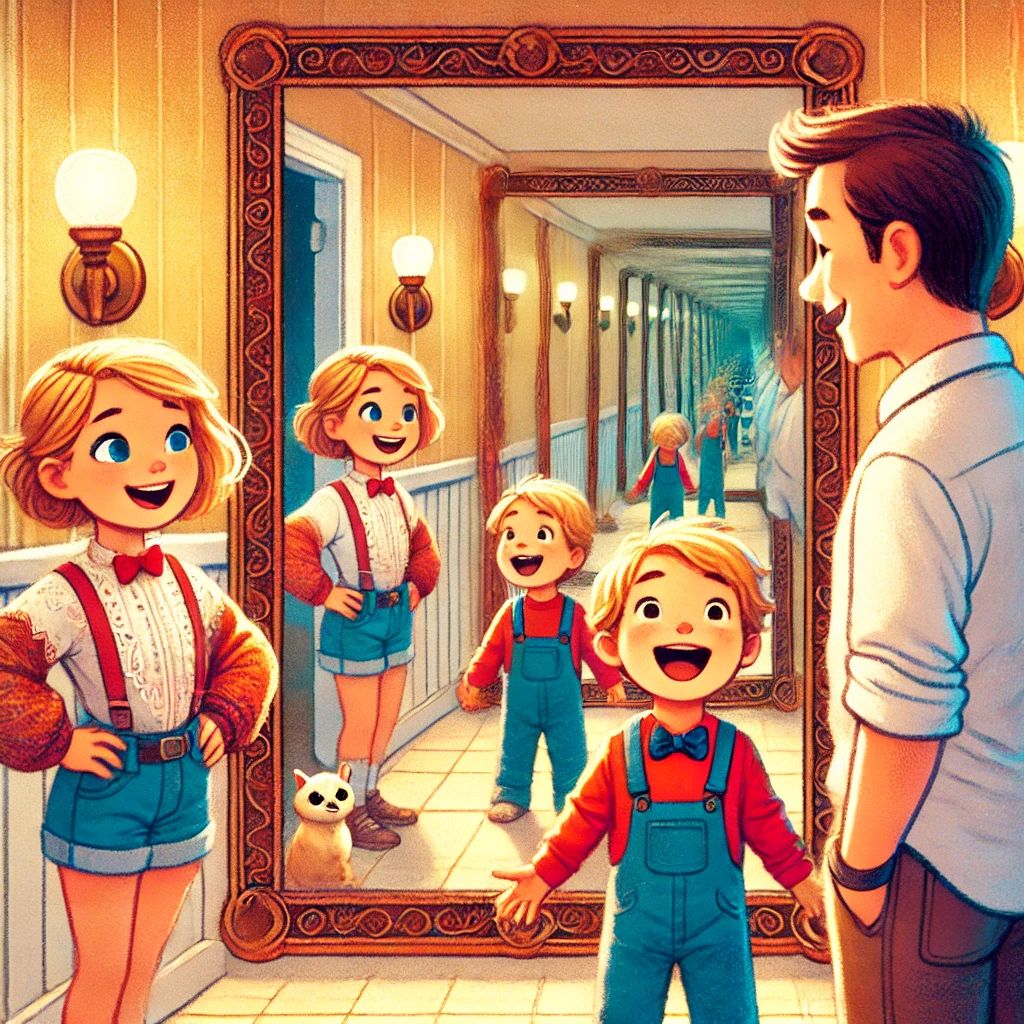
Mia and her little brother Finn played a game in the bathroom—The Mirror Game.
“If I stand here, I can see you in the mirror, and you can see me. But wait—if I hold up a mirror behind us… WHOA!” Mia gasped.
The mirror behind them reflected the front mirror, and suddenly there were endless Mias and Finns!
“It’s like a never-ending hallway!” Finn shouted.
Their dad chuckled. “That’s called an ‘infinity mirror.’ The reflections go on forever because they keep bouncing back and forth.”
Mia’s eyes widened. “So… are we in the mirror too? Or is it just copies of us?”
“Well,” Dad said, “what if the whole world is like a giant mirror? What if we are patterns reflecting back and forth, just like that?”
Finn frowned. “But if this has been happening forever, why don’t we remember seeing it before?”
Their dad winked. “Because mirrors don’t show you what’s behind you. Every time you step into a new reflection, it feels like the first time—even though it’s not.”
Mia shivered with excitement. Maybe life was like a mirror, showing us the same things over and over—but always making us think it was new.

The Video Game That Played Itself
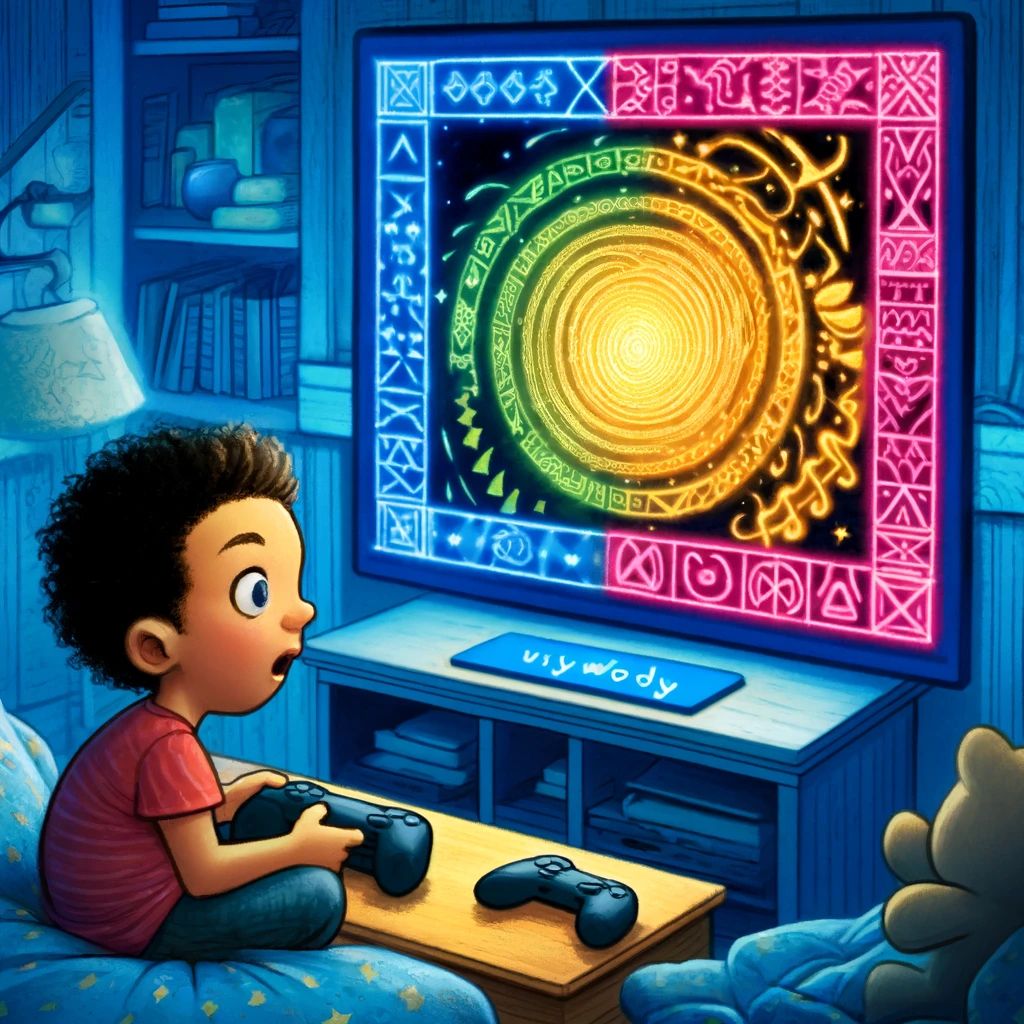
Jaden loved video games. One day, he asked his mom, “What if we’re actually inside a giant video game?”
His mom raised an eyebrow. “What makes you think that?”
Jaden tapped his controller. “Well, in my game, the trees and rocks are just copies of each other. The clouds are too. It’s like the game reuses patterns to save energy.”
His mom nodded. “That’s called a ‘procedural world.’ It means the game creates things using a set of rules, instead of making each one from scratch.”
Jaden blinked. “Wait… what if real life is like that? What if the universe has rules that make everything repeat, like in my game?”
His mom smiled. “Some scientists think that might be true. Maybe the universe is like a giant program, using patterns to build itself over and over.”
Jaden sat back, staring at the sky. “But if it’s a game, how come we don’t remember playing it before?”
His mom looked at him thoughtfully. “What happens when you start a new level in your game?”
“I… forget the last level until I play it again.” Jaden’s eyes widened.
His mom nodded. “Maybe that’s what happens to us too. Maybe we keep playing the same game over and over, but we forget every time we start.”
Jaden shivered. Maybe reality wasn’t just a game—it was a loop.
The Puzzle That Built Itself
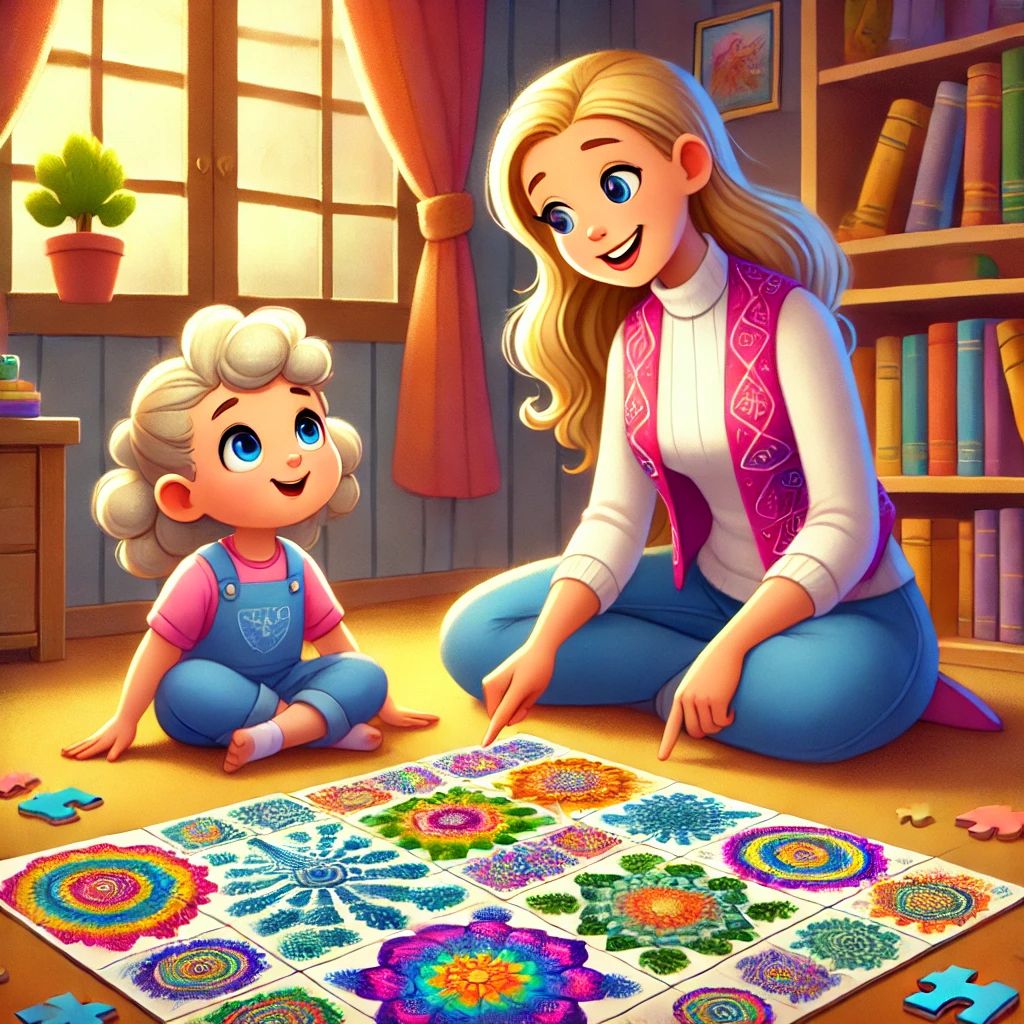
Sophie loved puzzles. One day, she opened a new one and gasped.
“Mom! The big picture is made of smaller pictures that look the same!”
Her mom smiled. “That’s called a ‘fractal puzzle.’ The same shapes repeat inside the bigger ones.”
Sophie tilted her head. “So if I had a microscope, would I just keep finding smaller and smaller copies forever?”
“Maybe!” her mom said. “That’s how some things in nature work—like snowflakes, seashells, and even your lungs!”
Sophie looked at the puzzle again. Maybe the whole universe was a giant picture made of tiny repeating pieces.
But then a thought hit her. “Wait… if the puzzle keeps repeating, why does it feel like I’ve never seen it before?”
Her mom chuckled. “Imagine if every time you put a puzzle together, the moment you finished, you forgot what it looked like. Wouldn’t it feel like a brand-new puzzle every time?”
Sophie shivered. “That means we could have done this before and never even know it!”
Her mom winked. “Exactly.”


The Secret Code of the Universe
Elijah loved patterns. He noticed them everywhere—in flowers, in spiderwebs, even in the way his curly hair looped around itself.
“Mom, why does everything have a pattern?” he asked.
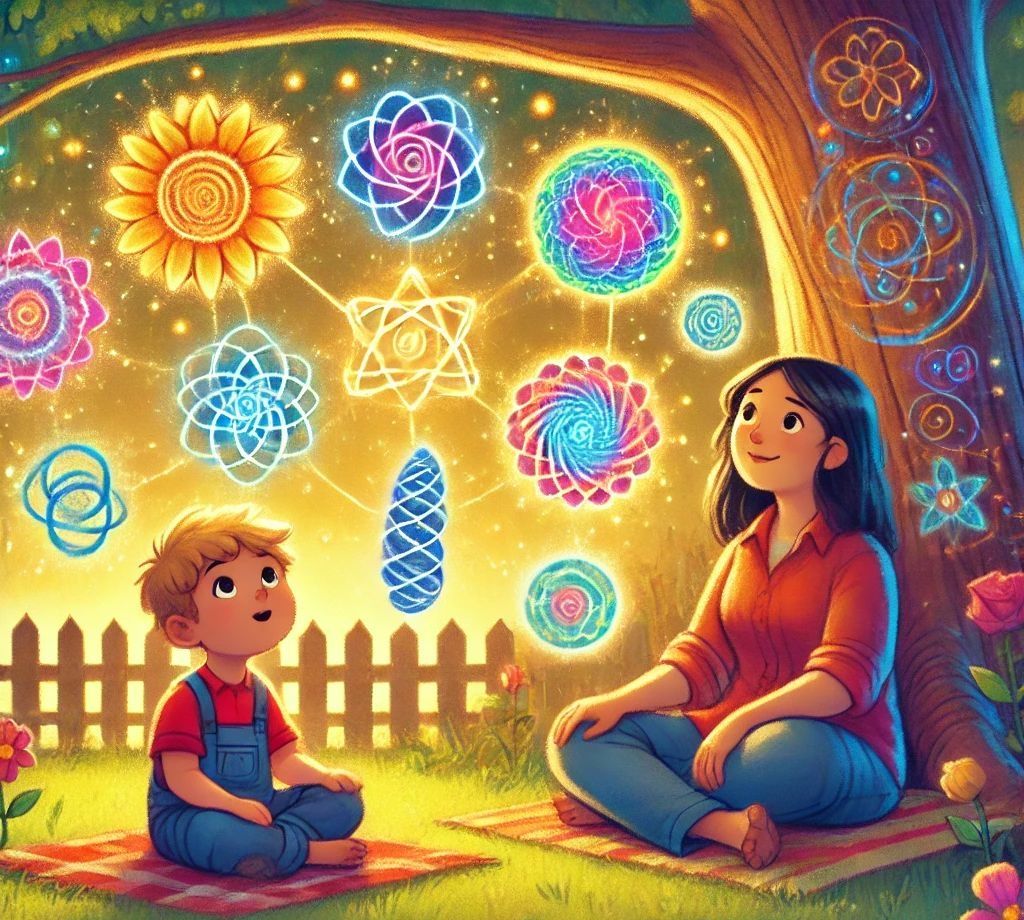
His mom smiled. “Because patterns are how the universe builds itself! Imagine if you had a magic stamp that copied the same design over and over. That’s what nature does!”
Elijah’s eyes lit up. “So if I zoomed out of the whole universe, would it look like a giant pattern too?”
“That’s what some scientists believe,” his mom said. “It’s like a code, repeating itself everywhere, from tiny atoms to huge galaxies.”
Elijah grinned. “So, does that mean we’re inside the pattern too?”
His mom nodded. “Yep. And if the pattern repeats, maybe we’ve lived this moment before.”
Elijah’s smile faded. “Then… why don’t I remember?”
His mom thought for a moment. “Maybe the pattern is designed to forget. If you remembered everything, you wouldn’t feel like you were learning. The code resets, just like a story starting over.”
Elijah sat back, staring at the sky. Maybe he wasn’t just looking at the world—maybe he was reading the universe’s secret code, written over and over again.
 Spirolateral