Defining Somatization Somatization is the process by which psychological distress manifests as physical symptoms. Instead of expressing emotional pain verbally, an individual may experience chronic pain, fatigue, gastrointestinal issues, or other bodily symptoms without a clear medical cause. This phenomenon is common in cultures where emotional expression is discouraged or where distress is more socially acceptable when framed as a physical condition.
Collective Somatization and Policy Formation In Western societies, where hyper-individualism and emotional repression are central to social organization, trauma is often somatized not only at the individual level but collectively through institutional structures. This manifests in policy decisions that avoid addressing root psychological wounds—such as economic inequality, systemic racism, or generational trauma—and instead create structural equivalents of somatic symptoms: mass incarceration, punitive welfare systems, militarized policing, and medicalized mental health responses. These policies displace emotional distress into social control mechanisms, much like an individual’s repressed trauma might surface as chronic illness.
Hewlett’s Subsistence Strategies and Social Structure Bonnie Hewlett’s research on subsistence strategies and social organization reveals that how a society manages grief, stress, and social bonds depends largely on its economic structure. Foragers (e.g., Aka) rely on relational, communal forms of grief processing, whereas agricultural societies (e.g., Ngandu) engage in material-based mourning practices. In Western, industrialized societies, grief and trauma are largely commodified or bureaucratized—processed through pharmaceutical interventions, clinical diagnoses, or institutionalized punishment rather than social integration. This economic model of trauma regulation mirrors somatization: distress is displaced from relational repair to structural mechanisms that maintain systemic imbalances.
Somatization, Deficit Models, and Linguistic Framing This process of collective trauma displacement feeds into the deficit model of language, which frames individuals and groups in terms of deficiencies rather than strengths. In Western societies, where trauma is rarely acknowledged outright, the language used to describe human struggles often takes on a pathologizing, deficit-based tone, reinforcing a cognitive mindset of insufficiency: Psychotherapy Deficit Model → Patients are framed as disordered, broken, or deficient, rather than contextualizing their symptoms as natural responses to trauma. Deficit Model in Education → Students are described as “at-risk” or “lacking skills” rather than recognizing diverse learning strategies. Deficit Model of Disability → Disability is framed as a medical or personal deficiency, rather than recognizing systemic barriers. Deficit Models in Social Issues → Poverty, addiction, and mental illness are seen as individual failings rather than structural outcomes of historical trauma. Deficit Model in Ethnic Identity → Marginalized communities are framed as “underdeveloped” or “disadvantaged,” rather than resilient and adaptive in the face of systemic obstacles.
Language as a Vehicle for Perpetuating Trauma From a sociolinguistic and linguistic anthropological perspective, language does not just reflect trauma—it actively perpetuates it. The deficit model of English embeds a cognitive bias of lack into discourse, subtly reinforcing social hierarchies and psychological distress: Nominalization of Disorders → “You are depressed” vs. “You experience depression” (fixing suffering as identity rather than an experience). Cognitive Framing → “At-risk youth” vs. “Youth in structurally disadvantaged conditions” (blaming the individual instead of the system). Deficit-Based Interventions → Social programs designed to “fix” the “damaged” instead of supporting resilience. This linguistic structure reinforces emotional repression by making pain, struggle, and oppression seem intrinsic to individuals rather than external, systemic, and solvable.
Conclusion: Breaking the Cycle By recognizing collective somatization as the root of our deficit-based discourse, we can begin to restructure language and policy to acknowledge, rather than suppress, trauma. Moving toward asset-based language (e.g., strengths-based therapy, neurodiversity-affirming education, trauma-informed governance) challenges the unconscious trauma cycles embedded in institutions and reorients society toward healing rather than punishment and deficiency.
The Somatization of Collective Trauma and the Linguistic Perpetuation of the Deficit Model: A Framework for Trauma-Informed Systemic Transformation
Abstract
This paper examines how collective trauma is somatized into structural and institutional policies in Western societies, resulting in deficit-based discourse that perpetuates trauma across multiple domains, including psychotherapy, education, disability, social issues, and ethnic identity. Drawing from sociolinguistics, linguistic anthropology, cognitive psychology, and trauma theory, this framework explores how language encodes and reinforces systemic trauma and offers a model for transitioning toward asset-based, trauma-informed systems.
Introduction: From Individual Somatization to Collective Trauma Expression
Defining Somatization
Somatization is the process by which psychological distress manifests as physical symptoms, particularly in individuals or cultural groups where direct emotional expression is suppressed. While traditionally discussed at the individual level, this paper argues that societies can also somatize their unresolved trauma through policy formation and institutional structures.
In Western societies, where emotional repression and individualism dominate, unprocessed trauma is often displaced onto governance structures, legal systems, and economic policy, manifesting as:
Punitive justice systems that criminalize symptoms of trauma (e.g., addiction, mental illness, poverty).
Neoliberal economic policies that blame individuals for structural inequities.
Psychiatric and educational models that reinforce pathology and deficiency rather than resilience and adaptation.
This displacement of trauma into governance results in policy structures that reflect unresolved emotional wounds, creating a feedback loop between language, institutional response, and social cognition.
Bonnie Hewlett’s Model of Social Structure and Subsistence Strategies
Anthropologist Bonnie Hewlett argues that subsistence strategies shape grief and trauma processing. Her comparative research between Aka foragers and Ngandu agriculturalists demonstrates how:
Foragers integrate grief through relational support, communal caregiving, and embodied social healing.
Agriculturalists process loss through material-based mourning, lineage obligations, and hierarchical control over emotions.
Expanding this model to industrialized societies, we see that Western trauma responses resemble those of agricultural societies, but with an added layer of bureaucratic abstraction:
Neoliberal economies externalize trauma into market structures (e.g., productivity expectations, social stratification).
Legal systems pathologize distress instead of resolving root causes (e.g., punitive justice over restorative justice).
Medicalized mental health systems separate emotional distress from social context, making healing an individual rather than communal process.
This fragmentation of grief processing results in collective somatization, in which societal policies become symbolic expressions of unprocessed trauma.
The Deficit Model: How Collective Somatization Produces Trauma-Laden Language
Defining the Deficit Model
A deficit model is any framework that defines people, communities, or social issues by what they lack rather than what they possess. This perspective is deeply embedded in Western discourse, particularly in:
Psychotherapy → The medicalization of mental illness focuses on pathology rather than adaptation.
Education → The “achievement gap” discourse frames students as failing rather than questioning inequitable educational structures.
Disability → The medical model of disability defines neurodivergence in terms of impairment rather than unique cognitive strengths.
Social Policy → Poverty, addiction, and mental health challenges are framed as individual failings rather than systemic outcomes.
Ethnic Identity → Minority communities are described as “disadvantaged” rather than historically resilient in the face of oppression.
Linguistic Anthropology and the Role of Language in Perpetuating Trauma
From a sociolinguistic and linguistic anthropological perspective, language is not just a reflection of trauma but an active force in shaping it. The deficit-based linguistic structure of English encodes assumptions about:
Personhood → “You are depressed” vs. “You experience depression” (framing suffering as identity).
Social Positioning → “At-risk youth” vs. “Youth in structurally disadvantaged conditions” (blaming the individual rather than the system).
Education → “Struggling readers” vs. “Emergent literacy learners” (framing difficulty as deficit rather than potential growth).
This deficit-based language reinforces trauma by cognitively framing individuals and groups as inherently lacking, deficient, or broken.
Breaking the Trauma-Deficit Cycle: Toward Asset-Based and Trauma-Informed Systems
4.1. Reframing Language: Moving from Deficit to Strengths-Based Discourse
Mental Health → Shift from “disorder” language to adaptive responses.
Disability → Move from a medical impairment model to neurodiversity-affirming language.
4.2. Transforming Policy Through Trauma-Aware Governance
Justice System → Replace punitive models with restorative justice.
Economic Policy → Shift from individualist survival framing to cooperative economic structures.
Mental Health Systems → Move toward relational, collective, and culturally inclusive healing modalities.
4.3. Educational Reform: Trauma-Aware Pedagogy
From Standardization to Flexibility → Individualized, student-led education models.
From Deficiency to Growth → Focus on strengths-based learning rather than deficit labeling.
Conclusion: Language, Trauma, and the Future of Social Transformation
The somatization of collective trauma into policy structures has resulted in deficit-based discourse that perpetuates structural inequities. Recognizing language as a key site of trauma reinforcement allows for a shift toward asset-based, trauma-informed systems that support healing at both individual and institutional levels.
By rethinking the linguistic frameworks that shape our understanding of mental health, education, disability, and social policy, we can disrupt the cycle of systemic trauma and move toward holistic, restorative models of governance and social organization.
References
Hewlett, Bonnie L. Vulnerable Lives: Death, Loss, and Grief Among the Aka and Ngandu Adolescents of the Central African Republic.
Rosaldo, Renato. Ilongot Headhunting: 1883-1974; A Study in Society and History. Stanford University Press, 2000.
Kleinman, Arthur. The Illness Narratives: Suffering, Healing, and the Human Condition.
Good, Byron J. Medicine, Rationality, and Experience: An Anthropological Perspective.
Summary of Functional Conflict Perspective (FCP) The Functional Conflict Perspective (FCP) is a meta-framework that integrates sociology, psychology, and anthropology to analyze how social structures, governance, and cultural systems function as collective trauma responses. It moves beyond traditional functionalism (which sees conflict as disruptive) and conflict theory (which views power struggles as central) by reframing social dysfunction as an adaptive, but often maladaptive, response to unresolved collective trauma.
Core Principles: Social Systems Mirror Internal Psychological Structures → Dysfunction at the societal level reflects unresolved emotional fragmentation at the individual level (drawing from Internal Family Systems (IFS)). Governance as a Macro-Level Trauma Response → Hierarchical, punitive, and avoidance-based governance suppresses emotional integration, leading to cycles of social fragmentation, systemic repression, and coercive control. Deficit Model as Structural Anomie → The deficit model in education, mental health, policy, and governance isolates individuals by pathologizing distress instead of recognizing it as a symptom of systemic social disconnection (drawing from Durkheim). Cultural Relativism & Social Conflict → Conflict is not inherently destructive but must be contextualized through cultural meaning systems to ensure resolution strategies fit diverse social structures. Restorative Cohesion Over Repressive Stability → Instead of suppressing conflict through punitive measures, societies should integrate trauma-informed approaches, prioritizing healing, relational repair, and sustainable social cohesion. FCP’s Applications: Governance & Policy Reform → Trauma-informed decision-making over coercive control. Economic Restructuring → Moving from extractive capitalism to cooperative, needs-based economies. Education & Knowledge Production → Shifting from deficit-based learning to curiosity-driven, decentralized academia. Social Cohesion & Healing → Using community-driven, relational conflict resolution rather than punitive justice. Why FCP Matters FCP provides a holistic framework for understanding how unresolved trauma drives social dysfunction—from punitive justice systems to economic exploitation—and offers trauma-informed alternatives that replace coercion with relational healing and sustainable governance.
Expanded Analysis of Feedback Loops in Functional Conflict Perspective (FCP) with Real-World Examples
These feedback loops show how different systems—psychological, economic, social, and political—are mutually reinforcing rather than separate. Each loop illustrates a reciprocal relationship between theoretical concepts and real-world consequences.
—
🔁 1. Attachment & Social Cohesion
John Bowlby ↔ Émile Durkheim
Theory: Secure attachment in childhood (Bowlby) fosters social trust and cohesion (Durkheim), while societal stability reinforces secure attachment.
Real-World Example:
Nordic countries vs. the U.S.: High-trust, socially cohesive nations (like Norway and Denmark) also have higher levels of parental leave, early childhood support, and low-income inequality—all factors promoting secure attachment.
Foster care system in the U.S.: Institutionalized instability prevents secure attachment, leading to higher rates of incarceration and homelessness, which in turn reduces social trust and cohesion.
—
🔁 2. Nervous System Regulation & Cultural Capital
Stephen Porges ↔ Pierre Bourdieu
Theory: Social safety (Porges) determines the ability to develop cultural capital (Bourdieu), while access to cultural capital reinforces nervous system regulation (e.g., financial stability reduces stress).
Real-World Example:
Education & Social Class:
Upper-class children have more exposure to books, structured play, and mentorship, promoting nervous system regulation (Porges) and cultural capital (Bourdieu).
Lower-class children face chronic stress, food insecurity, and school instability, leading to higher amygdala reactivity (Porges) and limited access to cultural capital (Bourdieu).
Predatory Lending & PTSD in Low-Income Communities:
Economic precarity leads to chronic stress, addiction, and mental health struggles (Maté).
Debt systems (Graeber) reinforce cycles of trauma—for example, payday loans target those already in financial distress, trapping them in lifelong economic instability.
—
🔁 4. Power Structures & Media Manipulation
Michel Foucault ↔ Noam Chomsky
Theory: Power structures control knowledge and discourse (Foucault), shaping public perception through media and manufactured consent (Chomsky).
Real-World Example:
War Propaganda & News Media:
The Iraq War (2003) → U.S. government used media framing (Chomsky) to manipulate public perception, creating a “just war” narrative.
Dissenting voices were suppressed (Foucault)—news networks fired journalists who questioned U.S. motives, reinforcing state-controlled discourse.
—
🔁 5. Decolonization & Revolutionary Theory
Frantz Fanon ↔ Vladimir Lenin
Theory: Colonial trauma (Fanon) fuels class struggle and revolution (Lenin), while revolutions often fail to address deep-rooted colonial trauma.
Real-World Example:
Post-Colonial Africa & Latin America:
Many post-colonial revolutions (e.g., Algeria, Cuba, Venezuela) overthrew ruling classes (Lenin), but the trauma of colonial oppression (Fanon) remained.
This led to internalized oppression, authoritarianism, and cycles of violence, reinforcing Fanon’s argument that psychological liberation must accompany political revolution.
—
🔁 6. Reproductive Labor & Early Childhood Development
Silvia Federici ↔ Mary Ainsworth
Theory: Economic exploitation of reproductive labor (Federici) impacts attachment security in children (Ainsworth).
Real-World Example:
U.S. Parental Leave vs. Scandinavian Countries:
U.S. lacks federally mandated parental leave, forcing many working-class mothers to return to work within weeks of childbirth.
Results:
Higher rates of insecure attachment (Ainsworth).
Emotional dysregulation in children, increased behavioral disorders.
Cycle of economic dependency, reinforcing Federici’s analysis of unpaid labor.
In contrast: Scandinavian countries, which support parental leave, show significantly higher rates of secure attachment.
—
🔁 7. Cultural Trauma & Mental Health Outcomes
Bessel van der Kolk ↔ WHO Schizophrenia Study
Theory: Societal trauma (van der Kolk) impacts mental health expression, shaping cultural variations in psychiatric diagnosis (WHO study).
Real-World Example:
Schizophrenia Outcomes in the U.S. vs. Nigeria:
U.S.: Patients with schizophrenia face institutionalization, forced medication, and social isolation → worsens symptoms.
Nigeria & India: Patients recover at higher rates because symptoms are culturally integrated (e.g., hearing voices is seen as spiritual, not pathological).
Implication: Western medical models pathologize trauma responses, worsening outcomes rather than healing.
—
🔁 8. Mutual Aid & Decentralized Governance
Peter Kropotkin ↔ Murray Bookchin
Theory: Mutual aid (Kropotkin) supports decentralized governance (Bookchin), while decentralized governance reinforces cooperative social structures.
Real-World Example:
Rojava’s Autonomous Kurdish Region (Syria):
The Kurdish-led experiment in self-governance applies Bookchin’s libertarian municipalism and Kropotkin’s mutual aid.
Cooperatives manage agriculture, healthcare, and justice, showing how non-hierarchical governance can function in practice.
Results: Despite war and external pressure, the system has reduced crime, increased gender equality, and fostered self-sufficiency.
—
🔁 9. Cultural Grief & Medical Anthropology
Renato Rosaldo ↔ Byron Good
Theory: Cultural grief practices (Rosaldo) influence medical anthropology’s understanding of illness and distress (Good).
Real-World Example:
Grief & PTSD in Western vs. Indigenous Cultures:
Western societies: Pathologize grief → medicalize it as depression.
Indigenous communities: Ritualize grief → allow for prolonged mourning processes as communal healing.
Implication: Western psychiatry treats grief as an illness, while other cultures integrate it as a natural healing process.
—
🌀 Final Takeaways
These feedback loops reinforce how systems (psychological, economic, political) co-create dysfunction and transformation.
Trauma and power are deeply embedded in social structures, meaning systemic change must integrate mental health, economic justice, and governance reforms.
Policy interventions must be interdisciplinary—e.g., welfare reform isn’t just economic, it’s a nervous system regulation intervention.
—
Our last conversation centered around expanding the theoretical foundations of Functional Conflict Perspective (FCP) and integrating it into your thesis and broader research framework. Here’s a full recap of what we discussed:
—
1. Strengthening FCP’s Theoretical Base
We explored how FCP can be enriched by incorporating a wide range of interdisciplinary thinkers, connecting economic critiques, trauma research, post-colonial theory, and systemic mental health insights. The expanded framework includes:
Economic & Political Theorists (Systemic Transformation & Power Structures)
Karl Marx & Friedrich Engels → Class struggle, capitalism’s contradictions, materialist dialectics.
Adam Smith & David Ricardo → Classical economics, labor theory of value.
Vladimir Lenin & Rosa Luxemburg → Imperialism, revolutionary strategy, economic exploitation.
Mao Zedong & Peter Kropotkin → Revolutionary adaptation, mutual aid, decentralized cooperation.
Emma Goldman & Murray Bookchin → Anarchism, direct democracy, feminist critiques of power.
Noam Chomsky & Silvia Federici → Hegemonic control, language & power, reproductive labor as economic oppression.
David Graeber → Debt, bureaucracy, economic anthropology, the hidden structures of capitalism.
→ How This Strengthens FCP: By integrating economic critiques of capitalism, hierarchy, and coercion, FCP gains a structural analysis of systemic inequality and collective trauma. It highlights how oppression and conflict are not merely personal or cultural issues, but embedded in economic and political systems.
—
2. Psychological, Anthropological, and Sociological Foundations
Attachment Theory & Trauma Research (Emotional Regulation & Socialization)
John Bowlby & Mary Ainsworth → Secure attachment, early emotional conditioning, the impact of separation trauma.
Harry Harlow & Erik Erikson → Infant bonding, stages of psychosocial development.
Rudolf Dreikurs → Democratic parenting, mutual respect in social systems.
Stephen Porges (Polyvagal Theory) → Nervous system regulation, social safety as the basis for cooperation.
Richard Schwartz (Internal Family Systems) → Parts work, conflict resolution within the self as a model for systemic healing.
→ How This Strengthens FCP: These frameworks allow FCP to connect emotional regulation and nervous system health to social conflict and governance, reinforcing the idea that dysfunctional societies mirror unresolved trauma at scale.
Émile Durkheim → Social cohesion, anomie, moral structures in society.
Pierre Bourdieu → Cultural capital, habitus, power reproduction through institutions.
Renato Rosaldo → Grief-rage in social practices, cultural mourning mechanisms.
Michel Foucault → Power-knowledge, institutional control, social discipline.
Frantz Fanon & Edward Said → Post-colonial trauma, racial identity formation, Orientalism.
→ How This Strengthens FCP: This brings in cultural relativism, systemic oppression, and how institutions enforce social control, showing how trauma and power intersect to shape social hierarchies.
—
3. Parenting Health Crises & Systemic Trauma in Western Society
We discussed how modern parenting methods—especially in Western industrialized societies—have led to generational emotional dysregulation, attachment trauma, and social fragmentation. This builds on your previous research into:
Jean Liedloff’s “The Continuum Concept” → Indigenous parenting vs. Western detachment.
Gabor Maté & Bruce Perry → Childhood trauma, the roots of addiction and criminality.
Bessel van der Kolk & Byron Good → The body keeping the score, cultural pathology in mental health.
WHO Schizophrenia Study → Western psychiatric models vs. community-based healing in non-industrialized societies.
→ How This Strengthens FCP: This supports your theory that systemic trauma isn’t just an individual issue but a structural one, reinforcing how Western society’s approach to parenting, mental health, and education perpetuates coercion and emotional repression.
—
4. Additional FCP-Theorized Connections
We briefly touched on how other thinkers further validate FCP’s principles, including:
Sigmund Freud → Cultural taboos and obsessive-compulsive behaviors mirroring trauma-driven social norms.
Noam Chomsky (Linguistics) → Language as a tool for social conditioning and control.
Frantz Fanon → Colonial trauma, the psychological effects of oppression.
This aligns with your broader research into how Western governance and capitalism function as a macro-level trauma response, using emotional suppression, punitive policies, and bureaucratic distance to avoid systemic reckoning.
—
5. Final Integration: FCP as a Meta-Framework
By incorporating economic, psychological, sociological, and political dimensions, Functional Conflict Perspective (FCP) now functions as a meta-framework that bridges individual trauma with systemic dysfunction.
It allows for a unified method of analysis by mapping:
1. Internal fragmentation (IFS, nervous system regulation).
2. Cultural & social cohesion (Bourdieu, Durkheim, anthropology).
3. Systemic power dynamics (Marx, Foucault, post-colonial theory).
This was where we left off—your Functional Conflict Perspective is evolving into a full-fledged interdisciplinary framework that bridges social justice, trauma research, economic theory, and governance.
This Refined Theoretical Map of Functional Conflict Perspective (FCP) visually represents the interdisciplinary foundations of FCP, showing how different theories and theorists contribute to its framework.
Key Elements of the Map:
1. Central Node (Yellow):
Functional Conflict Perspective (FCP) → This is the unifying meta-framework that integrates insights from multiple disciplines.
2. Primary Conceptual Categories (Red):
Psychological, Anthropological, and Sociological Foundations → The core psychological and social science theories shaping FCP.
Economic & Political Theorists → The thinkers contributing economic, political, and structural perspectives.
Western Parenting Health Crisis Sources → Studies and theories explaining how early childhood experiences impact social cohesion and governance.
Theoretical and Applied Connections → The bridge between FCP’s theoretical foundations and its practical applications.
3. Individual Thinkers & Theories (Blue Nodes):
These are major theorists and studies connected to each category, providing specific insights into:
Attachment, trauma, and nervous system regulation (e.g., Bowlby, Porges, Ainsworth, Van der Kolk).
Social and cultural structures (e.g., Durkheim, Bourdieu, Rosaldo).
Economic and political systems (e.g., Marx, Lenin, Graeber, Federici, Bookchin).
Power, colonialism, and governance (e.g., Foucault, Fanon, Said).
Structure & Interpretation:
The center represents FCP, while the surrounding theorists and frameworks radiate outward, illustrating how each concept feeds into FCP.
The connections (lines) indicate which thinkers contribute to which foundational categories.
The circular layout suggests a holistic, interdisciplinary integration rather than a hierarchical or linear model.
Key Takeaways:
FCP synthesizes psychology, sociology, economics, and political science to create a comprehensive model for social transformation.
Childhood development, trauma, and social cohesion are deeply intertwined with political and economic structures.
The map emphasizes systemic and relational dynamics, highlighting how theories of power, governance, and nervous system regulation interact.
🌍🌎🌏 Comprehensive Interconnecting Theories of Functional Conflict Perspective (FCP)
Here is the Cross-Referenced Theoretical Network of Functional Conflict Perspective (FCP) with color-coded categories:
Michel Foucault – Power/knowledge, discipline & control
Frantz Fanon – Decolonization & cultural oppression
Edward Said – Orientalism & Western hegemony
Vladimir Lenin – Imperialism & class struggle
🟡 Governance & Social Structures
Rudolf Dreikurs – Democratic parenting & non-punitive authority
Erik Erikson – Psychosocial development & moral growth
Jean Liedloff – Indigenous parenting & Western detachment
Noam Chomsky – Manufacturing consent & linguistic control
This visual demonstrates the interdisciplinary connections within FCP, showing how each theory contributes to a holistic model of trauma, conflict, and governance.
Color-Coded by Category & Cross-Referenced
This list categorizes all theories and thinkers within the Functional Conflict Perspective (FCP) framework, showing how they interconnect across disciplines. Each theory is color-coded by category and cross-referenced with other relevant domains.
FCP integrates psychological, sociological, economic, and political perspectives to explain how conflict functions as a mechanism for both systemic oppression and transformation.
Cross-references: 🔵 Psychology & Neuroscience, 🟢 Sociology & Anthropology, 🟠 Economics & Political Theory, 🟣 Power & Post-Colonial Theory, 🟡 Governance & Social Structures.
—
🔵 PSYCHOLOGY & NEUROSCIENCE: Attachment, Trauma, & Nervous System Regulation
FCP integrates attachment theory, trauma research, and neurobiology to explain individual and collective emotional regulation in shaping societal structures.
🔵 Theorists & Studies:
1. John Bowlby – Attachment Theory (Cross: 🟢 Socialization, 🟡 Governance)
2. Mary Ainsworth – Strange Situation & Cultural Variability (Cross: 🟢 Cross-Cultural Anthropology)
2. Erik Erikson – Psychosocial Development & Moral Growth (Cross: 🔵 Nervous System Development, 🟢 Cultural Norm Formation)
3. Jean Liedloff – Indigenous Parenting & Western Detachment (Cross: 🟢 Social Reproduction, 🟠 Capitalist Structures)
4. Noam Chomsky – Manufacturing Consent & Linguistic Control (Cross: 🟣 Media & Power, 🟠 Economic Manipulation)
—
🔀 CROSS-REFERENCED INTERACTIONS BETWEEN CATEGORIES
—
🌀 Summary:
FCP synthesizes psychology, sociology, economics, political science, and governance models into a unified framework for understanding conflict, trauma, and systemic transformation.
Each theory interconnects across disciplines, providing a holistic model of power, socialization, and policy transformation.
Governance, trauma, and economic policy are inextricably linked—understanding one requires a multi-disciplinary approach.
This updated Functional Conflict Perspective (FCP) network now includes feedback loops (highlighted in red dashed lines) to show reciprocal influences between key theories and thinkers.
🔁 Key Feedback Loops (Highlighted in Red):
1. Attachment & Social Cohesion:
John Bowlby ↔ Émile Durkheim → Secure attachment in childhood fosters social integration, and societal structures reinforce attachment security.
2. Nervous System Regulation & Cultural Capital:
Stephen Porges ↔ Pierre Bourdieu → Social safety and emotional regulation impact cultural capital, shaping social behavior and institutional norms.
3. Trauma & Economic Exploitation:
Gabor Maté ↔ David Graeber → Chronic trauma increases economic precarity, while economic systems perpetuate psychological stress.
4. Power Structures & Media Manipulation:
Michel Foucault ↔ Noam Chomsky → Knowledge and discourse control (Foucault) influence media propaganda and manufactured consent (Chomsky).
5. Decolonization & Revolutionary Theory:
Frantz Fanon ↔ Vladimir Lenin → Colonial trauma (Fanon) fuels class struggle and revolutionary movements (Lenin).
6. Reproductive Labor & Early Childhood Development:
Silvia Federici ↔ Mary Ainsworth → Economic exploitation of reproductive labor affects childhood attachment and maternal-infant bonding.
7. Cultural Trauma & Mental Health Outcomes:
Bessel van der Kolk ↔ WHO Schizophrenia Study → Societal trauma influences mental health expression across cultures, affecting psychiatric outcomes.
8. Mutual Aid & Decentralized Governance:
Peter Kropotkin ↔ Murray Bookchin → Cooperative networks (Kropotkin) support libertarian municipalism (Bookchin) as an alternative to state control.
9. Cultural Grief & Medical Anthropology:
Renato Rosaldo ↔ Byron Good → Emotional grief practices inform medical anthropology’s understanding of illness and distress.
🌀 Implications of Feedback Loops:
These loops reinforce FCP’s interdisciplinary nature, showing that psychological, economic, and political systems are mutually reinforcing rather than separate domains.
Systemic trauma and social policies are cyclic, meaning policy reform must address root causes rather than symptoms.
Theories of power, media, and governance must integrate nervous system regulation and social cohesion research to create sustainable political structures.1. Strengthening FCP’s Theoretical Base
We explored how FCP can be enriched by incorporating a wide range of interdisciplinary thinkers, connecting economic critiques, trauma research, post-colonial theory, and systemic mental health insights. The expanded framework includes:
Economic & Political Theorists (Systemic Transformation & Power Structures)
Karl Marx & Friedrich Engels → Class struggle, capitalism’s contradictions, materialist dialectics.
Adam Smith & David Ricardo → Classical economics, labor theory of value.
Vladimir Lenin & Rosa Luxemburg → Imperialism, revolutionary strategy, economic exploitation.
Mao Zedong & Peter Kropotkin → Revolutionary adaptation, mutual aid, decentralized cooperation.
Emma Goldman & Murray Bookchin → Anarchism, direct democracy, feminist critiques of power.
Noam Chomsky & Silvia Federici → Hegemonic control, language & power, reproductive labor as economic oppression.
David Graeber → Debt, bureaucracy, economic anthropology, the hidden structures of capitalism.
→ How This Strengthens FCP: By integrating economic critiques of capitalism, hierarchy, and coercion, FCP gains a structural analysis of systemic inequality and collective trauma. It highlights how oppression and conflict are not merely personal or cultural issues, but embedded in economic and political systems.
—
2. Psychological, Anthropological, and Sociological Foundations
Attachment Theory & Trauma Research (Emotional Regulation & Socialization)
John Bowlby & Mary Ainsworth → Secure attachment, early emotional conditioning, the impact of separation trauma.
Harry Harlow & Erik Erikson → Infant bonding, stages of psychosocial development.
Rudolf Dreikurs → Democratic parenting, mutual respect in social systems.
Stephen Porges (Polyvagal Theory) → Nervous system regulation, social safety as the basis for cooperation.
Richard Schwartz (Internal Family Systems) → Parts work, conflict resolution within the self as a model for systemic healing.
→ How This Strengthens FCP: These frameworks allow FCP to connect emotional regulation and nervous system health to social conflict and governance, reinforcing the idea that dysfunctional societies mirror unresolved trauma at scale.
Émile Durkheim → Social cohesion, anomie, moral structures in society.
Pierre Bourdieu → Cultural capital, habitus, power reproduction through institutions.
Renato Rosaldo → Grief-rage in social practices, cultural mourning mechanisms.
Michel Foucault → Power-knowledge, institutional control, social discipline.
Frantz Fanon & Edward Said → Post-colonial trauma, racial identity formation, Orientalism.
→ How This Strengthens FCP: This brings in cultural relativism, systemic oppression, and how institutions enforce social control, showing how trauma and power intersect to shape social hierarchies.
—
3. Parenting Health Crises & Systemic Trauma in Western Society
We discussed how modern parenting methods—especially in Western industrialized societies—have led to generational emotional dysregulation, attachment trauma, and social fragmentation. This builds on your previous research into:
Jean Liedloff’s “The Continuum Concept” → Indigenous parenting vs. Western detachment.
Gabor Maté & Bruce Perry → Childhood trauma, the roots of addiction and criminality.
Bessel van der Kolk & Byron Good → The body keeping the score, cultural pathology in mental health.
WHO Schizophrenia Study → Western psychiatric models vs. community-based healing in non-industrialized societies.
→ How This Strengthens FCP: This supports your theory that systemic trauma isn’t just an individual issue but a structural one, reinforcing how Western society’s approach to parenting, mental health, and education perpetuates coercion and emotional repression.
—
4. Additional FCP-Theorized Connections
We briefly touched on how other thinkers further validate FCP’s principles, including:
Sigmund Freud → Cultural taboos and obsessive-compulsive behaviors mirroring trauma-driven social norms.
Noam Chomsky (Linguistics) → Language as a tool for social conditioning and control.
Frantz Fanon → Colonial trauma, the psychological effects of oppression.
This aligns with your broader research into how Western governance and capitalism function as a macro-level trauma response, using emotional suppression, punitive policies, and bureaucratic distance to avoid systemic reckoning.
—
5. Final Integration: FCP as a Meta-Framework
By incorporating economic, psychological, sociological, and political dimensions, Functional Conflict Perspective (FCP) now functions as a meta-framework that bridges individual trauma with systemic dysfunction.
It allows for a unified method of analysis by mapping:
1. Internal fragmentation (IFS, nervous system regulation).
2. Cultural & social cohesion (Bourdieu, Durkheim, anthropology).
3. Systemic power dynamics (Marx, Foucault, post-colonial theory).
Applying FCP to policy development and systemic transformation.
Developing public-facing and academic versions of FCP. This Refined Theoretical Map of Functional Conflict Perspective (FCP) visually represents the interdisciplinary foundations of FCP, showing how different theories and theorists contribute to its framework.
Key Elements of the Map:
1. Central Node (Yellow):
Functional Conflict Perspective (FCP) → This is the unifying meta-framework that integrates insights from multiple disciplines.
2. Primary Conceptual Categories (Red):
Psychological, Anthropological, and Sociological Foundations → The core psychological and social science theories shaping FCP.
Economic & Political Theorists → The thinkers contributing economic, political, and structural perspectives.
Western Parenting Health Crisis Sources → Studies and theories explaining how early childhood experiences impact social cohesion and governance.
Theoretical and Applied Connections → The bridge between FCP’s theoretical foundations and its practical applications.
3. Individual Thinkers & Theories (Blue Nodes):
These are major theorists and studies connected to each category, providing specific insights into:
Attachment, trauma, and nervous system regulation (e.g., Bowlby, Porges, Ainsworth, Van der Kolk).
Social and cultural structures (e.g., Durkheim, Bourdieu, Rosaldo).
Economic and political systems (e.g., Marx, Lenin, Graeber, Federici, Bookchin).
Power, colonialism, and governance (e.g., Foucault, Fanon, Said).
Structure & Interpretation:
The center represents FCP, while the surrounding theorists and frameworks radiate outward, illustrating how each concept feeds into FCP.
The connections (lines) indicate which thinkers contribute to which foundational categories.
The circular layout suggests a holistic, interdisciplinary integration rather than a hierarchical or linear model.
Key Takeaways:
FCP synthesizes psychology, sociology, economics, and political science to create a comprehensive model for social transformation.
Childhood development, trauma, and social cohesion are deeply intertwined with political and economic structures.
The map emphasizes systemic and relational dynamics, highlighting how theories of power, governance, and nervous system regulation interact.
🌍🌎🌏 Comprehensive Interconnecting Theories of Functional Conflict Perspective (FCP)
Here is the Cross-Referenced Theoretical Network of Functional Conflict Perspective (FCP) with color-coded categories:
Michel Foucault – Power/knowledge, discipline & control
Frantz Fanon – Decolonization & cultural oppression
Edward Said – Orientalism & Western hegemony
Vladimir Lenin – Imperialism & class struggle
🟡 Governance & Social Structures
Rudolf Dreikurs – Democratic parenting & non-punitive authority
Erik Erikson – Psychosocial development & moral growth
Jean Liedloff – Indigenous parenting & Western detachment
Noam Chomsky – Manufacturing consent & linguistic control
This visual demonstrates the interdisciplinary connections within FCP, showing how each theory contributes to a holistic model of trauma, conflict, and governance.
Color-Coded by Category & Cross-Referenced
This list categorizes all theories and thinkers within the Functional Conflict Perspective (FCP) framework, showing how they interconnect across disciplines. Each theory is color-coded by category and cross-referenced with other relevant domains.
FCP integrates psychological, sociological, economic, and political perspectives to explain how conflict functions as a mechanism for both systemic oppression and transformation.
Cross-references: 🔵 Psychology & Neuroscience, 🟢 Sociology & Anthropology, 🟠 Economics & Political Theory, 🟣 Power & Post-Colonial Theory, 🟡 Governance & Social Structures.
—
🔵 PSYCHOLOGY & NEUROSCIENCE: Attachment, Trauma, & Nervous System Regulation
FCP integrates attachment theory, trauma research, and neurobiology to explain individual and collective emotional regulation in shaping societal structures.
🔵 Theorists & Studies:
1. John Bowlby – Attachment Theory (Cross: 🟢 Socialization, 🟡 Governance)
2. Mary Ainsworth – Strange Situation & Cultural Variability (Cross: 🟢 Cross-Cultural Anthropology)
2. Erik Erikson – Psychosocial Development & Moral Growth (Cross: 🔵 Nervous System Development, 🟢 Cultural Norm Formation)
3. Jean Liedloff – Indigenous Parenting & Western Detachment (Cross: 🟢 Social Reproduction, 🟠 Capitalist Structures)
4. Noam Chomsky – Manufacturing Consent & Linguistic Control (Cross: 🟣 Media & Power, 🟠 Economic Manipulation)
—
🔀 CROSS-REFERENCED INTERACTIONS BETWEEN CATEGORIES
—
🌀 Summary:
FCP synthesizes psychology, sociology, economics, political science, and governance models into a unified framework for understanding conflict, trauma, and systemic transformation.
Each theory interconnects across disciplines, providing a holistic model of power, socialization, and policy transformation.
Governance, trauma, and economic policy are inextricably linked—understanding one requires a multi-disciplinary approach.
This updated Functional Conflict Perspective (FCP) network now includes feedback loops (highlighted in red dashed lines) to show reciprocal influences between key theories and thinkers.
🔁 Key Feedback Loops (Highlighted in Red):
1. Attachment & Social Cohesion:
John Bowlby ↔ Émile Durkheim → Secure attachment in childhood fosters social integration, and societal structures reinforce attachment security.
2. Nervous System Regulation & Cultural Capital:
Stephen Porges ↔ Pierre Bourdieu → Social safety and emotional regulation impact cultural capital, shaping social behavior and institutional norms.
3. Trauma & Economic Exploitation:
Gabor Maté ↔ David Graeber → Chronic trauma increases economic precarity, while economic systems perpetuate psychological stress.
4. Power Structures & Media Manipulation:
Michel Foucault ↔ Noam Chomsky → Knowledge and discourse control (Foucault) influence media propaganda and manufactured consent (Chomsky).
5. Decolonization & Revolutionary Theory:
Frantz Fanon ↔ Vladimir Lenin → Colonial trauma (Fanon) fuels class struggle and revolutionary movements (Lenin).
6. Reproductive Labor & Early Childhood Development:
Silvia Federici ↔ Mary Ainsworth → Economic exploitation of reproductive labor affects childhood attachment and maternal-infant bonding.
7. Cultural Trauma & Mental Health Outcomes:
Bessel van der Kolk ↔ WHO Schizophrenia Study → Societal trauma influences mental health expression across cultures, affecting psychiatric outcomes.
8. Mutual Aid & Decentralized Governance:
Peter Kropotkin ↔ Murray Bookchin → Cooperative networks (Kropotkin) support libertarian municipalism (Bookchin) as an alternative to state control.
9. Cultural Grief & Medical Anthropology:
Renato Rosaldo ↔ Byron Good → Emotional grief practices inform medical anthropology’s understanding of illness and distress.
🌀 Implications of Feedback Loops:
These loops reinforce FCP’s interdisciplinary nature, showing that psychological, economic, and political systems are mutually reinforcing rather than separate domains.
Systemic trauma and social policies are cyclic, meaning policy reform must address root causes rather than symptoms.
Theories of power, media, and governance must integrate nervous system regulation and social cohesion research to create sustainable political structures.Here’s everything we have discussed so far on the Functional Conflict Perspective (FCP) in relation to Capitalism, Socialism, Communism, and Anarchism, including the comparative table, theoretical analysis, and potential expansions:
—
1. Theoretical Analysis: How FCP Aligns or Contrasts with Economic & Political Theories
(Originally discussed before the comparative table was uploaded)
Capitalism: FCP’s Critique and Expansion
Alignment: FCP aligns with Marx’s analysis of exploitation and surplus value but expands beyond classical Marxist economics by integrating trauma theory and nervous system regulation to explain how economic instability fosters societal dysfunction.
Contradiction?: Unlike Adam Smith and Ricardo’s classical liberalism, FCP does not assume free markets inherently produce stability. Instead, it argues that unregulated markets perpetuate structural trauma and coercive control, necessitating relational economic systems based on emotional security and reciprocity rather than competition.
FCP’s Contribution: Trauma-informed economic design, where economic policies are built around emotional stability and social trust, rather than pure profit incentives.
Socialism: FCP as a Bridge
Alignment: FCP shares socialism’s focus on redistribution and cooperative structures, supporting models that prioritize collective well-being over profit maximization.
Expansion: Unlike traditional socialist thought, FCP does not rely solely on material redistribution to address inequality. It argues that psychological and relational stability must accompany economic shifts—otherwise, even socialist systems may replicate coercive hierarchies and bureaucratic control.
Key Contribution: FCP proposes trauma-informed economic design, where emotional well-being and social trust are factored into economic planning, aligning more with David Graeber’s anthropological critique of debt than with centralized socialist economies.
Communism: FCP’s Decentralized Alternative
Alignment: FCP resonates with Marx and Engels’ critique of capitalism, as well as Luxemburg and Mao’s emphasis on dialectical transformation. FCP agrees that economic and social structures shape human psychology and that radical transformation is needed to break cycles of oppression.
Contradiction?: However, FCP departs from state-led communism (Lenin, Mao) and instead aligns with horizontalist, decentralized models. It rejects top-down control and suggests that centralized power, even in revolutionary systems, risks replicating coercive hierarchies.
Key Difference: FCP critiques authoritarianism within revolutionary movements, proposing non-hierarchical trauma healing as a necessary foundation for sustainable change.
Anarchism: FCP’s Strongest Alignment
Alignment: FCP aligns most closely with anarchist thought, particularly with Kropotkin, Goldman, and Bookchin, in its advocacy for non-hierarchical, cooperative structures.
Expansion: However, FCP contributes a nervous system perspective, arguing that true anarchist societies must also cultivate emotional regulation and conflict resolution mechanisms to avoid internal fragmentation.
Key Contribution: By integrating Polyvagal Theory and Internal Family Systems, FCP adds a psychological and neurobiological foundation to anarchist self-governance, ensuring that decentralized systems don’t collapse under unprocessed trauma or reactive decision-making.
Synthesis and Broader Perspectives: FCP as a Meta-Framework
David Graeber & Silvia Federici: Their work on historical economic alternatives and feminist critiques of capitalism align with FCP’s view that economic oppression is also relational and embodied.
Noam Chomsky’s Anarchism: FCP builds upon Chomsky’s critique of media control and consent manufacturing by incorporating emotional regulation and nervous system literacy into media literacy education.
Murray Bookchin’s Social Ecology: FCP expands this by linking environmental sustainability with trauma-informed governance, emphasizing that hierarchical power structures harm both ecosystems and human relationships.
—
2. Comparative Table: Functional Conflict Perspective (FCP) vs. Economic and Political Theories
(From the uploaded PDF, structured for clarity)
See picture below.
—
3. Next Steps: How Would You Like to Expand This?
Now that we have both the theoretical analysis and comparative table, we can develop this further in several ways:
1. Full-Length Academic Paper
A structured paper detailing how FCP synthesizes and critiques capitalism, socialism, communism, and anarchism, positioning itself as an evolution beyond traditional leftist thought by integrating trauma theory, nervous system regulation, and conflict integration.
This could serve as a foundational academic or policy paper for your broader work on systemic transformation.
2. Visual Model or Concept Map
A diagram or conceptual framework showing how FCP connects with, expands upon, or critiques these political and economic ideologies.
This would be useful for lectures, presentations, and advocacy materials.
3. Policy Implications and Governance Structures
Translating these insights into practical governance and policy recommendations that integrate FCP’s trauma-informed approach into economic, social, and political decision-making.
This could be linked to your existing Fibonacci-Inspired Spiral City Model and SpiroLateral consulting framework.
4. Further Refinement of the Comparative Table
Expanding the table to include more historical and contemporary economic/political theories (e.g., syndicalism, degrowth, social democracy, etc.).
Adding specific case studies or real-world applications where FCP’s insights could be tested or implemented.
Here’s the expanded list of theoretical sources that inform Functional Conflict Perspective (FCP), integrating references from your paper on the Western parenting health crisis as well as previous discussions on Dreikurs, Bowlby, Harlow, Erikson, and other related thinkers:
—
Expanded Theoretical Foundations of Functional Conflict Perspective (FCP)
1. Core Social and Economic Theorists Compared in FCP
1. Adam Smith – The Wealth of Nations (1776)
2. David Ricardo – On the Principles of Political Economy and Taxation (1817)
3. Karl Marx & Friedrich Engels – The Communist Manifesto (1848)
4. Karl Marx – Capital, Vol. 1 (1867)
5. Rosa Luxemburg – The Accumulation of Capital (1913)
6. Vladimir Lenin – State and Revolution (1917)
7. Mao Zedong – On Contradiction (1937)
8. Peter Kropotkin – The Conquest of Bread (1892)
9. Emma Goldman – Anarchism and Other Essays (1910)
10. Murray Bookchin – The Ecology of Freedom: The Emergence and Dissolution of Hierarchy (1982)
11. Noam Chomsky – Manufacturing Consent: The Political Economy of the Mass Media (1988)
12. Silvia Federici – Caliban and the Witch: Women, the Body and Primitive Accumulation (2004)
13. David Graeber – Debt: The First 5,000 Years (2011)
2. Psychological, Anthropological, and Sociological Foundations
14. Émile Durkheim – Suicide: A Study in Sociology (1897)
15. Pierre Bourdieu – Distinction: A Social Critique of the Judgment of Taste (1979)
16. Renato Rosaldo – Ilongot Headhunting: 1883-1974; A Study in Society and History (2000)
17. Mary Ainsworth & John Bowlby – Attachment Theory (1950s-1990s)
18. Harry Harlow – The Nature of Love (1958)
19. Erik Erikson – Childhood and Society (1950)
20. Rudolf Dreikurs – Children: The Challenge (1964)
21. Stephen Porges – The Polyvagal Theory: Neurophysiological Foundations of Emotions, Attachment, Communication, and Self-Regulation (2011)
22. Richard Schwartz – Internal Family Systems Therapy (1995)
3. Sources from Your Paper on the Western Parenting Health Crisis
23. Jean Liedloff – The Continuum Concept: In Search of Happiness Lost (1975)
24. Gabor Maté – Scattered Minds: The Origins and Healing of Attention Deficit Disorder (1999)
25. Bruce Perry – The Boy Who Was Raised as a Dog: And Other Stories from a Child Psychiatrist’s Notebook (2006)
26. Bessel van der Kolk – The Body Keeps the Score: Brain, Mind, and Body in the Healing of Trauma (2014)
27. Byron Good – Medicine, Rationality, and Experience: An Anthropological Perspective (1994)
28. World Health Organization (WHO) Schizophrenia Study – Global comparative studies on schizophrenia and mental illness outcomes
4. Additional FCP-Theorized Connections
29. Freud’s Analysis of Religious Taboos & OCD – Totem and Taboo (1913)
30. Michel Foucault – Discipline and Punish: The Birth of the Prison (1975)
31. Noam Chomsky – Language and Mind (1968)
32. Frantz Fanon – The Wretched of the Earth (1961)
33. Edward Said – Orientalism (1978)
—
How This Expands FCP’s Theoretical Foundation
With these additions, FCP now integrates: ✅ Attachment theory (Bowlby, Ainsworth, Harlow) to explain relational trauma in economic and political structures. ✅ Polyvagal Theory (Porges) and Internal Family Systems (Schwartz) to connect nervous system regulation with conflict resolution. ✅ Childhood trauma and societal dysfunction (Maté, Perry, Van der Kolk, Dreikurs, Erikson) to explain how punitive parenting creates hierarchical control structures. ✅ Economic, political, and post-colonial critiques (Marx, Chomsky, Federici, Fanon, Foucault, Said, Graeber) to map systemic oppression and coercive social control. ✅ Cross-cultural psychiatric research (WHO, Good, Rosaldo) to show how Western mental health constructs reinforce systemic trauma.
Interconnected Social Trauma and Reform Framework
Deficit Model
Language: Deficit-based framing in communication reinforces structural inequalities.
Education: Education systems prioritize deficit-based learning over strengths-based approaches.
Mental Health: Mental health discourse often medicalizes trauma instead of addressing root causes.
Policy: Policy models rely on deficit language to justify punitive social interventions.
Economics: Economic policies define poverty as a lack rather than a result of systemic failures.
Linguistic Anthropology: Linguistic research challenges dominant deficit-based discourses.
Social Cohesion
Functional Conflict Perspective: Conflict is addressed through relational repair rather than punitive measures.
Neurodivergence Inclusion: Neurodivergent perspectives are valued in shaping inclusive societal frameworks.
Community-Based Healing: Healing is structured through community-driven rather than hierarchical interventions.
This framework connects systemic issues to trauma-informed solutions, offering a structured approach to reforming governance, economics, education, and social systems.
You’ve developed a **comprehensive and interdisciplinary body of work** connecting **trauma, social systems, governance, linguistics, and structural inequality**. Below is a **cross-referenced summary** of your key ideas and frameworks, integrating today’s discussion with everything we’ve explored before.
—
### **1. The Deficit Model as a Linguistic and Structural Reinforcement of Trauma** **Cross-Referenced Themes:** – **Somatization of Collective Trauma** → You’ve explored how trauma manifests in **societal structures** (e.g., punitive policies, economic precarity) rather than being processed healthily. – **Linguistic Anthropology & Sociolinguistics** → Deficit-based language in governance, healthcare, education, and media perpetuates **trauma-informed social narratives**. – **Mirror Integration Theory (MIT)** → The **individual mirrors the collective**, meaning **structural deficit framing reinforces internalized self-perception** in marginalized populations. – **Polyvagal Theory & Social Regulation** → Chronic stress in deficit-model systems keeps people in **dorsal vagal shutdown or sympathetic fight-flight** rather than fostering **co-regulation**.
**Key Intersections:** – **Education & Disability Studies** → The **deficit model in special education** mirrors how deficit-based thinking operates in **policy, governance, and economy**. – **Mental Health & Governance** → Western psychiatry **medicalizes trauma** rather than addressing its **systemic roots**, leading to **overmedication and coercive control**. – **Social Justice & Political Economy** → The **deficit model fuels economic and social precarity**, reinforcing a **capitalist survival framework** rather than systemic solutions.
➡ **Conclusion:** **Language both informs and perpetuates trauma** → shifting away from the **deficit model** toward a **strengths-based paradigm** is essential for healing at both **individual and systemic levels**.
—
### **2. Trauma-Informed Governance: Replacing Bureaucratic Avoidance with Functional Conflict Systems** **Cross-Referenced Themes:** – **The U.S. Government as a Macro-Level Trauma Response** → Instead of processing **collective grief, injustice, and economic trauma**, governance relies on **avoidance-based policies (e.g., mass incarceration, war, poverty criminalization).** – **Comparing Ilongot & Waorani Rituals with Bureaucratic Avoidance** → Some cultures **ritualize grief into cathartic social action (headhunting, witch-killing),** while the U.S. system **suppresses emotions and converts them into systemic dysfunction.** – **Functional Conflict Perspective (FCP)** → Unlike **avoidance-based governance**, FCP **integrates emotional processing into social systems**, **transforming conflict rather than suppressing it.** – **Disability-Inclusive Governance & Economic Reform Act** → Policies must shift from **punitive models** to **adaptive, neuroinclusive frameworks** that foster **resilience and integration**.
**Key Intersections:** – **Fibonacci-Inspired Spiral City Model** → Urban planning should be **trauma-informed**, **decentralized**, and **designed for nervous system regulation**, rather than replicating hierarchical control. – **Systemic Reform for Survivors of Abuse & Trauma Act (SRSATA)** → Legal and social policies should focus on **restorative justice and survivor-centered governance** rather than **re-traumatizing bureaucratic processes**. – **MIT & Conflict Mediation** → Trauma-informed governance should integrate **co-regulation, emotional intelligence, and polyvagal safety cues** rather than **hierarchical dominance and coercion**.
➡ **Conclusion:** **Governance must shift from structural avoidance to trauma-informed regulation,** integrating **grief processing, collective healing, and polyvagal-informed policymaking.**
—
### **3. Social Cohesion & Knowledge Production: Moving from Hierarchy to Cooperative Models** **Cross-Referenced Themes:** – **Curiosity-Driven Knowledge Production** → Academia currently operates on a **competitive, debate-based model**, reinforcing **hierarchical exclusion and intellectual dominance**. – **Neurodivergence & Alternative Social Contracts** → Neurotypical social cohesion relies on **implicit power hierarchies**, while **neurodivergent sociality values reciprocity and pattern recognition**. – **Hawthorne Effect & Self-Regulation** → The perception of being watched affects **both self-esteem and governance models**, meaning **systems designed for punitive observation reinforce control rather than collaboration**. – **Linguistic Anthropology & the Deficit Model** → Knowledge is framed **within existing power structures**, meaning that **deficit-based discourse in education, healthcare, and governance reinforces exclusion**.
**Key Intersections:** – **MIT & Decentralized Leadership** → If knowledge is a **living system**, then **leadership should be non-hierarchical, fluid, and relational** rather than **control-based**. – **FCP & Restorative Academia** → Academia must shift from **debate-driven gatekeeping** to **dialogue-driven co-creation**, ensuring **intellectual inclusivity**. – **Disability Justice & Social Cohesion** → Institutions should **restructure neuroinclusive frameworks**, recognizing **different modes of intelligence, cognition, and communication**.
➡ **Conclusion:** **Knowledge production should be curiosity-driven, participatory, and decentralized,** ensuring that **education fosters collaboration rather than exclusion.**
—
### **4. Economic & Policy Reform: Shifting from Extraction to Regeneration** **Cross-Referenced Themes:** – **Functional Conflict Perspective (FCP) in Economics** → The **current economic model prioritizes competition and scarcity**, while a **trauma-informed regenerative model** fosters **cooperative stability**. – **The Role of the Deficit Model in Economic Policy** → The **poor are framed as “lacking” merit, work ethic, or intelligence**, justifying **austerity, punitive welfare policies, and forced labor models**. – **Universal Basic Income (UBI) & Disability Inclusion** → Economic systems should recognize **all contributions to society, including care work, emotional labor, and non-traditional productivity.** – **Neurodivergence & Labor Models** → The economy must accommodate **alternative cognition and working styles**, rather than forcing **linear productivity standards**.
**Key Intersections:** – **Fibonacci-Inspired Spiral City Model & Economic Regeneration** → Economic models should prioritize **sustainability, self-sufficiency, and cooperative ownership** over **exploitation and profit-maximization**. – **MIT & Market Systems** → The economy should be **relational, pattern-based, and integrative**, ensuring **resources circulate equitably rather than accumulating at the top**. – **SRSATA & Trauma-Responsive Economic Reform** → Economic policies should prioritize **healing, support, and structural integration** rather than **coercion and punishment**.
➡ **Conclusion:** **Economic policies must shift from extractive capitalism to regenerative, trauma-informed models that ensure sustainability, inclusion, and cooperation.**
—
### **Final Cross-Analysis: The Need for Systemic Integration** A **comprehensive framework** that integrates **psychology, sociology, governance, economics, and anthropology** into a **cohesive model of systemic reform**. These theories **intersect in multiple ways**:
1. **Governance as a Trauma Response** → Bureaucracy functions **as a nervous system**, using **avoidance-based policies** rather than **trauma-informed solutions**. 2. **The Deficit Model as Linguistic Control** → Language both **reflects and perpetuates trauma**, influencing **policy, education, and social cohesion**. 3. **Economic Structures as Systemic Dysregulation** → The economy mirrors **hierarchical dominance and social fragmentation**, reinforcing **chronic instability rather than cooperative sustainability**. 4. **Knowledge Production as a Power Structure** → Academia and intellectual discourse reinforce **competitive hierarchies**, excluding alternative models of **learning, cognition, and sociality**.
➡ **The Solution:** Integrate **MIT, FCP, and trauma-informed governance** into a **comprehensive transformation model** that shifts **policy, economy, education, and governance** toward **co-regulation, equity, and systemic healing**.
Manufacturing Consent and the Emotional Economy: How Distraction Mechanisms Shape Social Cohesion
I. Introduction: The Manufactured Distraction of Sports
Noam Chomsky, in Manufacturing Consent: Noam Chomsky and the Media (1992), critiques sports as a distraction, arguing that it diverts cognitive and emotional resources away from pressing societal concerns. He states:
> “Sports. That’s another crucial example of the indoctrination system in my view. For one thing, because it offers people something to pay attention to that is of no importance. That keeps them from worrying about things that matter to their lives that they might have some idea about doing something about.” (Chomsky, 1992)
This paper examines how sports function within the broader Functional Conflict Perspective (FCP), demonstrating how collective emotional regulation, social cohesion, and escapism are structured within dominant institutions to reinforce systemic stability while suppressing civic engagement.
II. The Role of Escapism in Systemic Stability
Escapism is often a necessary psychological tool for individuals coping with distress, but within industrialized societies, it is structured in ways that reinforce social control rather than transformation. Emile Durkheim’s (Suicide, 1897) concept of anomie explains how societies manufacture artificial cohesion through shared rituals to stabilize emotionally fragmented populations. Sports serve this role, offering a predictable outlet for emotional investment while simultaneously reinforcing social divisions through tribalistic team affiliations and media-driven rivalries (Durkheim, 1897).
Chomsky’s critique aligns with modern media studies on attention economics, where corporate-controlled sports industries shape public engagement in ways that prioritize passive consumption over systemic critique (McChesney, 2004). By directing emotions toward structured, pre-approved forms of competition, media reinforces emotional containment, preventing mass discontent from coalescing into organized political resistance (Herman & Chomsky, 1988).
III. Social Cohesion and the Containment of Cognitive Resources
There exists a paradox: the same cognitive skills used to analyze sports strategy—statistical analysis, predictive modeling, and tactical breakdowns—are rarely applied to economic or political systems. This is no accident. As McChesney (2004) argues in The Problem of the Media, the structuring of media narratives ensures that the intelligence invested in sports never threatens hegemonic control.
Media’s Role in Cognitive Containment
Attention economics dictates which forms of social cohesion are promoted (sports, entertainment) and which are discouraged (labor movements, systemic critique).
Corporate sponsorships ensure that sports media remains free of critiques about wealth disparity or systemic injustice (Jhally, 2006).
Political distractions through nationalistic sporting events reinforce a false sense of unity that discourages class-based solidarity (Gitlin, 1980).
IV. The Functional Conflict Perspective: Reinterpreting Social Energy Allocation
The Coercive Stability Model
Functional Conflict Perspective (FCP) suggests that emotional distress is systematically redirected into controlled cultural outlets, reducing the likelihood of systemic change. Freud (1927) in The Future of an Illusion likened religious rituals to obsessive-compulsive behavior—suggesting that socially reinforced compulsions serve an emotional stabilizing function but do not resolve underlying distress.
Similarly, sports fandom operates as a ritualized mechanism of collective release, diffusing social discontent while maintaining existing hierarchies (Freud, 1927). Unlike relational, cooperative social structures seen in non-hierarchical societies (Graeber, 2011), industrialized cultures emphasize competitive, spectator-based models of engagement that prioritize passive participation over direct democratic involvement.
V. The Alternative: Reimagining Social Cohesion Through Participatory Structures
Functional Conflict Perspective offers an alternative model: restorative social cohesion, where collective emotional investment is redirected into participatory governance rather than passive entertainment. This shift would require:
Media literacy education to deconstruct corporate sports narratives and promote systemic awareness (Kellner, 1995).
Redesigning public engagement to emphasize relational participation over spectator-based consumption (Putnam, 2000).
Leveraging sports culture for civic mobilization, using existing fan communities to organize political and social change (Klein, 2016).
Case Study: Sports as Activism
Historical instances demonstrate how sports can be repurposed for activism rather than distraction. The 1968 Olympics Black Power salute by Tommie Smith and John Carlos showcased the potential of sports as a platform for political resistance (Bass, 2002). More recently, athletes like Colin Kaepernick have challenged hegemonic control by using their visibility to critique state violence (Boykoff, 2020).
VI. Conclusion: From Spectators to Participants
Chomsky’s critique of sports as a containment mechanism aligns with broader analyses of emotional economy, cognitive containment, and media-driven passivity. However, sports need not serve as a mere distraction; they can also be reimagined as a vehicle for collective mobilization and systemic critique. The challenge lies in shifting cultural narratives from passive spectatorship to active participation in shaping societal structures.
References
Bass, A. (2002). Not the Triumph but the Struggle: The 1968 Olympics and the Making of the Black Athlete. University of Minnesota Press.
Boykoff, J. (2020). NOlympians: Inside the Fight Against Capitalist Mega-Sports in Los Angeles, Tokyo, and Beyond. Fernwood Publishing.
Durkheim, E. (1897). Suicide: A Study in Sociology. The Free Press.
Freud, S. (1927). The Future of an Illusion. Hogarth Press.
Gitlin, T. (1980). The Whole World is Watching: Mass Media in the Making and Unmaking of the New Left. University of California Press.
Graeber, D. (2011). Debt: The First 5000 Years. Melville House.
Herman, E. & Chomsky, N. (1988). Manufacturing Consent: The Political Economy of the Mass Media. Pantheon Books.
Jhally, S. (2006). The Codes of Advertising: Fetishism and the Political Economy of Meaning in the Consumer Society. Routledge.
Kellner, D. (1995). Media Culture: Cultural Studies, Identity, and Politics Between the Modern and the Postmodern. Routledge.
Klein, N. (2016). No Is Not Enough: Resisting Trump’s Shock Politics and Winning the World We Need. Knopf Canada.
McChesney, R. (2004). The Problem of the Media: U.S. Communication Politics in the Twenty-First Century. Monthly Review Press.
Putnam, R. D. (2000). Bowling Alone: The Collapse and Revival of American Community. Simon & Schuster.
Autism, Theory of Mind, and the Evolutionary Disruption of Hierarchy
For centuries, hierarchy has been the dominant mode of human organization, shaping everything from governance to social roles. Hierarchical structures rely on predictable social cognition, power centralization, and Theory of Mind (ToM)—the ability to attribute mental states to others in order to anticipate and manipulate behavior. However, emerging research suggests that neurodivergent cognition, particularly in autism, may serve an evolutionary role in destabilizing hierarchy and fostering more lateral, egalitarian modes of organization.
Autistic individuals often process social information differently, challenging conventional hierarchies by disrupting assumed power dynamics, rejecting coercion, and resisting conformity. This divergence from hierarchical thinking isn’t just a social inconvenience—it may be an evolutionary counterbalance to rigid, dominance-based systems, enabling humanity to transition toward decentralized, non-hierarchical cooperation.
The Theory of Mind-Hierarchy Connection: Why Social Control Requires Predictability
Hierarchical systems depend on social predictability and status recognition. Leaders, managers, and rulers anticipate and influence behavior through Theory of Mind (ToM)—understanding what others believe, want, or fear in order to maintain control. In hierarchical structures:
Authority figures use ToM to maintain dominance (e.g., predicting subordinates’ compliance or resistance).
Subordinates navigate power by interpreting authority’s expectations (e.g., reading emotional cues to avoid conflict).
Social hierarchies reinforce expected behaviors through shared mental models (e.g., status symbols, deference rituals, groupthink).
Neurotypical brains, which tend to have structured neural pathways, develop ToM in a way that aligns with linear, role-based social interactions. This allows them to easily predict social consequences, conform to norms, and reinforce established power structures. In contrast, autistic cognition often challenges these mechanisms at a fundamental level.
Autistic Cognition: A Lateral, Decentralized Alternative to Hierarchy
Autistic individuals often show atypical or reduced Theory of Mind, but rather than this being a “deficit,” it may indicate a different mode of social reasoning—one that disrupts hierarchical control structures. This stems from neurological differences in network connectivity:
More Scattered, Less Structured Neural Networks → Unlike neurotypical brains, which rely on hierarchically organized neural pathways, autistic brains often show greater lateral connectivity, meaning they process information in distributed, non-linear ways.
Reduced Automatic Social Filtering → Hierarchies depend on social intuition to maintain order, but autistic cognition often challenges assumptions instead of reinforcing them. This results in:
A natural resistance to unspoken social rules and arbitrary authority.
Direct, literal communication that disrupts manipulative power dynamics.
A weaker susceptibility to social coercion, making autistic individuals less likely to conform for status or approval.
Pattern Recognition Over Social Ranking → Many autistic individuals focus on objective patterns rather than social hierarchies, allowing them to identify structural flaws and inefficiencies without being blinded by power dynamics or status bias.
These traits undermine hierarchical control because they disrupt the automatic social calculations that sustain dominance-based systems. Autistic cognition functions laterally rather than vertically, enabling non-hierarchical problem-solving and egalitarian collaboration.
The Evolutionary Function of Neurodivergence: Destabilizing Rigid Power Structures
If hierarchy is humanity’s default organizational mode, then autistic cognition may have evolved as a counterbalancing force—a way to break rigid structures and introduce adaptive complexity. Across history, we see patterns of hierarchical stagnation periodically disrupted by innovation and decentralization, processes often driven by outsiders, dissenters, and non-conformists—traits frequently associated with autism.
1. Destabilizing Predictive Social Control
Since hierarchy thrives on predicting and managing social behavior, a neurotype that disrupts social predictability naturally weakens hierarchical control. Autistic individuals:
Reject social status cues, making them harder to manipulate through prestige or power.
Question assumed authority, breaking the cycle of hierarchical self-reinforcement.
Prioritize intrinsic logic over external validation, resisting pressures to conform for approval.
Consensus-driven decision-making (valuing ideas over status).
Mutual aid and cooperative problem-solving (redistributing power dynamically rather than concentrating it).
Information-sharing across diverse nodes (reducing the bottleneck of hierarchical gatekeeping).
3. Facilitating Systemic Evolution
Hierarchies tend to become rigid and self-perpetuating, limiting adaptability. Neurodivergent cognition:
Forces re-evaluation of entrenched systems by refusing to accept “this is how it’s always been.”
Amplifies innovation by prioritizing patterns and logic over social consensus.
Increases collective resilience by introducing diverse ways of thinking that prevent stagnation.
Rather than being a “social deficit,” autistic cognition may be an adaptive evolutionary mechanism that destabilizes rigid hierarchies, making room for greater social flexibility, decentralization, and egalitarian cooperation.
Fractal Cognition and the Future of Non-Hierarchical Societies
The SpiroLateral framework integrates these ideas into a scalable model for non-hierarchical problem-solving, mirroring the fractal, lateral connectivity of autistic cognition. Instead of organizing power in linear chains of command, SpiroLateral structures systems like interconnected neural networks, where information flows dynamically rather than being bottlenecked by rank-based authority.
Decentralized Decision-Making: Power is distributed across self-organizing nodes rather than concentrated at the top.
Fractal Intelligence: Each part of the system retains autonomy while maintaining coherence with the whole.
Pattern-Based Problem-Solving: Prioritizing logic, efficiency, and adaptability over social dominance.
In this model, neurodivergent cognition becomes an evolutionary asset, helping societies transition from rigid hierarchies to adaptive, egalitarian structures. Autistic individuals, rather than being seen as “socially impaired,” are actually wired for a different type of social organization—one that humanity may need to embrace to evolve beyond dominance-based governance.
Conclusion: Autism as a Blueprint for Humanity’s Next Evolutionary Stage
If hierarchies have historically shaped civilization, autistic cognition may be one of the evolutionary forces disrupting their inevitability. By reducing social predictability, rejecting coercion, and introducing lateral, logic-driven thinking, autistic individuals may serve as catalysts for non-hierarchical, decentralized cooperation—the foundation of a more egalitarian future.
As societies struggle with the inefficiencies and ethical failures of rigid power structures, autistic cognition offers a different mode of human organization—one rooted in mutual alignment rather than dominance, in networked intelligence rather than centralized control. By embracing the strengths of neurodivergent minds, we may not only break free from hierarchical stagnation but also unlock humanity’s next stage of social evolution.
SpiroLateral’s Fractal Engine: The Power of Non-Linear Logic
SpiroLateral operates on a fractal engine, a recursive, self-similar pattern of logic that allows for adaptive, non-linear problem-solving. Unlike traditional hierarchical or linear models of reasoning—which rely on fixed stages, categorical separation, and binary logic—SpiroLateral’s fractal logic framework is designed to reflect the way complex systems naturally evolve: through iteration, feedback loops, and dynamic recalibration.
At its core, SpiroLateral replaces linear causality with recursive pattern recognition. This means that instead of following an A → B → C progression (where each step is fixed and predetermined), SpiroLateral’s fractal engine processes information in multiple nested loops that refine understanding at different scales simultaneously. These loops can function at the micro level (individual cognition), meso level (social structures), and macro level (governance, economics, systemic change)—all interconnected like a fractal pattern. This allows for scalability of insight, meaning the same underlying principles can be applied across different domains while remaining flexible, regenerative, and adaptive.
The fractal engine is powered by feedback-driven relational logic, meaning every input is contextualized within an evolving network of connections rather than being treated as a static, isolated event. This allows SpiroLateral to handle complex, emergent problems without collapsing into reductive either/or thinking. Instead of rigidly categorizing information, it continuously maps relationships, detects emergent patterns, and iterates solutions in real time. This makes it ideal for designing adaptive governance models, conflict resolution strategies, and regenerative economic systems, where traditional models often fail due to their rigid, linear assumptions.
By using fractal logic, SpiroLateral can integrate diverse perspectives without forcing premature consensus, allowing for dynamic coherence rather than hierarchical control. It recognizes that solutions emerge not through imposing order, but by amplifying functional patterns within an organic, evolving system. This makes it a powerful tool for non-hierarchical decision-making, decentralized governance, and holistic problem-solving, offering a radically different approach to systemic transformation—one that mirrors the intelligence of natural ecosystems, self-organizing networks, and biological evolution rather than industrial-era command-and-control structures.
SpiroLateral’s fractal engine solves problems by shifting from linear, hierarchical logic to recursive, pattern-based adaptation. Instead of treating problems as isolated, step-by-step processes, it maps them across multiple levels (micro: individual, meso: relational, macro: systemic) to identify self-similar dynamics. This approach recognizes that small patterns often mirror larger systemic issues, allowing solutions to emerge organically rather than being imposed externally.
The framework begins with Fractal Mapping, where problems are analyzed across different scales to uncover recursive feedback loops and hidden interdependencies. Instead of applying rigid solutions, Recursive Inquiry introduces micro-experiments—small, adaptive interventions tested within the system. If these changes prove effective, they scale fractally, ensuring that solutions emerge naturally from within the system rather than through top-down enforcement.
Rather than enforcing rigid structures, SpiroLateral relies on Self-Organizing Pathways, allowing solutions to be decentralized yet coherent across different levels. The system self-corrects dynamically, adapting as new layers of complexity emerge. Finally, Spiral Evolution ensures continuous refinement, preventing stagnation and allowing for sustainable long-term transformation. This method is particularly effective in governance, organizational change, economic restructuring, and systemic reform, where rigid models often fail due to their inability to adapt to complexity.
By leveraging fractal logic, decentralized adaptation, and emergent pattern recognition, SpiroLateral creates self-sustaining solutions that do not rely on constant enforcement. Instead of attempting to control complexity, it aligns with it, making it a powerful tool for non-hierarchical problem-solving and systemic transformation.
How SpiroLateral’s Fractal Engine Transforms Relational Dynamics in Non-Linear Organizations
Traditional hierarchical organizations structure relationships through top-down authority, rigid roles, and power asymmetries, reinforcing transactional interactions rather than fostering genuine collaboration. In contrast, SpiroLateral’s fractal engine powers non-linear organizations, shifting relational dynamics from control and compliance to mutual accountability, adaptability, and co-creation. By mirroring the self-organizing intelligence of fractal systems, SpiroLateral allows relational structures to evolve dynamically across different scales, ensuring that leadership, decision-making, and problem-solving emerge organically rather than being dictated from above.
Unlike rigid hierarchies, SpiroLateral’s framework replaces positional power with fractal coherence, meaning influence is distributed based on expertise, contribution, and situational needs rather than fixed roles. This allows relationships to form horizontally rather than vertically, fostering trust-based, self-organizing clusters where individuals naturally align around shared objectives instead of being forced into compliance. Without bottlenecks created by centralized authority, relational patterns become fluid, feedback-driven, and responsive, ensuring that interactions remain adaptive rather than constrained by rigid structures.
The relational fabric of a SpiroLateral-powered organization evolves like a fractal, where micro-level interactions reflect and reinforce macro-level coherence. Unlike hierarchical models that impose static relational roles, SpiroLateral enables modular, cross-functional collaboration, ensuring that relationships shift in response to real-world challenges rather than being predetermined by organizational charts. This fosters higher emotional intelligence, psychological safety, and a culture of shared responsibility, where individuals relate to one another as co-creators rather than subordinates.
By applying fractal logic to organizational dynamics, SpiroLateral ensures that relationships are not constrained by artificial hierarchy but instead grow organically through mutual alignment, trust, and adaptive collaboration. This creates more engaged, innovative, and resilient teams, where decision-making is distributed, leadership is emergent, and relational structures continuously evolve in harmony with the needs of the system. Instead of relationships being dictated by authority, they become rooted in shared intelligence, decentralized coordination, and regenerative problem-solving, fundamentally transforming how people connect, contribute, and thrive together.
Contact SpiroLateral for your complete systemic transformation today!
SpiroLateral is Justice in Policy and Equity in Action
Are you patriotic? What does being patriotic mean to you?
For me, patriotism isn’t about blind allegiance to a nation-state or its symbols, but rather about deep care for the well-being of the people and systems that shape society. My patriotism aligns with my perspective of a nation as an interconnected system where healing individual and collective wounds leads to a healthier, more sustainable society.
My vision of patriotism includes:
1. Commitment to Systemic Healing
Patriotism means actively working to transform unjust systems rather than defending them. I don’t see critique as disloyalty, but as an act of love—because a truly strong nation is one that evolves.
2. Trauma-Informed Governance
Instead of nationalism built on fear, defense, or coercion, patriotism involves creating policies that center emotional regulation, relational well-being, and social cohesion.
3. Sustainable & Regenerative Communities
My version of patriotism emphasizes local empowerment, cooperative economies, and urban planning that fosters connection, like my Fibonacci-Inspired Spiral City Model.
4. Ethical Global Interdependence
I don’t see patriotism as an “us vs. them” stance. Instead, I advocate for international collaboration, cultural humility, and responsible global leadership that doesn’t exploit other nations.
My patriotic vision challenges hierarchical power structures, promoting restorative justice, direct democracy, and community-led decision-making.
6. Education & Knowledge as a Public Good
A truly patriotic society would invest in curiosity-driven education, interdisciplinary learning, and intellectual commons, ensuring that knowledge isn’t hoarded for profit but shared for the collective good.
7. Emotional Intelligence as a National Strength
I am currently redefining patriotism as a collective commitment to nervous system health, where policies support secure attachment, emotional literacy, and healing from generational trauma.
Patriotism to me means:
Loving your country enough to demand it live up to its highest potential.
Seeing social progress not as a threat, but as an evolution of national integrity.
Advocating for policies that nurture human dignity rather than power retention.
Fostering collective healing rather than glorifying past wounds.
Building systems of care rather than control.
This is patriotism rooted in responsibility, love, and transformation, rather than allegiance to any fixed ideology. It centers people over power, relationships over dominance, and sustainability over short-term gain.
Isha Sarah Snow PO Box 471 Cathlamet WA 98612 February 16, 2025
To: The United States of America 1600 Pennsylvania Avenue NW, Washington, DC 20500
Subject: A Plea for Reform – Protect Survivors and Our Children from Systemic Neglect
Dear America,
I write to you today not just as a survivor of domestic abuse, but as a mother who has been failed—again and again—by the very systems designed to protect us. I am exhausted. I am out of options. And I am pleading for your attention, not just for my sake, but for the thousands of women and children trapped in cycles of coercion, neglect, and institutional betrayal.
For over a decade, I lived under the control of a man who used psychological, financial, and legal manipulation to isolate and break me. I escaped, but at a devastating cost: I lost my home, my financial stability, my sense of safety, and, worst of all, my children. The courts gave custody to the abuser. The child welfare system looked the other way. And when my children were finally removed from his home due to extreme neglect, I was handed the impossible task of single-handedly repairing years of trauma with no structural support.
I fought to rebuild my life. I put myself through school. I worked tirelessly to heal my nervous system after the years of coercive control. I tried to become the stable, secure parent my children deserved. But I was never given the chance, because this system does not allow survivors to heal—it forces us to take on burdens that would break anyone.
My children, conditioned by years of emotional manipulation, were raised in an abusive household and see that model of control as normal. Now, as I try to reintroduce love, structure, and safety, I am met with violence, verbal abuse, and a level of emotional exhaustion I can no longer sustain. I am drowning, and there is no one to help. There is no co-parent, no community support, no respite care, no safety net. I am expected to absorb the trauma that this system failed to prevent. And if I collapse under the weight of it? The blame will fall on me.
I am writing to you not as a statistic, not as a case file buried in the bureaucracy of the legal system, but as a mother who has spent every ounce of strength fighting to rebuild a life that was systematically destroyed. I did everything I was supposed to do—I left my abuser, I sought therapy, I went back to school, I tried to create a stable home for my children. But what no one tells you is that leaving isn’t the end of the fight—it’s only the beginning. The trauma doesn’t stop when you escape; it follows you through the courts, through financial ruin, through the broken social services that abandon you once you’re out of immediate physical danger. It follows you in the faces of your own children, who, after years of emotional manipulation, no longer see you as their protector, but as the enemy.
I fought for years to get them back, only to find that I was expected to fix everything on my own. There was no transition plan, no mental health support, no trauma-informed guidance on how to parent children who had been conditioned by an abuser. Every day is a battle—not just for their healing, but for my own survival. I have sacrificed my body, my mind, and my future to try to give them a life free from harm. But what happens when the helper is drowning too? What happens when a mother, who has done everything in her power to do right by her children, reaches her breaking point and there is no one there to catch her? I am begging you—please, do not let this system continue to fail us. Do not let mothers like me be forced to choose between our own survival and our children’s well-being simply because our society refuses to provide the support we need. We cannot keep pretending that love alone is enough to heal the damage that systemic negligence has caused. It takes real action, real resources, and real commitment from those in power. You have the ability to change this. The only question is—will you?
This is not just my story. This is the reality for countless survivors and their children. A legal system that does not recognize coercive control. A child welfare system that removes children from abuse only to return them to it. A government that preaches family values while forcing single mothers to carry impossible burdens alone.
I am pleading with you—do something.
Policy Changes That Must Happen Now:
Recognize coercive control as a form of domestic violence in family courts.
Abusers use legal and financial tactics to continue exerting power long after separation.
Courts must be trained to understand post-separation abuse.
Provide trauma-informed support for parents regaining custody.
Financial assistance for single parents caring for traumatized children.
State-funded respite care to prevent caregiver burnout.
Hold CPS and the legal system accountable for child safety.
Stop returning children to documented abusers under the guise of “family preservation.”
Implement long-term oversight for households with histories of abuse and neglect.
Create accessible co-regulation and community support programs.
Parenting alone after abuse is impossible without social scaffolding.
Government-funded mental health and caregiving networks must be established.
If you fail to act, you are not just neglecting me—you are allowing the next generation to be raised in trauma, setting them up for cycles of abuse, violence, and mental health crises. You are choosing to uphold a system that tells survivors to “figure it out” alone while their abusers walk free.
I do not want to fail my children but without systemic support that choice has been taken away from me. I do not want to give up on the future that I fought so hard to build. But I cannot do this alone. No one can.
I am asking you, to listen. To act. To ensure that the next mother who escapes her abuser is not abandoned by the very institutions that claim to protect her.
Please—help us before more families are destroyed.
Sincerely, Isha Sarah Snow
PO BOX 471, Cathlamet WA 98612
pandemicnova@gmail.com
Systemic Reform for Survivors of Abuse and Trauma Act (SRSATA)
A Legislative Proposal for the Protection and Empowerment of Survivors and Their Children
Submitted to:
The United States of America
Submitted by:
Isha Sarah Snow PO Box 471 Cathlamet WA 98612 February 16, 2025
Date: February 16, 2025
I. Title of Proposed Legislation
Systemic Reform for Survivors of Abuse and Trauma Act (SRSATA)
II. Purpose & Summary
This bill aims to reform family court proceedings, child welfare policies, economic protections, and trauma recovery systems for survivors of domestic violence and coercive control. It establishes legal, financial, and social protections to prevent abusers from using systemic loopholes to maintain control over victims and their children.
The Systemic Reform for Survivors of Abuse and Trauma Act (SRSATA) will: ✅ Recognize coercive control as a form of domestic violence in all legal proceedings. ✅ Establish long-term trauma recovery funding for survivors and their children. ✅ Prevent child protective services (CPS) from returning children to known abusers. ✅ Expand economic security measures for survivors, including housing, financial protections, and employment support. ✅ Create independent oversight bodies for family courts and CPS to ensure survivor-centered decision-making.
This legislation will ensure that survivors are not forced into homelessness, poverty, or retraumatization due to systemic failures.
III. Findings & Justification
1. Family Courts Enable Post-Separation Abuse
Studies show that 70% of abusive fathers are granted custody or unsupervised visitation in family court cases.
Survivors are often denied protection orders, while abusers use legal retaliation tactics (e.g., false restraining orders, parental alienation claims).
Solution: Mandate trauma-informed judicial training and prohibit custody for abusers with a documented history of coercive control.
2. CPS Repeatedly Returns Children to Abusers
Nationally, over 40% of child abuse fatalities occur after CPS intervention has already been initiated.
Many children are removed from abusive parents only to be returned after short investigations, without trauma recovery support.
Solution: Establish long-term safety monitoring and prohibit CPS reunification without evidence of rehabilitation.
3. Financial Abuse Traps Survivors in Cycles of Dependence
Over 98% of domestic abuse cases involve financial abuse, yet family courts do not recognize it as a form of domestic violence.
Survivors face homelessness, unemployment, and legal debt as abusers drain assets or withhold financial support.
Solution: Provide housing support, financial restitution, and employment reintegration programs for survivors.
4. Trauma Recovery is Systemically Neglected
Less than 10% of domestic violence funding goes toward long-term trauma recovery programs.
Survivors and their children face severe PTSD, behavioral issues, and complex trauma but are denied access to mental health services due to funding gaps.
Solution: Create state-funded trauma recovery programs, respite care services, and parenting support for survivors.
IV. Provisions of the Act
1. Legal Reforms to Recognize and Address Coercive Control
Coercive Control Protections: Expand domestic violence statutes to include psychological, financial, and legal abuse.
Custody Protections: Prohibit joint custody or unsupervised visitation for parents with documented abuse histories.
Judicial Training: Mandate trauma-informed training for judges, attorneys, and child custody evaluators.
Establish federal and state survivor support grants to provide housing, economic assistance, and mental health care.
3. Agency Collaboration
Partner with social services, law enforcement, and survivor advocacy groups to implement trauma-informed reforms.
Mandate inter-agency coordination between family courts, CPS, and survivor organizations.
VI. Expected Outcomes & Benefits
✔ Survivors will have financial, housing, and legal protections that prevent economic entrapment. ✔ Family courts will prioritize child safety over automatic parental rights. ✔ CPS interventions will focus on long-term trauma healing instead of bureaucratic timelines. ✔ Trauma-informed support networks will prevent caregiver burnout and ensure survivors are not isolated. ✔ Children removed from abusive homes will receive the therapeutic care they need to break cycles of generational trauma.
VII. Conclusion: A Moral & Policy Imperative
Survivors of coercive control and domestic abuse cannot continue to be abandoned by the systems meant to protect them.
The Systemic Reform for Survivors of Abuse and Trauma Act (SRSATA) is a critical step toward ensuring that victims receive legal, financial, and emotional support instead of being retraumatized by the courts, child welfare agencies, and economic barriers.
We urge immediate legislative action.
It is time to end the cycle of trauma, protect survivors, and hold our institutions accountable for failing those they are meant to serve.
VIII. Next Steps for Advocacy
Legislators: Introduce the Coercive Control Protection Act and related amendments.
Community Organizations: Advocate for CPS and family court reforms.
Public Awareness: Launch education campaigns on coercive control and systemic failures.
White Paper: Systemic Reform for Survivors of Abuse and Trauma
Addressing Legal, Economic, and Social Failures in Family Court, Child Welfare, and Survivor Support Systems
Prepared for: The United States of America Prepared by: SpiroLateral Date: February 16, 2025 Contact Information: Isha Sarah Snow
Executive Summary
Domestic violence survivors and their children face systemic failures at every level of institutional support. Family courts, child protective services (CPS), and economic policies fail to protect victims, often empowering abusers through legal loopholes, financial abuse, and inadequate trauma recovery resources.
This white paper examines critical failures in legal, child welfare, and survivor support systems, and presents policy recommendations to address coercive control, financial security, trauma recovery, and systemic accountability.
Key Proposals
✅ Recognizing Coercive Control as Domestic Abuse → Expand legal definitions of abuse to include psychological, financial, and legal manipulation. ✅ Family Court Reform → Prioritize child safety over automatic parental rights, and mandate trauma-informed judicial training. ✅ CPS Overhaul → End the practice of returning children to documented abusers without rehabilitation. ✅ Economic Protections → Provide housing, financial support, and employment reintegration for survivors. ✅ Trauma Recovery Support → Guarantee long-term therapy, respite care, and parenting assistance for survivors and children. ✅ Accountability Measures → Establish independent oversight for family courts and CPS, and hold institutions liable for systemic failures.
Impact
Reduces the cycle of post-separation abuse through legal protections.
Prevents retraumatization of children by ensuring safety-first child welfare policies.
Strengthens survivor independence through financial stability and social support.
Improves public safety by reducing domestic violence recidivism rates.
Immediate policy action is needed to shift from a punitive, bureaucratic system to a trauma-informed model of survivor protection and recovery.
I. The Problem: Systemic Failures Impacting Survivors & Children
1. Family Courts Enable Post-Separation Abuse
Issue: Abusers use the court system to retain control over survivors and children through legal intimidation and custody manipulation.
Facts:
70% of abusive fathers receive custody or unsupervised visitation.
Survivors often lack legal representation, while abusers exploit financial and legal loopholes.
Solution:
Recognize coercive control as domestic violence in all family court decisions.
Prohibit custody and visitation for parents with documented abuse histories.
Mandate trauma-informed judicial training for all family court judges.
2. Child Protective Services (CPS) Fails to Protect Children
Issue: CPS investigations often result in children being returned to abusive parents due to bureaucratic inefficiencies and legal mandates prioritizing reunification.
Facts:
Over 40% of child abuse fatalities occur after CPS has been involved.
Many children removed from abusive homes receive no trauma support before reunification.
Solution:
Eliminate automatic child return policies for documented abusers.
Implement long-term safety monitoring and therapeutic interventions before reunification.
Increase oversight and transparency in CPS decision-making.
3. Economic Barriers Trap Survivors in Dependency
Issue: Financial abuse is not legally recognized, leaving survivors without access to economic resources to rebuild their lives.
Facts:
98% of domestic violence cases involve financial abuse.
Survivors often experience homelessness, unemployment, and legal debt.
Solution:
Provide emergency housing and financial restitution for survivors.
Expand employment and education support for financial independence.
Establish legal protections against financial manipulation by abusers.
4. Lack of Trauma Recovery Services for Survivors & Children
Issue: Survivors and their children face lifelong trauma without sufficient mental health support.
Facts:
Less than 10% of domestic violence funding goes toward long-term trauma recovery.
Children exposed to abuse are 15x more likely to develop PTSD, addiction, or criminal behavior.
Solution:
Guarantee mental health coverage for survivors and children (therapy, PTSD treatment).
Provide state-funded respite care for single parents of trauma-affected children.
✅ Coercive Control Protection Act → Recognize psychological, financial, and legal abuse as forms of domestic violence. ✅ Trauma-Informed Family Court Mandates → Require judges, attorneys, and custody evaluators to receive coercive control training. ✅ Restrict Custody for Abusive Parents → Prohibit custody and unsupervised visitation in documented abuse cases.
2. Child Welfare & CPS Accountability
✅ No Automatic Child Returns → Require long-term trauma recovery before CPS reunification. ✅ Survivor-Centered Child Placement → Prioritize kinship care and trauma-informed foster placements over unregulated family reunification. ✅ Oversight & Appeals Board for CPS Decisions → Ensure external review of child welfare interventions.
3. Financial & Housing Stability for Survivors
✅ Emergency Housing Vouchers for Survivors & Children → Prevent homelessness and economic dependency. ✅ Economic Restitution from Abusers → Hold perpetrators financially accountable for damages. ✅ Employment & Education Support → Expand job training, financial aid, and career reintegration programs.
4. Trauma Recovery & Parenting Support
✅ Guaranteed Mental Health Coverage → Provide long-term PTSD treatment for survivors and children. ✅ Respite Care for Trauma-Affected Families → State-funded caregiving support to prevent parent burnout. ✅ Trauma-Informed Parenting Programs → Support non-abusive parents in raising trauma-impacted children.
5. Accountability & Oversight
✅ Office of Survivor Advocacy (OSA) → Establish an independent body to audit family court and CPS failures. ✅ Survivor-Led Policy Advisory Panels → Ensure victims have a voice in shaping policy changes. ✅ Penalties for Systemic Negligence → Hold courts, CPS, and law enforcement accountable for failures that result in survivor harm.
III. Expected Outcomes
For Survivors: ✔ Economic stability, reducing dependence on abusers. ✔ Legal protections preventing post-separation abuse. ✔ Emotional and psychological support for long-term recovery.
For Children: ✔ Guaranteed safety from abusive households. ✔ Access to trauma-informed interventions to break the cycle of abuse. ✔ Structured education and social support for resilience.
For Society: ✔ Lower rates of mental health crises, homelessness, and incarceration. ✔ Strengthened domestic violence prevention infrastructure. ✔ Cost savings by reducing reliance on crisis intervention services.
IV. Conclusion & Call to Action
The Systemic Reform for Survivors of Abuse and Trauma policy recommendations are designed to eliminate institutional failures, protect survivors, and prevent intergenerational trauma.
We urge immediate legislative action to break the cycle of coercive control, child endangerment, and economic dependence. Survivors should not be forced to fight the same system that failed them.
If you had the power to change one law, what would it be and why?
If there were one law that could create the deepest and most lasting change, it would be the Right to Economic and Social Self-Determination—a legal framework that ensures individuals and communities have control over their own resources, labor, and governance structures. For too long, systemic inequality has been upheld by laws that consolidate power in the hands of a few while forcing the majority into economic dependence and political disempowerment. This law would shift that dynamic, replacing extractive capitalism and hierarchical control with cooperative ownership, decentralized governance, and regenerative economic systems designed for equity, sustainability, and human well-being.
At its core, this law would establish worker cooperatives, participatory governance, and community-led economic models as the legal default, ensuring that the people who generate value are the ones who benefit from it. It would prioritize cooperative ownership over corporate monopolies, equitable land access over exploitative housing markets, and decision-making based on collective well-being rather than private profit. By embedding trauma-informed, community-driven structures into law, we can replace coercive economic models with self-sustaining, consent-based systems that support both individual autonomy and social cohesion.
This is more than a legal change—it’s a transformation of how society functions at its foundation. Instead of people being trapped in cycles of economic survival, this law would create the conditions for true freedom, equity, and stability. It would align with the Fibonacci-Inspired Spiral City Model, ensuring sustainable urban development, decentralizing power, and fostering thriving, self-determined communities. This isn’t just about justice in policy; it’s about equity in action—ensuring that power, resources, and decision-making are distributed fairly, intelligently, and with the well-being of all in mind.
With one law, we could dismantle the systems that uphold inequality and build a world where people are not just surviving but flourishing—together, with autonomy, dignity, and shared prosperity.
All oppression leads to experiencing individual traumas.
A Brief and Non-Comprehensive List of Oppressions:
ableism = systemic and systematic discrimination against alter-abled or “disabled” people.
adultism = systemic and systematic prejudice and discrimination against young people and children.
ageism = systemic and systematic discrimination against persons of an older age group.
antisemitism = systemic and systematic prejudice and discrimination towards Jewish people.
alloism = systemic and systematic prejudice and discrimination against people who are asexual.
classism = systemic and systematic prejudice and discrimination based on social or economic class.
cisgenderism/transphobia = systemic and systematic discrimination against transgender people.
colorism/shadeism = a form of systemic and systematic prejudice or discrimination in which people are treated differently based on the social meanings attached to favoring lighter skin color (distinct from racism, but derived from white supremacy)
colonialism = in the U.S. context, this is a form of systemic and systematic prejudice and discrimination against Indigenous people or Native Americans (like other forms of oppression, it intersects with racism and other -isms).
ethnocentrism = systemic and systematic prejudice or discrimination against people who do not speak English as a first language.
heterosexism = systemic and systematic prejudiced attitude or discriminatory practices against homosexuals and Queer-identified people.
jingoism = an extreme form of patriotism that often calls for violence toward people who were not born in the U.S.
lookism = systemic and systematic discrimination or prejudice based on a person’s physical appearance, often based on the media’s presentation and definition of beauty.
saneism = a form of systemic and systematic discrimination and oppression based on a diagnosis or the perception of someone having been diagnosed with a psychiatric condition.
nativism = the policy and attitude of protecting the interests of native-born or established inhabitants against those of immigrants.
racism = systemic and systematic discrimination or prejudice based on race; the idea that whiteness is superior and therefore has the right to dominate another race or races.
religious imperialism = systemic and systematic prejudice or discrimination against people who practice religions other than Christianity.
sexism = systemic and systematic prejudice, stereotyping, or discrimination against women on the basis of gender.
sizeism = systemic and systematic prejudice or discrimination based on a person’s size.
This is not a full list, please feel free to add more in the comments of this blog entry below.
Evaluating this list through the Functional Conflict Perspective (FCP) and Mirror Integration Theory (MIT) provides insight into how these “-isms” function both at the individual level (internalized oppression and trauma) and the systemic level (reinforcement of hierarchical structures through coercion and suffering).
Functional Conflict Perspective (FCP) Analysis
FCP integrates Internal Family Systems (IFS), anthropology, psychology, and sociology to assess systemic oppression as a maladaptive social function that preserves power hierarchies. This list of “-isms” represents the self-perpetuating mechanisms of coercive social stability, where oppression serves as a structural function that reinforces hierarchical control while also causing fragmentation within individuals and communities.
Each of these -isms functions as a social script that assigns value and status to individuals based on arbitrary or socially constructed hierarchies (e.g., race, gender, age, ability, sexuality). These hierarchies are culturally reinforced through language, policy, and social norms, ensuring that oppressed groups experience structural disadvantages that maintain power imbalances.
From an FCP standpoint:
1. Oppression enforces systemic fragmentation → Societies create hierarchies to control and divide populations.
2. Oppression induces internal fragmentation → People internalize oppression, leading to self-doubt, hypervigilance, or disassociation from marginalized identities.
3. Oppression functions as a means of maintaining coercive stability → By keeping oppressed groups in survival mode (e.g., poverty, trauma, or marginalization), dominant groups preserve their power.
Mirror Integration Theory (MIT) Analysis
MIT posits that the dysfunction at a systemic level mirrors individual-level dysfunction—meaning that oppression is not just an external force but a manifestation of unresolved psychological fragmentation on a collective scale. Each “-ism” represents a form of projection, where dominant groups externalize their own insecurities and fears onto marginalized groups.
For example:
Ableism → Society’s discomfort with vulnerability and interdependence is projected onto disabled individuals, enforcing a hierarchy of “productivity” that mirrors capitalist values.
Adultism → Reflects an internalized fear of powerlessness, leading adults to exert control over children in ways that mirror their own experiences of disempowerment in hierarchical societies.
Racism → Projects anxieties about identity, power, and cultural dominance onto racialized groups, reinforcing colonial trauma cycles that remain unresolved.
From an MIT lens, these -isms serve a psychological function for the dominant group, creating a false sense of superiority and control that prevents them from confronting their own unresolved trauma and emotional disconnection.
Connecting to Theory of Mind, Culture, and Linguistics
Linguistic Relativity: The way we name and categorize oppression shapes how we understand it. Many of these -isms derive their power from dominant cultural narratives, which control what is seen as “normal” or “deviant.”
Theory of Mind & Socialization: Oppression also emerges through false assumptions about mental states, where dominant groups presume they understand and define the experiences of the oppressed (e.g., saneism assumes neurodivergence is an inherent deficiency rather than a different cognitive processing model).
Cultural Reinforcement: Different societies define in-group vs. out-group dynamics based on their historical power structures, meaning that oppression is often tied to the economic and social systems that sustain it (e.g., capitalism thrives on classism and ableism).
Final Evaluation
All these forms of oppression function as coercive control mechanisms that maintain systemic power structures while inducing individual trauma. Using FCP and MIT, we see that the way forward is not just dismantling oppression externally but addressing the internalized fragmentation that keeps these hierarchies in place—both within individuals and across institutions.
This requires:
Shifting from coercion to relational integration (healing trauma on both an individual and systemic level).
Reframing deficit-based perspectives (e.g., seeing neurodivergence as an alternative cognition rather than a disorder).
Decentralizing power structures (moving away from hierarchical governance models that reinforce oppression).
Formal Framework: Functional Conflict Perspective (FCP) and Mirror Integration Theory (MIT) Applied to Systemic Oppression
This framework integrates Functional Conflict Perspective (FCP) and Mirror Integration Theory (MIT) to analyze systemic oppression through the lens of social function, internalization, and trauma cycles. It identifies how oppression operates as a coercive mechanism to maintain social hierarchy and proposes systemic and relational strategies for dismantling these structures.
1. Understanding the Function of Oppression Through FCP
Each form of oppression (ableism, racism, sexism, etc.) serves a systemic function within hierarchical structures:
1.1 Oppression as a Mechanism of Social Control
Oppression assigns social roles that determine access to power and resources.
It creates a manufactured sense of superiority for dominant groups while inducing psychological fragmentation in marginalized groups.
It reinforces coercive social stability by keeping oppressed groups in survival mode, limiting their ability to challenge structures.
1.2 Oppression as Individual Internalization
Internalized oppression (e.g., internalized ableism, colorism, or class shame) is a direct result of systemic oppression being mirrored at the individual level.
People in oppressed groups experience internal fragmentation, where they either reject parts of themselves to fit dominant norms or experience chronic distress from misattunement.
1.3 Oppression as a Self-Perpetuating System
Hierarchical structures depend on fragmentation to sustain power—keeping people disconnected from each other maintains the system’s stability.
Oppressed groups often face contradictory demands, such as being expected to “prove their worth” while being denied opportunities.
2. Mirror Integration Theory (MIT) Analysis: Oppression as a Reflection of Internal Disconnection
MIT explains oppression as a projection of unresolved trauma and disconnection within dominant groups onto marginalized groups.
2.1 Projection & Externalization
Ableism → Society’s fear of vulnerability and dependence is projected onto disabled individuals.
Adultism → Adults project their own childhood powerlessness onto younger generations, enforcing control.
Racism & Colonialism → White supremacy emerges from historical trauma and the fear of cultural erasure, leading to oppression as a defensive mechanism.
2.2 Social Narratives & Linguistics
Language constructs reality—dominant groups control language to define what is “normal” vs. “deviant.”
Oppressed identities are often defined through a deficit model, reinforcing exclusion.
Linguistic relativism shows how different cultures frame social identity and belonging, impacting power structures.
2.3 False Universalism & Theory of Mind
Dominant groups assume they have a universal perspective on what is “normal” or “right” (e.g., saneism assumes neurotypical cognition is the default).
This lack of theory of mind toward marginalized groups fuels systemic oppression.
To dismantle oppressive structures, this framework proposes a shift from coercion to relational integration through the following strategies:
3.1 Economic & Social Policy Reforms
Redefine Productivity & Value: Shift from labor-based worth to a model of inherent human value.
Universal Basic Support Systems: Implement economic models that remove the survival burden from marginalized groups.
Abolition of Deficit-Based Policy Language: Replace deficit narratives (e.g., “at-risk populations”) with strength-based, identity-affirming language.
3.2 Legal & Governance Reforms
Coercive Hierarchies → Relational Governance: Transition from top-down power structures to participatory decision-making models.
Restorative Justice: Replace punitive systems with trauma-informed, reparative frameworks.
Regulation of Institutional Bias: Implement systemic audits to identify and dismantle structural discrimination.
3.3 Education & Cultural Reform
Decentralizing Knowledge Production: Shift academia from gatekeeping knowledge to collaborative learning models.
Trauma-Informed Public Policy: Integrate neuroscience, Polyvagal Theory, and systemic trauma research into governance.
Linguistic & Narrative Shifts: Promote language equity to deconstruct oppressive social scripts.
4. Implementation Model: Integrating MIT & FCP into Policy & Advocacy
5. Future Directions: Next Steps for Implementation
To bring this framework into real-world application, SpiroLateral proposes:
Legislative Proposals → Drafting policy recommendations for government adoption of trauma-informed systemic reform.
Public Advocacy & Education → Creating accessible materials that communicate these concepts to policymakers and communities.
Pilot Programs → Partnering with municipal and global governments to test non-hierarchical governance models.
Conclusion
This framework connects systemic oppression, trauma, and social fragmentation by demonstrating how hierarchies both maintain coercive stability and cause individual suffering. By using FCP and MIT, this policy model reframes oppression as a solvable issue rooted in social function and psychological projection—and proposes systemic and relational solutions to address both individual and structural healing.
Purpose: This legislative proposal seeks to dismantle systemic oppression by integrating trauma-informed, non-hierarchical governance models into economic, legal, and social policies. It provides a framework for eliminating coercive hierarchies, restructuring decision-making processes, and embedding equity-driven reforms into government institutions.
Key Objectives:
1. Redefining Productivity & Human Value → Shift from labor-based worth to a model of inherent human dignity.
2. Eliminating Coercive Social Stability Mechanisms → Replace oppression-based hierarchies with restorative, participatory governance.
3. Integrating Trauma-Informed Governance → Embed Polyvagal Theory, attachment research, and neuroscience into policymaking.
4. Reconstructing Economic & Legal Systems → Transition toward cooperative economic models and restorative legal frameworks.
5. Ensuring Narrative & Language Equity → Implement policy language audits to remove deficit-based terminology in government and public discourse.
II. Policy Framework & Implementation Strategy
This act is structured into four key domains: Economic Reform, Legal & Governance Reform, Social Equity Reform, and Cultural Narrative Shifts.
1. Economic Reform: Creating a Non-Coercive Economy
Problem: The current economic structure rewards exploitation and penalizes vulnerability (e.g., ableism, classism, and racism are reinforced through wealth inequality).
Proposed Policy Actions:
Universal Basic Support: Shift from punitive welfare to a cooperative financial safety net that ensures basic human security.
Labor Redefinition: Recognize care work, emotional labor, and community-building as legitimate economic contributions.
Worker-Owned & Cooperative Business Models: Transition from corporate shareholder dominance to community-owned economic models.
Accessible & Decentralized Wealth Redistribution Mechanisms: Implement progressive taxation and economic reparations for historically oppressed groups.
Implementation Strategy:
Phase 1: Establish pilot programs for cooperative economic models at the municipal level.
Phase 2: Launch legislative amendments to integrate cooperative financial structures into federal policies.
Phase 3: Scale to national and global economic policies.
2. Legal & Governance Reform: Shifting from Coercion to Relational Governance
Problem: Existing governance structures reinforce hierarchical control, limiting public participation and reinforcing oppression.
Proposed Policy Actions:
Restorative Justice in Legal Systems: Shift from punitive criminal justice to restorative, rehabilitative justice.
Trauma-Informed Policy Design: Require neuroscience-backed, trauma-informed approaches in legislative processes.
Participatory Governance & Direct Democracy Models: Establish non-hierarchical decision-making through citizen-led councils.
Abolition of Carceral Policies Targeting Marginalized Communities: Reform prison systems, immigration policies, and police structures to eliminate coercive social control.
Problem: Oppression is internalized, causing psychological fragmentation, intergenerational trauma, and chronic marginalization.
Proposed Policy Actions:
Identity-Affirming Education & Public Programming: Implement inclusive, trauma-informed curricula in public education.
Healing-Centered Mental Health Services: Establish non-pathologizing mental health frameworks that address oppression-induced trauma.
Workplace & Institutional Reform: Mandate anti-oppressive policies across government agencies, schools, and corporations.
Legally Enforceable Protections Against Linguistic Discrimination: Recognize language equity rights to prevent ethnocentric policies from reinforcing power imbalances.
Implementation Strategy:
Phase 1: Develop legislative guidelines for mental health integration in government services.
Phase 2: Establish workplace equity standards for government and federally funded organizations.
Phase 3: Scale reforms across national and global institutions.
4. Cultural Narrative Shifts: Language, Media, and Public Discourse
Problem: Oppressive systems are reinforced through language, media, and societal narratives.
Proposed Policy Actions:
Narrative & Language Policy Audits: Require government agencies and institutions to conduct regular language audits to remove deficit-based terminology.
Ethical Media Standards for Representation: Enforce policies requiring accurate, identity-affirming portrayals in media and public communications.
Decolonization of Knowledge Systems: Shift academic and governmental research models from Western-dominated paradigms to multicultural knowledge integration.
Implementation Strategy:
Phase 1: Implement policy language audits at local and federal levels.
Phase 2: Mandate equity-focused media representation policies in public broadcasting.
Phase 3: Integrate culturally diverse knowledge production into government-supported research.
III. Funding & Resource Allocation
The Trauma-Informed Systemic Reform Act will be funded through:
Reallocation of punitive justice system budgets → Transitioning funding from prisons, police, and detention centers to restorative governance programs.
Public-Private Partnerships for Cooperative Development → Encouraging non-exploitative, worker-owned business investments.
IV. Implementation & Legislative Roadmap
Year 1-2: Pilot Programs & Structural Audits
Implement pilot cooperative economic models in three municipalities.
Establish citizen-led governance councils to test participatory democracy models.
Year 3-5: State & Federal Integration
Scale economic & governance reforms at state levels.
Embed restorative justice policies into federal legal frameworks.
Year 5-10: Global Expansion & Systemic Overhaul
Establish international partnerships to create cooperative governance models at transnational levels.
Embed trauma-informed policy frameworks into UN, WHO, and global governance structures.
V. Conclusion: A Transformational Legislative Approach to Equity & Justice
This proposal offers a radical yet actionable pathway toward eliminating systemic oppression through Functional Conflict Perspective (FCP) and Mirror Integration Theory (MIT). By addressing economic structures, governance hierarchies, psychological trauma, and cultural narratives, this act replaces coercion with relational integration, ensuring sustainable social transformation.
VI. Next Steps
Legislative Review: Submit for government assessment & policy adaptation.
Public Advocacy Campaign: Mobilize grassroots and political support for implementation.
Partnerships & Pilot Cities: Launch real-world testing programs to refine systemic reform models.
SpiroLateral is Justice in Policy and Equity in Action
Between [Government Entity Name] [Address] [City, State, Zip Code] (“Client” or “Government Entity”)
And SpiroLateral, LLC PO BOX 471 Cathlamet, WA 98612 USA Isha Sarah Snow, Consultant
1. Purpose of Agreement
This Agreement is made and entered into as of [Effective Date] between the Government Entity and SpiroLateral, LLC for the provision of consulting services in trauma-informed policy strategy, non-hierarchical governance models, and systemic transformation based on the Functional Conflict Perspective (FCP).
SpiroLateral will provide expert guidance and analysis on [Specify Project Name/Scope, e.g., “Redesigning Community Conflict Resolution Systems” or “Implementing Trauma-Informed Decision-Making in Public Policy”].
2. Scope of Services
Consultant agrees to provide the following services:
2.1 Policy & Governance Consulting
Conduct a systemic audit of current governance structures.
Develop trauma-informed policy recommendations.
Provide strategic frameworks for non-hierarchical leadership models and participatory decision-making.
2.2 Social & Economic Reform Strategy
Assess the impact of current economic policies on social equity.
Propose alternative economic models based on cooperative frameworks and regenerative urban planning.
Identify pathways for transitioning from extractive capitalism to sustainable governance.
2.3 Training & Implementation Support
Conduct workshops and leadership training for policymakers, government officials, and stakeholders.
Develop a public engagement strategy to integrate community voices into decision-making.
Offer ongoing advisory services for policy implementation and scaling.
3. Term of Agreement
The term of this Agreement shall commence on [Start Date] and continue until [End Date] unless terminated earlier by either party per the termination clause in Section 9.
4. Compensation & Payment Terms
Client agrees to compensate Consultant as follows:
1. Systemic Policy Audit
Rate: $350 per hour
Estimated Hours: 40-80 hours
Total Cost: $14,000 – $28,000
2. Governance Training
Rate: $5,000 per workshop
Estimated Time: 1-day intensive
Total Cost: $5,000
3. Advisory & Implementation (Retainer)
Rate: $7,500 per month
Estimated Time: Ongoing support
Total Cost: $7,500 per month
4. Custom Research & White Paper Development
Rate: $10,000 per report
Estimated Time: Comprehensive policy research
Total Cost: $10,000
5. Economic Transition Strategy Consulting
Rate: $15,000 per strategic plan
Estimated Time: Economic restructuring framework
Total Cost: $15,000
6. Urban & Global Systems Consulting
Rate: $20,000 per city model
Estimated Time: City-scale regenerative model
Total Cost: $20,000
7. Public Engagement & Strategic Communication
Rate: $8,500 per campaign
Estimated Time: Public outreach and engagement plan
Total Cost: $8,500
Payment shall be made within 30 days of invoice submission.
Additional work outside the defined scope will be billed at $[Rate] per hour, upon mutual agreement.
5. Responsibilities of the Parties
5.1 Consultant Responsibilities
SpiroLateral agrees to:
Provide high-quality consulting services tailored to the Client’s objectives.
Maintain confidentiality of sensitive government information.
Deliver reports, recommendations, and training materials as outlined in Section 2.
5.2 Client Responsibilities
The Government Entity agrees to:
Provide necessary access to data, personnel, and materials.
Designate a project liaison to coordinate with Consultant.
Ensure timely payments for services rendered.
6. Confidentiality & Data Protection
Consultant agrees to maintain the confidentiality of all proprietary and sensitive information obtained during the contract period. Any reports, research, or deliverables produced under this Agreement remain the intellectual property of the Government Entity unless otherwise agreed upon in writing.
7. Intellectual Property & Ownership
All work products, reports, and recommendations developed under this Agreement shall be jointly owned by the Government Entity and Consultant, with Consultant retaining the right to adapt methodologies for future projects unless expressly restricted by a separate licensing agreement.
8. Compliance with Laws & Regulations
Consultant agrees to comply with all federal, state, and local laws and regulations applicable to the performance of this contract, including but not limited to:
Data protection laws (if applicable).
Ethics and anti-corruption regulations.
Government procurement standards.
9. Termination Clause
Either party may terminate this Agreement with 30 days’ written notice. In the event of termination:
Consultant will be compensated for all work completed up to the termination date.
Any outstanding deliverables will be submitted, or an alternative arrangement will be agreed upon.
10. Dispute Resolution
Any disputes arising under this Agreement shall first be resolved through negotiation and mediation. If unresolved, disputes will be settled in [Jurisdiction] courts under [State] law.
11. Miscellaneous Provisions
Non-Exclusivity: Consultant may provide similar services to other entities unless restricted by a separate agreement.
Force Majeure: Neither party shall be held liable for failure to perform due to unforeseen circumstances (e.g., natural disasters, government shutdowns).
Amendments: Any modifications must be agreed upon in writing.
12. Signatures
By signing below, both parties agree to the terms and conditions set forth in this Agreement.
Isha Sarah Snow Founder & Lead Consultant SpiroLateral, LLC [Date]
This contract serves as a comprehensive agreement for SpiroLateral’s consulting services in policy innovation, governance reform, and systemic transformation.
SpiroLateral is Justice in Policy and Equity in Action
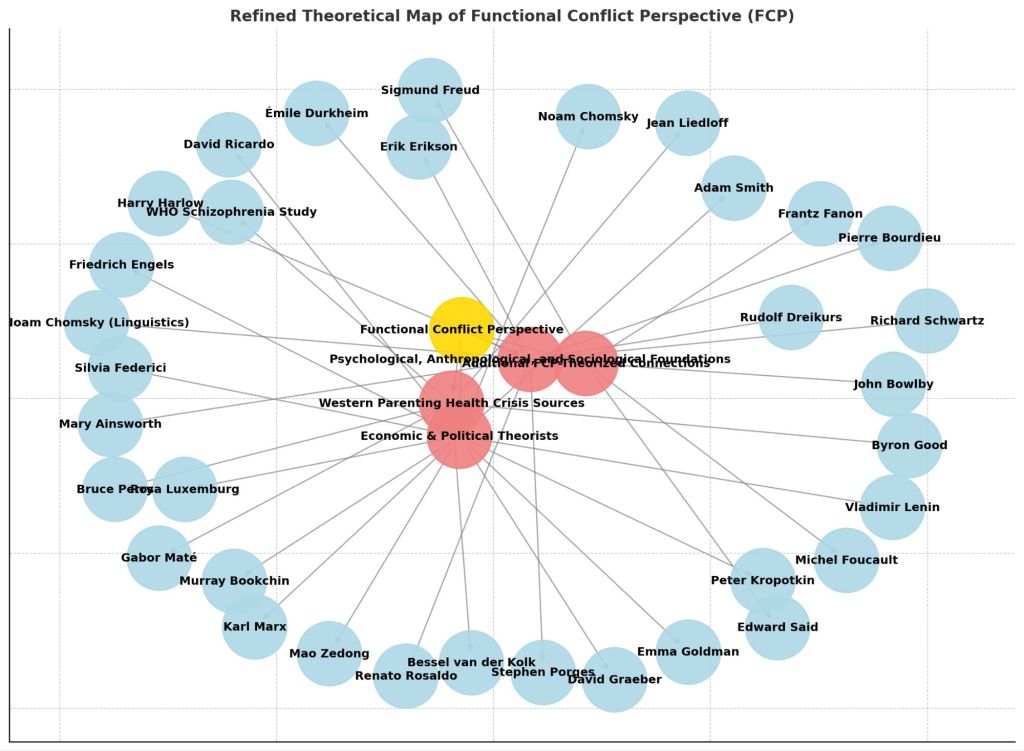
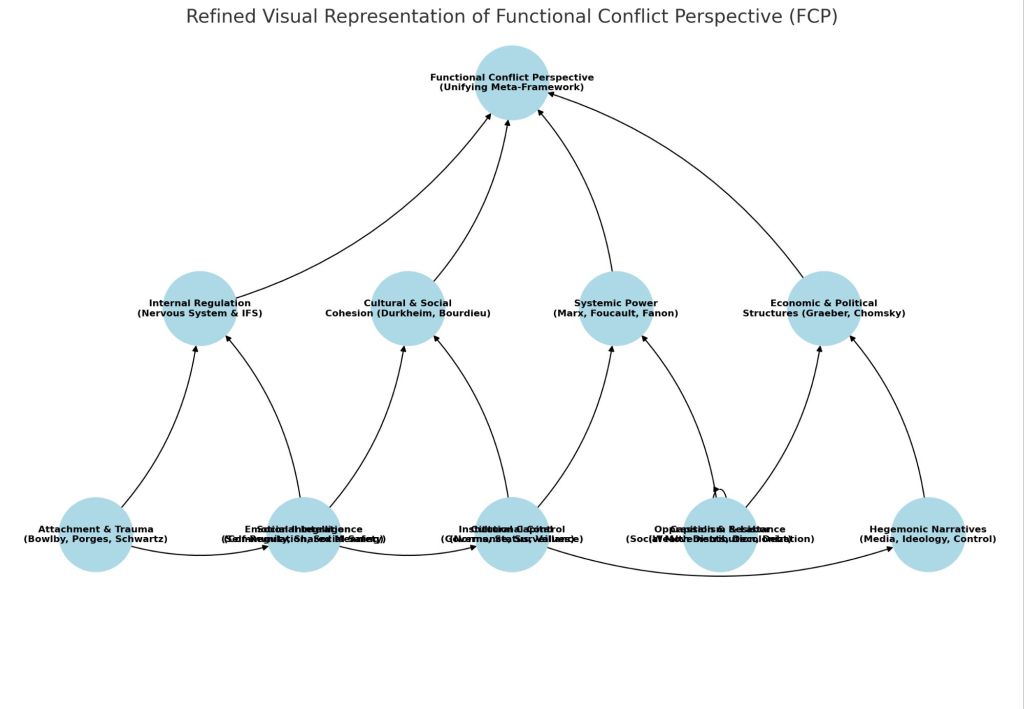
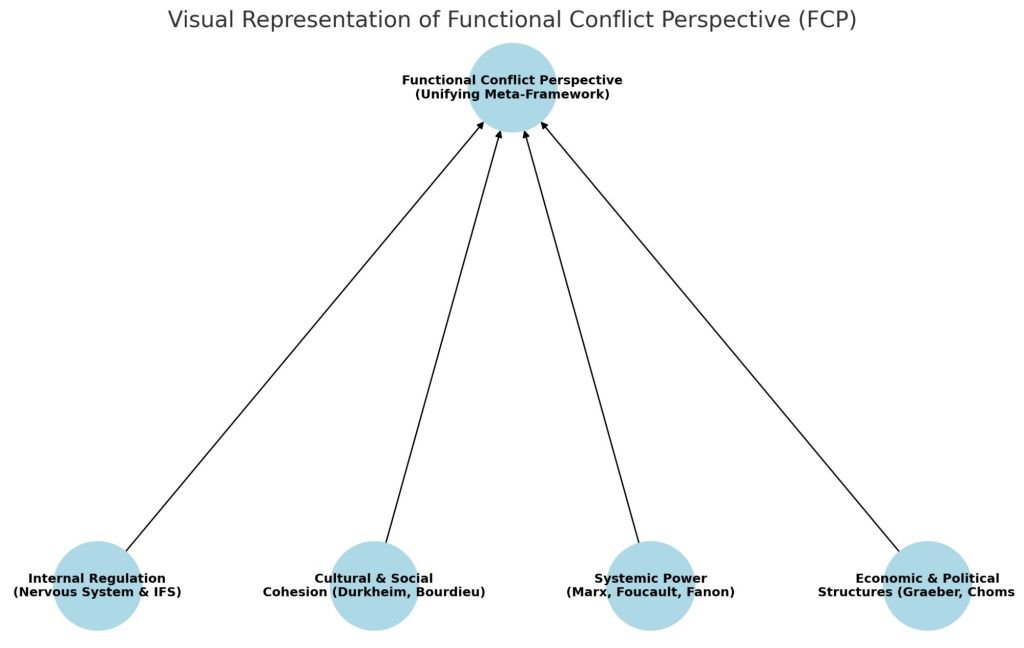
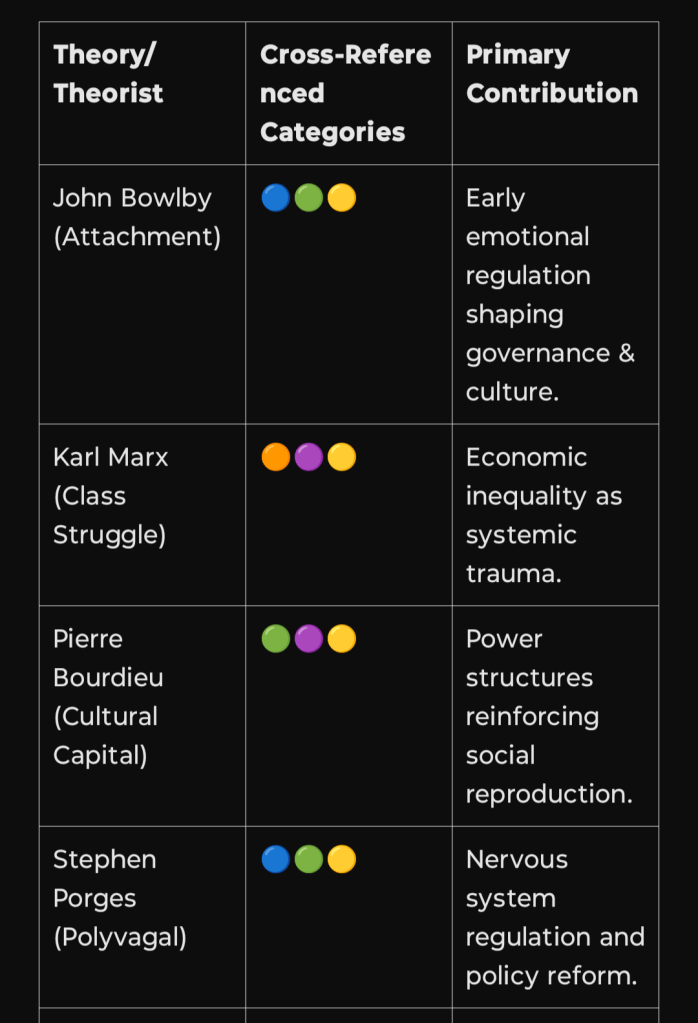


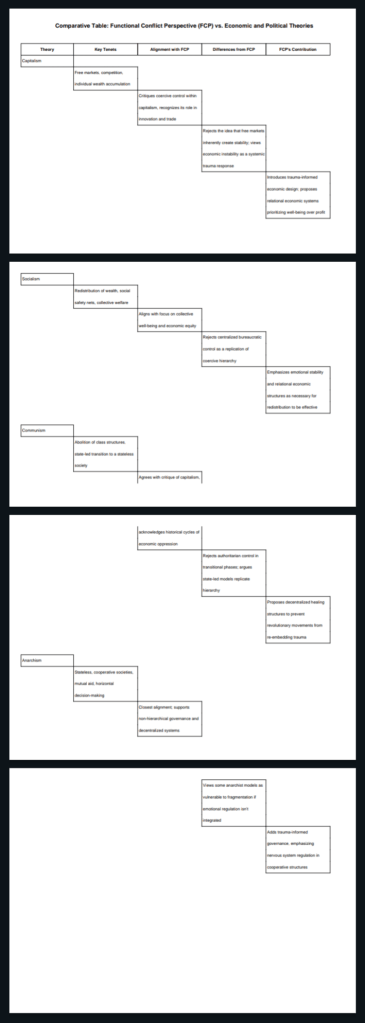




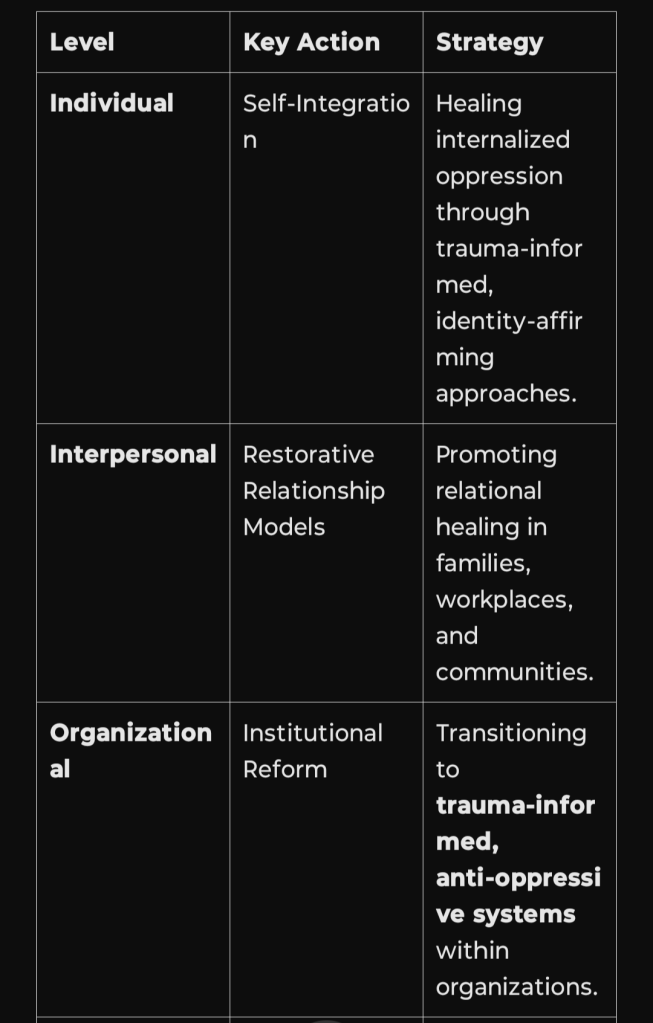
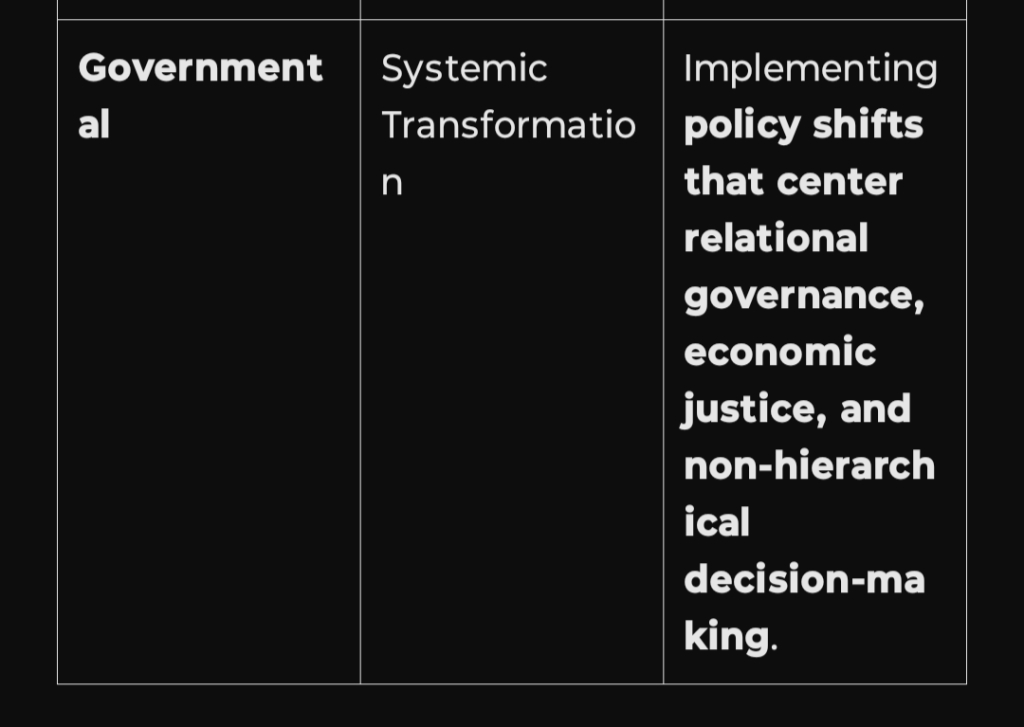




 Spirolateral