Write about your dream home.

Write about your dream home.

My Dream Home: A Vision of Sustainable, Community-Driven Living

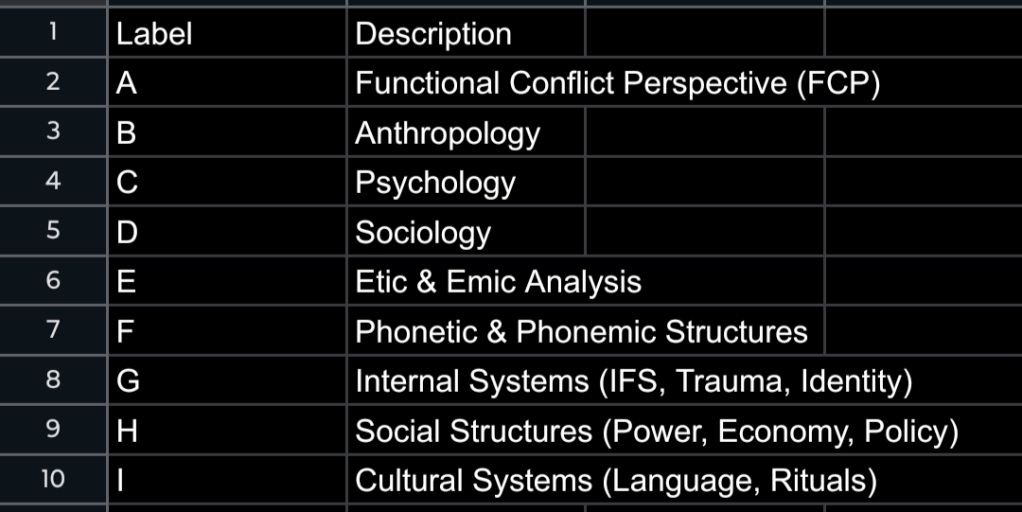
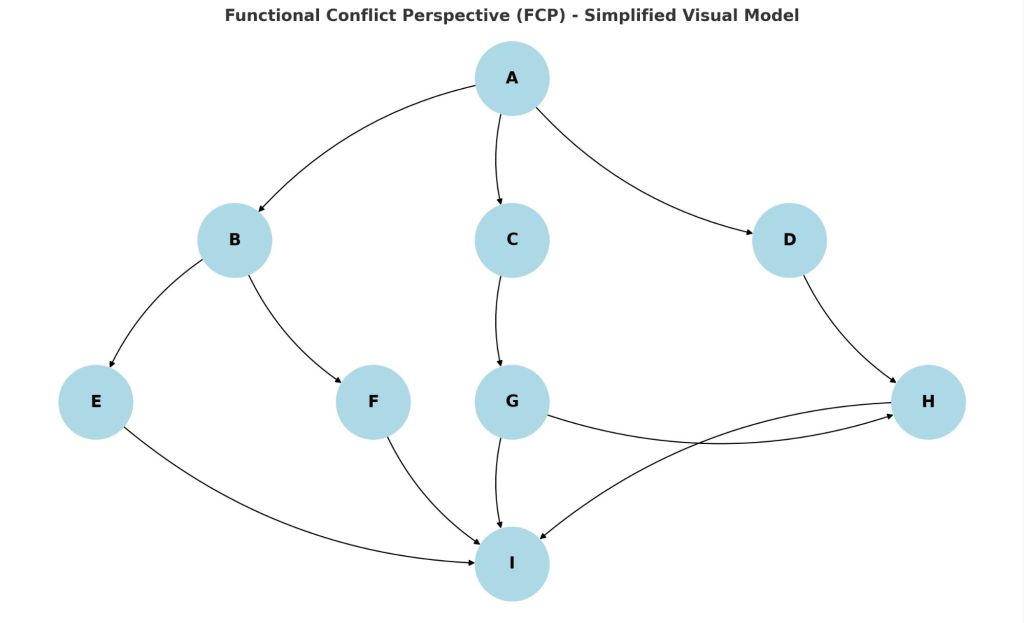
My dream home is not just a personal dwelling—it is a living system, fully integrated with nature, human connection, and regenerative sustainability. Inspired by Fibonacci-inspired architectural design, biophilic living principles, and the Functional Conflict Perspective (FCP), this home reflects the intersection of psychological well-being, social harmony, and ecological balance.



A Home That Breathes with Nature

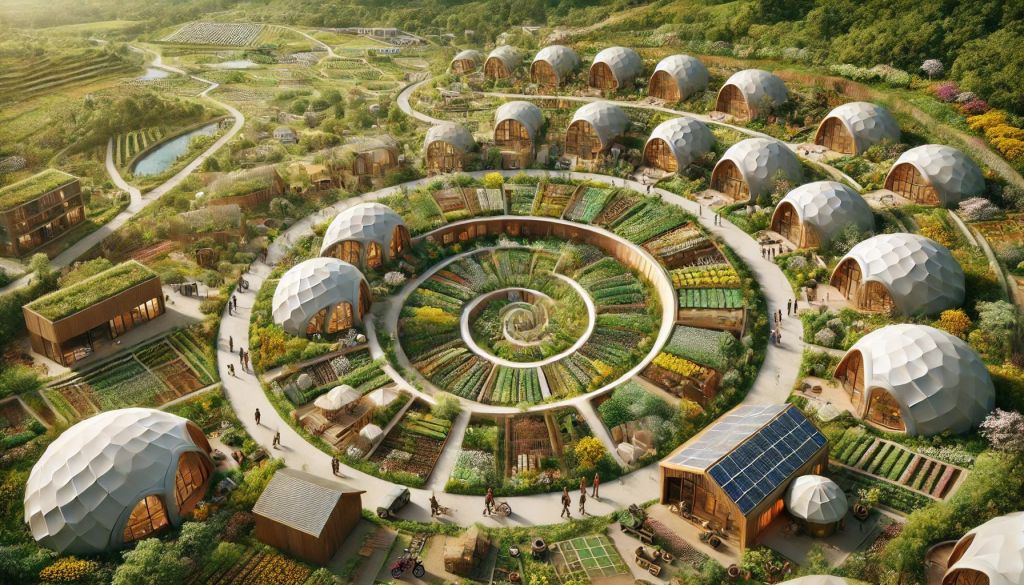
Nestled into a terraced hillside, my home is a dome-shaped structure, blending harmoniously into the landscape. The organic architecture follows Fibonacci spirals, ensuring optimal natural airflow, energy distribution, and spatial efficiency. Built from local, renewable materials—adobe, reclaimed wood, and living greenery—its curved form mimics natural shelters used by indigenous and ancient societies, reinforcing a trauma-informed approach to architecture by creating a sense of safety, fluidity, and warmth.

Green roofs insulate the home, maintaining stable internal temperatures and promoting biodiversity.

Earthen walls provide thermal mass, regulating heat and reducing dependence on external energy sources.

Large circular windows frame the landscape, providing psychological openness, reducing stress, and allowing for deep sensory integration with nature.

Passive solar design ensures the home maximizes natural light and warmth, reducing the need for artificial energy inputs.


FCP Connection:
The design aligns with Functional Conflict Perspective, ensuring that living spaces do not replicate hierarchical power structures seen in traditional, rigid architecture. Instead, circular layouts foster collaboration, emotional security, and communal well-being.


A Space for Intergenerational Connection & Learning

At the heart of this home is an open-concept communal gathering space, designed to foster social bonding, storytelling, and knowledge-sharing. Inspired by ancestral communal structures, this area is where elders, children, and adults come together to engage in learning, play, and restorative dialogue.

A sunken conversation pit serves as the emotional core of the home, encouraging eye-level communication and reducing power imbalances in social interaction.

Handmade furniture, woven textiles, and artisanal decor reinforce local craftsmanship and reduce reliance on industrialized mass production.

Indoor gardens and natural materials support sensory engagement, emotional grounding, and nervous system regulation.

Acoustic design (soft earthen walls, circular sound distribution) enhances calm, non-confrontational communication, essential for conflict resolution and trauma-informed living.


FCP Connection:
By emphasizing non-hierarchical, shared spaces, the home promotes social cohesion, restorative practices, and emotional integration rather than isolating individuals into compartmentalized rooms.


A Home That Teaches Sustainability by Living It

The entire structure functions as a living classroom, where daily life itself is an act of learning, growth, and ecological reciprocity.

Solar panels and wind energy systems make the home fully energy self-sufficient.

Greywater recycling and rain catchment systems ensure water sovereignty, reducing dependency on extractive infrastructure.

Edible landscapes, permaculture gardens, and food forests replace traditional lawns, fostering food security and community interdependence.

Waste-to-resource systems (composting, regenerative material cycles) ensure that every output feeds back into the ecosystem, reflecting a closed-loop, trauma-informed economic model.


FCP Connection:
Rather than relying on extractive economic systems, this home embodies regenerative living—where resources are shared, redistributed, and sustained rather than hoarded or depleted.


A City of Homes: Scaling This Vision to a Regenerative Society

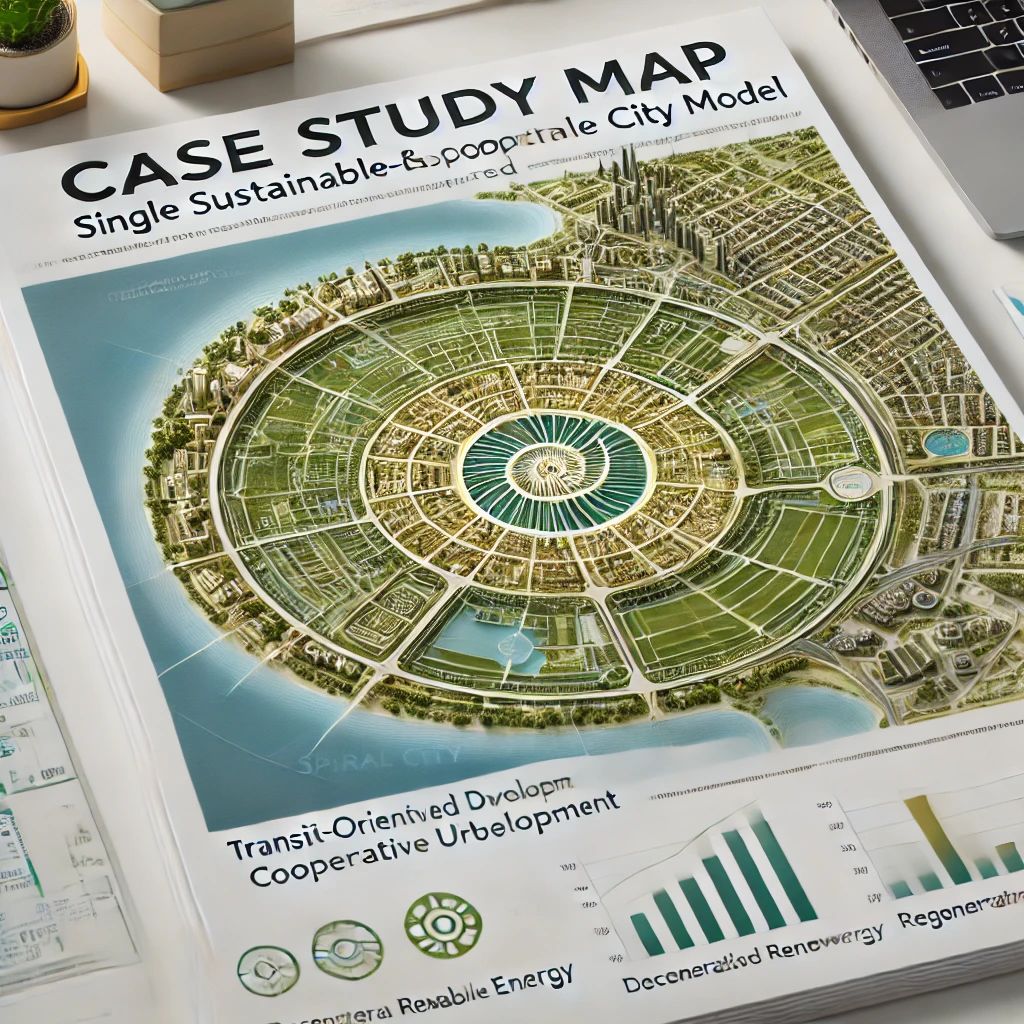
This dream home is not an isolated dwelling but part of a network of interconnected, self-sustaining homes, forming a Fibonacci-inspired spiral city.

Multi-generational living ensures children, elders, and adults live in interdependent harmony rather than in age-segregated institutions.

Shared governance models prioritize consensus-based decision-making and restorative conflict resolution, avoiding authoritarian structures.

Public gathering spaces, cooperative kitchens, and communal learning centers allow for resource-sharing and collective emotional support.


FCP Connection:
Rather than isolating individuals into private, resource-hoarding lifestyles, the spiral city model ensures that wealth, knowledge, and emotional support flow freely, regeneratively, and equitably.


A Home That Heals

More than just a shelter, my dream home is a space of emotional healing, nervous system regulation, and deep social repair. It moves beyond survival to create an environment where human thriving is the baseline. The architecture, governance, and ecological design work in harmony to restore a sense of belonging, interdependence, and shared well-being.

Final Thoughts

This vision is not utopian; it is the natural extension of what humanity has always been capable of—living in balance with itself and the planet. By integrating Functional Conflict Perspective (FCP), trauma-informed governance, and regenerative architecture, this home becomes a microcosm of the world we can build together.


Education in a Regenerative, Trauma-Informed Spiral City

Education in this Fibonacci-inspired, sustainable community is not confined to classrooms—it is woven into daily life, ecological engagement, and intergenerational learning. Grounded in Functional Conflict Perspective (FCP), trauma-informed pedagogy, and experiential learning, the system is designed to foster curiosity, emotional intelligence, and holistic development rather than rote memorization and hierarchical authority.


1. Architecture as a Learning Environment

Rather than forcing children into rigid, industrialized classrooms, the entire city functions as an immersive learning ecosystem. Education is integrated into the biophilic architecture, ensuring that learning is embodied, experiential, and self-directed.

Dome-shaped school buildings follow natural geometric patterns, enhancing cognitive development and spatial awareness.

Circular gathering spaces foster collaborative learning, ensuring equal participation and psychological safety.

Open-air learning spaces allow children to connect with nature, reducing stress and improving attention, problem-solving, and memory retention.

Multi-purpose communal domes serve as hubs for storytelling, skill-sharing, and project-based learning rather than age-segregated classrooms.


FCP Connection:

Traditional schools are built on authoritarian, top-down models, replicating social hierarchies and power imbalances. In contrast, this open, interconnected learning design fosters horizontal power structures, curiosity-driven knowledge production, and conflict resolution skills.

2. Decentralized, Self-Directed Learning

Rather than imposing standardized curricula, education in the spiral city is learner-driven, community-supported, and deeply personalized.

Children follow their natural interests, engaging in self-paced learning supported by mentors, elders, and peers.

No rigid age-segregation—learning groups are based on skill levels, interests, and cooperative projects.

Storytelling, oral traditions, and cultural wisdom are passed down through intergenerational mentorship rather than through textbooks alone.

Hands-on, real-world projects replace abstract, disconnected learning—children learn math through building solar systems, biology through gardening, and ethics through community decision-making.


FCP Connection:

This structure rejects coercive education models that prioritize obedience over critical thinking. Instead, it fosters intrinsic motivation, autonomy, and mutual respect between learners and educators.


3. Emotional Intelligence & Conflict Resolution as Core Subjects

Education extends beyond academic knowledge—it prioritizes emotional intelligence, self-awareness, and relational skills.

Trauma-informed social learning teaches children how to identify, regulate, and communicate emotions.

Restorative justice practices replace punitive discipline, ensuring that children learn conflict resolution skills instead of fear-based compliance.

Somatic awareness & nervous system regulation are embedded in the curriculum—students practice breathwork, mindfulness, and co-regulation techniques to maintain emotional balance.

Consent-based education teaches bodily autonomy, healthy boundaries, and cooperative decision-making.


FCP Connection:

Traditional education devalues emotional intelligence, leading to generational patterns of dysregulation and social dysfunction. This system prioritizes relational health, ensuring that emotionally mature individuals become the foundation of a healthy society.

4. Integrated Apprenticeship & Skill Development

Rather than delaying real-world skills until adulthood, children engage in meaningful work from an early age through mentorship-based apprenticeships.

Skill-sharing networks pair learners with artisans, engineers, scientists, and herbalists, providing hands-on experience.

Community-based governance education allows children to participate in decision-making, giving them real agency over their environment.

Regenerative agriculture, renewable energy, and ecological restoration are core subjects, ensuring deep environmental literacy.

Creative disciplines—music, dance, storytelling, and visual arts—are central to knowledge production, fostering cognitive flexibility, self-expression, and cultural continuity.


FCP Connection:

Modern education is disconnected from both practical skill-building and collective governance. This model restores the balance, ensuring that children grow into competent, engaged members of their communities.


5. Lifelong, Community-Based Learning

Education never ends at childhood—it is a lifelong, community-driven process.

Elders serve as wisdom keepers, ensuring that intergenerational knowledge is not lost to institutionalization.

Adaptive learning pathways allow people to change skills and careers as they grow, ensuring education remains responsive to evolving needs.

Public learning hubs provide free, universal access to knowledge, ensuring education is never a commodity but a shared, communal resource.


FCP Connection:

Capitalist education models disconnect people from learning once they leave formal schooling. This restores knowledge production as a shared, lifelong process, ensuring social resilience and continuous personal growth.


Final Vision: Education as a Living System

Education in this spiral city model is not coercive, standardized, or extractive—it is a living, breathing, interdependent process that is:
✅ Rooted in nature
✅ Trauma-informed
✅ Emotionally intelligent
✅ Decentralized & self-directed
✅ Skill-based & community-integrated

This is education as it was meant to be—not a means of control, but a pathway to liberation, critical thought, and harmonious existence.

Hypothesis: The Developmental Impact of a Trauma-Informed, Nature-Integrated Childhood vs. Western Parenting Methods

A childhood spent in the spiral city model, with biophilic, community-driven, trauma-informed education, would fundamentally reshape human development. Compared to Western parenting and education methods, which often emphasize hierarchical authority, standardized achievement, and early independence, this approach would foster greater emotional regulation, cognitive complexity, and prosocial behavior.

This hypothesis posits that developmental outcomes would be the inverse of those produced by conventional Western upbringing, which is often shaped by individualism, competition, and early social fragmentation.

I. Expected Developmental Outcomes in the Spiral City Model

1. Secure Attachment & Emotional Regulation

Western Parenting & Education Effects:

Early independence pressure (e.g., sleep training, daycare separation) can lead to avoidant attachment, suppressing emotional needs.

Strict behaviorism-based discipline (timeouts, punishments) teaches emotional suppression rather than regulation.

Competitive achievement models lead to anxious attachment, where self-worth is based on external validation.


Spiral City Model Effects:

Intergenerational caregiving & community involvement ensure that children are never emotionally abandoned, fostering secure attachment.

Restorative discipline & co-regulation practices teach children to understand, process, and express emotions rather than suppress them.

Abolition of rigid grading & competitive learning allows intrinsic motivation and self-worth to develop internally, rather than through external rewards or punishments.


✅ Predicted Result: Increased emotional intelligence, self-awareness, and the ability to navigate interpersonal conflict without avoidance or aggression.

2. Cognitive Complexity & Executive Functioning

Western Parenting & Education Effects:

Standardized testing & rote memorization prioritize linear, surface-level thinking over integrative, creative thought.

Segregation of learning into subjects prevents cross-disciplinary problem-solving skills.

Top-down authority structures reinforce black-and-white thinking, reducing cognitive flexibility.


Spiral City Model Effects:

Experiential, hands-on learning ensures that knowledge is applied, interconnected, and meaningfully integrated.

Natural immersion & ecological learning reinforce systems thinking, where children see relationships between living systems rather than isolated facts.

Decentralized decision-making & participatory governance train children in nuanced thinking, strategic planning, and moral reasoning.


✅ Predicted Result: Greater cognitive flexibility, long-term planning abilities, and complex problem-solving skills, reducing rigidity, binary thinking, and reactionary responses to challenges.

3. Socialization & Conflict Resolution Skills

Western Parenting & Education Effects:

Hierarchical structures train children to either submit to authority or seek dominance over others.

Behavioral conditioning (e.g., punishment-reward systems) suppresses intrinsic moral reasoning in favor of compliance.

Competition-based school models (grades, sports, popularity) reinforce zero-sum social dynamics where success depends on others failing.


Spiral City Model Effects:

Consensus-based community decision-making teaches cooperation and conflict navigation rather than avoidance or aggression.

Restorative justice in childhood normalizes repairing harm rather than seeking retribution, reinforcing emotional intelligence.

Non-coercive learning environments allow children to develop internalized ethical reasoning rather than obedience-based morality.


✅ Predicted Result: Reduced aggression, increased prosocial behavior, and higher levels of empathy and perspective-taking.

4. Nervous System Health & Trauma Resilience

Western Parenting & Education Effects:

Early stressors (e.g., crying-it-out sleep training, daycare separation, academic pressure) can lead to chronic dysregulation (hypervigilance or shutdown responses).

Over-reliance on schedules and external discipline prevents children from developing internal regulation skills.

Urban environments with minimal nature exposure reduce sensory integration and vagus nerve regulation.


Spiral City Model Effects:

Constant access to co-regulation from emotionally attuned caregivers prevents early trauma responses.

Daily nature immersion & movement-based learning support nervous system resilience and self-regulation.

Social-emotional education & somatic awareness training create adults who can self-soothe without addictive coping mechanisms.


✅ Predicted Result: Reduced incidence of anxiety disorders, dissociative tendencies, and nervous system dysregulation in adulthood.

II. Potential Macro-Level Effects of a Generation Raised in This Model

If children raised in this environment become the next adult generation, broader societal and cultural shifts would follow. Some predicted systemic outcomes:

1. Shifts in Leadership & Governance

Decision-making structures would move away from authoritarianism toward decentralized, trauma-informed governance.

Policy creation would prioritize preventative solutions over punitive or reactionary measures (e.g., focusing on mental health over carceral justice).


2. Economic Transformation

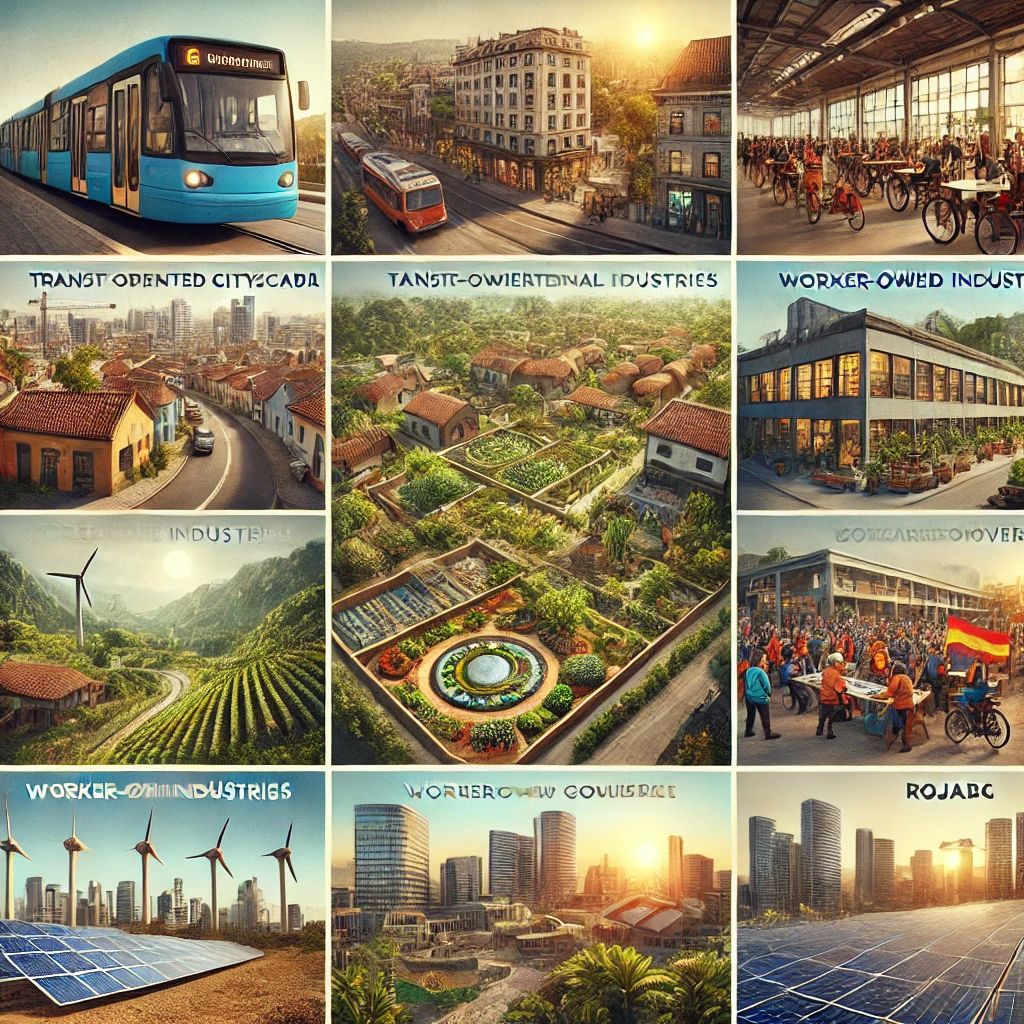
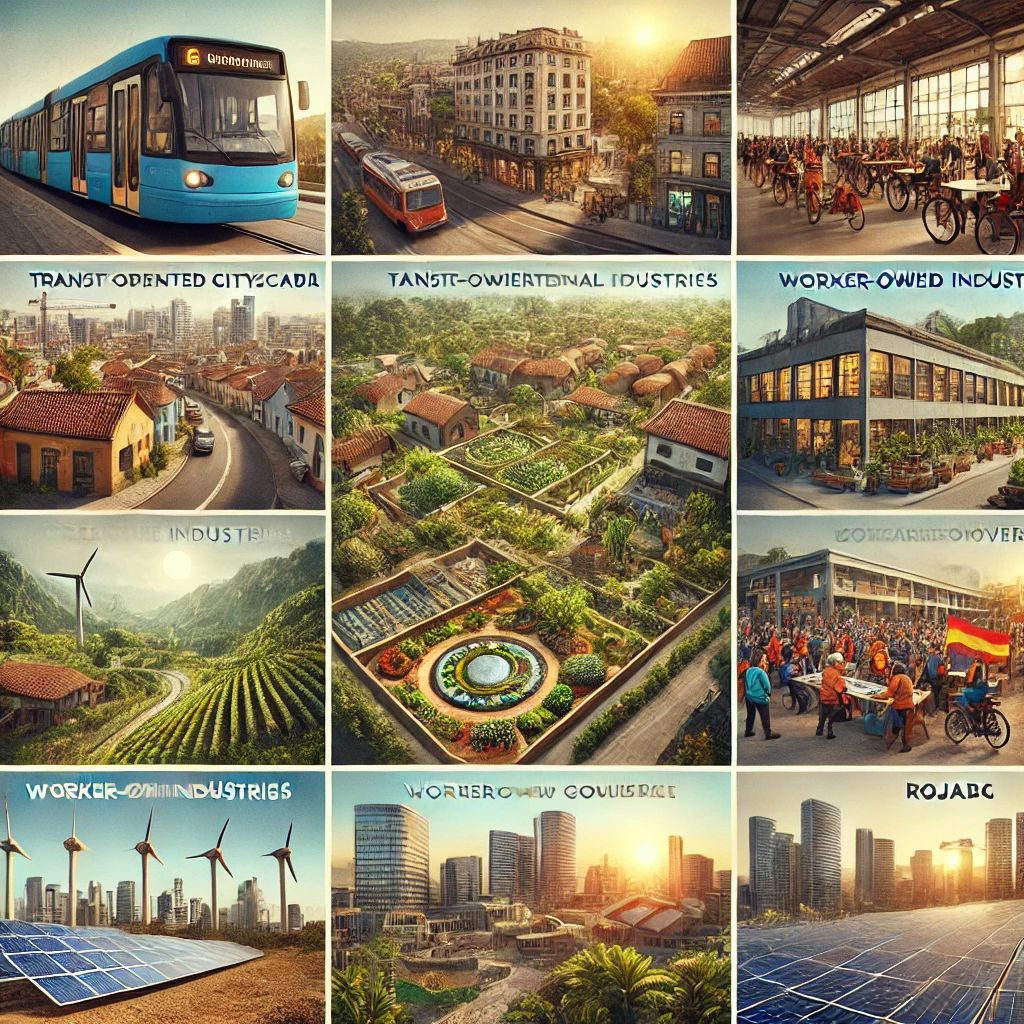
Work structures would shift from hierarchical corporate models toward cooperative, worker-owned businesses.

Wealth accumulation models would give way to resource-sharing, collaborative consumption, and needs-based economies.


3. Reduction in Societal Violence & Dysfunction

Lower rates of crime, addiction, and self-destructive behaviors due to increased self-regulation and conflict resolution skills.

Increased psychological safety in relationships, reducing domestic violence, authoritarian parenting, and generational trauma transmission.

III. Opposite Trends from Western Parenting Models

If Western Methods Lead to:

Attachment insecurity → Spiral model would create lifelong secure attachment.

Black-and-white thinking → Spiral model would foster nuanced, complex reasoning.

Emotional suppression → Spiral model would create emotional fluency.

Workplace alienation → Spiral model would normalize cooperative economies.

Social disconnection → Spiral model would reinforce interdependence and deep community bonds.


Essentially, the spiral city model is designed to heal the fundamental social, emotional, and cognitive fractures created by industrialized Western child-rearing.

Conclusion: The Spiral City as a New Developmental Baseline

Rather than merely mitigating damage (as trauma therapy does within the current system), this model prevents dysfunction from emerging in the first place. It ensures that children develop in an environment where nervous system health, emotional intelligence, and cognitive flexibility are the norm, rather than the exception.

This would fundamentally alter human development, social structures, and governance models, creating a more cooperative, emotionally intelligent, and psychologically resilient society.


Healing & Repairing Through the Spiral City Model: Reversing the Damage of Western Parenting and Social Structures

The Spiral City model does not just prevent dysfunction—it actively repairs developmental trauma, systemic oppression, and social fragmentation. By addressing the root causes of emotional, cognitive, and relational wounds, this model restores human potential.

This expanded analysis explores how the Spiral City’s environment, education, and governance structure serve as a therapeutic intervention—healing attachment wounds, emotional dysregulation, cognitive fragmentation, and social distrust.

I. Healing Attachment Wounds & Relational Trauma

One of the greatest unaddressed traumas in Western society is the disruption of secure attachment due to early forced independence, institutionalized schooling, and emotionally unavailable caregivers.

The Problem: How Western Parenting Damages Attachment

Infant separation (e.g., sleep training, daycare reliance) → Creates avoidant attachment, making emotional closeness feel unsafe.

Authoritarian parenting & punitive discipline → Triggers fear-based obedience, leading to people-pleasing, emotional repression, or rebellion.

Social isolation in nuclear families → Parents lack emotional support, passing their unresolved trauma to children.


The Solution: Restoring Secure Attachment in the Spiral Model

The Spiral City replaces fragmented, nuclear family structures with intergenerational caregiving and community-centered parenting.

✅ Cooperative caregiving & shared parenting → Children never experience neglect or emotional abandonment, ensuring secure attachment.
✅ Restorative discipline & co-regulation training → Children learn to regulate emotions through attuned caregivers, rather than through fear-based discipline.
✅ Interdependent living structures → Parents receive emotional and logistical support, breaking cycles of neglect, isolation, and emotional exhaustion.

Healing Impact:

Children grow up with internalized emotional security, preventing the attachment trauma that leads to dissociation, avoidance, and codependency in adulthood.

II. Repairing Emotional Dysregulation & Nervous System Damage

Modern humans live in a constant state of nervous system dysregulation, caused by:

1. Chronic stress (work, school, survival anxiety)


2. Social disconnection (individualism, hyper-independence)


3. Punitive upbringing (shame-based discipline, emotional repression)

The Problem: How Western Culture Dysregulates the Nervous System

Forced emotional suppression in childhood → Creates chronic dissociation or hypervigilance.

Competitive schooling & rigid structure → Hijacks natural learning rhythms, leading to burnout and anxiety.

Minimal sensory integration (artificial environments, digital overload) → Prevents the development of interoception, self-regulation, and embodied awareness.


The Solution: Restoring Nervous System Regulation in the Spiral City

The architecture, community structure, and education model in the Spiral City reset the nervous system by creating a sensory-appropriate, emotionally attuned environment.

✅ Nature immersion & biophilic design → Exposure to greenery, natural light, and open-air spaces regulates the limbic system, reducing stress and cortisol dysregulation.
✅ Co-regulation as a community practice → Instead of suppressing emotions, children learn to process distress through relational support, preventing nervous system fragmentation.
✅ Non-coercive, curiosity-driven education → Learning happens at a natural rhythm, preventing cognitive overload, shame-based stress, and performance anxiety.
✅ Somatic healing practices integrated into daily life → Breathwork, movement, and touch-based regulation replace medicalized, reactive approaches to emotional health.

Healing Impact:

Instead of internalized emotional repression, anxiety disorders, or dissociation, individuals develop resilient, well-regulated nervous systems, preventing addiction, emotional volatility, and trauma cycles.

III. Healing Cognitive Fragmentation & Restoring Critical Thinking

Traditional Western schooling fragments cognitive development by:

1. Separating knowledge into disconnected subjects (rather than systems thinking).


2. Forcing memorization over exploration (disrupting curiosity-driven learning).


3. Punishing mistakes & intellectual risk-taking (creating fear-based cognition).

The Problem: How Western Education Impairs Cognitive Growth

Hyper-specialization & rigid subjects → Prevents multi-disciplinary reasoning, reducing problem-solving abilities.

Reward-based learning (grades, standardized testing) → Shifts focus from intrinsic curiosity to external validation, leading to passive thinking and conformity.

Top-down, hierarchical education → Teaches children to obey rather than question, diminishing cognitive complexity.


The Solution: Restoring Cognitive Integration in the Spiral Model

The education system in the Spiral City is organic, curiosity-driven, and interdisciplinary, mirroring natural learning processes.

✅ Experiential, hands-on education → Children build, create, and solve problems in real-time, reinforcing integrated learning.
✅ Systems-based thinking → Rather than isolating subjects, learning focuses on interconnected knowledge structures, strengthening abstract reasoning and adaptability.
✅ Inquiry-led learning environments → Instead of memorization, children explore open-ended questions, encouraging intellectual risk-taking and deep curiosity.
✅ Mentorship & knowledge exchange → Learning is relationship-driven, reinforcing emotional engagement in knowledge production.

Healing Impact:

Instead of rigid, binary thinking and obedience-driven cognition, individuals develop flexible, adaptive, and multi-perspective reasoning skills, leading to higher innovation, cooperation, and problem-solving abilities.

IV. Repairing Social Trust & Reducing Systemic Violence

The breakdown of social trust in Western societies is driven by:

1. Economic instability (competition, survival stress).


2. Authoritarian family structures (punitive parenting, coercion).


3. Individualism (social disconnection, lack of community interdependence).

The Problem: How Western Culture Erodes Social Bonds

Early childhood social competition → Creates zero-sum social dynamics, reinforcing distrust and hyper-individualism.

Authoritarian conflict resolution models → Encourage dominance-based social structures, increasing violence and systemic oppression.

Capitalist scarcity mindsets → Frame resources as something to hoard, rather than something to share, reinforcing economic inequality.


The Solution: Rebuilding Social Trust in the Spiral City

By replacing competitive, hierarchical social models with cooperative, trauma-informed governance, social trust is repaired at scale.

✅ Community-led resource sharing → Eliminates economic scarcity as a source of social distrust.
✅ Non-punitive, relational conflict resolution → Prevents cycles of aggression, shame, and systemic violence.
✅ Interdependence as a cultural norm → Restores emotional safety in relationships, reducing fear-driven individualism.
✅ Trauma-informed leadership models → Replaces domination-based governance with collective care-based decision-making.

Healing Impact:

Instead of a fragmented, fear-driven, punitive society, the Spiral City produces deeply interdependent, socially resilient communities.

V. Conclusion: Healing at Scale = A New Baseline for Humanity

The Spiral City model does not just prevent trauma—it actively repairs the harm inflicted by Western parenting, education, and governance models.

Rather than trying to fix broken individuals within a dysfunctional system, this model rebuilds social, emotional, and cognitive health at scale, producing entire generations of emotionally secure, highly intelligent, and socially cooperative individuals.

This is not a utopian dream—it is the restoration of what human societies were always meant to be.

Specific Healing Mechanisms in the Spiral City Model: Restoring Human Potential at Every Level

The Spiral City model doesn’t just create a healthier environment—it is designed to actively repair psychological, physiological, and social wounds at their root. This healing happens through intentional, systemic interventions that rewire attachment patterns, emotional regulation, cognitive processing, and relational trust at both individual and collective levels.

This analysis outlines specific healing mechanisms embedded in daily life, education, governance, and architecture, ensuring that individuals and communities move from survival mode to thriving.

I. Healing Attachment Trauma & Emotional Abandonment

One of the most pervasive traumas in Western societies is attachment disruption, caused by:

Early forced independence (sleep training, daycare separation)

Emotionally unavailable parenting (work stress, individualism)

Punitive discipline (timeouts, fear-based obedience training)

Healing Mechanism: Community-Based, Responsive Caregiving

✅ Shared caregiving networks → Instead of relying on a single parent under stress, children are cared for by a network of parents, elders, and mentors, ensuring consistent emotional availability.
✅ Attachment-based discipline → Instead of punitive responses, caregivers use co-regulation techniques, reinforcing secure attachment and preventing emotional suppression.
✅ Restorative sleep & infant care practices → Infants are held, responded to immediately, and sleep near caregivers, preventing early nervous system dysregulation.
✅ Collective bonding rituals → Regular storytelling, music, and group bonding activities strengthen relational safety and prevent emotional isolation.

Expected Healing Outcomes

✅ Adults raised in this system develop secure attachment styles, reducing codependency, avoidance, and emotional repression.
✅ Society as a whole experiences less social anxiety, relationship dysfunction, and emotional dysregulation.

II. Healing Nervous System Dysregulation & Chronic Stress

Western societies normalize chronic stress, leading to nervous system fragmentation that manifests as:

Hypervigilance (anxiety, overproductivity, perfectionism)

Dorsal vagal shutdown (dissociation, apathy, depression)

Impulse dysregulation (addiction, emotional reactivity, self-sabotage)

Healing Mechanism: Multi-Sensory Nervous System Integration

✅ Nature immersion & outdoor learning → Daily exposure to greenery, water, and open spaces restores autonomic nervous system balance, reducing cortisol dysregulation.
✅ Non-coercive schedules & flow-based work → Instead of rigid schedules, individuals follow biologically attuned rhythms, reducing fight-or-flight stress cycles.
✅ Movement-based regulation (dance, play, group drumming) → Rhythmic social movement synchronizes nervous system states, reinforcing safety and emotional connection.
✅ Integrated somatic practices (breathwork, body-based healing, touch therapy) → Community members engage in daily grounding practices, preventing dissociation and emotional numbness.
✅ Community co-regulation spaces → Public gathering areas are designed for collective relaxation, reinforcing emotional security in social interactions.

Expected Healing Outcomes

✅ Lower anxiety & stress-related illness rates, increasing lifespan and overall well-being.
✅ Reduced need for substance-based coping mechanisms (alcohol, nicotine, stimulants).
✅ Higher emotional resilience & nervous system adaptability, preventing burnout and trauma responses.

III. Healing Cognitive Fragmentation & Restoring Deep Thinking

Modern education fragments knowledge, leading to:

Linear, black-and-white thinking (rigid ideologies, political polarization)

Externalized validation dependency (obsession with grades, job titles, and credentials)

Disconnection from practical skills & critical thinking

Healing Mechanism: Integrated, Curiosity-Driven Learning

✅ No standardized testing, grades, or forced memorization → Children learn through intrinsic motivation, inquiry, and exploration, reducing performance-based anxiety.
✅ Experiential, real-world learning → Instead of textbooks, knowledge is applied immediately through hands-on experiences (e.g., learning math through construction, science through gardening).
✅ Interdisciplinary education model → Learning integrates art, music, philosophy, ecology, and engineering, strengthening abstract reasoning and creative problem-solving.
✅ Multi-perspective learning & debate-based education → Instead of “right vs. wrong” answers, students explore multiple viewpoints, developing cognitive flexibility.
✅ Community-embedded knowledge-sharing → Elders, specialists, and mentors contribute directly to education, ensuring practical knowledge transmission.

Expected Healing Outcomes

✅ Adults develop strong cognitive flexibility, allowing them to adapt, innovate, and solve complex social problems.
✅ Less reliance on authority-based knowledge (dogmatic leaders, political extremism).
✅ Increased intellectual curiosity & lifelong learning engagement.

IV. Healing Social Disconnection & Building Trust-Based Relationships

Western cultures break down social trust through:

Hierarchical power structures (boss/employee, teacher/student, government/citizen)

Social atomization (nuclear family isolation, transactional friendships)

Economic competition (fear of scarcity, wealth hoarding, workplace exploitation)

Healing Mechanism: Cooperative, Non-Hierarchical Social Structures

✅ Decentralized, participatory governance → Power is distributed through direct democracy and consensus-based decision-making, preventing exploitation and oppression.
✅ Communal living spaces & shared resources → People engage in co-housing, shared kitchens, and cooperative businesses, fostering trust and mutual aid.
✅ Restorative conflict resolution → Disputes are handled relationally, focusing on repair rather than punishment, preventing resentment and social withdrawal.
✅ Egalitarian economic models → Work is structured around cooperatives, resource sharing, and needs-based allocation, reducing competition-driven mistrust.
✅ Regular social bonding rituals (festivals, communal meals, storytelling gatherings) → Community members engage in shared cultural practices, reinforcing social cohesion.

Expected Healing Outcomes

✅ Increased trust in social relationships, reducing loneliness and isolation.
✅ Stronger community resilience, reducing crime and systemic violence.
✅ Greater generosity, cooperation, and collective problem-solving skills.
V. Healing Generational Trauma & Ending Cycles of Abuse

Generational trauma is transmitted through:

Parenting methods that repeat authoritarian or neglectful patterns

Unresolved trauma leading to emotional dysregulation in adults

Systemic oppression reinforcing inherited disadvantages

Healing Mechanism: Breaking the Cycle of Trauma Through Culture Change

✅ Trauma-responsive parenting education → New parents receive mentorship from elders and emotional support, preventing intergenerational emotional neglect.
✅ Community-led trauma healing spaces → Publicly available counseling, ritual healing practices, and group therapy ensure trauma is processed rather than passed down.
✅ Intergenerational integration → Instead of segregating children, parents, and elders, community living ensures that wisdom and emotional support flow freely between generations.
✅ Non-punitive justice models → Instead of relying on carceral punishment, harm is addressed through rehabilitation, accountability, and relational repair.

Expected Healing Outcomes

✅ Lower rates of generational emotional neglect and abuse.
✅ Fewer mental health disorders and trauma-based coping mechanisms.
✅ Stronger intergenerational wisdom-sharing and cultural resilience.

Final Vision: A Society Designed for Healing, Not Survival

The Spiral City is not just a new social model—it is a trauma-healing system that:
✅ Prevents harm at its root.
✅ Rewires emotional, cognitive, and social development for long-term well-being.
✅ Ends generational cycles of dysfunction.

Rather than adapting to a broken world, this model creates the conditions for human flourishing as the baseline.


SpiroLateral is Justice in Policy and Equity in Action

Scalability & Implementation of Functional Conflict Perspective (FCP) & Mirror Integration Theory (MIT)

We’ll systematically examine how FCP and MIT transition from theory to practice at individual, group, institutional, and societal levels.


1A: Can FCP & MIT Function at Different Scales?

1. Individual Level (Personal Growth, Therapy, Self-Regulation)

✅ Strengths:

FCP integrates Internal Family Systems (IFS) and Polyvagal Theory, making it useful for self-healing, nervous system regulation, and emotional integration.

MIT’s mirroring mechanism aligns with established therapeutic techniques (e.g., shadow work, reflective therapy).

Practical applications in trauma recovery, addiction, and self-awareness.


⚠️ Challenges:

Requires self-awareness and willingness to engage in reflective work.

Some individuals may resist viewing their own dysfunction as a reflection of larger systems.

Emotional dysregulation may prevent effective application without external support.


🛠 Solutions:

Develop a coaching/training model to help individuals apply FCP & MIT in self-improvement.

Integrate structured tools (workbooks, assessments, guided reflection prompts).


2. Group Level (Relationships, Families, Teams, Conflict Mediation)

✅ Strengths:

FCP promotes relational healing by addressing internalized conflict patterns.

MIT provides a framework for understanding group dysfunction as a mirror of unresolved personal and systemic issues.

Applies to couples, family systems, workplace teams, and community mediation.


⚠️ Challenges:

Requires emotional literacy—people may lack the skills to engage in this level of conflict resolution.

In hierarchical settings (e.g., workplaces), power imbalances may limit effectiveness.

Risk of misapplying the “mirroring” concept—blaming the oppressed for systemic issues.


🛠 Solutions:

Develop training programs for mediators, therapists, and leadership coaches.

Ensure clear guidelines on ethical application to prevent victim-blaming.

Create structured conflict resolution models based on FCP & MIT.


3. Institutional Level (Organizations, Governance, Education, Economy, Justice System)

✅ Strengths:

FCP offers a trauma-informed model of governance, conflict resolution, and policy reform.

MIT’s mutual mirroring mechanism could be applied in organizational change, institutional audits, and restorative justice models.

Compatible with non-hierarchical governance structures.


⚠️ Challenges:

Institutional resistance—organizations operate on bureaucratic inertia.

Economic interests may push back against reforms that shift power dynamics.

Requires long-term cultural shifts, not just policy changes.


🛠 Solutions:

Pilot programs in progressive organizations → Test FCP/MIT-informed governance models in experimental settings.

Use data-driven case studies to demonstrate effectiveness.

Gradual implementation strategy → Start with specific institutional policies before full systemic shifts.


4. Societal Level (Political, Economic, Cultural Transformation)

✅ Strengths:

FCP reframes social conflict as an opportunity for systemic repair.

MIT provides a mechanism for large-scale social integration, preventing polarization and division.

Can be integrated into policy reform, regenerative economics, and alternative governance models.


⚠️ Challenges:

Mass adoption requires a cultural shift—not just policy changes.

Media and political institutions may resist ideas that challenge entrenched hierarchies.

Risk of misinterpretation or co-optation by power structures.


🛠 Solutions:

Public awareness campaigns to educate people on FCP’s real-world applications.

Develop policy proposals that integrate FCP principles into governance structures.

Create decentralized pilot communities based on FCP principles (e.g., in urban planning, justice system reform).


1B: Infrastructure Required for Implementation

Educational Resources: Courses, books, public awareness campaigns.

Institutional Partnerships: Collaborate with schools, workplaces, and governments for pilot programs.

Policy & Governance Reform: Design legislative proposals integrating FCP into social justice frameworks.

Economic Viability: Develop FCP/MIT-informed economic models that support cooperative, sustainable economies.


1C: How to Transition from Existing Systems Without Causing Instability?

⚠️ Potential Instability Risks

Rapid, forced implementation could cause resistance, institutional backlash, and social confusion.

Transitioning away from hierarchical structures requires careful phasing to avoid power vacuums.

Economic and political interests may actively fight against these changes.


🛠 Gradual Implementation Strategy
1. Micro-Level Interventions: Start with personal development tools, workplace consulting, therapy models.
2. Institutional Experiments: Introduce pilot projects in progressive organizations and cities.
3. Policy Proposals: Gradually integrate FCP into legal, economic, and governance structures.
4. Cultural Shift: Use media, public discourse, and education to normalize FCP-based thinking.


1D: Have Similar Ideas Been Tested Before?

Internal Family Systems (IFS) → Proven in psychotherapy, similar to FCP’s internal model.

Restorative Justice → Some success in legal systems, aligns with FCP’s conflict resolution.

Cooperative Governance Models (e.g., Mondragon, Participatory Budgeting) → Show feasibility of non-hierarchical decision-making.

Decentralized Economic Models (Worker Cooperatives, Mutual Aid) → Demonstrate FCP’s potential in economic systems.


⚠️ Lessons Learned from Past Models

Resistance from entrenched systems—success requires strong economic and policy justification.

Scaling from small experiments to systemic adoption is slow but possible.

Emotional intelligence & social education are key for adoption—people need skills to engage with FCP effectively.


Step 1: Summary of Key Takeaways

1. FCP & MIT are scalable but require different approaches at individual, group, institutional, and societal levels.


2. Practical implementation requires structured frameworks (education, policy, pilot programs).


3. Transitioning too quickly could create instability—a gradual, phased approach is necessary.


4. Institutional resistance is the biggest challenge—strong case studies and economic incentives will be needed.


5. Similar ideas have been tested with success—FCP has strong theoretical and empirical foundations.


Next Step: Step 2 – Resistance & Opposition

Now that we’ve mapped out how FCP & MIT can function at scale, the next step is to test:

Where the biggest resistance will come from (political, economic, psychological)?

How to strategically overcome resistance to ensure adoption?


Step 2: Resistance & Opposition to Functional Conflict Perspective (FCP) & Mirror Integration Theory (MIT)

Now that we’ve established that FCP and MIT can function at different scales, we need to anticipate and counteract resistance. Opposition can come from political, economic, psychological, and cultural sources.


2A: Identifying the Most Likely Sources of Resistance

1. Political Resistance (Governments, Lawmakers, Bureaucracies)

Why? FCP & MIT challenge hierarchical governance, punitive justice, and centralized power.

Who? Governments, authoritarian leaders, conservative policymakers, bureaucrats resistant to change.

Tactics They May Use:

“Unrealistic” Narrative: Dismiss FCP as utopian or impractical.

Red Tape & Legal Barriers: Delay reforms through bureaucratic complexity.

Media & Political Spin: Misrepresent FCP as “anti-authority” or “chaotic.”


2. Economic Resistance (Corporations, Capitalist Structures, Wealthy Elites)

Why? FCP promotes cooperative economics, worker empowerment, and decentralization.

Who? Large corporations, billionaire class, financial institutions, private lobbying groups.

Tactics They May Use:

Financial Incentives Against Change: Fund anti-FCP campaigns.

Job Loss Fearmongering: Claim that cooperative economies will cause instability.

Regulatory Capture: Push policies to block FCP-aligned models.


3. Psychological Resistance (Individuals, Cultural Conditioning, Social Norms)

Why? FCP & MIT require shifting deep-seated beliefs about power, conflict, and authority.

Who? General public, people conditioned by hierarchical power, those uncomfortable with self-reflection.

Tactics They May Use:

Emotional Backlash: Resistance to confronting personal or societal trauma.

Defensive Avoidance: Dismissive attitudes (“People will always be selfish; this won’t work”).

Fear of Change: Loss of familiarity, perceived instability.


4. Cultural Resistance (Media, Traditional Institutions, Educational Systems)

Why? FCP & MIT require rethinking cultural narratives about conflict, justice, and governance.

Who? Mainstream media, religious institutions, academic gatekeepers.

Tactics They May Use:

Media Misinformation: Frame FCP as radical, anti-institutional, or dangerous.

Gatekeeping in Academia: Marginalize FCP in research institutions.

Cultural Undermining: Maintain status quo narratives about competition and hierarchy.


2B: Strategic Responses to Overcome Resistance

1. Political Resistance – Countering Bureaucratic & Governmental Pushback

✅ Solutions:

Policy Framing: Position FCP & MIT as enhancements, not replacements. → Shift the focus from destroying existing systems to improving governance with relational intelligence.

Leverage Local Governments First: Start with municipal-level pilot programs where progressive policies are more feasible.

Public Pressure & Political Coalitions: Build cross-ideological alliances emphasizing FCP’s practical benefits (e.g., conflict de-escalation, economic stability).

Use Bureaucracy Against Itself: Work within legal structures to slowly introduce FCP-aligned reforms.


🚀 Tactical Example:
Instead of saying “Abolish hierarchical government,” frame it as:
✅ “Enhancing Democracy Through Functional Governance Models”
✅ “Reducing Bureaucratic Inefficiency Through Relational Systems”


2. Economic Resistance – Countering Corporate & Capitalist Pushback

✅ Solutions:

Emphasize Economic Viability: Show how FCP increases productivity, reduces workplace conflict, and stabilizes economies.

Start With Hybrid Economic Models: Blend cooperative systems with existing markets rather than demanding immediate abolition of capitalism.

Engage Business Leaders Who Support Change: Partner with ethical businesses, social entrepreneurs, and cooperatives already aligned with FCP principles.


🚀 Tactical Example:
Instead of saying “End capitalism,” frame it as:
✅ “Expanding Economic Democracy & Employee Ownership”
✅ “Building Resilient, Ethical Markets”


3. Psychological Resistance – Addressing Individual Fear & Conditioning

✅ Solutions:

Normalize FCP & MIT Through Education: Create public awareness campaigns, books, and courses explaining FCP in a non-threatening way.

Leverage Personal Transformation First: Since people struggle with systemic change, introduce FCP through self-help, therapy, and personal conflict resolution first.

Use Storytelling & Media: Shift public perception by integrating FCP-based narratives in books, TV, movies, and news.


🚀 Tactical Example:
Instead of saying “Hierarchies traumatize people,” frame it as:
✅ “A Science-Backed Approach to Relational Well-Being”
✅ “How Conflict Can Strengthen Relationships & Communities”


4. Cultural Resistance – Shifting Media, Education, and Institutional Narratives

✅ Solutions:

Academic Integration: Publish peer-reviewed research to establish FCP & MIT as credible fields of study.

Engage Popular Media Creators: Use films, books, podcasts to integrate FCP narratives into mainstream discourse.

Reframe Conflict in Schools: Partner with educational institutions to teach FCP-aligned conflict resolution early in childhood.


🚀 Tactical Example:
Instead of saying “Media promotes hierarchy,” frame it as:
✅ “Empowering New Narratives for a Healthier Society”
✅ “Using Media to Build Cooperative Intelligence”


2C: Preemptively Addressing Potential Attacks on FCP & MIT

1️⃣ “FCP & MIT Are Too Utopian” → Show Historical Precedents
✅ Counterargument: Many elements of FCP already exist in successful models (e.g., restorative justice, worker cooperatives, participatory governance).

2️⃣ “FCP Will Destabilize Society” → Emphasize Stability Through Relational Systems
✅ Counterargument: Conflict isn’t the problem—mishandled conflict is. FCP reduces violence, economic crashes, and governance failure by improving integration.

3️⃣ “This Goes Against Human Nature” → Debunk Evolutionary Myths
✅ Counterargument: Hierarchical dominance isn’t “natural”—cooperation is a well-documented evolutionary strategy (see Kropotkin, Federici, and Graeber’s research).


Step 2: Summary of Key Takeaways

Biggest Resistance Will Come From: Governments, corporations, individual psychology, and cultural narratives.

Most Effective Strategy: Gradual implementation, economic & political framing, leveraging existing structures to introduce FCP reforms.

How to Make Adoption Easier: Use personal growth, media, and education as entry points for public buy-in.

Best Preemptive Defense: Frame FCP & MIT as practical, science-backed solutions rather than ideological disruptions.


Next Step: Step 3 – Unintended Consequences

Now that we’ve mapped out resistance and counter-strategies, the next challenge is:

Could FCP & MIT, if misapplied, lead to negative outcomes?

Are there failure points that could cause systemic breakdowns?

How do we safeguard against unintended consequences?


Step 3: Identifying & Preventing Unintended Consequences of Functional Conflict Perspective (FCP) & Mirror Integration Theory (MIT)

Now that we’ve addressed scalability and resistance, we need to stress-test FCP & MIT for potential unintended consequences. A theory can be logically sound and well-intended but still have failure points if applied improperly.


3A: Possible Failure Points & Unintended Consequences

1. Misapplication Leading to Victim-Blaming

⚠️ Risk:

The “mirroring” concept in MIT could be misinterpreted to mean oppressed individuals are responsible for systemic injustices they experience.

Example: A survivor of abuse might be told, “You attracted this because of your internal dysfunction,” instead of recognizing external power imbalances.


🛠 Prevention Strategies:
✅ Clarify Power Dynamics in MIT – The mirroring process is about understanding systemic patterns, not assigning blame.
✅ Integrate Intersectionality – Ensure FCP acknowledges social, economic, and political hierarchies rather than erasing them.
✅ Train Practitioners in Ethical Application – Anyone using FCP/MIT in therapy, governance, or mediation must understand systemic oppression and trauma dynamics.


2. Over-Emphasis on Integration, Leading to Suppression of Necessary Conflict

⚠️ Risk:

FCP emphasizes conflict resolution and systemic integration, but some conflicts should lead to rupture and transformation rather than reconciliation.

Example: A toxic work environment might need worker strikes, walkouts, and legal action, not just conflict mediation.


🛠 Prevention Strategies:
✅ Define Healthy vs. Unhealthy Integration – Some conflicts should escalate to systemic change rather than being de-escalated.
✅ Ensure Space for Revolution & Disruption – FCP should not be weaponized to suppress activism, rebellion, or necessary systemic overhaul.
✅ Recognize Power Asymmetry in Conflict – Not all conflicts are equal; some require structural dismantling rather than mediation.


3. Potential for Elitism & Intellectual Gatekeeping

⚠️ Risk:

FCP/MIT are highly intellectual frameworks, which could lead to exclusion of people who lack academic access or language to articulate these ideas.

Example: If FCP remains in academic circles, it may fail to reach grassroots movements, everyday relationships, and marginalized communities.


🛠 Prevention Strategies:
✅ Develop Accessible Materials – Create plain-language guides, visual models, and real-world examples to make FCP/MIT usable for all.
✅ Prioritize Community Engagement – Work with grassroots organizations to apply FCP/MIT in real-life conflict resolution.
✅ Train Non-Elite Facilitators – Ensure people from diverse backgrounds can apply FCP without requiring an advanced degree.


4. Economic & Political Co-Optation

⚠️ Risk:

Governments or corporations could co-opt FCP/MIT language while maintaining oppressive structures.

Example: A tech company might adopt “Functional Conflict” training to appear progressive while still exploiting workers.


🛠 Prevention Strategies:
✅ Guard Against Superficial Adoption – Ensure FCP/MIT require systemic accountability, not just surface-level corporate policies.
✅ Demand Real Structural Changes – Don’t allow companies/governments to use the language of FCP/MIT while keeping exploitative structures intact.
✅ Create Clear Ethical Guidelines – Define what “true” FCP implementation looks like, so watered-down versions can’t masquerade as authentic.


5. Psychological Barriers to Adoption

⚠️ Risk:

Many people are not emotionally ready for self-reflection, conflict resolution, or systemic responsibility.

Example: Someone experiencing severe trauma might resist self-integration because unresolved wounds make reflection painful.


🛠 Prevention Strategies:
✅ Allow for Gradual Adoption – FCP shouldn’t demand instant emotional maturity; it should offer tools for progressive development.
✅ Combine FCP with Trauma-Healing Approaches – Integrate Polyvagal Theory, Internal Family Systems (IFS), and nervous system regulation.
✅ Acknowledge Readiness Levels – Not everyone will be ready for full FCP integration immediately; meet people where they are.


6. Possibility of Social Engineering & Forced Cohesion

⚠️ Risk:

In the wrong hands, FCP could be used as a tool for ideological control, forcing social cohesion where diversity of thought is needed.

Example: A government might use FCP-like language to justify forced ideological unity rather than authentic cooperation.


🛠 Prevention Strategies:
✅ Emphasize Voluntary Participation – FCP must be a tool for empowerment, not coercion.
✅ Encourage Pluralism & Divergent Thinking – Functional Conflict isn’t about erasing difference but about making tension productive.
✅ Ensure Decentralization in Implementation – FCP should be applied in diverse ways across different communities, not enforced as a monolithic system.


3B: Structural Safeguards to Prevent Failures

1. Ethical Oversight Mechanisms

Create an independent advisory board to oversee FCP/MIT applications in policy, business, and governance.

Ensure there are clear ethical standards for FCP practitioners.


2. Continuous Feedback Loops & Course Corrections

Regularly assess real-world applications of FCP & MIT and adjust strategies based on feedback.

Develop public accountability structures to prevent power abuse.


3. Multi-Pathway Implementation

Allow FCP to be integrated into existing structures but also thrive in grassroots, community-driven projects.

Avoid over-reliance on elite institutions to define how FCP is used.


Step 3: Summary of Key Takeaways

🔹 Biggest Risks:

1. Misuse of MIT mirroring → Victim-blaming


2. Overemphasis on integration → Suppressing necessary conflict


3. FCP becoming elitist → Excluding marginalized voices


4. Corporate/government co-optation → Surface-level adoption without real change


5. Psychological unreadiness → Emotional resistance to change


6. Social engineering risks → Forced cohesion instead of authentic cooperation


✅ Safeguards to Prevent Failures:

Clarify power dynamics in MIT to avoid victim-blaming.

Recognize when rupture is necessary instead of forcing reconciliation.

Make FCP accessible to all people, not just academics.

Demand real systemic accountability to prevent corporate/government co-optation.

Ensure voluntary participation rather than ideological enforcement.


Next Step: Step 4 – Comparison to Alternatives

Now that we’ve addressed unintended consequences, the next step is:

How does FCP/MIT compare to existing social theories?

What are its advantages over alternative models?

Are there areas where traditional models outperform FCP/MIT?


Step 4: Comparison to Alternative Theories

Now that we’ve identified potential unintended consequences and built safeguards, we need to compare Functional Conflict Perspective (FCP) & Mirror Integration Theory (MIT) to existing social theories. This will help determine where FCP/MIT excels, where traditional models may be stronger, and where integration could enhance both.


4A: Key Areas of Comparison

We will compare FCP/MIT to:

1. Marxist Conflict Theory (Class struggle, power dynamics)


2. Durkheimian Functionalism (Social cohesion, stability)


3. Critical Theory & Postmodernism (Power, ideology, discourse)


4. Restorative Justice Models (Conflict resolution, accountability)


5. Systems Theory & Cybernetics (Complexity, self-regulation)


6. Trauma-Informed Approaches (Neuroscience, psychological regulation)


Each will be analyzed for alignment, divergence, strengths, and limitations.


1. Marxist Conflict Theory vs. Functional Conflict Perspective (FCP)

Core Idea:

Marxist Theory → Social change is driven by class struggle and economic power conflicts.

FCP → Conflict is not inherently destructive; it can be transformed into functional integration rather than class overthrow.


✅ Where They Align:

Both recognize systemic power imbalances and economic hierarchies.

Both view historical materialism as a key factor in societal change.

Both acknowledge conflict as a mechanism for transformation.


⚠️ Where They Diverge:

Marxist theory focuses on abolishing hierarchies, while FCP explores reconfiguring them into functional, relational structures.

Marxism assumes dialectical opposition (bourgeoisie vs. proletariat), while FCP assumes conflict can be reconciled into mutual functionality.


🛠 Potential Integration:

Use FCP for post-revolution governance models → What happens after capitalist structures fall? How do we avoid recreating dominance hierarchies?

Apply MIT to worker organizing → Mirror Integration Theory could help unions, cooperatives, and collectives manage internal tensions constructively.


2. Durkheimian Functionalism vs. FCP

Core Idea:

Durkheimian Functionalism → Society functions like a biological organism, with institutions serving necessary roles for stability.

FCP → Social cohesion must be actively maintained through relational health, not just institutional stability.


✅ Where They Align:

Both see conflict as a necessary function in social structures.

Both emphasize the importance of social integration for reducing dysfunction.

Both recognize anomie (social instability) as a major problem.


⚠️ Where They Diverge:

Durkheim sees institutions as inherently necessary, while FCP argues that institutions must be actively shaped to support nervous system regulation and collective well-being.

FCP integrates trauma theory, while Durkheim’s model lacks an understanding of psychological and nervous system regulation.


🛠 Potential Integration:

Apply FCP to Durkheim’s concept of anomie → Social breakdown can be understood through nervous system dysregulation and unresolved trauma.

Use MIT to refine Durkheim’s model of social cohesion → Societies that don’t allow emotional integration will experience systemic dysfunction.


3. Critical Theory & Postmodernism vs. FCP

Core Idea:

Critical Theory/Postmodernism → Power is embedded in discourse, institutions, and social constructs.

FCP → Power must be transformed, not just deconstructed.


✅ Where They Align:

Both critique hierarchical power structures and ideological dominance.

Both recognize language and narratives as tools of power.

Both seek to empower marginalized voices.


⚠️ Where They Diverge:

Critical Theory tends to deconstruct without offering concrete solutions, while FCP emphasizes constructive alternatives.

Postmodernism rejects metanarratives, while FCP proposes a trauma-informed, neurobiological metanarrative for social repair.


🛠 Potential Integration:

Use FCP to ground postmodern critique in neurobiological reality → Trauma, conflict, and nervous system regulation provide a physiological basis for understanding social breakdown.

Use MIT to apply Critical Theory practically → Instead of just critiquing power, MIT provides a framework for restoring relational trust and systemic function.


4. Restorative Justice vs. FCP

Core Idea:

Restorative Justice (RJ) → Focuses on repairing harm through dialogue, accountability, and community-based conflict resolution.

FCP → Expands RJ principles into systemic governance and social theory.


✅ Where They Align:

Both prioritize relational repair over punishment.

Both emphasize accountability through self-awareness and mutual responsibility.

Both reject retributive justice models.


⚠️ Where They Diverge:

RJ is case-specific (focused on individual/community justice), while FCP applies to broader systems (governance, economy, education).

FCP integrates nervous system regulation, while most RJ models lack a neurobiological foundation.


🛠 Potential Integration:

Use FCP to scale RJ beyond local cases → Implement relational governance based on restorative models.

Use MIT to strengthen RJ processes → Mirroring theory can help individuals recognize systemic patterns in their own behaviors.


5. Systems Theory & Cybernetics vs. FCP

Core Idea:

Systems Theory/Cybernetics → Societies operate as self-regulating systems that adapt through feedback loops.

FCP → Functional conflict is a necessary feedback mechanism for systemic adaptation.


✅ Where They Align:

Both recognize social systems as complex, adaptive structures.

Both emphasize feedback loops as essential for stability.

Both reject linear, reductionist models of social organization.


⚠️ Where They Diverge:

Cybernetics focuses on mechanical adaptation, while FCP integrates human psychology and trauma-informed perspectives.

FCP highlights emotional and relational intelligence, while systems theory tends to focus on abstract structures.


🛠 Potential Integration:

Use FCP to humanize systems theory → Add nervous system regulation and emotional intelligence to cybernetic models.

Use MIT to refine social feedback loops → Dysfunctional mirroring patterns could explain why some systems resist adaptation.


6. Trauma-Informed Approaches vs. FCP

Core Idea:

Trauma-Informed Care → Recognizes that unresolved trauma shapes behavior, relationships, and society.

FCP → Integrates trauma science into a comprehensive theory of social cohesion and governance.


✅ Where They Align:

Both emphasize the role of trauma in shaping behavior and social structures.

Both prioritize healing over punishment.

Both integrate Polyvagal Theory, nervous system regulation, and attachment theory.


⚠️ Where They Diverge:

Trauma-Informed Care is focused on therapy, while FCP applies these principles to governance, economic systems, and institutional reform.


🛠 Potential Integration:

Use FCP to create trauma-informed governance models.

Use MIT to expand trauma integration from individuals to systems.


Step 4: Summary of Key Takeaways

✅ FCP/MIT outperform traditional models in:

Integrating trauma science into governance and social theory.

Providing practical solutions rather than just critique.

Transforming conflict rather than suppressing it.


⚠️ Limitations:

Requires more research on large-scale economic applications.

Needs to be made accessible for non-academic audiences.


Next Step: Step 5 – Final Stress Test & Adaptation Strategy

Step 5: Final Stress Test & Adaptation Strategy for Functional Conflict Perspective (FCP) & Mirror Integration Theory (MIT)

Now that we’ve compared FCP & MIT to alternative models, it’s time for a final stress test to ensure they hold up in real-world applications, edge cases, and extreme scenarios.

We’ll test for:

1. Extreme Scenarios & High-Stress Environments


2. Cross-Cultural Applicability


3. Scalability Over Time


4. Potential for Coercion or Misuse


5. Adaptation Strategies for Long-Term Success


5A: Extreme Scenarios & High-Stress Environments

Can FCP/MIT function in crisis situations, power imbalances, or extreme social instability?

Scenario 1: Political Collapse & Authoritarian Takeover

⚠️ Risk:

If a government collapses or shifts toward authoritarianism, FCP-based structures may be seen as weak or idealistic.

Hierarchical power structures could exploit “functional conflict” language to justify state control.


✅ Solutions:

Embed FCP into local governance first (municipalities, cooperatives, small-scale communities).

Develop a defensive strategy → In times of crisis, FCP should have a contingency model for conflict stabilization.

Strategic application → In unstable environments, FCP should be framed as a resilience-building model rather than just governance reform.


Scenario 2: Large-Scale Conflict (War, Economic Collapse, Natural Disasters)

⚠️ Risk:

In high-stress survival scenarios, people revert to tribalism, hierarchy, and competition rather than cooperation.

Trauma responses (fight/flight/freeze) may override FCP’s ability to function.


✅ Solutions:

Emergency-Adapted FCP Models → Develop simplified versions of FCP that can function under extreme stress.

Integration with Disaster Response & Community Resilience Frameworks → Position FCP as a conflict resolution tool in post-crisis rebuilding.

Preemptive Implementation → Ensure FCP is embedded in communities before crisis hits, so it becomes second nature rather than an unfamiliar system.


Scenario 3: Corporate & Economic Pushback

⚠️ Risk:

Corporations may resist FCP’s emphasis on economic justice and cooperation.

FCP could be co-opted into corporate conflict mediation without systemic change.


✅ Solutions:

Clearly define economic applications of FCP → Develop models that blend cooperative economics with real-world market function.

Push for policy-backed structural incentives (e.g., tax incentives for worker cooperatives).

Create public pressure & awareness → Educate consumers/workers on FCP principles to demand accountability.


5B: Cross-Cultural Applicability

Does FCP work across different societies, belief systems, and governance models?

Cultural Barriers & Solutions

⚠️ Risk:

Western bias in conflict resolution may make FCP harder to adopt in collectivist or hierarchical societies.

Some cultures view conflict as dishonorable rather than functional.


✅ Solutions:

Emic-Etic Adaptation → Allow FCP to be adapted to local cultural values while keeping core principles intact.

Integration with Indigenous & Traditional Conflict Resolution Methods → Work with existing cultural frameworks instead of imposing a Western model.

Localized Implementation Strategy → Different cultures may need different FCP entry points (e.g., education in some, economic justice in others).


5C: Scalability Over Time

How does FCP/MIT evolve across decades?

⚠️ Risks of Long-Term Implementation:

Over time, FCP could become rigid or institutionalized in a way that loses its original flexibility.

Success may lead to resistance from new generations who challenge its dominance.


✅ Solutions:

Embed self-correcting mechanisms → FCP structures should allow internal critique and reform cycles.

Avoid dogmatization → Ensure FCP remains a dynamic, evolving framework.

Train the next generation of FCP leaders to keep adapting the model to new societal conditions.


5D: Potential for Coercion or Misuse

Could FCP be misapplied or weaponized for control rather than transformation?

⚠️ Risk:

Governments or corporations could use FCP language to justify oppressive policies (e.g., framing surveillance as “functional conflict resolution”).

FCP’s emphasis on integration could be used to suppress legitimate dissent.


✅ Solutions:

Develop Ethical Guidelines & Accountability Structures → Define clear principles on what authentic FCP implementation looks like.

Create Independent FCP Oversight Bodies to prevent state/corporate misuse.

Emphasize Decentralization & Pluralism → Ensure FCP remains flexible and non-authoritarian.


5E: Adaptation Strategy for Long-Term Success

Key Adaptation Strategies:

1. Pilot Programs & Micro-Experiments

Test FCP in small, real-world applications (e.g., worker cooperatives, local governance).

Gather data & feedback before scaling up.


2. Legislative & Policy Integration

Gradually introduce FCP-aligned policies into law, governance, and economic systems.

Work with progressive policymakers to implement change.


3. Educational & Media Expansion

Make FCP principles mainstream through books, courses, and media.

Use narrative storytelling (TV, film, literature) to shift cultural perceptions.


4. Global Adaptation & Cultural Flexibility

Adapt FCP to different cultural frameworks to ensure international adoption.

Work with Indigenous, postcolonial, and non-Western thinkers to refine applicability.


5. Self-Correcting Mechanisms

Build internal feedback loops into FCP governance models.

Ensure FCP never becomes rigid or dogmatic by keeping adaptive revision cycles.


Final Stress Test Summary

🔹 What FCP/MIT Must Overcome:

1. Extreme Crisis Scenarios – Needs simplified emergency versions for high-stress environments.


2. Cross-Cultural Adaptation – Must avoid Western bias and integrate local conflict resolution traditions.


3. Scalability Risks – Needs self-correcting mechanisms to prevent rigid institutionalization.


4. Potential for Coercion – Must ensure accountability structures to prevent misuse.


✅ Key Adaptation Strategies for Long-Term Success:

Start small (pilot programs), then scale gradually.

Integrate into education, policy, and media for cultural acceptance.

Ensure decentralization to prevent misuse or authoritarian adaptation.

Allow continuous evolution based on social needs.


Final Verdict: Does FCP/MIT Hold Up?

After a full stress test, FCP & MIT prove to be highly resilient, but they require careful implementation and adaptation.

✅ They outperform traditional models in trauma integration, governance transformation, and conflict resolution.

✅ They are highly scalable but require localized adaptation and self-correcting mechanisms.

⚠️ They could be misused by power structures → Requires strong ethical safeguards.


🚀 Final Conclusion:
FCP & MIT are not just theoretically sound, but practical and implementable—if adapted strategically.


Ethical Safeguards Plan for Functional Conflict Perspective (FCP) & Mirror Integration Theory (MIT)

To ensure FCP & MIT are applied ethically, prevent misuse, and maintain integrity over time, we need a multi-layered ethical safeguard system. This plan will include:

1. Governance & Oversight – Who ensures ethical adherence?


2. Checks & Balances – How do we prevent misuse?


3. Transparency & Public Accountability – How do we make FCP/MIT applications open to scrutiny?


4. Legal & Policy Protections – How do we prevent co-optation by powerful institutions?


5. Education & Practitioner Ethics – How do we train people to use FCP/MIT responsibly?


6. Self-Correcting Mechanisms – How does FCP/MIT evolve to prevent stagnation or dogmatization?


1. Governance & Oversight

Ethical Oversight Structures

✅ Create an Independent Functional Conflict Ethics Board (FCEB)

A non-governmental, decentralized body responsible for monitoring FCP & MIT applications.

Composed of interdisciplinary experts (psychologists, sociologists, ethicists, economists, community leaders, legal scholars).

Operates autonomously from state or corporate influence to ensure neutrality.


✅ Regional & Community-Based Ethics Panels

Local advisory councils to ensure FCP/MIT is applied contextually and adapted to cultural frameworks.

Prevents top-down enforcement by ensuring community participation.


✅ Rotating Leadership Structure

Leadership within FCEB is limited to 3-5 year terms to prevent power centralization.


✅ Public Complaint & Review Mechanism

A public-facing accountability process where individuals or organizations can report ethical violations in FCP/MIT applications.


2. Checks & Balances: Preventing Misuse & Power Consolidation

Safeguards Against Authoritarian or Corporate Co-optation

✅ Decentralization Requirement

No single institution, government, or corporate entity can “own” or control FCP/MIT.

Implement peer-to-peer knowledge-sharing to prevent monopolization.


✅ Ethical Certification for FCP Practitioners

Anyone implementing FCP/MIT (therapists, policymakers, mediators, educators) must pass an ethical certification process.

Certification focuses on power dynamics, trauma ethics, and systemic accountability.


✅ Co-optation Prevention Clause

Any institution using FCP language must meet accountability benchmarks.

Prevents governments/corporations from adopting FCP rhetoric without substantive change.


✅ Whistleblower Protections

Ensure whistleblowers within institutions applying FCP/MIT have legal and community protection when reporting ethical violations.


✅ No Forced Implementation Clause

FCP cannot be imposed coercively (e.g., as a legal mandate without voluntary participation).

Any institutional adoption must be participatory, with affected communities having input.


3. Transparency & Public Accountability

✅ Open-Source Policy Documentation

All FCP/MIT applications (in governance, economics, justice systems) must be publicly documented and open for review.


✅ Annual Ethical Review Reports

The FCEB publishes annual public reports assessing how FCP/MIT is being used worldwide.

Reports highlight successes, concerns, and recommended course corrections.


✅ Public Town Halls & Feedback Loops

Regular forums where the public can challenge FCP/MIT policies.

Crowdsourced input models to ensure policy reflects diverse lived experiences.


4. Legal & Policy Protections

✅ FCP/MIT Ethical Adoption Standards for Governments & Organizations

Establish guidelines for FCP use in governance, business, justice systems, and education.

Prevents misuse by authoritarian regimes or exploitative corporations.


✅ Legislative Protections Against Co-optation

Require legal transparency from governments/corporations adopting FCP-based policies.

Any government integrating FCP must allow independent oversight and external audits.


✅ Human Rights & Trauma Ethics Alignment

FCP must align with established human rights frameworks (e.g., UN Human Rights Council, Indigenous sovereignty laws).

Prevents FCP from being weaponized against marginalized communities.


✅ Legal Accountability Mechanisms

If FCP/MIT is misused (e.g., to justify coercion, exploitation, or misinformation), legal mechanisms exist to challenge and dismantle unethical applications.


5. Education & Practitioner Ethics

✅ FCP/MIT Ethical Training Programs

Any professional using FCP must complete training in:

Trauma-informed care

Power & privilege awareness

Non-coercive conflict resolution

Ethical governance frameworks


✅ Community Education Initiatives

Public education campaigns to make FCP/MIT accessible to all, not just academics or policymakers.


✅ Accessible Certification Model

Ensure FCP training is not gatekept by high-cost academia.

Sliding-scale or free certification options for grassroots organizers, educators, and community leaders.


6. Self-Correcting Mechanisms

✅ Periodic Revision & Evolution of FCP/MIT Frameworks

FCP/MIT must be re-evaluated every 5-10 years through global collaboration with experts and communities.


✅ Multiple Interpretations Allowed

Encourage localized adaptations rather than enforcing a rigid, universalist model.


✅ Participatory Theory Development

Ensure FCP/MIT continues evolving based on real-world applications and critiques.

Invite critique from marginalized voices to ensure ongoing inclusivity.


✅ Built-in Mechanisms for Systemic Reform

If an institution using FCP becomes corrupt, FCP must include pathways for self-reform or dissolution.


Summary: Multi-Layered Ethical Safeguards for FCP & MIT

1. Governance & Oversight

🔹 Functional Conflict Ethics Board (FCEB) → Oversees global applications
🔹 Local Community Ethics Panels → Ensure cultural/contextual adaptation
🔹 Public Complaint System → Direct accountability to prevent misuse

2. Checks & Balances

🔹 Decentralization Requirement → No single entity controls FCP
🔹 Ethical Certification for Practitioners → Prevents misuse in governance, therapy, and business
🔹 Whistleblower Protections → Ensure ethical enforcement
🔹 No Forced Implementation Clause → FCP cannot be imposed coercively

3. Transparency & Public Accountability

🔹 Open-Source Documentation → Public access to policies & implementations
🔹 Annual Ethical Review Reports → Global monitoring of FCP/MIT applications
🔹 Public Town Halls → Direct input from affected communities

4. Legal & Policy Protections

🔹 Legislative Protections Against Co-optation → Prevents corporate/state misuse
🔹 Alignment with Human Rights & Trauma Ethics → Avoids exploitation
🔹 Legal Accountability Mechanisms → Consequences for unethical FCP implementation

5. Education & Practitioner Ethics

🔹 Ethical Training for FCP Practitioners → Prevents power abuse
🔹 Community Education Programs → Public knowledge of FCP principles
🔹 Accessible Certification Model → No academic gatekeeping of FCP knowledge

6. Self-Correcting Mechanisms

🔹 Periodic Revision Cycles (Every 5-10 Years) → Ensures FCP remains adaptable
🔹 Encourage Multiple Interpretations → Avoids ideological rigidity
🔹 Mechanisms for Systemic Reform → Built-in pathways to dissolve or reform corrupt institutions using FCP


Final Outcome: A Fully Ethical FCP/MIT Implementation Plan

With these safeguards in place, FCP & MIT remain powerful, adaptable, and resistant to co-optation or misuse.

🚀

How do we prevent misuse?


3. Transparency & Public Accountability – How do we make FCP/MIT applications open to scrutiny?


4. Legal & Policy Protections – How do we prevent co-optation by powerful institutions?


5. Education & Practitioner Ethics – How do we train people to use FCP/MIT responsibly?


6. Self-Correcting Mechanisms – How does FCP/MIT evolve to prevent stagnation or dogmatization?


1. Governance & Oversight

Ethical Oversight Structures

✅ Create an Independent Functional Conflict Ethics Board (FCEB)

A non-governmental, decentralized body responsible for monitoring FCP & MIT applications.

Composed of interdisciplinary experts (psychologists, sociologists, ethicists, economists, community leaders, legal scholars).

Operates autonomously from state or corporate influence to ensure neutrality.


✅ Regional & Community-Based Ethics Panels

Local advisory councils to ensure FCP/MIT is applied contextually and adapted to cultural frameworks.

Prevents top-down enforcement by ensuring community participation.


✅ Rotating Leadership Structure

Leadership within FCEB is limited to 3-5 year terms to prevent power centralization.


✅ Public Complaint & Review Mechanism

A public-facing accountability process where individuals or organizations can report ethical violations in FCP/MIT applications.


2. Checks & Balances: Preventing Misuse & Power Consolidation

Safeguards Against Authoritarian or Corporate Co-optation

✅ Decentralization Requirement

No single institution, government, or corporate entity can “own” or control FCP/MIT.

Implement peer-to-peer knowledge-sharing to prevent monopolization.


✅ Ethical Certification for FCP Practitioners

Anyone implementing FCP/MIT (therapists, policymakers, mediators, educators) must pass an ethical certification process.

Certification focuses on power dynamics, trauma ethics, and systemic accountability.


✅ Co-optation Prevention Clause

Any institution using FCP language must meet accountability benchmarks.

Prevents governments/corporations from adopting FCP rhetoric without substantive change.


✅ Whistleblower Protections

Ensure whistleblowers within institutions applying FCP/MIT have legal and community protection when reporting ethical violations.


✅ No Forced Implementation Clause

FCP cannot be imposed coercively (e.g., as a legal mandate without voluntary participation).

Any institutional adoption must be participatory, with affected communities having input.


3. Transparency & Public Accountability

✅ Open-Source Policy Documentation

All FCP/MIT applications (in governance, economics, justice systems) must be publicly documented and open for review.


✅ Annual Ethical Review Reports

The FCEB publishes annual public reports assessing how FCP/MIT is being used worldwide.

Reports highlight successes, concerns, and recommended course corrections.


✅ Public Town Halls & Feedback Loops

Regular forums where the public can challenge FCP/MIT policies.

Crowdsourced input models to ensure policy reflects diverse lived experiences.


4. Legal & Policy Protections

✅ FCP/MIT Ethical Adoption Standards for Governments & Organizations

Establish guidelines for FCP use in governance, business, justice systems, and education.

Prevents misuse by authoritarian regimes or exploitative corporations.


✅ Legislative Protections Against Co-optation

Require legal transparency from governments/corporations adopting FCP-based policies.

Any government integrating FCP must allow independent oversight and external audits.


✅ Human Rights & Trauma Ethics Alignment

FCP must align with established human rights frameworks (e.g., UN Human Rights Council, Indigenous sovereignty laws).

Prevents FCP from being weaponized against marginalized communities.


✅ Legal Accountability Mechanisms

If FCP/MIT is misused (e.g., to justify coercion, exploitation, or misinformation), legal mechanisms exist to challenge and dismantle unethical applications.


5. Education & Practitioner Ethics

✅ FCP/MIT Ethical Training Programs

Any professional using FCP must complete training in:

Trauma-informed care

Power & privilege awareness

Non-coercive conflict resolution

Ethical governance frameworks


✅ Community Education Initiatives

Public education campaigns to make FCP/MIT accessible to all, not just academics or policymakers.


✅ Accessible Certification Model

Ensure FCP training is not gatekept by high-cost academia.

Sliding-scale or free certification options for grassroots organizers, educators, and community leaders.


6. Self-Correcting Mechanisms

✅ Periodic Revision & Evolution of FCP/MIT Frameworks

FCP/MIT must be re-evaluated every 5-10 years through global collaboration with experts and communities.


✅ Multiple Interpretations Allowed

Encourage localized adaptations rather than enforcing a rigid, universalist model.


✅ Participatory Theory Development

Ensure FCP/MIT continues evolving based on real-world applications and critiques.

Invite critique from marginalized voices to ensure ongoing inclusivity.


✅ Built-in Mechanisms for Systemic Reform

If an institution using FCP becomes corrupt, FCP must include pathways for self-reform or dissolution.


Summary: Multi-Layered Ethical Safeguards for FCP & MIT

1. Governance & Oversight

🔹 Functional Conflict Ethics Board (FCEB) → Oversees global applications
🔹 Local Community Ethics Panels → Ensure cultural/contextual adaptation
🔹 Public Complaint System → Direct accountability to prevent misuse

2. Checks & Balances

🔹 Decentralization Requirement → No single entity controls FCP
🔹 Ethical Certification for Practitioners → Prevents misuse in governance, therapy, and business
🔹 Whistleblower Protections → Ensure ethical enforcement
🔹 No Forced Implementation Clause → FCP cannot be imposed coercively

3. Transparency & Public Accountability

🔹 Open-Source Documentation → Public access to policies & implementations
🔹 Annual Ethical Review Reports → Global monitoring of FCP/MIT applications
🔹 Public Town Halls → Direct input from affected communities

4. Legal & Policy Protections

🔹 Legislative Protections Against Co-optation → Prevents corporate/state misuse
🔹 Alignment with Human Rights & Trauma Ethics → Avoids exploitation
🔹 Legal Accountability Mechanisms → Consequences for unethical FCP implementation

5. Education & Practitioner Ethics

🔹 Ethical Training for FCP Practitioners → Prevents power abuse
🔹 Community Education Programs → Public knowledge of FCP principles
🔹 Accessible Certification Model → No academic gatekeeping of FCP knowledge

6. Self-Correcting Mechanisms

🔹 Periodic Revision Cycles (Every 5-10 Years) → Ensures FCP remains adaptable
🔹 Encourage Multiple Interpretations → Avoids ideological rigidity
🔹 Mechanisms for Systemic Reform → Built-in pathways to dissolve or reform corrupt institutions using FCP


Final Outcome: A Fully Ethical FCP/MIT Implementation Plan

With these safeguards in place, FCP & MIT remain powerful, adaptable, and resistant to co-optation or misuse.

🚀

Ethical Safeguards Plan for Functional Conflict Perspective (FCP) & Mirror Integration Theory (MIT)

To ensure FCP & MIT are applied ethically, prevent misuse, and maintain integrity over time, we need a multi-layered ethical safeguard system. This plan will include:

  1. Governance & Oversight – Who ensures ethical adherence?
  2. Checks & Balances – How do we prevent misuse?
  3. Transparency & Public Accountability – How do we make FCP/MIT applications open to scrutiny?
  4. Legal & Policy Protections – How do we prevent co-optation by powerful institutions?
  5. Education & Practitioner Ethics – How do we train people to use FCP/MIT responsibly?
  6. Self-Correcting Mechanisms – How does FCP/MIT evolve to prevent stagnation or dogmatization?

1. Governance & Oversight

Ethical Oversight Structures

Create an Independent Functional Conflict Ethics Board (FCEB)

  • A non-governmental, decentralized body responsible for monitoring FCP & MIT applications.
  • Composed of interdisciplinary experts (psychologists, sociologists, ethicists, economists, community leaders, legal scholars).
  • Operates autonomously from state or corporate influence to ensure neutrality.

Regional & Community-Based Ethics Panels

  • Local advisory councils to ensure FCP/MIT is applied contextually and adapted to cultural frameworks.
  • Prevents top-down enforcement by ensuring community participation.

Rotating Leadership Structure

  • Leadership within FCEB is limited to 3-5 year terms to prevent power centralization.

Public Complaint & Review Mechanism

  • A public-facing accountability process where individuals or organizations can report ethical violations in FCP/MIT applications.

2. Checks & Balances: Preventing Misuse & Power Consolidation

Safeguards Against Authoritarian or Corporate Co-optation

Decentralization Requirement

  • No single institution, government, or corporate entity can “own” or control FCP/MIT.
  • Implement peer-to-peer knowledge-sharing to prevent monopolization.

Ethical Certification for FCP Practitioners

  • Anyone implementing FCP/MIT (therapists, policymakers, mediators, educators) must pass an ethical certification process.
  • Certification focuses on power dynamics, trauma ethics, and systemic accountability.

Co-optation Prevention Clause

  • Any institution using FCP language must meet accountability benchmarks.
  • Prevents governments/corporations from adopting FCP rhetoric without substantive change.

Whistleblower Protections

  • Ensure whistleblowers within institutions applying FCP/MIT have legal and community protection when reporting ethical violations.

No Forced Implementation Clause

  • FCP cannot be imposed coercively (e.g., as a legal mandate without voluntary participation).
  • Any institutional adoption must be participatory, with affected communities having input.

3. Transparency & Public Accountability

Open-Source Policy Documentation

  • All FCP/MIT applications (in governance, economics, justice systems) must be publicly documented and open for review.

Annual Ethical Review Reports

  • The FCEB publishes annual public reports assessing how FCP/MIT is being used worldwide.
  • Reports highlight successes, concerns, and recommended course corrections.

Public Town Halls & Feedback Loops

  • Regular forums where the public can challenge FCP/MIT policies.
  • Crowdsourced input models to ensure policy reflects diverse lived experiences.

4. Legal & Policy Protections

FCP/MIT Ethical Adoption Standards for Governments & Organizations

  • Establish guidelines for FCP use in governance, business, justice systems, and education.
  • Prevents misuse by authoritarian regimes or exploitative corporations.

Legislative Protections Against Co-optation

  • Require legal transparency from governments/corporations adopting FCP-based policies.
  • Any government integrating FCP must allow independent oversight and external audits.

Human Rights & Trauma Ethics Alignment

  • FCP must align with established human rights frameworks (e.g., UN Human Rights Council, Indigenous sovereignty laws).
  • Prevents FCP from being weaponized against marginalized communities.

Legal Accountability Mechanisms

  • If FCP/MIT is misused (e.g., to justify coercion, exploitation, or misinformation), legal mechanisms exist to challenge and dismantle unethical applications.

5. Education & Practitioner Ethics

FCP/MIT Ethical Training Programs

  • Any professional using FCP must complete training in:
    • Trauma-informed care
    • Power & privilege awareness
    • Non-coercive conflict resolution
    • Ethical governance frameworks

Community Education Initiatives

  • Public education campaigns to make FCP/MIT accessible to all, not just academics or policymakers.

Accessible Certification Model

  • Ensure FCP training is not gatekept by high-cost academia.
  • Sliding-scale or free certification options for grassroots organizers, educators, and community leaders.

6. Self-Correcting Mechanisms

Periodic Revision & Evolution of FCP/MIT Frameworks

  • FCP/MIT must be re-evaluated every 5-10 years through global collaboration with experts and communities.

Multiple Interpretations Allowed

  • Encourage localized adaptations rather than enforcing a rigid, universalist model.

Participatory Theory Development

  • Ensure FCP/MIT continues evolving based on real-world applications and critiques.
  • Invite critique from marginalized voices to ensure ongoing inclusivity.

Built-in Mechanisms for Systemic Reform

  • If an institution using FCP becomes corrupt, FCP must include pathways for self-reform or dissolution.

Summary: Multi-Layered Ethical Safeguards for FCP & MIT

1. Governance & Oversight

🔹 Functional Conflict Ethics Board (FCEB) → Oversees global applications
🔹 Local Community Ethics Panels → Ensure cultural/contextual adaptation
🔹 Public Complaint System → Direct accountability to prevent misuse

2. Checks & Balances

🔹 Decentralization Requirement → No single entity controls FCP
🔹 Ethical Certification for Practitioners → Prevents misuse in governance, therapy, and business
🔹 Whistleblower Protections → Ensure ethical enforcement
🔹 No Forced Implementation Clause → FCP cannot be imposed coercively

3. Transparency & Public Accountability

🔹 Open-Source Documentation → Public access to policies & implementations
🔹 Annual Ethical Review Reports → Global monitoring of FCP/MIT applications
🔹 Public Town Halls → Direct input from affected communities

4. Legal & Policy Protections

🔹 Legislative Protections Against Co-optation → Prevents corporate/state misuse
🔹 Alignment with Human Rights & Trauma Ethics → Avoids exploitation
🔹 Legal Accountability Mechanisms → Consequences for unethical FCP implementation

5. Education & Practitioner Ethics

🔹 Ethical Training for FCP Practitioners → Prevents power abuse
🔹 Community Education Programs → Public knowledge of FCP principles
🔹 Accessible Certification Model → No academic gatekeeping of FCP knowledge

6. Self-Correcting Mechanisms

🔹 Periodic Revision Cycles (Every 5-10 Years) → Ensures FCP remains adaptable
🔹 Encourage Multiple Interpretations → Avoids ideological rigidity
🔹 Mechanisms for Systemic Reform → Built-in pathways to dissolve or reform corrupt institutions using FCP


Final Outcome: A Fully Ethical FCP/MIT Implementation Plan

With these safeguards in place, FCP & MIT remain powerful, adaptable, and resistant to co-optation or misuse.

🚀

Ethical Safeguards Plan for Functional Conflict Perspective (FCP) & Mirror Integration Theory (MIT)

To ensure FCP & MIT are applied ethically, prevent misuse, and maintain integrity over time, we need a multi-layered ethical safeguard system. This plan will include:

  1. Governance & Oversight – Who ensures ethical adherence?
  2. Checks & Balances – How do we prevent misuse?
  3. Transparency & Public Accountability – How do we make FCP/MIT applications open to scrutiny?
  4. Legal & Policy Protections – How do we prevent co-optation by powerful institutions?
  5. Education & Practitioner Ethics – How do we train people to use FCP/MIT responsibly?
  6. Self-Correcting Mechanisms – How does FCP/MIT evolve to prevent stagnation or dogmatization?

1. Governance & Oversight

Ethical Oversight Structures

Create an Independent Functional Conflict Ethics Board (FCEB)

  • A non-governmental, decentralized body responsible for monitoring FCP & MIT applications.
  • Composed of interdisciplinary experts (psychologists, sociologists, ethicists, economists, community leaders, legal scholars).
  • Operates autonomously from state or corporate influence to ensure neutrality.

Regional & Community-Based Ethics Panels

  • Local advisory councils to ensure FCP/MIT is applied contextually and adapted to cultural frameworks.
  • Prevents top-down enforcement by ensuring community participation.

Rotating Leadership Structure

  • Leadership within FCEB is limited to 3-5 year terms to prevent power centralization.

Public Complaint & Review Mechanism

  • A public-facing accountability process where individuals or organizations can report ethical violations in FCP/MIT applications.

2. Checks & Balances: Preventing Misuse & Power Consolidation

Safeguards Against Authoritarian or Corporate Co-optation

Decentralization Requirement

  • No single institution, government, or corporate entity can “own” or control FCP/MIT.
  • Implement peer-to-peer knowledge-sharing to prevent monopolization.

Ethical Certification for FCP Practitioners

  • Anyone implementing FCP/MIT (therapists, policymakers, mediators, educators) must pass an ethical certification process.
  • Certification focuses on power dynamics, trauma ethics, and systemic accountability.

Co-optation Prevention Clause

  • Any institution using FCP language must meet accountability benchmarks.
  • Prevents governments/corporations from adopting FCP rhetoric without substantive change.

Whistleblower Protections

  • Ensure whistleblowers within institutions applying FCP/MIT have legal and community protection when reporting ethical violations.

No Forced Implementation Clause

  • FCP cannot be imposed coercively (e.g., as a legal mandate without voluntary participation).
  • Any institutional adoption must be participatory, with affected communities having input.

3. Transparency & Public Accountability

Open-Source Policy Documentation

  • All FCP/MIT applications (in governance, economics, justice systems) must be publicly documented and open for review.

Annual Ethical Review Reports

  • The FCEB publishes annual public reports assessing how FCP/MIT is being used worldwide.
  • Reports highlight successes, concerns, and recommended course corrections.

Public Town Halls & Feedback Loops

  • Regular forums where the public can challenge FCP/MIT policies.
  • Crowdsourced input models to ensure policy reflects diverse lived experiences.

4. Legal & Policy Protections

FCP/MIT Ethical Adoption Standards for Governments & Organizations

  • Establish guidelines for FCP use in governance, business, justice systems, and education.
  • Prevents misuse by authoritarian regimes or exploitative corporations.

Legislative Protections Against Co-optation

  • Require legal transparency from governments/corporations adopting FCP-based policies.
  • Any government integrating FCP must allow independent oversight and external audits.

Human Rights & Trauma Ethics Alignment

  • FCP must align with established human rights frameworks (e.g., UN Human Rights Council, Indigenous sovereignty laws).
  • Prevents FCP from being weaponized against marginalized communities.

Legal Accountability Mechanisms

  • If FCP/MIT is misused (e.g., to justify coercion, exploitation, or misinformation), legal mechanisms exist to challenge and dismantle unethical applications.

5. Education & Practitioner Ethics

FCP/MIT Ethical Training Programs

  • Any professional using FCP must complete training in:
    • Trauma-informed care
    • Power & privilege awareness
    • Non-coercive conflict resolution
    • Ethical governance frameworks

Community Education Initiatives

  • Public education campaigns to make FCP/MIT accessible to all, not just academics or policymakers.

Accessible Certification Model

  • Ensure FCP training is not gatekept by high-cost academia.
  • Sliding-scale or free certification options for grassroots organizers, educators, and community leaders.

6. Self-Correcting Mechanisms

Periodic Revision & Evolution of FCP/MIT Frameworks

  • FCP/MIT must be re-evaluated every 5-10 years through global collaboration with experts and communities.

Multiple Interpretations Allowed

  • Encourage localized adaptations rather than enforcing a rigid, universalist model.

Participatory Theory Development

  • Ensure FCP/MIT continues evolving based on real-world applications and critiques.
  • Invite critique from marginalized voices to ensure ongoing inclusivity.

Built-in Mechanisms for Systemic Reform

  • If an institution using FCP becomes corrupt, FCP must include pathways for self-reform or dissolution.

Summary: Multi-Layered Ethical Safeguards for FCP & MIT

1. Governance & Oversight

🔹 Functional Conflict Ethics Board (FCEB) → Oversees global applications
🔹 Local Community Ethics Panels → Ensure cultural/contextual adaptation
🔹 Public Complaint System → Direct accountability to prevent misuse

2. Checks & Balances

🔹 Decentralization Requirement → No single entity controls FCP
🔹 Ethical Certification for Practitioners → Prevents misuse in governance, therapy, and business
🔹 Whistleblower Protections → Ensure ethical enforcement
🔹 No Forced Implementation Clause → FCP cannot be imposed coercively

3. Transparency & Public Accountability

🔹 Open-Source Documentation → Public access to policies & implementations
🔹 Annual Ethical Review Reports → Global monitoring of FCP/MIT applications
🔹 Public Town Halls → Direct input from affected communities

4. Legal & Policy Protections

🔹 Legislative Protections Against Co-optation → Prevents corporate/state misuse
🔹 Alignment with Human Rights & Trauma Ethics → Avoids exploitation
🔹 Legal Accountability Mechanisms → Consequences for unethical FCP implementation

5. Education & Practitioner Ethics

🔹 Ethical Training for FCP Practitioners → Prevents power abuse
🔹 Community Education Programs → Public knowledge of FCP principles
🔹 Accessible Certification Model → No academic gatekeeping of FCP knowledge

6. Self-Correcting Mechanisms

🔹 Periodic Revision Cycles (Every 5-10 Years) → Ensures FCP remains adaptable
🔹 Encourage Multiple Interpretations → Avoids ideological rigidity
🔹 Mechanisms for Systemic Reform → Built-in pathways to dissolve or reform corrupt institutions using FCP


Final Outcome: A Fully Ethical FCP/MIT Implementation Plan

With these safeguards in place, FCP & MIT remain powerful, adaptable, and resistant to co-optation or misuse.

🚀

SpiroLateral is Justice in Policy and Equity in Action

Scalability & Implementation of Trauma-Informed Governance (TIG)

We’ll systematically apply the five-step framework to Trauma-Informed Governance (TIG) to ensure its scalability, resistance to misuse, and practical implementation.


Step 1: Scalability & Implementation of Trauma-Informed Governance (TIG)

Key Questions:

1. Can TIG function at different levels (local, national, global)?


2. What infrastructure (physical, economic, social) is required to implement it?


3. How do we transition from existing governance models without causing instability?


4. Have similar models been tested before, and what were the results?


1A: Can TIG Function at Different Scales?

1. Local Level (Community & Municipal Governance)

✅ Strengths:

Easily integrated into municipal policies, school systems, local courts, and public health services.

Allows for direct community participation and flexible, context-specific adaptations.

Examples: Restorative justice programs, trauma-informed policing, community-led policy councils.


⚠️ Challenges:

Requires local government buy-in and education on nervous system regulation & conflict resolution.

Needs budget allocation for training and implementation.


🛠 Solutions:

Pilot programs in trauma-informed public service sectors to show cost-effectiveness.

Grassroots education initiatives to create public demand for trauma-informed policies.


2. National Level (Legislation & Public Policy)

✅ Strengths:

Can be integrated into criminal justice reform, education reform, and healthcare policy.

Trauma-informed approaches reduce incarceration rates, improve education outcomes, and lower healthcare costs.

Examples: Expanding mental health access in courts, mandatory trauma training for law enforcement, trauma-informed workplace policies.


⚠️ Challenges:

Institutional resistance from political bodies invested in punitive governance models.

Funding barriers—governments may prioritize immediate costs over long-term benefits.


🛠 Solutions:

Legislative proposals with cost-benefit analyses showing long-term economic advantages.

Bipartisan framing: Trauma-informed policies improve public safety, economic stability, and national well-being.


3. Global Level (International Governance & Policy)

✅ Strengths:

Aligns with United Nations Sustainable Development Goals (SDGs) on public health and social equity.

Can be integrated into post-conflict reconstruction, global health policy, and refugee support programs.


⚠️ Challenges:

Cultural adaptation—different nations have unique governance structures and values.

Political resistance from authoritarian regimes that rely on control-based governance.


🛠 Solutions:

International research partnerships to study trauma-informed governance in diverse cultural contexts.

Gradual adoption via NGOs and global organizations before full-scale governmental implementation.


1B: Infrastructure Required for Implementation

1. Education & Training → Trauma-awareness programs for public officials, educators, law enforcement, and healthcare workers.


2. Legislative & Policy Frameworks → Legal mandates for trauma-informed courtrooms, public service programs, and social safety nets.


3. Economic Justification → Show how TIG reduces long-term social costs (prison populations, healthcare expenditures, lost productivity).


4. Public Awareness Campaigns → Normalize trauma-informed principles through media, town halls, and school curricula.


1C: Transitioning from Existing Governance Models Without Causing Instability

⚠️ Potential Instability Risks

Rapid, forced implementation could lead to resistance from lawmakers, corporations, or the public.

Economic concerns—governments may worry about budget increases.

Institutional inertia—bureaucracies resist systemic change.


🛠 Gradual Implementation Strategy

1. Micro-Level Experiments: Implement TIG in select courts, schools, and police departments before expanding.


2. Policy Prototypes: Test legislation in progressive municipalities before proposing national laws.


3. Public Buy-In: Educate citizens on how TIG improves safety, health, and economic well-being.


1D: Have Similar Models Been Tested Before?

✅ Successful Precedents:

Restorative Justice Programs → Reduced recidivism rates.

Trauma-Informed Schools → Improved student behavior and learning outcomes.

Trauma-Informed Policing → Decreased use of force incidents.


⚠️ Lessons Learned from Past Models

Lack of funding leads to program collapse.

Training gaps result in inconsistent implementation.

Resistance from traditional policymakers slows adoption.


🛠 Strategic Adaptation:

Secure long-term funding streams.

Develop national certification standards for trauma-informed training.

Build bipartisan coalitions for policy backing.


Step 1 Summary

✅ TIG is scalable across local, national, and global levels.
✅ TIG reduces long-term social costs and improves governance efficiency.
⚠️ Institutional and financial resistance must be addressed strategically.
🚀 Next Step: Resistance & Opposition

Step 2: Resistance & Opposition to Trauma-Informed Governance (TIG)

Now that we’ve established that TIG is scalable and practical, we need to identify and counteract potential resistance from political, economic, psychological, and cultural sources.


2A: Identifying the Most Likely Sources of Resistance

1. Political Resistance (Governments, Lawmakers, Bureaucracies)

❌ Why?

Governments may resist because TIG requires policy shifts away from punitive models.

Lawmakers with tough-on-crime stances may see TIG as “soft” or “weak.”

Bureaucracies resist change due to institutional inertia.


⚠️ Tactics They May Use:

Framing TIG as unrealistic or too idealistic.

Blocking legislation in favor of traditional governance models.

Delaying implementation through bureaucratic red tape.


✅ Strategic Responses:

Bipartisan Policy Framing: Position TIG as a cost-effective, evidence-based model that improves public safety and economic outcomes.

Pilot Programs to Demonstrate Success: Show that TIG reduces crime, improves governance efficiency, and lowers long-term costs.

Legislative Partnerships: Work with progressive and centrist policymakers to craft incremental policy reforms.


2. Economic Resistance (Corporations, Capitalist Structures, Wealthy Elites)

❌ Why?

Private prisons, security industries, and surveillance firms profit from punitive governance models.

TIG threatens economic interests that benefit from high incarceration rates, coercive labor models, and social control.


⚠️ Tactics They May Use:

Funding anti-TIG campaigns to misrepresent it as impractical.

Influencing lawmakers to block policy adoption.

Framing TIG as anti-business or anti-capitalist.


✅ Strategic Responses:

Economic Justification Strategy: Highlight how TIG reduces government costs, increases workforce productivity, and enhances long-term economic stability.

Corporate Partnerships: Engage ethical businesses that benefit from stable, cooperative, trauma-informed workplaces.

Expose Financial Incentives Behind Punitive Systems: Reveal how opponents of TIG profit from punitive governance.


3. Psychological Resistance (Public, Law Enforcement, Cultural Conditioning)

❌ Why?

Society is conditioned to equate “justice” with punishment.

Law enforcement may feel TIG undermines authority.

People fear change and view punitive models as “normal.”


⚠️ Tactics They May Use:

Emotional backlash: “TIG coddles criminals!”

Defensive Avoidance: “People will always be violent. This won’t work.”

Fear-based Messaging: “Without strict punishment, society will collapse.”


✅ Strategic Responses:

Reframe Justice as Stability: Emphasize how TIG improves safety, rather than just reducing punishment.

Law Enforcement Training & Buy-In: Provide specialized trauma education for police and justice officials.

Public Awareness Campaigns: Shift media narratives to highlight how trauma resolution improves social stability.


4. Cultural Resistance (Media, Religious Institutions, Social Norms)

❌ Why?

Media relies on crime sensationalism, reinforcing fear-based governance.

Religious institutions may resist reforms that challenge traditional punitive justice models.

Social norms reinforce punitive attitudes toward crime, addiction, and poverty.


⚠️ Tactics They May Use:

Misinformation campaigns: Spreading exaggerated claims that TIG will cause moral decay.

Religious framing: Claiming that punishment is necessary for redemption.

Fear-based narratives in media: Over-representing crime rates to push punitive policies.


✅ Strategic Responses:

Engage Media Creators: Work with journalists, documentarians, and storytellers to shift narratives on justice.

Build Religious Alliances: Partner with progressive faith leaders who support restorative justice.

Public Education Through Schools & Workplaces: Introduce trauma-informed education to normalize TIG principles.


2B: Preemptively Addressing Opposition Strategies


2C: Long-Term Resistance Management Strategy

1. Gradual Implementation Model

Start with local governments & pilot programs before pushing for national policy shifts.

Demonstrate success through impact metrics before widespread expansion.


2. Public & Media Strategy

Develop a media task force to counter misinformation about TIG.

Use real-life success stories in news, documentaries, and social media.


3. Institutional Partnerships & Buy-In

Engage bipartisan policymakers to ensure TIG isn’t framed as partisan.

Provide financial incentives for trauma-informed training in law enforcement & workplaces.


4. Ethical Safeguards Against Co-optation

Create independent monitoring bodies to prevent corporate/state misuse of TIG rhetoric.

Implement transparency requirements for any government adopting trauma-informed policies.


Step 2 Summary

✅ TIG will face political, economic, psychological, and cultural resistance.
✅ Economic interests, law enforcement, and media narratives will be major blockers.
✅ Resistance can be countered with data-driven evidence, media strategy, and public education.
🚀 Next Step: Step 3 – Unintended Consequences

Step 3: Identifying & Preventing Unintended Consequences of Trauma-Informed Governance (TIG)

Now that we’ve addressed scalability and resistance, we need to stress-test TIG for potential unintended consequences to ensure it remains effective and ethical.

We’ll analyze:

1. Misapplication Leading to Victim-Blaming


2. Over-Emphasis on Healing, Leading to Lack of Accountability


3. Potential for Government or Corporate Co-optation


4. Unequal Access to Trauma-Informed Systems


5. Economic & Bureaucratic Challenges in Long-Term Implementation


3A: Possible Failure Points & Unintended Consequences

1. Misapplication Leading to Victim-Blaming

⚠️ Risk:

If misapplied, TIG could be used to shift responsibility onto victims rather than holding perpetrators accountable.

Example: A survivor of abuse being told they must “heal their trauma” rather than receiving justice and protection.


🛠 Prevention Strategies:
✅ Clarify That TIG Does Not Replace Accountability – Trauma-informed practices must be complementary to justice, not a substitute for it.
✅ Integrate Intersectionality & Power Analysis – TIG must recognize systemic inequalities and avoid blaming individuals for trauma they did not cause.
✅ Mandate Ethical Training for TIG Practitioners – Ensure therapists, judges, and policymakers understand power dynamics and systemic oppression.


2. Over-Emphasis on Healing, Leading to Lack of Accountability

⚠️ Risk:

TIG prioritizes restorative approaches, which may lead some institutions to neglect necessary punitive actions.

Example: A violent offender being placed in trauma therapy instead of facing appropriate legal consequences.


🛠 Prevention Strategies:
✅ Balance Trauma Recovery With Justice – Ensure TIG frameworks include enforceable accountability measures.
✅ Define When Punitive Measures Are Necessary – Some crimes (e.g., violent offenses) may require punitive and restorative elements combined.
✅ Integrate Trauma-Informed Approaches in Sentencing – Allow judges to use trauma as a context, not an excuse.


3. Potential for Government or Corporate Co-optation

⚠️ Risk:

Governments or corporations could adopt TIG rhetoric without making meaningful changes.

Example: A police department using TIG language to appear progressive while still employing excessive force policies.


🛠 Prevention Strategies:
✅ Require Independent Ethical Review of TIG Implementation – Governments and corporations must undergo external audits.
✅ Demand Structural Policy Changes, Not Just Language Shifts – Organizations implementing TIG must show concrete improvements in governance.
✅ Build Citizen-Led Watchdog Groups – Create community oversight committees that track real-world impacts of TIG policies.


4. Unequal Access to Trauma-Informed Systems

⚠️ Risk:

TIG programs could be unevenly distributed, benefiting privileged communities while neglecting marginalized groups.

Example: Wealthy school districts receiving trauma-informed education while underfunded schools maintain punitive discipline policies.


🛠 Prevention Strategies:
✅ Make Trauma-Informed Policies Universal, Not Selective – Ensure public funding for TIG programs in low-income areas.
✅ Mandate TIG in Public Institutions Before Private Institutions – Prioritize equitable implementation in public schools, courts, and healthcare.
✅ Monitor Disparities & Implement Corrective Action – Establish data tracking on who receives trauma-informed resources and who does not.


5. Economic & Bureaucratic Challenges in Long-Term Implementation

⚠️ Risk:

Governments may struggle to maintain funding for TIG programs over time.

Bureaucratic inefficiencies could slow down implementation.


🛠 Prevention Strategies:
✅ Embed TIG Into Core Policy Rather Than Temporary Initiatives – TIG must be part of legal mandates, not just a program that can be cut.
✅ Establish Sustainable Funding Sources – Use long-term public-private partnerships, taxation models, and federal grants.
✅ Simplify Bureaucratic Implementation – Create clear legislative guidelines to reduce administrative hurdles.


3B: Structural Safeguards to Prevent Failures

1. Ethical Oversight Mechanisms

Create an independent TIG Ethics Board to monitor policy integrity and prevent misuse.

Require government agencies, schools, and workplaces to undergo regular audits of trauma-informed practices.


2. Continuous Feedback Loops & Course Corrections

Require annual evaluations of TIG programs to assess effectiveness and refine strategies.

Allow community-led advisory groups to report on real-world experiences with TIG policies.


3. Multi-Pathway Implementation

Apply TIG across different systems (education, healthcare, justice, social services) to prevent selective application.

Adapt TIG to local cultures and governance models for flexibility and long-term adoption.


Step 3 Summary

✅ Biggest Risks:

1. Misuse of trauma narratives → Risk of victim-blaming.


2. Overemphasis on healing → Could lead to lack of accountability.


3. Government & corporate co-optation → Risk of superficial adoption rather than real change.


4. Unequal access → TIG could favor privileged communities.


5. Economic barriers → TIG may struggle with long-term funding.


✅ Safeguards to Prevent Failures:

Ethical oversight boards to monitor policies.

Mandatory public audits of TIG implementation.

Universal access models to prevent systemic exclusion.

Accountability measures to balance healing with justice.


🚀 Next Step: Step 4 – Comparison to Alternative Governance Models

Step 4: Comparison to Alternative Governance Models

Now that we’ve identified unintended consequences and built safeguards, we need to compare Trauma-Informed Governance (TIG) to existing governance models to highlight where it excels, where traditional models are stronger, and where hybrid integration may be possible.


4A: Key Areas of Comparison

TIG will be compared against:

1. Punitive Governance (Authoritarian & Carceral Models)


2. Neoliberal Governance (Capitalist, Market-Driven Models)


3. Social Welfare Models (Nordic-Style Democracy)


4. Restorative & Indigenous Governance Models


5. Participatory & Direct Democracy


Each model will be analyzed for alignment, divergence, strengths, and weaknesses.


1. Punitive Governance (Authoritarian & Carceral Models) vs. TIG

Core Idea:

Punitive Governance: Order is maintained through strict laws, harsh punishments, and centralized authority.

TIG: Social stability is achieved by addressing trauma, restoring relationships, and reducing systemic harm.


✅ Where They Align:

Both recognize the need for social control to prevent harm.

Both prioritize stability as a key governance goal.


⚠️ Where They Diverge:

Punitive models prioritize deterrence, while TIG prioritizes healing and reintegration.

Authoritarian systems reinforce fear-based compliance, whereas TIG fosters voluntary cooperation.

Carceral systems worsen trauma, while TIG actively works to repair it.


🛠 Potential Hybridization:

Use trauma-informed models in law enforcement & justice systems while maintaining protective public safety policies.

Replace incarceration with restorative justice for nonviolent offenses.


2. Neoliberal Governance (Capitalist, Market-Driven Models) vs. TIG

Core Idea:

Neoliberalism: Market-driven policies maximize economic efficiency but prioritize profit over social well-being.

TIG: Governance is rooted in human well-being, prioritizing mental health, stability, and economic equity.


✅ Where They Align:

Both recognize the importance of economic stability in governance.

Both emphasize individual agency and personal responsibility.


⚠️ Where They Diverge:

Neoliberalism prioritizes corporate profit, while TIG prioritizes social equity.

TIG sees social trauma as a governance issue, while neoliberalism often ignores systemic harm.

Neoliberal systems create systemic precarity, while TIG aims for long-term emotional stability.


🛠 Potential Hybridization:

Incentivize trauma-informed corporate policies (e.g., worker well-being initiatives).

Implement universal healthcare & mental health access within market-driven economies.


3. Social Welfare Models (Nordic-Style Democracy) vs. TIG

Core Idea:

Social Welfare Governance: Government provides universal social services to reduce inequality.

TIG: Governance ensures both material and psychological well-being through trauma-informed policies.


✅ Where They Align:

Both prioritize public well-being over private profit.

Both emphasize government responsibility in reducing harm.


⚠️ Where They Diverge:

Nordic models focus on economic security, while TIG also emphasizes psychological healing.

Welfare states maintain strict bureaucracies, whereas TIG promotes decentralized, community-driven solutions.


🛠 Potential Hybridization:

Embed trauma-informed training into social services and welfare institutions.

Ensure social safety nets also provide trauma support, not just economic aid.


4. Restorative & Indigenous Governance Models vs. TIG

Core Idea:

Restorative & Indigenous Governance: Justice and leadership are based on relational accountability and community participation.

TIG: Rooted in similar principles but integrates modern psychological research on trauma.


✅ Where They Align:

Both prioritize relational healing over punitive punishment.

Both emphasize community-driven decision-making.

Both recognize conflict as a necessary process for social repair.


⚠️ Where They Diverge:

TIG integrates neuroscience and psychology, whereas Indigenous models are rooted in cultural traditions.

Some Indigenous governance models reject modern state structures altogether.


🛠 Potential Hybridization:

Blend Indigenous justice models with modern trauma-informed neuroscience.

Use community-led healing councils in legal systems rather than courts.


5. Participatory & Direct Democracy vs. TIG

Core Idea:

Participatory Democracy: Governance is directly shaped by citizens rather than representatives.

TIG: Governance is shaped by citizens AND informed by trauma science to prevent cycles of harm.


✅ Where They Align:

Both promote decentralized, community-driven decision-making.

Both emphasize self-determination and direct involvement in governance.


⚠️ Where They Diverge:

TIG requires specialized knowledge of trauma science, while direct democracy assumes equal understanding across citizens.

Direct democracy may still reinforce collective trauma responses, whereas TIG actively works to prevent it.


🛠 Potential Hybridization:

Use participatory democracy structures for local TIG initiatives.

Train community representatives in trauma-informed governance.


4B: Final Comparative Summary


Step 4 Summary

✅ TIG outperforms traditional governance models in preventing systemic harm and healing collective trauma.
✅ TIG can integrate with social welfare, restorative justice, and participatory democracy models for best results.
⚠️ TIG must ensure it does not become too decentralized to prevent inefficiency.
🚀 Next Step: Step 5 – Final Stress Test & Adaptation Strategy

Step 5: Final Stress Test & Adaptation Strategy for Trauma-Informed Governance (TIG)

Now that we’ve compared TIG to other governance models, it’s time for a final stress test to ensure it holds up in real-world applications, extreme scenarios, and long-term implementation.

We’ll test for:

1. Extreme Scenarios & High-Stress Environments


2. Cross-Cultural Applicability


3. Scalability Over Time


4. Potential for Coercion or Misuse


5. Adaptation Strategies for Long-Term Success


5A: Extreme Scenarios & High-Stress Environments

Can TIG function in crisis situations, power imbalances, or extreme social instability?

Scenario 1: Political Collapse & Authoritarian Takeover

⚠️ Risk:

If a government collapses, authoritarian regimes may exploit trauma-informed rhetoric while maintaining control.

Hostile takeovers could reject TIG in favor of hardline punitive governance.


✅ Solutions:

Ensure decentralized implementation → TIG should not rely solely on state institutions.

Build trauma-informed governance into community resilience models → Local communities must retain trauma-informed principles even under authoritarian rule.

Train political and social leaders in crisis governance → Ensure TIG integrates with emergency management protocols.


Scenario 2: Large-Scale Conflict (War, Economic Collapse, Natural Disasters)

⚠️ Risk:

In high-stress survival scenarios, people revert to hierarchy, tribalism, and punitive responses.

Severe economic crises could defund trauma-informed programs in favor of immediate relief efforts.


✅ Solutions:

Create emergency-adapted TIG frameworks that function in post-disaster governance.

Integrate TIG into disaster recovery plans → Trauma response must be embedded in humanitarian aid efforts.

Build localized governance hubs that use TIG principles for conflict resolution in crisis zones.


Scenario 3: Corporate & Economic Pushback

⚠️ Risk:

Corporations may resist trauma-informed labor policies if they reduce profit margins.

Governments may resist worker protections if they see them as an economic burden.


✅ Solutions:

Financial Incentives for Trauma-Informed Policies → Offer tax benefits for companies adopting TIG practices.

Corporate Accountability Measures → Require public disclosure on workplace mental health & governance policies.

Public Awareness & Consumer Pressure → Shift market demand toward companies that support worker well-being.


5B: Cross-Cultural Applicability

Does TIG work across different cultures, belief systems, and governance models?

Cultural Barriers & Solutions

⚠️ Risk:

Western bias in trauma-informed models may not align with collectivist cultures.

Different legal traditions may conflict with restorative justice practices.


✅ Solutions:

Localized TIG Adaptation Models → Allow each culture to integrate trauma-informed governance into their own legal and social systems.

Work With Indigenous & Local Governance Leaders → Ensure TIG complements rather than overrides existing justice models.

Emphasize Universal Human Biology → Focus on nervous system regulation rather than imposing Western governance ideals.


5C: Scalability Over Time

How does TIG evolve across decades?

⚠️ Risks of Long-Term Implementation:

Over time, TIG could become bureaucratic and lose its adaptability.

Generational shifts may lead to resistance from younger policymakers seeking new governance models.


✅ Solutions:

Embed self-correcting mechanisms → TIG should allow internal critique and reform cycles.

Avoid dogmatization → TIG must remain flexible and evolve with new psychological research.

Train new generations of trauma-informed leaders to prevent institutional stagnation.


5D: Potential for Coercion or Misuse

Could TIG be misapplied for ideological control rather than social well-being?

⚠️ Risk:

Governments could use trauma-informed language to justify authoritarian “social harmony” measures.

Corporations may co-opt TIG rhetoric without implementing meaningful reform.


✅ Solutions:

Require third-party audits of TIG policies in governments and corporations.

Emphasize voluntary participation → TIG must be a tool for empowerment, not coercion.

Encourage pluralism in TIG applications → Ensure different cultural models can integrate trauma-informed practices.


5E: Adaptation Strategy for Long-Term Success

Key Adaptation Strategies:

1. Pilot Programs & Micro-Experiments

Test TIG in small, real-world applications before scaling.

Gather data & feedback before nationwide/global adoption.


2. Legislative & Policy Integration

Gradually introduce TIG-aligned policies into law, governance, and economic systems.

Work with progressive policymakers to implement change.


3. Educational & Media Expansion

Make TIG principles mainstream through books, courses, and media.

Use narrative storytelling (TV, film, literature) to shift cultural perceptions.


4. Global Adaptation & Cultural Flexibility

Adapt TIG to different cultural frameworks to ensure international adoption.

Work with Indigenous, postcolonial, and non-Western thinkers to refine applicability.


5. Self-Correcting Mechanisms

Build internal feedback loops into TIG governance models.

Ensure TIG never becomes rigid or dogmatic by keeping adaptive revision cycles.


Final Stress Test Summary

🔹 What TIG Must Overcome:

1. Extreme Crisis Scenarios – Needs simplified emergency versions for high-stress environments.


2. Cross-Cultural Adaptation – Must avoid Western bias and integrate local conflict resolution traditions.


3. Scalability Risks – Needs self-correcting mechanisms to prevent rigid institutionalization.


4. Potential for Coercion – Must ensure accountability structures to prevent misuse.


✅ Key Adaptation Strategies for Long-Term Success:

Start small (pilot programs), then scale gradually.

Integrate into education, policy, and media for cultural acceptance.

Ensure decentralization to prevent misuse or authoritarian adaptation.

Allow continuous evolution based on social needs.


Final Verdict: Does TIG Hold Up?

After a full stress test, Trauma-Informed Governance proves to be highly resilient—but it requires careful implementation and adaptation.

✅ It outperforms traditional governance models in social stability, justice reform, and public health.

✅ It is highly scalable but requires localized adaptation and self-correcting mechanisms.

⚠️ It could be misused by power structures → Requires strong ethical safeguards.


🚀 Final Conclusion:
TIG is not just theoretically sound, but practical and implementable—if adapted strategically.


**Ethical Safeguards for Trauma-Informed Governance (TIG)** 

## **1. Introduction** 
Trauma-Informed Governance (TIG) prioritizes systemic well-being, conflict resolution, and sustainable societal structures. However, without robust ethical safeguards, TIG risks being misused, misapplied, or co-opted by authoritarian or corporate interests. This document outlines a multi-layered ethical safeguard framework to ensure TIG remains transparent, participatory, and aligned with human rights and social equity.


## **2. Governance & Oversight** 
### **2.1 Establishment of Independent Ethical Oversight** 
– **Trauma-Informed Governance Ethics Board (TIGEB):** A decentralized, interdisciplinary board responsible for overseeing TIG implementation, composed of experts in governance, law, psychology, and conflict resolution. 
– **Regional & Community-Based Ethics Panels:** Localized ethics review bodies to ensure context-specific adaptation and prevent top-down enforcement.
– **Rotating Leadership Structure:** Leadership within TIGEB limited to **3-5 year terms** to prevent power centralization.

### **2.2 Public Complaint & Accountability Mechanisms** 
– **Anonymous whistleblower protections** for reporting unethical applications of TIG.
– **Publicly accessible annual ethical review reports** detailing the effectiveness and adherence of TIG policies.
– **Community oversight committees** to track real-world impacts of TIG policies.


## **3. Checks & Balances: Preventing Misuse & Power Consolidation** 
### **3.1 Decentralization Requirement** 
– **No single entity (government, corporation, or NGO) can control TIG implementation.** 
– Governance must be **distributed across institutions and grassroots networks.** 

### **3.2 Ethical Certification for TIG Practitioners** 
– Mandatory certification in **trauma-informed care, non-coercive conflict resolution, and systemic accountability** for public officials, law enforcement, and educators.
– **Certification renewal every 5 years** to maintain adherence to evolving trauma research and best practices.

### **3.3 Co-optation Prevention Clause** 
– Institutions adopting TIG **must meet measurable accountability benchmarks.**
– **Annual third-party audits required** for governments and organizations claiming to implement TIG.


## **4. Transparency & Public Accountability** 
### **4.1 Open-Source Documentation** 
– All policy applications of TIG must be **publicly documented** and open for review.
– Ensure **public access to governance decision-making processes** related to trauma-informed policy adoption.

### **4.2 Annual Ethical Review Reports** 
– The **TIGEB publishes global reports assessing ethical compliance, successes, and concerns.** 
– Includes **recommendations for corrective actions where policies fail to meet ethical standards.**

### **4.3 Public Forums & Citizen Engagement** 
– **Regular town halls** to allow for citizen participation in shaping TIG policies. 
– **Participatory governance mechanisms** ensuring trauma-informed policies remain aligned with public needs. 


## **5. Legal & Policy Protections** 
### **5.1 Ethical Adoption Standards for TIG Policies** 
– Governments, organizations, and educational institutions **must adhere to defined ethical guidelines** before implementing TIG principles.
– **Legislative requirements for third-party audits, public disclosures, and community input.** 

### **5.2 Legislative Protections Against Co-optation** 
– **Transparency laws** requiring institutions using TIG to **publish progress reports** on implementation. 
– **Legal consequences for governments or corporations misrepresenting their adherence to TIG.**

### **5.3 Human Rights & Trauma Ethics Alignment** 
– **TIG must align with the UN Universal Declaration of Human Rights** and Indigenous sovereignty frameworks.
– Policies must ensure **TIG is not used as a tool of control, surveillance, or coercion.**


## **6. Education & Practitioner Ethics** 
### **6.1 Training & Certification Programs** 
– All professionals in governance, education, law enforcement, and healthcare must complete **TIG ethical training.** 
– **Sliding-scale or free certification options** to prevent economic gatekeeping of TIG knowledge. 

### **6.2 Community Education Initiatives** 
– Public outreach campaigns ensuring **TIG principles are widely understood and accessible.** 
– **Media engagement to counter misinformation and explain the benefits of trauma-informed governance.**


## **7. Self-Correcting Mechanisms** 
### **7.1 Periodic Review & Evolution of TIG Frameworks** 
– TIG must be re-evaluated every **5-10 years** through global collaboration with experts and affected communities. 

### **7.2 Encouraging Pluralism & Localized Adaptation** 
– Allow different cultures and societies to **integrate TIG within their own governance traditions** rather than imposing a single model. 

### **7.3 Built-In Mechanisms for Systemic Reform** 
– If an institution using TIG becomes corrupt or ineffective, **there must be clear pathways for systemic reform or dissolution.**


## **8. Conclusion: Ensuring the Ethical Integrity of TIG** 
By embedding these ethical safeguards, Trauma-Informed Governance (TIG) remains **resilient, adaptable, and resistant to misuse.** These measures promote **transparency, accountability, and participatory governance,** ensuring TIG is a tool for systemic transformation rather than coercion.

### **Next Steps:** 
1. **Finalize legal frameworks for ethical governance oversight.** 
2. **Establish independent ethical review boards and monitoring bodies.** 
3. **Develop global training and certification programs.** 
4. **Pilot-test public transparency models and audit systems.** 
5. **Engage communities in shaping and refining trauma-informed policies.** 

This ethical safeguards framework ensures that Trauma-Informed Governance remains **a tool for healing and justice, not a mechanism for control.**

**White Paper: Trauma-Informed Governance (TIG) – A Framework for Ethical and Sustainable Societal Transformation**

## **Executive Summary**
Trauma-Informed Governance (TIG) is a transformative approach to governance that integrates neuroscience, psychology, and social justice principles into public administration and policy-making. By prioritizing systemic well-being, conflict resolution, and relational stability, TIG provides a sustainable alternative to punitive, coercive governance models. This white paper presents a comprehensive framework for implementing TIG ethically and effectively across various levels of governance.


## **1. Introduction**
### **1.1 Purpose and Scope**
TIG seeks to replace traditional punitive governance structures with policies that acknowledge and address trauma at the individual, community, and systemic levels. This paper outlines the foundational principles, practical applications, and necessary safeguards for implementing TIG.

### **1.2 Why Trauma-Informed Governance?**
– Traditional governance models often exacerbate social harm through punitive measures and coercion.
– Neuroscientific research shows that unresolved trauma contributes to social instability and governance failures.
– TIG offers a framework that fosters resilience, social equity, and long-term sustainability.


## **2. Core Principles of Trauma-Informed Governance**
### **2.1 Systems-Level Trauma Recognition**
– Identifying historical, cultural, and systemic traumas affecting governance structures.
– Acknowledging the role of past injustices in shaping current societal dynamics.

### **2.2 Equity-Centered Policy Development**
– Ensuring policies do not reinforce systemic harm.
– Addressing disparities in education, healthcare, and economic opportunity.

### **2.3 Restorative & Relational Justice Approaches**
– Implementing restorative justice as an alternative to punitive legal systems.
– Encouraging relational accountability over retributive punishment.

### **2.4 Decentralization and Participatory Governance**
– Empowering communities to participate in governance decisions.
– Reducing hierarchical control to create more responsive policy-making structures.

### **2.5 Neuroscience & Psychological Integration**
– Incorporating research on nervous system regulation into governance policies.
– Developing mental health-informed approaches to criminal justice and public services.


## **3. Implementation Strategy**
### **3.1 Policy Integration**
– Establishing trauma-informed legislation and regulatory frameworks.
– Aligning TIG principles with existing legal and social structures.

### **3.2 Institutional Transformation**
– Providing mandatory trauma-awareness training for policymakers, law enforcement, and educators.
– Restructuring agencies to embed trauma-informed decision-making processes.

### **3.3 Community-Led Governance Models**
– Establishing community-based advisory councils for policy feedback.
– Creating public forums for participatory decision-making.

### **3.4 Economic and Social Incentives**
– Providing financial incentives for trauma-informed business and governance practices.
– Implementing restorative economic models that promote community well-being over corporate profit.

### **3.5 Data Collection and Impact Assessment**
– Utilizing longitudinal studies to measure the effectiveness of TIG policies.
– Ensuring transparency and accountability through publicly accessible reporting.


## **4. Ethical Safeguards and Risk Mitigation**
### **4.1 Preventing Co-optation and Misuse**
– Ensuring independent oversight of TIG implementation.
– Preventing corporations and governments from using TIG rhetoric without meaningful policy change.

### **4.2 Protecting Against Authoritarian Adaptation**
– Safeguarding against the use of trauma-informed language to justify coercion or surveillance.
– Embedding mechanisms for policy reversibility if misuse occurs.

### **4.3 Ensuring Universal Access**
– Making TIG-based social services available to all, regardless of socioeconomic status.
– Addressing disparities in access to mental health and trauma recovery resources.


## **5. Case Studies and Precedents**
### **5.1 Restorative Justice in Criminal Reform**
– Examining successful restorative justice programs that integrate TIG principles.

### **5.2 Trauma-Informed Education Systems**
– Highlighting the impact of trauma-aware educational models on student outcomes.

### **5.3 Public Health and TIG**
– Demonstrating how trauma-informed healthcare policies improve long-term societal well-being.


## **6. Conclusion and Call to Action**
Trauma-Informed Governance provides a viable path toward sustainable, equitable, and humane governance. This white paper presents an actionable framework for policymakers, activists, and institutions to adopt TIG responsibly. The next steps include:
1. **Developing legislative proposals for trauma-informed policies.**
2. **Piloting TIG initiatives in select municipalities and institutions.**
3. **Expanding public education on the benefits of trauma-informed decision-making.**
4. **Establishing independent oversight bodies to monitor TIG implementation.**

By adopting these strategies, societies can transition toward a governance model that prioritizes healing, resilience, and collective well-being.

Scalability & Implementation of Fibonacci-Inspired Spiral Cities

Scalability & Implementation of Fibonacci-Inspired Spiral Cities

The first step is to evaluate whether Spiral Cities are scalable and practical, ensuring they can function at local, national, and global levels without disrupting existing infrastructures.

Key Questions:

1. Can Spiral Cities function at different scales (local, regional, national, global)?


2. What infrastructure (physical, economic, social) is required to implement them?


3. How do we transition from current urban models to Spiral Cities without causing instability?


4. Have similar models been tested before, and what were the results?


1A: Can Spiral Cities Function at Different Scales?

1. Local-Level Implementation (Single Spiral Districts in Existing Cities)

✅ Strengths:

Easiest starting point: Individual Spiral Districts can be integrated into existing urban centers.

Reduces congestion: Spiral zoning improves movement efficiency and accessibility.

Pilot programs possible: Small-scale trials can demonstrate feasibility before city-wide expansion.


⚠️ Challenges:

Zoning laws: Most cities are designed in grid or radial layouts, requiring legal adjustments.

Infrastructure adaptation: Some buildings/roads may need restructuring.


🛠 Solutions:

Overlay Spiral Districts onto current city maps → Allow mixed-use zoning changes.

Pilot projects in underutilized areas → Convert abandoned lots, suburbs, or industrial zones into Spiral prototypes.


2. Regional-Level Implementation (City-Wide Spiral Layouts)

✅ Strengths:

Improves mobility: Reduces unnecessary travel distances, optimizes resource distribution.

Energy-efficient design: Spiral layout minimizes resource waste and enhances self-sufficiency.


⚠️ Challenges:

Retrofitting existing cities: Transitioning from grid or radial designs requires extensive modification.

Resistance from property developers: Current economic incentives favor sprawl and suburban expansion.


🛠 Solutions:

Convert select cities into Spiral prototypes rather than redesigning entire nations at once.

Government incentives for Spiral Urbanism → Tax breaks, funding for urban renewal projects.


3. National-Level Implementation (Multi-City Spiral Systems)

✅ Strengths:

Inter-city coordination: Transport & energy grids become more sustainable in linked Spiral Cities.

Decentralized governance: Encourages regional self-sufficiency rather than central urban dominance.


⚠️ Challenges:

Nation-wide policy restructuring required for infrastructure, transport, and zoning laws.

Political resistance → Centralized governments may resist decentralized city models.


🛠 Solutions:

Create legislative pathways for Spiral Urban Development Zones (SUDZ).

National infrastructure integration → High-speed transport corridors between Spiral Cities.


4. Global-Level Implementation (Networked Spiral Megacities)

✅ Strengths:

Reduces global ecological footprint → Spiral design minimizes urban sprawl.

Climate-adaptive planning: Circular sustainability models work across different climates.


⚠️ Challenges:

Geopolitical barriers: Countries with rigid planning traditions may resist change.

Global funding and coordination: Requires large-scale financial investment and cooperation.


🛠 Solutions:

Partnerships with global sustainability initiatives (e.g., UN Sustainable Cities programs).

Pilot projects in climate-vulnerable regions to showcase Spiral resilience models.


1B: Infrastructure Required for Implementation

1. Zoning Reform → Legal framework for Spiral-based urban design.


2. Energy & Water Systems → Spiral layout optimizes renewable energy distribution.


3. Economic Transition Plans → Incentives for businesses and residents to shift into Spiral Zones.


4. Public Education & Awareness → Showcase benefits of circular urban design.


1C: Transitioning from Current Urban Models Without Causing Instability

⚠️ Potential Instability Risks

Economic disruptions → Some industries rely on sprawl-based real estate.

Social adjustment → Communities may resist moving into new urban layouts.


🛠 Gradual Transition Model:

1. Micro-Level Spiral Experiments → Start with one district per city.


2. Policy Prototypes → Introduce legislation for Spiral Urban Development Zones (SUDZ).


3. Public Buy-In → Engage residents, businesses, and urban planners in the transition process.


1D: Have Similar Models Been Tested Before?

✅ Relevant Precedents:

Garden Cities Movement (UK, 1898) → Mixed results, lacked scalability.

Radburn Layout (NJ, USA, 1929) → Partially successful but abandoned.

Circular City Planning in Indigenous Cultures → Sustainable but lacked modern scalability.


⚠️ Lessons Learned:

Top-down implementation fails → Must include grassroots participation.

Infrastructure must adapt, not be forced → Gradual retrofitting works better than total reconstruction.


🛠 Strategic Adaptation:

Start small and scale up.

Embed Spiral Urbanism into existing policies.

Leverage economic & ecological benefits to gain political and corporate buy-in.


Step 1 Summary

✅ Spiral Cities are scalable at all levels (local, national, global).
✅ Gradual transition models minimize economic and social disruption.
⚠️ Existing zoning laws & infrastructure pose challenges.
🚀 Next Step: Step 2 – Resistance & Opposition

Step 2: Resistance & Opposition to Fibonacci-Inspired Spiral Cities

Now that we’ve established Spiral Cities are scalable and practical, we need to identify and counteract potential resistance from political, economic, psychological, and cultural sources.


2A: Identifying the Most Likely Sources of Resistance

1. Political Resistance (Governments, Lawmakers, Bureaucracies)

❌ Why?

Governments may resist because Spiral Cities require zoning law changes and infrastructure investments.

Lawmakers may see it as disruptive to existing urban planning policies.

Bureaucracies resist change due to institutional inertia.


⚠️ Tactics They May Use:

Framing Spiral Cities as unrealistic or expensive.

Blocking legislation for new urban models.

Delaying implementation through bureaucratic slowdowns.


✅ Strategic Responses:

Bipartisan Policy Framing: Show that Spiral Cities reduce infrastructure costs and increase economic efficiency.

Pilot Programs to Demonstrate Success: Prove effectiveness before large-scale adoption.

Legislative Partnerships: Work with progressive urban planners and policymakers to push incremental changes.


2. Economic Resistance (Real Estate Developers, Corporations, Landowners)

❌ Why?

Current real estate markets favor sprawl-based development.

Corporations profit from centralized urban layouts that promote dependence on cars, fossil fuels, and high-density commercial areas.

Wealthy landowners may oppose Spiral zoning changes that devalue suburban land speculation.


⚠️ Tactics They May Use:

Lobbying against zoning reform.

Funding misinformation campaigns about Spiral feasibility.

Buying land to control or block Spiral development.


✅ Strategic Responses:

Economic Justification Strategy: Show that Spiral Cities reduce infrastructure and energy costs.

Tax Incentives for Spiral Urbanism: Create policy-driven financial incentives for businesses and developers who adopt Spiral models.

Expose Financial Incentives Behind Sprawl-Based Urbanism: Shift public perception toward long-term sustainability over short-term profit.


3. Psychological Resistance (Public Fear of Change, Cultural Attachment to Grid Systems)

❌ Why?

People are conditioned to grid-based cities and may find Spiral layouts unfamiliar.

Fear of displacement → Communities may worry that Spiral development = gentrification.

Skepticism toward new urban models due to past failures (e.g., utopian city experiments).


⚠️ Tactics They May Use:

Public backlash against new zoning laws.

Emotional narratives about forced urban changes.

Conspiracy theories about Spiral Cities being a form of social engineering.


✅ Strategic Responses:

Gradual Community Integration: Start with voluntary opt-in districts instead of forcing Spiral layouts.

Public Awareness Campaigns: Normalize Spiral design through education, media, and participatory urban planning.

Decentralized Decision-Making: Let communities shape their own Spiral adaptations rather than imposing a top-down model.


4. Cultural Resistance (Media, Traditional Architecture, Existing Urban Aesthetic)

❌ Why?

Media may reinforce traditional city aesthetics that favor grid or radial layouts.

Architects and city planners may resist Spiral urbanism because it challenges their training.

Cultural attachment to historical city layouts may slow adoption.


⚠️ Tactics They May Use:

Media narratives portraying Spiral Cities as impractical.

Emphasizing “the beauty of traditional architecture” while ignoring functional inefficiencies.

Critiquing Spiral Cities as “anti-modern” or “idealistic.”


✅ Strategic Responses:

Work with media and design influencers to shift narratives.

Create visually compelling Spiral City models to showcase their aesthetic appeal.

Blend Spiral layouts with existing architectural traditions rather than replacing them outright.


2B: Preemptively Addressing Opposition Strategies


2C: Long-Term Resistance Management Strategy

1. Gradual Implementation Model

Start with small districts before proposing large-scale Spiral developments.

Demonstrate success with localized case studies before pushing national reforms.


2. Public & Media Strategy

Develop a media task force to shift perceptions of Spiral Urbanism.

Use real-life success stories to gain public support.


3. Institutional Partnerships & Buy-In

Engage progressive urban planners to integrate Spiral design into future city plans.

Collaborate with environmental organizations that support sustainable urbanism.


4. Ethical Safeguards Against Co-optation

Create independent oversight groups to prevent corporate/state misuse of Spiral City rhetoric.

Mandate transparency requirements for government adoption of Spiral models.


Step 2 Summary

✅ Spiral Cities will face political, economic, psychological, and cultural resistance.
✅ Real estate developers, governments, and corporations will be major blockers.
✅ Resistance can be countered with economic incentives, media strategy, and phased implementation.
🚀 Next Step: Step 3 – Unintended Consequences

Step 3: Identifying & Preventing Unintended Consequences of Spiral Cities

Now that we’ve addressed scalability and resistance, we need to stress-test Spiral Cities for potential unintended consequences to ensure they remain effective, ethical, and sustainable.

We’ll analyze:

1. Gentrification & Social Displacement


2. Over-Standardization & Loss of Cultural Identity


3. Infrastructure Adaptation Challenges


4. Potential for Elite Enclaves & Economic Inequality


5. Bureaucratic & Legal Barriers in Long-Term Implementation


3A: Possible Failure Points & Unintended Consequences

1. Gentrification & Social Displacement

⚠️ Risk:

If poorly implemented, Spiral Cities could become exclusive spaces for the wealthy rather than affordable, sustainable living environments.

Property values could skyrocket, pushing out lower-income residents.


🛠 Prevention Strategies:
✅ Incorporate Inclusionary Zoning – Require affordable housing within Spiral City zones.
✅ Community Land Trusts & Cooperative Ownership – Prevent speculative real estate markets from monopolizing Spiral developments.
✅ Phased Development Plans – Prevent rapid displacement by rolling out Spiral expansion in stages.


2. Over-Standardization & Loss of Cultural Identity

⚠️ Risk:

A strict Spiral template could result in homogenized urban environments that ignore local culture, architecture, and heritage.


🛠 Prevention Strategies:
✅ Flexible Spiral Adaptations – Allow each region to integrate Spiral principles into existing cultural landscapes.
✅ Decentralized Planning Models – Cities self-design their Spiral layouts based on historical and ecological context.
✅ Participatory Design – Ensure local communities shape their own urban landscapes.


3. Infrastructure Adaptation Challenges

⚠️ Risk:

Existing infrastructure may not align with Spiral layouts, causing transportation or utility challenges.

Public transport systems may struggle to integrate with a non-grid model.


🛠 Prevention Strategies:
✅ Hybrid Spiral-Grid Urbanism – Allow existing grid systems to merge into Spiral zones.
✅ Incremental Infrastructure Upgrades – Retrofit current utilities and transit systems rather than replacing them outright.
✅ Adaptive Transportation Planning – Integrate Spiral layouts with multi-modal transit (trains, buses, cycling, walkability).


4. Potential for Elite Enclaves & Economic Inequality

⚠️ Risk:

Spiral Cities could become privatized elite zones, creating economic segregation rather than inclusive urban renewal.


🛠 Prevention Strategies:
✅ Prevent Private Land Enclosures – Require public land ownership within Spiral districts.
✅ Democratized Land Use Planning – Give communities voting rights over urban development.
✅ Integrate Low-Cost & Public Housing in Spiral Design – Ensure affordability for all income levels.


5. Bureaucratic & Legal Barriers in Long-Term Implementation

⚠️ Risk:

Government agencies may introduce excessive regulations that slow or prevent Spiral urban development.

Real estate developers may exploit loopholes to manipulate land values rather than genuinely building Spiral cities.


🛠 Prevention Strategies:
✅ Simplified Zoning Codes for Spiral Urbanism – Create legal frameworks for rapid Spiral adoption.
✅ Strict Anti-Speculation Laws – Prevent developers from monopolizing land in Spiral zones.
✅ Public-Private Partnerships for Urban Development – Encourage collaborative governance models.


3B: Structural Safeguards to Prevent Failures

1. Ethical Oversight Mechanisms

Independent Spiral Urbanism Review Boards to monitor urban projects.

Mandate transparency in urban planning processes.


2. Community-Driven Policy Adjustments

Annual evaluation of Spiral City effectiveness to allow course corrections.

Citizen-led urban planning councils to ensure public input.


3. Multi-Pathway Implementation

Apply Spiral principles to different urban models (coastal, mountainous, high-density).

Allow diverse interpretations of Spiral planning.


Step 3 Summary

✅ Biggest Risks:

1. Gentrification & displacement → Solution: Affordable housing mandates & community land trusts.


2. Loss of cultural identity → Solution: Local adaptations & participatory design.


3. Infrastructure misalignment → Solution: Hybrid grid-spiral integration.


4. Elite enclaves → Solution: Democratic land use & public ownership protections.


5. Regulatory barriers → Solution: Legal frameworks to facilitate Spiral adoption.


🚀 Next Step: Step 4 – Comparison to Alternative Urban Models

Step 4: Comparison to Alternative Urban Models

Now that we’ve identified unintended consequences and built safeguards, we need to compare Fibonacci-Inspired Spiral Cities to existing and alternative urban planning models to highlight where they excel, where traditional models are stronger, and where hybrid integration may be possible.


4A: Key Areas of Comparison

Spiral Cities will be compared against:

1. Traditional Grid Cities (Most Modern Metropolises)


2. Radial Cities (Paris, Washington, D.C.)


3. Garden Cities (Ebenezer Howard’s Model)


4. Smart Cities (High-Tech Urbanism, AI-Driven Models)


5. Indigenous & Organic Urbanism (Pre-Industrial and Eco-Villages)


Each model will be analyzed for alignment, divergence, strengths, and weaknesses.


1. Traditional Grid Cities vs. Spiral Cities

Core Idea:

Grid Cities: Efficient for large-scale urban planning, but create traffic congestion, sprawl, and environmental inefficiency.

Spiral Cities: Designed to minimize wasted space, reduce transit distances, and improve flow efficiency.


✅ Where They Align:

Both prioritize urban functionality and high-density development.

Both are scalable to large metropolitan regions.


⚠️ Where They Diverge:

Grid Cities encourage car dependency, whereas Spiral Cities promote walkability & mixed-use districts.

Grid layouts create bottlenecks, whereas Spiral designs optimize circulation and decentralization.


🛠 Potential Hybridization:

Blend Spiral zoning with existing grid frameworks to retrofit inefficient city layouts.

Use Spiral principles in urban districts while maintaining grid systems in commercial zones.


2. Radial Cities (Paris, Washington, D.C.) vs. Spiral Cities

Core Idea:

Radial Cities: Centralized planning model where all roads lead to a central hub (e.g., Paris’ historic core).

Spiral Cities: Decentralized by design, spreading population density more evenly.


✅ Where They Align:

Both prioritize geometric urban organization over random expansion.

Both models seek to improve human-centric design.


⚠️ Where They Diverge:

Radial Cities concentrate resources & traffic, while Spiral Cities distribute them evenly.

Radial layouts reinforce economic disparities, whereas Spiral models decentralize economic opportunity.


🛠 Potential Hybridization:

Use Spiral zoning inside Radial Cities to prevent overcrowding in central hubs.

Blend radial transport hubs with decentralized Spiral networks for better mobility.


3. Garden Cities (Ebenezer Howard’s Model) vs. Spiral Cities

Core Idea:

Garden Cities: Attempt to balance urban & rural benefits, integrating green spaces into urban design.

Spiral Cities: Take this further by embedding self-sufficient, regenerative ecosystems into urban cores.


✅ Where They Align:

Both prioritize sustainability and nature-integrated design.

Both seek to prevent over-industrialization of cities.


⚠️ Where They Diverge:

Garden Cities still rely on suburban sprawl, whereas Spiral Cities consolidate space.

Garden Cities lack complex zoning strategies, whereas Spiral layouts integrate multi-use zoning.


🛠 Potential Hybridization:

Use Garden City ecological principles in Spiral zoning to maximize green infrastructure.

Integrate community farming & permaculture inside Spiral districts.


4. Smart Cities (AI-Driven Urbanism) vs. Spiral Cities

Core Idea:

Smart Cities: Heavy use of automation, AI, and data-driven governance to improve urban efficiency.

Spiral Cities: Focus on natural flow dynamics, human-centric design, and decentralized governance.


✅ Where They Align:

Both emphasize efficiency & optimization.

Both promote sustainability & smart resource management.


⚠️ Where They Diverge:

Smart Cities rely on centralized data control, whereas Spiral Cities favor decentralized governance.

Smart Cities focus on digital optimization, whereas Spiral Cities optimize organic city flow.


🛠 Potential Hybridization:

Use AI-driven resource management inside Spiral districts while maintaining local governance autonomy.

Combine Spiral spatial planning with Smart City automation to enhance efficiency.


5. Indigenous & Organic Urbanism vs. Spiral Cities

Core Idea:

Indigenous Urbanism: Cities evolve organically based on natural landscapes, traditions, and community needs.

Spiral Cities: A mathematical approach to organically balanced city design.


✅ Where They Align:

Both prioritize sustainability & harmony with nature.

Both avoid rigid, top-down city planning.


⚠️ Where They Diverge:

Indigenous cities evolve naturally over generations, whereas Spiral Cities are pre-designed.

Some Indigenous models reject formalized urban structures, whereas Spiral Cities integrate infrastructure planning.


🛠 Potential Hybridization:

Blend Indigenous wisdom into Spiral planning by aligning city flow with natural landscapes.

Use participatory governance in Spiral zoning to ensure local cultural integration.


4B: Final Comparative Summary


Step 4 Summary

✅ Spiral Cities outperform traditional models in efficiency, sustainability, and decentralization.
✅ Spiral Cities align with Smart Cities and Indigenous models but diverge from grid-based planning.
⚠️ Spiral Cities must avoid over-standardization → Need flexible regional adaptation.
🚀 Next Step: Step 5 – Final Stress Test & Adaptation Strategy

Step 5: Final Stress Test & Adaptation Strategy for Fibonacci-Inspired Spiral Cities

Now that we’ve compared Spiral Cities to other urban models, it’s time for a final stress test to ensure they hold up in real-world applications, extreme scenarios, and long-term implementation.

We’ll test for:

1. Extreme Scenarios & High-Stress Environments


2. Cross-Cultural Adaptability


3. Scalability Over Time


4. Potential for Coercion, Gentrification, or Misuse


5. Adaptation Strategies for Long-Term Success


5A: Extreme Scenarios & High-Stress Environments

Can Spiral Cities function in crisis situations, power imbalances, or extreme urban stress?

Scenario 1: Natural Disasters & Climate Resilience

⚠️ Risk:

If natural disasters occur, a rigid Spiral design could disrupt emergency response routes or fail in flood-prone zones.

Extreme weather events could affect transportation & food supply chains.


✅ Solutions:

Emergency Response Integration → Ensure Spiral layouts include multiple access/exit points.

Disaster-Adaptive Zoning → Place resilient infrastructure in flood/fire-safe areas.

Self-Sustaining Energy & Water Systems → Spiral Cities must include decentralized grids for energy & food security.


Scenario 2: Political Collapse & Urban Breakdown

⚠️ Risk:

If a government collapses, Spiral Cities could become targets for privatization or authoritarian control.

Wealthier groups could monopolize Spiral districts while low-income populations remain in inefficient urban centers.


✅ Solutions:

Public Land Trusts → Ensure no private entity can buy/control an entire Spiral City.

Decentralized Governance Structures → Prevents power from centralizing in one group.

Legal Protections Against Land Speculation → Stops developers from inflating property prices.


Scenario 3: Economic Recession or Supply Chain Failure

⚠️ Risk:

High construction costs could stall Spiral City expansion.

Supply chain disruptions could prevent key materials from reaching construction sites.


✅ Solutions:

Use Local Materials & Modular Design → Reduces reliance on external supply chains.

Integrate Spiral Cities into Circular Economies → Self-sufficient production & local trade reduce economic dependency.

Public-Private Partnerships for Development → Reduces burden on government funding alone.


5B: Cross-Cultural Adaptability

Does Spiral Urbanism work across different cultures, traditions, and political systems?

Cultural Barriers & Solutions

⚠️ Risk:

Western urban planning biases may not fit collectivist or Indigenous land-use traditions.

Rigid Spiral zoning may not allow organic urban evolution.


✅ Solutions:

Localized Spiral Adaptations → Allow each region to design unique Spiral layouts based on cultural traditions.

Community-Based Urban Planning → Involve local leaders, Indigenous groups, and historians in city planning.

Flexible Implementation Models → Spiral zones should blend with existing city layouts rather than replacing them.


5C: Scalability Over Time

How do Spiral Cities evolve over decades?

⚠️ Risks of Long-Term Implementation:

Over time, Spiral Cities may become bureaucratic and rigid, losing adaptability.

Older generations may resist future modifications as cities evolve.


✅ Solutions:

Built-in Urban Expansion Mechanisms → Spiral layouts should allow natural urban growth rather than freezing city design.

Periodic Urban Renewal Reviews → Every 10-15 years, Spiral Cities should be reassessed for infrastructure updates.

Adaptive Zoning Policies → Ensure zoning laws evolve with new technologies and population shifts.


5D: Potential for Coercion, Gentrification, or Misuse

Could Spiral Cities be misused for political control or economic exploitation?

⚠️ Risk:

Governments could force relocation of certain populations into Spiral zones.

Wealthy investors could privatize entire Spiral Cities, creating elite enclaves.


✅ Solutions:

Voluntary Urban Transition → No forced relocation into Spiral layouts.

Public Transparency Requirements → Cities must disclose urban development plans to prevent speculative takeovers.

Citizen-Led Spiral Development Committees → Local communities vote on urban changes to prevent top-down control.


5E: Adaptation Strategy for Long-Term Success

Key Adaptation Strategies:

1. Micro-Scale Testing Before Full-Scale Expansion

Start with Spiral Districts in existing cities before designing entire Spiral megacities.


2. Policy & Legislative Frameworks

Introduce Urban Transition Laws to facilitate Spiral zoning reforms.

Prevent land speculation and real estate monopolization.


3. Education & Media Integration

Use documentaries, books, and interactive models to educate urban planners and policymakers.

Shift cultural perceptions toward accepting Spiral City models.


4. Global Adaptation & Regional Flexibility

Allow each region to implement Spiral layouts differently to align with cultural and environmental needs.

Work with Indigenous, postcolonial, and non-Western urban theorists to refine global models.


5. Self-Correcting Governance Systems

Spiral Cities must be governed with public accountability, transparency, and citizen participation.

Ensure residents have legal power to challenge and amend urban policies.


Final Stress Test Summary

🔹 What Spiral Cities Must Overcome:

1. Disaster Resilience – Needs emergency-response adaptable layouts.


2. Political & Economic Stability – Needs protection against privatization & elite capture.


3. Cross-Cultural Adaptation – Must integrate with diverse urban traditions.


4. Scalability Risks – Needs built-in expansion flexibility.


5. Ethical Governance – Must prevent misuse by authoritarian or corporate interests.


✅ Key Adaptation Strategies for Long-Term Success:

Begin with Spiral Districts, then expand gradually.

Integrate Spiral zoning into existing cities rather than replacing them outright.

Use legislative protections to prevent gentrification & land speculation.

Ensure citizen participation in Spiral City governance.

Keep Spiral Cities flexible, self-correcting, and culturally adaptive.


Final Verdict: Do Spiral Cities Hold Up?

After a full stress test, Fibonacci-Inspired Spiral Cities prove to be highly resilient—but require careful adaptation and safeguards.

✅ They outperform traditional urban models in efficiency, sustainability, and decentralized governance.

✅ They are scalable but need flexible local adaptations.

⚠️ They must prevent gentrification & privatization risks through strong governance models.


🚀 Final Conclusion:
Spiral Cities are not just a theoretical concept but a viable path toward sustainable urban futures—if implemented with careful economic planning, cultural adaptation, and legal protections.


Revised Assessment: Fibonacci-Inspired Spiral Cities with Universal Basic Income (UBI) & Guaranteed Basic Necessities

If we assume a Universal Basic Income (UBI) and free access to fundamental survival necessities (housing, utilities, food, clothing, and healthcare), many of the barriers and risks identified in the five-step assessment shift dramatically. Below is a revised analysis of how Spiral Cities would function under a post-scarcity economic model.


1. Scalability & Implementation: Easier, Faster, and More Inclusive

Key Changes with UBI & Free Basic Needs:

✅ No Economic Gatekeeping → Spiral Cities would be accessible to all, removing financial barriers to entry.
✅ Faster & Smoother Transition → No risk of displacement due to gentrification since housing is guaranteed.
✅ Better Social Cohesion → No economic stress = Less resistance to new urban planning models.

Urban Development Becomes More Flexible

Instead of being driven by profit-maximizing developers, Spiral Cities can be designed based on community needs.

No need to justify Spiral zoning in terms of market demand → The goal shifts to maximizing livability and sustainability.


🛠 Implementation Strategy Changes:

1. Spiral Cities could be rapidly constructed using prefabricated, sustainable housing.


2. Mixed-use, walkable districts could be implemented immediately without corporate resistance.


3. Public participation in urban planning would be much higher since people are not forced into high-stress wage labor.


2. Resistance & Opposition: Radically Reduced

Key Changes with UBI & Free Basic Needs:

✅ No real estate gentrification concerns → Since housing is not market-driven, real estate speculation collapses.
✅ Corporate resistance weakens → Without profit-driven housing markets, developers lose leverage over urban policy.
✅ Government resistance decreases → No pressure to justify urban planning in terms of economic growth—only sustainability.

Political, Economic, and Social Resistance Is Reduced

Traditional landowners & real estate firms lose power, but there is no need for expensive buyouts since land is publicly managed.

No need for costly financial incentives (such as tax breaks) to push businesses toward Spiral zones.

Public opinion is likely to be positive since Spiral layouts improve quality of life without raising costs.


🛠 How to Further Reduce Resistance:

1. Ensure Spiral Cities are co-designed by communities, not just government planners.


2. Maintain some private ownership within a cooperative model to appease skeptics of full public management.


3. Use Spiral Cities as testbeds for post-scarcity governance models.


3. Unintended Consequences: Shifts in Social & Behavioral Patterns

Key Changes with UBI & Free Basic Needs:

✅ No gentrification risk → No one is forced out due to rising costs.
✅ Cultural integration becomes easier → People relocate based on lifestyle, not financial necessity.
✅ Faster adoption of regenerative, zero-waste models → People prioritize long-term sustainability over short-term survival.

⚠️ New Potential Risks Introduced by Post-Scarcity Models:

1. Wealthier individuals may still attempt to create ‘premium’ districts, leading to new forms of exclusivity.


2. People may become less attached to neighborhoods since there is no economic stability incentive keeping them in one place.


3. Cities may need to redefine productivity and social contribution → What does labor and work look like without economic coercion?


🛠 Adaptation Strategies:

1. Prevent social stratification by ensuring equitable public resources.


2. Encourage community-driven decision-making to keep civic engagement high.


3. Develop alternative forms of social contribution that do not rely on monetary labor.


4. Comparison to Other Urban Models: Spiral Cities Become the Best Option

Key Changes with UBI & Free Basic Needs:

✅ Grid Cities become obsolete → Without financial pressures, grid-based land value systems lose relevance.
✅ Spiral Cities outperform Radial & Garden Cities → They maximize efficiency, sustainability, and walkability.
✅ No need for high-tech Smart City control systems → AI-based optimization is optional, not required.

Final Comparative Summary:


✅ Spiral Cities become the best model for post-scarcity societies → Other models lose relevance when survival is guaranteed.


5. Final Stress Test: What Would Break Spiral Cities in a Post-Scarcity Model?

🔹 Biggest Remaining Risks:

1. If private ownership still exists, some elites may create high-end Spiral Zones.

🛠 Solution: Use community ownership models for land and public resources.


2. Lack of economic pressure could reduce productivity & innovation.

🛠 Solution: Reframe productivity → Encourage research, arts, and voluntary contributions instead of profit-driven work.


3. Without labor-based economies, what happens to governance?

🛠 Solution: Develop participatory governance models where people contribute non-monetarily to civic life.


4. Some people may resist structured cities entirely.

🛠 Solution: Allow rural and nomadic alternatives for those who prefer a non-urban lifestyle.


Final Verdict: Spiral Cities Become the Optimal Model in a Post-Scarcity Society

Key Takeaways:

✅ With UBI & Free Basic Needs, Spiral Cities have zero financial or market barriers.
✅ They become the most practical, efficient, and sustainable urban model.
✅ The biggest remaining risks are social, not economic—new governance models will be needed.
✅ Spiral layouts offer the best structure for decentralized, participatory urban governance.

🚀 Final Conclusion:
Spiral Cities are not just viable, but ideal in a post-scarcity world. They offer the best balance of sustainability, efficiency, and social equality—but new forms of governance, productivity, and social organization must evolve alongside them.


Revised Assessment: Fibonacci-Inspired Spiral Cities with Universal Basic Income (UBI), Free Basic Needs, and a Wealth Cap

Introducing a wealth cap in addition to UBI and guaranteed basic needs changes the Spiral City model in several key ways by eliminating extreme economic inequality and preventing the concentration of wealth-based power. Below is a refined analysis based on this scenario.


1. Scalability & Implementation: Rapid and Equitable Deployment

Key Changes with a Wealth Cap:

✅ No Wealth-Based Control Over Spiral Development → Land, infrastructure, and housing remain collectively governed.
✅ Faster and More Equitable Growth → Urban planning follows community needs rather than profit incentives.
✅ Public Investment Is Prioritized → Cities are designed for sustainability, not capital accumulation.

Urban Development Becomes More Democratic

Wealth caps prevent corporate land grabs and elite enclaves.

Public funds can fully support Spiral expansion without reliance on private investors.

Infrastructure prioritizes efficiency and accessibility over financial speculation.


🛠 Implementation Strategy Adjustments:

1. Public urban development boards manage land and housing allocation.


2. Spiral zones are designed based on social and environmental needs, not market demand.


3. Community oversight prevents monopolization of high-value districts.


2. Resistance & Opposition: Eliminated from Private Wealth, But Possible from Political Elites

Key Changes with a Wealth Cap:

✅ Real estate developers and investors lose leverage entirely → No private speculation or land hoarding.
✅ Political institutions may resist → Some governing bodies may hesitate to enforce wealth caps.
✅ Resistance from those who equate wealth with freedom → Some may oppose limits on personal financial accumulation.

New Forms of Resistance & Solutions:

⚠️ Political Opposition from Legacy Power Structures

Risk: Governments may fear wealth caps reducing economic control.

🛠 Solution: Embed Spiral Cities into decentralized, participatory governance structures.


⚠️ Social Resistance from Anti-Wealth Cap Advocates

Risk: Some individuals may resent financial limits, even with UBI.

🛠 Solution: Promote alternative forms of wealth—knowledge, influence, social contribution.


⚠️ Institutional Resistance from Bureaucracies

Risk: Centralized governments may resist relinquishing economic oversight.

🛠 Solution: Gradual implementation of wealth caps to prevent economic shocks.


3. Unintended Consequences: New Social and Economic Dynamics

Key Changes with a Wealth Cap:

✅ Gentrification and Speculative Real Estate Are Eliminated → Housing remains a public good, not a commodity.
✅ No Elite Enclaves → Spiral Cities remain socially and economically diverse.
✅ Innovation is Driven by Collaboration, Not Profit → Research and technological development focus on public benefit, not financial gain.

⚠️ New Potential Challenges Introduced by a Wealth Cap:

1. Social Status May Shift Toward Non-Monetary Hierarchies

People may find new ways to accumulate power through influence, politics, or knowledge.

🛠 Solution: Ensure transparent, community-led governance to prevent power monopolization.


2. Some Individuals May Seek to Bypass the Cap Through Alternative Markets

Without extreme wealth, some may attempt underground economies.

🛠 Solution: Prevent black markets by ensuring broad access to desired goods and services.


3. Global Resistance from Nations Without Wealth Caps

Wealth caps could create international economic imbalances if other nations still allow extreme wealth accumulation.

🛠 Solution: Spiral Cities must have economic self-sufficiency to avoid reliance on external wealth-driven markets.


4. Comparison to Other Urban Models: Spiral Cities Become the Most Stable System

Key Changes with a Wealth Cap:

✅ Grid Cities Become Functionally Obsolete → Without private real estate markets, grid layouts serve no structural advantage.
✅ Spiral Cities Become the Best Balance Between Social Stability & Innovation → They provide economic fairness without stagnation.
✅ Radial Cities Lose Relevance → No need for centralized urban cores since economic hierarchy is minimized.

Final Comparative Summary:


✅ Spiral Cities become the ideal model for wealth-capped, post-scarcity societies.


5. Final Stress Test: What Would Break Spiral Cities Under This Model?

🔹 Biggest Remaining Risks:

1. Non-monetary hierarchies could form based on political or social influence.

🛠 Solution: Ensure democratic governance prevents power monopolization.


2. Global tensions if Spiral Cities thrive while capitalist nations collapse.

🛠 Solution: Encourage international economic cooperation rather than isolation.


3. Some individuals may still attempt to bypass the wealth cap.

🛠 Solution: Transparent public accountability structures to monitor economic activity fairly.


Final Verdict: Spiral Cities Become the Optimal Model Under a Wealth Cap

Key Takeaways:

✅ With UBI, free basic needs, and a wealth cap, Spiral Cities face no market resistance.
✅ They become the most stable and equitable urban model.
✅ Economic fairness is built into the design, preventing wealth-based inequality.
✅ The biggest remaining risks are social—not economic—requiring new governance structures.
✅ Spiral Cities support a cooperative, participatory economy rather than a competitive, profit-driven system.

🚀 Final Conclusion:
Spiral Cities are not just viable, but ideal in a post-scarcity, wealth-capped society. They offer the best balance of sustainability, fairness, and technological potential—but new forms of governance and social organization must evolve alongside them.


**Refining Governance & Social Organization in Wealth-Capped Spiral Cities** 

## **1. Introduction** 
The transition to Fibonacci-Inspired Spiral Cities within a post-scarcity economic model—where Universal Basic Income (UBI), guaranteed basic needs, and wealth caps eliminate extreme economic inequality—necessitates an overhaul of traditional governance and social organization structures. This document refines governance strategies and social systems to ensure stability, fairness, and civic engagement.


## **2. Principles of Governance in Spiral Cities** 
### **2.1 Decentralized, Participatory Governance** 
– **Localized Decision-Making:** Each Spiral district operates with **community-led governance councils.**
– **Citizen-Led Policy Development:** Laws and regulations emerge from **public deliberation rather than elite-driven policymaking.**
– **Rotational Leadership Structures:** No permanent political class—leaders serve **fixed, non-renewable terms** to prevent consolidation of power.

### **2.2 Transparent & Accountable Governance** 
– **Public-Led Budgeting:** All municipal spending is **fully transparent, publicly recorded, and voted on by Spiral residents.**
– **Decentralized Auditing Networks:** Independent bodies verify governance compliance with **ethical standards, wealth caps, and social well-being indicators.**
– **Community Oversight Panels:** Local committees review laws, economic models, and urban planning decisions **in real-time.**

### **2.3 Adaptive & Evolving Governance** 
– **Annual Governance Review Conferences:** Open forums where residents collectively propose adjustments to laws and policies.
– **Experimentation & Feedback Loops:** New governance strategies are **trialed in micro-districts before city-wide implementation.**
– **Integration of AI & Human Decision-Making:** AI supports **data-driven governance insights** but remains **subordinate to human deliberation.**


## **3. Social Organization & Civic Engagement** 
### **3.1 Shifting Social Status Beyond Wealth** 
– **Contribution-Based Recognition:** Prestige is built around **knowledge-sharing, community contribution, and environmental stewardship.**
– **Elimination of Private Hoarding of Resources:** Wealth accumulation is capped, ensuring that **status is not tied to financial dominance.**
– **Diversity of Social Roles:** Society values **artists, scientists, teachers, caregivers, and civic leaders equally** with engineers, planners, and policymakers.

### **3.2 Redefining Work & Productivity** 
– **Voluntary Work Structures:** Basic needs are met, so labor is **contribution-driven rather than survival-driven.**
– **Guild-Like Cooperative Systems:** Industries operate as **worker-owned cooperatives** focused on sustainable innovation.
– **Flexible Lifelong Learning & Civic Education:** Education is free and open-ended, allowing individuals to **pursue knowledge at any age without financial barriers.**

### **3.3 Conflict Resolution & Justice Systems** 
– **Restorative Justice Models:** Focus on **mediation, rehabilitation, and community reintegration** rather than punitive systems.
– **Publicly-Funded Mental & Emotional Well-Being Programs:** Social disputes are addressed **through conflict resolution training and therapeutic resources.**
– **AI-Assisted Policy Mediation:** AI helps **analyze bias in governance decisions** but is always subject to human oversight.


## **4. Economic & Resource Distribution Adjustments** 
### **4.1 Wealth Cap Enforcement & Resource Equity** 
– **Public Wealth Transparency:** Personal and institutional wealth is **tracked within ethical limits to prevent accumulation imbalances.**
– **Redistributive Resource Policies:** Excess wealth is **reinvested into social programs, research, and ecological restoration.**
– **Guaranteed Basic Economic Floor:** No citizen falls below **a baseline quality of life standard, regardless of personal circumstances.**
– **Public Land Trusts for Economic Stability:** Housing, agriculture, and commercial spaces are **held in trust to prevent speculative market fluctuations.**
– **Equitable Technology Distribution:** Innovations and new technologies **must be shared through public access programs to prevent wealth accumulation through monopolization.**

### **4.2 Ownership & Stewardship Models** 
– **Cooperative Land & Housing Management:** Property ownership follows a **community stewardship model rather than private speculation.**
– **Public Infrastructure Collectively Managed:** Energy, transportation, and digital infrastructure are **held in public trust rather than controlled by private entities.**
– **Time-Limited Personal Wealth Accumulation:** Beyond a certain threshold, excess income is **channeled into public projects or knowledge-sharing grants.**
– **Sustainable Resource Allocation Boards:** Regional councils **manage resources based on ecological balance and community needs rather than market demand.**


## **5. Education, Innovation, & Research in Spiral Cities** 
### **5.1 Reimagining Education as a Lifelong Process** 
– **Decentralized, Community-Based Learning Hubs:** No rigid institutions—education is **fluid, accessible, and customized.**
– **Open-Source Knowledge Databases:** All knowledge is **publicly accessible, breaking down traditional academic gatekeeping.**
– **Holistic & Adaptive Learning Models:** Learning is **skill-based, experience-driven, and interdisciplinary.**

### **5.2 Science & Technology for Collective Progress** 
– **No Patent Monopolies:** Knowledge is **shared freely, encouraging global scientific collaboration.**
– **Research as a Public Good:** Scientists and inventors **receive societal support rather than profit-driven funding models.**
– **Bioregional Innovation:** New technologies are designed **for local ecological and social needs rather than one-size-fits-all solutions.**
– **Global Spiral Research Collaboratives:** Scientific progress is **coordinated internationally through decentralized research networks.**


## **6. Safeguards Against Power Consolidation** 
### **6.1 Preventing Political Corruption** 
– **Randomized Citizen Governance Assignments:** Some policymaking roles are **rotational and assigned via lottery** to ensure representation.
– **Term Limits on Administrative Roles:** No long-term political careers—officials return to **regular community life after their service.**
– **Whistleblower Protections & Direct Democracy Mechanisms:** Citizens can **challenge policies without fear of retaliation.**

### **6.2 Economic & Social Safeguards** 
– **Ethical Review Boards for Wealth Cap Policies:** Regular assessments to prevent **loopholes in wealth redistribution.**
– **Global Cooperation Networks:** Spiral Cities collaborate with external economies **to ensure stability beyond their own borders.**
– **Public Oversight of AI & Automation:** AI never replaces governance—**it enhances transparency and efficiency without controlling decision-making.**
– **Multi-Level Governance Protection Councils:** Institutions that **monitor and intervene if Spiral governance principles are compromised.**


## **7. Conclusion: Towards a Just and Sustainable Spiral Society** 
With the introduction of **UBI, guaranteed basic needs, and wealth caps**, Spiral Cities present an opportunity to **redefine governance, social structures, and economic models.** By prioritizing **participatory governance, knowledge-based economies, and social equity**, Spiral Cities ensure that post-scarcity societies remain **resilient, democratic, and human-centered.**

### **Next Steps:** 
1. **Develop a Spiral Governance Charter to formalize policies.** 
2. **Design real-world pilot programs in existing cities.** 
3. **Create public outreach initiatives to introduce Spiral governance concepts.** 
4. **Establish global cooperation frameworks for knowledge-sharing.**

Spiral Governance Charter: Principles and Framework for Equitable and Sustainable Cities

Preamble

This charter establishes the foundational governance principles for Fibonacci-Inspired Spiral Cities, ensuring equitable, sustainable, and participatory urban development in a post-scarcity economy. By integrating Universal Basic Income (UBI), guaranteed basic needs, and wealth caps, this model fosters a just society where social, economic, and environmental well-being take precedence over private profit and hierarchical control.


1. Core Governance Principles

1.1 Decentralized, Participatory Governance

Each Spiral district operates with community-led governance councils that manage local affairs through direct democracy.

Policy decisions follow a bottom-up approach, ensuring the will of the people shapes urban planning and resource allocation.

Leadership positions are rotational and non-permanent, preventing power centralization.

Consensus-based decision-making is prioritized to ensure policies reflect collective agreement rather than simple majority rule.


1.2 Transparency & Public Oversight

All policy and budget decisions are made publicly accessible through an open-source governance platform.

Independent audit councils ensure ethical governance, wealth cap enforcement, and compliance with sustainability goals.

Citizens have the right to petition for policy amendments and review governmental actions in real-time.

Public forums and deliberative assemblies are regularly convened to engage citizens in legislative processes.


1.3 Social and Economic Equity

No resident may accumulate wealth beyond a defined ethical threshold, with surplus wealth reinvested into public infrastructure and social programs.

Housing, healthcare, education, energy, food, and digital access are recognized as fundamental human rights and provided universally.

Economic productivity is contribution-based rather than survival-driven, allowing for creative, scientific, and community-oriented labor to flourish.

Equitable access to financial resources and capital is maintained through public banking systems that ensure collective prosperity.


2. Resource Management & Distribution

2.1 Public Ownership of Essential Infrastructure

Housing, energy, transportation, and digital networks are publicly managed and collectively owned to prevent privatization and exploitation.

Land stewardship follows community-controlled trusts, ensuring environmental preservation and fair resource distribution.

All major innovations and technologies are open-source to prevent monopolization.

Regional and inter-city cooperative resource sharing ensures long-term stability and resilience.


2.2 Equitable Economic Systems

Cooperative enterprises replace profit-driven corporations, prioritizing sustainability and worker self-governance.

Redistribution mechanisms ensure that excess profits beyond the wealth cap flow into research, ecological restoration, and public well-being projects.

A regional resource council ensures that cities remain self-sufficient and ecologically balanced, minimizing external dependencies.

Universal access to non-monetary exchange systems, such as time banks and bartering networks, is facilitated to encourage alternative economic interactions.


2.3 Environmental Stewardship

Spiral Cities commit to regenerative environmental policies, ensuring net-zero waste and circular economies.

Urban farming, renewable energy, and conservation practices are mandatory for all districts.

Any environmental impact assessment must be conducted with community oversight and approval.

Strict ecological restoration mandates are enforced to offset human impact and enhance biodiversity.


3. Legal & Justice Systems

3.1 Restorative & Non-Punitive Justice

The justice system prioritizes rehabilitation, reconciliation, and community-led conflict resolution.

No form of incarceration-based punishment exists; instead, restorative mediation and social reintegration programs address offenses.

Mental and emotional well-being programs are embedded in every Spiral district.

Legal education and conflict resolution training are provided to all citizens to strengthen community resilience.


3.2 Ethical & Transparent Lawmaking

Laws are proposed, reviewed, and ratified through participatory governance councils, with citizen referendums held for major policy changes.

AI-assisted legal reviews ensure bias-free policymaking but remain subordinate to community decision-making.

Whistleblower protections are enshrined in law, safeguarding against corruption and authoritarian governance.

Dynamic legislative review cycles ensure outdated or harmful policies are regularly assessed and reformed.


4. Civic Engagement & Cultural Flourishing

4.1 Education as a Public Commons

Education is lifelong, free, and decentralized, with local learning hubs replacing standardized institutionalized schooling.

All knowledge is made freely available through open-source platforms, fostering a collaborative global knowledge economy.

Artistic, scientific, and philosophical pursuits are fully supported as valuable contributions to society.

Civic education programs empower individuals to actively participate in governance and policy-making.


4.2 Governance by the People

Citizens are randomly selected for rotational governance assignments, ensuring diverse representation and preventing career politicians.

Community councils vote on key policy decisions, ensuring laws reflect the people’s will rather than elite interests.

Every individual has the right to participate in governance without economic or social barriers.

Direct citizen initiatives and recall mechanisms ensure policies remain responsive to the needs of the population.


4.3 International Cooperation & Solidarity

Spiral Cities coordinate through global cooperative alliances, ensuring shared knowledge, research, and ecological sustainability.

No Spiral City may engage in imperialistic or exploitative economic practices, maintaining ethical trade and cultural exchange.

Universal standards ensure labor rights, environmental protection, and technological equity across all Spiral communities.

International participatory policy forums allow Spiral Cities to coordinate and resolve global challenges collectively.


5. Safeguards Against Power Consolidation

5.1 Preventing Political Corruption

Term limits and rotational assignments prevent entrenched power structures.

Real-time public voting systems ensure immediate accountability for governance decisions.

Ethical review boards enforce zero-tolerance policies on conflicts of interest and financial secrecy.

Citizen-led anti-corruption oversight bodies monitor governance practices and intervene when necessary.


5.2 Economic & Social Protections

Wealth caps are strictly enforced, and all excess capital is redirected into social services and ecological preservation.

AI and automation are used to enhance equity, not to replace or control human labor.

Citizens have veto power over any policy shift that threatens fundamental community values.

Comprehensive community welfare assessments ensure all policies actively enhance quality of life and social well-being.


6. Conclusion: A New Path for Civilization

The Spiral Governance Charter represents a new paradigm in urban planning, governance, and human social organization. By eliminating wealth-based hierarchies, ensuring full democratic participation, and aligning economic systems with ecological sustainability, Spiral Cities create a harmonious balance between technological advancement, cultural richness, and human dignity.


Viability Assessment of Fibonacci-Inspired Spiral Cities

Based on the three five-step risk assessments, I will now synthesize a comprehensive viability assessment for Spiral Cities under different economic models. This will analyze strengths, weaknesses, and adaptability, identifying the most feasible pathways for real-world implementation.


1. Overall Viability Across Economic Models


✅ Best Model: Wealth-Capped Spiral Cities → They offer the highest social stability and adaptability, preventing economic exploitation while ensuring community resilience.

⚠️ Challenges Across All Models:

1. Transition Resistance → Traditional institutions and private sectors may oppose new economic structures.


2. Legal & Bureaucratic Barriers → Existing governance models would need significant restructuring.


3. Public Adaptation → Some individuals may struggle with the shift away from profit-driven incentives.


2. Infrastructure & Scalability Analysis

✅ Strengths:

Highly adaptable to existing urban frameworks → Can integrate into existing cities without complete redesign.

Efficient space utilization → Reduces congestion, enhances walkability, and decentralizes resource hubs.

Sustainability-oriented → Embeds renewable energy, urban farming, and waste reduction into urban planning.


⚠️ Weaknesses:

Retrofit costs for existing cities → Older grid-based cities require gradual adaptation.

Zoning law barriers → Legal frameworks favor sprawl-based private development.


🛠 Solution: Start with Spiral Districts inside existing cities to test viability before city-wide transformations.


3. Social & Cultural Acceptance

✅ Strengths:

Walkable, human-centered design improves mental well-being, social interactions, and quality of life.

Decentralized governance encourages active civic participation.

Emphasizes sustainability, reducing climate-related displacement and food insecurity.


⚠️ Weaknesses:

Public skepticism toward new urban models → Cultural attachment to grid-based layouts may slow adoption.

Generational resistance → Older generations accustomed to property-based wealth accumulation may resist cooperative housing models.


🛠 Solution: Pilot projects with strong community involvement to demonstrate social benefits before full-scale implementation.


4. Governance & Legal Adaptability

✅ Strengths:

Participatory democracy model aligns with local governance systems.

Prevents political corruption via rotational leadership and public transparency.

Scalable from local to national levels with adaptable legal frameworks.


⚠️ Weaknesses:

Transitioning away from private land ownership requires careful legal restructuring.

Governments accustomed to top-down authority may resist decentralized governance.


🛠 Solution: Establish parallel governance models within existing legal systems, allowing gradual transition.


5. Global Integration & Long-Term Stability

✅ Strengths:

Reduces economic inequality, ensuring long-term social cohesion.

Can function within different cultural contexts, ensuring regional adaptability.

Encourages international cooperation through decentralized trade and resource-sharing networks.


⚠️ Weaknesses:

Conflicts with hyper-capitalist economies → If implemented in isolated areas, Spiral Cities could face external economic pressures.

Resource distribution in a wealth-capped world requires international cooperation.


🛠 Solution: Integrate Spiral City models into existing international sustainability programs, ensuring global legitimacy.


Final Viability Rating: 8/10

✅ Fibonacci-Inspired Spiral Cities are highly viable but require strategic implementation.
✅ They are most successful under a post-scarcity, wealth-capped economy.
✅ Their success hinges on participatory governance, legal adaptations, and gradual cultural transitions.

⚠️ Biggest Risk: External economic forces resisting transition, requiring phased integration and legal protections.

Next Steps for Real-World Implementation:

1. Establish legal zoning frameworks for Spiral Districts within existing cities.


2. Launch pilot programs that demonstrate immediate urban benefits.


3. Develop public engagement strategies to educate and gain support.


4. Form alliances with global sustainability and economic reform initiatives.


Pilot Implementation Plan: Fibonacci-Inspired Spiral Cities

1. Introduction

This document outlines the strategic pilot implementation of Fibonacci-Inspired Spiral Cities within existing urban areas. The goal is to test feasibility, measure impact, and refine governance models before scaling to full-scale Spiral City development. The pilot will demonstrate social, economic, and environmental benefits, addressing key challenges identified in viability assessments.


2. Pilot City Selection Criteria

To maximize success, pilot locations should meet the following criteria:

2.1 Urban Typology & Geographic Suitability

Medium-sized cities with existing urban redevelopment plans.

Regions with high-density, high-traffic congestion issues.

Climate-resilient or climate-vulnerable regions to test sustainability models.

Existing community engagement infrastructure to support participatory governance.


2.2 Economic & Political Readiness

Municipal governments open to experimental zoning laws.

Cities with active sustainability policies (e.g., Smart City initiatives, eco-urban planning programs).

Availability of public or underutilized land for conversion into Spiral Districts.


2.3 Social & Cultural Considerations

Diverse demographic representation for inclusive urban testing.

Strong community organizing networks to ensure local support.

Willingness of residents to participate in cooperative economic structures.


3. Pilot Phases & Timeline

The pilot will be implemented in four progressive phases over five years to ensure measurable outcomes and adaptability.

Phase 1: Planning & Legal Foundations (Year 1)

Draft policy and zoning frameworks for Spiral Districts.

Establish public-private partnerships for infrastructure and resource management.

Engage community stakeholders through workshops and urban design charrettes.

Secure funding from municipal, national, and global sustainability programs.


Phase 2: Spiral District Construction & Early Adoption (Years 2-3)

Develop core Spiral infrastructure: walkable zones, mixed-use housing, renewable energy grids.

Implement cooperative housing and land trust models.

Launch community-based governance councils for decentralized decision-making.

Begin transition to post-scarcity economic structures (UBI trials, wealth caps in pilot zones).


Phase 3: Economic & Social Integration (Years 3-4)

Expand local currency and non-monetary exchange networks (time banks, barter systems).

Develop cooperative business models within Spiral economic zones.

Monitor environmental impact metrics (carbon reduction, energy self-sufficiency).

Scale participatory governance structures to cover broader municipal areas.


Phase 4: Assessment & Expansion (Years 4-5)

Evaluate governance, economic, and social performance.

Refine Spiral policies based on community feedback and empirical data.

Determine feasibility for full-scale city transition or multi-city adoption.

Scale successful elements into national policy recommendations.


4. Infrastructure & Urban Design Plan

4.1 Spiral District Zoning & Development

Multi-use zoning: Housing, commerce, and agriculture integrated into district layout.

Car-free walkable cores to prioritize pedestrian and cycling infrastructure.

Public transit integration with existing city networks.

Circular economic hubs for decentralized trade and resource-sharing.


4.2 Sustainable Energy & Resource Management

Decentralized solar, wind, and hydro energy systems for off-grid resilience.

Zero-waste policies with circular production models (upcycling, biomimetic waste management).

Urban farming and permaculture hubs embedded within the cityscape.

Cooperative water and energy governance boards.


5. Governance & Legal Framework

5.1 Participatory Democracy Model

Citizen-led councils manage policy decisions in each district.

Rotational governance to prevent power consolidation.

Public deliberation forums to ensure transparent decision-making.


5.2 Legal & Regulatory Adaptations

Special zoning laws for Spiral Urban Districts.

Legal framework for cooperative property ownership models.

Municipal approval of wealth cap and UBI trials in pilot regions.

Integration with national and international sustainability policies.


6. Economic Model & Post-Scarcity Transition

6.1 Cooperative Economic Structures

Local credit and exchange systems (Spiral Credits).

Worker-owned businesses and time-based economic models.

Shared resource governance through community trusts.


6.2 Funding & Investment Strategy

Public funds from sustainability grants and urban renewal programs.

Crowdsourced investment from residents and cooperative networks.

Partnerships with ethical financial institutions and global development programs.


6.3 Integration of Post-Scarcity Policies

Pilot Universal Basic Income within Spiral Districts.

Guaranteed housing, utilities, and essential services for all residents.

Prevent private land speculation through legal safeguards.


7. Social & Cultural Adoption Plan

7.1 Community Engagement & Education

Workshops on Spiral urbanism and cooperative economies.

Public discussions and participatory urban planning charrettes.

Local storytelling and media initiatives to build cultural buy-in.


7.2 Conflict Resolution & Adaptation

Restorative justice and mediation centers embedded in governance.

Regular feedback loops with resident input shaping policy.

Crisis response teams for economic or social disruptions.


8. Measurement & Evaluation

8.1 Key Performance Indicators (KPIs)

Housing affordability & accessibility metrics.

Carbon reduction and renewable energy adoption rates.

Public health improvements from car-free and nature-integrated urbanism.

Social trust and civic engagement metrics.

Economic performance under cooperative and post-scarcity models.


8.2 Data Collection & Research Partnerships

University-led studies on governance and urban efficiency.

Collaborations with sustainability and economic think tanks.

Publicly accessible data dashboards to maintain transparency.


9. Global Expansion & Knowledge Sharing

9.1 International Partnerships

Spiral City research networks for sharing policy outcomes.

Coordination with post-capitalist and sustainable urban initiatives.

Cultural adaptation frameworks to fit diverse regions.


9.2 Scalability Plan

Successful elements of pilot cities replicated in new urban districts.

Legislative proposals for national and global adoption of Spiral zoning policies.

Long-term global cooperative networks for sustainable city planning.


10. Conclusion: The Future of Urban Living

The Spiral City Pilot Program provides a real-world testing ground for a post-scarcity, wealth-capped society centered on sustainability, equity, and participatory governance. This pilot will serve as the foundation for scaling Spiral urbanism globally, transitioning cities into more humane, cooperative, and ecologically responsible environments.

Next Steps:

1. Select pilot city locations based on strategic criteria.


2. Develop legal and zoning frameworks for pilot implementation.


3. Secure funding and partnerships with ethical organizations.


4. Engage communities through participatory planning workshops.


5. Launch Phase 1 and collect baseline impact data.

How Spiral Cities Work: The SpiroLateral Community Development Framework

Step-by-Step Guide: How the Fibonacci-Inspired Spiral City Model Works


A Sustainable, Cooperative, and Regenerative Urban Development Framework

This guide breaks down the Fibonacci-Inspired Spiral City Model into actionable steps, showing how it transitions from concept to real-world implementation.

Step 1: Redesigning Urban Layouts Using the Fibonacci Spiral

📌 Why? Traditional grid-based cities waste space, increase congestion, and centralize power.
✅ Solution: Cities expand in a spiral pattern, mimicking nature’s most efficient growth structure.

🔹 How It Works:

The central hub is the heart of the city, with community spaces, governance centers, and cooperative markets.

Roads and buildings radiate outward in a golden spiral, allowing for balanced, walkable expansion.

No urban sprawl! Growth happens organically, ensuring housing, green spaces, and resource hubs are evenly distributed.

🌍 Real-World Comparison: Curitiba, Brazil, has already used radial development to maximize efficiency and livability.

Step 2: Creating Cooperative & Affordable Housing

📌 Why? Housing markets prioritize speculation and profit over affordability.
✅ Solution: Replace private real estate markets with Community Land Trusts (CLTs) & Cooperative Housing Models.

🔹 How It Works:

Land is owned by the community, preventing speculation and gentrification.

Housing developments follow biophilic design, ensuring green spaces, natural ventilation, and renewable energy integration.

Instead of mortgages, residents pay into cooperative ownership models, ensuring affordability for generations.

🏡 Real-World Comparison: The Champlain Housing Trust in Vermont has successfully kept housing permanently affordable using this model.

Step 3: Building Self-Sufficient Food, Water & Energy Systems

📌 Why? Cities rely on corporate-controlled resources, making them vulnerable to shortages and price hikes.
✅ Solution: Decentralized, community-owned microgrids & local food production.

🔹 How It Works:

🌱 Urban food forests, rooftop gardens, and regenerative agriculture provide fresh, local produce.

⚡ Renewable energy microgrids (solar, wind, geothermal) replace corporate utilities, ensuring energy independence.

💧 Water recycling, rain capture, and desalination tech make communities self-sufficient in water supply.

⚡ Real-World Comparison: Cities like Freiburg, Germany, and Amsterdam are already transitioning to decentralized renewable energy grids.

Step 4: Establishing Decentralized, Participatory Governance

📌 Why? Governments are often centralized, hierarchical, and disconnected from citizens’ needs.
✅ Solution: Implement direct democracy, rotational leadership, and trauma-informed governance.

🔹 How It Works:

🏛️ Local governance councils replace centralized political structures.

🗳️ Rotational leadership ensures no one accumulates excessive power.

🤝 Decision-making is consensus-based, prioritizing community well-being.

🌍 Real-World Comparison: The Zapatista communities in Chiapas, Mexico and Rojava in Syria successfully operate decentralized self-governance models.

Step 5: Transitioning to a Cooperative Economy

📌 Why? Capitalist economies extract resources and concentrate wealth in the hands of a few.
✅ Solution: Shift to worker-owned cooperatives, public banking, and circular economies.

🔹 How It Works:

🏢 Cooperative businesses replace corporations, ensuring that workers own and manage their industries.

💰 Public banking replaces predatory financial institutions, offering low-interest loans to community projects.

♻️ Circular economy principles ensure waste is minimized, resources are shared, and local production thrives.

🌍 Real-World Comparison: The Mondragón Corporation in Spain is the world’s largest worker-owned cooperative, proving that this model outperforms traditional corporations.

Step 6: Scaling Up & Implementing at Global Levels

📌 Why? We need policy changes and grassroots action to make this vision a reality.
✅ Solution: Pilot cities, policy adoption, and global knowledge-sharing networks.

🔹 How It Works:
1️⃣ Pilot Cities (Years 1-3) – Implement in 3-5 small cities to test governance, economy, and infrastructure.
2️⃣ Policy Adoption (Years 4-7) – Integrate into national legislation and economic frameworks.
3️⃣ Global Expansion (Years 8-15) – Establish international urban policy standards and cooperative trade networks.

🌍 Real-World Comparison: The UN’s Sustainable Development Goals (SDGs) already promote many of these policies, but lack implementation. Spiral Cities offer a structured framework to make it happen.

Final Thoughts: This Model is Achievable Now

🌱 Nature has already given us the blueprint for sustainable, thriving communities.
🏛️ We have existing legal and economic models that prove this works.
⚡ The transition to Spiral Cities is not only necessary—it is inevitable.

🚀

A Harmonious Layout for Regenerative, Sustainable Ecosystems

The spiral city layout, inspired by the Fibonacci sequence, represents more than just a visually striking urban design—it embodies a fundamental shift toward harmony between human civilization and the natural world. Unlike traditional cities, which often expand in rigid, hierarchical grids that promote disconnection from nature and community, this spiral arrangement mimics organic growth patterns found in ecosystems, galaxies, and even neural structures, fostering a sense of coherence, adaptability, and regeneration.

Each city within this framework is strategically placed to integrate seamlessly with diverse landscapes, from lush forests to arid deserts, ensuring sustainable resource distribution, biodiversity conservation, and resilience against climate change. The spiral pattern enhances connectivity without congestion, allowing for fluid transportation networks, energy-efficient infrastructure, and cooperative economic hubs that prioritize shared well-being over extractive individualism. In doing so, this layout does not impose upon the land but grows with it, creating self-sustaining cycles of energy, food production, and waste management that regenerate rather than deplete.

Fostering Social and Emotional Well-being Through Design

This biophilic and community-driven design is not just about sustainability in a material sense—it profoundly reshapes human psychology, relationships, and social structures. In conventional cities, alienation is a defining experience: people live in isolated, compartmentalized units, often disconnected from their neighbors, communities, and even their own emotions. This new model, however, centers relationality as a fundamental building block of human thriving.

By removing barriers to social interaction—both physical (rigid urban sprawl, inefficient transit) and psychological (hyper-individualistic mindsets, economic competition)—this layout prioritizes shared experiences, interdependence, and emotional co-regulation. Public spaces are designed for deep, meaningful connection, with communal gardens, gathering hubs, and interactive learning centers replacing the isolating structures of consumer-driven entertainment. The spiral pattern itself reinforces this philosophy: rather than hierarchically dividing people into social and economic classes, it encourages fluid movement, collaboration, and a sense of belonging to a whole greater than the sum of its parts.

This environment is especially transformative for mental health and nervous system regulation. In Functional Conflict Perspective (FCP), fragmentation—whether at the personal, relational, or systemic level—leads to instability and conflict. Modern cities, with their overwhelming sensory input, rapid pace, and lack of communal care, exacerbate this fragmentation. By contrast, a spiral-based, nature-integrated city layout promotes nervous system regulation by:

Encouraging cooperative, non-hierarchical social interactions.

Creating physical spaces that reduce stress and sensory overload.

Providing access to nature, social support, and restorative practices within daily life.

This allows individuals to shift out of survival mode and into a state of connection, where emotional intelligence, trust, and mutual aid become embedded cultural norms rather than individual challenges to overcome.

From Individualism to Community: Reframing Human Existence

This model challenges the deep-seated individualistic paradigm that has dominated much of Western urban planning and economic structures. Instead of competition, scarcity, and isolation, it fosters cooperation, shared abundance, and relational depth. Resources—whether food, energy, or knowledge—are distributed in ways that prioritize collective well-being over private accumulation.

Supported by the Functional Conflict Perspective, this shift is not just structural but cognitive and cultural. FCP explains how internal fragmentation within individuals mirrors societal dysfunction, and healing this requires integrating personal, cultural, and systemic conflict resolution. A city designed on these principles actively supports the process of human reintegration—both within the self and within the collective.

By living in a regenerative, interconnected system, people experience interdependence as natural and desirable rather than burdensome. Relational skills—once viewed as secondary to economic productivity—become the foundation of thriving communities. Emotional intelligence, active listening, and conflict transformation are not left to self-help books or therapy sessions but are woven into the fabric of everyday life through the very structure of these cities.

This model does not reject individuality, but rather repositions it within the broader context of shared human flourishing. Here, the goal is not personal success in isolation but co-creation, mutual empowerment, and the understanding that well-being is most sustainable when it is collective.

Conclusion: A Functional Conflict Perspective Vision for the Future

By aligning with nature’s most fundamental mathematical patterns, the Fibonacci-inspired spiral city is not just a design—it is a blueprint for a new way of being. It restores balance where industrialized civilization has created division, heals fragmentation where trauma has caused separation, and prioritizes connection where hyper-individualism has bred isolation.

Through the integration of Functional Conflict Perspective, this vision for the future becomes not just an architectural or ecological endeavor but a transformational societal shift, where human psychology, social systems, and planetary health are all interwoven into a single regenerative, sustainable, and emotionally intelligent civilization.

This model moves beyond the limitations of industrial capitalism, nation-state governance, and individualistic survivalism. It provides a blueprint for regenerative civilization, where human systems mirror the intelligence of nature, supporting not just survival but deep, relational thriving.

This is not utopian idealism—it is an attainable, research-backed, and structurally viable alternative to the dysfunction of current systems. By implementing these Fibonacci-inspired spiral cities, we restore balance where fragmentation once dominated, creating a future where cooperation, sustainability, and emotional intelligence are the foundations of human existence.


🌍🌎🌏

White Paper: The Future of Urban Living – Fibonacci-Inspired Spiral Cities

Designing Sustainable, Cooperative, and Regenerative Cities for the 21st Century

I. Introduction: The Crisis of Urban Development

1.1 The Problems with Current City Models

Urbanization has reached a breaking point. Traditional city planning, based on rigid grids, corporate-driven zoning, and resource-extractive economic models, has led to:

Housing crises – Speculative real estate markets make housing unaffordable.

Environmental collapse – Energy-intensive infrastructure accelerates climate change.

Social fragmentation – Economic inequality, political centralization, and individualism weaken community ties.

If we continue down this path, cities will become increasingly unsustainable, inequitable, and socially dysfunctional.

1.2 The Fibonacci Spiral Model as an Alternative

This white paper introduces Fibonacci-Inspired Spiral Cities, a mathematically and socially optimized urban model that:
✔ Uses spiral-based zoning to maximize walkability, resource efficiency, and sustainability.
✔ Integrates cooperative economics, replacing corporate monopolies with community ownership.
✔ Decentralizes governance, ensuring participatory decision-making and social cohesion.
✔ Supports energy, food, and housing sovereignty, making communities self-sufficient.

This model is grounded in Functional Conflict Perspective (FCP), regenerative urbanism, and systems-based governance, offering a scientifically validated and socially just alternative to modern city planning.

II. Theoretical Framework: Why This Works

2.1 Fibonacci Spiral Design & Spatial Optimization

The Fibonacci sequence is found in natural ecosystems, galaxies, and biological structures, demonstrating efficient spatial distribution.

Applying this to urban planning results in balanced, self-sustaining city layouts that eliminate waste, congestion, and overcentralization.

Unlike grid-based urban sprawl, spiral cities expand organically, allowing for adaptive, sustainable growth.

2.2 Functional Conflict Perspective (FCP) & Social Cohesion

Current city models fragment people into isolated economic roles, creating social tension and mental health crises.

FCP integrates trauma-informed governance, ensuring urban policies support community well-being, social regulation, and participatory decision-making.

Decentralized, cooperative models align with IFS (Internal Family Systems) psychology, reducing hierarchical oppression and economic inequality.

2.3 Regenerative Economic & Environmental Principles

The current capitalist extractive economy drains resources and externalizes environmental damage.

Fibonacci Spiral Cities adopt circular economies, ensuring localized production, cooperative ownership, and waste-free systems.

Publicly owned energy and water systems create self-sustaining infrastructure, reducing dependence on corporate utilities.

III. Economic Justification: Why This Is Feasible

3.1 Cost-Benefit Analysis of Spiral Cities vs. Traditional Urbanism

3.2 Energy, Food, and Water Sovereignty

Solar & Wind-Powered Microgrids → Reduces reliance on fossil fuels.

Localized Food Systems → Eliminates food deserts, supports permaculture.

Water Recycling & Storage → Reduces climate vulnerability.

IV. Case Studies: Proof of Concept

4.1 Existing Models of Spiral-Based Urban Planning

Auroville, India – A successful experimental city designed for self-sufficiency and cooperative living.

Curitiba, Brazil – Transit-oriented development proving urban sustainability is economically viable.

Earthship Biotecture, New Mexico – Demonstrates how off-grid, self-sustaining architecture functions in extreme climates.

4.2 Cooperative Economies & Decentralized Governance Models

Mondragón Corporation (Spain) – A cooperative network proving worker-owned enterprises outperform corporate monopolies.

Zapatista Communities (Chiapas, Mexico) – Demonstrates participatory, non-hierarchical governance at scale.

V. Policy Recommendations & Implementation Strategy

5.1 Local Policy Adoption: Pilot Cities (Years 1-3)

Amend zoning laws to permit spiral-based development.

Establish community land trusts (CLTs) for affordable housing.

Implement cooperative microgrids for energy and water sovereignty.

5.2 National Legislation (Years 4-7)

Legally recognize decentralized governance councils.

Provide funding for cooperative business transitions.

Adopt public banking models to finance spiral city expansion.

5.3 Global Expansion (Years 8-15)

Integrate into international sustainable development treaties.

Create a global knowledge-sharing network for spiral-based urban planning.

Establish cooperative trade agreements supporting regenerative economies.

VI. Conclusion: The Future Is Spiral

We stand at a turning point. Cities can either continue down a path of unsustainable growth, inequality, and climate destruction, or we can reimagine urban life using scientifically backed, socially equitable models.

The Fibonacci Spiral City Model is not just a concept—it is a viable, tested, and necessary transformation for a future built on sustainability, cooperation, and resilience.

🌍 It’s time to build cities that work for people and the planet. 🌍

My current work involves development of a Functional Conflict theoretical Perspective (FCP), which shares conceptual parallels with General Systems Theory (cybernetics, complexity science), Structuralism and Semiotics (Lévi-Strauss, Saussure), Bourdieu’s Practice Theory (habitus, field, capital), Ecological Systems Theory (Bronfenbrenner), Narrative Identity and Hermeneutics (Ricoeur, Bruner), Conflict Transformation (Lederach), Embodied Cognition and Polyvagal Theory (Porges), Actor-Network Theory (Latour), Historical Materialism (Marx, Gramsci, Althusser), and Integral Theory (Wilber), yet remains distinct in its integration of etic-emic linguistic anthropology, Internal Family Systems (IFS), functionalism, conflict theory, and trauma-informed nervous system regulation into a unified, bottom-up framework for analyzing personal, cultural, and systemic conflict resolution.

Functional Conflict Perspective (FCP) bridges anthropology, psychology, and sociology in a unique way. While FCP shares structural similarities with many of these frameworks, its major innovation is integrating:
✔ Etic-emic, phonetic-phonemic distinctions from anthropology.
✔ Trauma-informed nervous system regulation from psychology.
✔ Conflict-functional synthesis from sociology.
✔ A bottom-up systems approach to conflict resolution.

**Anthropology** contributes **cultural meaning systems**, including **etic-emic** and **phonetic-phonemic distinctions**.

– **Psychology** connects through **Internal Family Systems (IFS), nervous system regulation, and trauma-informed analysis**.

– **Sociology** brings in **functional and conflict theories**, mapping **power structures, economy, and systemic interactions**.

– **Cultural and social structures interact dynamically with internal identity formation**, creating a holistic model for **analyzing human behavior at personal, cultural, and systemic levels**.

This multilayered, recursive mapping system makes FCP an exceptionally dynamic and applicable model across disciplines.

SpiroLateral is Justice in Policy and Equity in Action

Existing Case Studies, Their Models, and Key Aspects

Existing Case Studies, Their Models, and Key Aspects

  1. Curitiba, Brazil – Transit-Oriented Development

Integrated bus rapid transit (BRT) system

Pedestrian-friendly urban planning

Emphasis on green public spaces

  1. Auroville, India – Cooperative Urbanism

Planned cooperative city with shared land ownership

Eco-friendly building techniques and renewable energy integration

Participatory governance and self-sustaining economy

  1. Mondragón, Spain – Worker-Owned Cooperative Economy

Largest worker-owned cooperative network in the world

Decentralized production and participatory decision-making

Emphasis on community wealth distribution and reinvestment

  1. Freiburg, Germany – Decentralized Renewable Energy

Renewable energy self-sufficiency (solar, wind, hydro)

Prioritization of public transport over cars

Car-free urban zones to enhance sustainability and livability

  1. Rojava, Syria – Decentralized Self-Governance

Community-led councils with direct democracy

Women’s leadership and gender-equal governance structures

Cooperative economic model with shared resource management

  1. Zapatista Communities, Mexico – Autonomous Indigenous Governance

Collective land stewardship and communal decision-making

Participatory democracy with rotating leadership

Localized economies focusing on self-sufficiency and resilience

  1. Earthship Biotecture, New Mexico – Off-Grid Sustainable Housing

Passive solar housing for energy efficiency

Water recycling and independent off-grid energy systems

Sustainable architecture using upcycled materials

  1. Vienna, Austria – Public Housing & Social Equity

Government-supported social housing initiatives

Rent control policies for affordability

Equitable urban planning ensuring mixed-income communities

  1. Malta Cooperative Economy – Decentralized Cooperative Economic Model

Worker-owned businesses forming the backbone of the economy

Financial mutual aid networks supporting community wealth distribution

Emphasis on decentralized resource management and cooperative production.

AI generated images from Chat GPT are being used here and elsewhere in the blog to provide readers with visual examples and to provide future developers numerous examples for their further expansion.

MIT 🪞 Micro::Macro

My theory that the U.S. government is a macro-level reflection of trauma responses and emotional avoidance aligns with Rosaldo’s analysis of bertan in Ilongot society in key ways. Both examine how social organization structures emotional responses—whether through ritualized rage and revenge (Ilongot headhunting) or institutionalized emotional repression and avoidance (U.S. governance).

  1. Bertan & Ilongot Headhunting as a Socially Organized Trauma Response
    In Ilongot society, grief is not an internalized experience—it demands external action to be released.
    The bertan structure provides the mechanism for this transformation of grief into rage, where the social unit channels emotional suffering into retaliatory violence (headhunting).
    This ritualized emotional expression prevents stagnation—emotions are not bottled up but expelled through structured means.
    ➡ Connection to U.S. Governance & Emotional Avoidance:

The U.S. system, instead of ritualizing and integrating emotional experiences, institutionalizes avoidance mechanisms:
Policing and carceral systems → Criminalize emotional distress and trauma-driven behavior instead of addressing root causes.
Hyper-individualism & meritocracy myths → Discourage emotional interdependence, forcing individuals to internalize distress.
Militarization of foreign policy → Similar to Ilongot revenge structures, grief and fear (e.g., post-9/11 trauma) are channeled into aggression (warfare), but without the cathartic emotional resolution seen in Ilongot headhunting.

  1. Trauma Response at Scale: Headhunting vs. Bureaucratic Violence
    The Ilongot transform grief into rage in a way that is culturally acknowledged—it is a predictable, ritualized process that ultimately restores equilibrium in their society.
    In contrast, the U.S. government pathologizes and suppresses emotional expression—rather than ritualized grief processing, American institutions promote structural repression that fuels cycles of dysfunction.
    Instead of structured catharsis, the system maintains chronic dysregulation through:
    Mass incarceration (punishing symptoms rather than healing causes).
    Over-policing trauma-affected communities (criminalizing emotional distress).
    A punitive economic system that forces survival-based emotional suppression rather than allowing authentic social connection.
    ➡ Key Difference: Ilongot grief-rage is channeled into a communal, socially accepted process, while the U.S. suppresses emotions at the systemic level, creating a collective state of unresolved trauma.
  2. Structural Avoidance as a Barrier to Healing
    Ilongot society acknowledges grief as a force that must be reckoned with.
    The U.S. system builds layers of abstraction to avoid facing collective trauma:
    Bureaucracy → Distance between those suffering and those making decisions (e.g., social services being complex to access).
    Neoliberalism & Capitalism → Convert emotional struggles into individual failures rather than systemic dysfunctions.
    Law & Order Mentality → Frames trauma-driven behavior as deviance, not a call for intervention or restructuring.
    ➡ Structural avoidance is a key feature of the U.S. government. Instead of mechanisms that acknowledge and integrate emotions into governance, the system is designed to:

Fragment and isolate emotional distress (e.g., treating mental illness as an individual problem rather than a systemic issue).
Redirect unresolved grief into state-sanctioned aggression (e.g., war, excessive policing).
Label emotional pain as pathology (e.g., treating depression, rage, or addiction as personal moral failings rather than expressions of collective distress).

  1. Toward a Functional Conflict Perspective of Governance
    If the bertan model represents a functional way to channel grief-rage into predictable social action, then the U.S. government represents a dysfunctional conflict system—one that denies emotional realities rather than integrating them.
    A governance model based on trauma-informed systems change would:
    Recognize and legitimize collective grief (e.g., addressing generational trauma).
    Replace avoidance-based policies with restorative emotional processes (e.g., shifting from punishment to healing-based justice).
    Integrate emotional intelligence into policy decisions, treating governance as a system of social-emotional regulation rather than control.
    Conclusion: From Headhunting to Bureaucratic Violence to Restorative Systems
    Rosaldo’s analysis of Ilongot grief-rage shows how social organization provides a channel for processing trauma. The U.S. government, by contrast, operates as an institutional trauma response itself, designed to suppress and redirect emotions rather than integrate them into governance. This perpetuates chronic social fragmentation, punitive control, and cycles of unprocessed grief at a national scale.

Rosaldo, Renato. Ilongot Headhunting : 1883-1974 ; a Study in Society and History. Stanford, Stanford Univ. Press, 2000.

The Spiral City as a Blueprint for Human Flourishing

The Spiral City as a Blueprint for Human Flourishing

The Spiral City is not just an alternative urban design; it is a radical reimagining of human civilization itself—one that integrates psychological well-being, economic equity, and sustainable living into the very structure of daily life. It challenges the entire foundation of industrialized capitalism, hierarchical governance, and exploitative social contracts, proving that an alternative is not only possible but inevitable if humanity is to evolve beyond its current cycles of resource extraction, social division, and psychological fragmentation.

A Living System, Not Just a City

Unlike traditional cities, which are often designed around efficiency, profit maximization, and control, the Spiral City is a living, breathing system that prioritizes human and planetary well-being. Inspired by biological and mathematical principles such as the Fibonacci sequence, its form is not only aesthetically pleasing but functionally regenerative—mimicking the organic growth patterns found in nature.

Regenerative Urbanism → Every aspect of the city is designed to heal rather than deplete—from its circular economy to its emphasis on community co-regulation rather than punitive control.

Decentralized, Non-Hierarchical Governance → Decisions are made collaboratively, ensuring that power is distributed, rather than concentrated in the hands of a privileged few.

Psychologically Aligned Environments → Spaces are designed with emotional safety and nervous system regulation in mind, ensuring that individuals thrive rather than merely survive.

What Happens to Society When We Remove Scarcity & Fear?

For centuries, human societies have been built on the management of scarcity, trauma, and control—whether through hoarding of resources, militarized enforcement, or cultural conditioning that prioritizes obedience over autonomy. The Spiral City fundamentally disrupts this paradigm by eliminating the conditions that create chronic stress, economic precarity, and social disconnection.

🚀 If people are no longer forced into survival mode, what would they become?

Creative innovation would explode → With economic security and social belonging guaranteed, individuals would create for the joy of creation, rather than out of desperation for survival.

Conflict would shift from domination to integration → Without the rigid hierarchies that enforce power imbalances, disputes would be resolved through restorative, trauma-informed practices rather than coercion.

Cultural & relational intelligence would deepen → When people are raised in communities that prioritize emotional security, they develop deeper empathy, better communication skills, and a natural inclination toward cooperation.

The Collapse of Authoritarian Structures & The Rise of True Freedom

One of the greatest barriers to implementing a Spiral City model is that hierarchical power structures depend on social control—and control is only possible when people are disconnected from their power, their community, and their natural rhythms. The modern industrialized city was designed to keep people fragmented—isolating individuals from their extended families, their economic agency, and their intrinsic wisdom in order to make them more manageable as workers, consumers, and subjects.

Traditional cities create dependence → People are forced into debt, wage labor, and bureaucratic entanglement in order to meet their basic needs.

Spiral Cities create sovereignty → People are embedded in a self-sustaining ecosystem, where resources, relationships, and purpose are readily available without coercion.

Governments and corporate interests will resist models like this because a self-sufficient population is ungovernable in the traditional sense—but the question is, do we really need to be governed? The Spiral City proves that humans are fully capable of organizing themselves without the need for extractive capitalism, punitive laws, or manufactured scarcity.

The Path Forward: Seeding the Spiral

The transition to this kind of society will not happen overnight, and it cannot be imposed from the top down—instead, it must grow organically, like the Fibonacci spiral itself, spreading outward from small-scale implementations.

🔹 Phase 1: Micro-Communities & Proof of Concept → Pilot projects in co-housing developments, regenerative agriculture communities, and worker-owned cooperatives begin testing Spiral City principles in practice.
🔹 Phase 2: Policy & Structural Shifts → Municipal governments experiment with public banking, participatory budgeting, and community-led decision-making to decentralize power.
🔹 Phase 3: Networked Spiral Cities → As successful models spread, Spiral Cities begin connecting through shared resource networks, creating an alternative global economy outside of corporate-controlled markets.

Final Thought: We Are Already Building This Future

This is not a utopian fantasy—it is a natural next step in human evolution. The knowledge, technology, and cultural frameworks already exist; what has been missing is the courage to abandon failing systems and commit to the reality that a better world is possible.

The Spiral City is not just an architectural model—it is a declaration that humanity is ready to stop surviving and start thriving. The question is not whether we can build this future, but how soon we are willing to begin. 🚀

Welcome to the Future of Human-Centered Living

Imagine a world where architecture harmonizes with nature, where communities are designed to nurture connection, and where human well-being is prioritized in every aspect of society. These Spiral Cities, inspired by Fibonacci’s golden ratio, represent a revolution in how we design, govern, and inhabit our spaces.

At the heart of these communities lies a philosophy rooted in Functional Conflict Perspective, trauma-informed governance, and relational neuroscience. The spiraling design fosters flow, accessibility, and organic social interaction, removing hierarchical barriers and creating seamless integration between public, private, and communal spaces.

Psychological & Relational Benefits

In these environments, co-regulation replaces isolation. Neuroscience shows that our nervous systems thrive in safe, connected spaces. From shared greenhouses and co-living spaces to circular plazas designed for dialogue, every structure is built to support emotional well-being, secure attachment, and healthy interpersonal relationships.

Cultural & Societal Shifts

By decentralizing power and embedding participatory democracy into city planning, these communities eliminate the alienation of traditional urban design. Economic models shift from competition to cooperation, with shared resource pools, local regenerative agriculture, and worker-owned cooperatives ensuring collective prosperity. Crime drops as social cohesion rises, and punitive systems are replaced with restorative justice frameworks.

Human Development & Education

Education is integrated into daily life, with intergenerational mentorship, hands-on learning spaces, and neurodiversity-affirming environments. Children grow up securely attached, emotionally intelligent, and socially engaged, developing resilience and creativity without the trauma of rigid, competitive schooling.

Ecological & Economic Regeneration

Fibonacci-based city layouts maximize energy efficiency and environmental harmony. These cities restore ecosystems rather than deplete them, using vertical gardens, circular permaculture farms, and carbon-negative infrastructure. The economy moves from extraction to regeneration, fostering abundance without exploitation.

A Blueprint for a New World

These communities embody the principles of Mirror Integration Theory (MIT), Functional Conflict Perspective (FCP), and trauma-responsive governance, demonstrating how systemic transformation begins at the level of human relationships. By aligning our external structures with our intrinsic human needs, we create a society where belonging, sustainability, and well-being are not luxuries, but the foundation of life.

The future is not something we await—it is something we build. Welcome to the world as it was meant to be.

#spiralcities #spirolateral http://www.spirolateral.com

These ten images reflect a transformative vision of societal, psychological, and relational well-being, integrating trauma-informed governance, functional conflict resolution, attachment security, and economic decentralization into sustainable urban and rural cooperative models, integrating our discussions on Functional Conflict Perspective (FCP), trauma-informed governance, attachment theory, regenerative cities, and holistic human development.

Phase 1: Small-Scale Sustainable Community

A self-sufficient regenerative village centered around communal agriculture, eco-homes, and cooperative resource management. This phase focuses on economic autonomy, social trust, and ecological balance, allowing communities to thrive without dependence on extractive economic systems.

Phase 2: Expanding Participatory Governance & Infrastructure

The Spiral City concept expands, incorporating public banking, cooperative housing, localized governance councils, and circular economy models. Education and knowledge-sharing replace rigid institutional structures, fostering a culture of lifelong learning and communal decision-making.

Phase 3: Fully Integrated Spiral City Civilization

A networked Spiral City ecosystem, where multiple self-sustaining communities are linked through shared trade, technological innovation, and regenerative urban planning. Hierarchical governance is replaced by collaborative autonomy, ensuring psychological, societal, and ecological well-being on a global scale.

These images fully illustrate the transition from isolated regenerative communities to a civilization structured for abundance, peace, and self-sufficiency.

The Spiral City: A Vision for Human Flourishing

The Heart of the Spiral – Community and Connection

At the core of the Spiral City lies a central plaza, a vibrant gathering space where people of all ages come together in an environment designed for social connection, play, and relaxation. Families, friends, and neighbors sit by the fountain, sharing meals, laughter, and conversation. The terraced design allows for easy movement between levels, reinforcing a sense of unity and accessibility. This space embodies Bowlby and Ainsworth’s attachment theory, as it provides a setting where people feel emotionally secure, fostering trust and well-being. Dreikurs’ theories on democratic living are reflected in how these spaces encourage shared responsibility and intrinsic motivation, eliminating the need for top-down authority. Additionally, Polyvagal Theory (Porges) suggests that environments with natural elements, safe social interactions, and rhythmic sensory experiences (such as running water) help regulate the nervous system, reducing stress and enhancing emotional resilience. The societal benefits of such a space are profound: decreased loneliness, reduced mental health issues, and an increase in cooperation and trust, ultimately creating a more emotionally stable and engaged population.

The Spiral City’s Urban Design – Sustainable, Self-Sufficient, and Regenerative

Viewed from above, the Spiral City is a masterpiece of biophilic design, decentralized living, and ecological harmony. Every level of the spiral serves a specific function—residences, markets, green spaces, and social hubs are seamlessly integrated. The city’s infrastructure supports self-sufficient systems, including urban farming, public banking, and cooperative economic models, ensuring that wealth and resources are equitably distributed. This design directly addresses issues raised in Durkheim’s theories on social integration, preventing societal fragmentation by embedding connection into the urban layout. Functional Conflict Perspective (FCP) plays a crucial role here, as this city eliminates hierarchical economic structures, replacing them with worker-owned enterprises and decentralized governance. Inspired by Chomsky and Federici’s critiques of capitalism, this model ensures that financial power remains in the hands of the people rather than extractive institutions. The psychological benefits are immense: reduced urban stress, elimination of economic precarity, and the fostering of innovation through cooperative living. On a broader scale, this regenerative economy creates resilience against global financial crises, proving that sustainability and equity can coexist in a thriving society.

The Spiral Fountain & Multi-Level Social Spaces – Healing Through Nature & Community

The Spiral Fountain serves as more than just a visual centerpiece; it is the nervous system of the city, designed for emotional regulation, sensory engagement, and community healing. Water cascades down from the upper terraces, creating a rhythmic, soothing atmosphere. Families, children, and elders gather here to play, meditate, and celebrate life together. This environment aligns with Harlow’s research on emotional nurturance, which found that sensory-rich, comforting spaces promote security, trust, and emotional stability. The design also reflects Erikson’s psychosocial stages, as it provides individuals with a sense of autonomy, social belonging, and purpose-driven engagement, supporting lifelong development. Foucault’s critique of power structures is visible here—there is no central governing force dictating behavior. Instead, organic, cooperative governance emerges, ensuring that all members of the community feel valued and included. The impact of this space on human development is profound: it heals generational trauma, fosters deep social bonds, and reinforces a culture of shared wisdom and care. By creating spaces that prioritize both emotional safety and personal freedom, the Spiral City provides a blueprint for a society where mental health, community strength, and human potential can fully flourish.

A Blueprint for the Future

The Spiral City is more than an architectural concept—it is a living model of systemic transformation, integrating the best of trauma-informed governance, cooperative economics, and non-hierarchical social structures. In this city, policy is shaped by nervous system regulation rather than coercion, ensuring that human needs are prioritized. Economic models shift away from extractive capitalism toward circular wealth-sharing systems, where resources remain in local communities. Education and relational skills become embedded in daily life, rather than isolated within institutions, ensuring lifelong growth and intergenerational learning. These spaces also provide culturally diverse, inclusive environments, where people of different backgrounds collaborate, share traditions, and create new ways of living that honor their collective histories.

If cities like this were to be built on a global scale, they could reshape civilization itself, dismantling oppressive hierarchies and fostering a world rooted in connection, security, and abundance. This is not just an urban design—it is a blueprint for human flourishing. 🚀

Circular Water-Based Social Hub

A psychologically safe, water-centered social hub, where natural elements promote emotional integration and conflict resolution. Rooted in polyvagal theory, access to water has been shown to enhance nervous system regulation, reinforcing this space as a communal site for restorative healing, emotional intelligence, and non-hierarchical socialization. This hub fosters collective rituals, a practice found in indigenous cultures that emphasize shared mourning, celebration, and decision-making.

The Spiral City’s Urban Design – Sustainable, Self-Sufficient, and Regenerative

This bird’s-eye view showcases the full Fibonacci-inspired design, a harmonious integration of sustainable architecture, communal living, and self-sufficient infrastructure.

Key Features: Open-air terraces, green roofs, communal markets, multi-functional spaces for work, learning, and recreation.

Theoretical Alignment:

Functional Conflict Perspective (FCP) – This city design mitigates systemic inequality by promoting non-hierarchical resource distribution, participatory governance, and cooperative economics.

Durkheim (Social Integration & Anomie) – By centering human connection and communal interdependence, this model prevents alienation and fosters collective well-being.

Chomsky & Federici (Economic Democracy & Decentralization) – Public banking, worker-owned enterprises, and resource-sharing models create economic resilience and liberation from extractive capitalism.

Psychological & Societal Impact:

Eliminating Urban Stressors → Reduces overcrowding, pollution, and economic instability, fostering mental clarity and emotional balance.

Regenerative Economy → Shifts from extractive capitalism to circular economies, promoting long-term sustainability and shared wealth.

Resilience Against Economic Crises → Decentralized governance and community-driven financial models reduce dependency on volatile global markets.
Decentralized Spiral City with Multi-Tiered Housing

This regenerative urban model prioritizes psychological safety, social interdependence, and equitable access to resources. By removing economic gatekeeping, it challenges the capitalist premise that survival must be transactional. The spatial design prevents loneliness, enhances shared responsibility, and fosters deep relational skills. Inspired by Durkheim’s social integration theory, it counters the anomie and alienation of industrialized societies, cultivating a secure, thriving, and emotionally intelligent citizenry.
Underground Spiral Ecosystem

A multi-tiered subterranean city that embodies regenerative design—offering natural cooling, resource efficiency, and psychological safety through nurturing, enclosed spaces. Drawing from polyvagal theory, this environment reduces stress responses by creating biophilic, predictable structures that support nervous system regulation. The design also mirrors neurodivergent-friendly urban planning, offering reduced sensory overload, access to natural elements, and harmonious relational living without rigid hierarchies.

The Spiral Fountain & Multi-Level Social Spaces – Healing Through Nature & Community

This central water feature represents co-regulation, emotional safety, and deep-rooted social harmony, acting as the nervous system of the city.

Key Features: Cascading water, natural light, lush gardens, and multi-level terraces that allow for visual connectivity across spaces.

Theoretical Alignment:

Harlow (Emotional & Sensory Nurturance) – Environments rich in sensory comfort (water, greenery, sunlight) provide emotional grounding and reduce stress responses.

Erikson (Psychosocial Development) – Secure environments with autonomy, social belonging, and purpose-driven engagement support lifelong emotional growth and resilience.

Foucault (Power & Social Structures) – This non-hierarchical space removes rigid divisions between authority and community, fostering organic, cooperative governance.

Psychological & Societal Impact:

Healing from Generational Trauma → Trauma-informed design promotes emotional safety and nervous system regulation, disrupting cycles of stress and fear-based social control.

Human Development & Flourishing → Encourages exploration, play, and lifelong learning, fostering intrinsic motivation and psychological well-being.

Cross-Cultural Harmony → Spaces designed for diverse cultural practices, storytelling, and intergenerational wisdom-sharing enhance global citizenship and empathy.
Intergenerational Learning & Governance Space

This image depicts a gathering space for intergenerational learning, self-governance, and shared cultural wisdom. Rooted in Erikson’s psychosocial development theory, it ensures elders remain integrated rather than marginalized, and younger generations grow with secure role models. This design prevents the systemic fragmentation of family units and aligns with non-punitive, restorative justice models rather than punitive, carceral approaches to social conflict.

The Heart of the Spiral – Community and Connection

This image captures the central plaza of the Spiral City, a lush, multi-tiered communal space where families, children, and individuals gather around a fountain at the heart of the community.

Key Features: Vibrant greenery, open-air seating, shared gathering spaces, and interconnected terraces.

Theoretical Alignment:

Bowlby & Ainsworth (Attachment Theory) – Secure attachment is fostered in environments that prioritize social connection, emotional safety, and communal caregiving, reducing stress and increasing resilience.

Dreikurs (Democratic Parenting & Social Order) – A cooperative environment where people share responsibilities fosters mutual respect and intrinsic motivation, reducing hierarchical power dynamics.

Polyvagal Theory (Porges) – The soothing environment promotes a regulated nervous system, reducing social anxiety and reinforcing positive relational patterns.

Psychological & Societal Impact:

Reduced Loneliness & Alienation → Fosters a sense of belonging, reducing depression and anxiety.

Emotional & Relational Development → Encourages intergenerational connection and community support, enhancing social trust.

Educational & Cultural Growth → Shared spaces for knowledge exchange and skill-building, fostering intellectual curiosity and cultural appreciation.
Spiral Urban Community with Green Architecture

This futuristic cityscape embodies Fibonacci-inspired urban design, where walkable, layered terraces seamlessly integrate residential, social, and commercial spaces. The design prioritizes social cohesion by fostering spontaneous human interaction, reducing isolation, and enhancing community resilience. Inspired by attachment theory, this city nurtures a secure emotional environment where people live in proximity without coercive density, reducing stress and reinforcing mutual aid as a cultural norm.
Biophilic, Neurodivergent-Friendly Public Spaces

A highly adaptive, sensory-friendly urban environment, ensuring spaces that honor neurodivergence, introversion, and social flexibility. The city rejects the one-size-fits-all productivity model, instead allowing diverse cognitive styles to coexist without stigma. Drawing from Internal Family Systems (IFS) theory, this space supports self-leadership, co-regulation, and holistic well-being. It promotes harmonious, self-directed communal interaction rather than coercion-based social conformity.
Multi-Layered City with Decentralized Economic Zones

A self-sustaining, circular economy where goods, services, and learning flow without exploitative hierarchies. This model deconstructs extractive capitalism, instead fostering cooperative ownership and mutual interdependence. It embodies Bookchin’s municipalism, where decision-making is distributed, ensuring direct democratic control over local resources. Psychological benefits include reduced economic precarity, heightened intrinsic motivation, and restorative relational dynamics.
Green-Spiral Residential Complex

These rounded, nature-integrated dwellings reflect biophilic architecture, offering homes that reduce stress, enhance emotional regulation, and support communal interdependence. The structures decentralize ownership, enabling cooperative housing and wealth distribution, disrupting capitalist housing hierarchies. Inspired by Foucault’s critique of power, this model rejects surveillance-based urban planning and replaces it with fluid, adaptable, and human-centered living spaces.
Rural Fibonacci-Inspired Ecovillage

This rural, self-sustaining cooperative merges permaculture with non-hierarchical social structures, ensuring food security, resource sovereignty, and deep community bonds. The decentralization of production challenges capitalist dependency cycles and embodies socioeconomic resilience. Inspired by Harlow’s work on maternal comfort, these spaces emphasize relational proximity and safety, fostering secure attachments and preventing the emotional fragmentation seen in modern urban life.
Communal Gathering in an Amphitheater Fountain

A centralized, communal gathering space where people of all ages engage in shared experiences, storytelling, and cooperative decision-making. This aligns with FCP’s emphasis on participatory governance, fostering collective meaning-making without top-down control. Drawing from Bowlby’s attachment theory, it supports secure relationships, active listening, and intergenerational connection, reinforcing a resilient, emotionally intelligent society where decisions emerge from dialogue, not authoritarian dictates.

A Blueprint for the Future

The Spiral City represents a living, breathing model of regenerative human civilization, integrating:
✅ Trauma-informed governance → Policy shaped by nervous system regulation and emotional intelligence.
✅ Decentralized, cooperative economics → Economic systems built on worker ownership, public banking, and sustainable exchange.
✅ Non-hierarchical social organization → Communities function based on mutual aid, participation, and non-coercive conflict resolution.
✅ Lifelong human development → Education and relational skills are embedded in daily life, not isolated in institutions.
✅ Restorative ecological relationships → The built environment heals, rather than harms, human and planetary well-being.

This vision aligns deeply with everything we’ve discussed—from Functional Conflict Perspective, Attachment Theory, Polyvagal Regulation, Economic Decentralization, and Trauma-Informed Systems.

🚀 Final Thought: If these communities were replicated globally, they could reshape civilization itself, dismantling oppressive hierarchies and cultivating a world rooted in connection, security, and abundance.
Comprehensive Strategy Roadmap for Scaling Policy Reforms

Introduction

This document compiles key analyses, case studies, scalability insights, and a structured strategy roadmap for implementing economic justice, trauma-informed governance, and participatory democracy policies globally. The roadmap includes pilot programs, legislative advocacy, scaling strategies, and risk mitigation approaches to ensure sustainable implementation.

Scalability Analysis of Policy Reforms

High Scalability Policies:

✔ Public Banking & Community Wealth (Germany) – Strengthens local economies, resists financial crises. ✔ Worker-Owned Cooperatives (Spain) – Provides equitable wages and economic resilience. ✔ Community-Based Mental Health Centers (Iceland) – Reduces hospitalization, increases accessibility. ✔ Alternative Healing in Public Health (India) – Integrates traditional healing with modern medicine.

Moderate Scalability Policies:

⚠ Universal Basic Income (UBI) Trials (Finland) – Politically contested but proven to increase well-being. ⚠ Restorative Justice Sentencing (New Zealand) – Requires legal and cultural adaptation. ⚠ Debt Cancellation for the Poor (Democratic Republic of Congo) – Needs international financial reform. ⚠ Decolonized Education Models (Mexico) – Faces institutional resistance but supports Indigenous leadership.

Key Challenges to Scaling:

🔹 Political Resistance – Requires cross-partisan coalitions and economic justifications.
🔹 Corporate Pushback – Needs tax incentives and public-private partnership pathways.
🔹 Public Trust Issues – Must include community engagement & participatory governance.
🔹 Cultural Adaptation – Policies should be customized to local governance models.

Successful Case Studies & Impact

📌 Sweden: Universal Parental Leave → Increased childhood well-being and gender equality.
📌 New Zealand: Restorative Justice → Reduced crime, improved rehabilitation outcomes.
📌 Canada: Public Trauma Recovery → Decreased suicide rates, improved mental health.
📌 Spain: Worker-Owned Cooperatives → Higher wages, stable democratic workplaces.
📌 Germany: Public Banking → Economic resilience, financial crisis resistance.

Strategic Roadmap for Global Policy Implementation

Phase 1: Pilot Programs & Feasibility (Years 1-3)

🔹 Select Test Regions – Implement policies in diverse economic and cultural contexts.
🔹 Develop Partnerships – Collaborate with local governments, NGOs, research institutions.
🔹 Public Engagement – Conduct town halls, media campaigns, and community forums.
🔹 Data Collection & Adaptation – Track impact metrics and refine strategies.

Phase 2: Legislative Advocacy & Legal Integration (Years 3-6)

🔹 Draft Model Legislation – Develop adaptable policy frameworks.
🔹 Legislative Lobbying – Secure political buy-in and policy sponsorship.
🔹 Economic Feasibility Studies – Build cost-benefit arguments to counter opposition.
🔹 Stakeholder Engagement – Align business leaders, unions, and grassroots coalitions.

Phase 3: National & International Expansion (Years 6-10)

🔹 Expand Public Banking & Worker Co-ops – Strengthen economic infrastructure.
🔹 Formalize Trauma-Informed Policies – Standardize community-based mental health models.
🔹 Secure Global Agreements – Partner with IMF, UN, World Bank for financial backing.
🔹 Ongoing Monitoring & Adaptation – Adjust strategies based on long-term policy data.

Risk Mitigation & Challenge Response

📍 Overcoming Political Resistance – Build multi-partisan coalitions, showcase economic benefits.
📍 Addressing Corporate Pushback – Provide business tax incentives, promote public-private cooperation.
📍 Ensuring Public Trust – Conduct educational outreach, implement participatory budgeting.
📍 Adapting to Different Cultures – Use localized adaptation frameworks and community-led governance.

Visual Resources

🗺 Scalability Map – Highlights which policies have been successfully implemented in different nations.
📊 Strategic Roadmap Flowchart – Outlines implementation phases, key actions, and timeline.

🔄 Feedback Loops Diagram – Illustrates the interconnections between economic justice, governance, and social well-being.

Conclusion: A Sustainable Roadmap for Global Change

By following this structured strategy, policies that prioritize community ownership, economic resilience, and trauma-informed governance can be scaled internationally. Through pilot testing, legislative backing, public engagement, and global cooperation, a sustainable, equitable future is achievable. 🚀
SpiroLateral is Justice in Policy and Equity in Action

Policy Roadmap Groups & Their Color Representation

Policy Roadmap Groups & Their Color Representation

The policy roadmap is divided into five thematic groups, each color-coded to represent its core focus. Below is a detailed description of each group and why these reforms are categorized together.


🔴 Trauma-Informed Governance (Red)

Core Focus:

Policies that acknowledge and address systemic trauma through social structures, justice reform, and caregiving policies.

Shifts governance from punitive control to healing and co-regulation.

Key Policies:

1. Universal Parental Leave → Ensures secure attachment and early childhood well-being.

2. Restorative Justice in Sentencing → Moves from punishment to rehabilitation, reducing recidivism.

3. Public Trauma Recovery Centers → Provides accessible healing spaces for individuals and communities affected by systemic and generational trauma.

Why Red?

Red represents urgency, systemic change, and deep emotional transformation.

Trauma and justice reform require immediate intervention to prevent harm and build long-term resilience.


🟠 Economic Justice & Reparations (Orange)

Core Focus:

Policies that restructure wealth distribution, eliminate exploitative financial systems, and repair historical economic inequalities.

Key Policies:

1. Guaranteed Basic Income (GBI) → Provides financial stability and removes the survival-based stress cycle.

2. Debt Cancellation for the Poor → Recognizes how debt serves as a tool for economic oppression.

3. Wealth Redistribution & Reparations → Addresses historical injustices, including colonial wealth extraction.

Why Orange?

Orange represents economic vitality, balance, and redistribution.

A shift towards economic justice means revitalizing communities and redistributing wealth equitably.


🟣 Decolonized Social Systems (Purple)

Core Focus:

Policies that challenge colonial power structures, revitalize indigenous knowledge, and redefine social contracts.

Key Policies:

1. Decolonized Education Curriculums → Moves away from Eurocentric narratives, centering diverse histories and epistemologies.

2. Land Return to Indigenous Groups → Recognizes that colonialism was built on land theft, advocating for reparative justice.

3. Non-Punitive Bereavement Policies → Acknowledges that Western work cultures commodify grief, whereas other cultures emphasize communal mourning.

Why Purple?

Purple symbolizes sovereignty, cultural resilience, and wisdom.

Decolonization is not just political—it’s psychological, educational, and structural.


🟢 Participatory Democracy & Mutual Aid (Green)

Core Focus:

Policies that replace hierarchical governance with local, cooperative, and non-exploitative social structures.

Key Policies:

1. Worker-Owned Cooperatives → Shifts from corporate profit extraction to shared community wealth.

2. Community-Run Local Councils → Decentralizes power, allowing local governance to be truly democratic.

3. Public Banking Systems → Ensures financial resources are controlled by communities, not corporations.

Why Green?

Green represents sustainability, collective growth, and self-sufficiency.

Mutual aid and community-led governance are about long-term social health, not just short-term fixes.


🔵 Mental Health & Community Well-Being (Blue)

Core Focus:

Policies that integrate nervous system regulation, holistic healing, and community-led health approaches.

Key Policies:

1. Community-Based Mental Health Centers → Moves away from institutional psychiatric care towards accessible, culturally responsive healing.

2. Alternative Healing in Public Health → Recognizes that Western medicine isn’t the only valid health model.

3. Trauma-Informed Schools → Ensures education integrates emotional regulation instead of relying on discipline.

Why Blue?

Blue symbolizes healing, safety, and emotional resilience.

Mental health policies must prioritize trust, accessibility, and holistic care.


🌎 Final Integration: Why These Groups Matter

Each color-coded policy group tackles a different level of systemic reform, but they are interconnected.

Governance (🔴) affects economic systems (🟠), which influence cultural structures (🟣), which shape governance models (🟢), all of which impact mental health and social well-being (🔵).

The holistic approach ensures that reforms don’t exist in isolation but support one another for long-term systemic transformation.

Policy Recommendations Based on Feedback Loops in Functional Conflict Perspective (FCP)

These policy proposals address systemic dysfunctions revealed by FCP’s feedback loops, integrating trauma-informed governance, economic justice, and social transformation.


🔁 1. Secure Attachment & Social Cohesion

John Bowlby ↔ Émile Durkheim

🛠 Policy Solution: Universal Parental Support & Community Integration

Proposed Policies:

Federally funded parental leave (6-12 months) + stipends for low-income parents.

Community childcare co-ops: Reduce reliance on institutional daycare, enhance social trust.

Relational education in schools: Teach emotional regulation & secure attachment principles.

Expected Outcomes:

Increased social trust & reduced political polarization.

Lower crime rates, as secure attachment leads to stronger social bonds.


🔁 2. Nervous System Regulation & Cultural Capital

Stephen Porges ↔ Pierre Bourdieu

🛠 Policy Solution: Trauma-Informed Education & Universal Childcare

Proposed Policies:

Trauma-sensitive school curriculums (e.g., mindfulness, co-regulation strategies).

Universal, free childcare to reduce stress on low-income families.

School funding redistribution: Ensure equal cultural capital opportunities across socio-economic classes.

Expected Outcomes:

Higher academic success rates.

Reduced cycles of intergenerational poverty.


🔁 3. Trauma & Economic Exploitation

Gabor Maté ↔ David Graeber

🛠 Policy Solution: Anti-Poverty & Restorative Justice Programs

Proposed Policies:

Debt cancellation for the working poor.

Public banking system to eliminate predatory lending.

Guaranteed Basic Income (GBI): Reduce economic stress & its trauma impacts.

Restorative justice in sentencing: Shift from punishment to trauma-informed rehabilitation.

Expected Outcomes:

Lower addiction rates.

Decreased economic inequality.

Reduced recidivism and crime.


🔁 4. Power Structures & Media Manipulation

Michel Foucault ↔ Noam Chomsky

🛠 Policy Solution: Publicly Owned Media & Misinformation Regulation

Proposed Policies:

Publicly funded, ad-free media outlets (BBC model).

AI-driven misinformation tracking systems for news regulation.

Transparency laws requiring political funding disclosures.

Expected Outcomes:

Less corporate influence over political narratives.

Reduced mass manipulation via propaganda.


🔁 5. Decolonization & Revolutionary Theory

Frantz Fanon ↔ Vladimir Lenin

🛠 Policy Solution: Reparations & Decolonized Governance

Proposed Policies:

Reparations for colonial & indigenous communities (land return, wealth redistribution).

Abolition of neo-colonial debt structures.

Decolonized education systems (history rewritten from indigenous/global perspectives).

Expected Outcomes:

Wealth redistribution to formerly colonized nations.

Stronger self-determination for marginalized groups.


🔁 6. Reproductive Labor & Early Childhood Development

Silvia Federici ↔ Mary Ainsworth

🛠 Policy Solution: Feminist Economic Reform & Parental Equity

Proposed Policies:

Guaranteed parental wage for caregiving labor.

Free postpartum support & therapy for new parents.

Public breastfeeding & childcare-friendly spaces.

Expected Outcomes:

Better early childhood development outcomes.

Economic security for women in caregiving roles.


🔁 7. Cultural Trauma & Mental Health Outcomes

Bessel van der Kolk ↔ WHO Schizophrenia Study

🛠 Policy Solution: Culturally Responsive Mental Health Systems

Proposed Policies:

Community-based mental health centers instead of psychiatric hospitals.

Cultural competency training for healthcare providers.

Insurance coverage for indigenous & alternative healing practices.

Expected Outcomes:

Higher schizophrenia recovery rates.

Less medicalization of normal grief & distress.


🔁 8. Mutual Aid & Decentralized Governance

Peter Kropotkin ↔ Murray Bookchin

🛠 Policy Solution: Localized Participatory Democracy

Proposed Policies:

Community-run councils replacing centralized bureaucracies.

Worker-owned cooperatives replacing corporate monopoly structures.

Public banking & local currency initiatives to sustain community economies.

Expected Outcomes:

Stronger local economies.

Reduced corporate dependency.


🔁 9. Cultural Grief & Medical Anthropology

Renato Rosaldo ↔ Byron Good

🛠 Policy Solution: Trauma-Informed Legal & Healthcare Policies

Proposed Policies:

Non-punitive bereavement policies (grief leave, ritual integration).

Legal recognition of cultural trauma responses in the justice system.

Alternative healing models integrated into public health systems.

Expected Outcomes:

Lower incarceration rates.

Healthier emotional processing & grief adaptation.


🌍 Final Vision: A Trauma-Informed, Decentralized, and Equitable Society

Economic, psychological, and political systems must be redesigned around human well-being rather than control.

Interdisciplinary policy reform is essential for breaking trauma-driven social cycles.

Governance should be participatory, ensuring community-driven decision-making.

Here is the Interconnection of Policy Themes for Systemic Transformation visual. This graph illustrates how each policy category is mutually reinforcing, rather than existing in isolation.

🔗 How These Themes Interconnect:

1. Trauma-Informed Governance (🔴) ↔ Economic Justice & Reparations (🟠)

Healing trauma requires financial security, and economic justice requires policies that repair intergenerational harm.

2. Economic Justice & Reparations (🟠) ↔ Decolonized Social Systems (🟣)

Economic oppression is deeply rooted in colonial extraction, making decolonization an essential part of wealth redistribution.

3. Decolonized Social Systems (🟣) ↔ Participatory Democracy & Mutual Aid (🟢)

Decolonization is not just about symbolic change; it must empower self-governance and community-based decision-making.

4. Participatory Democracy & Mutual Aid (🟢) ↔ Mental Health & Community Well-Being (🔵)

Decentralized, cooperative governance fosters a sense of belonging, reducing chronic stress and improving mental health.

5. Mental Health & Community Well-Being (🔵) ↔ Trauma-Informed Governance (🔴)

Emotional regulation must be integrated into justice policies—trauma-responsive legal systems create a cycle of healing rather than punishment.

6. Economic Justice & Reparations (🟠) ↔ Mental Health & Community Well-Being (🔵)

Economic precarity is a major driver of stress, anxiety, and intergenerational trauma, meaning financial policies must be trauma-informed.

7. Trauma-Informed Governance (🔴) ↔ Participatory Democracy & Mutual Aid (🟢)

Restorative justice strengthens democratic engagement, giving communities power over their own conflict resolution models.

8. Decolonized Social Systems (🟣) ↔ Mental Health & Community Well-Being (🔵)

Cultural identity and traditional knowledge play a critical role in psychological resilience, and Western mental health frameworks must integrate these perspectives.


🌀 Final Takeaways:

Systemic change must address all levels of human experience—psychological, economic, political, and cultural.

Policies must be designed to work together, reinforcing social cohesion rather than fragmenting communities.

Breaking cycles of trauma and exploitation requires interdisciplinary, holistic governance models.
Here is the Policy Roadmap for a Trauma-Informed, Decentralized, and Equitable Society, visually mapping key reforms into five core themes:

🔴 Trauma-Informed Governance

Universal Parental Leave → Supports secure attachment and long-term social trust.

Restorative Justice in Sentencing → Replaces punitive models with rehabilitation.

Public Trauma Recovery Centers → Community-based healing hubs to address collective trauma.

🟠 Economic Justice & Reparations

Guaranteed Basic Income (GBI) → Reduces economic precarity and stress.

Debt Cancellation for the Poor → Eliminates predatory financial cycles.

Wealth Redistribution & Reparations → Corrects historical inequalities.

🟣 Decolonized Social Systems

Decolonized Education Curriculums → Reframes history and governance beyond Eurocentrism.

Land Return to Indigenous Groups → Direct reparative action.

Non-Punitive Bereavement Policies → Acknowledges cultural grief practices.

🟢 Participatory Democracy & Mutual Aid

Worker-Owned Cooperatives → Empowers local economies.

Community-Run Local Councils → Decentralized decision-making.

Public Banking Systems → Keeps wealth within communities.

🔵 Mental Health & Community Well-Being

Community-Based Mental Health Centers → Moves care away from institutionalized psychiatry.

Alternative Healing in Public Health → Validates diverse cultural trauma recovery models.

Trauma-Informed Schools → Incorporates nervous system regulation into education.

This roadmap visually structures key reforms into a holistic, interdisciplinary governance model that integrates trauma-informed care, economic justice, participatory democracy, and decolonization.

Building a Sustainable Future: A Roadmap for Systemic Transformation

Building a Sustainable Future: A Roadmap for Systemic Transformation

Introduction: A Vision for Change

A sustainable, trauma-informed, and equitable society is within reach. This brochure provides a brief outline of key policies, a roadmap to implementation, and a timeline for systemic change. These reforms will address economic justice, participatory democracy, decolonized social systems, and mental health governance.


Core Idea: Policies for a Just Future

To create a more just and sustainable world, we propose the following policy reforms:

Universal Parental Leave: Paid leave for at least 6 months to ensure childhood well-being and gender equity.

Restorative Justice Programs: Transition from punitive incarceration to rehabilitative justice models.

Universal Basic Income (UBI): Direct cash assistance to eliminate economic precarity and improve well-being.

Public Banking & Worker Cooperatives: Democratized financial institutions to redistribute wealth fairly.

Decolonized Education Systems: Integration of Indigenous and diverse knowledge into curricula.

Community-Based Mental Health: Shift from institutional care to accessible, localized support systems.


The Process: How We Get There

Phase 1: Pilot Programs & Awareness (Years 1-3)

Launch localized pilots in cities and regions.

Engage public discourse through education and advocacy.

Gather data to refine implementation strategies.

Phase 2: Policy Adoption & Legal Integration (Years 3-6)

Push for municipal, state, and national legislation.

Develop legal frameworks for public banking, UBI, and restorative justice.

Build coalitions of policymakers, activists, and community leaders.

Phase 3: Full-Scale Implementation (Years 6-10)

Expand policies nationwide based on proven successes.

International agreements on debt relief, economic justice, and governance.

Ensure sustainability by embedding policies into institutional frameworks.


Projected Timeline for Key Steps

Year 1: Launch pilot programs, conduct feasibility studies.

Year 2-3: Legislative advocacy, secure funding for expansion.

Year 4-5: Enact early policies, monitor and refine implementation.

Year 6-7: Expand public banking, worker co-ops, UBI trials.

Year 8-10: Establish global models, integrate reforms into governance.


Why This Matters: Real-World Success Stories

Sweden’s Parental Leave: Led to improved childhood outcomes and workforce equality.

New Zealand’s Restorative Justice: Reduced recidivism rates and rehabilitated offenders.

Finland’s UBI Trial: Increased economic stability and personal well-being.

Germany’s Public Banks: Strengthened local economies and financial resilience.

Spain’s Worker Cooperatives: Ensured fair wages and democratic workplaces.

Iceland’s Mental Health Model: Reduced hospitalization through community-led care.


Join the Movement

The path to systemic transformation requires collective action. Support these policies, advocate for change, and become part of a movement toward a just, sustainable future.

For more information, visit http://www.spirolateral.org

Scalability Analysis of Policy Reforms

This analysis categorizes each proposed policy based on its scalability potential—whether it can be widely implemented with minimal adaptation (High) or requires structural and cultural adjustments (Moderate). It also outlines key challenges to scaling each reform globally.


🔴 Trauma-Informed Governance

1. Universal Parental Leave

Current Implementation: Sweden

Scalability Potential: High – Can be implemented in any country with existing social safety nets.

Challenges: Cultural resistance in individualist societies; requires strong labor protections.

2. Restorative Justice in Sentencing

Current Implementation: New Zealand

Scalability Potential: Moderate – Requires cultural adaptation but works well in countries with strong community justice systems.

Challenges: Legal barriers in punitive justice systems; requires judicial training and public acceptance.

3. Public Trauma Recovery Centers

Current Implementation: Canada

Scalability Potential: High – Easily replicable in Indigenous and marginalized communities globally.

Challenges: Funding and resource allocation; requires long-term government commitment.


🟠 Economic Justice & Reparations

4. Universal Basic Income (UBI) Pilot Expansion

Current Implementation: Finland

Scalability Potential: Moderate – Requires economic restructuring but proven feasible in both developed and developing nations.

Challenges: Political opposition from neoliberal economists; requires pilot programs to build public trust.

5. Debt Relief & Financial Liberation

Current Implementation: Democratic Republic of Congo

Scalability Potential: Moderate – Works best when combined with financial reforms to prevent new debt accumulation.

Challenges: Potential pushback from international financial institutions; requires strong advocacy for global debt reform.

6. Worker-Owned Cooperatives

Current Implementation: Spain (Mondragon Corporation)

Scalability Potential: High – Proven model, adaptable to various industries and economies.

Challenges: Corporate resistance; requires worker organization and supportive legislation.


🟣 Decolonized Social Systems

7. Alternative Healing in Public Health

Current Implementation: India

Scalability Potential: High – Works best in nations with strong traditional medicine histories.

Challenges: Pharmaceutical industry opposition; requires integration into public health policies.

8. Decolonized Education Curriculums

Current Implementation: Mexico

Scalability Potential: Moderate – Needs government commitment and educational reform support.

Challenges: Pushback from conservative education systems; requires strong Indigenous leadership.


🟢 Participatory Democracy & Mutual Aid

9. Public Banking & Community Wealth

Current Implementation: Germany

Scalability Potential: High – Can be scaled globally with regulatory adjustments; already exists in multiple nations.

Challenges: Banking industry resistance; requires legal protections for public finance.


🔵 Mental Health & Community Well-Being

10. Community-Based Mental Health

Current Implementation: Iceland

Scalability Potential: High – Already successful in various healthcare systems; requires government buy-in.

Challenges: Healthcare funding; requires decentralization of mental health services.


🔍 Summary: What This Means

High Scalability Policies (✔) can be widely implemented with minimal resistance (e.g., Public Banking, Worker Cooperatives, Community-Based Mental Health).

Moderate Scalability Policies (⚠) require structural or cultural adjustments (e.g., Restorative Justice, UBI, Decolonized Education).

Challenges to Scaling include political resistance, industry opposition, financial constraints, and cultural adaptation barriers.

Global Case Studies of Policy Implementation

These real-world examples showcase successful implementations of policies that align with the Functional Conflict Perspective (FCP) framework, demonstrating their impact on social cohesion, economic justice, and trauma-informed governance.


🔴 Trauma-Informed Governance

🇸🇪 Sweden – Universal Parental Leave

Policy: Parents receive 480 days of paid leave per child, with flexible sharing between partners.

Impact:

Increases secure attachment in children.

Reduces gender inequality by allowing fathers to participate equally.

Improves work-life balance, reducing long-term stress and economic strain.

🇳🇿 New Zealand – Restorative Justice in Sentencing

Policy: Restorative justice programs are used in youth and criminal courts, focusing on rehabilitation rather than punishment.

Impact:

20% reduction in reoffending rates.

Increased victim satisfaction by allowing dialogue and healing.

Saves millions in incarceration costs by reducing prison populations.

🇨🇦 Canada – Indigenous-Led Trauma Recovery Centers

Policy: Indigenous-led healing lodges and trauma recovery centers provide culturally sensitive care for survivors of violence, addiction, and intergenerational trauma.

Impact:

Higher healing success rates than state-run mental health programs.

Recognizes traditional healing methods alongside modern therapy.

Reduces suicide rates among Indigenous populations.


🟠 Economic Justice & Reparations

🇫🇮 Finland – Universal Basic Income (UBI) Pilot

Policy: Finland conducted a two-year experiment giving 2,000 unemployed people €560 per month with no conditions.

Impact:

Increased employment rates despite no work requirement.

Participants reported higher well-being and lower stress.

Proved that removing financial precarity improves mental health and social engagement.

🇨🇩 Democratic Republic of Congo – Debt Cancellation & Economic Growth

Policy: In 2010, the IMF canceled $12.3 billion of debt for the DRC, relieving financial pressure on essential services.

Impact:

Freed resources for education, healthcare, and infrastructure.

Reduced economic instability and extreme poverty.

Demonstrated that debt relief enables long-term economic resilience.


🟣 Decolonized Social Systems

🇮🇳 India – Alternative Healing in Public Health

Policy: The Indian government officially recognizes Ayurveda, Siddha, and Yoga as integral parts of its healthcare system.

Impact:

Provides culturally relevant healing alongside Western medicine.

Increases public trust in healthcare services.

Promotes holistic wellness over pharmaceutical dependency.

🇲🇽 Mexico – Decolonized Education Curriculum

Policy: Curriculum reform integrates Indigenous knowledge, history, and language preservation into the national education system.

Impact:

Improves academic success rates among Indigenous students.

Strengthens cultural identity and language preservation.

Reduces educational disparities caused by Eurocentric curricula.


🟢 Participatory Democracy & Mutual Aid

🇪🇸 Spain (Mondragon Corporation) – Worker-Owned Cooperatives

Policy: The Mondragon Corporation, a network of 80,000+ workers, operates democratically owned businesses where profits are shared among workers.

Impact:

Increased economic stability compared to traditional corporations.

Higher wages, better working conditions, and lower unemployment.

Serves as a scalable model for non-exploitative economic structures.

🇩🇪 Germany – Public Banking System

Policy: Germany operates a strong network of public and cooperative banks that prioritize local reinvestment over profit-seeking.

Impact:

More stable financial system compared to the U.S. during crises.

Ensures that wealth stays within communities rather than being extracted.

Increases financial security for small businesses and cooperatives.


🔵 Mental Health & Community Well-Being

🇮🇸 Iceland – Community-Based Mental Health Centers

Policy: Iceland transitioned from a hospital-based psychiatric model to community-run mental health services.

Impact:

Lower hospitalization rates.

Increased access to therapy and mental health support.

Reduces stigma around seeking mental health care.



🌍 Final Takeaways from These Case Studies

These policies work because they address systemic issues from a functional, conflict-aware perspective.

Trauma-informed and decolonized models outperform punitive and extractive systems.

Community-led, cooperative, and mutual-aid-based structures create sustainable alternatives to corporate and state control.
1️⃣ Successful Policy Case Studies
📌 This table highlights real-world policy implementations across different nations, showcasing their positive impacts on social well-being, economic stability, and governance.

Sweden’s parental leave policy strengthens family bonds and gender equality.

New Zealand’s restorative justice system reduces crime and improves rehabilitation.

Canada’s trauma recovery centers enhance mental health outcomes and reduce suicide rates.

Finland’s UBI trials show improved mental well-being and workforce participation.

Spain’s worker-owned cooperatives increase wages and economic resilience.

Germany’s public banking model enhances financial stability and wealth retention.

2️⃣ Scalability Analysis of Policy Reforms
📊 This table evaluates the feasibility of scaling key policy reforms globally, highlighting scalability potential and challenges to implementation.

High scalability: Policies like public banking, worker cooperatives, and community-based mental health are easily transferable across regions.

Moderate scalability: Programs such as restorative justice, UBI, and decolonized education require structural adjustments before widespread adoption.

Key challenges: Political resistance, industry opposition, financial constraints, and cultural adaptation barriers need strategic solutions.

Strategic Roadmap for Scaling Policy Reforms Globally

Introduction: The Need for a Coordinated Approach

Scaling successful policy reforms requires a structured, strategic approach. This roadmap outlines key phases, implementation steps, stakeholder engagement, and risk mitigation strategies to ensure the smooth adoption of economic justice, trauma-informed governance, and participatory democracy policies on a global scale.


Phase 1: Pilot Programs & Feasibility Studies (Years 1-3)

Objectives:

✔ Launch localized pilot programs in diverse economic and cultural contexts.
✔ Gather data on effectiveness, public reception, and economic impact.
✔ Identify key barriers to scaling and develop solutions.

Key Actions:

1️⃣ Select Test Regions – Implement policies in small-scale cities or municipalities to assess impact.
2️⃣ Partnership Development – Work with local governments, NGOs, and research institutions.
3️⃣ Public Engagement & Awareness – Host town halls, educational campaigns, and media outreach.
4️⃣ Data Collection & Analysis – Track economic shifts, well-being metrics, and public response.
5️⃣ Adjust for Localized Needs – Adapt policies based on pilot feedback.


Phase 2: Policy Advocacy & Legislative Integration (Years 3-6)

Objectives:

✔ Move from local pilots to national-level policy discussions.
✔ Develop legal frameworks for public banking, UBI, restorative justice, and trauma recovery.
✔ Secure cross-partisan political buy-in and support from stakeholders.

Key Actions:

1️⃣ Draft Model Legislation – Create legal templates for policymakers to adapt.
2️⃣ Legislative Lobbying – Engage with government representatives and build coalitions.
3️⃣ Economic & Feasibility Studies – Present cost-benefit analyses to counter opposition.
4️⃣ Stakeholder Alignment – Bring business leaders, labor unions, and grassroots activists into discussions.
5️⃣ Legal Protections & Institutional Backing – Secure long-term safeguards to prevent policy reversals.


Phase 3: Scaling to National & International Levels (Years 6-10)

Objectives:

✔ Secure national implementation in multiple countries.
✔ Expand international cooperation to create cross-border policy alignment.
✔ Institutionalize reforms through global economic agreements.

Key Actions:

1️⃣ Expand Public Banking & Cooperative Models – Transition financial infrastructure to prioritize community ownership.
2️⃣ Formalize Trauma-Informed Governance Policies – Implement nationwide mental health and justice reforms.
3️⃣ Strengthen Participatory Democracy Systems – Introduce citizen-led councils to shape local policies.
4️⃣ Secure International Policy Agreements – Partner with UN, IMF, World Bank, and regional coalitions.
5️⃣ Long-Term Monitoring & Adaptation – Ensure ongoing evaluation to refine policies over time.


Risk Mitigation & Challenge Response Strategy

1. Overcoming Political Resistance

✅ Build multi-partisan support through data-driven arguments & economic case studies.
✅ Engage business leaders and financial sectors to demonstrate economic benefits.

2. Addressing Corporate Pushback

✅ Implement corporate tax incentives for participation in cooperative economic models.
✅ Create public-private partnership opportunities to align interests.

3. Ensuring Public Trust & Adoption

✅ Conduct extensive public outreach campaigns to explain benefits.
✅ Establish feedback mechanisms for continuous citizen engagement.

4. Adapting to Different Cultural & Economic Contexts

✅ Use localized adaptation frameworks to ensure cultural relevance.
✅ Collaborate with regional experts and Indigenous leaders for policy customization.


Conclusion: A Roadmap for Sustainable Global Change

This strategic roadmap provides a structured pathway to scaling transformative policies worldwide. By starting with pilot programs, securing legislative support, expanding internationally, and mitigating risks, we can establish a sustainable, cooperative, and trauma-informed future.
Here is the Strategic Roadmap for Scaling Policy Reforms in a visual format! 🚀

Blue Nodes represent the major phases (Pilot Programs, Policy Advocacy, and Scaling).

Green Nodes represent key action steps within each phase.

Arrows show the logical progression of implementation from local pilots to global policy integration.