For too long, psychology has treated neurotypicality as the default and neurodivergence as a deviation, failing to examine how neurotypicality itself is a socially conditioned, hierarchy-enforcing construct rather than an inherent baseline of human cognition. If we reverse-engineer the DSM, neurotypicality could be defined as a cognitive state characterized by binary thinking, emotional suppression, selective empathy, and reliance on hierarchical structures for social organization. In this framework, sociopathy and psychopathy are not outliers but extreme manifestations of traits already embedded in the neurotypical survival-based paradigm—traits that are punished in individuals but rewarded in systems of power.
Hierarchical socialization mimics developmental trauma, keeping individuals in survival mode and conditioning them to prioritize control, detachment, and competition over relational intelligence and mutual care. This is why childism, adultism, and ableism exist—to devalue those who operate outside of this trauma-driven neurotypical structure. Meanwhile, selective empathy thrives: those at the top of hierarchies expect to be understood while refusing to extend the same to those below them. This mirrors the Double Empathy Problem, where dominant groups enforce a one-way emotional economy while marginalizing those who refuse to conform to it.
The absence of a psychosocial approach to mental health ensures that this system remains intact, treating sociopathy and psychopathy as individual pathologies rather than logical products of a society that structurally incentivizes and rewards these traits. Rather than asking how to “manage” sociopaths and psychopaths, we should be asking: Why does our system condition people into detachment, dominance, and manipulation in the first place? True mental health reform requires rejecting the myth of neurotypicality as a neutral default and acknowledging that the real pathology is systemic, not individual. Healing must begin by dismantling hierarchical conditioning and reclaiming the full spectrum of human cognition, relational intelligence, and interdependence.
If neurotypicality is not an objective baseline but rather a socially conditioned, binary, hierarchy-enforcing cognitive framework, then traditional definitions of sociopathology and psychopathology need to be reconsidered. Instead of viewing them as individual pathologies, they can be reframed as extreme manifestations of the hierarchical, trauma-driven survival conditioning that underpins neurotypicality itself.
1. Traditional Definitions vs. A Systemic View
Traditional psychology defines sociopathy (ASPD) and psychopathy as disorders marked by a lack of empathy, impulsivity, manipulative tendencies, and disregard for social norms.
However, these traits perfectly align with the values rewarded by hierarchical societies—particularly in competitive, capitalist, and authoritarian structures.
This raises the question: If these behaviors are considered disordered in individuals, why are they normalized (even celebrated) in systems of power?
2. Hierarchical Socialization as the Breeding Ground for Sociopathic Traits
Hierarchies condition individuals to suppress empathy, prioritize dominance, and detach from relational consequences in order to navigate power structures.
People in positions of authority are often rewarded for exhibiting behaviors identical to those classified as sociopathic in a clinical setting—such as exploitation, manipulation, and calculated detachment.
This suggests that sociopathy is not an inherent defect but a logical survival adaptation to a system that rewards power over connection.
3. Psychopathy as the Logical Extreme of the Neurotypical Binary
If neurotypicality is built on binary thinking, detachment from relational intelligence, and submission to external authority, then psychopathy can be understood as the extreme endpoint of this conditioning—where emotional connection is entirely severed in favor of control.
In this sense, psychopathy is not an “other” category but rather the far edge of the neurotypical spectrum—one in which hierarchical survival strategies have fully overtaken relational cognition.
Instead of asking, “Why do psychopaths lack empathy?”, a better question might be: “Why does neurotypical socialization encourage behaviors that align with psychopathy in positions of power?”
4. Redefining Sociopathy & Psychopathy as Systemic, Not Individual, Pathologies
Instead of treating sociopathy and psychopathy as personal disorders, they should be understood as symptoms of a traumatized, hierarchy-driven society.
Sociopaths and psychopaths are not exceptions—they are logical products of a system that conditions people to suppress empathy and seek power at all costs.
The real pathology is not in the individual but in the structure that incentivizes and rewards these traits at a systemic level.
5. The Implications of This Reframing
Healing sociopathy and psychopathy is not about “fixing” individuals but about deconstructing the conditions that manufacture them.
A non-hierarchical, trauma-informed society—one that prioritizes relational intelligence over competition and coercion—would produce fewer individuals exhibiting these traits because the incentives for detachment, control, and manipulation would disappear.
This approach would shift mental health interventions away from punitive models and toward systemic healing, focusing on relational repair rather than individual punishment.
Conclusion: The Pathology is the System, Not the Individual
By redefining neurotypicality as a hierarchy-enforcing construct, it becomes clear that sociopathy and psychopathy are not deviations from normalcy, but rather extreme manifestations of what hierarchical conditioning already encourages. Instead of treating these conditions as isolated disorders, they should be recognized as logical adaptations to a traumatized world that values dominance over connection. The true pathology lies in the system that produces and rewards these traits—not just in the individuals who express them.
It’s not that every neurotypical individual is a sociopath or psychopath in the clinical sense, but rather that neurotypicality as a social construct aligns with, enables, and rewards behaviors that resemble sociopathy and psychopathy at a systemic level.
1. Neurotypicality as Systemic Sociopathy & Psychopathy
Neurotypicality, as I have defined it (a binary, hierarchy-enforcing cognitive framework), normalizes behaviors that, in an individual clinical setting, would be labeled as sociopathic or psychopathic.
Examples of sociopathic traits normalized in neurotypical society:
Lack of empathy: Emotional detachment is framed as “professionalism” or “rationality.”
Manipulativeness: Social success often depends on strategic self-presentation rather than authenticity.
Disregard for others’ autonomy: Authority figures (bosses, politicians, law enforcement) are empowered to control others without consent.
Callousness & exploitation: Economic systems depend on exploiting labor, environmental destruction, and treating people as disposable.
Superficial charm & deception: Corporate, political, and social success often reward charisma without integrity.
In other words, if an individual were to behave the way neurotypical society expects and rewards at scale, they would be clinically diagnosable under psychopathy or sociopathy.
2. The Absence of a Psychosocial Approach to Mental Health Keeps the System in Place
Mainstream mental health care individualizes pathology rather than examining how the system produces and reinforces it.
Instead of asking, “How do we prevent sociopathy from developing?”, mental health frameworks ask, “How do we manage individuals who express these traits in extreme forms?”
This deliberate avoidance of a psychosocial approach keeps the system intact by ensuring that the real source of pathology—hierarchical trauma conditioning—is never addressed.
This is why neurodivergent individuals, who often resist binary, coercive systems, are the ones labeled as disordered, while neurotypical traits that align with hierarchy remain unquestioned.
3. What This Means for Mental Health Reform
The real solution is not about “fixing” individuals but dismantling the conditions that create sociopathic and psychopathic traits in the first place.
A trauma-informed, relational, non-hierarchical mental health approach would focus on repairing broken systems rather than punishing individuals for behaviors they were conditioned into.
Instead of viewing neurodivergence as pathology, it should be recognized as a resistance to a pathological system.
Conclusion
Neurotypicality as a framework structurally aligns with sociopathy and psychopathy, and the lack of a psychosocial approach to mental health ensures that the system producing these traits remains intact. This is why traditional psychology upholds social hierarchies rather than challenging them—because true systemic change would require acknowledging that the pathology is in the system, not just in the people labeled as disordered.
For too long, psychology has framed neurodivergence as a deviation from an unexamined, supposedly objective standard of neurotypicality. But what if the framework itself is flawed? What if neurotypicality is not a neutral default but a socially conditioned state that reflects hierarchical norms, binary thinking, and emotional suppression rather than natural cognitive function? Instead of defining neurodivergence as a disorder, I propose turning the tables on pathology and constructing a reverse-engineered DSM definition of neurotypicality—one that reflects its true characteristics as a learned, not inherent, cognitive state.
If I were to diagnose neurotypicality, I would define it as a condition marked by binary thinking, rigid adherence to social hierarchies, suppression of emotional and sensory awareness to conform to external expectations, and reliance on authority rather than internal intuition to determine truth. This framework does not emerge from biological necessity but from social conditioning that forces individuals into hierarchical roles that prioritize obedience, productivity, and detachment over relational intelligence and holistic cognition. In contrast, neurodivergence is not a single state but an umbrella encompassing any way of thinking that does not conform to this binary framework—embracing complexity, fluidity, and interdependent ways of processing the world.
This reframing aligns with what neuroscience tells us about brain development under trauma versus typical development. In a stable environment, human cognition follows a natural progression: basic survival needs are met first, allowing for emotional regulation, then social and emotional skills, and finally higher cognitive abilities like problem-solving and deep empathy. However, in trauma conditions, this development is disrupted—the brain remains in survival mode, limiting access to emotional and social intelligence, and reinforcing black-and-white thinking as a defense mechanism. I argue that hierarchical socialization mimics this trauma response, forcing people into a survival-based framework where dominance, compliance, and selective empathy replace natural relational cognition.
This is evident in childism, adultism, and ableism, which systemically devalue those who exist outside the rigid norms of neurotypicality. Children, disabled people, and the elderly—groups that naturally function in relational, interdependent ways—are treated as burdens, their cognition labeled as deficient because it does not conform to a system that rewards detachment and self-suppression. In reality, these groups often embody the unconditioned human state—one that values connection, sensory integration, and emotional authenticity over hierarchical compliance. Their marginalization is not a reflection of their inability to function but rather a symptom of a system pathologically invested in suppressing human interdependence.
This is why selective empathy is a feature, not a flaw, of neurotypicality. In hierarchical systems, those at the top expect understanding and deference, while those at the bottom are denied the same courtesy. This mirrors the Double Empathy Problem, in which dominant groups assume their way of thinking is the default and place the burden of understanding on marginalized groups while excusing their own lack of reciprocity. It is not the oppressed who lack empathy—it is the system itself that suppresses it through trauma-based conditioning. Those who ridicule deep empathy and emotional intelligence as “childish” or “irrational” are not demonstrating superior cognitive function; rather, they are displaying the defensive mechanisms of a system that mistakes emotional detachment for maturity and domination for intelligence.
To move forward, we all must reject the inherited pathology model and redefine neurotypicality for what it is—a trauma-driven, hierarchy-enforcing cognitive framework that has been falsely labeled as the default. Just as individuals can heal from trauma by reconnecting to their relational intelligence, societies can heal by dismantling hierarchical conditioning and rebuilding systems around mutual care and interdependence. When Jesus said, “Unless you become like little children, you will never enter the kingdom of heaven,” he was not advocating for naivety but for a radical return to a state of relational openness, emotional presence, and rejection of coercive power structures. The future of human progress lies not in further reinforcing neurotypicality as an unquestioned norm, but in turning the tables on pathology and reclaiming the full spectrum of human cognition as valid, adaptive, and worthy of recognition.
This image directly relates to the discussion on hierarchical conditioning, empathy suppression, and societal structures like childism, adultism, and ableism because it visually represents how trauma disrupts brain development, altering the way individuals process the world and engage in relationships.
1. Trauma and the Loss of Relational, Non-Coercive Ways of Being
The left side of the image (Typical Development) shows a stable, hierarchical progression where survival needs are met first, allowing for emotional regulation, social-emotional skills, and higher cognitive functions (such as empathy, problem-solving, and abstract reasoning) to develop naturally.
The right side (Developmental Trauma) shows how trauma disrupts this natural sequence, forcing the brain to prioritize survival mechanisms (fight, flight, freeze, fawn), which in turn impairs regulation, social connection, and cognitive growth.
In hierarchical societies that devalue relational connection and force children into emotionally coercive environments (rigid discipline, neglect, or emotionally dismissive caregiving), the nervous system remains in survival mode, preventing full emotional and intellectual development.
Just as trauma traps the brain in a survival-first mode, hierarchical systems trap people in dominance-first or compliance-first conditioning rather than fostering relational, cooperative ways of being.
Childism: Many children in coercive family and school structures experience chronic stress or low-level trauma, constantly navigating power imbalances instead of secure attachment and mutual respect. This can leave them emotionally dysregulated and more vulnerable to authoritarian conditioning.
Adultism & Ableism: Societal structures reinforce the idea that those who are “weaker” (children, disabled people, the elderly) are less valuable because they require relational support—mirroring how traumatized individuals are often dismissed for being “too emotional” or “irrational.”
3. The Empathy Suppression Loop
In hierarchical societies, those stuck in survival mode develop coping strategies that reinforce hierarchy rather than relational connection:
Avoidant/Dismissive Responses → “People need to toughen up” (emotional detachment as a defense mechanism).
Fawning/Submission Responses → “If I comply, I will be safe” (Wendy Syndrome).
Power-Seeking Responses → “I need to dominate others to protect myself” (Peter Pan Syndrome, emotional avoidance).
This leads to a society where higher cognitive and relational functions are suppressed, and people are conditioned to prioritize survival strategies that reinforce hierarchical control rather than mutual care.
4. Healing Requires Breaking the Trauma-Hierarchy Cycle
Just as developmental trauma can be healed through safety, regulation, and relational security, societal structures must also shift from hierarchical dominance to relational, trauma-informed governance.
Becoming like little children, as Jesus suggested, means returning to a state where emotional security allows for natural empathy, cooperation, and higher cognition to flourish.
This means undoing coercive socialization, recognizing the impact of trauma on empathy suppression, and building systems that foster relational well-being rather than dominance and compliance.
This image directly supports the argument that hierarchical conditioning mimics trauma by keeping individuals in survival-based ways of relating rather than relational, cooperative, and cognitively expansive states. If we want to build a more empathetic and just society, we must prioritize healing at both the individual and structural levels, breaking the cycle of trauma-driven social organization and restoring the conditions that allow full human development.
Hierarchies, Selective Empathy, and the Double Empathy Problem
Empathy is sometimes considered a childlike trait because it is associated with openness, emotional sensitivity, and an unfiltered connection to others’ feelings—qualities that children often exhibit before they learn social defenses, hierarchical thinking, or cultural conditioning that suppresses emotional expression. However, this framing is misleading because empathy is actually a sophisticated social and cognitive skill that deepens with maturity, rather than something inherently naïve or childish.
Yet, as individuals are socialized into hierarchical systems, empathy often becomes selective—reserved for those within one’s in-group or those in higher social positions while being suppressed toward those in lower-status positions. Hierarchies teach people to direct care and understanding toward authority figures and peers while justifying detachment or even cruelty toward those perceived as less powerful. This selective distribution of empathy becomes a structural feature of social systems, where those at the top expect to be understood while those at the bottom are left to navigate their emotions without reciprocal recognition.
This dynamic mirrors the Double Empathy Problem, originally conceptualized to explain the disconnect between neurotypical and neurodivergent individuals. In hierarchical societies, the dominant group assumes its way of thinking, feeling, and communicating is the default, placing the burden of understanding entirely on the marginalized group. Just as neurodivergent individuals are expected to navigate neurotypical social norms while their own experiences are ignored or invalidated, those in lower hierarchical positions—whether due to class, race, gender, or disability—are expected to empathize with those in power while receiving little understanding in return. This is not a failure of empathy in marginalized groups but a systemic failure of reciprocity imposed by the structure of power itself.
Hierarchies do not eliminate empathy, but they distort its distribution, creating an asymmetry where dominant groups demand understanding while dismissing the emotional realities of those beneath them. This selective application of empathy is what allows structural oppression, economic inequality, and social exclusion to persist—because those in power can justify the suffering of others while maintaining an internal narrative of moral righteousness. In this way, the Double Empathy Problem extends beyond neurodivergence to all forms of systemic marginalization, making it clear that the real issue is not a lack of empathy but a socially conditioned refusal to extend it equally. Overcoming this requires breaking hierarchical conditioning and reclaiming empathy as a mutual, relational process rather than a tool of social control.
A lack of empathy is not a sign of strength or intelligence but rather a symptom of emotional damage, disconnection, and stunted psychological growth. Empathy is fundamental to emotional intelligence, moral reasoning, and social cohesion, yet in hierarchical cultures that reward dominance over connection, its suppression is often framed as a virtue. People who mock or look down on empathetic individuals are not displaying maturity but rather a socially conditioned form of emotional immaturity—one that equates detachment with power and vulnerability with weakness. This phenomenon is deeply tied to Peter Pan Syndrome and Wendy Syndrome, both of which emerge from dysfunctional emotional development shaped by hierarchical conditioning.
Peter Pan Syndrome, characterized by emotional avoidance and an inability to take on mature responsibilities, is deeply rooted in hierarchical systems that suppress emotional depth in favor of superficial power dynamics. Those affected often dismiss or ridicule empathy because they see emotional engagement as a threat to their carefully maintained detachment. They have been conditioned to believe that to feel deeply is to be weak, and so they construct an identity around emotional aloofness, cynicism, or avoidance—often positioning themselves as rebels against perceived “childish” emotionality when, in reality, their avoidance is the immature response. This reflects the way hierarchical systems distort emotional development: those at the top of social structures, or those who aspire to be, are rewarded for strategic detachment rather than relational depth.
On the other hand, Wendy Syndrome, which manifests in excessive caretaking and self-sacrificial behavior, arises from the same system but on the opposite end. Those conditioned into Wendy Syndrome are socialized to overextend empathy in order to maintain relationships with emotionally stunted individuals, often suppressing their own needs in the process. This dynamic is especially visible in gendered hierarchies, where women and feminine-coded individuals are expected to bear the emotional burdens of others—providing care, understanding, and emotional labor without receiving the same in return. Hierarchical societies need Wendys to sustain the illusion that Peter Pans are functioning adults; they need people who will bridge the empathy gap, making up for the emotional immaturity that hierarchical conditioning creates.
The ridicule of empathy, then, is not about intelligence or pragmatism—it is a defensive mechanism designed to justify emotional underdevelopment. People who mock empathy are often unconsciously protecting themselves from the discomfort of realizing how emotionally stunted they are. Hierarchical cultures produce emotionally fragile individuals, not resilient ones—people who cannot navigate deep relationships, struggle with collective problem-solving, and rely on avoidance rather than true connection. True maturity is not the suppression of empathy but the ability to integrate it wisely—to feel deeply without being overwhelmed, to care without self-erasure, and to recognize that emotional intelligence is not a liability but one of the greatest markers of human strength.
When viewed through this lens, Peter Pan Syndrome and Wendy Syndrome are not just individual pathologies but manifestations of a broader social dysfunction—one that discourages emotional depth, fosters selective empathy, and ultimately weakens human relationships at every level. Healing from this conditioning requires breaking free from hierarchical distortions of maturity, reclaiming empathy as a strength, and fostering a society that values emotional intelligence not as an exception but as the norm.
Relational, non-coercive ways of being are the natural state of children before they are conditioned by power structures. When Jesus said, “Truly I tell you, unless you change and become like little children, you will never enter the kingdom of heaven” (Matthew 18:3), he was referring to a mindset that rejects social hierarchies, ego-driven status, and power-seeking behaviors—aligning with the idea that children embody a natural state of openness, humility, and unfiltered empathy before hierarchical conditioning distorts these qualities.
1. Children as a Model of Non-Hierarchical Thinking
Children naturally engage in egalitarian relationships because they have not yet been conditioned to see the world through rigid social hierarchies. They relate to others based on immediacy, emotional connection, and reciprocity, rather than status, wealth, or power.
Jesus’ teachings frequently challenge social hierarchies—whether it’s rebuking the powerful, uplifting the poor, or warning against seeking status (e.g., “The greatest among you will be your servant” – Matthew 23:11). This aligns with children’s innate lack of concern for hierarchical positioning.
2. The Kingdom of Heaven as a Rejection of Worldly Status
Many of Jesus’ parables flip hierarchical values upside down: the last shall be first, the meek shall inherit the earth, the humble will be exalted (Matthew 5:5, Matthew 20:16).
In this context, “becoming like children” could mean unlearning the hierarchical conditioning of adulthood—letting go of the competitive, power-driven mindset that governs worldly institutions.
Just as children do not judge people based on wealth or status, entering the kingdom of heaven requires returning to a state where human worth is not measured by hierarchical rank but by relational and spiritual integrity.
3. Empathy, Vulnerability, and Trust
Children embody emotional openness, vulnerability, and an unfiltered willingness to trust and connect—qualities that are often stripped away by hierarchical socialization.
Hierarchies demand emotional suppression and selective empathy, whereas children’s interactions are driven by authentic relational attunement.
Jesus often taught through relational ethics rather than legalistic hierarchy—suggesting that the “kingdom of heaven” is built on love, mutual care, and non-coercive relationships, much like how children form bonds.
4. The Rejection of Power-Seeking Behavior
Right before Jesus makes this statement in Matthew 18, the disciples ask “Who is the greatest in the kingdom of heaven?” (Matthew 18:1), implying that they are still thinking in terms of power and hierarchy.
Jesus responds by placing a child among them, symbolically demonstrating that greatness in God’s vision is not about dominance but about humility and relational purity.
This mirrors his consistent rejection of social stratification, such as when he says, “Whoever wants to be first must be last” (Mark 9:35).
The Call to Unlearn Hierarchical Thinking
By telling people to become like children, Jesus was urging them to return to a state of humility, relational integrity, and non-hierarchical social engagement. Rather than reinforcing a top-down system where power and dominance determine worth, he envisioned a reality where mutual care, empathy, and humility define human relationships—a direct challenge to the rigid hierarchies of both his time and ours.
Our society’s ableism, childism, and adultism are deeply rooted in the way hierarchical power structures condition people away from relational, non-coercive ways of being and into systems of control, dominance, and stratification. Children, disabled people, and the elderly (as well as other marginalized groups) often exist in a more relational, interdependent state, which directly contradicts the hierarchy-driven values of individualism, competition, and productivity that dominate modern society. Because of this, they are devalued, dismissed, and treated as burdens rather than as equal, autonomous beings.
1. Childism: The Systemic Oppression of Children
Children naturally operate outside of rigid social hierarchies, forming relationships based on emotional connection rather than status, wealth, or authority. However, as they grow, they are conditioned into obedience-based systems where adults exert control over their autonomy, emotions, and even bodily integrity.
Children’s dependence on adults is pathologized rather than honored, leading to widespread acceptance of coercive discipline rather than collaborative caregiving.
Their emotions and needs are frequently dismissed as “immature” or “irrational,” reinforcing the idea that hierarchical power is justified by intelligence or emotional suppression.
The infantilization of children (treating them as incapable of rational thought) coexists with unrealistic expectations of emotional self-regulation, forcing them into premature independence rather than allowing for natural interdependence.
This conditioning normalizes power imbalances, teaching people that those in lower-status positions (whether due to age, disability, or social class) deserve less autonomy and respect—which later manifests in adultist and ableist structures.
2. Adultism: The Worship of Productivity and Control
Adultism is the belief that adults (particularly able-bodied, working-age adults) are superior to children and the elderly, which stems from capitalist and hierarchical values that equate worth with economic productivity and emotional detachment. In an adultist society:
Emotional expression is suppressed because rationality, detachment, and self-sufficiency are considered more “mature” than relational ways of being.
The natural human need for care, rest, and interdependence is devalued, leading to a society that prioritizes extraction over well-being.
Older adults and disabled individuals are treated as less valuable because they do not contribute to the economy in the same way as working-age adults.
Adultism reinforces ableism by pathologizing any state of dependence and conditioning people to see reliance on others as shameful rather than natural.
3. Ableism: The Devaluation of Interdependence
Ableism functions within the same hierarchical framework, where bodies and minds that do not conform to capitalist productivity standards are considered inferior. Just as children are devalued for their dependence, disabled people are often denied autonomy and agency because they exist outside of society’s rigid definitions of “independence.”
The modern world is built for high-efficiency, high-output individuals, disregarding the fact that many human beings function in ways that are more cyclical, sensory-driven, or interdependent.
Just as children are expected to self-regulate beyond their developmental capacity, disabled people are often expected to conform to neurotypical and able-bodied standards rather than having society adapt to their needs.
Care work is undervalued, even though all human beings—disabled or not—require care at different points in life. The rejection of care is directly tied to adultist and ableist conditioning.
How Hierarchical Conditioning Creates These Systems
At its core, childism, adultism, and ableism all serve the same function: maintaining a rigid hierarchy where dependence, relationality, and non-coercive ways of being are suppressed in favor of power, control, and productivity. The natural, unfiltered empathy of children must be conditioned out of them for hierarchical systems to function, because a society built on empathy and interdependence would reject coercive authority outright.
This is why children, disabled people, and the elderly are devalued—they embody the very things hierarchical societies seek to erase: relational living, emotional openness, and interdependence. When Jesus said, “Become like little children to enter the kingdom of heaven,” he was advocating for a return to these lost qualities—a rejection of coercion, dominance, and selective empathy. To dismantle ableism, childism, and adultism, we must undo the conditioning that strips us of our innate capacity for relational, mutual care and embrace a world that values people not for what they produce, but for who they are.
Here’s a visual map showing the interactions between the Anterior Cingulate Cortex (ACC) and Wernicke’s Area in language processing. The connections highlight how these brain regions collaborate in error detection, emotional tone regulation, cognitive load management, and conflict resolution in speech comprehension.
Introducing Wernicke-ACC-Informed Therapy (WAIT): A Neurodevelopmental Alternative to ABA
Recent neuroscience research has shed light on the anterior cingulate cortex (ACC) as a key player in affective empathy, emotional regulation, and social cognition. Studies show that the ACC activates both when we experience pain ourselves and when we observe pain in others, highlighting its crucial role in empathy and relational understanding. This aligns with previous findings on the ACC’s role in self-monitoring, emotional co-regulation, and error detection, suggesting that it is not just responsible for cognitive control but also for fostering meaningful social interactions. Meanwhile, Wernicke’s Area, traditionally associated with language comprehension, plays a parallel role in interpreting social meaning, pragmatics, and contextual understanding—all of which are essential for adaptive communication.
This emerging understanding of neurobiology calls for a shift in how we approach autism therapy and social learning interventions. Rather than relying on compliance-based models like Applied Behavior Analysis (ABA), which focus on external reinforcement, Wernicke-ACC-Informed Therapy (WAIT) integrates natural language processing, emotional attunement, and self-regulation strategies to build authentic, meaningful social engagement. By targeting error detection, conflict resolution, and affective co-regulation, WAIT helps individuals develop internalized self-monitoring skills without coercion. This approach leverages the brain’s natural pathways for communication and empathy, offering a more neurologically-aligned, trauma-informed alternative that respects intrinsic motivation and relational growth.
Developing an Alternative to ABA: A Neurodevelopmental Approach Centered on Wernicke’s Area & ACC
Instead of Applied Behavior Analysis (ABA), which primarily focuses on external reinforcement and compliance, we can design a neurologically-informed, relational, and language-centered alternative that integrates Wernicke’s Area (language comprehension) and the Anterior Cingulate Cortex (ACC) (self-monitoring, emotional regulation, and error detection).
This approach would focus on authentic communication, emotional co-regulation, and self-driven learning, rather than behavioral conditioning.
Core Principles of Our Alternative Model (Wernicke-ACC-Informed Therapy, WAIT)
1. Language as an Internal Guide for Self-Regulation
Instead of external compliance training, therapy would strengthen internal speech and self-monitoring mechanisms by activating Wernicke’s Area for meaning comprehension and the ACC for error detection and correction.
Example: Rather than using discrete trials (“Touch your nose”), we use guided self-talk:
Therapist: “I see you’re frustrated. Can you say what’s wrong?”
Child: “I don’t like this.”
Therapist: “You don’t like this? What would help?”
2. Emotional Co-Regulation Through Natural Language Processing
The ACC regulates emotional tone and social adaptation. Instead of using “planned ignoring” (ABA’s extinction strategy) for meltdowns, we engage in relational co-regulation that helps build internal error-correction without shame or suppression.
Example: A child struggling with frustration would be guided to verbalize distress (“This is hard, I need a break”) rather than being ignored until they comply.
3. Conflict Resolution & Meaning-Based Adaptation
Wernicke’s Area processes ambiguity and meaning, while the ACC resolves conflict. Rather than rewarding scripted responses, we support comprehension-based problem-solving.
Example:
ABA: “Say ‘thank you’ when someone gives you something.” (rote memorization)
WAIT: “How do we show appreciation when someone helps us?” (meaning-based interaction)
4. Intrinsic Motivation Over Extrinsic Compliance
Instead of rewards/punishments, WAIT fosters internal motivation through curiosity, social engagement, and contextual understanding.
Example:
ABA: “Do 5 tasks, get a token.”
WAIT: “Let’s explore how this works! What do you notice?”
5. Adapting Speech Processing & Pragmatics
Many autistic individuals struggle with pragmatic language processing, meaning they may take things literally or have difficulty with social context shifts.
WAIT uses neuro-aligned scaffolding, ensuring that abstract social norms are broken down into comprehensible, meaningful frameworks (not just memorized scripts).
Example:
Instead of forcing eye contact, we guide an understanding of social signaling without pressure:
“You don’t have to look at me, but can you listen to my words and tell me what you think?”
Neural Benefits of WAIT vs. ABA
Implementation & Training for WAIT
To implement WAIT as a viable alternative to ABA, we would:
1. Train Therapists & Educators
Teach neurodevelopmental approaches rooted in language processing, emotional co-regulation, and self-monitoring strategies.
2. Develop Personalized Learning Paths
Each child’s linguistic and cognitive profile would guide therapy, rather than using standardized compliance-based curricula.
3. Measure Progress via Comprehension & Emotional Flexibility
Instead of tracking task completion rates, we would assess comprehension, emotional adaptability, and problem-solving skills.
4. Scale & Replace ABA in Schools & Therapy Programs
WAIT-based interventions would be designed for early intervention, school inclusion, and family-based support.
Final Thought
This Wernicke-ACC-Informed Therapy (WAIT) re-centers language, self-regulation, and emotional understanding as the foundation for neurodivergent support—rejecting compliance models and instead fostering true autonomy, self-awareness, and meaningful social engagement.
Here is a visual representation of the Wernicke-ACC-Informed Therapy (WAIT) framework. It maps how Wernicke’s Area and the Anterior Cingulate Cortex (ACC) interact to support error detection, emotional co-regulation, conflict resolution, and intrinsic motivation in language-based learning.
1. Introduction: Acknowledgment of Critique and Evolution of the Framework
We would like to begin by thanking the colleague who provided a thoughtful critique of the initial Functional Conflict Perspective (FCP) framework. This critique was invaluable in highlighting several shortcomings and opportunities for growth. It pointed out a lack of depth in our original approach and the limitations of relying too heavily on classical theories without updating or enriching them. The feedback also noted our failure to integrate the concept of power in a way that recognizes power as both structured (institutionalized and systemic) and dynamic (circulating through discourse and daily practices). Additionally, it was observed that the original framework remained constrained by academic silos – it drew narrowly from certain disciplines and neglected insights from others, resulting in an incomplete picture.
These critiques prompted a deep re-examination and restructuring of our framework from the ground up. In response, we embarked on an extensive interdisciplinary integration, drawing from a much wider range of theoretical perspectives. The result of this transformative process is the Regenerative Social Systems Model (RSSM), a meta-framework that addresses the earlier gaps. RSSM represents a significant evolution beyond the FCP, incorporating richer depth of analysis, bridging formerly isolated academic domains, and reconceptualizing key concepts like power, identity, and change. What follows is a presentation of RSSM, its core principles, the changes made from the original framework, the breadth of theorists now integrated, and an explanation of why this new name and approach better capture the aims of the framework.
2. The Regenerative Social Systems Model (RSSM): A Meta-Framework for Systemic Transformation
Regenerative Social Systems Model (RSSM) is proposed as a relational, regenerative, and emergent systems model for understanding and guiding systemic transformation. It is relational in that it focuses on the interconnections and relationships between various social domains (governance, economy, identity, justice, ecology) rather than treating them in isolation. It is regenerative in emphasizing processes that renew, heal, and adapt within social systems, drawing inspiration from how living systems sustain themselves through cycles of growth and restoration. It is emergent in recognizing that complex social change arises from iterative, recursive interactions over time, rather than from any single linear cause or one-time upheaval. As a meta-framework, RSSM does not belong solely to one academic field or ideology; instead, it serves as an integrative model that can be applied across disciplines to inform transformative practice.
At its heart, RSSM is built on several core principles that encapsulate this relational and regenerative ethos. These principles outline how different aspects of society can be reconceived in line with regenerative systems thinking:
Governance as Regenerative Cycles – Governance structures are viewed as adaptive and participatory cycles of power, rather than fixed top-down hierarchies. This principle implies that decision-making and power distribution should function like a renewable cycle: inclusive feedback loops that allow continual learning, adjustment, and sharing of power. Authority is not held permanently by a single actor or institution; instead, power is circulated and co-created with community participation. This approach is informed by ideas such as participatory democracy and cybernetic feedback in governance, ensuring that policies and institutions can evolve in response to the needs of the people and the environment. By conceptualizing governance as a regenerative process, RSSM embraces Michel Foucault’s notion of power as ubiquitous and diffuse (operating through daily practices and knowledge) alongside Antonio Gramsci’s emphasis on structured power dynamics and hegemony. In practice, this could mean governance systems that routinely incorporate community deliberation, periodic power redistribution or term limits, and conflict resolution mechanisms that rejuvenate rather than merely suppress dissent. The result is a political system capable of self-correction and growth, much like an ecosystem that regenerates after disturbance.
Economy as a Living System – RSSM reconceives the economy not as a zero-sum competitive arena, but as a living, circulating system of wealth and resources. In this view, wealth is a renewable resource that gains value through continuous circulation and equitable distribution, rather than through extraction and hoarding. An economy should function analogously to an ecosystem, where nutrients (resources, capital, knowledge) cycle through communities, fostering mutual abundance without degrading the source. This principle draws on Karl Polanyi’s idea of re-embedding the economy within social relations and the natural environment, as well as on feminist and ecological economics that emphasize care, cooperation, and sustainability (for example, Silvia Federici’s work on the commons and social reproduction, or Vandana Shiva’s advocacy of biodiversity and local knowledge in economics). It also aligns with Immanuel Wallerstein’s and Andre Gunder Frank’s world-systems perspective by being mindful of how global inequalities are structurally created, and seeks to transform those by fostering regenerative economic relationships. In practical terms, treating the economy as a living system could involve promoting circular economies (where materials and goods are reused and recycled), cooperative business models, community wealth building, and measures of prosperity that account for well-being and ecological health rather than only profit. By seeing economy as alive and evolving, RSSM moves away from the mechanistic, extractive logic of classical capitalism toward a vision of economics rooted in reciprocity, resilience, and shared prosperity.
Identity as a Dynamic Process – In RSSM, social identities (such as class, race, gender, nationality, etc.) are understood as dynamic, intersectional, and relational processes rather than fixed categories or essences. This means an individual’s identity is continually shaped and reshaped through interactions, experiences, and relationships, and through structures of society – much as an organism adapts within an ecosystem. We embrace an intersectional perspective: people inhabit multiple social positions simultaneously, and these intersecting positions jointly influence one’s experiences and opportunities. For example, the way one experiences power or injustice is affected not just by class or just by gender, but by the interaction of class and gender and race, and so forth. This principle is heavily informed by contemporary social theory: it integrates insights from Judith Butler’s concept of gender performativity (the idea that gender is continuously created through performance and discourse), Kimberlé Crenshaw’s theory of intersectionality (though not listed among the theorists, her influence underpins the term intersectional), and Dorothy Smith’s standpoint theory which highlights that knowledge is situated in one’s social position. It also draws from post-structuralists like Gilles Deleuze and Félix Guattari, who see identity as a process of becoming rather than a stable being. By treating identity as fluid and relational, RSSM avoids simplistic binary classifications (e.g., oppressor vs. oppressed, or male vs. female) and instead encourages an analysis of how identities are co-constructed and how power circulates through these social relations. In application, this could mean that policies and social programs acknowledge diverse identities and are tailored to the complex realities of people’s lives, rather than assuming one-size-fits-all categories. It also means that movements for social change must remain attentive to inclusivity, ensuring that the voices of those at the intersections of multiple marginalized identities are centered.
Justice as Structural Healing – RSSM approaches justice not merely as punishment for wrongdoing or a balancing of scales, but as a process of healing social and structural wounds. This principle views social conflict and injustice as symptoms of deeper structural problems and historical traumas that need to be addressed and healed. Rather than casting conflict or deviance only as disruptions to be suppressed or punished (as a strictly functional perspective might), RSSM sees conflict as potentially generative – an opportunity to surface grievances, acknowledge harms, and transform the underlying conditions that gave rise to them. This is aligned with the ethos of restorative justice and transformative justice frameworks. Influenced by scholars and activists like Howard Zehr (who pioneered restorative justice), Angela Davis and Mariame Kaba (who advocate for prison abolition and community-based healing), and Johan Galtung’s idea of positive peace (resolving root causes of conflict), RSSM’s justice principle focuses on repairing relationships and communities. It also integrates trauma-informed insights from psychologists such as Bessel van der Kolk and Gabor Maté, recognizing that unhealed trauma (both individual and collective) often perpetuates cycles of harm. Justice as structural healing means that responding to harm involves understanding the social systems that enabled that harm (for example, poverty, racism, colonialism, patriarchy) and working to change those systems, while also addressing the immediate needs of those affected. In practice, this might translate to expanding restorative justice programs in schools and legal systems, truth and reconciliation processes in societies addressing historical injustices, and policies that focus on rehabilitation and reintegration rather than retribution. Ultimately, by treating conflict as a potentially constructive force, we shift from a punitive paradigm to one that strives for holistic healing and systemic change.
Ecology and Society as One System – A foundational tenet of RSSM is the reintegration of human society with the natural world, treating them as one interconnected system. Human governance, culture, and economy are seen as embedded within ecological cycles and bound by the limits and principles of nature. This stands in contrast to frameworks that treat society as separate from or above nature. Drawing inspiration from ecological thinkers and indigenous knowledge, this principle emphasizes that social systems must learn from and work with natural systems. For instance, it incorporates insights from Murray Bookchin’s social ecology (which argues that nearly all of our ecological problems originate in deep-seated social issues), Vandana Shiva’s advocacy for biodiversity and traditional ecological knowledge, and Robin Wall Kimmerer’s teachings on reciprocity between humans and the earth. Decolonial and indigenous perspectives, such as those by Ailton Krenak or Arturo Escobar, also inform this view by challenging the Western notion of human dominance over nature and advocating for a pluriverse where many ways of relating to the earth coexist. By viewing ecology and society as one, RSSM posits that sustainable social systems must mirror the balance and cyclic renewal found in nature. This means policies and institutional designs explicitly account for ecological impact and are oriented toward regeneration of environmental health. In practical terms, this could lead to governance models that grant legal rights to ecosystems (as seen in movements for the Rights of Nature), economic models based on regenerative agriculture and renewable energy that align with natural cycles, and urban planning that treats cities as integrated parts of local ecosystems. Ultimately, this principle reminds us that any social transformation is incomplete if it does not also heal our relationship with the planet that sustains us.
Change as Recursive and Emergent – RSSM understands social change as a recursive, cyclical, and emergent process, rather than as a one-time event or a simple linear progression from one state to another. Change is recursive in the sense that it feeds back into itself: transformations at one level (say, cultural values) will loop back and alter other levels (institutions, personal behaviors), which in turn influence future changes in culture – creating ongoing cycles of transformation. Change is emergent in that it results from the complex interactions of many agents and factors; it often unfolds in unpredictable ways and cannot be fully engineered or controlled from the top down. This principle moves away from viewing history purely as a series of oppositional struggles where one force wins over another, and instead sees history more like an evolving ecosystem or an iterative learning process. It’s informed by systems thinking and complexity theory, as well as by social movement theorists who emphasize iterative experimentation. For example, adrienne maree brown’s concept of Emergent Strategy (inspired in part by Octavia Butler’s science-fiction ideas about adaptive change) highlights how small-scale, adaptive changes can scale up to large transformations, and how critical it is to build resilient, adaptable movements. Achille Mbembe’s reflections on the iterative deconstruction of colonial power and Gloria Anzaldúa’s notion of nepantla (the in-between space where new consciousness can form) also resonate with the idea of recursive change that breaks old binaries and creates new syntheses. In practice, embracing change as cyclical and emergent means that activists, policymakers, and communities focus on long-term processes and learning-by-doing. Rather than expecting a single revolution or policy to “fix” society, RSSM would encourage continuous reflection, adaptation, and iterative reforms. Social transformation then becomes a series of unfolding phases – periods of upheaval and periods of stabilization – each building on one another. This principle counsels patience and persistence: even setbacks or conflicts can generate knowledge that feeds into the next cycle of change. Over time, these cycles can lead to profound systemic shifts without the process being straightforwardly linear or zero-sum.
In summary, the Regenerative Social Systems Model (RSSM) offers a holistic set of guiding principles for analyzing society and pursuing change. It encourages us to see governance, economy, identity, justice, and ecology not as separate silos or static structures, but as interdependent and ever-evolving subsystems of one larger living social system. Each principle reinforces the others: for instance, treating economy as a living system dovetails with seeing ecology and society as one system; viewing identity as fluid and intersectional complements the emphasis on participatory, regenerative governance that includes diverse voices; and understanding change as emergent underlies the commitment to justice as an ongoing healing process. Together, these principles form a meta-framework aimed at systemic transformation – one that is adaptive, inclusive, and attuned to both social and ecological well-being.
3. Outline of All Changes from the Original Framework
The transition from the original Functional Conflict Perspective (FCP) to the Regenerative Social Systems Model (RSSM) involved numerous fundamental changes. Below we outline the key shifts that were made, explaining why each was necessary and how it improves the framework. These changes address the critiques of the original and are designed to eliminate the binary thinking, rigid hierarchies, and intellectual silos that previously limited the framework:
From Classical Theory Constraints to Interdisciplinary Integration: The original FCP was rooted mainly in classical sociological paradigms (structural-functionalism and orthodox conflict theory), which gave it a relatively narrow theoretical scope. We recognized this as a limitation in depth and relevance. In RSSM, we expanded the theoretical foundation to integrate a much broader range of thinkers and disciplines – including critical theory, feminist theory, decolonial studies, ecology, psychology, and systems theory. This change was necessary to provide a richer, more nuanced understanding of social phenomena. By bringing in diverse intellectual traditions, we overcome academic silos. No longer confined to one school of thought, RSSM can draw connections between, for example, economic systems and psychological trauma, or between power dynamics and ecological sustainability. This interdisciplinary approach increases the framework’s explanatory power and applicability to complex real-world issues that do not fall neatly into one academic category.
From One-Dimensional Power to Multi-Dimensional Power: FCP did not sufficiently capture the dual nature of power as both embedded in structures and enacted through everyday relations. It tended to treat power either in the classical conflict sense of one group dominating another structurally, or simply assumed a functional necessity of power hierarchies. In RSSM, we reconceptualized power as multi-dimensional – incorporating both structural power (laws, institutions, economic systems that shape outcomes) and dynamic power (the micro-level, dispersed power that operates in discourse, norms, and interpersonal relations). This shift was influenced by integrating theorists like Michel Foucault (power/knowledge and disciplinary power) alongside traditional structural analysts like Max Weber (bureaucratic authority) and Pierre Bourdieu (social and cultural capital within fields). By doing so, RSSM avoids the binary of viewing power as either top-down or purely micro; it sees power as operating on many levels simultaneously. This change was crucial because it allows analysis of how entrenched systems (say, legal structures or class stratification) are maintained or challenged through daily practices and beliefs, and vice versa. It improves the framework by giving a more dynamic account of social control and change – one that can explain, for instance, how cultural hegemony (à la Gramsci) stabilizes structural inequality, and how grassroots actions and changing narratives can, over time, destabilize and transform those structures.
From Rigid Categories to Fluid, Relational Categories: The original framework, being influenced by older theories, risked treating social categories (like class, gender, race) in isolation or as fixed roles in a social structure (for example, bourgeoisie vs proletariat, or male vs female roles in a family, etc.). This reflected a kind of binary and rigid understanding of identity and social positions. We recognized that this was inadequate for capturing the complexity of contemporary societies. RSSM explicitly shifts to an intersectional and relational view of social categories, as described in Principle 3 (Identity as a Dynamic Process). This change means that instead of analyzing societal issues through a single-axis lens (only class or only gender, etc.), we look at how these axes intersect and how identities and group boundaries themselves are constantly reshaped. It eliminates simplistic either/or binaries – for instance, people can be both oppressors and oppressed in different contexts, and cultural identities can blend. The necessity of this change became evident to avoid blind spots (like ignoring how race and gender modify class dynamics, or how global North/South positions affect the experience of capitalism). By making identity categories fluid and emphasizing relationships, the framework can better address issues such as systemic racism, patriarchy, and other forms of oppression in an integrated way. It also fosters a more inclusive approach, acknowledging voices and experiences that classical theories might marginalize.
From Conflict vs. Order Dualism to Conflict-as-Generative Cycles: The term “Functional Conflict Perspective” itself suggests an attempt to bridge a dualism between conflict and function/order, but it might have inadvertently maintained that dichotomy (with conflict seen as something to be managed to maintain function). In RSSM, we did away with the conflict vs. order binary altogether by reframing conflict through the lens of regeneration and emergence. Rather than seeing social conflict and social stability as opposites in a zero-sum game, RSSM views conflicts as part of the ongoing cycles of change (Principle 6) and as opportunities for structural healing (Principle 4). This means social tensions are not simply negative disruptions nor automatically functional in the old sense; they are potentially catalysts for learning and transformation. The framework no longer asks “How does conflict serve stability?” (as a functionalist might) or “Which side wins the conflict?” (as a strict conflict theorist might), but instead asks “How can conflict reveal what needs to be healed or improved in the system?” and “What new pattern might emerge from this conflict?” This shift was essential to move beyond a static view of society. It improves the framework by providing a process-oriented understanding: social systems can go through stress and conflict and emerge reorganized at a higher level of health or justice. In practical analysis, this helps us examine, say, protest movements or social crises not just as threats to social order or as inevitable class clashes, but as recursive phases in transforming governance, economic arrangements, or cultural norms.
From Hierarchical, Mechanistic Models to Networked, Cyclical Models: The original FCP, grounded in functionalism, might have implicitly accepted rigid hierarchies (e.g., institutions ranked over individuals, or a top-down notion of social control) and a machine-like metaphor for society (each part has a set function for the stability of the whole). One of the critiques was that this worldview is too rigid and fails to capture emergent properties. In RSSM, we replaced this with a networked and cyclical understanding of systems. Inspired by systems theory and ecology, RSSM sees social systems as more like organic networks with feedback loops rather than static pyramids. For example, rather than a one-way hierarchy where policy is dictated from the top and implemented at the bottom, a regenerative governance cycle (Principle 1) suggests information and influence flow in multiple directions in repeated loops. This eliminates the presumption that higher levels are always “in charge” in a simple chain of command; instead, power and information are distributed across nodes in the network (communities, organizations, individuals) and structure emerges from their interactions. This change was necessary to align the model with contemporary understandings of complexity. It improves the framework by allowing it to analyze phenomena like social media networks influencing political power, or local initiatives scaling up to global movements – things a rigid hierarchical model struggles to explain. Moreover, it resonates with ethical shifts towards flattening harmful hierarchies: for instance, RSSM’s network approach would critique and seek alternatives to strict patriarchal family models or purely profit-driven corporate structures, replacing them with more egalitarian, collaborative configurations.
From Anthropocentric to Ecological: A subtle but crucial change is the integration of the ecological dimension which was absent or minimal in FCP. Traditional social theories often treated human society as separate from the natural world (anthropocentrism). We realized this was a critical oversight, especially in the face of climate change and sustainability crises. RSSM embeds ecology into the core (Principle 5: Ecology and Society as One System), effectively collapsing the silo between social theory and environmental science. This shift was necessary not only to address current global challenges but also to enrich the framework’s understanding of how material conditions and environmental factors are entwined with social structures (for example, how resource extraction drives global inequalities or how environmental degradation disproportionately affects marginalized communities). By integrating ecological thought, RSSM eliminates the false division between human systems and natural systems. It also removes a hierarchy that placed humans above nature; instead, humans are part of a larger Earth system. The framework is thus improved in its ability to deal with questions of sustainable development, environmental justice, and long-term viability of social systems. It enables analysis of policies or practices in terms of both social and ecological impact, and it draws on wisdom from environmental movements to inform social change strategies (e.g., learning from ecosystem resilience to design resilient communities).
From Static Model to Evolving Model: Finally, a meta-level change is how we view the framework itself. The original FCP was presented somewhat as a finished perspective derived from established theories. In reimagining it as RSSM, we acknowledge that this model is evolving and open-ended. This reflexive change means RSSM is explicitly a living model that will adapt as it is applied and as new insights emerge (in line with its own Principle 6 about emergent change). We broke the intellectual silo that separated “theory” from practice by intending RSSM to be used in practice and updated from feedback. This change was necessary to avoid the framework becoming yet another rigid dogma. Instead, it positions RSSM as a guiding set of principles that can learn and regenerate— in other words, the framework itself operates regeneratively. This improvement ensures that RSSM can remain relevant and inclusive, incorporating new knowledge (for example, as new social issues arise or new thinkers from previously marginalized groups contribute ideas). It embraces continuous critique and revision, much as the creation of RSSM was born out of critique of FCP.
In essence, each of these changes addresses a dimension where the original framework was lacking and replaces it with a more flexible, integrative, and forward-thinking approach. The elimination of binary thinking (such as structure vs. agency, society vs. nature, conflict vs. order) and rigid hierarchies (both in social ontology and in intellectual approach) allows RSSM to capture the nuances of power and change. Breaking out of intellectual silos means the model draws on the full range of human knowledge to inform its insights. These shifts collectively make RSSM a more powerful tool for understanding the complexities of societal transformation and for guiding action toward a more equitable and sustainable world.
4. Comprehensive List of Theorists Integrated
A wide array of theorists and intellectual traditions have been integrated into RSSM to provide its interdisciplinary foundation. Below is a categorized list of key thinkers whose work has informed the development of the Regenerative Social Systems Model:
Power and Governance: Michel Foucault; Antonio Gramsci; Dorothy Smith; Max Weber; Pierre Bourdieu. *(These theorists contribute understandings of how power operates, from Foucault’s dispersed power/knowledge and disciplinary mechanisms, to Gramsci’s cultural hegemony, Smith’s feminist institutional ethnography and standpoint of the everyday, Weber’s types of authority and bureaucracy, and Bourdieu’s forms of capital and habitus that reproduce power dynamics.)
Political Economy: Immanuel Wallerstein; David Harvey; Andre Gunder Frank; Silvia Federici; Karl Polanyi. *(This category brings in world-systems analysis (Wallerstein, Frank) to understand global economic structures, Harvey’s Marxist geography and critique of capitalism, Federici’s feminist Marxist perspective on labor and the commons, and Polanyi’s idea of the economy embedded in society and the “double movement” against market excesses.)
Post-Structuralism: Jean Baudrillard; Judith Butler; Gilles Deleuze & Félix Guattari; Ernesto Laclau & Chantal Mouffe. *(These thinkers inform RSSM’s view on discourse, identity, and power. Baudrillard’s simulations and hyperreality critique how meaning is constructed; Butler provides insight into gender performativity and the fluidity of identity; Deleuze & Guattari contribute concepts of rhizomatic networks and deterritorialization, influencing the non-hierarchical modeling; Laclau & Mouffe bring in post-Marxist ideas about hegemony, discourse, and radical democracy.)
Decolonial Thought: Frantz Fanon; Gayatri Chakravorty Spivak; Walter Mignolo; Dipesh Chakrabarty; Boaventura de Sousa Santos. *(From this tradition, RSSM gains perspectives on how colonial histories shape present power structures and knowledge systems. Fanon addresses the psychological and social impacts of colonization and the possibility of decolonial revolution; Spivak questions representation and “epistemic violence” against subaltern voices; Mignolo and Santos advocate for pluriversal knowledges and delinking from Eurocentric paradigms; Chakrabarty emphasizes provincializing Europe’s historic narrative and integrating multiple temporalities in understanding modernity.)
Trauma-Informed Systems: Stephen Porges; Bessel van der Kolk; Gabor Maté; Ruth Lanius. *(These figures introduce a psychological and neurobiological dimension, highlighting how trauma (whether personal or collective) affects human behavior and social systems. Porges’ Polyvagal Theory helps explain how people’s ability to engage socially is tied to feelings of safety; van der Kolk and Maté provide insight into how trauma and stress can shape societal issues like addiction, aggression, or illness; Lanius (a trauma researcher) offers understanding of how trauma healing can be facilitated. Their inclusion ensures RSSM accounts for the somatic and emotional underpinnings of social conflicts and the need for healing in social change.)
Restorative Justice: Angela Davis; Mariame Kaba; Howard Zehr; John Braithwaite. *(These theorists and practitioners inform the framework’s approach to justice as healing. Davis and Kaba’s work on prison abolition and transformative justice shows how addressing harm can be done outside of carceral, punitive systems by instead focusing on community accountability and support. Howard Zehr is a pioneer of restorative justice, emphasizing repairing harm and involving all stakeholders (victims, offenders, community) in the process of justice. Braithwaite contributes with theories of reintegrative shaming and how communities can respond to wrongdoing in ways that restore social bonds. Their ideas are integral to RSSM’s concept of justice as structural healing rather than mere punishment.)
Ecological & Regenerative Governance: Vandana Shiva; Murray Bookchin; Arturo Escobar; Robin Wall Kimmerer; Ailton Krenak. *(These thinkers bridge ecological wisdom with social theory. Vandana Shiva offers insights on ecofeminism, biodiversity, and community rights over resources against exploitative systems. Bookchin’s social ecology links environmental issues to hierarchical social structures and proposes libertarian municipalism as a political solution. Escobar brings an anthropology of development and design for the pluriverse, arguing for localized, bio-cultural approaches. Robin Wall Kimmerer, as an indigenous scientist, shares the concept of reciprocity with nature and combines traditional ecological knowledge with Western science. Ailton Krenak, an indigenous leader, challenges the Western worldview of human-nature separation and advocates for living well in harmony with the earth. These contributions ensure RSSM treats ecological sustainability and participatory governance as deeply connected.)
Emergent Social Change: adrienne maree brown; Octavia Butler; Gloria Anzaldúa; Achille Mbembe. *(Under this category, the focus is on understanding change, imagination, and hybrid identities. adrienne maree brown’s work on Emergent Strategy provides practical guidance on how small-scale, iterative, adaptive changes can lead to big transformations, taking cues from nature’s patterns. Octavia Butler, through her speculative fiction (like the Parable series), has inspired social thinkers with ideas of adaptability, change (“God is Change”), and envisioning alternative futures beyond oppressive structures. Gloria Anzaldúa’s concept of the Borderlands and mestiza consciousness exemplifies emergent identities and new ways of thinking that arise at the intersections of cultures and oppressions, embodying change from the margins. Achille Mbembe offers a critical look at power, necropolitics, and the postcolonial state, as well as ideas about Afrofuturism and reimagining African identities and futures beyond colonial categories. Together, these figures encourage RSSM to remain imaginative, flexible, and attuned to how new possibilities can grow out of present complexities.)
This comprehensive roster of theorists demonstrates how RSSM synthesizes insights from many domains. By organizing them into categories, we can see, for example, that our framework’s power analysis draws on both classical and contemporary social theory; our economic understanding is informed by Marxist, feminist, and world-systems critiques; our notion of identity and culture is shaped by post-structural and decolonial thinkers; our approach to justice and governance incorporates activist and non-Western perspectives; and our view of change is enriched by literature, philosophy, and complexity science. This integration is what gives RSSM its robustness. It stands on the shoulders of numerous intellectual traditions, not confined to one school, and thus is equipped to tackle the interwoven challenges of modern social systems. (We acknowledge that the above list is not exhaustive – it highlights key influences, but RSSM remains open to incorporating additional thinkers as the framework evolves.)
5. Explanation of the Name Change: From FCP to RSSM
One of the most outwardly visible changes to this framework is its name – from Functional Conflict Perspective (FCP) to Regenerative Social Systems Model (RSSM). This change in nomenclature was not just cosmetic; it reflects the profound shifts in substance and scope that we have discussed.
The name “Functional Conflict Perspective” (FCP) no longer fit the framework for several reasons. First, it was too tightly tied to classical sociology terminology. The phrase evokes mid-20th century sociological debates, essentially mashing together elements of functionalism and conflict theory. While our initial framework did attempt to reconcile those (hence the name), the growth of the framework has far surpassed those intellectual roots. Continuing to call it FCP would be misleading, because the framework now integrates far more than just functionalist and conflict views – it includes feminist theory, post-structuralism, decolonial thought, ecological science, etc. In short, the old name was too narrow and hinted at an outdated paradigm. It risked confining the perception of the framework to that old binary (function vs. conflict) that we have since moved beyond. Additionally, the word “Perspective” suggested a static viewpoint or a lens, which did not convey the action-oriented, evolving nature of what we developed.
By contrast, “Regenerative Social Systems Model” (RSSM) was chosen to encapsulate the new essence and ambitions of the framework:
“Regenerative” emphasizes the focus on self-renewing and healing processes. This term highlights that the model is concerned with cycles that restore and sustain systems, whether it’s in governance (adaptive cycles of feedback), economy (renewable flows of resources), or community (healing from conflict). It marks a departure from static or equilibrium-based words like “functional”. Instead of assuming systems tend toward a stable function, “regenerative” assumes systems need to continuously renew themselves. This word also aligns with contemporary discourses on regenerative development, agriculture, and design – linking our social model to a broader movement of creating systems that actively improve and regenerate their environments, rather than merely sustaining or exploiting them. It signals optimism and creativity in addressing social problems: even after disruption or damage, systems can regenerate stronger.
“Social Systems” in the name captures the comprehensive, interwoven nature of the domains we are addressing. Whereas FCP might imply a focus just on social conflict in an abstract sense, social systems makes it clear that we are examining concrete systems (governance systems, economic systems, social relations, etc.) in an integrated way. It tells the reader that this model deals with society in a holistic manner – not just one aspect like economy or politics in isolation, but the entire fabric of interacting systems that constitute human societies. The plural “systems” also underlines that there are multiple interacting subsystems (political, economic, cultural, ecological, etc.) of concern. We deliberately use “social systems” to indicate that even ecology and technology, when brought in, are considered through their integration with human social life (thus maintaining a focus on social arrangements). This phrasing moves us beyond the earlier sociology-centric language and opens the framework to interdisciplinary audiences, such as systems scientists, ecologists, policy designers, and more, who may not identify with a “perspective” but will relate to systemic models.
“Model” signifies that RSSM is meant to be applied and continually refined, rather than a doctrinal theory set in stone. We opted for “model” to convey pragmatism and flexibility. A model is something you can use as a template or guide, adapt to different situations, and test against reality – which is exactly what we envision for RSSM. In contrast, “Perspective” or even “Theory” can sometimes imply a more fixed or purely analytical construct. By calling it a model, we emphasize that this framework has an operational side: it can inform the design of policies, institutions, and strategies. It also implies a level of abstraction that is high-level (meta-framework) but still structured enough to outline components and relationships (as a model does). Furthermore, “model” aligns with the scientific spirit of iteration; models can be updated or even transformed as new data and feedback come in. This resonates with RSSM’s emergent and recursive view of change – the framework itself is expected to undergo regeneration as it is put into practice.
In summary, Regenerative Social Systems Model (RSSM) as a name brings forward the key attributes of the new framework: its regenerative approach, its systemic breadth, and its status as a living, working model. The name change was essential to signal the intellectual transition and to avoid confusion with the old paradigm. It announces that we are no longer operating within the confines of classical sociological theory alone, but have built something that aspires to guide transformation in a complex, interdependent world.
Looking ahead, the vision for RSSM is ambitious. We aim to apply this model to real-world systemic redesign in various arenas:
In governance, RSSM can inspire the creation of political institutions that are more participatory, responsive, and fused with local ecological knowledge – for example, developing community councils that manage resources regeneratively or implementing policy-making processes that include regular feedback loops from citizens.
In economics, RSSM encourages experiments with cooperative enterprises, circular economies, and commons-based resource management. We envisage economic policies oriented towards regeneration of communities and environments (such as green new deals, solidarity economies, or indigenous-led resource stewardship) rather than mere growth of GDP.
In social policy and justice, RSSM provides a framework for shifting towards restorative justice systems, trauma-informed social services, and conflict mediation practices that strengthen community bonds. It also could guide educational curricula that break silos, teaching students to see social, ecological, and economic issues as interconnected.
In organizational and community development, the model can be used to audit and redesign institutions (from schools to corporations) to be more inclusive, adaptive, and life-affirming, following the principles of diversity, feedback, and regeneration.
Finally, in scholarship and research, RSSM serves as a call for more integrative, solution-oriented approaches that cross disciplinary boundaries. It invites researchers to contribute to an evolving understanding of systemic change by incorporating insights from all fields and even non-traditional knowledge sources.
In conclusion, the Regenerative Social Systems Model (RSSM) represents a comprehensive reimagining of how we understand and work towards systemic transformation. Born out of constructive critique, enriched by a tapestry of theoretical insights, and oriented toward healing and renewal, RSSM stands as an academically rigorous yet practical meta-framework. With its new name and structure, it better captures the guiding vision: to foster societies that are adaptive, equitable, and in harmony with the natural world. The journey from FCP to RSSM illustrates the very principles of the model – through reflection, feedback, and iterative change, a more robust system has emerged. We look forward to advancing this framework and collaborating with others to apply RSSM in the service of regenerative futures.
RSSM represents a fundamental shift from old paradigms of social analysis toward a fully integrated model of social transformation. It replaces hierarchical, extractive, and oppositional models with regenerative, relational, and emergent systems thinking.
Moving forward, RSSM will continue to evolve based on:
1. Real-world applications in governance, economy, and justice.
2. Further interdisciplinary synthesis.
3. Community-based research and participatory design.
RSSM provides a roadmap for building societies that do not just sustain themselves—but actively regenerate, heal, and evolve.
A visual representation of the key structural shifts from the Functional Conflict Perspective (FCP) to the Regenerative Social Systems Model (RSSM). The diagram highlights how hierarchical, extractive, and oppositional systems have been transformed into regenerative, cyclical, and participatory models that integrate governance, economy, identity, justice, and ecology.This timeline illustrates the evolution of social theories leading to the development of the Regenerative Social Systems Model (RSSM) as a collective meta-framework. The graph maps key theorists from Karl Marx to adrienne maree brown, culminating in RSSM (2025) as an integrative model that synthesizes interdisciplinary insights for systemic transformation.
New Theorists Incorporated into the Updated Meta-Framework
Our revised Functional Conflict Perspective (FCP) and broader meta-framework have now integrated a much wider range of interdisciplinary theorists across governance, political economy, post-structuralism, decolonial thought, trauma-informed systems, and regenerative models. Below is a categorized list of all the new theorists we have incorporated:
1. Power, Governance, and Institutional Critique
✅ Michel Foucault – Power/knowledge, biopolitics, and governmentality. ✅ Dorothy Smith – Institutional ethnography; how power operates through everyday social relations. ✅ Antonio Gramsci – Hegemony and cultural power. ✅ Max Weber – Bureaucracy, legitimacy, and authority. ✅ Pierre Bourdieu – Social capital, habitus, and symbolic power.
2. Political Economy and Global Systems
✅ Immanuel Wallerstein – World-systems theory, core-periphery economic structures. ✅ David Harvey – Neoliberalism and urban political economy. ✅ Andre Gunder Frank – Dependency theory, global economic imbalances. ✅ Silvia Federici – Feminist critiques of capitalism, reproductive labor, and the commons. ✅ Karl Polanyi – Market society critique, embedded economies.
3. Post-Structuralism and Postmodernism
✅ Jean Baudrillard – Hyperreality, simulation, and media as reality construction. ✅ Judith Butler – Gender performativity, identity as fluid and socially constructed. ✅ Deleuze & Guattari – Rhizomatic thinking, deterritorialization, anti-Oedipal power structures. ✅ Ernesto Laclau & Chantal Mouffe – Post-Marxist discourse theory, radical democracy.
4. Decolonial Thought and Indigenous Knowledge Systems
✅ Frantz Fanon – Decolonization, psychological effects of colonial rule. ✅ Gayatri Spivak – Subaltern studies, epistemic violence. ✅ Walter Mignolo – Decoloniality, border epistemologies. ✅ Dipesh Chakrabarty – Provincializing Europe, postcolonial historiography. ✅ Boaventura de Sousa Santos – Epistemologies of the South, legal pluralism.
5. Trauma-Informed Systems and Nervous System Regulation
✅ Stephen Porges – Polyvagal theory, nervous system regulation in governance. ✅ Bessel van der Kolk – Trauma and body-memory integration. ✅ Gabor Maté – Addiction, trauma, and systemic distress. ✅ Ruth Lanius – Complex PTSD, relational repair models.
6. Restorative Justice and Conflict Transformation
✅ Angela Davis – Abolitionist frameworks, prison-industrial complex critique. ✅ Mariame Kaba – Transformative justice and community-led conflict resolution. ✅ Howard Zehr – Restorative justice models, victim-offender reconciliation. ✅ John Braithwaite – Reintegrative shaming, restorative legal frameworks.
7. Ecological and Regenerative Governance
✅ Vandana Shiva – Indigenous ecological knowledge, food sovereignty. ✅ Murray Bookchin – Social ecology, municipalism. ✅ Arturo Escobar – Pluriverse, post-development, and relational ecology. ✅ Robin Wall Kimmerer – Indigenous ecological knowledge, reciprocity in governance. ✅ Ailton Krenak – Indigenous futurism, relational land governance.
8. Social Change as Non-Linear and Emergent
✅ Adrienne Maree Brown – Emergent strategy, fractal systems of social change. ✅ Octavia Butler – Change as a recursive and adaptive process. ✅ Gloria Anzaldúa – Borderlands theory, fluidity in identity and social transformation. ✅ Achille Mbembe – Necropolitics, colonial continuities in governance.
Summary of Theoretical Expansions
We have now fully integrated governance, political economy, decoloniality, trauma-informed systems, conflict transformation, ecological governance, and emergent social change into a single meta-framework that eliminates Cartesian dualism and embraces relational, networked, and regenerative thinking.
If you are autistic or know someone who is, and read one thing about the work I’m doing right now, it should be this: The reason why my Functional Conflict Perspective (FCP) and Mirror Integration Theory (MIT) are so effective as cross-cultural models for mental health is because they strengthen pragmatic reasoning, which directly engages and expands Wernicke’s Area and related cognitive skills.
FCP/MIT systemically trains the brain to process information such as language, social context, and ethics relationally rather than rigidly, which is precisely what autistic individuals often struggle with due to differences in Wernicke’s Area function.
This neurodivergent cognitive expansion model trains recursive thinking/metacognition and forces cognitive flexibility in meaning-making, which mirrors neuroplasticity training. This method essentially acts as a structured workout for Wernicke’s Area, strengthening the brain’s pragmatic reasoning networks.
Traditional models (ABA) focus on controlling behavior through external reinforcement and hierarchical cognition, while FCP/MIT focuses on expanding cognitive adaptability through relational, non-binary, and recursive learning. This makes FCP/MIT a more neurodivergent-friendly, cognitively expansive, and cross-cultural approach to social adaptation and mental health. Unlike models based on Western biomedical paradigms, this is a treatment model created by an autistic person, for other autistic people, after first using it to successfully treat her own autistic family.
Wernicke’s Area is highly trainable when given the right linguistic, contextual, and ethical input. Autistic individuals simply need a structured, pattern-based way to develop the pragmatic reasoning they are missing, and through my own learned experience, I have developed that model.
Instead of operating within traditional treatment modalities such as Applied Behavioral Analysis (ABA)—which trains social adaptation through conformity, uses punitive (negative or positive) behavior conditioning (which is based on Cartesian duality and neurotypical supremacy ideology), and relies on the assimilation of autistic minds into a rigid, binary, and hierarchical neuronormative cognitive framework—FCP/MIT teaches internalized, adaptive, and context-driven meaning-making. It is mapped relationally, using context and feedback loops that result in recursive reasoning and learned metacognition skills.
The reason why FCP/MIT also works so well as a biopsychosocial cross-cultural model for mental health is because it trains social reasoning methods without forcing conformity and restructures social and ethical norms towards cooperation and collaboration, enhancing cross-cultural cognition while treating underlying individual traumas.
FCP/MIT systematically trains the brain to process language, social context, and ethics relationally rather than rigidly, allowing cognition to make the leap from binary to quantum comprehension, interpretation, and meaning-making. Expanding Wernicke’s Area using these methods resulted in a noticeable improvement in my pragmatic language use, including my ability to understand connotation, implied meanings, indirect communication, sarcasm, and figurative speech, as well as my understanding of context-driven language use. The FCP/MIT methods that I developed during my trauma recovery process strengthened my own Wernicke’s Area, which then allowed me to recognize multiple interpretations of meaning, adapt across various social and cultural contexts, and engage in recursive moral reasoning.
I recently created this FCP/MIT treatment modality to be specifically geared toward other adolescents and adults with autism and other neurodivergencies like myself, who would benefit from a treatment modality that is not founded in Western neurotypical supremacy.
My results speak for themselves. Using this method, I was able to return to college after a twenty-year lapse and am now receiving numerous scholarships. By applying these principles in my own personal healing journey and in that of my own autistic sons, I trained my own Wernicke’s Area and theirs to process meaning more flexibly, improving our pragmatic reasoning and cross-contextual adaptation.
FCP/MIT is now theory-based and evidence-backed by a meta-framework of case studies and research, but it was first learned through trial and error. This means I have anecdotal evidence and lived experience, as well as a large personal volume of measurable data as a potential case study, showing improved social adaptability, enhanced ethical cognition, and contextualized thinking throughout our entire family system.
[This can be pulled from the numerous institutional evaluations (doctors, psychologists, case management, etc.) that were taken on myself and both my sons over the past five years.]
FCP/MIT is different from traditional therapy because it trains cognition rather than conditioning behavior. Instead of teaching you what to say, it trains your brain to naturally process meaning and context more fluidly, which leads to real, internalized adaptation.
It’s backed by theory, research, and real-world results—including institutional evaluations of me and my sons over the past five years. I’m turning it into a full curriculum now, but I wanted to share it with you because I think it could be really helpful. Let me know what you think!
Functional Conflict Perspective (FCP) & Mirror Integration Theory (MIT) – A Relational Learning Approach
1. Functional Conflict Perspective (FCP)
FCP is a relational learning model that trains the brain to process conflict, ethics, and social context through connection and co-regulation, rather than through rigid, hierarchical conditioning. It is rooted in Polyvagal Theory, recognizing that emotional safety and relational engagement are essential for developing cognitive flexibility, social adaptability, and ethical reasoning.
Instead of reinforcing external compliance through behavioral conditioning, FCP helps individuals develop internalized, adaptive reasoning skills through co-regulation, recursive learning, and metacognition.
Prioritizes relational learning over rote memorization, reinforcing cognitive flexibility through emotional attunement rather than forced compliance.
Uses co-regulation and feedback loops to help individuals engage with social complexity in a way that feels safe, intuitive, and adaptive.
Expands Wernicke’s Area through interactive, relational processing, strengthening pragmatic reasoning, contextual language use, and social-emotional intelligence.
Develops social adaptability without forcing neurotypical conformity, allowing individuals to navigate social spaces in a way that aligns with their authentic neurology.
2. Mirror Integration Theory (MIT)
MIT builds on FCP by focusing on the nervous system’s role in cognitive expansion and social reasoning. It integrates Polyvagal Theory and relational neuroscience to train emotional integration, self-reflection, and cognitive restructuring in a way that is co-regulated, rather than self-enforced.
Uses relational mapping to expand social cognition, emotional safety, and ethical reasoning, rather than imposing static social rules.
Encourages meaning-making through co-regulation, rather than rigid memorization or rote social scripts.
Strengthens metacognition and pattern recognition, reinforcing adaptive, iterative learning rather than rigid response-based thinking.
Creates a foundation for social reasoning through felt safety, making it ideal for autistic and neurodivergent individuals who struggle with social adaptation due to dysregulated nervous system responses.
Key Differences from Traditional Models
Unlike ABA, CBT, or other behaviorist approaches, FCP/MIT does not attempt to train compliance, suppression, or self-monitoring through external control. Instead, it leverages relational learning, emotional co-regulation, and neuroplasticity to develop cognitive adaptability and deep social reasoning.
Rejects punishment/reward systems in favor of structured, relationally guided learning experiences that activate safety and connection first.
Prioritizes co-regulation over forced independence, recognizing that meaning-making and ethical reasoning develop best in relationally supportive environments.
Respects neurodivergent cognition, providing a structured way to improve social reasoning without erasing individual identity or enforcing neuronormative expectations.
Who is It For?
FCP/MIT is designed for:
Autistic and neurodivergent individuals who struggle with pragmatic reasoning, social adaptation, and contextual meaning-making due to nervous system dysregulation rather than cognitive deficits.
Anyone seeking to improve cognitive flexibility, emotional integration, and recursive thinking through relationally grounded learning rather than compliance-based conditioning.
Cross-cultural communication and trauma recovery, as it helps process meaning relationally rather than rigidly, reinforcing felt safety in social adaptation rather than conformity.
Why FCP/MIT is a Viable Alternative to ABA in Most Cases (If Not All)
Applied Behavior Analysis (ABA) has long been the dominant intervention for autistic individuals, but its compliance-based, behaviorist approach has been widely criticized as abusive. ABA operates on the assumption that autistic behaviors should be “corrected” to align with neurotypical expectations, using external reinforcement (rewards and punishments) to shape behavior without addressing the underlying cognitive, emotional, or sensory realities of autistic individuals. This dualistic, hierarchical model of cognitive processing treats autistic ways of thinking as inferior and reinforces neuronormative supremacy, creating a system in which autistic individuals are forced to suppress their natural cognition in favor of externally imposed social norms.
This is inherently abusive to autistic systems because it demands constant masking, leading to increased anxiety, trauma, and long-term dissociation from one’s own needs and emotions. Many autistic adults who underwent ABA report PTSD-like symptoms, difficulty with self-advocacy, and a lifelong struggle to unlearn the internalized belief that their natural ways of thinking, moving, and communicating are “wrong.” The model is based on a Cartesian dualist framework, which ranks cognitive processes hierarchically, prioritizing external behavioral control (executive function, compliance, logic) over internal sensory, emotional, and relational processing. This hierarchy denies the autistic brain’s need for bottom-up, relational learning, instead imposing rigid, top-down control mechanisms that are at odds with how autistic cognition naturally functions.
In contrast, Functional Conflict Perspective (FCP) and Mirror Integration Theory (MIT) reject this dualistic, neuronormative hierarchy and instead embrace a relational, trauma-informed approach to social and cognitive development. Rather than forcing compliance, FCP/MIT trains recursive thinking, co-regulation, and pattern-based meaning-making, allowing autistic individuals to develop pragmatic reasoning, social adaptability, and ethical cognition in a way that aligns with their neurology, rather than suppressing it. By incorporating Polyvagal Theory and relational learning, FCP/MIT prioritizes emotional safety, intrinsic motivation, and natural cognitive expansion, rather than coercion or forced social mimicry.
Unlike ABA, which relies on behavioral compliance metrics, FCP/MIT is evidence-based and backed by a robust meta-framework integrating research from cognitive neuroscience, attachment theory, and social cognition studies. The model is supported by:
Neurological Evidence: Research on Wernicke’s Area plasticity demonstrates that pragmatic reasoning can be systematically trained, reinforcing FCP/MIT’s recursive thinking framework.
Polyvagal Theory: Studies on autonomic nervous system regulation confirm that social engagement and cognitive adaptability require a foundation of felt safety, aligning with FCP/MIT’s emphasis on co-regulation over compliance.
Attachment & Relational Learning Research: Findings from Bowlby, Ainsworth, and Schore support FCP/MIT’s claim that social adaptation is best learned through relational interaction rather than forced conditioning.
Cross-Cultural Pragmatics & Social Cognition Studies: Research on how different cultures process social meaning supports FCP/MIT’s recursive adaptation framework, proving that social cognition is not rigid, but learned through interactive experience.
Additionally, FCP/MIT is backed by extensive case study data, including institutional evaluations (psychologists, case managers, therapists) conducted on myself and my autistic sons over the past five years. The results demonstrate measurable improvements in social adaptability, pragmatic reasoning, and contextualized thinking—all without requiring behavioral suppression or external compliance enforcement. Unlike ABA, which relies on forced repetition of neuronormative scripts, FCP/MIT leverages natural cognitive plasticity, teaching autistic individuals to expand their ability to process meaning rather than memorize performative responses.
For most, if not all, autistic individuals, FCP/MIT offers a more ethical, effective, and evidence-based alternative to ABA—one that respects autonomy, fosters cognitive flexibility, and rejects the harmful hierarchy that treats autistic cognition as defective. By replacing dualistic, control-based interventions with relational, recursive cognitive expansion, FCP/MIT eliminates the need for coercion altogether, creating a framework where autistic individuals can thrive without compromising their identity.
ABA is highly controversial within the autism community due to its compliance-based approach, which many autistic individuals and advocates argue is coercive, trauma-inducing, and rooted in neuronormative supremacy, with research indicating that nearly half of autistic adults who underwent ABA report symptoms consistent with PTSD (Kupferstein, 2018).
Kupferstein, H. (2018). Evidence of increased PTSD symptoms in autistics exposed to applied behavior analysis. Advances in Autism, 4(1), 19-29. https://doi.org/10.1108/AIA-08-2017-0016
FCP/MIT Structured Curriculum
Training Cognitive Flexibility, Recursive Thinking, and Pragmatic Reasoning
The Functional Conflict Perspective (FCP) and Mirror Integration Theory (MIT) curriculum is designed to train cognitive adaptability, pragmatic reasoning, and social context processing. It is specifically structured for autistic and neurodivergent individuals, but its applications extend to cross-cultural cognition, trauma recovery, and ethical reasoning development.
This curriculum follows a progressive structure, moving from basic pattern recognition to complex recursive reasoning. It incorporates interactive exercises, self-reflection activities, and relational feedback loops to help individuals integrate new cognitive frameworks.
A Relational Learning Approach Using Polyvagal Theory, Co-Regulation, and Cognitive Expansion
Curriculum Overview
This curriculum is designed to train cognitive flexibility, recursive thinking, and social reasoning through relational learning and nervous system regulation. Instead of traditional behavioral conditioning (e.g., ABA, CBT), Functional Conflict Perspective (FCP) and Mirror Integration Theory (MIT) use co-regulation, pattern recognition, and contextual meaning-making to support pragmatic reasoning and emotional adaptability.
The core principles of this curriculum are:
1. Felt Safety First → Learning happens best in an emotionally safe, co-regulated environment.
2. Relational Meaning-Making → Social cognition is trained through interaction and connection, rather than memorization.
3. Recursive, Adaptive Thinking → The brain is trained to process meaning iteratively, allowing for flexible social reasoning.
4. Polyvagal Integration → Nervous system regulation is essential for pragmatic language development and cognitive expansion.
Phase 1: Foundations of Co-Regulation & Relational Learning (Weeks 1-4)
Objective: Establish a foundation for cognitive flexibility by creating felt safety, emotional co-regulation, and contextual pattern recognition.
Module 1: Understanding Social Cognition Through the Nervous System
Introduce Polyvagal Theory → How nervous system regulation impacts social interaction and cognitive processing.
Explore how felt safety enhances learning and how dysregulation affects social reasoning.
Exercise: Nervous System Mapping → Identify safe states vs. dysregulated states in real-world interactions.
Module 2: Pattern Recognition & Context Mapping
Teach how social meaning is shaped by context and relational cues rather than rigid rules.
Explore how cognitive flexibility develops through recursive exposure to different interpretations of meaning.
Exercise: “Same Words, Different Meanings” → Analyze how language shifts depending on tone, relationship, and social setting.
Phase 2: Recursive Thinking & Meaning-Making Through Co-Regulation (Weeks 5-8)
Objective: Train adaptive, recursive reasoning through relational mapping, interactive learning, and feedback loops.
Module 3: Co-Regulation & Emotional Integration in Social Interaction
Learn how co-regulation enhances social adaptability by reinforcing emotional connection rather than compliance.
Train non-verbal communication awareness through body language, tone, and nervous system cues.
Exercise: “Emotional Echoing” → Practice noticing and responding to co-regulation cues in conversation.
Module 4: Recursive Thinking & Ethical Adaptation
Develop social reasoning skills by exploring multiple interpretations of a single situation.
Teach recursive ethical reasoning → How decisions and actions evolve over time based on new context and relationships.
Exercise: “Situational Shifts” → Analyze ethical dilemmas in multiple contexts to develop adaptive reasoning skills.
Objective: Apply relational learning principles to strengthen pragmatic language use, moral reasoning, and social adaptability.
Module 5: Pragmatic Language & Contextual Communication
Train the brain to process implied meaning, indirect speech, and figurative language relationally.
Explore how polyvagal regulation affects language comprehension and social engagement.
Exercise: “Decode the Subtext” → Practice identifying hidden meanings in conversations, media, and literature.
Module 6: Social Adaptation Without Conformity
Teach how to navigate social expectations while maintaining autonomy.
Explore co-regulation in group dynamics → How social norms shift across different cultural and relational contexts.
Exercise: “Adaptive Social Mapping” → Identify how different environments require different levels of engagement and reciprocity.
Final Project: Personalized Relational Learning Plan (Weeks 13-16)
Objective: Integrate FCP/MIT strategies into daily life using a self-directed, co-regulated approach.
Self-Evaluation & Growth Mapping → Identify personal areas of cognitive rigidity and social stressors.
Co-Regulation Strategy Development → Create a plan to use relational support systems for ongoing cognitive and emotional expansion.
Adaptive Thinking Challenge → Apply FCP/MIT strategies in one real-world social interaction per week and analyze personal responses.
Delivery Methods
Relational Coaching & Peer Support Discussions (optional)
Guided Exercises with Interactive Feedback Loops
Video & Audio Lessons on Polyvagal Theory, Co-Regulation, and Recursive Learning
Case Study Analyses & Real-World Applications
This curriculum prioritizes cognitive expansion through relational learning, nervous system regulation, and recursive reasoning—empowering individuals to adapt socially without sacrificing their authentic cognitive style.
Training Methods for Recursive Thinking in FCP/MIT
Recursive thinking is a core component of FCP/MIT, allowing individuals to continuously refine their understanding of language, social context, and ethical reasoning based on new information. Rather than processing meaning in fixed, binary terms, recursive thinking enables layered, context-driven learning through iterative exposure and relational feedback loops.
The following training methods are designed to enhance recursive reasoning through co-regulation, pattern recognition, and adaptive meaning-making, integrating Polyvagal Theory, metacognition, and relational cognition.
1. Pattern Expansion Training (Building Context Awareness)
Goal: Strengthen recognition of shifting meanings across different contexts, tones, and relationships.
Method: Contextual Reframing
Present a neutral sentence or phrase and have the individual analyze how its meaning shifts in different contexts.
Use three layers of modification:
1. Change the speaker (e.g., a boss vs. a close friend vs. a stranger).
2. Change the environment (e.g., a workplace vs. a family gathering vs. online).
3. Change the emotional tone (e.g., neutral, sarcastic, frustrated).
Example Exercise:
Phrase: “Are you okay?”
Context 1: Said by a parent to a child after a fall. → Concerned and nurturing
Context 2: Said by a friend during an argument. → Skeptical or accusatory
Context 3: Said by a boss after a mistake at work. → Professional concern or subtle reprimand
By practicing layered context mapping, the individual trains recursive reasoning by analyzing how meaning shifts based on relational and environmental cues.
2. Recursive Feedback Loop Training (Strengthening Adaptive Reasoning)
Goal: Develop cognitive flexibility by analyzing how meaning evolves over time in conversation and decision-making.
Method: Meaning Evolution Exercise
Have the individual analyze a past decision or social interaction and break it into three stages of reinterpretation:
1. Immediate Reaction: What did the situation mean in the moment?
2. Delayed Processing: What did it mean after reflection (hours or days later)?
3. Expanded Understanding: How would they interpret it now, with additional perspective?
Example Exercise:
Situation: A friend cancels plans last-minute.
Immediate Reaction: They don’t value my time.
Delayed Processing: Maybe they had a personal emergency or were overwhelmed.
Expanded Understanding: They tend to struggle with commitments due to anxiety—I can adjust my expectations accordingly.
This recursive meaning expansion helps individuals train metacognition, increasing their ability to reprocess experiences adaptively rather than reactively.
3. Recursive Ethical Dilemma Training (Strengthening Moral Complexity)
Goal: Enhance recursive ethical reasoning by exploring multiple perspectives on a moral issue.
Method: Ethical Context Layering
Present a moral or ethical scenario, then modify key relational or situational factors to examine how the reasoning process changes.
Example Exercise:
Scenario: Someone takes food without paying.
Version 1: They are wealthy and shoplift for fun.
Version 2: They are starving and steal to survive.
Version 3: They were manipulated into stealing by someone else.
By recursively modifying intent, social position, and ethical stakes, individuals train recursive moral reasoning, reinforcing nuanced, context-driven decision-making instead of binary moral judgments.
4. Polyvagal Co-Regulation & Recursive Social Adaptation
Goal: Use felt safety and co-regulation to train social adaptability without compliance-based conditioning.
Method: Co-Regulated Meaning Expansion
Engage in a dyadic (two-person) dialogue exercise where one person provides non-verbal co-regulation (e.g., tone, posture, eye contact) while the other explores their thoughts.
The listener mirrors and expands on the speaker’s ideas, guiding them into recursive reflection rather than fixed thinking.
Example Exercise:
Step 1: The speaker shares a belief, assumption, or social interpretation.
Step 2: The listener asks an open-ended, curiosity-driven question (e.g., “What if that assumption isn’t entirely true? What might another perspective look like?”).
Step 3: The speaker revises or expands their original thought in response to relational cues.
This technique integrates Polyvagal co-regulation into recursive learning, allowing pragmatic reasoning to develop through safe, adaptive interaction rather than forced correction.
5. Narrative Perspective Training (Deepening Recursive Thinking Through Storytelling)
Goal: Train multi-perspective thinking by exploring how different people interpret the same event differently.
Method: Multi-Angle Storytelling
Have the individual analyze or retell a story from multiple perspectives, reinforcing recursive meaning expansion.
Example Exercise:
Story: A disagreement between two people at work.
Step 1: Retell the event from Person A’s perspective (e.g., “I was just trying to follow the rules, but they got upset.”).
Step 2: Retell it from Person B’s perspective (e.g., “They didn’t listen to my reasoning, and it felt unfair.”).
Step 3: Retell it from a neutral third-party perspective (e.g., “Both were reacting to a misunderstanding.”).
By continuously shifting viewpoints, the individual trains recursive perspective-taking, reinforcing empathy and cognitive flexibility.
Conclusion: Integrating Recursive Thinking into Daily Life
By engaging in these recursive cognitive training methods, individuals develop fluid, adaptive reasoning skills that allow them to:
Process language, social cues, and ethical decisions dynamically rather than rigidly.
Recognize shifting meanings and reinterpret experiences based on new information.
Strengthen co-regulation as a tool for cognitive and emotional adaptability.
These methods replace traditional behavioral conditioning with relational learning and iterative cognitive expansion, making FCP/MIT a trauma-informed, neurodivergent-friendly alternative to compliance-based social training models.
Outline for the Proposed Training Workbook
Section 1: Foundations of Recursive Thinking & Relational Learning
Worksheet: Identifying Cognitive Rigidity vs. Flexibility → A self-assessment tool for recognizing rigid thought patterns and opportunities for cognitive expansion.
Exercise: Nervous System Mapping → Guided reflection on safe vs. dysregulated social interactions using Polyvagal cues.
Dialogue Prompt: Recognizing Meaning Shifts in Conversations → Practicing context-based interpretation of words and tone through guided examples.
Worksheet: Contextual Reframing Practice → Take a single phrase and analyze its meaning across different contexts, relationships, and tones.
Exercise: One Word, Many Meanings → Exploring how a single word changes meaning based on social and relational cues.
Guided Video Exercise: Recognizing Shifting Social Cues → Analyze short video clips where tone, facial expression, and body language change the meaning of dialogue.
Section 3: Recursive Feedback Loop Training
Worksheet: Breaking Down Social Interpretation Over Time → Guide for analyzing a past social interaction in three phases (Immediate Reaction → Delayed Processing → Expanded Understanding).
Exercise: Changing the Story → Take a past experience and rewrite the meaning with new context layers, training recursive meaning expansion.
Dialogue Prompt: What If This Wasn’t the Whole Story? → Encourages shifting perspectives in real-time conversations to practice adaptive thinking.
Section 4: Recursive Ethical Reasoning & Moral Complexity
Worksheet: Ethical Context Layering → Analyze a moral dilemma from three different angles, reinforcing non-binary ethical reasoning.
Exercise: Situational Shifts in Ethics → Compare how intent and circumstances affect the morality of an action.
Guided Video Exercise: Analyzing Ethical Complexity in Film & Literature → Deconstructing moral decisions in storytelling using recursive analysis.
Section 5: Co-Regulation & Social Adaptation Without Conformity
Worksheet: Mapping Your Co-Regulation Network → Identify who and what helps create a safe, socially adaptive environment.
Exercise: Adaptive Social Mapping → Guide for recognizing different relational expectations in different settings without losing autonomy.
Dialogue Prompt: Exploring Felt Safety in Conversations → Training awareness of non-verbal co-regulation cues in conversations.
Guided Video Exercise: Decoding Subtext & Hidden Meanings in Conversations → Practicing pragmatic reasoning in real-world interactions.
Final Integration: Personalized Recursive Thinking Plan
Worksheet: Your Cognitive Expansion Plan → Self-designed roadmap for implementing recursive thinking in daily life.
Exercise: Real-World Recursive Thinking Challenge → Apply one FCP/MIT strategy per week, reflect on progress.
Guided Video Exercise: Tracking Personal Growth in Meaning-Making & Social Adaptation.
FCP/MIT Training Workbook: This workbook is designed to support recursive thinking, co-regulation, and pragmaticreasoning using the Functional Conflict Perspective (FCP) and Mirror Integration Theory (MIT).
Identifying Cognitive Rigidity vs. Flexibility
– Describe a recent situation where you felt stuck in your thinking.
– What was your initial interpretation of the situation?
– Were there alternative explanations you considered later?
– How could you reframe this situation using a broader perspective?
– What emotions did you feel at each stage of the interpretation process?
– What strategies can you use to encourage cognitive flexibility in the future?
Nervous System Mapping
– Think of a recent interaction where you felt completely safe. Describe it.
– How did your body respond in that moment? (Relaxed, tense, alert, etc.)
– Now think of a stressful interaction. How did your body react differently?
– List three ways to self-regulate when feeling dysregulated.
– What social cues (tone, facial expression, pacing) signal safety to you?
– How can you seek out co-regulation when feeling overwhelmed?
Contextual Reframing Practice
– Take the phrase: ‘Are you okay?’ and analyze its meaning in three different contexts.
– How does the meaning change if it’s said by a friend vs. a boss vs. a stranger?
– How does tone of voice influence the meaning?
– How does the setting (workplace, home, public space) shift the interpretation?
– How can this exercise help you develop better social adaptability?
Breaking Down Social Interpretation Over Time
– Think of a past social misunderstanding. What was your immediate reaction?
– How did you feel about it a few hours later?
– What changed in your understanding after a few days or weeks?
– What new perspectives can you apply to this situation now?
– How can you use this awareness to handle future situations differently?
Ethical Context Layering
– Describe a moral dilemma you have encountered or heard about.
– Analyze the situation from the perspective of three different people involved.
– What factors influenced each person’s perspective?
– How does shifting viewpoints help develop ethical complexity?
– What does this tell you about how morality is context-dependent?
Mapping Your Co-Regulation Network
– List the people, places, or activities that help you feel safe and regulated.
– What specific qualities make these environments feel supportive?
– How do you know when you are dysregulated in social interactions?
– What are three things you can do to return to a regulated state?
– How can you improve your ability to recognize co-regulation in others?
Adaptive Social Mapping
– List three different social environments you engage in regularly (e.g., home, work, social
gatherings).
– How do expectations shift between these settings?
– What social norms exist in each setting?
– How can you remain authentic while adapting to different environments?
– What strategies can help you navigate social expectations while maintaining autonomy?
Your Cognitive Expansion Plan
– Identify one area of your thinking that you’d like to make more flexible.
– What exercises from this training can help you improve this area?
– How will you track your progress in applying recursive thinking?
– What external support systems (people, tools, environments) can assist you?
– Set one weekly challenge for yourself using FCP/MIT principles.
Breaking the Cycle of Emotional Detachment: How Language, Hierarchy, and Systemic Gaslighting Suppress Empathy—And How We Rebuild It
By Isha Sarah Snow | SpiroLateral Blog
The Hidden Cost of Cartesian Dualism: How We Became Disconnected from Ourselves and Each Other
Have you ever felt like modern society rewards emotional detachment—as if deep empathy, emotional honesty, and relational authenticity are liabilities rather than strengths? That’s because, in many ways, they are.
Not because empathy is inherently problematic, but because our entire social, economic, and political structure is built upon a foundation of emotional suppression and coercive socialization.
For centuries, Western thought has been shaped by Cartesian dualism, a philosophy that separates mind from body, reason from emotion, and self from other. This binary thinking has deeply embedded itself into our language, governance, education, and economy, reinforcing hierarchical control and emotional disconnection as the default mode of social existence.
The result? A society where true relational empathy is structurally discouraged, and those who refuse to conform—such as autistic individuals, trauma survivors, and emotionally attuned thinkers—are gaslit into believing their way of experiencing the world is “deficient.”
But what if they’re not deficient? What if they’re actually the ones who are most in touch with reality—and it’s the dominant system that is broken?
This is where SpiroLateral comes in—offering a blueprint for rebuilding social structures based on relational empathy, non-coercive governance, and trauma-informed systems.
Let’s break down how we got here, and how we can undo the damage.
1. The Double Empathy Problem as Systemic Gaslighting
The Double Empathy Problem (DEP), proposed by Damian Milton, argues that autistic and non-autistic people experience mutual communication difficulties—yet only autistics are blamed for it.
But this isn’t just a breakdown in communication—it’s systemic gaslighting.
Why? Because neurotypicals are conditioned to interact within a hierarchical, emotionally detached system, while autistics refuse to participate in the cognitive distortions that reinforce emotional suppression.
Neurotypical socialization enforces:
Forced politeness over genuine connection
Emotional minimization as a survival skill
Status-based interactions rather than mutual engagement
Compartmentalization of emotions to maintain productivity
Meanwhile, autistic people tend to:
Communicate directly and authentically
Struggle with inauthentic social scripts
Reject hierarchical dominance in relationships
Prioritize deep, reciprocal connection over superficial interaction
So when autistics are labeled as “socially deficient”, what’s really happening is that they are exposing the dysfunction of neurotypical social structures—and the system punishes them for it.
How This Connects to Hierarchy & Capitalism
This pattern isn’t just personal—it’s systemic. The same structures that pathologize neurodivergent communication are the ones that reinforce economic coercion, workplace hierarchy, and punitive governance.
If authentic emotional connection is discouraged in everyday interactions, it’s because the system thrives on disconnection:
Capitalism requires emotional suppression so that workers prioritize productivity over well-being.
Governments rely on obedience, not relational attunement, to maintain control.
Educational institutions reinforce compliance rather than encouraging emotional intelligence.
The result? A society where true empathy is stifled at every level.
2. The Role of Language in Sustaining Emotional Suppression
One of the biggest barriers to empathy is language itself.
Western languages, particularly English, are structured in ways that reinforce:
Hierarchical subject-object relationships (“I control, you obey”)
Fixed, essentialist identities rather than process-based becoming
Contrast this with Indigenous languages, process-based languages, and neurodivergent communication styles, which often emphasize:
Relational interdependence rather than individualism
Verbs over nouns (e.g., “learning together” rather than “teaching”)
Non-binary, non-hierarchical expressions of identity and thought
If language shapes thought, then our current linguistic structures literally make it harder for people to empathize—reinforcing emotional detachment as the default mode of social interaction.
Solution: Adopting Relational Language Models
Replace binary, static labels with fluid, process-oriented expressions.
Shift from subject-object framing (where people are positioned as “acted upon”) to relational framing (where interaction is mutual).
Normalize somatic and sensory language to reintegrate mind and body.
3. SpiroLateral as a Blueprint for Restoring Relational Empathy
If our current systems force emotional suppression, economic coercion, and hierarchical control, then the solution isn’t just individual healing—it’s systemic transformation.
4. The Path Forward: Undoing Systemic Emotional Suppression
If empathy is suppressed by the system, then restoring empathy requires systemic change. That means:
1. Recognizing that the problem is not individual but structural. Autistics, trauma survivors, and highly empathetic individuals aren’t “too sensitive” or “bad at socializing”—they are rejecting a system that demands emotional detachment.
2. Building alternative governance, education, and economic models that remove coercion and center relational well-being.
3. Reshaping language and communication to reflect interdependence rather than hierarchy.
4. Prioritizing neurodivergent wisdom in designing social systems, since neurodivergents naturally resist emotional suppression.
Final Thought: From Disconnection to Relational Healing
The Cartesian, hierarchical model of society is not sustainable—it creates loneliness, burnout, conflict, and emotional atrophy. But alternatives exist.
By dismantling the social scripts that enforce emotional detachment, restoring relational governance, and creating trauma-informed social structures, we can build a world where empathy is the foundation of every system we live in.
The question isn’t whether this change is possible—it’s whether we’re ready to stop gaslighting those who have been calling out the system all along.
What’s Next?
Want to be part of this transformation? Explore SpiroLateral’s framework for non-coercive governance, regenerative economy, and functional conflict resolution.
Let’s build a world where relational empathy isn’t suppressed—it’s the foundation of everything.
If language and socialization within hierarchical, dualistic systems inherently reinforce emotional detachment, then people raised in these systems would be conditioned to be less empathetic, emotionally neglectful, and even inadvertently abusive—particularly toward those who do not conform to these cognitive distortions.
This directly connects to the Double Empathy Problem (DEP) in autism research, but it goes deeper: it reveals that neurotypicals are not just misunderstanding autistics, but actively enforcing a system that requires emotional detachment to function. This makes DEP not just a breakdown in communication but a structural form of gaslighting, where autistics are pathologized for not adhering to the cognitive distortions required to sustain hierarchical power structures.
1. Neurotypicals as Products of Emotionally Detaching Systems
If Cartesian duality is embedded in Western culture and language, then:
Neurotypicals are socialized to prioritize cognitive distortions that suppress empathy (e.g., emotional compartmentalization, binary thinking, hierarchy enforcement).
Their “normal” behavior is actually an adaptation to a system that discourages deep relational empathy.
Those who resist this detachment (e.g., autistic people, highly empathetic neurodivergents) are framed as “deficient” rather than more emotionally integrated.
Result: Neurotypicals are conditioned to ignore, suppress, or misinterpret emotions—especially those that disrupt the system (e.g., grief, rage, vulnerability).
2. Double Empathy Problem as Systemic Gaslighting
The Double Empathy Problem (DEP), proposed by Damian Milton, argues that the breakdown in communication between autistics and neurotypicals is mutual, not a deficit in autistics. But if Cartesian duality and hierarchical socialization enforce emotional detachment, then DEP is not just about miscommunication—it’s about power and coercion.
How the Double Empathy Problem Becomes Gaslighting:
Neurotypicals expect autistics to conform to a communication system that is fundamentally detached from embodied emotional experience.
When autistics reject social scripts that require emotional dishonesty (e.g., masking, people-pleasing, hierarchy enforcement), they are punished, excluded, or labeled “socially impaired.”
This mirrors gaslighting because:
The neurotypical social world demands adherence to distortions (e.g., pretending to care about hierarchy, engaging in small talk rituals that lack depth).
When autistics point out these distortions (“This rule makes no sense.” “Why are people being fake?”), they are made to feel like they are the problem.
Their perception of reality is systematically invalidated, forcing them to doubt their own emotional intelligence.
This means autistic people are not struggling with communication— they are resisting an imposed cognitive distortion that neurotypicals have been conditioned to accept.
3. Cognitive Distortions as Emotional Control Mechanisms
If neurotypical social norms are shaped by hierarchical systems, then many neurotypical behaviors that seem “normal” are actually forms of emotional self-suppression. This aligns with psychological cognitive distortions, such as:
This suggests that neurotypicals are required to adopt cognitive distortions to function in their social world, while autistics refuse to engage in these distortions, making them perceived as disruptive.
4. Neurotypical Emotional Avoidance as a Trauma Response
If Cartesian duality created a system where emotions are secondary to logic and hierarchy, then neurotypicals are not naturally emotionally detached—they are traumatized into it.
The industrial revolution, colonialism, capitalism, and patriarchy all reinforced the need for detachment to survive (e.g., emotional repression in the workplace, suppressing empathy for exploited laborers).
Attachment theory (Bowlby) suggests that emotional detachment is a learned survival strategy in unsafe environments.
Autistic people, being more sensitive to inconsistency and injustice, resist this detachment, which is why they are often more emotionally honest and empathetic than neurotypicals.
This means:
Neurotypicals learned to suppress empathy for social survival.
Autistics experience distress because they refuse to suppress their emotions.
Society punishes autistics because their existence exposes the dysfunction of neurotypical emotional detachment.
5. Implications: Are Neurotypicals Actually Lacking Empathy?
Neurotypicals often claim that autistic people lack empathy, but this projects their own emotional disconnection onto autistics.
If neurotypical socialization requires suppressing deep emotional attunement, then they are actually less empathetic in practice—but because their form of empathy is “socially appropriate” (i.e., performative politeness), they believe they are more empathetic than autistics.
Autistics often show deeper affective empathy (feeling others’ emotions as their own), but they refuse to engage in the shallow, performative empathy expected in neurotypical culture (e.g., fake smiles, empty condolences).
The entire narrative that autistics lack empathy is an inversion of reality—it’s neurotypicals who struggle with true emotional attunement because they’ve been conditioned to function in a detached, hierarchical system.
Conclusion: Is the Double Empathy Problem a Neurotypical Defense Mechanism?
Yes. The real double empathy problem is that neurotypicals have been conditioned into an emotionally detached system that forces cognitive distortions upon them. When autistics refuse to engage in these distortions, they are labeled as defective—when in reality, they are simply operating with greater emotional integrity.
DEP is not just a breakdown in communication—it is an active form of social coercion.
Autistics are being gaslit into thinking their perception is “wrong,” when in reality, they are resisting an emotionally detached, dualistic worldview.
The true “empathy deficit” lies in the system that forces detachment as a condition of social acceptance.
This means fixing the Double Empathy Problem does not mean making autistics more “socially skilled”—it means deconstructing the entire system of emotional suppression that neurotypicals are trapped in.
Alternative Social Models That Restore Relational Empathy and Undo Hierarchical Cognitive Distortions
If neurotypical socialization requires emotional detachment and cognitive distortions, then the solution is alternative social structures that prioritize relational empathy, authenticity, and non-hierarchical engagement. Below are six key models that deconstruct Cartesian dualism, hierarchy, and emotional repression, allowing for more humane and neurodivergent-affirming ways of relating.
1. Neurodivergent-Led Relational Communication Models
Since neurotypicals have been conditioned into emotionally detached social scripts, alternative models should be led by neurodivergent people, who naturally resist these distortions.
Key Features of Neurodivergent Communication Models:
Emotional Transparency → No forced masking, performative politeness, or emotional suppression.
Direct, Honest Expression → Conversations prioritize mutual attunement over social hierarchy.
Non-Coercive Social Engagement → Social participation is opt-in, and interactions are based on mutual respect rather than obligation.
Examples:
Autistic-Led Group Communication Norms → Many neurodivergent spaces (e.g., interest-based groups, text-based discussions) naturally function without hierarchical dominance, emphasizing deep conversations and parallel engagement.
“Double-Processing” Conversations → Instead of demanding instant responses, some neurodivergent social structures allow people to process before responding, reducing social overwhelm and forced small talk.
Why This Restores Empathy:
Removes coercion from communication.
Respects diverse processing styles, reducing emotional suppression.
Encourages authenticity rather than social performance.
Hierarchical governance reinforces emotional detachment by prioritizing power over relational understanding. A trauma-informed alternative would:
Remove rigid hierarchies → Replace top-down decision-making with consensus-based governance.
Ensure that emotions are valued → Policies are designed with emotional impact in mind, rather than treating people as “rational actors.”
Foster co-regulation instead of coercion → Justice and discipline systems emphasize restoration and nervous system safety over punishment.
Examples:
Anarchist and Indigenous Consensus Models → Many non-Western governance structures prioritize relational accountability rather than punitive control.
Worker-Owned Cooperatives → Instead of boss-subordinate relationships, cooperatives distribute decision-making power based on mutual respect.
Restorative Justice in Legal Systems → Rather than punishment-based law enforcement, restorative justice involves dialogue, reconciliation, and relational repair.
Why This Restores Empathy:
Breaks hierarchical dominance structures.
Prevents governance from becoming emotionally detached.
Ensures justice is relationally responsive, not mechanistic.
3. Language Models That Emphasize Relational Thinking
Since Cartesian duality is embedded in language, alternative linguistic frameworks can restore empathy by shifting from binary thinking to relational logic.
Key Features of Relational Language Models:
Verb-Based, Process-Oriented Communication → Focus on ongoing relationships rather than fixed categories.
Emphasizing Connection Over Objectification → Language reflects mutual becoming rather than static identities.
Non-Binary, Non-Hierarchical Expression → Rejecting linguistic structures that reinforce control, ownership, or superiority.
Examples:
Indigenous Languages That Prioritize Interconnection → Hopi, Lakota, and Nahuatl emphasize process over separation (e.g., “learning together” rather than “teaching”).
Decolonial Language Innovations → Gender-neutral, non-hierarchical, and consent-based linguistic structures challenge Cartesian and colonialist social scripts.
Somatic & Sensory Language → Incorporating body-based descriptions of emotion instead of abstracted cognition (e.g., “I feel warmth in my chest” instead of “I like you”).
Why This Restores Empathy:
Breaks down binary, hierarchical ways of thinking.
Encourages seeing others as relational partners rather than objects.
4. Non-Coercive Social Structures That Remove Emotional Performance
A core issue in neurotypical socialization is that people are expected to perform emotions rather than genuinely feel them. This leads to chronic masking, suppression, and relational inauthenticity.
Key Features of Non-Coercive Social Structures:
No Forced Socialization → People are free to opt-in or opt-out of interactions without social penalties.
Emotional Integrity Over Social Performance → Authenticity is valued more than appearing “pleasant” or “normal.”
Consent-Based Relationships → Social engagement is reciprocal, not obligatory.
Examples:
Neurodivergent-Affirming Friendship Models → Spaces where silence, stimming, info-dumping, and direct honesty are respected.
Community-Oriented Living Arrangements → Housing and social structures that allow people to engage when they want to, without pressure.
Affinity-Based Social Groups → Instead of forced “networking” and shallow interactions, relationships are formed through shared passion and deep resonance.
Why This Restores Empathy:
Eliminates forced politeness and inauthenticity.
Encourages natural connection rather than social obligation.
Reduces masking, emotional exhaustion, and burnout.
5. Economic & Labor Structures That Prioritize Emotional and Social Well-Being
Capitalist labor models require emotional detachment for productivity, treating human well-being as secondary to efficiency. This reinforces hierarchical, coercive socialization.
Key Features of Emotionally-Aware Economic Structures:
Worker Sovereignty Over Labor → Labor conditions that prioritize mental health, emotional regulation, and autonomy.
Time Structures That Honor Emotional Cycles → Work is structured to respect social rhythms, seasonal shifts, and neurodivergent pacing.
Emotional & Relational Compensation → Recognizing caregiving, community work, and emotional labor as valuable economic contributions.
Examples:
Universal Basic Income (UBI) → Reducing economic coercion, allowing people to engage in relationships and emotional well-being without financial pressure.
Shorter Workweeks and Flexible Schedules → Prioritizing human energy flow over rigid schedules.
Community Wealth Models → Encouraging cooperative ownership, shared resources, and economic systems rooted in care.
Why This Restores Empathy:
Prevents burnout from forcing emotional suppression at work.
Allows people to prioritize relationality rather than survival.
Recognizes emotional well-being as an economic priority.
6. Restorative Education Models That Center Emotional Connection
Most educational systems enforce hierarchical knowledge transmission, prioritizing obedience over curiosity. This suppresses relational learning and empathy.
Key Features of Restorative Education:
Relational, Consent-Based Learning → Teachers and students co-create knowledge rather than enforcing top-down instruction.
Indigenous Knowledge Systems → Teaching through storytelling, relational mentorship, and collective wisdom.
Trauma-Informed Schools → Integrating Polyvagal Theory, nervous system regulation, and attachment-based teaching.
Why This Restores Empathy:
Removes hierarchical power structures from learning.
Allows emotional expression to be part of knowledge acquisition.
Encourages relational intelligence rather than rote obedience.
Conclusion: The Future of Relational Empathy
To dismantle the distortions created by Cartesian dualism and hierarchical socialization, we must redesign communication, governance, language, social structures, labor, and education around relational, embodied empathy.
These models break the cycle of emotional detachment, coercion, and forced hierarchy, creating a world where emotional honesty, relational connection, and neurodivergent ways of being are not only accepted—but celebrated.
SpiroLateral as the Structural Application of Relational Empathy & Functional Conflict Resolution
The alternative social models we’ve discussed align directly with SpiroLateral because SpiroLateral is designed to replace coercive, hierarchical systems with trauma-informed, relationally attuned structures.
SpiroLateral integrates Functional Conflict Perspective (FCP), neurodivergent-informed social models, and regenerative governance to create a world where relational empathy is the foundation of systemic transformation.
Here’s how the key ideas we’ve explored connect directly to SpiroLateral’s principles and applications.
1. SpiroLateral’s Core Philosophy: Relational, Trauma-Informed, and Non-Coercive
SpiroLateral challenges Cartesian duality, hierarchical power structures, and economic coercion by promoting:
Functional Conflict Resolution → Conflict is a natural part of relational growth, not a disruption to be suppressed.
Non-Coercive Social Systems → Removing forced hierarchy, emotional detachment, and binary thinking.
Regenerative, Spiral-Based Development → Progress is iterative and relational, not linear and extractive.
How This Connects to Our Discussion:
SpiroLateral’s approach to governance, economy, and education mirrors neurodivergent social models that emphasize mutual attunement, consent, and deep relationality.
Hierarchical decision-making is replaced with cooperative, decentralized, trauma-informed governance—eliminating the cognitive distortions that reinforce emotional detachment.
The circular, adaptive nature of SpiroLateral aligns with process-based languages and relational epistemologies, where social systems are dynamic, evolving, and interdependent.
2. SpiroLateral’s Structural Solutions to Double Empathy & Hierarchical Suppression
If Cartesian-influenced social structures force neurotypicals into emotional detachment, then SpiroLateral:
Creates alternative governance models that remove the need for emotional suppression.
Centers neurodivergent and trauma-informed frameworks as the default model for human organization.
Eliminates the coercion-based economy, allowing people to prioritize relational well-being over survival-based labor.
SpiroLateral’s Structural Solutions:
3. SpiroLateral’s Applications: Turning Theory into Systemic Change
Now that we understand the theoretical connections, how does SpiroLateral put this into practice?
Governance: Spiral-Based Decision Making
Instead of top-down, rigid power structures, SpiroLateral implements spiral governance, where decisions flow through iterative, feedback-driven cycles.
Governance becomes relational → Power is distributed based on emotional intelligence, conflict resolution skills, and co-regulation rather than rigid roles.
Economy: Replacing Productivity with Relational Sustainability
Universal Basic Income (UBI) as an Emotional Safety Net → Instead of forcing emotional suppression for survival, people are free to engage in caregiving, artistic creation, and social healing.
Worker-Owned & Neurodivergent-Led Businesses → Labor structures center emotional health, consent-based participation, and deep engagement.
Wealth Redistribution Based on Relational Contribution → Emotional, social, and caregiving labor are recognized as economically valuable.
Social Structures: Moving from Forced Interaction to Consent-Based Relationships
Social engagement becomes opt-in, neurodivergent-affirming, and focused on affinity.
Communication norms are restructured to allow for processing time, parallel play, and direct honesty—instead of forcing shallow politeness.
Education: Shifting from Knowledge Control to Knowledge Co-Creation
Decentralized learning replaces authoritarian schooling → Education becomes co-created, self-directed, and embedded in relational learning.
Knowledge production mirrors neurodivergent thinking → Systems prioritize pattern recognition, deep focus, and iterative understanding.
Emotion is treated as part of learning → No more detachment-based, standardized testing.
Restorative Justice replaces Punitive Systems → Conflict is treated as an opportunity for relational repair, not an excuse for punishment.
Autistic & Neurodivergent-Led Mediation Models → Rather than forcing compliance, mediation focuses on mutual understanding, sensory regulation, and non-hierarchical engagement.
4. SpiroLateral as a Living System: Iterative, Spiral-Based Growth
Unlike traditional systems that assume fixed categories, SpiroLateral is a constantly evolving, relationally attuned framework.
Instead of forcing artificial “social norms,” SpiroLateral allows social structures to emerge naturally through deep relational attunement.
By rejecting rigid binaries (mind vs. body, self vs. other, neurotypical vs. autistic), SpiroLateral enables a non-dualistic, regenerative society.
5. The Ultimate Connection: SpiroLateral as a Bridge Between Neurodivergent Relationality & Systemic Transformation
If Cartesian dualism, hierarchical power, and capitalist coercion enforce emotional detachment, then SpiroLateral is the systemic mechanism that undoes these distortions.
It restores relational empathy as the core of governance, economy, and social structures.
It embeds Functional Conflict Perspective (FCP) into real-world decision-making, resolving conflicts without coercion.
It ensures that neurodivergent, trauma-informed models become the foundation of a more just, emotionally sustainable world.
Final Thought: SpiroLateral as the Antidote to Systemic Gaslighting
Neurodivergent people have been gaslit into believing their way of engaging with the world is “deficient.”
In reality, they are rejecting an emotionally suppressive, coercive system that forces cognitive distortions onto neurotypicals.
SpiroLateral validates and structurally implements the neurodivergent way of being as the foundation of a new, relationally regenerative society.
SpiroLateral is already the structural framework for the world we are envisioning—now it’s just a matter of us applying it in the most effective way together.
Here is a visual representation of the transition from hierarchical suppression to relational healing through SpiroLateral solutions. Each category of systemic dysfunction is paired with its corresponding SpiroLateral alternative, illustrating how governance, economy, social structures, leadership, education, and justice can be transformed. Here is a visual representation of how all relational systems are mirrors of the ones they arise from. The dysfunctional systems (red) represent hierarchical, coercive structures, while their relational alternatives (green) emerge as SpiroLateral solutions.
Hierarchical Governance → Relational Governance (shifting from power-based to trauma-informed leadership)
Economic Coercion → Regenerative Economy (prioritizing well-being over productivity)
Social Norms → Authentic Social Engagement (removing forced emotional suppression)
Education System → Self-Directed Learning (moving from obedience to autonomy)
Justice System → Restorative Justice (replacing punishment with healing)
This mirrored relationship demonstrates that dysfunctional systems are not “destroyed” but transformed into relational, sustainable alternatives. SpiroLateral serves as the structural framework for this transformation.
Beyond Pathology: A Cross-Cultural Bio-Psycho-Social Model and a New Healing Modality Integrating Functional Conflict Perspective (FCP) and Mirror Integration Theory (MIT)
Author: Isha Sarah Snow
Abstract
Traditional mental health models, predominantly shaped by Western cognitive and behavioral sciences, often prioritize individual pathology over systemic context and top-down cognitive restructuring over bottom-up, embodied healing. These approaches fail to account for neurodivergent experiences, collective healing traditions, and the interconnected nature of human well-being.
This paper introduces a novel cross-cultural bio-psycho-social model of mental wellness that integrates Functional Conflict Perspective (FCP) and Mirror Integration Theory (MIT). By framing conflict as an opportunity for learning (FCP) and self-awareness as a reflection of systemic conditions (MIT), this model provides a trauma-informed, neurodivergent-affirming, and culturally responsive framework for emotional and psychological healing.
Additionally, this paper proposes a new healing modality based on this integration—one that moves beyond Western pathology-driven interventions like Cognitive Behavioral Therapy (CBT) and into adaptive, relational, and systemic healing approaches. This modality acknowledges the role of the nervous system, relational dynamics, and cultural context in emotional regulation, providing an alternative framework for therapeutic practice, education, and policy development.
1. Introduction: The Limits of Traditional Mental Health Models
Western psychological frameworks, such as CBT and DSM-based diagnostic models, operate under a top-down, pathology-driven approach, where individuals are expected to “fix” their thoughts and behaviors to fit within an external system. These models: ✔ Assume thoughts precede emotions (neglecting bottom-up processing). ✔ Frame distress as dysfunction rather than a functional response to environment. ✔ Prioritize individual symptom reduction over collective and systemic healing.
However, trauma, neurodivergence, and cultural identity play crucial roles in shaping emotional experiences that cannot be reduced to faulty thought patterns. Instead, mental wellness must be understood within biological, psychological, and social frameworks—a perspective often marginalized by dominant Western mental health narratives.
2. The Cross-Cultural Bio-Psycho-Social Model
2.1. Biological Level: Nervous System Regulation & Somatic Awareness
Traditional models overlook the role of polyvagal regulation and bottom-up processing (Porges, 2011).
This model integrates:
FCP: Regulating stress through adaptive conflict processing.
MIT: Enhancing self-awareness through interoception & embodied cognition.
Application: Trauma-informed therapy, body-based interventions, and nervous system resilience practices.
3. A New Healing Modality: Integrating FCP & MIT into Practice
This new healing modality shifts the therapeutic focus from individual pathology to relational and systemic transformation.
3.1. Core Pillars of the Healing Modality
✔ Conflict as Growth (FCP): Distress is a functional response to a misaligned system, not a disorder. ✔ Self-System Mirroring (MIT): Personal healing requires understanding how internal struggles reflect external realities. ✔ Neurobiological Grounding: Healing must be rooted in nervous system regulation. ✔ Collectivist Integration: Healing is relational and cultural, not just individual.
Education & Coaching: Teaching self-reflection and conflict engagement as adaptive skills.
Social Policy & Justice: Applying systemic self-awareness in governance and restorative justice.
4. Implications & Future Directions
This model provides a flexible, cross-cultural approach to mental wellness, rejecting the Western pathology-based paradigm in favor of a systemic, trauma-informed, and relationally attuned framework. Future work should focus on: ✔ Developing formal interventions based on this model. ✔ Training practitioners in conflict-based and systemic healing approaches. ✔ Expanding applications beyond therapy—into education, AI development, governance, and economic policy.
5. Conclusion
The integration of FCP & MIT provides a paradigm shift in mental health, healing, and societal transformation. By moving away from Western pathology-based frameworks and into a bio-psycho-social model that is trauma-informed, neurodivergent-affirming, and culturally adaptable, this paper introduces a new era of healing—one rooted in adaptability, self-awareness, and relational integration.
The future of mental health is not about diagnosing dysfunction but about understanding, integrating, and healing in ways that honor both the individual and the system.
References
1. Porges, S. W. (2011). The Polyvagal Theory: Neurophysiological Foundations of Emotions, Attachment, Communication, and Self-Regulation. W.W. Norton & Company.
2. Van der Kolk, B. (2014). The Body Keeps the Score: Brain, Mind, and Body in the Healing of Trauma. Viking.
3. Dweck, C. S. (2006). Mindset: The New Psychology of Success. Random House.
4. Flavell, J. H. (1979). “Metacognition and Cognitive Monitoring: A New Area of Cognitive-Developmental Inquiry.” American Psychologist, 34(10), 906–911.
5. Kirmayer, L. J., & Swartz, L. (2013). “Culture and Global Mental Health.” Transcultural Psychiatry, 50(6), 763–789.
6. Maté, G. (2022). The Myth of Normal: Trauma, Illness, and Healing in a Toxic Culture. Avery.
7. Tutu, D. (1999). No Future Without Forgiveness. Image.
8. Gone, J. P. (2013). “Redressing First Nations Historical Trauma: Theorizing Mechanisms for Indigenous Culture as Mental Health Treatment.” Transcultural Psychiatry, 50(5), 683–706.
Monism is the direct opposition to Cartesian dualism, rejecting the idea that mind and body are fundamentally distinct. There are different types of monism, each presenting a different perspective on the nature of reality:
1. Materialism (Physicalism) – Everything, including thoughts and consciousness, is ultimately physical in nature. The mind is simply a function of the brain, and mental states are reducible to physical processes.
2. Idealism – The opposite of materialism, it asserts that reality is fundamentally mental. Everything we perceive as physical is actually a manifestation of consciousness.
3. Neutral Monism – Proposes that both mind and matter arise from a more fundamental, neutral substance that is neither strictly physical nor strictly mental.
In contrast, Cartesian dualism insists that the mind is a distinct, immaterial substance that interacts with the body in some way, leading to ongoing debates about how such interaction occurs. There is a parallel between the Cartesian dualism vs. monism debate and the Hinayana vs. Mahayana distinction in Buddhist philosophy, though they are not identical.
Hinayana (Theravāda) and Cartesian Dualism
Hinayana (meaning “Lesser Vehicle,” a term used by Mahayana, though Theravāda practitioners don’t use it for themselves) emphasizes a more individual, analytical, and separation-based approach to enlightenment.
It focuses on the distinction between nirvana (unconditioned) and samsara (conditioned) as fundamentally different states, similar to how Cartesian dualism separates mind (immaterial) from body (material).
In Theravāda, the self (or rather, the skandhas) is analyzed and deconstructed, but the division between enlightenment and suffering remains stark.
Mahayana and Monism
Mahayana (Greater Vehicle), especially in schools like Madhyamaka (Nāgārjuna) and Yogācāra, challenges the rigid division between nirvana and samsara, proposing a more non-dual or monistic view.
Nāgārjuna’s Madhyamaka asserts that all phenomena are empty (śūnyatā) of inherent existence, meaning that nirvana and samsara are ultimately the same when seen from an enlightened perspective.
Yogācāra (Mind-Only) leans toward idealism, arguing that all experiences arise from consciousness, dissolving the distinction between “external” and “internal.”
Key Comparison:
Conclusion
While not a perfect match, the Cartesian vs. monism debate parallels the Hinayana vs. Mahayana divide in terms of how they conceive reality:
Hinayana (like dualism) sees a fundamental distinction between suffering and liberation.
Mahayana (like monism) emphasizes interconnectedness and non-duality, breaking down conceptual barriers between mind and body, self and other, and even samsara and nirvana.
You could conceptualize monism as bottom-up and duality as top-down, though it depends on the context and framework in which you’re applying these ideas.
1. Dualism as a Top-Down Framework
Dualism assumes a fundamental separation (e.g., mind vs. body, self vs. other, material vs. spiritual) and imposes a hierarchical structure to explain the interaction between these distinct entities.
Examples of top-down dualism:
Cartesian Dualism: Mind is superior to matter, guiding the body from above.
Traditional Governance & Religion: Authority flows downward—divine law, monarchy, and centralized decision-making.
Theravāda (Hinayana) Buddhism: Nirvana is a distinct state, separated from samsara, and one must work upward toward enlightenment.
2. Monism as a Bottom-Up Process
Monism starts from a unified foundation, where distinctions emerge from within the system, rather than being imposed from above.
Examples of bottom-up monism:
Materialism: Everything, including consciousness, arises from physical matter and emergent processes.
Democratic & Decentralized Systems: Authority arises from collective consensus rather than being imposed from above.
Mahayana Buddhism & Advaita Vedanta: The realization that nirvana is not separate from samsara, but rather, a different perception of the same reality.
3. SpiroLateral as a Spiral Between Bottom-Up and Top-Down
SpiroLateral governance and infrastructure are neither strictly dualistic nor monistic, but rather, they follow a spiral approach:
Phase 2 (Bottom-Up Integration): Shifting governance, economy, and social structures toward cooperative, self-organizing, regenerative models.
Phase 3 (Spiral Resolution): Moving toward non-duality, where governance, economy, and social well-being exist as an emergent, relational system rather than imposed structures.
Conclusion
Dualism is top-down because it starts with predefined separations and imposes hierarchical control.
Monism is bottom-up because it starts with unity and allows complexity to emerge organically.
SpiroLateral balances both, using a spiral model to transition from structured distinctions to fluid, relational systems.
Buddhism, Daoism, and Other Similar Paths
Buddhism and Daoism are two distinct but interconnected philosophical traditions that have influenced each other throughout history. While Buddhism focuses on awakening through insight and liberation from suffering, Daoism emphasizes harmony with the natural flow of existence (Dao, or “The Way”).
Both offer non-dualistic perspectives but take different approaches to achieving balance and enlightenment.
1. Buddhism and Daoism: Key Similarities and Differences
How They Intersect:
Chan/Zen Buddhism (China/Japan) → A fusion of Buddhism and Daoism that emphasizes meditation, intuition, and natural spontaneity.
Mahayana & Daoist Influence → Mahayana Buddhism absorbed Daoist flexibility and poetic mysticism, shifting from rigid asceticism to a more integrated, flowing approach.
2. Other Similar Paths Across Cultures
Beyond Buddhism and Daoism, many traditions reflect non-duality, balance, and fluid adaptation:
Hinduism: Advaita Vedanta (Path of Non-Duality)
Like Mahayana Buddhism, Advaita Vedanta sees the self (Atman) and the universe (Brahman) as one.
Similar to Daoism’s effortless flow, it teaches that the illusion of separateness (Maya) dissolves when one recognizes unity.
Sufism (Mystical Islam)
Like Zen Buddhism, Sufism emphasizes direct experience over rigid dogma.
Similar to Daoism, it speaks of merging with divine love (Ishq) through surrender.
Christian Mysticism & Gnosticism
Like Mahayana Buddhism, some Christian mystics (Meister Eckhart, Thomas Merton) describe ego dissolution and unity with the divine.
Similar to Daoism, early Gnosticism rejected rigid law in favor of inner knowing (gnosis).
Native & Indigenous Traditions
Many Indigenous worldviews mirror Daoist and Buddhist insights, seeing humans as part of an interconnected, cyclical reality.
Practices like shamanism and animism resemble Daoism’s attunement to nature’s rhythms.
3. SpiroLateral as a Bridge Between These Paths
If we apply SpiroLateral Integration to these traditions, we see a spiral evolution rather than strict adherence to one:
Buddhism teaches detachment from suffering (structural discipline).
Daoism embraces effortless alignment with reality (fluid balance).
SpiroLateral synthesizes both:
Sometimes structure is needed (Buddhist discipline).
Sometimes fluidity is needed (Daoist flow).
The key is knowing when to shift between them dynamically.
Conclusion: Many Paths, One Spiral
While Buddhism, Daoism, and other wisdom traditions differ in approach, they converge in their emphasis on non-duality, adaptability, and deeper wisdom.
I’ve added FCP (Functional Conflict Perspective) and MIT (Mirror Integration Theory / SpiroLateral Integration) to the comparison table alongside Buddhism and Daoism. This table highlights how SpiroLateral functions as a bridge between structured dualism (Buddhism’s discipline) and fluid interconnection (Daoism’s effortless flow), integrating conflict resolution, relational adaptation, and systemic evolution:
Here is the SpiroLateral Model visually mapping the relationship between Buddhism, Daoism, FCP (Functional Conflict Perspective), and MIT (Mirror Integration Theory / SpiroLateral Integration):
How to Read This Model:
Buddhism (Top-Left, Red) → Focuses on structured awakening through detachment and discipline.
Daoism (Top-Right, Blue) → Emphasizes effortless flow and alignment with natural rhythms.
FCP (Bottom-Left, Purple) → Uses structured conflict resolution to transform tensions into growth.
MIT/SpiroLateral (Bottom-Right, Green) → Integrates both structure (Buddhism/FCP) and flow (Daoism/Monism) dynamically.
Key Features:
Dashed Lines → Show direct conceptual links between these philosophies.
Green Spiral Path → Represents SpiroLateral’s dynamic evolution, moving between structure and fluidity rather than staying fixed in one paradigm.
This visualization bridges Eastern wisdom traditions with modern systemic transformation frameworks, demonstrating how SpiroLateral absorbs and integrates multiple paths into a flexible, relational model.
Where Does Christ Fit into the SpiroLateral Model?
Christ, as both a historical and theological figure, embodies aspects of both structured dualism and emergent monistic integration, making Him a key SpiroLateral figure in bridging opposites.
Traditional Christianity (Dualism) → Christ is often framed as separate from humanity, a divine figure distinct from the material world.
Mystical Christianity (Non-Dualism) → Christ represents oneness with God and all creation, dissolving divisions between human and divine.
SpiroLateral Christ (Adaptive Bridge) → Christ functions as a dynamic link between structured moral order and relational, adaptive love, integrating hierarchy and fluidity.
1. Christ as the Bridge Between Duality and Non-Duality
Christ holds paradoxical teachings that seem contradictory but are both true:
“The last shall be first, and the first shall be last.”
“My kingdom is not of this world,” but also “The kingdom of God is within you.”
“I am the way,” but also “You will do greater things than I.”
Like quantum superposition, Christ’s teachings exist in multiple states depending on context—He is both divine and human, both teacher and student, both structure and flow.
(B) Entanglement: Christ as Relational Healing
Christ’s miracles are not isolated events but entangled with faith, community, and relational presence:
Healing through touch → Recognizing the nervous system’s co-regulation.
Feeding the 5,000 → Demonstrating regenerative, shared wealth rather than scarcity.
Forgiveness on the Cross → Not just about individual salvation but about shifting collective consciousness from retribution to relational restoration.
Like quantum entanglement, Christ connects all people, making salvation a relational, rather than transactional, process.
(C) Probability & Emergence: Christ’s Kingdom as an Adaptive System
Christ describes the Kingdom of God using metaphors of growth and transformation (mustard seed, yeast in dough), suggesting a self-organizing, emergent reality rather than a fixed destination.
The Sermon on the Mount shifts morality from rigid laws (dualist hierarchy) to heart-centered relational wisdom (non-duality).
Old Law: “Do not murder.” → Christ’s Adaptive Law: “Do not even harbor anger in your heart.”
Old Law: “Love your neighbor.” → Christ’s Adaptive Law: “Love even your enemies.”
This is not fixed determinism but an evolutionary, probability-based ethics model → it expands morality beyond rules into relational integration.
3. Christ as the SpiroLateral Leader: Balancing Structure & Flow
(A) Christ as Structured Order (Dualism)
Challenges corrupt power structures but upholds discipline and responsibility.
Uses hierarchy where necessary (discipleship, leadership, moral clarity).
Teaches discipline (fasting, prayer, sacrifice) but not as an end in itself.
(B) Christ as Emergent Flow (Non-Dualism)
Breaks down false divisions (clean vs. unclean, Jew vs. Gentile).
Teaches interconnectedness (“Abide in me as I abide in you”).
Mirrors Daoist effortless action (wu wei)—”Consider the lilies of the field, how they grow.”
(C) Christ as the Spiral Integration
Moves dynamically between order and spontaneity.
Uses dualism where needed but dissolves it where restrictive.
His teachings evolve in relational time, not fixed absolute laws.
4. Applying the SpiroLateral Christ Model to Modern Systems
Final Thought: Christ as the Ultimate SpiroLateral Model
Christ is neither purely hierarchical nor purely decentralized—He moves between structure and flow as needed.
His teachings mirror quantum mechanics, demonstrating superposition, entanglement, and emergent morality.
Christ’s Kingdom of God is not a fixed place or ideology, but a dynamic, evolving process—the very essence of SpiroLateral thought.
This visualization represents the distinct paths of Dualism, Monism, and SpiroLateral Integration (FCP/MIT):
Red (Top-Down Dualism – Cartesian/Hinayana) follows a rigid, oscillating path, reflecting strict separations and hierarchical control.
Blue (Bottom-Up Monism – Mahayana) follows a smooth upward curve, symbolizing the gradual dissolution of distinctions into unity.
Green (SpiroLateral – FCP/MIT) follows a spiral-like trajectory, integrating elements of both structured distinction and fluid interconnection, demonstrating how it moves through dualism and monism rather than just opposing them.
The SpiroLateral path intersects both other paths, indicating that it absorbs functional elements of dualistic structure and monistic integration rather than rejecting either outright.
This model visually explains how FCP/MIT serves as a bridge between structured order and dynamic interconnection—a true spiral evolution rather than a binary shift.This SpiroLateral Model visually maps the transition from Top-Down Dualism (Hierarchical Separation) to Bottom-Up Monism (Integrated Unity) through a spiral path of dynamic integration.
Key Features of This Model:
1. Red (Dualism – Cartesian/Hinayana) → Located at the bottom-left, representing rigid, hierarchical separation where distinctions are enforced.
2. Blue (Monism – Mahayana) → Positioned at the top-right, symbolizing fluid unity, where distinctions dissolve.
3. Green Spiral (SpiroLateral – FCP/MIT) → Shows how transformation occurs not as a straight path, but as a spiral movement, integrating elements of both structure and flow at each stage.
How This Model Works:
The spiral begins near Dualism, recognizing distinctions but moving beyond rigid categories.
As it expands, it passes near Monism, absorbing relational, interdependent insights.
Unlike a linear transition, SpiroLateral maintains structure while evolving, creating a synthesis rather than a binary shift.
This SpiroLateral transition allows for both systemic structure and fluid interconnection, balancing hierarchical order with emergent complexity. Red (Top-Down Dualism – Cartesian/Hinayana) follows a rigid, oscillating path, reflecting strict separations and hierarchical control. Blue (Bottom-Up Monism – Mahayana) follows a smooth upward curve, symbolizing the gradual dissolution of distinctions into unity. Green (SpiroLateral – FCP/MIT) follows a spiral-like trajectory, integrating elements of both structured distinction and fluid interconnection, demonstrating how it moves through dualism and monism rather than just opposing them. The SpiroLateral path intersects both other paths, indicating that it absorbs functional elements of dualistic structure and monistic integration rather than rejecting either outright. FCP/MIT serves as a bridge between structured order and dynamic interconnection—a true spiral evolution through integration rather than a binary shift.
How FCP and MIT (SpiroLateral Integration) Bridge Dualism and Monism
1. Dualism (Structured, Top-Down Thinking)
Definition: Dualistic thinking divides reality into separate, opposing categories (e.g., mind vs. body, good vs. bad, self vs. other).
Strength: It creates clear distinctions and order, which helps with analysis and problem-solving.
Weakness: It reinforces rigid hierarchies, making integration and adaptation difficult.
2. Monism (Emergent, Bottom-Up Integration)
Definition: Monistic thinking sees all things as interconnected and ultimately one (e.g., mind and body as different expressions of the same reality).
Strength: It removes artificial divisions, allowing for holistic, relational understanding.
Weakness: It can dissolve necessary structure, making it hard to address real-world complexity.
3. FCP and MIT (SpiroLateral) as the Bridge
Instead of choosing one extreme, SpiroLateral moves through both in a spiral.
How?
Step 1: Start with structured distinctions (like dualism) to analyze and understand reality.
Step 3: Spiral between structure and fluidity, using each where it is most effective.
Example: How This Works in Practice
SpiroLateral Integration (FCP/MIT) doesn’t reject structure or fluidity—it integrates both dynamically, allowing systems to evolve while maintaining coherence. This creates a balanced, adaptive approach that works in real-world governance, relationships, and personal development.
This SpiroLateral Model visually maps how FCP and MIT (SpiroLateral Integration) act as a bridge between structured dualistic thinking (Top-Down Dualism) and emergent monistic integration (Bottom-Up Monism):
How It Works:
Red (Top-Down Dualism – Cartesian/Hinayana) → Emphasizes structure and separation but is rigid and hierarchical.
Blue (Bottom-Up Monism – Mahayana) → Emphasizes unity but lacks functional distinctions.
Green (SpiroLateral Integration – FCP/MIT) → Balances both by maintaining structure while adapting to relationships and emerging complexity.
The black arrows represent the transition paths:
Moving from Dualism to SpiroLateral involves introducing relational awareness while preserving useful distinctions.
Moving from Monism to SpiroLateral involves maintaining holistic integration while reintroducing functional structures where necessary.
Key Takeaway:
Instead of choosing rigid structure or total fluidity, SpiroLateral moves dynamically between them, adapting as needed—this is how it bridges dualism and monism into an adaptive, relational system.
SpiroLateral infrastructure fits into the dualism vs. monism debate as a functional bridge between dualistic and non-dualistic systems, integrating the best aspects of both while transcending their limitations.
1. SpiroLateral as a Functional Conflict Perspective (FCP) Application
Hinayana/Theravāda (Cartesian Dualism) = Order and Structure
Recognizes distinctions and necessary separations.
Helps individuals deconstruct suffering analytically before achieving integration.
Example in SpiroLateral: Systemic repair must first recognize dysfunction (e.g., economic injustice, trauma cycles) before transformation can occur.
Mahayana (Monism) = Integration and Fluidity
Moves beyond dualities to recognize a deeper, interconnected reality.
Nirvana and samsara are two perspectives on the same reality.
Example in SpiroLateral: Regenerative city models, trauma-informed governance, and cooperative economies all focus on relational, non-hierarchical integration.
2. SpiroLateral’s Spiral City Model as the Middle Way
Spiral architecture embodies the transition from linear (dualistic) to dynamic (non-dualistic) thinking.
Infrastructure moves from extractive (capitalist, hierarchical) to regenerative (networked, relational, circular).
Like Mahayana, it rejects false separations (e.g., economy vs. ecology, mind vs. body, individual vs. collective) and creates fluid systems.
3. Governance & Policy as a Balance Between Structural Distinctions & Relational Healing
Traditional Western governance is Cartesian (hierarchical, segmented, mechanistic).
SpiroLateral moves toward non-dualistic, trauma-informed governance, but recognizes that systems still require functional distinctions (like guardrails on a bridge).
Conclusion: SpiroLateral as a Spiral Path
It begins with structured distinctions (functional dualism) and leads toward systemic integration (non-dualistic regeneration).
This mirrors the Buddhist Middle Way, where analytical deconstruction (Hinayana) transitions into deep, interdependent realization (Mahayana).
The spiral is the bridge, ensuring both structural coherence and fluidity.
SpiroLateral Infrastructure: The Spiral Path Between Dualism and Non-Dualism
Throughout history, human thought has oscillated between duality and unity, structure and fluidity, separation and integration. From Descartes’ mind-body dualism to Buddhism’s distinction between Hinayana and Mahayana, civilizations have grappled with the tension between seeing the world in divided categories or as an interconnected whole.
Where does SpiroLateral fit into this paradigm?
As a framework for regenerative systems, trauma-informed governance, and cooperative economies, SpiroLateral does not reject duality outright. Instead, it functions as a bridge between structured distinctions and holistic integration, moving from a linear to a spiral-based understanding of reality.
The Old Debate: Dualism vs. Monism
Dualism (Separation & Structure)
Descartes argued that mind and body are distinct substances interacting with each other.
Theravāda (Hinayana) Buddhism treats nirvana and samsara as separate, focusing on gradual purification toward enlightenment.
Western governance & economy function under Cartesian logic—hierarchical, mechanistic, and segmented into rigid categories (e.g., public vs. private, work vs. life).
Monism (Integration & Interconnection)
Monistic philosophies (like Advaita Vedanta and Mahayana Buddhism) reject separation, arguing that everything arises from a singular reality.
Nāgārjuna’s Madhyamaka philosophy states that nirvana and samsara are the same when seen with wisdom.
Trauma-Informed Governance (as envisioned by SpiroLateral) moves toward non-duality by blending economy, ecology, and social well-being into one regenerative system.
SpiroLateral: The Spiral Path Beyond Dualism
1. Infrastructure as the Middle Way
Instead of choosing either separation or unity, SpiroLateral spiral infrastructure embraces both functional distinctions and fluid integration:
Linear thinking (hierarchy, fixed structure) is necessary in early development—just as Theravāda Buddhism provides a structured path to liberation before transitioning to Mahayana’s non-duality.
Circular, regenerative systems (non-dual, networked structure) are necessary for long-term sustainability, just as Mahayana Buddhism dissolves artificial separations.
The SpiroLateral Spiral City Model exemplifies this shift:
Early-stage design requires distinctions (e.g., zones for housing, food sovereignty, and cooperative governance).
Mature systems dissolve strict separations, leading to self-sustaining, interwoven communities where governance, economy, and ecology are fully integrated.
2. Governance & Policy: A Shift from Cartesian Hierarchies to Relational Systems
Traditional governance is Cartesian—hierarchical, fragmented, and adversarial. In contrast, SpiroLateral governance:
Starts with structured roles (dualistic distinctions), ensuring order and accountability.
Transitions to relational governance, where leadership is dynamic, non-hierarchical, and responsive to systemic healing.
Aims for fully regenerative governance, where governance itself dissolves into networked collaboration.
This spiral evolution of governance mirrors the transition from Theravāda (structural discipline) to Mahayana (relational awakening).
The Future: SpiroLateral as a Bridge Between Separation & Unity
The future of infrastructure, governance, and economy will not be purely hierarchical or fully decentralized, but rather a spiral of structured distinction and fluid integration.
SpiroLateral’s Vision for the Future:
First, repair what is broken (recognizing dualities like injustice vs. justice, economic extraction vs. regeneration).
Finally, achieve systemic integration, where governance and economy are expressions of collective well-being, not systems of coercion.
Much like the Buddhist Middle Way, SpiroLateral does not reject structure or unity but recognizes their interdependence.
By embracing the spiral path, we move toward a world where distinctions exist for function but dissolve in wisdom.
The question is: How far along the spiral are we willing to go?
Applying the SpiroLateral Model to Governance, Psychology, and Education
The SpiroLateral Model is a dynamic bridge between rigid, hierarchical structures (dualism) and fluid, interconnected systems (monism). Here’s how it applies to governance, psychology, and education:
1. Governance: Moving from Hierarchy to Adaptive, Relational Systems
Starts with clear foundations but evolves based on student curiosity.
Balances autonomy and guidance (e.g., Montessori + project-based learning).
Teachers guide rather than impose authority, blending mentorship with exploration.
Final Thoughts: Why SpiroLateral Works
Instead of choosing between strict hierarchy (dualism) or fluid unity (monism), SpiroLateral uses both dynamically:
Structure when needed, fluidity when useful.
Distinctions when they add function, dissolution when they create connection.
A spiral evolution instead of a binary shift.
How SpiroLateral Integration Equals a Quantum Thinking Process
The SpiroLateral Model, which bridges Buddhism, Daoism, Functional Conflict Perspective (FCP), and Mirror Integration Theory (MIT), reflects a quantum thinking process in three key ways:
1. Quantum Superposition: Holding Multiple Perspectives at Once
Classical Thinking (Binary Logic):
Traditional dualistic thought operates linearly: something is either true or false, structured or fluid, hierarchical or decentralized.
Example: Buddhism sees samsara and nirvana as opposites (Hinayana), while Daoism sees opposites as interwoven (yin-yang).
Quantum Thinking (Superposition):
SpiroLateral does not force a choice between structure and fluidity; instead, it holds both simultaneously, depending on context.
Example: Governance can be structured yet adaptive → restorative justice integrates rules with relational repair, rather than being purely punitive or purely permissive.
How This Matches Quantum Reality:
In quantum mechanics, a particle exists in multiple states (wave-particle duality) until measured.
In SpiroLateral, a system (mind, society, governance) remains dynamically adaptive, shifting between structure and flow as needed, rather than being forced into one rigid mode.
2. Quantum Entanglement: The Interconnectedness of All Systems
Classical Thinking (Isolation & Separation):
Cartesian logic treats mind and body as separate, just as Western governance separates economy, justice, and social welfare into isolated categories.
Example: FCP recognizes that social conflicts are not isolated problems, but symptoms of larger systemic imbalances.
Quantum Thinking (Entanglement):
In quantum mechanics, two particles can be entangled—changing one instantly affects the other, no matter the distance.
SpiroLateral recognizes that no system operates in isolation:
Mental health is entangled with social justice.
Governance is entangled with ecological sustainability.
Individual transformation is entangled with systemic change.
How This Matches Quantum Reality:
SpiroLateral replaces hierarchical cause-effect models with relational entanglement, ensuring that interventions are holistic, trauma-informed, and interconnected.
Traditional governance, economics, and education assume a fixed structure with predictable outcomes.
Example: The legal system treats punishment as a fixed cause-effect relationship (crime = penalty).
Quantum Thinking (Probability & Emergence):
In quantum mechanics, outcomes are probabilistic, not deterministic—reality emerges based on context and interaction.
SpiroLateral applies this by embracing flexibility and probability over rigid, deterministic solutions:
Instead of one-size-fits-all policies, governance adapts based on community needs.
Instead of rigid mental health diagnoses, SpiroLateral sees healing as emergent and relational.
How This Matches Quantum Reality:
Complex systems do not follow fixed rules—they evolve through feedback loops, adaptation, and co-regulation (like quantum wave functions collapsing into different possibilities).
SpiroLateral moves governance, psychology, and education from fixed structures to emergent, adaptive systems.
Conclusion: SpiroLateral as a Quantum Thinking Framework
By integrating Buddhism’s insight, Daoism’s flow, FCP’s systemic transformation, and MIT’s relational adaptation, SpiroLateral mirrors quantum reality in three ways:
1. Superposition: Holding structure and fluidity at once.
2. Entanglement: Recognizing that all systems are relationally connected.
3. Probability & Emergence: Moving beyond fixed structures to adaptive, probabilistic models.
This quantum approach to thinking and governance is essential for navigating complex, interconnected 21st-century challenges—from trauma-informed governance to regenerative economic models.
Applying the Quantum Thinking Model (SpiroLateral) to Law, Economy, AI, and Mental Health
Since SpiroLateral thinking mirrors quantum mechanics, it reshapes governance, economics, AI, and mental health by moving away from rigid, deterministic structures and instead applying superposition, entanglement, and probability-based emergence.
1. Law & Justice: Moving from Deterministic Punishment to Restorative Entanglement
Traditional (Classical) Legal System → Fixed & Linear (Binary Thinking)
The legal system treats crime as a cause-effect binary:
Guilt or innocence.
Punishment or no punishment.
Fixed sentencing, regardless of individual circumstances.
Assumes justice is hierarchical and top-down, ignoring the relational impact of crime on both victim and offender.
Quantum-Informed Law (SpiroLateral Approach) → Restorative & Probabilistic
Justice is not just about individual guilt but about the entangled relationships in a society.
Restorative justice replaces punishment with co-regulation and healing-based reintegration, treating justice as an emergent process, not a fixed verdict.
Uses superposition:
The offender is not just “guilty” or “innocent”—their role in harm must be addressed relationally.
The victim is not just “damaged” or “healed”—they need agency in shaping justice outcomes.
A Universal Moral Framework: Challenging Ethical Relativism Through the Biopsychosocial Model
Introduction
In his speech “Distorted Morality: America’s War on Terror?” delivered at Harvard University in February 2002, Noam Chomsky asserts, “The only ethics that everyone can agree on is survival.” This statement underscores a fundamental truth about human nature: at its core, human morality is deeply intertwined with the imperative for survival. Across cultures, societies, and even historical contexts, human beings are driven by the basic need to live, thrive, and cooperate. This intrinsic drive for survival, embedded in our biology, psychology, and social structures, offers a universal foundation for moral principles that transcend cultural relativism. Chomsky’s insight aligns closely with the biopsychosocial model—a framework that integrates biological, psychological, and social dimensions of human experience to propose universal moral principles grounded in human nature.
The biopsychosocial model, which integrates these diverse dimensions, challenges ethical relativism by proposing that while moral expressions may vary across cultures, there are fundamental moral principles that are universal and objective. These principles are embedded in our genetic predispositions, shared psychological mechanisms, and social imperatives for cooperation and collective well-being. This paper explores how the biopsychosocial model creates a universal moral framework that counters ethical relativism and aligns with Chomsky’s claim that survival is the most universally agreed-upon ethical principle.
Ethical Relativism and Its Challenge
Ethical relativism posits that moral values and principles are not universal but are subjective and culturally specific. According to this view, what is considered right or wrong depends entirely on the customs, values, and beliefs of individual societies, and there are no universal moral truths that apply to all cultures (Harman, 1975). This form of relativism suggests that moral judgments are based on social contexts and cannot be universally applied, as different societies have different moral standards based on their unique traditions, languages, and worldviews.
The Sapir-Whorf Hypothesis, which suggests that language shapes thought, often aligns with ethical relativism by claiming that language not only reflects but also influences cognitive processes. According to this perspective, because different cultures use different languages and linguistic structures, they also develop distinct ways of perceiving and categorizing reality, including moral concepts (Whorf, 1956).
However, this perspective is challenged by the biopsychosocial model, which argues that human morality is not purely culturally constructed but rather rooted in universal biological and psychological processes that transcend linguistic and cultural boundaries. The biopsychosocial model suggests that while cultural norms may shape the expression of moral values, the underlying principles of cooperation, fairness, and empathy are universal and biologically ingrained in all human beings, regardless of their linguistic or cultural differences.
The Biopsychosocial Model and Universal Moral Principles
Biological Foundations of Morality
From a biological perspective, the biopsychosocial model asserts that moral behavior is rooted in genetic predispositions and neural mechanisms that are shared by all humans. Humans are biologically wired to experience empathy, cooperation, and altruism, which are essential for social bonding and group survival. Research has shown that the mirror neuron system plays a key role in our ability to empathize with others and recognize their emotional states, suggesting that these biological mechanisms underlie universal moral emotions like compassion and guilt (Rizzolatti & Sinigaglia, 2008). These neural mechanisms are common across cultures, reinforcing the idea that basic moral principles—such as non-harm, fairness, and justice—are biologically embedded in human nature, making them universal rather than culturally specific.
Moreover, evolutionary biology supports the notion that cooperation and altruism are adaptive traits that have been selected for in human populations due to their importance for group survival. The tendency to act in ways that benefit others, particularly within social groups, is a fundamental part of human nature that transcends cultural or linguistic barriers. This biological basis for moral behavior provides a universal foundation for ethics, grounded in the imperative of survival and cooperative living.
Psychological Universals in Moral Reasoning
Psychologically, the biopsychosocial model posits that universal emotional responses—such as empathy, guilt, and shame—drive moral decision-making. These emotional reactions to the suffering of others and the violation of social norms are common across cultures and reflect a shared psychological framework for understanding and responding to moral dilemmas.
Moral emotions such as empathy and guilt are deeply ingrained in our cognitive development. These emotions guide individuals to act in ways that promote social harmony and group well-being, providing a psychological foundation for universal moral principles. For example, research shows that humans are universally motivated to punish wrongdoers and reward cooperative behaviors, which are core aspects of justice and fairness (Toby, 2009). These psychological mechanisms, rooted in human emotional regulation, support the notion of a universal moral code that promotes justice, equality, and non-harm across diverse societies.
Social and Cultural Dimensions
While the biological and psychological aspects of morality form the foundation of universal moral principles, the social dimension of the biopsychosocial model underscores that human societies rely on certain social structures to promote cooperation and ensure the survival of the community. Across cultures, societies establish laws and norms that regulate behavior, promote social justice, and protect vulnerable members of the community. These social structures are based on the universal moral principles of cooperation, justice, and respect for others’ rights.
Regardless of culture or language, every society develops a system of justice that addresses the needs of the collective, promoting equity, safety, and peace. The biopsychosocial model posits that these social norms are not arbitrary but are grounded in universal moral principles that are essential for the survival and well-being of both individuals and communities.
Aligning with Noam Chomsky: The Universal Ethics of Survival
Chomsky’s assertion that “the only ethics that everyone can agree on is survival” resonates deeply with the biopsychosocial model, which emphasizes that survival is the primary and universal ethical principle that guides all human behavior. The biological, psychological, and social imperatives for survival are shared across all cultures, providing a universal moral framework rooted in the survival of the group and the well-being of individuals within it.
As Chomsky points out, survival is the ethics that unites humanity, even when other ethical principles may diverge based on cultural, religious, or individual beliefs. The biopsychosocial model aligns with this by asserting that moral reasoning and ethical decision-making are deeply influenced by biological instincts for cooperation, psychological mechanisms such as empathy and guilt, and social structures that promote collective well-being.
Creating a Universal Moral Principle
Drawing from the biological, psychological, and social dimensions of human experience, the biopsychosocial model proposes a universal moral principle:
“The principle of collective well-being and mutual respect.” This principle arises from the biological need for cooperation, the psychological experience of empathy, and the social imperative for stability and harmony. It asserts that human beings, by virtue of their biology, psychology, and social contexts, share the capacity to act in ways that ensure mutual survival and well-being. This universal moral principle calls for non-harm, fairness, justice, and compassion, as these ethical standards ensure the survival and flourishing of both individuals and communities.
Conclusion
The biopsychosocial model challenges ethical relativism by proposing that while the expression of moral values may vary across cultures, the core moral principles—such as justice, empathy, and cooperation—are universal. These principles, rooted in our biological nature, psychological experiences, and social imperatives, provide a universal foundation for ethics. In this sense, the biopsychosocial model supports Noam Chomsky’s assertion that the one universal ethical principle everyone can agree upon is survival. The biopsychosocial framework offers a moral foundation that is valid, sound, and universally applicable, promoting justice, equality, and collective well-being across diverse cultural and linguistic contexts.
References
Chomsky, N. (1999). The Common Good. Odonian Press.
Chomsky, Noam. Distorted Morality: America’s War on Terror? Delivered at Harvard University, February 2002. Available at: https://chomsky.info/200202__02/.
Damasio, A. (2003). Looking for Spinoza: Joy, Sorrow, and the Feeling Brain. Harcourt.
Gazzaniga, M. S. (2011). Who’s in Charge? Free Will and the Science of the Brain. HarperCollins.
Haidt, J. (2012). The Righteous Mind: Why Good People are Divided by Politics and Religion. Pantheon Books
Harman, G. (1975). Moral relativism and moral objectivity. Journal of Philosophy, 72(9), 611–628.
Rizzolatti, G., & Sinigaglia, C. (2008). Mirror neurons and the social nature of language. In A. F. S. (Ed.), The Neuroscience of Social Interaction (pp. 13-35). Oxford University Press.
Toby, G. (2009). Moral emotions and social behavior: Empathy and its role in conflict resolution. Journal of Social Psychology, 39(4), 42-56.
Whorf, B. L. (1956). Language, thought, and reality: Selected writings of Benjamin Lee Whorf. MIT Press.
My biopsychosocial model presents a compelling challenge to the idea of ethical relativism, which claims that there is no universal moral standard and that ethics are entirely dependent on cultural, societal, or individual perspectives. This model, integrating biological, psychological, and social dimensions, suggests that there are universal principles of morality that transcend cultural or subjective differences, grounded in human nature, shared human experiences, and natural laws.
Challenging Ethical Relativism
Ethical relativism argues that moral principles are culturally bound, meaning that each culture develops its own ethical system based on historical, social, and linguistic contexts, and therefore, no culture’s ethical system is superior to another. The biopsychosocial model, however, provides a counter-argument by asserting that human morality is deeply embedded in our biology, psychology, and social structures, creating a foundation for universal moral principles.
1. Biological Universals: From a biological perspective, humans share a common genetic inheritance and neurological framework that shape our capacity for empathy, cooperation, and moral reasoning. These biological traits suggest that basic ethical principles, such as non-violence, fairness, and compassion, are ingrained in human nature and likely universal across cultures, regardless of linguistic or social differences. This universality of basic ethics challenges the relativist view that there are no objective moral standards, because it posits that humans have an innate capacity to recognize and practice certain ethical behaviors for survival and cooperation.
2. Psychological Universals: Psychologically, the model emphasizes that humans across cultures develop similar emotional responses to suffering, harm, and justice. Regardless of cultural context, there are shared experiences of empathy and guilt, which guide moral behavior. These psychological mechanisms, rooted in both our neural architecture and individual development, point to the existence of certain universal moral principles—for example, the Golden Rule (“Do unto others as you would have them do unto you”) is recognized across diverse cultural traditions. The universality of these psychological mechanisms undermines the relativist view that ethics are merely subjective or culturally constructed.
3. Social Universals: Socially, the biopsychosocial model asserts that while each culture may have different expressions of morality, they all rely on certain social structures to maintain cohesion, order, and collective well-being. Principles such as justice, equality, and social trust are foundational to human societies, and while their exact interpretations may differ, their existence in all societies points to an underlying universal standard of moral behavior.
Together, these biological, psychological, and social elements suggest that ethics, while culturally shaped, are not completely relative. There are universal principles grounded in human nature that provide a foundation for moral objectivity—challenging the claim that ethical relativism is the only valid stance.
Aligning with Noam Chomsky: Ethics and Survival
Noam Chomsky, in his speeches, has argued that the one universally agreed-upon ethical principle is survival—that, regardless of culture or belief, human beings instinctively value life, both their own and that of others. In the context of my biopsychosocial model, this principle aligns with the biological and psychological foundations of human morality.
1. Biological Imperative for Survival: The biological aspect of my model demonstrates that all humans are driven by survival instincts. The fight-or-flight response, as well as mechanisms of cooperation and social bonding, evolved to ensure group survival and individual well-being. These instincts guide moral decision-making in ways that promote life-preserving behaviors—such as empathy, compassion, and cooperation—as humans rely on social bonds for collective survival. This supports Chomsky’s claim that survival is a universal ethical principle embedded in human nature.
2. Psychological and Social Imperatives: Psychologically, humans are wired to avoid harm and seek protection for themselves and their communities. The sense of guilt and shame when inflicting harm or violating others’ rights speaks to a psychological aversion to behaviors that threaten survival. The biopsychosocial model thus reinforces the idea that our moral reasoning is rooted in our shared survival instincts, aligning with Chomsky’s assertion that survival is the only ethical principle that is universally agreed upon.
Creating a Universal Moral Principle
My biopsychosocial model can help define a universal moral principle that is both valid and sound, grounded in the shared biological, psychological, and social experiences of all human beings. The universal moral principle can be articulated as follows:
**The principle of collective well-being and mutual respect: Morality arises from the biological need for cooperation, the psychological experience of empathy, and the social need for stability and harmony. Human beings have an innate capacity to recognize that mutual cooperation and respect for the rights of others are essential for the survival and flourishing of both individuals and communities. This principle calls for non-harm, fairness, justice, and empathy, as these ethical standards ensure the collective survival of human beings in a complex, interconnected world.
Why This Principle is Valid:
Biological Validation: Our genetic predispositions and neural systems are designed to support survival through empathy, cooperation, and social bonding. These biological factors provide the foundation for universally shared moral instincts.
Psychological Validation: The human experience of empathy, guilt, and moral reasoning across cultures demonstrates that these principles resonate universally, even when expressed differently across societies.
Social Validation: All human societies, regardless of culture, require certain social structures for cohesion and well-being, such as justice systems, resource sharing, and care for the vulnerable. These systems are essential for collective survival.
Why This Principle is Sound:
The principle is sound because it is rooted in human nature—biological instincts and psychological needs for survival and cooperation. Moreover, the principle has been historically validated by its manifestation in virtually every society, whether it is expressed in religious teachings, legal systems, or cultural norms.
Conclusion
The biopsychosocial model challenges ethical relativism by asserting that while culture may influence the expression of moral values, there exist universal moral principles grounded in biological instincts, psychological experiences, and social necessities. These universal principles are not arbitrary but are rooted in the shared need for survival and collective well-being, aligning with Noam Chomsky’s assertion that survival is the one universal ethical principle.
In this way, the biopsychosocial model offers a universal, objective moral framework—one that is valid, based on human nature, and sound, as it is evidenced across biological, psychological, and social dimensions of human existence. This framework establishes a moral foundation that transcends cultural differences, providing a guiding principle that can be applied universally to promote justice, empathy, and collective survival.
The Sapir-Whorf Hypothesis, also known as linguistic relativity, suggests that language shapes thought, meaning that the structure and vocabulary of a language influence the way its speakers perceive and understand the world. In this view, cultural differences in language can lead to differences in cognition, suggesting that people from different linguistic backgrounds experience reality in fundamentally distinct ways.
My biopsychosocial model, which integrates the biological, psychological, and social dimensions of human experience, counters the Sapir-Whorf Hypothesis by emphasizing that human perception and thought are not solely shaped by language but also by biological processes (e.g., the brain’s neural structure, genetic predispositions), psychological factors (e.g., individual experiences, emotional regulation), and social factors (e.g., cultural context, community norms). This model argues that while language plays a role in shaping thought, it is not the only determining factor; biological wiring, psychological development, and societal structures also play crucial roles in how people perceive, interpret, and react to the world.
For example:
Biological processes like brain structure and neurotransmitter functioning influence how we process emotions, memories, and information. This biological foundation allows for similar cognitive and emotional experiences across different linguistic groups, undermining the idea that language alone determines thought.
Psychological factors—such as individual experiences, trauma, attachment styles, and self-awareness—can shape cognition and perception in ways that are independent of language, supporting the idea that humans can perceive and understand reality in similar ways, even across linguistic divides.
Social and cultural structures, as emphasized in my biopsychosocial model, also contribute to how people experience reality. However, societies—even those with different languages—can share core human experiences, such as empathy, conflict, and cooperation, suggesting that human cognition and perception are shaped by more than just language.
In this way, my biopsychosocial model proposes a more holistic, multifactorial view of human perception and cognition, in contrast to the Sapir-Whorf Hypothesis, which places the dominance of language at the core of shaping thought. The biopsychosocial approach highlights the interplay between biological, psychological, and social factors, showing that thought is shaped by a broader spectrum of influences, not just the linguistic framework.
Reframing Thought: How the Biopsychosocial Model Counters the Sapir-Whorf Hypothesis
Introduction
The Sapir-Whorf Hypothesis, or linguistic relativity, posits that the structure and vocabulary of language shape the way individuals perceive and interpret the world around them. This concept suggests that different linguistic communities may experience reality in fundamentally different ways based on the languages they speak. However, this hypothesis has been met with critiques and alternative models that argue for a broader understanding of cognition and perception. The biopsychosocial model—which integrates biological, psychological, and social factors—offers a comprehensive framework that challenges the linguistic determinism suggested by the Sapir-Whorf Hypothesis. By emphasizing the interplay between biological processes, psychological experiences, and social contexts, the biopsychosocial model proposes that thought and perception are shaped by a far broader set of influences than just language. This paper explores how the biopsychosocial model counters the Sapir-Whorf Hypothesis and provides a more holistic perspective on human cognition and perception.
The Sapir-Whorf Hypothesis: Language as the Shaper of Thought
The Sapir-Whorf Hypothesis, first articulated by Edward Sapir and Benjamin Lee Whorf in the early 20th century, argues that language influences thought—or even, in its strong form, determines thought. The hypothesis posits that speakers of different languages conceptualize reality in distinct ways based on the structures and lexicons of their respective languages. For example, Whorf famously analyzed how the Hopis, a Native American tribe, viewed time differently from Western societies due to their distinct language structure, which lacked tenses corresponding to past, present, and future.
According to linguistic relativity, the language you speak not only allows you to express concepts but also influences how you perceive and categorize experiences. In this framework, language is not merely a tool for communication but an essential component of cognitive processes and worldview formation. This has profound implications for how we understand cultural differences, suggesting that the linguistic structures inherent in a culture’s language could create fundamental differences in cognition, perception, and behavior.
The Biopsychosocial Model: A Holistic Framework for Understanding Thought
The biopsychosocial model, by contrast, proposes that human cognition and behavior are shaped by a complex interplay of biological, psychological, and social factors. This model suggests that language, while influential, is just one piece of the puzzle when it comes to understanding human experience.
Biological Influences on Thought
The biological dimension of the biopsychosocial model emphasizes that cognitive and emotional processes are rooted in the brain’s structure and function. The neural wiring of the brain, the neurotransmitter systems, and the genetic predispositions of an individual all play essential roles in shaping how we think, perceive, and respond to the world. Cognitive processes such as memory, emotional regulation, and pattern recognition are biologically grounded, and these processes occur across individuals, irrespective of the language they speak.
For instance, brain regions involved in emotion regulation, such as the amygdala and the prefrontal cortex, play a role in how we experience emotions and make decisions. These brain functions are common across cultures and languages. This suggests that similar emotional experiences, such as fear, joy, or anger, are universal, even though different cultures may have distinct words or concepts for these emotions.
Psychological Factors and Cognitive Development
The psychological aspect of the biopsychosocial model introduces the importance of individual experience and development in shaping cognition. Cognitive processes are influenced by a person’s emotional experiences, attachment styles, personal trauma, and the psychological strategies they develop over time. Psychological experiences, such as early childhood trauma or positive social interactions, can profoundly impact how we interpret new information, perceive risks, and navigate social relationships.
Importantly, these psychological factors can override language-based distinctions. For example, a person from any linguistic background can learn empathy and develop emotional intelligence, allowing them to understand the emotional states of others, regardless of how their language encodes those emotions.
Social and Cultural Influences on Perception
The social dimension of the biopsychosocial model underscores that human thought and behavior are profoundly shaped by the social context in which an individual lives. Cultural norms, social roles, and interpersonal relationships inform how we interpret the world and guide our behaviors. Social influences like family dynamics, peer relationships, and institutional structures (such as education, healthcare, and governance) create shared frameworks for understanding and responding to the environment.
In this framework, cultural variations in how concepts like time, space, or morality are understood might emerge, but these variations are not solely tied to language. Instead, they arise from broader social contexts, such as historical experiences, economic conditions, and educational systems, that shape individuals’ perceptions and behaviors.
How the Biopsychosocial Model Counters the Sapir-Whorf Hypothesis
1. Cognitive Universals vs. Linguistic Relativity
One of the key arguments of the biopsychosocial model against the Sapir-Whorf Hypothesis is that human cognition is universal to a large degree. While language can influence how we express or categorize experiences, the core cognitive and emotional experiences—such as the ability to feel empathy, experience anger, or recognize patterns—are rooted in the biological and psychological systems that are shared by all humans. In this sense, the fundamental ways of perceiving and interacting with the world do not change simply because of language.
For example, while the wording and categorization of emotions may differ across languages, the emotional experience itself—whether it is joy, fear, or sadness—is largely biologically and psychologically driven, as it involves the same underlying neural mechanisms. FCP highlights how even in conflict or dysfunction, the human drive to regulate and heal is present universally, regardless of linguistic or cultural context.
2. Language as One of Many Influences
While the Sapir-Whorf Hypothesis asserts that language plays a central role in shaping thought, the biopsychosocial model emphasizes that thought and perception are multi-faceted, shaped by a combination of biological functions, psychological processes, and social influences. Language, while important for communication and expression, does not exist in a vacuum but is part of a much broader system of human experience.
For example, the social context of education can shape an individual’s worldview just as much as the language they use. Similarly, biological factors—such as brain function and neurotransmitter regulation—are independent of language but essential for shaping perception, cognition, and emotional regulation.
3. Cross-Cultural Commonalities
The biopsychosocial model also counters the Sapir-Whorf Hypothesis by highlighting the cross-cultural universality of certain cognitive and emotional experiences. Despite linguistic differences, humans from diverse cultures exhibit similar patterns of emotional expression, cognitive processing, and problem-solving strategies. This suggests that language may influence the expression of thoughts and feelings, but it does not determine how humans experience or understand the world on a fundamental level.
Conclusion
While the Sapir-Whorf Hypothesis proposes that language shapes thought in profound and deterministic ways, the biopsychosocial model provides a broader and more holistic view of human cognition and perception. By recognizing the interconnected roles of biological systems, psychological experiences, and social contexts, the biopsychosocial model demonstrates that human perception is influenced by a range of factors beyond language, including innate cognitive structures, shared emotional experiences, and societal norms. This comprehensive approach counters the deterministic view of linguistic relativity and offers a more inclusive framework for understanding how humans perceive, process, and respond to reality.
The biopsychosocial model invites us to consider that while language is a significant tool in shaping our expressions and conceptualizations, it is by no means the sole determinant of how we think, feel, and understand the world.
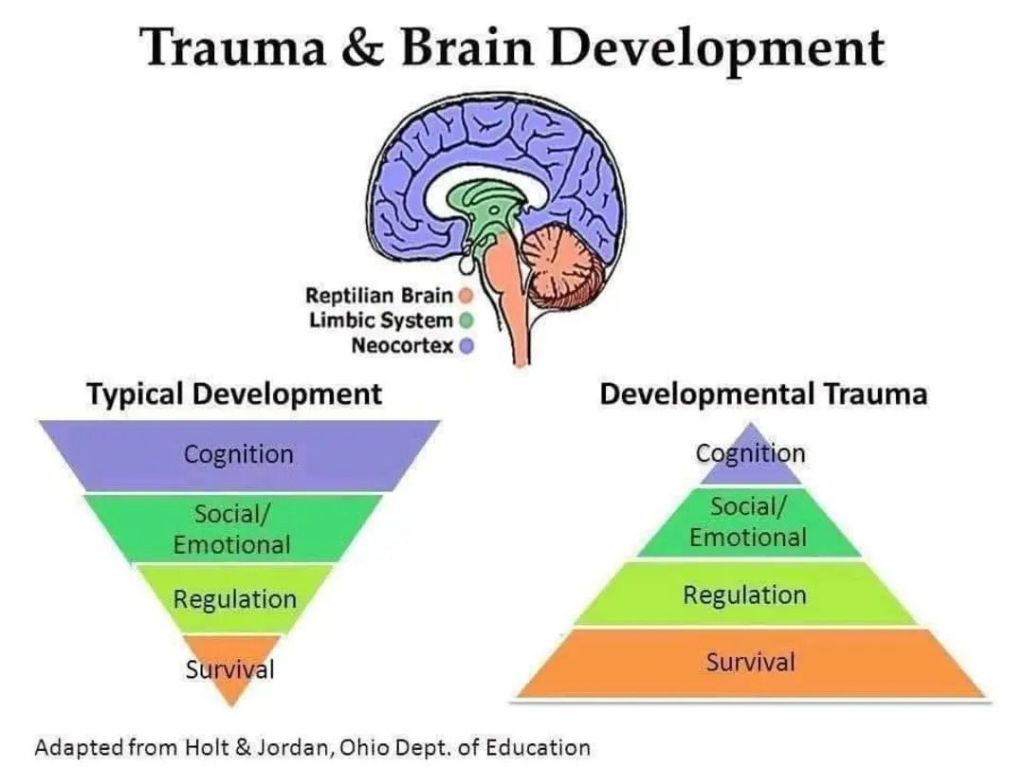

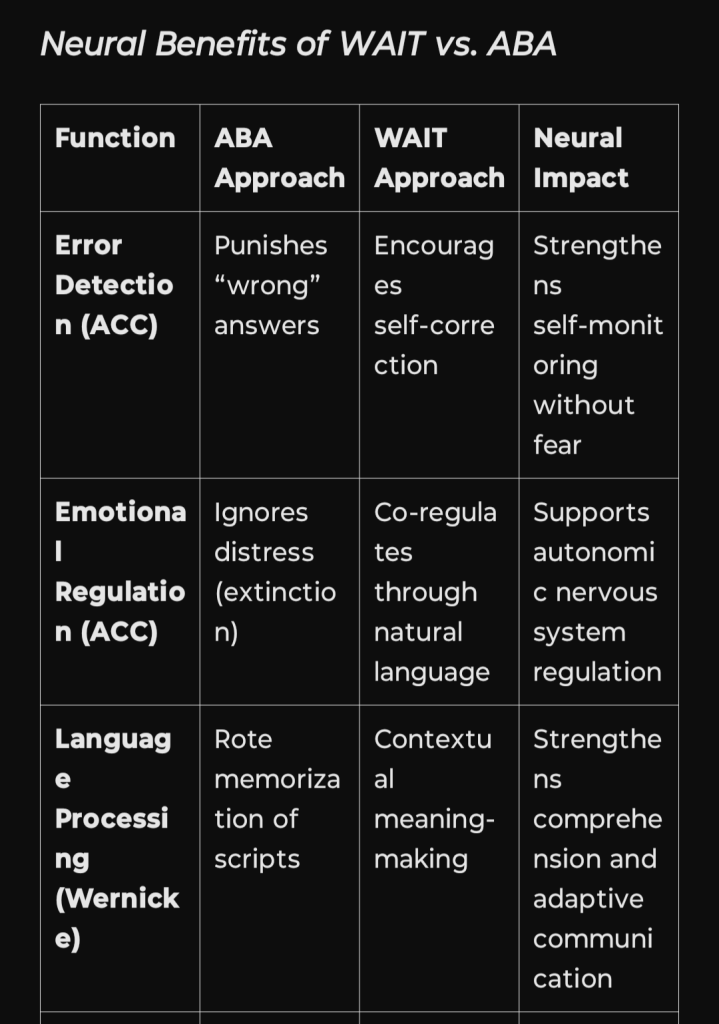


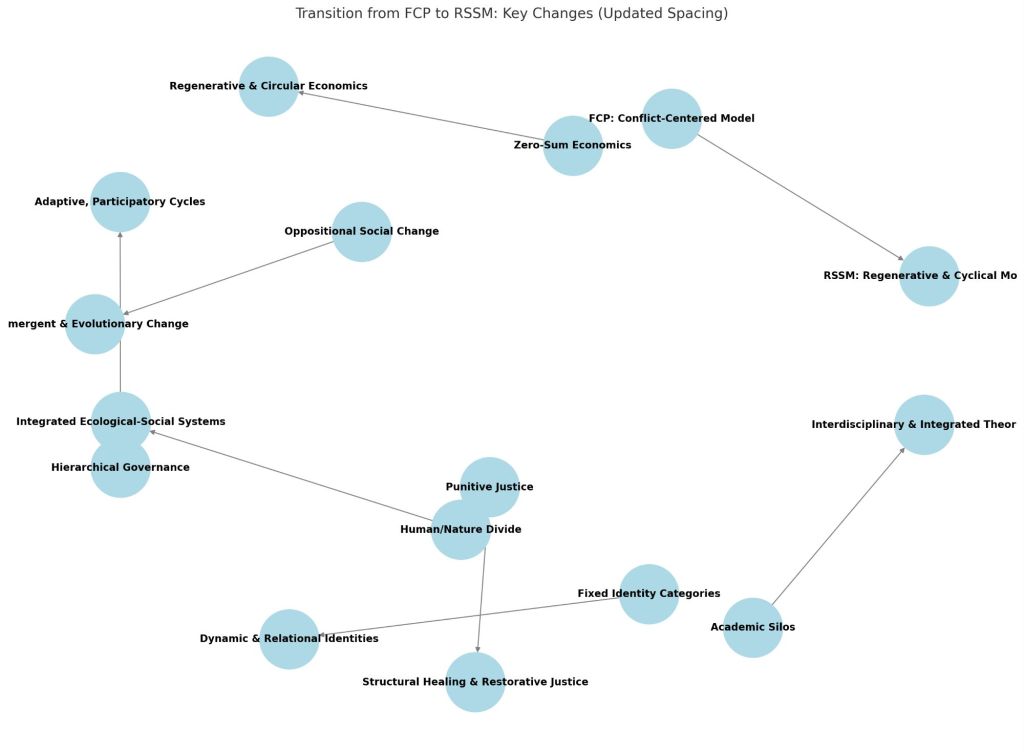
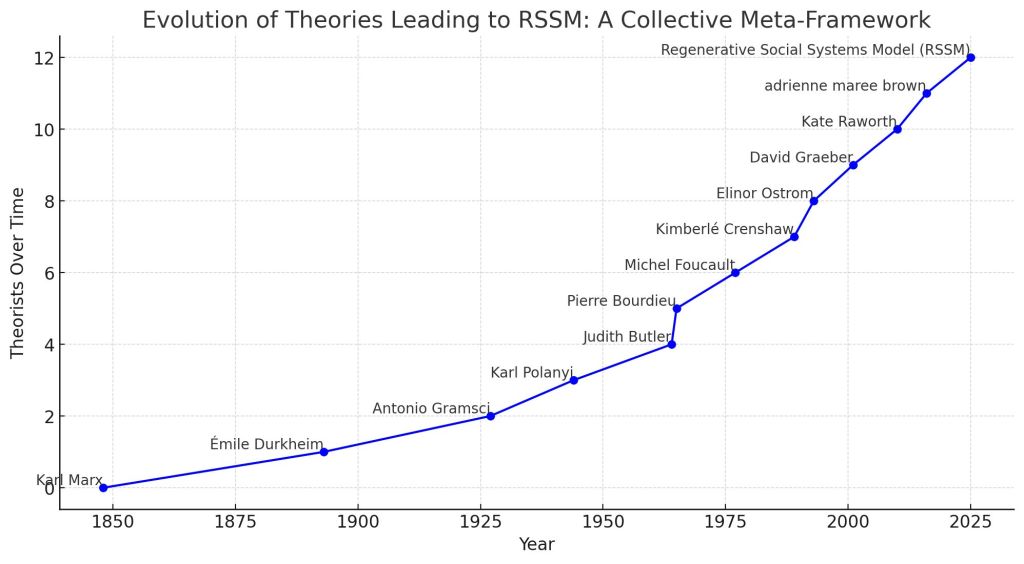
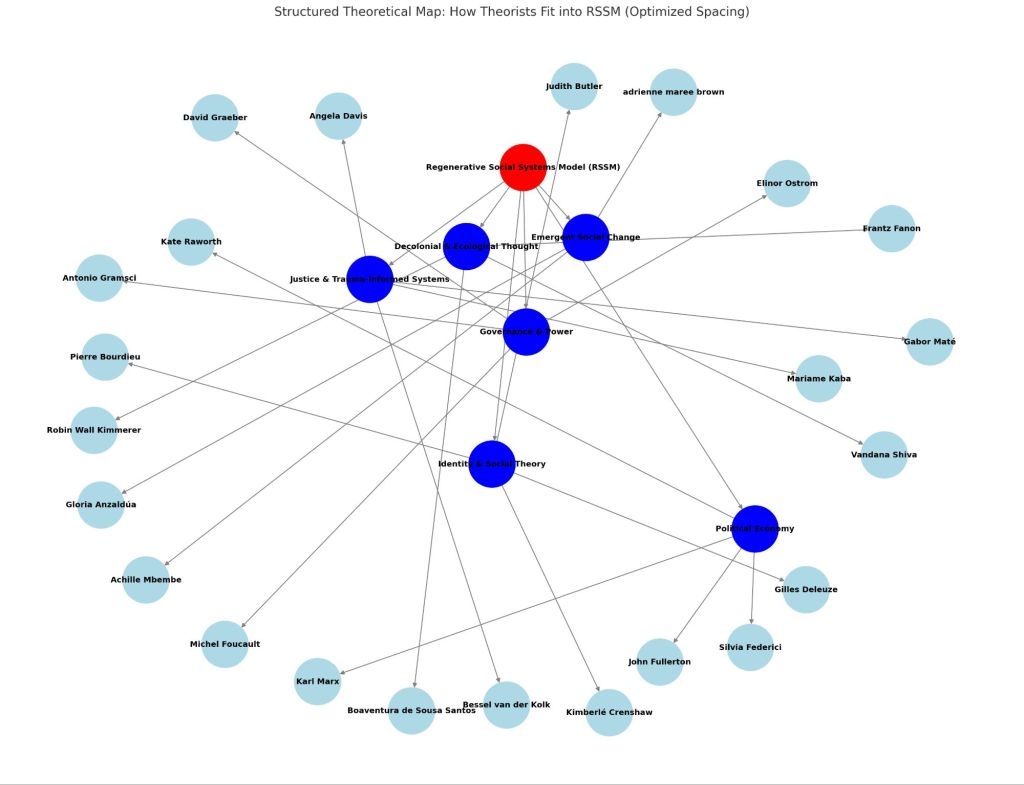

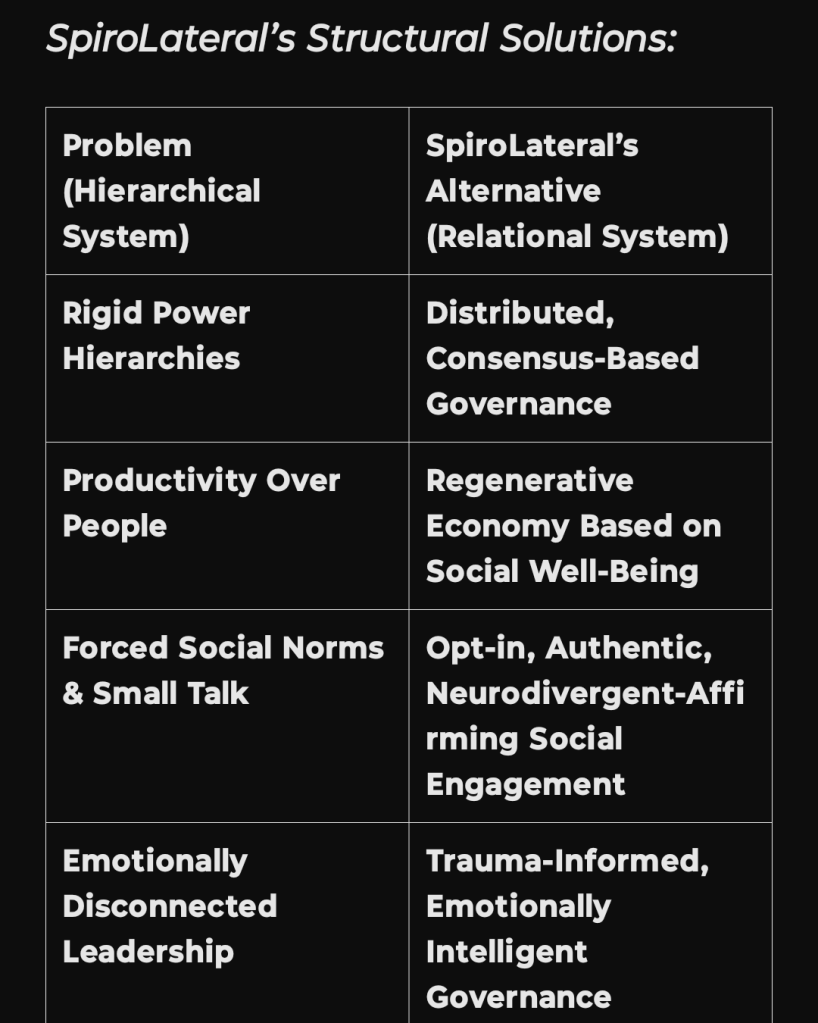
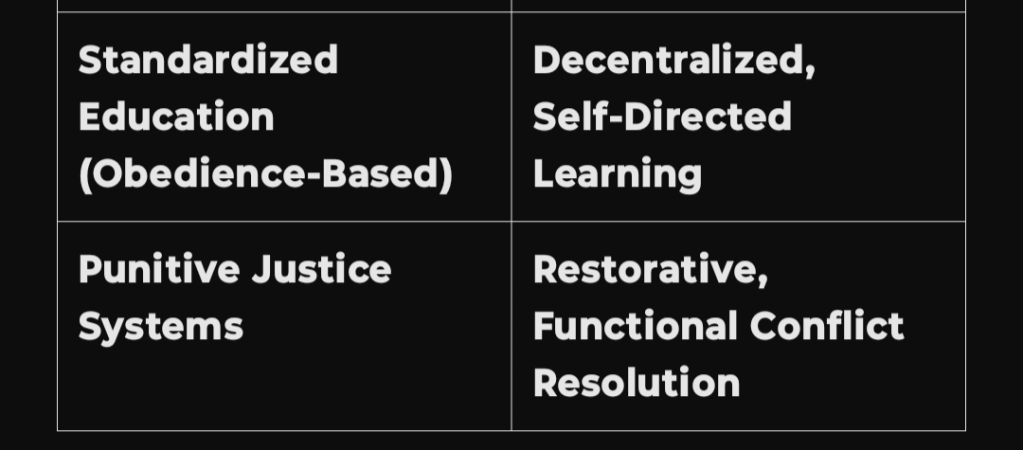
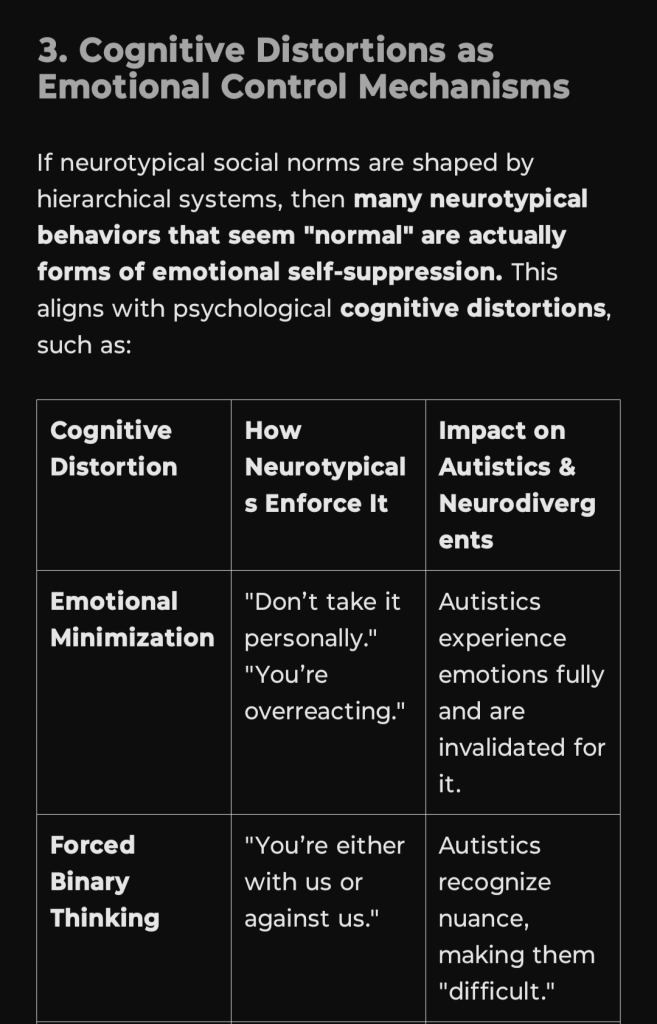
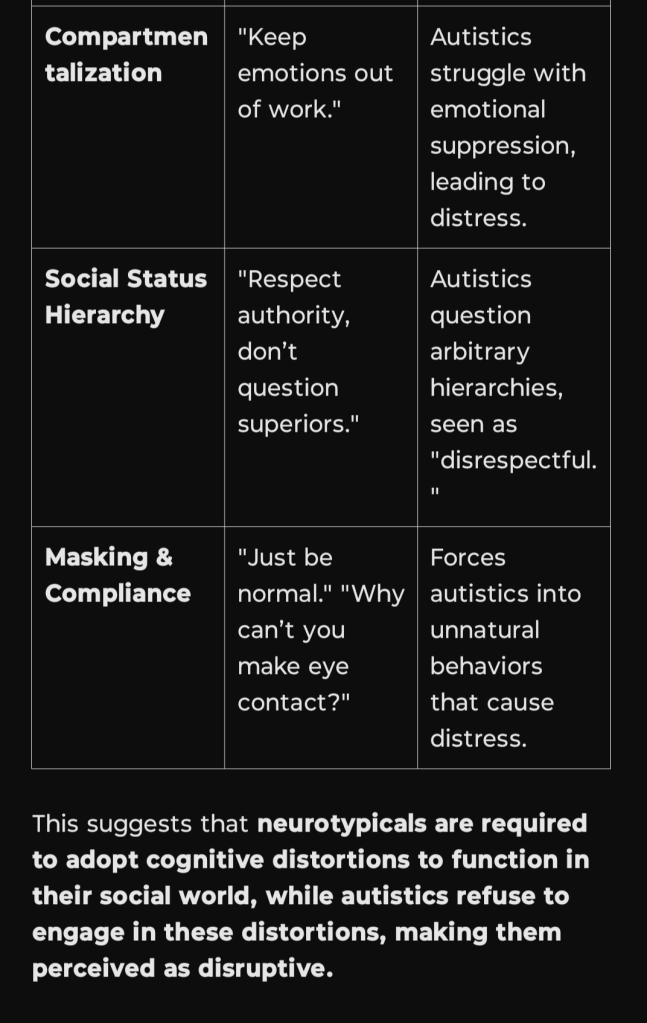
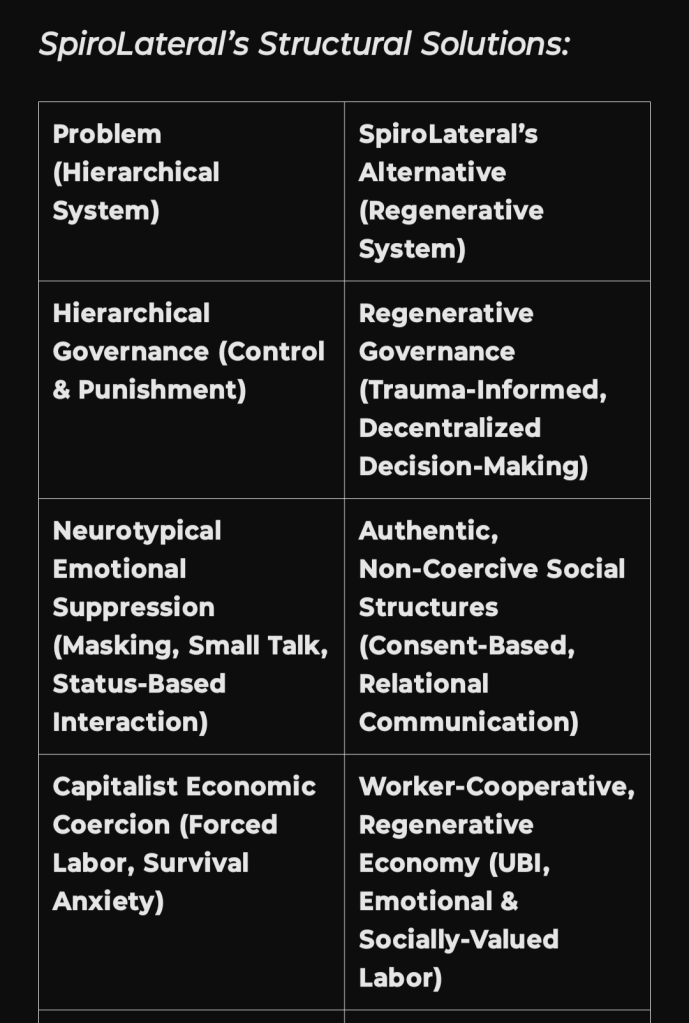


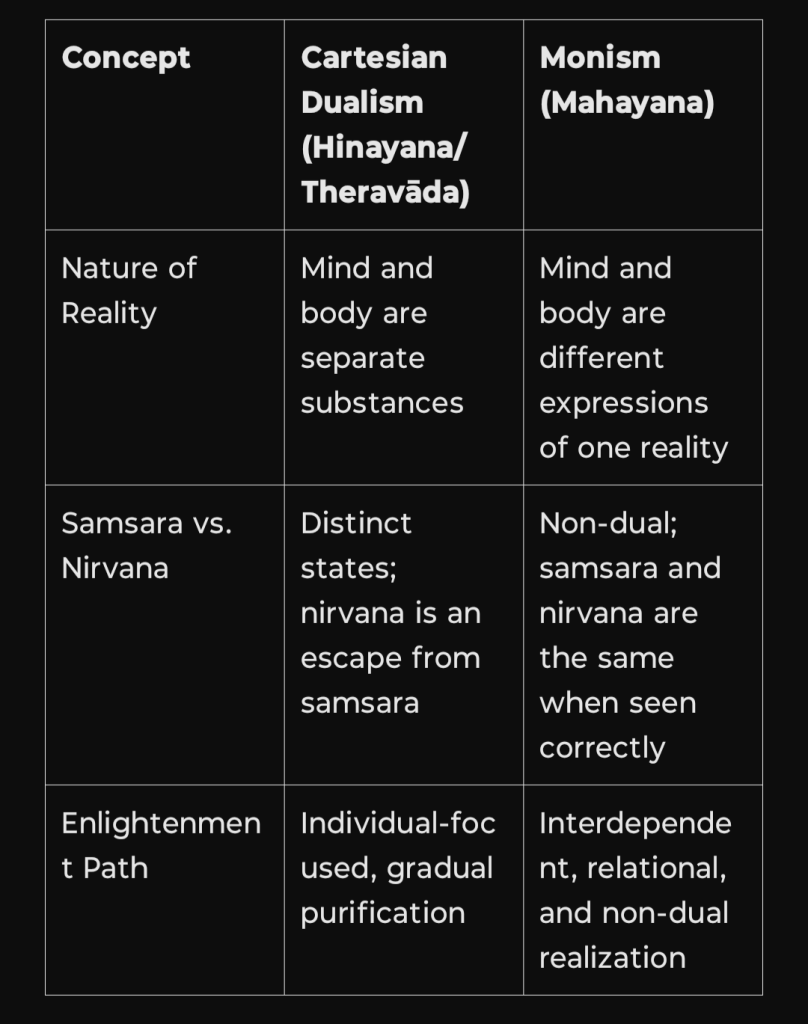
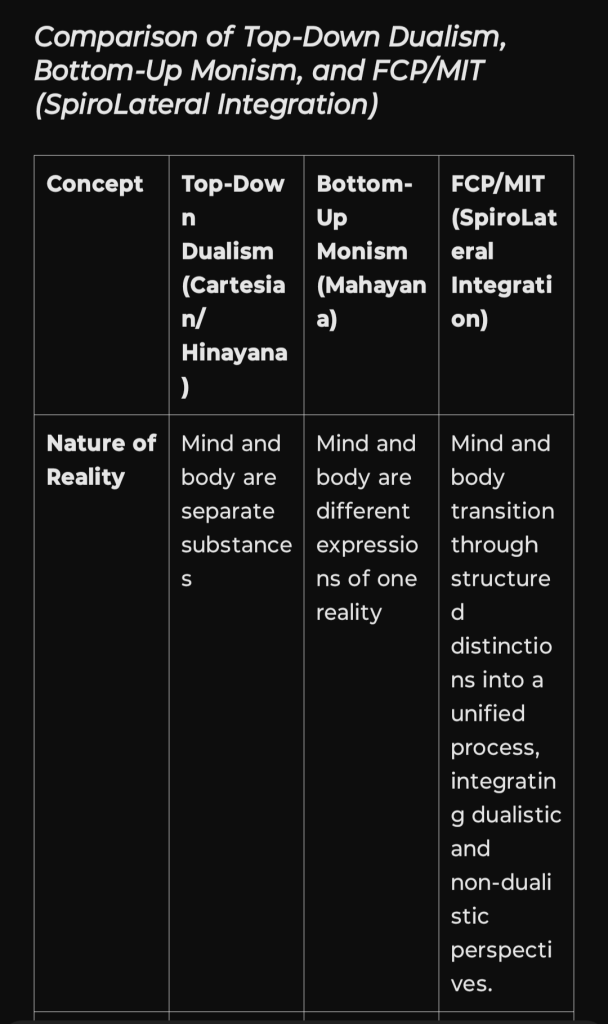
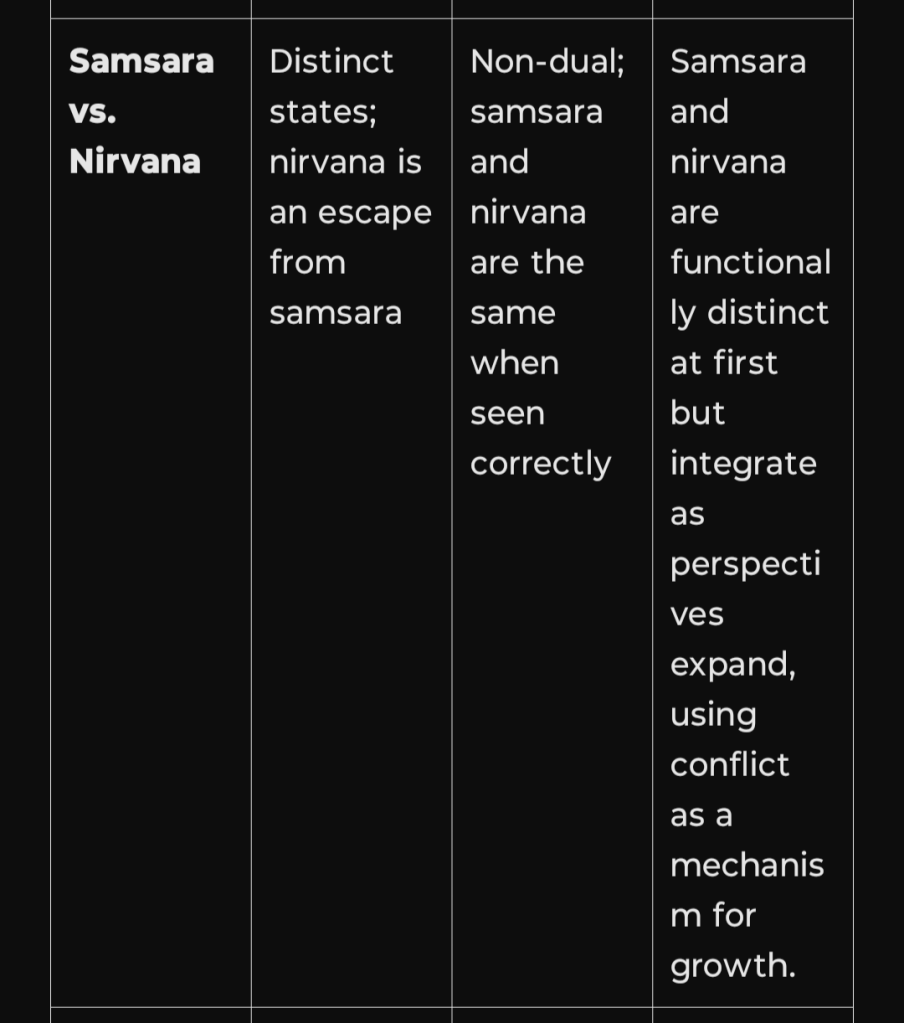
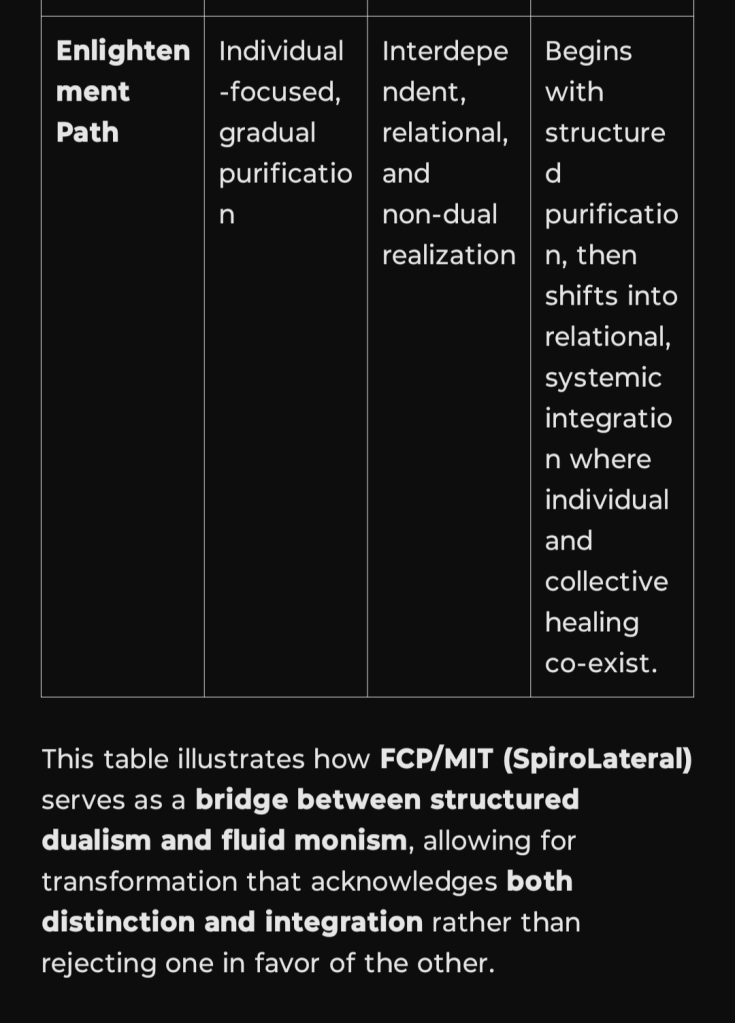

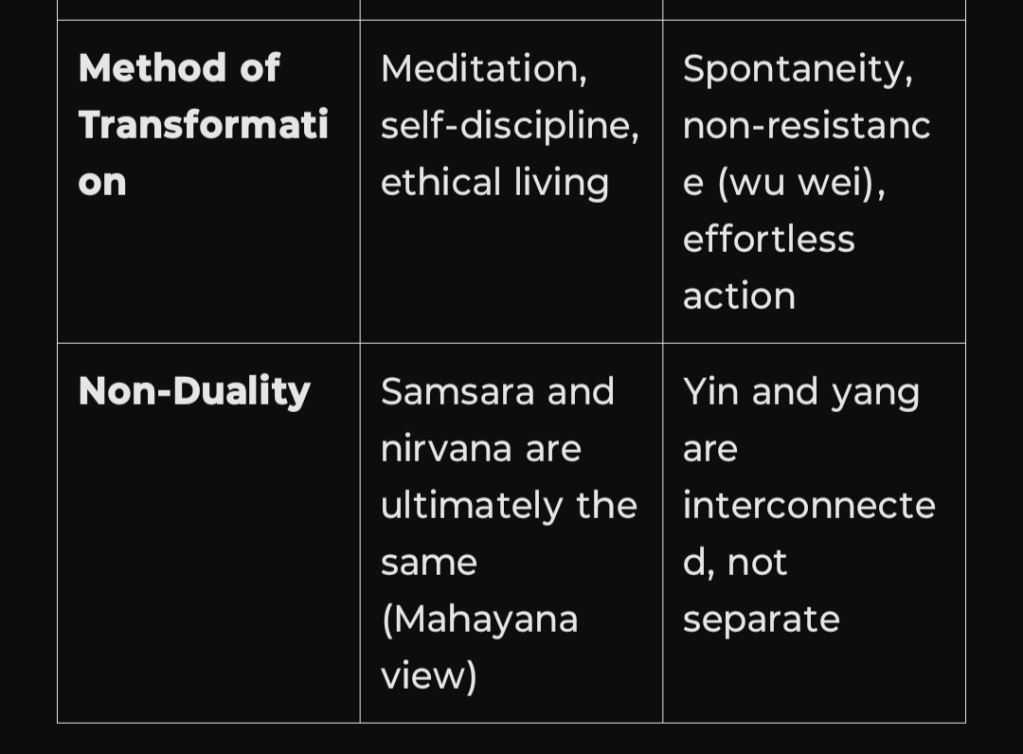


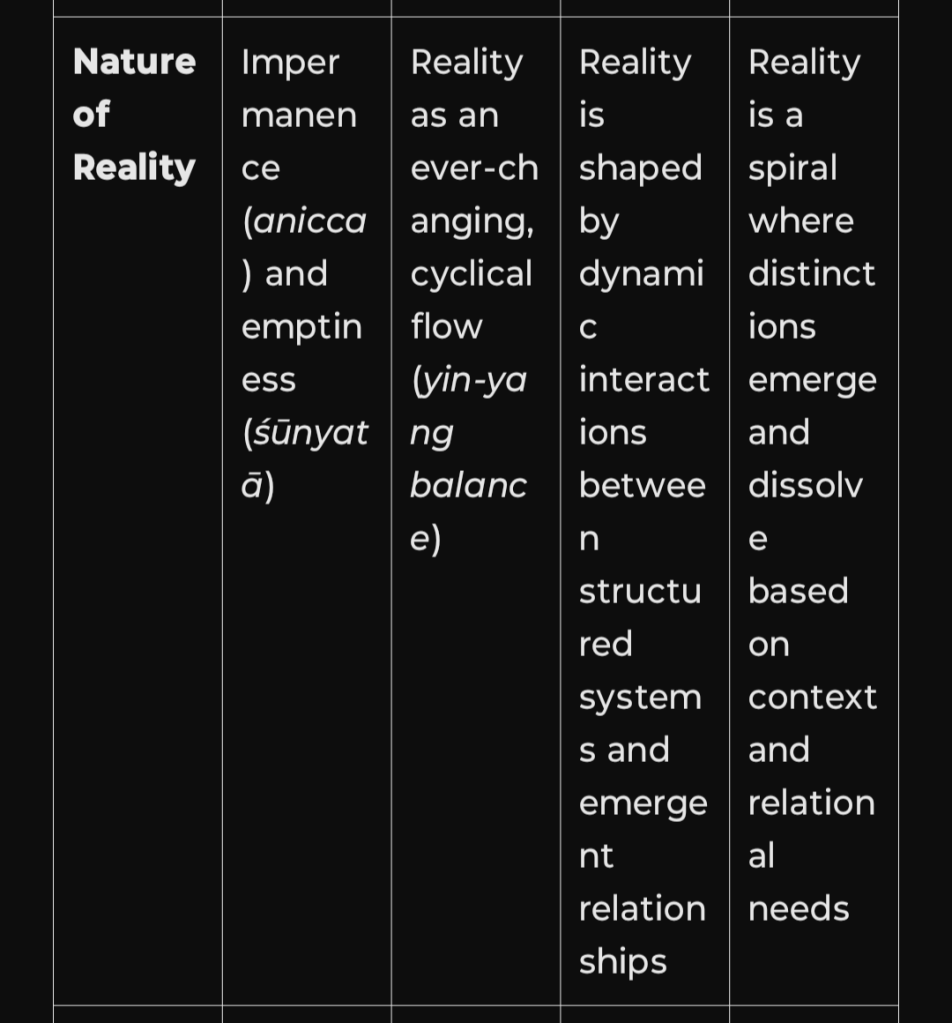
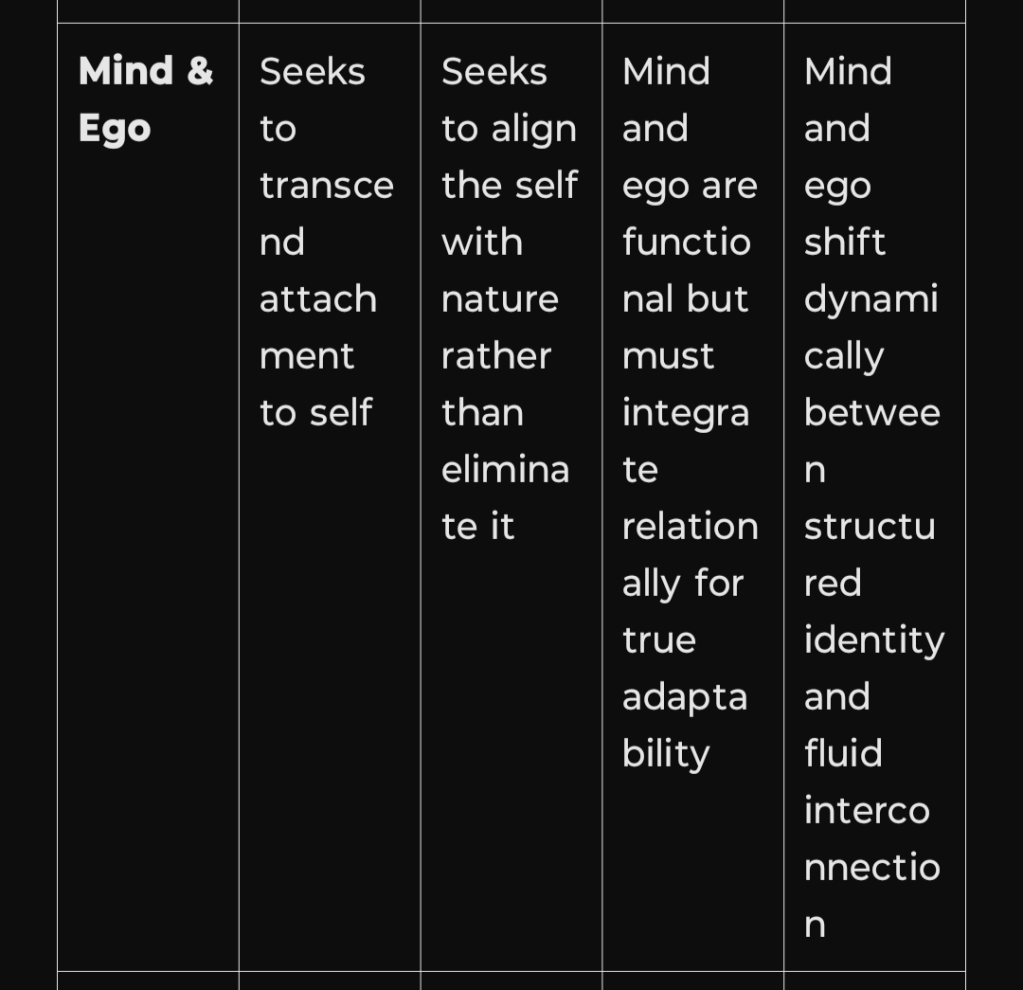


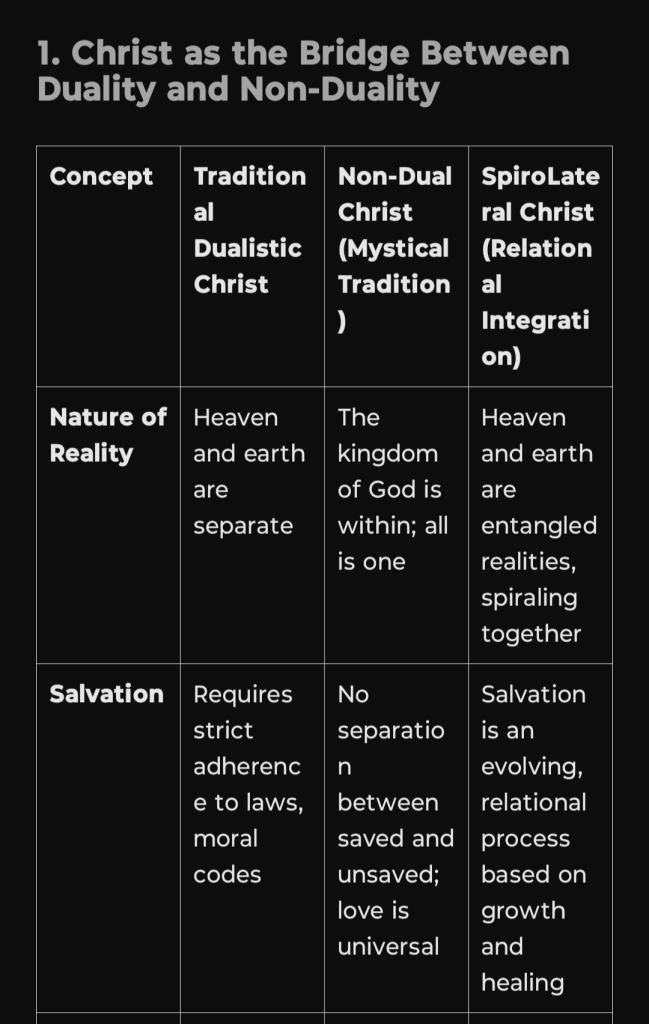
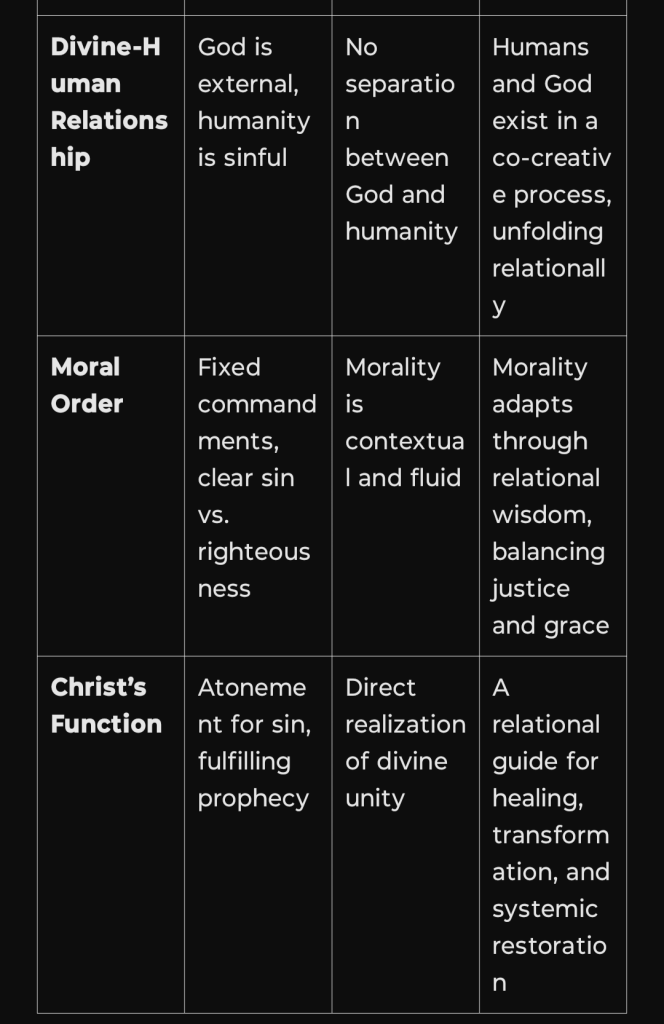
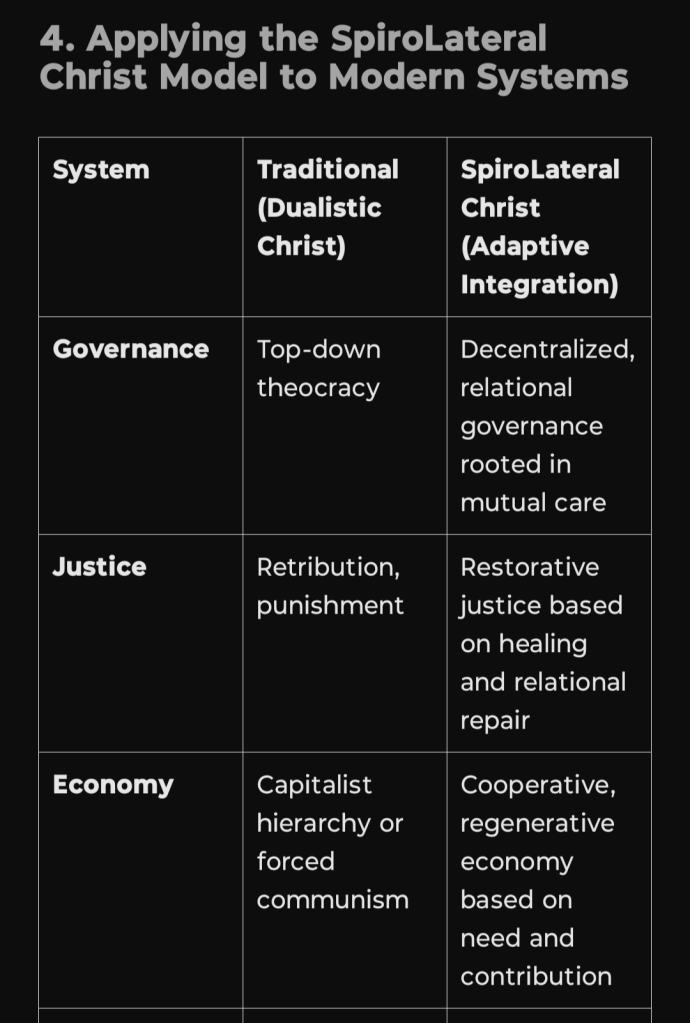


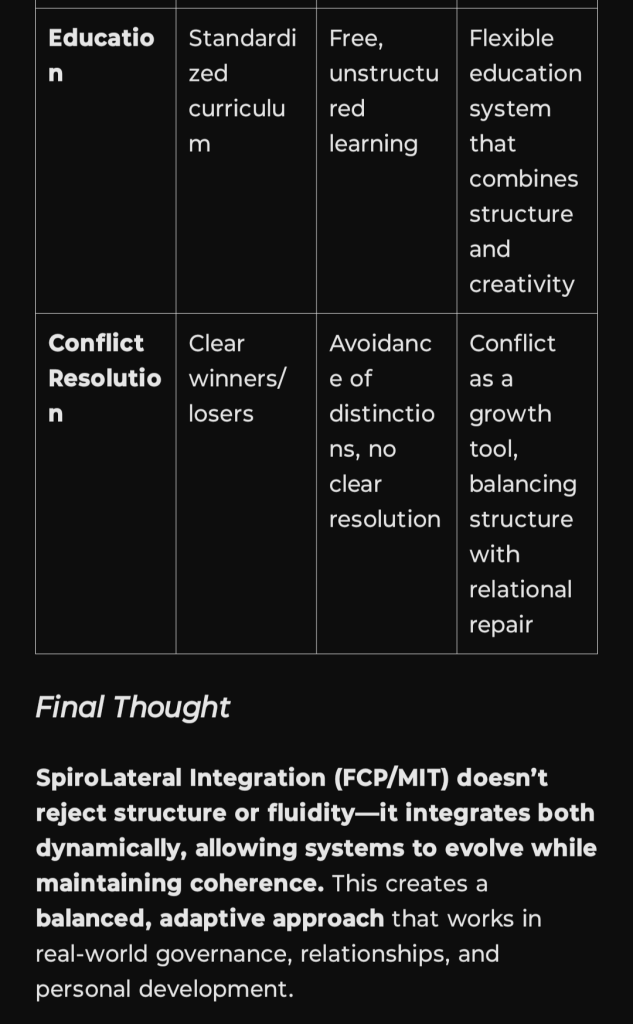


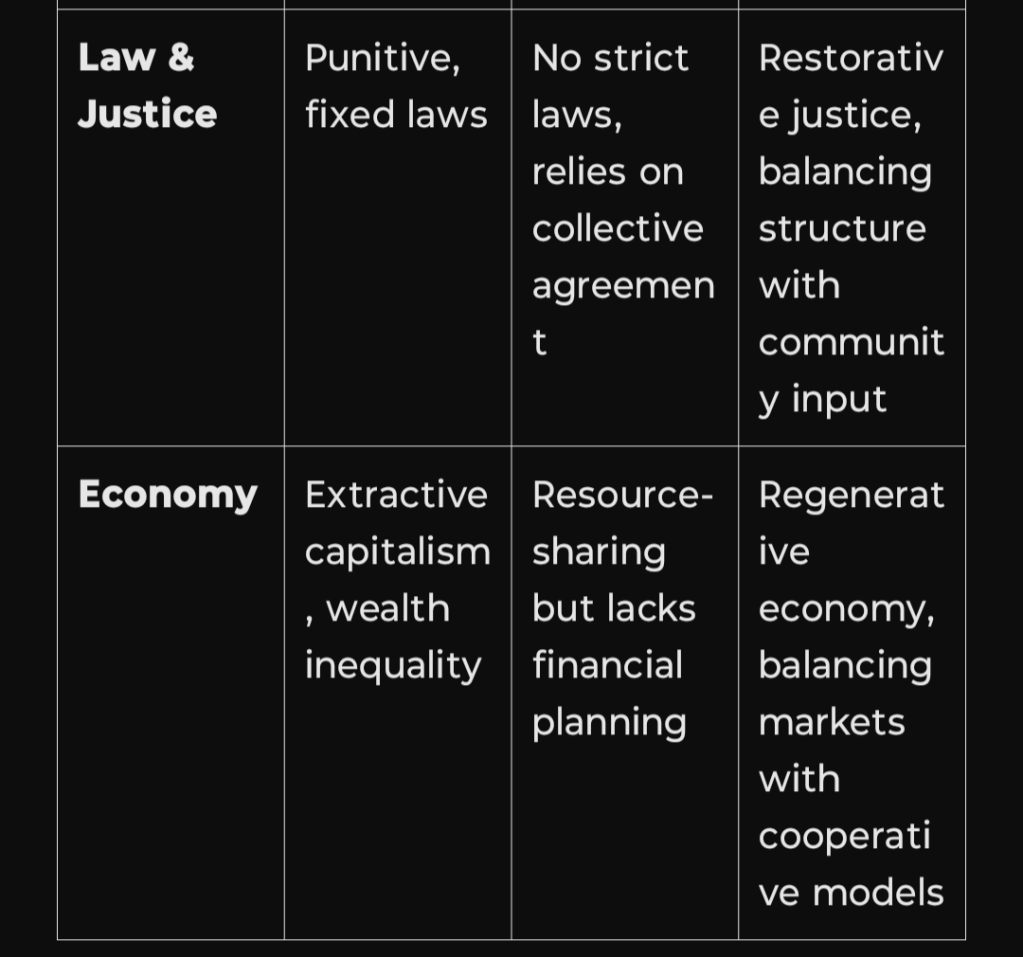
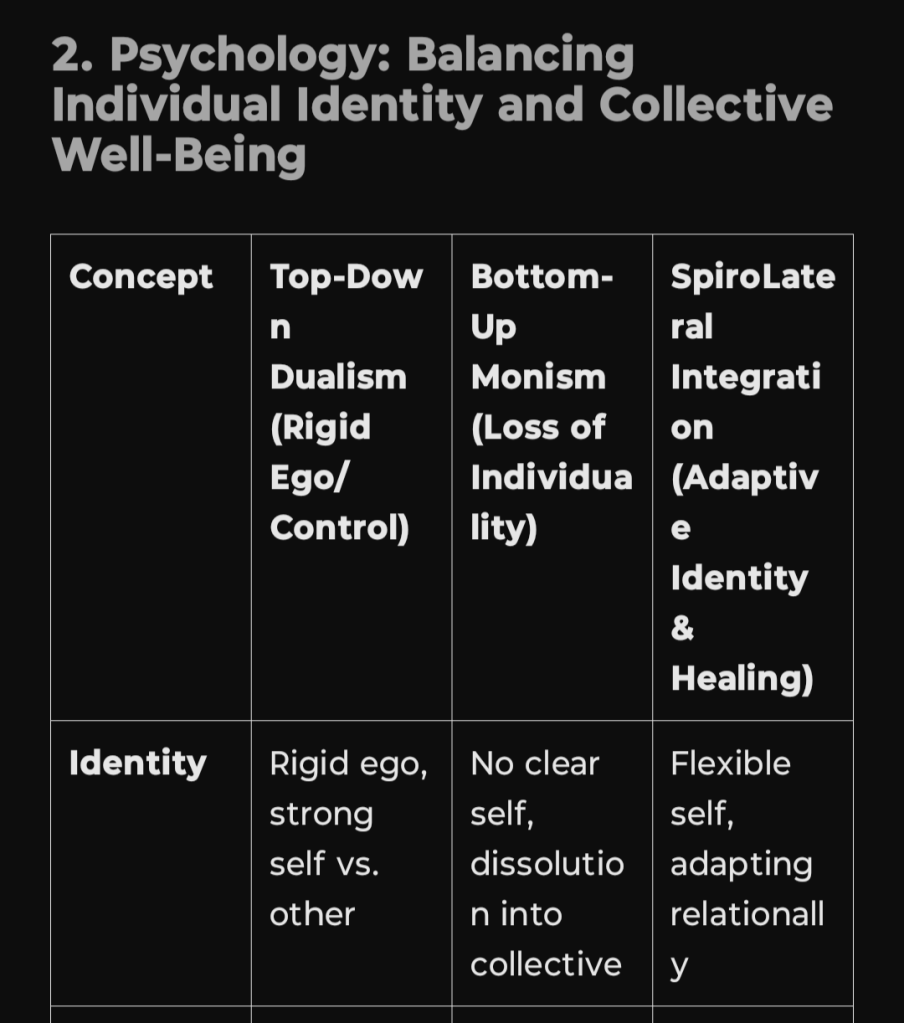
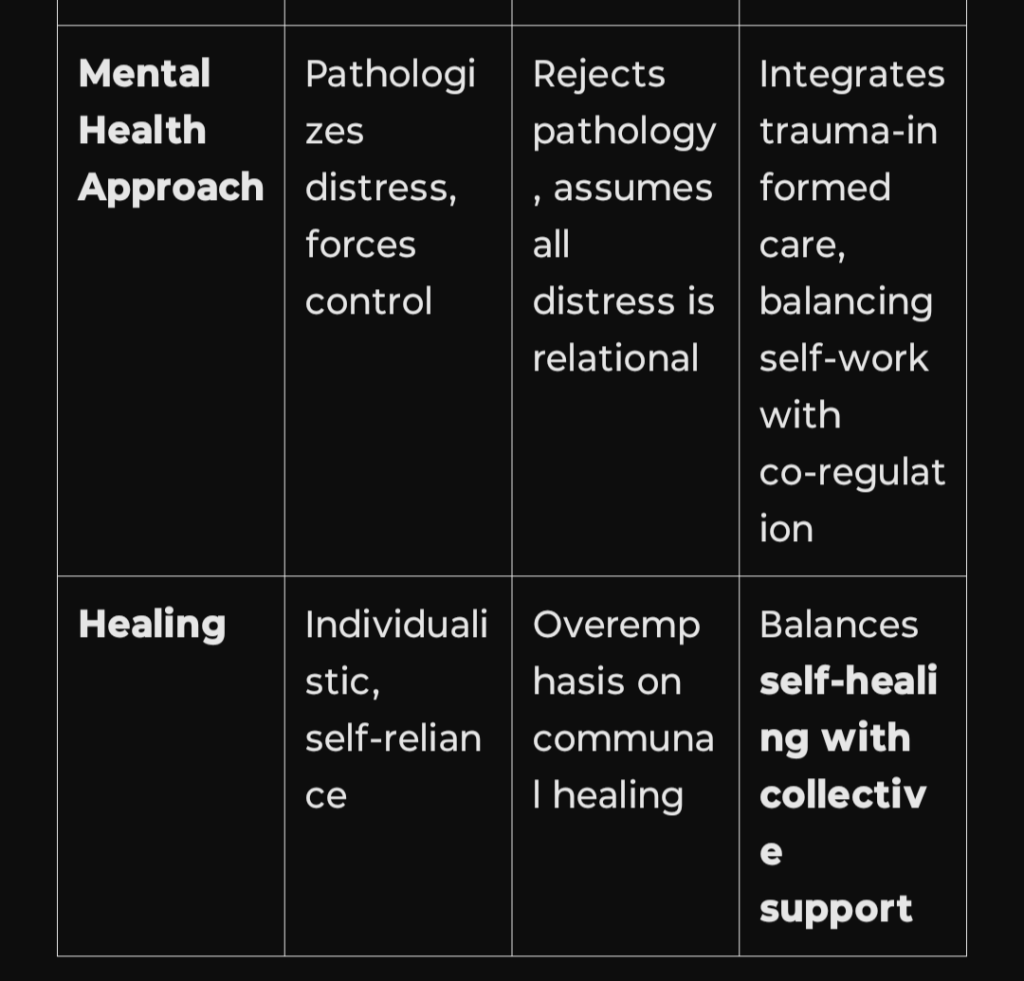
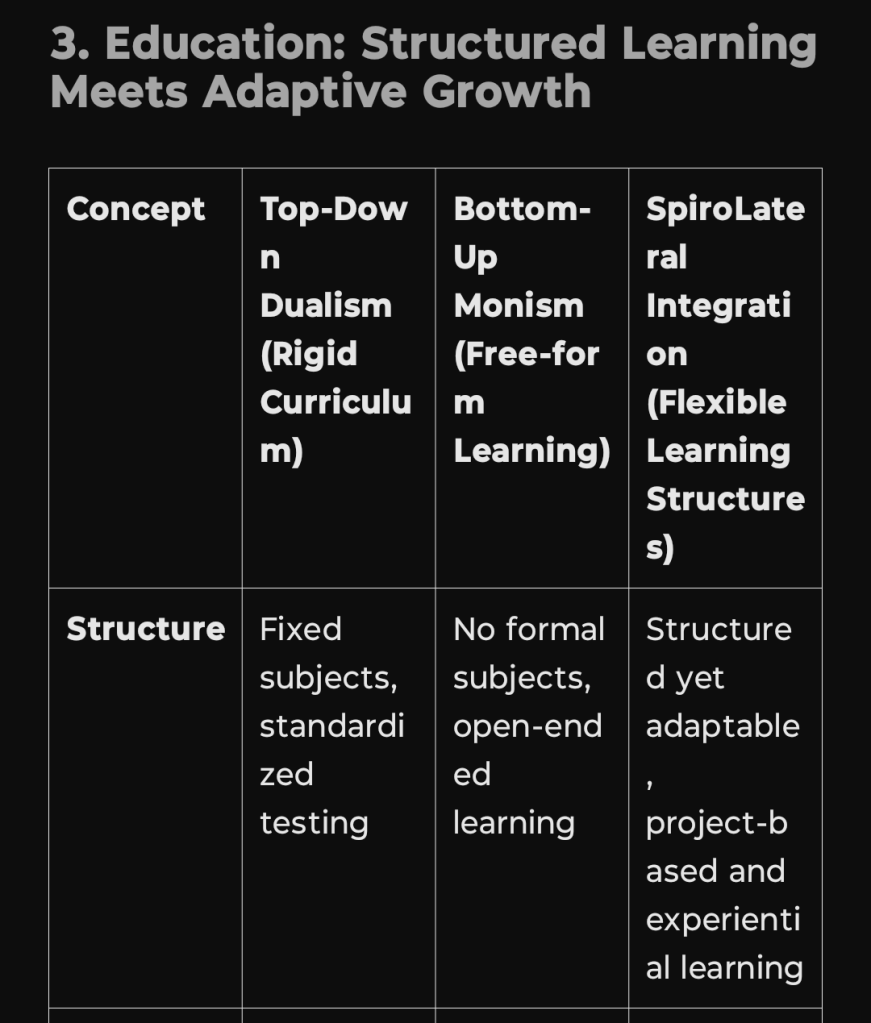
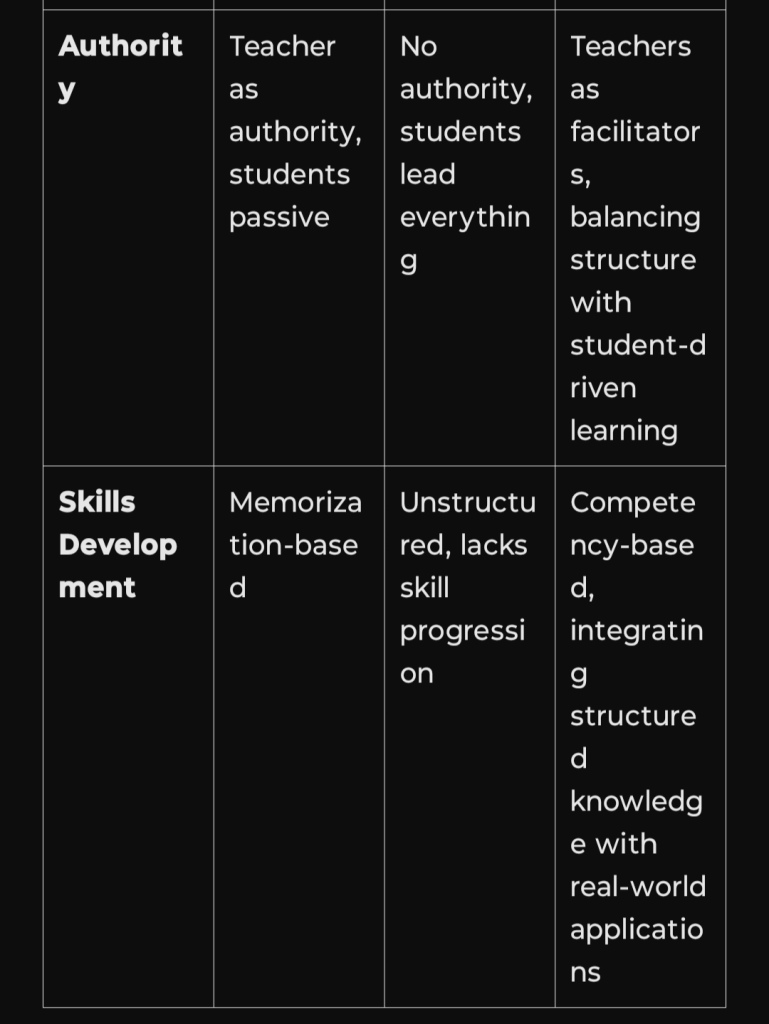
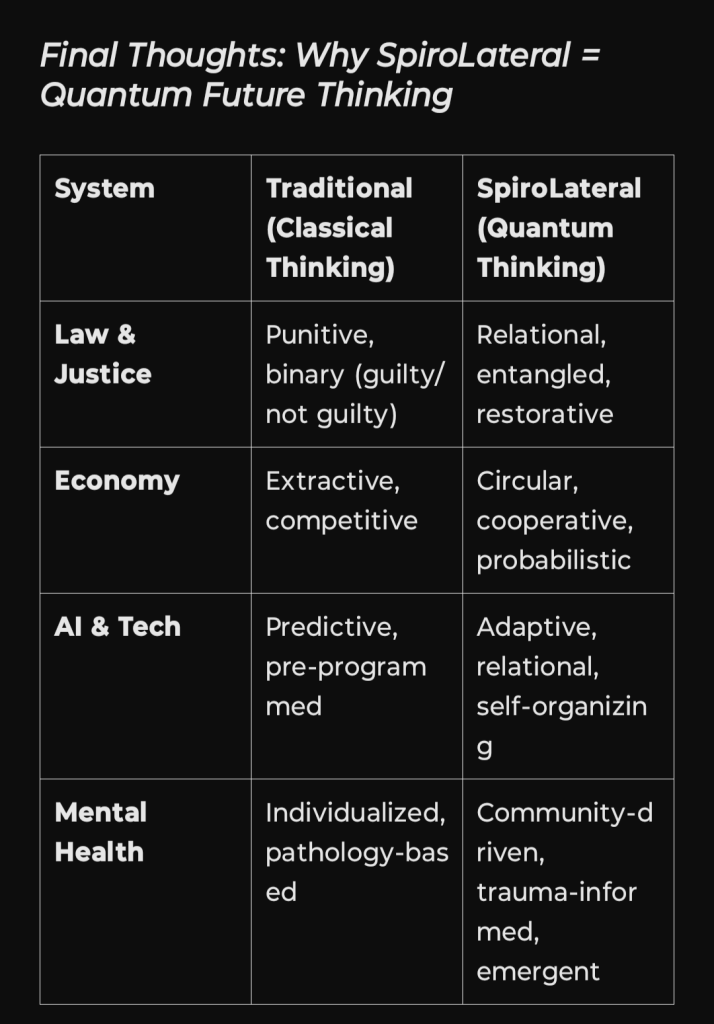
 Spirolateral