In childhood, consistent emotional attunement from caregivers is essential for developing a cohesive, regulated nervous system. When a child grows up in an emotionally unpredictable or unsafe environment, their nervous system adapts in self-protective ways, leading to fragmentation—a process where the child’s physiological states (fight, flight, freeze, fawn) become disconnected rather than integrated.
How Fragmentation Develops:
Hypervigilance (Fight/Flight) → If emotions at home are volatile, the child stays alert, scanning for emotional shifts in caregivers.
Dissociation (Freeze/Shutdown) → If emotional neglect or unpredictability is too overwhelming, the nervous system numbs itself as a defense.
Attachment Confusion → When love and rejection occur unpredictably, the child struggles with relational coherence, leading to anxious or avoidant attachment patterns.
In short, an emotionally unstable home prevents the nervous system from forming a unified, regulated response to stress. Instead, it fragments into separate survival strategies.
The Double Burden: Autistic Children in Unpredictable Homes
If we combine these two frameworks, we see that autistic children raised in emotionally unstable homes faced a double challenge:
Their own natural neurobiological differences made it harder to predict and respond to social cues in a way that neurotypical caregivers expected.
If the home itself was unpredictable, their nervous system had to cope with both the internal dysregulation of autism and the external instability of their environment.
Possible Effects of This Double Dysregulation:
More extreme nervous system fragmentation → Greater shifts between shutdown (dorsal vagal) and hyperarousal (sympathetic fight/flight).
Stronger social withdrawal → Avoidance of unpredictable social situations due to both sensory overload and attachment uncertainty.
Misinterpretation of autistic behaviors as emotional rejection → Caregivers, lacking understanding of autism, might respond with frustration or further withdrawal, reinforcing the misdiagnosis.
By integrating what we now know from Polyvagal Theory, autism research, and trauma-informed care, we can rewrite the framework:
Children in unpredictable emotional environments often fragment as a survival response, regardless of neurotype.
Many autistic children, particularly those growing up in unstable homes, likely exhibited extreme nervous system fragmentation—leading to further misunderstandings of their behaviors.
From Pathology to Understanding
Culture is a learned, shared, integrated behavior. When people or groups of people do not share the same culture (i.e., language), cultural miscommunication can occur (i.e. committing some sort of cultural taboo). As an autistic woman, I have experienced differences in communication between my own neurodivergent and the dominant neuronormative cultural norms for communicating. This is because neurodivergent culture holds separate language ideologies for the modes of communication, such as speech, gesture, touch, and eye gaze. (Ahearn, page 53) Because the neuronormative assigns different meanings to these modes and how they should be used, it results in significant friction between the two cultures unless neurodivergent individuals “mask,” or pretend, to communicate in a more neuro normative socially acceptable form by “code switching” between the two language ideologies.
Linguistic interactions establish a common understanding of what the interaction is about (Ahearn, page 45), but cultural miscommunications occur when no common understanding can be established. For this and other reasons, I believe that cultural anthropologists should explore the intersection between neuronormative and neurodivergent linguistic ideologies more closely. One example of a cultural miscommunication between neuronormative and neurodivergent language ideologies can be found in the concept of “infodumping,” a mode of communicating that is unique to neurodivergent usage. Infodumping involves sharing large amounts of information related to special interest topics, and these streams of thought are generally thought of as the way that neurodivergents exchange pleasantries, similar to the neuronormative practice of small talk. Neurodivergents, on the other hand, usually find small talk uncomfortable and unnatural (see attached image below illustrating this common miscommunication).
In addition to infodumping, the concept of parallel play from childhood is extended into adulthood, where two adults share a common space while maintaining separate activities. This is also referred to in neurodivergent spaces as “body doubling.” Beyond “infodumping” and “parallel play,” other forms of neurodivergent specific modes of communication can include: “penguin pebbling” (giving small, meaningful gifts), “support swapping” (offering emotional support and understanding), “deep pressure” (physical touch like hugs or gentle pressure), echolalia (repeating words or phrases), and using visual aids or alternative communication methods like PECS (Picture Exchange Communication System). (Neurospark Health)
Another mode of neurodivergent communication is the practice of oversharing, which is particularly common to the ADHD (Attention Deficit Hyperactivity Disorder) neurotype due to difficulties in impulse control. Neurodivergents may overshare when they struggle to “read the room” and have difficulty with social cues that indicate discomfort in others with sharing information that might not be socially appropriate to the situation, such as topics considered personal or private according to neuronormative social norms. Oversharing can lead to frequent miscommunications between neurodivergent and neurotypical language ideologies due to the violations of social norms. For instance, I have often used social media as a place to share about the struggles that I am overcoming in life. From my perspective, I am connecting with others through my vulnerability, and it gives me a sense of feeling like my lived experience matters in some small regard. Neurotypical individuals on my feed may perceive me as being attention seeking or complaining, or may just be irritated by my posts because they deviate from their expected norms for social media usage (sharing of accomplishments or basic information exchanges). Neurotypical people often perceive oversharing as uncomfortable, intrusive, or a sign of poor boundaries, as it can feel like someone is revealing too much personal information too quickly, potentially making them feel uneasy or even judged by the person who is oversharing; this can be especially true in social situations where a certain level of privacy is expected. This has been a common miscommunication error when I try to date. I have a tendency to want to escalate things quickly in my relationships, which causes a fear response in potential partners and tends to push people away due to neuronormative relational standards defining oversharing as a red flag behavior to immediately distance themselves from, instead of the separate form of relating and communicating through the lived differences in social and behavioral abilities that the behavior may actually represent.
Some autistic people use spoken language as their predominant method of communication, some are minimally speaking, situationally mute, and some are nonspeaking. A common miscommunication between cultures is the assumption that non speakers lack autonomy, agency, or intelligence. The neurodivergent community assumes competence regardless of individual abilities. For a neurodivergent person, “code switching” means adjusting their communication modes to fit in by mimicking neurotypical behaviors, and generally refers to speaking individuals. Mimicking behaviors or code switching between language ideologies by using conflicting modes of communication can be exhausting and is considered a form of “masking,” a way of imitating others to appear more neurotypical. These frequently unsuccessful attempts at fitting in cost neurodivergents their authentic means of expression and natural ways of being in the world. Neuronormative modes of communication include making eye contact, taking turns speaking, using verbal cues, and relying heavily on unspoken social cues using theory of mind. (Stimpunks) Neurotypicals benefit through privilege that creates imbalances in relational power by requiring their modes of communication to be adapted to in order to fit in with and function in their society.
The paper written by Kristen L Syme and Edward H Hagen titled “Mental Health is Biological Health: Why Tackling “Diseases of the Mind” is an Imperative for Biological Anthropology in the 21st Century” reference an important social problem and gap in communication abilities between neurotypes, the autistic dysfunction of the theory of mind; the cognitive ability to infer the mental states of others and more generally reflect on the connection between one’s own or others mental states and actions. ToM is thought to have evolved in response to social selection pressures and elements of it appear in infancy and early childhood. It is one of the foundations of the social intelligence hypothesis, the idea of social complexity, which is the ability to understand and manage people, and to act wisely in human relations. (Syme and Hagen, p. 101) Opponents to ToM argue that the theories about ToM deny autistic people agency by calling into question their very humanity and, in doing so, wreak violence on autistic bodies. (Yergeau, 2013)
Empirical findings suggest that ToM performance is affected by sociodemographic variables such as age, socioeconomic status, and education, as well as individual difference variables such as intelligence, and executive functioning. (Karoğlu) Autistic and other neurodivergent individuals are statistically more likely to become victims of bullying and abuse, two things I have consistently struggled with throughout my own life, due to deficits in theory of mind that make it more difficult to recognize intentions and emotions of others. (Trundle, Grace, et al., 2022) Abuse is a significant cultural taboo for both neurotypes whether physical, emotional, or psychological, but due to imbalances in power and the cultural privileges experienced because of them, neuronormative individuals tend to be the aggressors in situations involving any type of abuse between the two cultures. Neurodivergents may struggle to recognize manipulative or harmful behaviors, which makes them more susceptible to being taken advantage of. Social isolation, lack of public awareness about autism, and power imbalances also increase their vulnerability to abuse.
Misunderstandings are often used in instances of power imbalance intentionally by the dominant linguistic neurotype to intentionally reinforce cultural norms of communication as a form of microaggression. Microaggressions can be defined as indirect, subtle, or unintentional discrimination against members of a marginalized group. Microaggressions within social relations serve the purpose of reinforcing ideologies that maintain the existing power structures, which continue to serve the interests of the dominant neurotype, and perpetuate the social inequalities experienced by members of the human species who deviate from cultural norms for communication.
Conclusion: A Holistic Model for Understanding Autism, Trauma, and Nervous System Regulation
An autistic child struggles with emotional and sensory unpredictability in their environment.
The nervous system fragments as a response to both internal (autistic processing) and external (attachment instability) stressors.
Autism and attachment trauma together create a double burden that magnifies challenges in emotional regulation, social navigation, and identity formation. While autism itself is not inherently pathological, the social model of disability highlights how environments structured around neuronormative expectations create disabling barriers for autistic individuals. Meanwhile, attachment trauma compounds these struggles by disrupting the development of secure relational templates, making it harder to form trusting connections in a world that already misinterprets autistic cognition. The DSM’s deficit-based framework exacerbates this issue by pathologizing autistic traits—such as differences in communication and social reciprocity—without addressing the social and relational adaptations needed for genuine inclusion. This neglect mirrors the limitations of the psychosocial model, which, while considering environmental factors, still fails to integrate the role of culture and linguistic relativity in shaping how autistic sociality is perceived and valued. Theories of mindblindness have historically misrepresented autistic cognition by assuming an inherent lack of empathy, rather than recognizing a different cognitive processing style shaped by divergent socialization experiences. Cross-cultural research in linguistics and anthropology further underscores how language ideologies—such as the Western emphasis on verbal, explicit communication—frame autistic expression as deficient rather than different. This structural and conceptual misalignment leaves autistic individuals with attachment trauma especially vulnerable to misattunement, rejection, and compounded marginalization, reinforcing cycles of alienation and distress in both personal relationships and broader societal participation.
This topic has immense nterdisciplinary potential.
Works Cited
Ahearn, Laura M. Living Language : An Introduction to Linguistic Anthropology. Third Edition. Malden, Ma, Wiley-Blackwell, 2021. Karoğlu, Nilda, et al. “Theory of Mind in Offending: A Systematic Review.” Trauma, Violence, & Abuse, vol. 23, no. 5, 6 May 2021, p. 152483802110131, https://doi.org/10.1177/15248380211013143.
Syme, Kristen, and Edward Hagen. “Mental Health Is Biological Health: Why Tackling “Diseases of the Mind” Is an Imperative for Biological Anthropology in the 21st Century.” Yearbook of Physical Anthropology, 24 Oct. 2019, pp. 87–117. https://onlinelibrary.wiley.com/doi/10.1002/ajpa.23965.
Trundle, Grace, et al. “Prevalence of Victimisation in Autistic Individuals: A Systematic Review and Meta-Analysis.” Trauma, Violence & Abuse, vol. 24, no. 4, 6 May 2022, p. 15248380221093689, pubmed.ncbi.nlm.nih.gov/35524162/, https://doi.org/10.1177/15248380221093689.
Yergeau, Melanie. “Clinically Significant Disturbance: On Theorists Who Theorize Theory of Mind.” Disability Studies Quarterly, vol. 33, no. 4, 5 Sept. 2013, https://doi.org/10.18061/dsq.v33i4.3876.Rather than viewing autism and attachment trauma as separate phenomena, we should recognize that they intersect when:
Isha Sarah Snow Sociology 102/Social Problems Jenna DePasquale, M.S., A.B.D. February 9, 2025
Memo 1:
Abstract
Colonizer culture, in its endless quest for hegemony, is innately insular. This contributes to social dysfunction, collective emotional avoidance and reluctance to self reflect. This memo provides a new theoretical framework for initiating collective shadow work, combining psychological and sociological approaches to investigate the intersectional social issues that are institutionalized parts of Western colonizer culture.
The social problem that I have chosen to explore further in this memo is the three way intersection between gender, poverty and mental illness, with an emphasis on the latter two. I am approaching these issues using a Functional-Conflict perspective, which is a theory that I have been developing for the past two years. FC blends the sociological frameworks of functionalist and conflict theories along utilizing a framework similar to psychology’s Internal Family Systems Theory, viewing each societal group and their associated issues as “parts” functioning together interdependently within the broader societal system. Integrating systems theory, conflict theory and functionalism results in acknowledging that “negative” social problems ultimately serve a “positive” collective function and greater good by generating social stability and systemic cohesion in response to the tension and friction naturally arising between societal structures and their hidden or ignored social issues, which mirrors how psychology’s IFS exposes and heals the wounds of its exiled parts by acknowledging and reintegrating them. Functional-Conflict perspective avoids viewing social issues in absolutist or polarized terms, instead viewing any friction or conflict between its parts as relational and necessary to creating lasting systemic change and maintaining the resulting increase in social consciousness. IFS uses the word “burden” to refer to a specific characteristic that a part has taken on which doesn’t necessarily belong to the original system; an example of this can be found in an article written by Alessio Rizzo explaining how gendered burdens shape society’s hiding and disowning aspects of its sexuality (Rizzo, 2021). Using IFS and FC, gender inequalities, poverty, racial and ethnic disparities, and any other social issue can be seen through the lens of being a “burden” on the larger human social system, as Rizzo clearly shows, using gender as an example. A Functional-Conflict approach uses this concept of burdens to identify societies unresolved historical traumas and institutionalized biases, applying the IFS technique of supporting a system in addressing the roots of its inequality using non judgment, collective ownership, empathy and curiosity. By unburdening the parts of society that carry the traumas of systemic injustice, society heals itself and experiences greater harmony and cohesion. IFS conceptualizes no parts as being “bad” as all parts are interdependent, each serving an integral purpose. Unresolved conflicts, whether on an individual psyche or collective level, lead to dysfunction and defragmentation; rather than something to be avoided, FC understands that the purpose of conflict is to stimulate growth and culminate in resolution. A Functional-Conflict perspective highlights how micro level social interactions and macro level systemic dynamics are related and interconnected and emphasizes cohesion being integral to survival of a species. It borrows from IFS the idea that broader societal issues should not be pathologized or seen as individual shortcomings but rather as be seen as polarities in need of reconciliation, and acknowledges that unmet needs and systemic inequalities serve a necessary function of stimulating and evolving social consciousness through an ongoing process of recognition and awareness creating friction and tension prior to reaching reintegration and resolution, fostering the restoration of collective balance through the dynamic and fluid process of human adaptation. FC is particularly useful when applied towards investigation of the intersectionality between societal injustices, as it analyzes the commonalities between multiple complex and overlapping parts or issues to identify and address corollary root causes, creating opportunities for rapid cultural reformation and social evolution.
The key structural components at play in the issues of poverty, gender and mental illness are all public issues, which C. Wright Mills termed the sociological imagination (Social Problems, 2012). William Ryan expanded on this, pointing out that “Americans typically think that social problems such as poverty and unemployment stem from personal failings of the people experiencing these problems, not from structural problems in larger society.”
Functional-Conflict illustrates that each social problem is part of a larger system sharing at its roots the same legacy burden which is based in Puritanical and colonial values. The social institutions involved in these issues are the family, community, schools, churches, and healthcare systems, public health programs, governmental agencies on federal, state, and local levels, workplaces and employers, the criminal justice system, and news and entertainment media, all of which shape public perceptions of disparities and inequalities, reinforcing stereotypes and perpetuating discrimination towards anyone not conforming to Western sociocultural norms.
Global poverty has a devastating impact on the lives of hundreds of millions of people throughout the world. Poor nations have much higher rates of mortality and disease and lower rates of literacy. Poverty, gender issues and mental health issues are all massive and interrelated social problems. Our nation spends billions of dollars to address poverty and spends more money than it should on the consequences of poverty, such as increased health expenses, higher crime rates, and many other issues, including mental health problems. (Social Problems, 2012). Gender and ethnic disparities must be addressed in tandem with poverty. For instance, despite society’s reliance on the unpaid labor of women, particularly when systems fall short, employment rates in the state of Maine have not increased for women in the past 20 years, making them twice as likely to experience poverty as men (Davis, 2024). Women are “much worse off than men in poor nations in many ways, so helping them is crucial for both economic and humanitarian reasons” (Social Problems, 2012).
Current findings:
Hermes Trismegistus is famously attributed as saying ‘As above, so below, as within, so without, as the universe, so the soul…’ (Coppenhaver, 1992). This quote can be applied to the phenomenon of a microcosm retaining the qualities of its macrocosm, and all parts of a system retaining the characteristics that make up the whole. Characteristics of the whole can also be changed by its parts, which the Functional-Conflict theory demonstrates. In the article (Whippman, 2012) titled “America the Anxious,” it stated that, “America’s precocious levels of anxiety are not just happening in spite of the great national happiness rat race, but also perhaps, because of it.” The author characterizes the uniquely American relentless pursuit of happiness as an “exhausting daily application of the Declaration of Independence.” The Puritan values that shaped America’s Declaration of Independence emphasized individual liberty, hard work, and a strong belief in self governance. These are reflected in the Declaration’s list of unalienable rights that include life, liberty, and the pursuit of happiness, which in turn has shaped how Americans have come to view contentment as a destination and “happiness as work,” as Ruth Whippman states.
Individuals learn how to interact with others through the process of socialization, which is the way that a culture’s behaviors and values are transmitted to its members. For children, this includes the acquisition of individual prosocial skills, as well as absorption of cultural behavioral norms and belief ideologies. These beliefs include what Ruth in this NY Times article describes as “trying too hard” to find and maintain an elusive state of happiness. Being acutely aware of a lack of something results in experiencing its negative, and holding happiness as the emotional standard culturally negates the validity of every other emotional state, crippling the full spectrum of the human emotional experience. America’s focus on positivity becomes toxic and lacks actual joy when happiness becomes an endless chase with constantly moving goalposts; in this way, a consumerist society socializes its members to have toxic, soulless, and labor driven all-consumptive emotions. These soulless and labor driven Puritanical values define the intersection of all institutionalized inequalities. “As deeply as the patriarchal tree shapes our lives, we are the leaves and not the roots, trunk, or branches. We are too easily blinded by the good/bad fallacy that says only bad people can partake in and benefit from societies that produce bad consequences,” writes AG Johnson (1997). Johnson believed that systemic oppression is fueled by a dynamic relationship between control and fear. Mark Rank said that society views poverty as an individual failing, similar to how Johnson described patriarchy blinding us with fallacies; “the traditional manner of thinking about poverty in the United States has been one of viewing impoverishment as largely due to individual inadequacies and failings. Whether it be that those in poverty have not worked hard enough, have failed to acquire sufficient skills, or have made bad decisions in their lives, the problem of poverty is generally seen through the lens of individual pathology.” (Race and Social Problems, page 93). This article referenced written by Mark Rank appeared in Chapter 6 of Race and Social Problems, where he describes poverty as systemic, pervasive and enduring in Western society due to the values placed on individualism, shaping the way that impoverishment is viewed in American culture and pathologizing it as a personal failing. “These shortcomings include not working hard enough, failure to acquire sufficient skills, or just making bad decisions,” Rank wrote in his article Rethinking American Poverty, and “since individuals are perceived as having brought poverty onto themselves, our collective and societal obligations are seen as limited.” (Race and Social Problems, page 93) These attitudes “foster a lack of political and social will to address the problem itself” (Rank, 2011). Western society depersonalizes and pathologizes the deeper societal issues surrounding mental and behavioral health in the same way that it views poverty as being someone else’s problem. A study by Martin, Pescosolido, Olafsdottir, and McLeod (2007) investigated the social stigma surrounding children and adolescents with mental health conditions and determined that the association of mental illness with dangerousness is a key driver of social rejection, linking behavioral unpredictability with fear. Acker (2006, pg. 454) also attributed the weaponization of fear and other mechanisms used to exert coercive social control with the purpose of achieving compliance as being practices which relate to maintaining structural inequalities such as class, gender, and race.
Just as the issues around poverty surround us all, so do the issues around mental illness and how our culture collectively chooses to ignore the systemic inequalities and stigmatization that results due to internalized fears of divergence from social norms. The Puritan social values of self governance and hard work are the measuring stick used to define concepts of mental illness and poverty, and assume everyone maintains a baseline of perfect health and productivity throughout their lives, but both poverty and mental illness are social problems affecting about half of the population, give or take, at some point when we eventually lose the ability to govern and/or provide for ourselves. Gender issues affect us all, but women disproportionately carry the majority of social burdens for them. One in eight children in North America has a mental health problem, or 13%, according to the Centers for Disease Control. But fewer than 10% receive proper services (Mash, 2022). According to the American Psychiatric Association, more than one in five adults in the US has a diagnosable mental health disorder (Njoku, 2022). The Offices for Disease Prevention estimate that half or one in every two people in the United States will be diagnosed with a mental health issue at some point in their lifetime, but estimates indicate that only half of the individuals affected will actually receive treatment (Healthy People 2030).
Similar to how mental health issues affect a large proportion of the population indiscriminately, “The number of Americans who are touched by poverty during adulthood is exceedingly high. My co-author, sociologist Thomas Hirschl, and I have estimated that between the ages of 20 and 75, nearly 60 percent of Americans will experience at least one year below the poverty line and three quarters will experience a year either in or near poverty. Perhaps more surprising is the fact that two thirds of Americans between the ages of 20 and 65 will wind up using a social welfare program such as Food Stamps or Medicaid; 40 percent will use such a program in at least five years scattered throughout their working age adulthood.” (Rank, 2011) Rank also reports that the reason for such high poverty rates is primarily because during the course of a lifetime, any number of things can happen to people, many of which are unexpected and detrimental—losing a job, a family splitting up, or developing a health problem. Rather than a risk that affects a few on the fringes of society, poverty and the use of a safety net program are events that will strike the vast majority of American citizens. (Race and Social Problems, p. 96) Rank asserts that “the fact that poverty exists in the first place results not from [individual] characteristics, but from a failure of the economic and political structures to provide enough decent opportunities and supports for the whole of society” (Rank, 2011). The responsibility for poverty belongs to society, and not the poor. “The recognition of poverty as a structural failing also makes it clear why the U.S. has such high rates of poverty when compared to other Western countries. It’s not that Americans are less motivated or less skilled than those in other countries, but that our economy has been producing millions of low-wage jobs and our social policies have done relatively little to economically support families compared to other industrialized countries.” (Rank, 2011) Puritan values around working hard, rugged individualism and self governance create the coercive social contract that Western culture adheres to, which in turn influences its social policies and dictate the lack of support most families experience when seeking help from the system when experiencing either poverty or mental illness. Underlying it all is a deficit model based on categorizing human life into hierarchies of social value and varying levels of worth.
In psychiatric anthropology, both illness and disease are considered cognitive constructions based on cultural schemas, which means that the scientific study and deficit model of mental illnesses is itself influenced by the Western culture and belief that some lives matter more than others, which psychiatry originated from. “Cultures as Causative of Mental Disorder” explores the multiple ways that culture can affect how disorders are defined and perceived, and also draws a correlation between the Western cultural view of “child like” behavior and how the West views “primitives,” equating higher social value to cognitive complexity as it relates to productivity, and to the cultural norm of the exploitation of labor being used as social currency. The authors also connect social sanctioning and different types of social controls as playing a major cultural factor in “manifesting and maintaining transgressions in behavior” (Leighton and Hughes, pg 8). This ties directly in with the discussion in the paper “Inequality Regimes: Gender, Class, and Race in Organizations” by Joan Acker, who addresses hierarchical structures and organizational systems as one core aspect which maintains the system of inequalities (Acker, 2006).
Kleinman wrote in “Culture and Depression” that while depression exists universally, the ways that it is expressed and interpreted varies widely,. He described how Chinese depression is experienced somatically and as physical symptoms, in contrast to Western psychiatry’s description of emotional and behavioral expressions. In the article “Studying Mental Illness In Context: Local, Global, or Universal?” Byron Good recounts how Western psychiatric models often overlook sociocultural dynamics and societal interpretations of mental illness, which shape how disorders are defined, treated, experienced and recovered from (Good, 1997), similar to how societally normalized victim blaming views shift the burden of poverty off of the system and onto the individual (Social Problems, 2012). Edward Hagen’s paper “The Functions of Postpartum Depression” challenges PPD as a dysfunction, and instead advocates for PPD as an evolutionary adaptation serving as a function which signals a need for increased social support. His theories of depression as a culturally evolved response to adversity parallel the Functional-Conflict perspective, which views tension and conflict between interdependent systemic parts as serving the basic function of communicating unmet needs that require the system’s immediate attention and resolution (Hagen, 1999; Hagen, 2011).
Using a Functional-Conflict framework and applying the concepts of IFS, I would first identify what qualities the social issue(s) has/have. I would then identify the burdens of the people experiencing that issue, and how those burdens might be contributing to scripts that perpetuate toxicity or inequality. I would then systematically address the burdens by addressing biases and the institutionalized social rewards keeping them in place, and then work towards resolving conflict by reaching collective agreement on a need for change from all parts involved, shifting and letting go of the legacy burdens that belong to our outdated and dysfunctional cultural norms.
For example, in addressing the issue of poverty, I would first look at what the current academic literature and findings are reporting, and note any common ideas, trends or patterns. From the connections drawn between the articles that have been referenced in this paper, I would categorize poverty as 1) a structural failing that is individually pathologized, 2) something that can affect anyone at any time, 3) something that affects nearly everyone at some point, 4) something that is not being adequately addressed on a systemic level. In addressing the connections made between articles on cultural approaches to mental illness, I would also identify that mental illness is 1) a structural failing that is individually pathologized, 2) something that can affect anyone at any time, 3) something that affects nearly everyone at some point, 4) something that is not being adequately addressed on a systemic level. A noteworthy example of both the first and fourth social issues listed can be found in the childhood mental diagnoses of oppositional defiant disorder and/or conduct disorder, which describes symptoms of children acting out in rebellion and in opposition to authority, displaying aggressive and antisocial behaviors that violate the rights of others with little regard to the consequences of their actions. What this culturally sanctioned pathologization of childhood behavior fails to take into account is how these are fairly normal responses for a child who has been parented through coercive control, which involves repeated violations of a child’s own rights and autonomy. It is also typical for the nervous system to be having a stress response while attempting to exist under a controlling power structure, such as in our current political, governmental, administrative and institutionalized public and social systems which in many cases, is reflected in our culturally sanctioned parenting practices as well. The authoritarian pathologization of child behavior of scapegoating children due to modeling their behaviors after their adult caregivers is symptomatic of victim blaming or “crab bucket” mentality, a metaphor for the human social contract, where crabs keep pulling each other back in a bucket, alluding to how people fail to help each other under a dominion and dominance based system. This “me first” individualism explains the cultural phenomenon of parents who seek a diagnosis and treatment for their children instead of self-reflecting on their own rejected and ignored parts.
Children, who never self refer for treatment, are blamed for their behavior issues which likely result from a combination of these neglected parts: early attachment trauma, poor parenting methods, inconsistent discipline, high conflict homes, and living in poverty (Mash, 2022). All of which are reflective of larger systemic issues (rejected parts). Pathologizing child behavior or mental illness in general fails to take into account that crabs do not naturally occur in buckets, and people do not naturally occur in authoritarian systems based on power and control. “Kids who are described as hard to handle are often resisting the tendency of adults to treat them as things to be handled,” said Alfie Kohn.
Having identified that poverty and mental illness as social issues both share the same basic qualities (parts), I would locate and name any commonalities between the parts. For instance, what is the relationship between these four things: 1) a structural failing that is individually pathologized, 2) something that can affect anyone at any time, 3) something that affects nearly everyone at some point, 4) something that is not being adequately addressed on a systemic level? Do these parts indicate a broader pattern? These qualities may indicate abuse, neglect, entitlement, the systemic avoidance of responsibility, a cycle of learned helplessness, and may also indicate patterns of behavior motivation using shame or blame. Testing these qualities against other social issues will indicate the saliency and validity of the labeled parts; in the case of gender and women’s studies or race, patterns of learned helplessness, systemic avoidance of responsibility, as well as the use of shame or blame to modify behaviors and maintain inequalities all still apply. If we externalize these shared parts onto any given individual’s personality, these traits would all resemble symptoms which are typically associated with a diagnosis of narcissism, or with toxic and red flag behaviors, indicating a sickness or corruption within the system itself. These traits are also associated with colonialism, the practice of using stolen labor and resources to generate wealth. After listing the basic traits (or “parts”) of each social issue, naming any shared qualities the traits may have, and investigating any overlapping areas of interest, we have identified the friction or conflict in question; in this case, the key structural components of society and the social institutions involved in Western society retain narcissistic traits and behaviors due to parts of a system retaining the essential qualities of that system. These institutions include the family, community, schools, churches, and healthcare systems, public health programs, governmental agencies on federal, state, and local levels, workplaces and employers, the criminal justice system, and news and entertainment media.
Identifying the social conflict at its roots exposes a common denominator; violation of a key element of the capitalist social contract, the ability to produce wealth and contribute to the economy through labor or skills. We can further extrapolate that burdens serve a functional purpose through weaponizing shame and fear of burdens in an attempt to coerce society’s members into agreeing to the terms of the social contract. The social contract is a form of control that forces society members to trade their freedom and autonomous rights to self govern for limited protections that could be lost at any time and a false sense of security that is used as a weapon. A social contract is an agreement that defines an individual’s rights and responsibilities in society, and the capitalist social contract only benefits and extends to those who agree to be controlled by it, and whose labor or talents are exploitable. This shared and unspoken social script surrounds every narrative on systemic injustice and inequality. It classifies individuals by type, and vilifies members of marginalized groups by extending the benefits of society only to the members who have the ability to contribute to the system through access to capital. The capitalist social contract creates a shared social script based on a classification of human beings that results in a hierarchical authoritarian power structure which informs social norms and relational dynamics. Dividing and classifying individuals based on their abilities to produce wealth manifests itself on a micro relational level as public perceptions depicting the mentally unwell as “choosing” not to overcome their condition and being “weak willed,” and portraying people living in poverty as being lazy. One example of this macro systemic hierarchical power structure manifesting itself on an individual micro relational level behaviorally is when an individual uses boundaries as a form of control or as a way of maintaining power in the relationship. Oppressive social contracts penalize individuals who do not adhere to their assigned roles, placing burdens and/or social sanctions on those unable to follow scripts and rules or play the social game properly, and treating resultant suffering as individual failings instead of the greater moral and societal issue that it is. Actual rights only exist in a system where they can’t be lost, and where no one has the power to take them away. Carl Jung once said, “the classification of individuals by type means nothing at all” (Evans, 1964, page 23). The lines between abnormal and normal, healthy and unhealthy are entirely arbitrary (Mash, 2022) and culturally defined, which means they could be evaluated for their usefulness and redefined at any point in time.
Oppressive social contracts lead to a systemic failure, meaning that Americans do not have unalienable rights, they have conditional privileges that exist dependent on collective conformity and adherence to the social contract, on individual social, emotional, physical and cognitive abilities, as well as on characteristics such as gender, race, ethnicity, income level, and so on. “There’s a fundamental distinction between who loses at the game and why the game produces losers in the first place” (Rank, 2011). “Given that the game is structured in a way such that players are bound to lose, these individual attributes only explain who loses, not why there are losers in the first place. Ultimately, there are simply not enough chairs for those playing the game” (Rank, 2011).
This leads to the question of who is controlling the seats at the table, and why. For logic and reasoning purposes, Functional-Conflict relies on Occam’s Razor (the simplest explanation is the best one) and Hanlon’s Razor (never attribute to malice that which can be adequately explained by neglect), which means that FC assumes good faith and rejects unnecessary complexities to make clear and straightforward claims. Having identified that the conflicted part that is causing social friction within the system is as coercive control, I could explore the many ways that coercive parts show up within the system, indicating further saliency. For instance, I would note that in regards to gender issues, patriarchy puts women in the position of needing men, whether they really want them or not. In regards to poverty, a system that puts a price tag on basic human rights puts a coercive price tag on survival, weaponizing poverty as a form of violence against its own citizens. The legacy burden that has been identified here is pervasive and systemic coercive control.
FC would then identify the other burdens associated with being impoverished, a woman, and mentally ill, and where these burdens might overlap. Comparing the categories, I would see that mental illness, gender issues and experiencing poverty share mutual burdens in the areas of basic needs insecurities, social stigmas and barriers to opportunity, increased psychological and emotional stress, health challenges, limited access to resources, reduced life expectancy, educational and developmental delays, and strained personal relationships. They both also involve risks of getting stuck in a self perpetuating cycle. Identifying the existing issues within the common sociocultural narrative that result in barriers to an individual’s abilities to live a life of liberty and pursue happiness is a prerequisite first step to changing the rules of the game to ensure that the fundamental rights described in the Declaration of Independence are upheld. Establishing a common moral framework is imperative prior to beginning discussion on systemic biases and the facts surrounding the institutionalized social rewards that keep inequalities held in place through privileges that are only experienced by the parts of the whole benefiting from adhering to the social contract. But what is the point of a society if not to help care for each other and to help everyone to realize their full potentials? Reframing the social contract from “crabs in a bucket” to one where the suffering of others isn’t seen as personally beneficial and replacing the dysfunctional system by adopting an equity seeking relational framework would result in a better game for everyone, by adding more seats to the table and increasing opportunities to play.
Shadow work was developed by Swiss psychiatrist Carl Jung. It is a type of psychotherapy that evaluates the hidden motives behind thought and action; it explores and integrates the hidden aspects of an individual’s personality. A Functional-Conflict analysis combines sociological and psychological theories to develop a theory based on systemic or collective shadow work, analyzing systems and their parts to expose hidden corruption and, through restorative justice practices, FC creates an action plan for integration, repair, and cohesion. It can be used to evaluate the intersection of any social issue through analyzing and evaluating characteristics of individual parts which mirror shared commonalities with the system the parts belong to, identifying problems at their roots. For instance, in evaluating the intersection of gender and poverty, FC can be employed at the intersection of gender disparities among women, connecting the cultural undervaluing of the care industry (Davis, 2024) to poverty and mental illness through the intersecting parts of Western social contracts, to the Puritanical emphasis on independence and self reliance, and to coercive control, which results in the diminishment of caregiver value. Identifying these legacy burdens is the first step towards consciously shifting social norms towards healthier relational practices. Fostering healthy relationships that are based in mutual respect and collaboration accomplishes social cohesion by creating sustainable equitable structures, through collaborative and restorative social interactions on both macro and micro levels.
After identifying a system’s ignored or excommunicated parts, areas of friction or conflict, and its associated burdens, we can use this information to improve ourselves and our environment. The final step of Functional-Conflict is integration through resolution, and involves creating a detailed action plan with incremental steps towards attainable goals focused on maintaining sustainable growth. By definition, you are in your environment right now, and saving the environment also means saving yourself. Viewing both the micro and macro aspects of society and its parts as personally reflective of both ourselves individually, and also viewing individuals being reflective of the larger interdependent system that we are a part of, can help to expose our hidden and ignored parts and open them up for shared dialogue and healing on a collective level. This discussion leads to contemplating our collective ethics and values, and deeper questions such as who we really are as an individual, as a species, and more importantly, who we all want to become together, and how we all want to move forward. Will we continue to make unconscious choices that reflect our excommunicated parts and the burdens that they have taken on as part of our rejection of them? An FC approach would map the patterns, inquire and investigate further into what the burdens need us to know, find out what they are trying to communicate to us, where they came from, and how they can best be understood. It would then strategize ways to release the burdens or reincorporate them into the collective by finding new roles for the parts. Using coercive control as an example, after mapping where it appears in society, I would trace it back to its origins, understand its impacts, engage the larger groups affected as well as organizations and society in general in multiple conversations to raise awareness, employ restorative justice practices, subvert unhealthy patterns by teaching and intentionally practicing and modeling new ways of socializing and relating to others, and create new cultural narratives though the use of trauma informed leadership. At the root of coercive tactics is a fear of the loss of control, but strong leaders inspire respect through transparency and fostering an environment of trust.
The Functional-Conflict perspective hypothesizes that friction from systemic injustice and intersectional social conflicts will ultimately push humanity towards a collective increase in social awareness, establishing a need for mutual collaboration. FC focuses our attention on the various social conditions (parts) that account for systemic failures instead of blaming the victim, using radical responsibility to create a conscious agreement towards mutual evolution, using social inequality as a moral compass in shaping who humanity becomes by showing us who we no longer want to be, establishing a collective shift in the social climate, paving a path towards collaboration and ensuring our mutual survival as a species in the process. “A burden can only be shifted and let go of when all parts are in agreement. If not, the burden is likely to return” (Rizzo, 2021). As AG Johnson wrote, “there are many ways to avoid facing the world in ourselves and ourselves in the world. But it has to get done sooner or later, because any society that does not take seriously enough the critical process of creating alternatives to itself probably does not have much of a future” (1997).
Works Cited
Acker, Joan. “Inequality Regimes: Gender, Class, and Race in Organizations.” Gender & Society, vol. 20, no. 4, Aug. 2006, pp. 441–464, journals.sagepub.com/doi/abs/10.1177/0891243206289499, https://doi.org/10.1177/0891243206289499.
Bangs, Ralph L, and Larry E Davis. Race and Social Problems : Restructuring Inequality. New York, Springer, 2016.
Copenhaver, Brian P. (1992). Hermetica: The Greek Corpus Hermeticum and the Latin Asclepius in a New English Translation, with Notes and Introduction. Cambridge: Cambridge University Press. ISBN0-521-42543-3.
Davis, Emma. “Commission Recommends More Caregiving Support to Address Maine’s Persistent Gender Disparities • Maine Morning Star.” Maine Morning Star, 12 Dec. 2024, mainemorningstar.com/2024/12/12/commission-recommends-more-caregiving-support-to-address-maines-persistent-gender-disparities/. Accessed 9 Feb. 2025.
Good, Byron. “Studying Mental Illness in Context: Local, Global, or Universal? .” Ethos, vol. 25, no. 2, June 1997, pp. 230–248. Stable URL: http://www.jstor.org/stable/640357.
Hagen, E. H. (2011). Evolutionary theories of depression: A critical review. The Canadian Journal of Psychiatry, 56(12), 716–726. https://doi.org/10.1177/070674371105601202
Johnson, Allan G. The Gender Knot : Unraveling Our Patriarchal Legacy. Philadelphia, Temple University Press, 1997.
Evans, Richard Isadore, et al. Conversations with Carl Jung and Reactions from Ernest Jones. Princeton, N.J., Van Nostrand, 1964.
Kleinman, A. (n.d.). Culture and depression. Harvard University, Department of Anthropology & Harvard Medical School, Departments of Social Medicine and Psychiatry.
Kohn, Alfie. Beyond Discipline : From Compliance to Community. Alexandria, Va., Association For Supervision And Curriculum Development, 2006.
LEIGHTON, ALEXANDER H., and JANE M. HUGHES. “Cultures as a Causative of Mental Disorder.” Milbank Quarterly, vol. 83, no. 4, 18 Nov. 2005, p. Online-only-Online-only, https://doi.org/10.1111/j.1468-0009.2005.00424.x. Accessed 29 Dec. 2019.
Martin, J. K., Pescosolido, B. A., Olafsdottir, S., & McLeod, J. D. (2007). The construction of fear: Americans’ preferences for social distance from children and adolescents with mental health problems. Journal of Health and Social Behavior, 48(1), 50-67. https://www.jstor.org/stable/27638690
Mash, Eric J, and David A Wolfe. Abnormal Child Psychology. Wadsworth Publishing Company, 2022.
Isha Sarah Snow pandemicnova@gmail.com February 12, 2025
Abstract
Autism, often framed as a disorder in Western psychiatric models, may instead be an evolutionarily adaptive mechanism that serves both individual and cultural functions. Applying Edward Hagen’s evolutionary model of mental illness as a response to adversity (Hagen, 2011), along with Brown’s assertion that self-destructive behaviors function as cultural mechanisms (Brown, 1986), this paper proposes that autism serves as a regulatory counterbalance within societal structures. It emerges as an adaptive response to cultural complexity, group cohesion, and knowledge transmission, ensuring both social stability and innovation.
Introduction
Autism Spectrum Disorder (ASD) is traditionally diagnosed based on deficits in social communication, repetitive behaviors, and sensory processing differences (American Psychiatric Association, 2022). However, recent interdisciplinary research suggests that these traits may not be deficits, but evolutionary adaptations that serve distinct functions within society (Hagen & Barrett, 2007). This paper explores the hypothesis that autism is an essential cultural and evolutionary mechanism, playing a role in stabilizing societies, advancing innovation, and resisting coercive social norms. Furthermore, the increasing rates of autism diagnoses may be indicative of a broader societal failure to meet fundamental social and emotional needs, making autism a canary in the coalmine that signals urgent systemic dysfunction. The prevailing biomedical model often categorizes autism as a disorder, but this perspective fails to account for its evolutionary persistence. If autism were purely disadvantageous, natural selection would likely have eliminated it from the human gene pool. Instead, autistic traits appear across all cultures and throughout history, often linked to major scientific, artistic, and philosophical advancements (Silberman, 2015). This suggests that autism serves an adaptive function that societies have failed to recognize fully.
Theoretical Framework
This paper synthesizes insights from multiple fields:
Hagen’s Evolutionary Theory of Mental Illness → Suggests that conditions labeled as mental illnesses may actually serve as adaptive responses to social adversity (Hagen, 2011).
Brown’s Functional-Conflict Analysis of Suicide → Self-destructive behaviors function as cultural mechanisms, reinforcing social cohesion and hierarchy (Brown, 1986).
Good’s Critique of Western Psychiatry → Psychiatric classifications often ignore sociocultural contexts, leading to the pathologization of natural variations (Good, 1997).
Leighton & Hughes on Cultural Pathology → Mental disorders are socially constructed, emerging from the specific pressures and norms of a given society (Leighton & Hughes, 2005).
These frameworks suggest that autism may not be a disorder but an integrated cultural function, shaping human progress while also exposing systemic failures in modern societies.
Autism as an Evolutionary Adaptation: Rather than being a maladaptive condition, autism aligns with several evolutionary advantages (Hagen & Barrett, 2007).
Monotropic Focus (Deep Specialization in Interests) Enhances knowledge retention and expertise in key survival areas (e.g., tool-making, pattern recognition, environmental tracking). Contributes to technological and scientific advancement, ensuring societies have individuals focused on long-term problem-solving.
Sensory Sensitivity Heightened perception of environmental dangers (e.g., detecting changes in weather, animal behavior, or food toxicity). Provides early-warning systems in group survival, preventing risks others may not perceive.
Resistance to Social Conditioning Reduced susceptibility to groupthink and blind conformity; greater ability to challenge social norms. Acts as a counterbalance to excessive social conformity, preventing cultural stagnation and reinforcing logical rather than emotional decision-making.
Pattern Recognition & Systemizing Cognition Exceptional ability to detect inconsistencies, optimize systems, and enhance long-term planning. Drives innovation in mathematics, science, engineering, and cultural traditions, leading to technological and intellectual progress.
Emotional Dysregulation & Atypical Social Processing Prioritization of direct perception over social politeness (e.g., truth-seeking behavior, refusal to engage in deception). Functions as a moral compass in societies, preventing excessive exploitation, deception, and hierarchical abuses of power.
Sensory-Seeking & Stimming Behaviors Regulation of nervous system arousal and emotional processing. Serves as an adaptive self-regulation strategy, similar to meditation, dance, or ritual movements in early human cultures.
Autism as a Cultural Mechanism
Applying Brown’s model of suicide as a cultural mechanism, this paper hypothesizes that autistic traits also serve an essential cultural function. Unlike suicide, which reinforces hierarchical control, autism challenges and reshapes societal norms by fostering alternative perspectives, logical integrity, and knowledge accumulation.
1. Social Cohesion vs. Social Innovation Neurotypical individuals drive cohesion by reinforcing existing cultural norms and promoting emotional reciprocity. Autistic individuals drive innovation by resisting social conditioning, ensuring cultural traditions are examined critically rather than blindly followed.
2. Adaptive Resistance to Cultural Pathology Neurotypical mechanisms often prioritize social harmony over truth (e.g., groupthink, propaganda, compliance with authority). Autism naturally resists coercive social scripts, acting as a stabilizer against systemic dysfunction (e.g., detecting institutional abuses, resisting manipulative social structures).
3. Evolutionary Need for Outliers Every adaptive system requires variation—autistic individuals function as “divergent nodes” within cultural systems, ensuring alternative strategies exist in case dominant models fail.
This is why autistic individuals appear across all cultures and have persisted in evolutionary history despite social difficulties.
Autism spectrum disorder is a biologically based neurodevelopmental disorder, meaning that there are underdeveloped areas of the brain. This results in deficits in the Theory of Mind. Study findings support Theory of Mind as the cognitive domain responsible for hierarchical processing. Which means that top down thinking is dependent on ToM. The hierarchical social contract is also dependent on ToM, and deficits in ToM typically result in oppositional or defiant and demand avoidance. It’s also why kids can innately sense a social difference and often bully autistic children. There is likely a link between theory of mind and executive functioning, which is likely due to theory of mind being responsible for hierarchical processing, and which is what allows typical brains to think in terms of “big picture” instead of being so detail-oriented. Because autistic people lack ToM they struggle to process information in cohesive wholes, which results in bottom-up processing, breaking down data into smaller units, identifying patterns, and applying rule based reasoning methods to collect data, distinguished traits and then generate a master list arriving at a schematic description. These deficits in global processing result in underdeveloped social cognitive skills, because complex processing is needed to understand the thoughts and infer mental states from others behaviors. The vagus nerve might overlap with the language parts of the brain, specifically Wernicke’s and Broca’s areas, which are responsible for the acquisition of sociocultural and behavioral conditioning in childhood and which may be fragmented due to nervous system dysregulating. Most traditional therapy is based on a top down model of cognitive processing and an intact ToM; for instance, one of the lost widely used therapies, cognitive behavioral therapy (CBT) operates from a thought-feeling-behavior top down process,.which renders it virtually ineffective for neurodivergent and autistic people. I hope to use this information and the social model of disability to create new holistic non invasive treatments for the neurodivergent community in the future. (The term neurodivergent itself alludes to lacking a ToM; a neurotypical brain is defined ToM being a cohesive whole, hence the DSM and Western psychiatric institutions taking a deficit model for their pathology.)
The Canary in the Coalmine Hypothesis posits that autism serves as an early warning system for societal dysfunction, much like the canaries once used in coal mines to detect toxic gases before they reached lethal levels. The increasing diagnosis and visibility of autism may not indicate a biological epidemic but rather a cultural and environmental crisis in which social structures fail to meet fundamental human needs. Autistic individuals, with their heightened sensitivity to sensory, emotional, and ethical inconsistencies, are disproportionately affected by the demands of hypercapitalist productivity, rigid social norms, and overstimulating environments. Their distress signals the broader consequences of a world designed for rapid social processing and coerced conformity rather than deep focus, ethical reasoning, and genuine emotional connection. Instead of pathologizing autism, society should recognize that the struggles of autistic individuals reveal structural failures in modern institutions, from education to labor systems. Addressing these failures would not only benefit neurodivergent individuals but also create a more humane and sustainable society for all.
Autism’s increasing visibility in modern society may be directly connected to a cultural landscape that is severely lacking in social and emotional intelligence. In environments where emotional repression, performative socialization, and hierarchical dominance are the norm, autistic individuals—who often prioritize authenticity, direct communication, and logic over social conformity—struggle to navigate a system that values compliance over connection. Many autistic traits, such as difficulty with small talk, discomfort with social masking, and a preference for deep, meaningful relationships, stand in stark contrast to a culture that rewards superficial charm, manipulative social strategies, and emotional suppression in the name of professionalism and efficiency. In this way, autism serves as both a mirror and a critique of a society that fails to teach emotional literacy, relies on transactional relationships, and punishes those who do not conform to arbitrary social norms. The very traits that make autistic individuals struggle in such a system—honesty, moral clarity, and sensitivity to inconsistency—are not dysfunctions but indicators of a broken social fabric. If society valued genuine emotional intelligence over social performance, many of the challenges autistic individuals face would not be framed as disabilities, but as essential contributions to a healthier, more connected world.
Implications and Future Directions
This hypothesis challenges dominant psychiatric models by proposing that autistic traits were evolutionarily selected for their ability to stabilize and advance society. If true, this perspective requires a shift in how autism is understood and accommodated in modern culture.
Education & Workforce → Autistic individuals should be integrated into roles that maximize their strengths in deep specialization, systems optimization, and ethical reasoning.
Cultural Psychiatry → Mental health models must incorporate cultural and evolutionary perspectives rather than assuming pathology.
Social Policy → Societal structures should be redesigned to reduce coercive pressures and better integrate neurodivergent cognition as a vital component of cultural evolution.
Conclusion
Autism is not a disorder; it is an adaptive safeguard against the social and cultural pathologies of hierarchical societies. This perspective reframes autism as a biological necessity for human survival, ensuring technological progress, moral stability, and resistance to oppressive social forces. Recognizing this role could lead to significant changes in how neurodivergence is integrated into modern society. Future research should explore cross-cultural differences in autism perception and investigate historical trends in autistic contributions to major intellectual and social movements.
References American Psychiatric Association. (2022). Diagnostic and Statistical Manual of Mental Disorders (DSM-5-TR). APA. Brown, M. (1986). Power, gender, and the social meaning of Aguaruna suicide. Man, 21(2), 311-328. Good, B. (1997). Studying mental illness in context: Local, global, or universal? Ethos, 25(2), 230–248. Hagen, E. H. (2011). Evolutionary theories of depression: A critical review. The Canadian Journal of Psychiatry, 56(12), 716–726. Hagen, E. H., & Barrett, H. C. (2007). Perinatal sadness among Shuar women: Support for an evolutionary theory of psychic pain. Medical Anthropology Quarterly, 21(1), 22–40. Leighton, A. H., & Hughes, J. M. (2005). Cultures as causative of mental disorder. The Milbank Quarterly, 83(4), 1-22. Silberman, S. (2015). NeuroTribes: The legacy of autism and the future of neurodiversity. Avery Publishing. Functional-Conflict Analysis: Integrating Theories into a Unified System
Using a Functional-Conflict Perspective (FC), we will analyze each of these theories as “parts” of a larger system, identifying shared burdens and systemic functions. This approach treats societal struggles—such as suicide, poverty, mental illness, coercive control, and cultural ideologies—not as isolated issues, but as interdependent mechanisms that reinforce systemic stability and social cohesion.
By cross-referencing Michael F. Brown’s analysis of Aguaruna suicide with the additional perspectives on mental health, cultural pathology, coercion, and adaptive distress responses, we can synthesize a single unifying category that encapsulates them all.
Step 1: Identifying Common Functions Across All Theories
By analyzing each theory through a Functional-Conflict lens, we can identify the following shared functions: Theory/Identified Function within the System
Brown’s Aguaruna Suicide Analysis Suicide as a gendered mechanism of resistance and reinforcement of hierarchy. Suicide occurs where power is least available.
Rizzo (Gendered Burdens & Sexuality) Gendered burdens function as hidden cultural scripts that regulate identity and suppress personal agency.
Whippman (America’s Anxiety & Toxic Happiness) The social construct of happiness enforces a coercive emotional script, creating anxiety and ensuring labor productivity.
Leighton & Hughes (Cultural Causation of Mental Illness) Culture actively creates and enforces definitions of mental disorder through social sanctions and control mechanisms.
Hagen (PPD as an Evolutionary Response) Depression and sadness function as social signals for unmet needs, demanding collective attention and support.
Good (Western Psychiatry’s Oversight of Cultural Contexts) Mental illness models ignore systemic factors and instead individualize pathology rather than addressing societal dysfunction.
Snow, I. S. Western Parenting Impacts on Human Development and Behavior: America’s Hidden Health Crisis ODD & conduct disorder function as natural responses to coercive control, rather than inherent pathology.
Hagen & Barrett (Perinatal Sadness as Adaptive Distress Signal) Emotional distress during childbirth serves as an adaptive mechanism to elicit social support.
Cassaniti (Mindlessness as Thai Idiom of Distress) Mental distress is socially encoded and culturally relative, not a universal biological disorder.
Step 2: Identifying Common Themes Across All Theories
Each of these theories describes a social burden that has been pathologized, suppressed, or institutionalized within society. The common themes include:
Systemic Coercion and Control – Structures enforce compliance through coercive emotional, social, and economic scripts.
Marginalization of Resistance – Groups that resist or cannot conform are labeled as “dysfunctional” (e.g., ODD, suicide, mental illness).
Suffering as a Functional Mechanism – Distress, pathology, and even self-destruction (e.g., suicide, depression, defiance) serve to reinforce social stability. Weaponization of Social Scripts – Cultural constructs (e.g., gender, happiness, mental health, economic productivity) are used to discipline individuals and enforce hierarchy.
Step 3: Defining the Unifying System
All of these “parts” fit within a single overarching system:
The System of Coercive Social Stability
This system maintains hierarchical stability through a balance of induced suffering, internalized oppression, and controlled resistance. It functions by: Assigning Burdens to Marginalized Groups → Gendered oppression, pathologization of behavior, economic precarity.
Using Pathology as a Form of Social Control → Mental illness, suicidality, and emotional distress are framed as individual defects rather than systemic failures. Enforcing Social Scripts that Reinforce Productivity → Coercive happiness, emotional suppression, and gender norms ensure compliance.
Creating Self-Perpetuating Mechanisms of Oppression → Those who resist are seen as deviant (ODD, mental illness, suicide) or are forced into reinforcing their own oppression.
This self-replicating cycle ensures that power structures remain intact while appearing to be natural. Step 4: Naming the Category that Unifies All Parts If we consider all of these issues as interconnected “parts” of a single system, we can categorize them under a unifying term:
“The Burdened Self: How Systems Enforce Stability through Coercion and Suffering” This unifying category encapsulates how individual distress is co-opted into maintaining systemic control by:
Assigning suffering as a natural consequence of social organization (e.g., gender burdens, poverty, suicide). Framing expressions of resistance as pathological disorders (e.g., ODD, perinatal sadness, defiance). Suppressing alternative frameworks that could challenge systemic coercion (e.g., ignoring cultural interpretations of distress).
Maintaining social stability through suffering – society does not eliminate inequality, because inequality ensures hierarchical function.
Final Synthesis: The Unified Functional-Conflict Model The System of Coercive Stability
This system is structured by four interlocking mechanisms:
Hierarchical Role Assignment: Gendered burdens, economic precarity, and mental distress are assigned unequally to maintain control.
Pathologization of Dissent: Those who resist social structures (e.g., defiant children, suicidal individuals, depressed mothers) are seen as flawed rather than as indicators of systemic dysfunction.
Coercive Emotional Control: Cultural scripts (e.g., happiness as labor, gender expectations, psychiatric definitions of distress) dictate acceptable emotions and behaviors.
Self-Perpetuation through Suffering: Distress, while appearing to be a problem, reinforces stability by preventing deeper social transformation.
This model explains why society does not address poverty, gender oppression, mental illness, or coercion at their roots—because these very forms of suffering are what keep the system stable.
Conclusion: Moving from Identification to Transformation
Now that we have defined the System of Coercive Stability, the next steps in Functional-Conflict analysis would be:
* Reintegrating the Exiled Parts – Addressing burdens instead of pathologizing them.
* Changing the Narrative of Suffering – Recognizing oppression as systemic, not individual.
* Transforming Coercion into Collaboration – Creating social structures based on equity rather than control.
Key Points and Summaries:
1. Gendered Burdens and Societal Disowning of Sexuality (Rizzo, 2021) Alessio Rizzo’s work explores how gendered burdens function within society, particularly in shaping the ways individuals and cultures suppress or disown aspects of their sexuality. Rizzo applies Internal Family Systems (IFS) theory to examine how societal expectations and norms act as psychological burdens, influencing collective behavior and individual identity formation. Through this lens, societal issues such as gender inequality and repression of sexuality can be understood as legacy burdens that require acknowledgment and reintegration for collective healing.
Citation: Rizzo, A. (2021). Gendered burdens: How IFS (Internal Family Systems) sees burdens related to our biological gender. Retrieved from http://www.therapywithalessio.com
2. America’s Anxiety and the “Happiness Rat Race” (Whippman, 2012) Ruth Whippman’s article, America the Anxious, critiques the American pursuit of happiness, arguing that the cultural obsession with achieving happiness paradoxically contributes to heightened anxiety. She describes this phenomenon as an “exhausting daily application of the Declaration of Independence,” where individuals are conditioned to see happiness as an active project rather than a natural state. The relentless drive for self-optimization and personal fulfillment creates societal pressure that undermines genuine well-being.
3. Social Sanctioning and Cultural Influences on Mental Disorders (Leighton & Hughes, 2005) Leighton and Hughes explore the role of cultural determinants in shaping mental disorders. They argue that culture is not merely an interacting factor but an active force that dictates social norms and expectations, leading to the manifestation and maintenance of behavioral transgressions. Their research suggests that mental disorders are not purely biological but are significantly influenced by cultural contexts, social sanctions, and societal control mechanisms.
4. Postpartum Depression as an Evolutionary Adaptation (Hagen, 1999) Edward Hagen challenges the Western psychiatric classification of postpartum depression (PPD) as a dysfunction. Instead, he argues that PPD serves as an evolutionary mechanism designed to elicit social support from kin and community members. According to his hypothesis, postpartum sadness or distress signals a mother’s need for additional assistance, improving her and her offspring’s survival chances. This perspective reframes PPD from a pathological condition to an adaptive social strategy.
5. Western Psychiatry’s Overlooked Sociocultural Factors (Good, 1997) Byron Good critiques Western psychiatric models for their failure to account for sociocultural dynamics in the classification and treatment of mental illness. He argues that psychiatric frameworks such as the DSM-5 impose a universalist perspective that often disregards cultural idioms of distress. Good’s work highlights the necessity of incorporating anthropological insights into mental health research to better understand how different societies conceptualize and experience psychological distress.
6. Western Parenting Impacts on Human Development and Behavior: America’s Hidden Health Crisis {Snow, I. S.) My previous work suggests that Oppositional Defiant Disorder (ODD) and Conduct Disorder should not be viewed purely as pathological conditions but as natural adaptations to authoritarian and coercive control structures. In this framework, behaviors classified as disobedience or defiance may be expressions of resistance against oppressive social norms rather than inherent dysfunctions. This perspective aligns with broader critiques of psychiatric pathologization and reinforces the argument that behavior must be understood within its sociocultural context.
7. Evolutionary Perspective on Perinatal Sadness (Hagen & Barrett, 2007) Hagen and Barrett extend Hagen’s evolutionary theories on postpartum depression to perinatal sadness. They argue that maternal distress and sadness during pregnancy and postpartum periods may serve a functional purpose in signaling unmet social or resource needs. Their findings among the Shuar people suggest that these emotions are not inherently pathological but rather evolved mechanisms for securing social support in times of increased vulnerability.
Citation: Hagen, E. H., & Barrett, H. C. (2007). Perinatal sadness among Shuar women: Support for an evolutionary theory of psychic pain. Medical Anthropology Quarterly, 21(1), 22-40. https://doi.org/10.1525/MAQ.2007.21.1.22
8. Thai Buddhist Mindlessness as an Idiom of Distress (Cassaniti, 2019) Julia Cassaniti examines the concept of mai mii sati (mindlessness) in Thai Buddhist culture, contrasting it with the Western emphasis on mindfulness as a marker of well-being. Her research reveals that mindlessness is locally understood as both an everyday lapse in attention and a deeper state of distress, sometimes linked to mental instability. Cassaniti critiques the Western adoption of mindfulness, arguing that it often strips the concept of its cultural and religious roots, leading to tensions in how it is applied in global mental health discourse.
Citation: Cassaniti, J. (2019). Keeping it together: Idioms of resilience and distress in Thai Buddhist mindlessness. Transcultural Psychiatry, 56(4), 697-722. https://doi.org/10.1177/1363461519847050
Using punitive discipline methods results in lower levels of cognitive complexity, which is how well people perceive things. Low cognitive complexity results in difficulties with self control and emotional self regulation, which show up in adulthood as deviant behavior, such as impulsivity and aggression. Deviance is any behavior or reaction that lies outside of social norms. This research project focuses on socio-emotional deviant behaviors which fail to conform to society’s norms and expectations, such as aggression and low impulse control. This research compiled qualitative data from five interview subjects who represent a range of ages, genders, and races, and analyzed the information, concluding that experiencing supportive correction in the form of connection, empathy and understanding alongside clear and direct communication during childhood mitigated potential difficulties with emotional regulation in adulthood.
This research project connects attachment theory with situational control theory, providing a valuable link between the fields of psychology and sociology, and its findings offer a potential solution to mitigating and preventing deviant behaviors resulting from difficulties with emotional regulation, which can be seen in society today. The literature review contains the topics of parent imprinting and role modeling, attachment and communication theories (or a lack of imprinting and positive role models), the role emotion plays in development and how it is stifled by insecure attachment, ways that fear can impact learning and development, Adverse Childhood Experiences, social and moral integration, and the prefrontal cortex of the brain.
It is well documented that the ways parents and caregivers communicate with their children affect a child’s abilities to empathize. Using punitive discipline methods can damage or arrest development to the prefrontal cortex. Childhood symptomatology appears as difficulties with self control and emotional self regulation, and in adulthood, impulsivity and aggression. Prefrontal cortex functionality through cognitive complexity can be measured by evaluating an individual’s differences between their tested morality and emotional intelligence scores.
I chose the topic of generational trauma and the different types of communication associated with various attachment styles in order to study how different methods of childhood discipline could potentially correlate with adult behavior patterns. This study is based on research that I performed independently following my own trauma recovery after separation from a dysfunctional family system, and thus a personal bias was potentially introduced to the study in the initial topic choice. The research for this paper and study was gathered with this bias in mind and an effort was made to be objective and remain detached from the outcome and the process. That was done by attempting to not influence my subjects’ answers in any way, even when prompting them to provide further clarifying information. It is believed that the data gathered from all five subjects of various ages and genders is an accurate representation of what the findings would be among similar individuals outside of this research project. Further in depth research on this topic would certainly be recommended, and would be supported by the results of this study.
LITERATURE REVIEW:
Modeling emotional regulation, boundaries and conflict resolution creates children who feel heard and listened to, who will feel confident to advocate for their needs while trusting those needs will be met or at least taken into consideration and negotiated fairly. Vulnerable children who are not given this security in their attachments with their primary caregivers suffer tragic consequences from their parent’s lack of ability to lead with empathy and integrity. “There is more and more evidence that dissociation is caused by dysfunctional attachment – you don’t have somebody who looks at you and picks you up and responds to you when you are in distress, so you learn to deal with your misery by shutting yourself down,” said Bessel van der Kolk, M.D. (Van Der Kolk, 2015). Dr. Gordon Neufeld of the Neufeld Institute said that “Emotion, long dismissed as a nuisance factor, is now confirmed to be at the core of development and well being. Yet little is being taught about the nature of emotion or the implications for parenting, teaching, and treatment. To make sense of emotion is to make sense of us all. There is no better way to glean insight into oneself and others than through a working knowledge of the science of emotion.” (Maté and Neufeld, 2019) In a recent podcast, Gabor Maté said “We use this word discipline, but what does the word discipline actually mean? We think it means punishment. No, it doesn’t. Who had disciples? Jesus, for example, had disciples. Not because he punished or threatened them, but because he loved them and they loved him. So then naturally they wanted to learn more from him.” (Lansbury and Maté, 2024)
Methods of parenting typically vary from generation to generation, especially when it comes to discipline. While this is normal, it does not necessarily mean that these patterns are beneficial to repeat. This research paper will clarify which parenting styles are least and most beneficial for a child’s development into a fully individuated adult, with appropriately developed morals and the ability to act on them. Mimicking or mirroring others is the first step in the development of a separate sense of self (Mead, 1934) and when children are cared for by adults lacking in cognitive complexity, they are unable to fully individuate. Cognitive complexity is the ability to construct a variety of different frameworks for viewing any issue (Adler and Proctor, 2017). Parents’ approach to discipline, their family communication styles (Model A) and individual attachment styles (Model B) all impact their child’s development of both empathy and cognitive complexity. In other words, parents can apply their own egocentric influences on their child’s ability to perspective shift (Burleson, et al., 1995). Parents’ communication styles also have a powerful effect on a child’s development in general. A study by John Gottman has shown that there are two separate styles of parenting: “emotion coaching” and “emotion dismissing” (Gottman et al., 2013), with the coaching approach giving children the skills they need for communicating their feelings in adulthood. Children who grew up in dismissing families have an elevated risk of developing behavior problems as they mature (Lunkenheimer et. al., 2007). Studies show a connection between cognitive complexity and empathy (Joireman, 2004). Research also shows that people who live in individualist cultures lack cognitive complexity, as opposed to collectivist cultures who are more skilled at perspective taking, because those cultures require greater attunement to each other.
Evidence suggests that this deficit in cognitive complexity manifests itself as an egocentric interference to the thought process. In other words, individualistic Western cultures create in its members an inability to empathize due to this culturally ingrained egocentrism (Triandis et al., 1988; Markus and Kitayama, 1991; Ross et al., 2002) with one study concluding “lifelong membership in a particular culture may shape one’s tendency or ability to take another’s perspective into account while comprehending language” (Wu et al., 2013). It is important to note that this egocentric interference is unique to Western, meaning European and North American, culture (Wu and Keysar, 2007). There is still good news for Westerners: cognitive complexity is a skill which can be developed and enhanced through practicing viewing issues from multiple sides. A group of Japanese children developed the Pillow Method, called such because it views every conflict or communication issue as having four sides and a center just like a pillow. These consist of: “I’m right and you’re wrong (side 1)”; “you’re right and I’m wrong (side 2)”; “we are both right and both are wrong (side 3)”; “the issue isn’t important to us (side 4)”; “there is truth in all perspectives (center)”. This exercise takes effort and time to pause and consider a problem before responding as opposed to simply reacting, but after repeated use will train the brain to be able to quickly switch perspectives. The pillow method enables people to see the flaws in their own thinking as well as see the merits of other perspectives. Cognitive complexity relates to higher levels of emotional intelligence, and is a measure of how well an individual can intuitively understand information. Emotional intelligence (EQ) is the ability to perceive, express, and regulate emotions. Research has shown that trauma can disrupt a child’s ability to regulate their emotions, lowering their emotional intelligence. (Lang, 2022, page 243)
Attachment Theory, created by John Bowlby in 1982, focuses on connection being our earliest need in infancy as a survival mechanism (Model B). This goes on to form the basis of all adult relationships (Simon and Baxter, 1993). Insecure partners are more likely to act in ways that increase their odds that their insecurities will become manifest in a self fulfilling repetitive cycle (Fowler and Dillow, 2011). Healthy families emphasize interdependence, where everyone involved is able to maintain their sense of self while still depending on each other, and respect the autonomy of all individuals present, regardless of age or maturity level. They rely on trust and two way reciprocity, absent in traditional parenting and punitive discipline methods. They also rest on a firm foundation of cooperation and seek to correct behaviors through open dialogue, because “a sense of connection is what leads to compliance” (Adler and Proctor, 2017). This is sometimes referred to as “positive parenting” “attachment parenting” “gentle parenting” or “modern parenting” interchangeably, but what these terms all have in common is that these methods foster individual self reliance in children by respecting their individuality. This paper will be referring to non-traditional parenting as “supportive parenting”, due to how these methods focus on creating a loving atmosphere that prioritizes maintaining the emotional connection and bond between caregiver and child. “Open communication and shared decision making produces better results than power plays and refusal to have an open dialogue” (Adler and Proctor, 2017).
Supportive parenting creates secure attachment, which results in grown adults who are able to communicate clearly, share healthy intimacy, and maintain effective relationships with others (Shochet et al., 2007). When both partners in romantic relationships have a secure attachment style, they are able to move through conflict by communicating constructively (Domingue and Mollen, 2009). Children who grow up with disruptions to their attachment bonds tend to be more anxious and have less social skills in adulthood (Thompson and Trice-Black, 2012) and are more likely to act aggressively themselves (Wahl et al., 2012).
William Makepeace Thackeray said that “Mother is the name for God in the lips and hearts of all children.” Traditional Western parenting practices are based on systems of imposed hierarchy, which view parents as the ultimate authorities in the home who utilize coercive methods of punishments and consequences. Limits are set by authority figures and enforced through power and coercion in order to control the child in lieu of parents modeling and teaching self control. Imposed hierarchy leads to insecure attachment, RAD, and ACEs. Adverse childhood experiences (ACEs) is a term coined in 1995 from the CDC-Kaiser Permanente Adverse Childhood Experiences (ACE) study, one of the largest investigations of childhood abuse and neglect and household challenges, and their long term impacts on adult health and well-being (Centers for Disease Control, 2023). ACEs leave a lasting mark on a child’s forming brain and nervous system and they will result in insecure attachment and reactive attachment disorders (RAD), which are characterized by a fear based bond with caregivers created through punitive discipline and inconsistent or intermittent supportive reinforcement. According to the American Academy of Child and Adolescent Psychiatry (AACAP, 2023), RAD forms as a result of negative experiences with adults in a child’s early years. In the vast majority of cases, RAD exists alongside all neurological disorders. These include mood and personality disorders, and deviant behaviors such as demand avoidance and refusal to obey rules which are commonly associated with oppositional defiant disorder and conduct disorder. Demand avoidance and a refusal to comply and obey authority figures arises due to an early disruption in the bond between a child and their caregiver. A lack of emotional safety creates a psychological crisis, which results in an inability to trust caregivers to meet their needs, and disconnects the child from their attachment figure (s). The recent study Parent Grandiose Narcissism and Child Socio-Emotional Well Being: The Role of Parenting states in its abstract that “Negative parenting tactics intervened in relations between facets of…[a] child internalizing and externalizing [their emotions]” (Rawn, et. al, 2023).
The most widely used parent training programs available today and ones most utilized by social service workers include Positive Parenting (Triple P), Love and Logic, and the Incredible Years programs. They all rely on a parenting philosophy of imposed hierarchy, which is rooted in socially accepted and condoned coercive control methods. Behavioral parent training (BPT) techniques generally consist of training parents in the use of reward and punishment following appropriate and inappropriate behaviors (Behavioral Parenting Training). However, coercive rewards are still punishments, and promote extrinsic motivation over intrinsic motivation.“Behaviorism in education, or behavioral learning theory is a branch of psychology that focuses on how people learn through their interactions with the environment. It is based on the idea that all behaviors are acquired through conditioning, which is a process of reinforcement and punishment. According to this theory, learning is a change in observable behavior that results from experience.” (National University, 2023) Behaviorism undermines both relational and mental health. If the option to control is removed, what is left is figuring out how to work with children collaboratively through non-coercion, connection, collaboration, safety, trust, consent, autonomy, kindness and compassion.
Relationships are the most powerful tool for change. Yuval Noah Harari (2015) said in his book Sapiens: A Brief History of Humankind that “Most mammals emerge from the womb like glazed earthenware emerging from a kiln – any attempt at remoulding will only scratch or break them. Humans emerge from the womb like molten glass from a furnace. They can be spun, stretched, and shaped with a surprising degree of freedom. This is why today we can educate our children to become Christian or Buddhist, capitalist or socialist, warlike or peace-loving.” Jane Addams (1961), founder of the Hull House and the first woman to win the Nobel Peace Prize in 1931, believed that society can be changed through effort. This research project shows that society could potentially change the way that it works by changing the ways it parents its children. Instances of deviance and demand avoidance which lead to incarcerations can be dramatically reduced by educating parents about reasonable age appropriate limits and teaching them how to create and enforce consistent consequences through the use of positive reinforcement. In a study on Early Growth and Development following 360 adopted children whose biological parents exhibited psychopathy, significantly fewer behavioral problems were experienced when their adoptive parents used more structured [supportive] parenting, as opposed to unstructured. (Leve, et. al., 2010) Focusing on connection over correction markedly reduces the intensity and frequency of hostile and defiant behaviors, and shifts the relationship dynamic from “them vs me” to a more cognitively complex “us and we,” which creates trust and a sense of emotional and psychological safety. This shift to more positive parenting practices could potentially result in a more moral society, children with a functional internal guidance system, reformation of our justice system, and ultimately a conscious shift away from imposed hierarchical authoritarian systems of government which control their populations through methods of fear and coercion. Aasi Tahir Siddique said that “If we are serious about bringing effective behavioral changes to adopt a peaceful life then it must begin long before an unborn becomes a victim of the cycle of socialization.” (Siddique, 2023)
Fredrich Nietzsche said that “insanity in individuals is something rare – but in groups, parties, nations and epochs, it is the rule.” Because Western culture has accepted traditional parenting as its established norm, it is unable to see how insane of a practice traditional parenting actually is, and by not challenging the status quo, a cycle of insanity is continually being perpetuated. In individualistic cultures, traditional parenting methods lack cognitive complexity due to Western egocentrism, which results in “I’m right and you’re wrong” hierarchies of authority. “Subject D” stated during their interview for this paper which can be found located in the field test results section regarding her experiences with conflict as a child that, “Children weren’t really considered people, so their needs and their wants and their personhood weren’t really considered equally…you can’t even really negotiate a conflict unless you acknowledge that the parties are equal.” Western egocentrism evolved into culturally accepted norms of punishment and reward systems, where children are taught to manage their behavior through expecting their adherence to strict rules with punitive consequences should they not do so. Traditional parenting methods expect children to obey and defer to their parents as a higher authority, and creates dialectical tensions between a child’s need for autonomy and their need for connection. When these needs for autonomy and connection are not met in childhood, these dialectical tensions become traumas, and attachment disorders occur. Traditional parenting tactics apply conditions to a parent’s love and approval, and when those conditions are not met, traditional parenting practices dictate punitive punishment, which include spanking, time-outs, having earned privileges revoked, or being yelled at, with the implicit goal of scaring a child into “being good.” These may change a child’s actions on the outside but will not change the internal issues that prompted the acting-out behavior. This traditional model for parenting has been our established norm for parenting our children for the past 200 years, ever since the Industrial Revolution, and it can breed anger, mistrust, rebellion and problems with authority well into adulthood. “If a child stops crying after someone ignores them, shames them, yells at them, or spanks them, they do not calm down; they shut down. For a developing brain, calming down is a relational process. It involves receiving empathy, understanding, and care,” said Eli Harwood, author of Securely Attached: Transform Your Attachment Patterns into Loving, Lasting Romantic Relationships ( A Guided Journal) (Harwood, 2023). Traditional parenting is now rapidly being replaced by “love based parenting” “attachment parenting” or “positive parenting” which for the purposes of this paper will be defined as “supportive parenting” that relies on mindful tactics such as connection, presence, helping children name what they are feeling, and developing corrective but supportive solutions. It’s okay to set rules, for example, but it’s important to ensure they know these rules ahead of time while being consistent and reasonable in how those rules are enforced. Effective disciplinary strategies set clear and appropriate expectations, and then caregivers work together with children to understand what is getting in their way if they find it difficult to meet those expectations. “Toddlers have only two action items on their agenda: play, and deep emotional connection with their parents. If you’re struggling with their behavior, their life is likely lacking in one of those two ways,” stated Robin Einzig, Founder of Visible Child (Enzig, 2022).
According to the Global Initiative to End all Corporal Punishment of Children, corporal punishment is defined as “any punishment in which force is issued and intended to cause some degree of pain or discomfort, however light.” Examples include shaking, kicking, forcing ingestion (soap, hot sauce), “smacking”, “slapping”, or “spanking”, and also include nonphysical forms of punishment such as verbal and emotional abuse, or activities intended to cause shame to a person, such as humiliation, threats, ridicule, etc. (American Academy of Pediatrics, 2018) “Vast amounts of research have consistently demonstrated strong correlations between youth who experienced harsh punishment from their parents and increased risks of changes in brain physiology that show on MRI studies, mental health disorders, misconduct, aggressive behaviors, and adverse outcomes that extend into adulthood.” (Lang, page 156). This can include shrinking of the hippocampus and prefrontal cortex in particular. The prefrontal cortex is one of the last areas to mature in the brain, and is thought of as the place where the personality resides. It is where an individual takes in input from their external world, processes it, and uses that information to instantly react to their experiences without conscious thought. A study published in Neuroscience in 2018 identified two specific areas ( DLPFC and OFC) in the prefrontal cortex of the brain that are responsible for the executive functions related to inhibitory control, planning and problem solving, delay discounting, and risky decision making (areas that may affect how an individual’s morality is perceived by others, or how the judge themselves). This study showed how both DLPFC and OFC work interdependently to contribute to both cognitive control and emotional-motivational aspects as an integrated hot and cold network (Vahid, et. al., 2018, page 119) (Figures A and B).
Punitive discipline leverages shame as a teaching tool, which results in a child experiencing disruptions to their attachment bonds with their caregivers, damaging the brain’s development during a crucial period in an individual’s life, and that faulty wiring in the brain results in insecure dysfunctional relationships as an adult. “The right orbitofrontal cortex (OFC) is about maternal bonding. It functions as a primary regulator of the amygdala. Early maternal connection causes the OFC to grow in size in the first few months of life, overlapping the frontal tip of the left prefrontal cortex. The cortex has plasticity, so even through adversity and trauma, as a child grows, connection and attunement help to mitigate the activation of the amygdala. A poorly developed OFC is correlated with attachment disorders among other challenges creating negative plasticity – the physical malleability of the brain in stress,” said Robert Scaer, M.D. (Scaer, 2014). The right OFC is responsible for childhood bonding to caregivers, and it is also responsible for controlling and correcting reward and punishment related reinforcers, showing a clear connection between attachment and discipline in the structures of the brain itself. Even time outs, which were at one time considered to be a more humane alternative to spanking, are now known to cause significant emotional distress in children. “We are all social animals and have a deep need for connection. Human beings are wired for social interaction, and isolation can have a detrimental effect on our health and well being” (Sapolksy, 2018). Professor and author Brené Brown says that shame is the fear of disconnection, and safety is a sense of validation and belonging (Brown, 2007). When a parent leverages their child’s connection to them in order to force compliance, it creates a core abandonment wound, which results in problems trusting their caregivers, and this mistrust then manifests as maladaptive and dysfunctional means for achieving connections as an adult who will have difficulties individuating into a fully mature grownup (Madigan et. al., 2016) (Beaudoin and Bernier, 2013) (Tarrin-Sweeny, 2013) (Kerig and Beker, 2010) (Meuller et. al., 2013). The right OFC is also responsible for coordinating the retrieval of explicit memories for use in speech and thus a poorly developed OFC will result in communication difficulties. It is hypothesized that the right OFC plays a significant role in our decision making process as well, which indicates that poor attachment in childhood will lead to poor choices as an adult (Gore et. al., 2023). The methodology for this research paper describes a measurement that the researcher referred to as an MES index, which may potentially indicate a poorly developed OFC. Lower MES index scores (less difference between measured levels of morality and EQ) initially appear to correlate with lower levels of cognitive complexity (refer to proof of thesis below). A higher MES score may indicate greater cognitive complexity and a more matured OFC.
French sociologist Émile Durkeim (1858-1917) concluded that the moral constitution of a society is what determines its suicide rate. (Nehring, 2014, p.96-115) Durkeim believed that suicide rates were based on the imbalance of two social forces: social and moral integration. In a recent cohort study using twins, childhood adversity was linked to increased odds of psychiatric disorders (Daníelsdóttir, et. al., 2024). At the time of Durkeim’s writings, Adverse Childhood Experiences (ACEs) had yet to be discovered. When the morals in a society decline, the instances of ACEs increase, which in turn cause higher suicide rates. Morals can be defined as the standards that guide a person’s behavior and choices. They inform an individuals’ beliefs about what is or is not acceptable. Virtually everyone is familiar with the Golden Rule and the adage of “do unto others as you would have them do unto you,” which implores society to act considerately. However, this doesn’t work well when others would like to be treated differently than what the other may prefer. Milton Bennett proposed that to overcome issues of differing wants, a Platinum Rule of “do unto others as they themselves would have done unto them” helps individuals to understand how others think and what they want before acting. It implies that empathy is a prerequisite for moral sensitivity. (Adler and Proctor, 2017) Many other studies have been done that connect empathy to moral development (Narvaez, 2010) (Aquino and Reed, 2002) (Aquino et al., 2009)(Pathak et al., 2012) (Mestvirishvili et al., 2020), while other studies have looked at the impacts of shame on mental health (Yakeley, 2018) (El-Jamil, 2003) and on the impacts of shame and humiliation on moral decision making (Nelissen, 2013)(Silfver-Kuhalampi et al., 2015). Robert Sapolsky, who has researched extensively in the fields of neuroscience, psychology, and evolutionary biology for decades, said that “empathy is the ability to understand and share the feelings of others. Empathy is essential for building strong relationships and creating a just and compassionate society” (Sapolsky, 2018). This research project connects an individual’s abilities to act on their morals with their abilities to regulate and control themselves and evaluates how the area of the brain responsible for cognitive complexity or the ability to perspective shift is related to areas of the brain damaged by punitive discipline. The field experiment results show that the development of adequate self control and emotional self regulation by which a person acquires the means to act on their morals is determined by the methods of discipline that were experienced in childhood.
The primary research paper used for the literature review portion of this paper was “Attachment as a Mediator between Childhood Maltreatment and Adult Symptomatology,” written by Robert T. Mueller, Kristin Thornback, and Ritu Bedi, published by the Journal of Family Violence (2012). This study looked at how attachment between caregiver and child could potentially mitigate the effects that childhood mistreatment and abuse have on the later development of adult mental disorders. By connecting their own work with multiple other studies already done on the topic, including one published by Trickett and McBride-Chang (1995), it links insecure attachments with caregivers in childhood to “increased levels of delinquency and criminality, difficulty controlling aggression, social withdrawal and difficulty in relationships,” and with being “more likely to interpret the actions of others as hostile.” The paper by Mueller, Thornback and Bedi cites multiple other sources who show that almost all of what is thought of as “mental illness” is actually trauma from childhood; the memories of which can be forgotten by adulthood but still shape subconscious behaviors. It relates psychological symptoms including what might be considered deviance in adulthood with the experience of insecure attachment as a child. They also emphasize the importance of viewing this as a systemic issue, not just an individual one. Their findings support the thesis proposed in this field study which looks at the effects of punitive discipline on human behavior. They created vital academic dialogue around the subject and the previous studies they cite indicate that secure attachment is crucial for an individual’s healthy psychological development. During their analysis of John Bowlby’s Attachment Theory, the authors of this study stated that insecurities in attachment “represent an individual’s level of fear of abandonment in relationships,” (Meuller, et. al., 2012, page 244). This ties directly into this paper’s field research and subsequent analysis on the impact of abandonment wounds on the childhood development of the right orbitofrontal cortex (OFC), which is responsible for maternal bonding. The right OFC is also responsible for controlling and correcting reward related and punishment related reinforcers. In other words, it assists in establishing the Western cultural norms surrounding discipline practices. (Figure A) Therefore, a key focus point of this field research is connecting caregiver bonding in childhood and adult deviant behaviors with how society approaches discipline methods.
The Mueller, Thornback and Bedi study looked at the role of caregiver attachment in mediating childhood abuse, and how that affects the development of adulthood mental illness and psychological symptomatology. It specifically looked at how disruptions to attachment result in an individual externalizing and internalizing their emotions. The participants in Mueller’s study were undergraduate students whose data was gathered through use of a questionnaire. The researchers rated their participants’ attachment styles, emotional and behavioral problems, trauma histories, and experiences of abuse using a sequence of four separate questionnaires previously developed by other researchers. The researchers analyzed this data in order to correlate and determine the relationships between abuse, attachment, and psychological symptoms. Variables in attachment accounted for 85% of the variances in both attachment anxiety and avoidance. They used structural equation modeling to conclude that there is a direct link between childhood attachment and adult symptomatology (Meuller, et. al., 2012, page 248). Their study found that adult attachment in close relationships partially mediated the effects of psychological maltreatment on externalizing and internalizing [emotions], and trauma related symptomatology. (Meuller, et. al., 2012, page 249). This is a key point, and these study results indicate that experiencing safe and secure attachments in adulthood can help to mitigate the development of and lessen the impacts of mental illness among those impacted by insecure attachment, which parallels the results of my field research.
They state that “In a meta-analysis including 105 studies using the Adult Attachment Interview, van IJzendoorn and Bakermans-Kranenburg (2008) found that individuals with insecure attachment styles were over represented in clinical groups with both internalizing and externalizing disorders.” (Meuller, et. al., 2012, page 244) and also state that “a large scale meta-analysis performed by BakermansKranenburg and van IJzendoorn (2009) revealed that approximately 56% of individuals in non-clinical adult samples were classified as securely attached.” That means that slightly under half of all adults everywhere suffer from poorly developed and maladaptive coping strategies in their adult relationships. This data implies that insecure attachments are a massive hidden health crisis, one that this research project hopes to continue to shed more light on. The Mueller et. al. paper stated that “the negative effects of childhood maltreatment on the attachment system is important because of the impact it has on children’s functioning.” They go on to explain these impacts, which constitute the basis for this field research project. Their paper showed that insecurities created in childhood manifest as problems in later adult relationships, which all of the five subjects in this research paper have illustrated through their qualitative interviews collected here, confirming that punitive discipline methods result in adulthood difficulties with self control and emotional self regulation, which results in impulsive and aggressive behaviors.
This research takes an interpretivist approach by collecting qualitative data through five in depth interviews in order to analyze information regarding how individuals experienced conflict in their childhood. It then contrasted that with their experiences in adulthood and compared their childhood experiences with any current deviant behaviors, then analyzed the results through a lens of both DAT and Situational Control Theory (SAT) (Fiedler, 1978). SAT suggests that people may not behave morally when experiencing stress due to a temporary inability to exercise self control. SAT “proposes that the causes of human actions are situational. The theory further proposes that humans are fundamentally rule-guided actors and that their responses to motivators are essentially an outcome of the interaction between their moral propensities and the moral norms of the settings in which they take part.” (Wikström, 2014) SAT argues that when outside pressure is exerted on an individual, they may not act in accordance with their personal morals or values, because they fail to exercise self control. “Viewed in concert, it is fair to say that morality and self-control interlock and form what we call moral self-control whenever people need to suppress a selfish impulse or desire in the service of a less selfish (e.g., cooperative, prosocial) moral value or goal.” (Hofmann, Meindl, Mooijman, Graham, 2018) The results of this study show that adulthood difficulties in emotional regulation and self control can be correlated with experiencing a lack of supportive correction in childhood.
METHODOLOGY:
I chose to study the topic of generational trauma and the different types of communication associated with various attachment styles because I wanted to study how different methods of childhood discipline could potentially correlate with adult behavior patterns. This study is based on the research that I performed independently during my own trauma recovery following separation from a dysfunctional family system, and thus a personal bias was potentially introduced to the study in the initial topic choice. The research for this paper and study was gathered with this bias in mind and an effort was made to be objective and remain detached from the outcome and the process, and this was done by attempting to not influence my subjects’ answers in any way, even when prompting them to provide further clarifying information. It is believed that the data gathered from all five subjects of various ages and genders is an accurate representation of what the findings would be among similar individuals outside of this research project. I did confirm these numbers through the use of a separate informal observation of my Interpersonal Communications class, included in a footnote here. Family Communications Theory (Model A) was developed by Ascan F. Koerner and Mary Anne Fitzpatrick (2002). It views the family as a social system, and divides these family systems into categories of communication through four distinct patterns. The four family communication patterns are consensual (high conversation, high conformity), protective (low conversation, high conformity), pluralistic (high conversation, low conformity), and laissez-faire (low conversation, low conformity). Families with high levels of conformity produce children who have a fewer number of interpersonal skills in their adult relationships (Koesten, 2004), are conflict avoidant, and tend to be more hierarchical, with a clear sense that some members have more authority than others (Alder and Proctor, 2017). Families with low conversation orientations interact less and are more emotionally distant. Conflict tends to be avoided in these families, and they are characterized by power plays and refusal to have an open dialogue. In protective families (low conversation, high conformity), obedience to authority is emphasized. Protective family members typically scored low on communication skills (Samek and Reuter, 2012). Pluralistic families produce offspring that are less verbally aggressive than any other type (Schrodt and Carr, 2012). In pluralistic families, all family members’ contributions are valued and evaluated on their own merits. Studies have shown that in addition to the association between communication and family closeness (Schrodt, 2006; Vazsonyi, Hibbert & Snider, 2003) FCT communication patterns are also associated with the amount and quality of of intimacy shared in close adult relationships following childhood (Ledbetter, 2009). Pluralistic families tend to be more securely attached, and utilize supportive discipline methods. The other three types of patterns tend to result in more insecurely attached family members. Based on the results of the field experiment here, as well as in previous studies that show a direct link between low conformity and low aggression (Schrodt and Carr, 2012), pluralistic patterns are the optimal and ideal FCT category.
I used FCT categories while analyzing the data gathered from my five research subjects to categorize the FCT types experienced in childhood based on the interview results. Of the five subjects consenting to give interviews for this research project, Subjects A, C and D describe their families of origin as being Protective (low conversation, high conformity), Subject B describes his family as being Pluralistic (high conversation, low conformity), and Subject E described her family as being Consensual (high conversation, high conformity). Given a reasonable margin of error, these numbers appear to correlate to the numbers acquired with my observational class poll referenced in the footnote.
This study analyzes the qualitative data obtained through interviews by using Differential Association Theory (DAT), which was initially proposed by Edwin Sutherland in 1939 (Sutherland, 1995) and revised in 1947. DAT proposes that people learn deviant behavior through their interactions with others. This paper assumes that behavior is learned from others through the processes of behavioral modeling and positive or negative reinforcement as well as through communication, and that most of this learning happens within our intimate personal groups and relationships, specifically through Family Communications Pattern Theory (FCRT) (Compton and Craig, 2019) (Hesse, et. al., 2017). This paper also looks at the data through a lens of Control Theory, which proposes that weak bonds between individuals, such as seen with attachment disorders, are responsible for creating opportunities for individuals to deviate from the expected norms for their behavior.
Two ethical issues in qualitative research include confidentiality and the role of the researcher as a data collection instrument. The identities of the research subjects in this study have been disguised to protect the confidentiality and anonymity of the participants. The subject matter is sensitive and was potentially emotionally upsetting to participants, but every effort was made during the interviews to avoid harming the research subjects. They were made aware of the topic and nature of the research prior to obtaining their consent to participate in the study.
During the data collection process, the interviews were recorded and these recordings were directly transcribed before any analysis took place. A series of six questions were developed for qualitative interviews, which included two questions intended to inquire into the subject’s experiences with discipline and conflict in their childhoods. Two questions were asked about their current conflict resolution skills and self regulation abilities, and two questions which required them to define morality and ethics by giving personal examples. Test subjects A, B, and C were asked these six questions initially, then they were followed up with regarding a final seventh question that was developed a month later, which asked them specifically about impulsive and aggressive behaviors. This final question was based on the study “Parent Grandiose Narcissism and Child Socio-Emotional Well Being: The Role of Parenting,” first published online October 19, 2023 (Rawn, Keller, Widiger, 2023). Since Rawn et. al.’s study was directly related to the topic of this study, the added question was shown to be a necessary step, and the timing of the last question was not deemed problematic to the results of this study. “In terms of takeaways from the paper – for parents, it would be the knowledge of what parenting practices to use,” Rawn told PsyPost (Dolan, 2023). “Specifically, those that are more positive (e.g., emotional warmth, autonomy support, and use of democratic discipline) rather than those that are more negative (e.g., punitive or permissive discipline).” Subjects D and E were contacted after this revision was made, and were asked all seven questions at the same time. Following their completion and transcription, the interviews were analyzed for communication, relational and behavior patterns repeating over time.
A conscious attempt was made to get a wide range of ages and genders for demographic sampling. Subjects A and B are both people that I met online and have a casual acquaintance with. Subject C is my caregiver. Subject D is a friend of mine, and Subject E is a classmate. None of the participants received any financial compensation or incentives in order to participate in this study. It is important to note that they may have been more willing to share deeply personal details because of an existing relationship with me prior to this study. In order to minimize harm done to my subjects due to the sensitive topics discussed in our interviews, I attempted to remain both nonjudgmental and empathetic while gathering my data. Because this research relies solely on oral reports, the participants’ own personal bias may have been unintentionally introduced, and therefore it is recommended to perform further in depth longitudinal research in this area in order to more fully understand the dynamics of socio-emotional development and the impact that both parenting styles and the communication styles experienced in child have on adult mental health. Before the interview, the participants were asked to complete two online quizzes that measured their levels of emotional intelligence and morality. Given the relatively small sample size, a larger study could be justified through the results that were obtained here.
FIELD EXPERIMENT: Subject A Age: 45 years old Gender: Questioning Location: Washington state Diagnosis: Bipolar (BPD) and PTSD Overall EQ result: 66.19% (high) Morality quiz results: 72% Nurture MES score: 5.81
Subject A was informed of this study and asked to participate via text message. They are an online acquaintance of mine, and have no direct relation to me. After consent to participate was obtained, they were sent two links to two online surveys via text and asked to screenshot and send me back their results.
After the results were obtained from both quizzes, a time was arranged to have an interview over zoom video call, where Subject A was asked six questions about their experiences in childhood and their current life experiences in adulthood. Subject A interviewed on Saturday, October 28, 2023 at 6:00 pm Pacific Standard Time. I sent them a link with my zoom meeting information. They were told that their name would be kept confidential to protect their anonymity and that their personal details may be used for data collection and analysis purposes. They were informed of the purposes of the study and asked to provide their verbal consent over video, which they did. They agreed to sign a consent form, which they did. I identified my study as being performed under the guidelines of the American Sociological Association’s code of ethics and a copy of this was offered to them. They were provided with a copy of the original research plan and indicated they understood the purpose of the study and their role in it. The following interview took about 20 minutes to complete, and was recorded for later transcribing.
The interview questions each subject is asked in this study are as follows:
When you were a child… What methods of discipline were used? How was conflict handled in your home?
As an adult… What do you do when you disagree with a friend or loved one? How do you cope with difficult feelings? How do you personally define morality? Recall one instance when you were faced with making a difficult choice in life. How did you decide what to do?
When you were a child, what methods of discipline were used? “My parents used spanking roughly until my sister was born, I don’t actually remember being spanked but I know that I was. My dad is now and has been for most of my life a pretty dedicated pacifist, he was opposed to it but he had let my mom decide at first. But then he changed his mind about that when my sister came along. So, a little bit of spanking early on, after that, time outs and removal of privileges, you know, grounding and that kind of thing.”
How was conflict handled in your home? “Pretty often, conflict was avoided. You know, it would just get kind of avoided and not really talked about. And then when it actually, like, came up, it would be kind of explosive, like, screaming at each other and that sort of thing, which didn’t happen often, but happened more often with my mom than with my dad. But with my dad it would get much more explosive, but that would only happen like once every few years.”
What do you do when you disagree with a friend or loved one now? “I try to bring it to them, I’m not always perfect about it but I’ll try to bring it to them and let them know preferably before I get too worked up about it so that I can remain calm about it. And I have been working on and have been relatively successful at avoiding escalation so that if they’re resistant to resolving the conflict and it doesn’t seem like it’s going anywhere, I’m able to back off and not push, but that’s been more of a recent development, basically over the past year since going to jail.”
How do you cope with difficult feelings? “I will generally escape into video games, smoke weed and kinda space out, stare at my phone. Until I can get into a place where they are manageable enough that I feel like they’re not going to control my actions. And then if there’s anything I can do about the root cause of them, then I’ll try to. Sometimes I can’t, sometimes I just have to endure; in that case I’m just going to have to endure; in that case I’m just going to dissociate more.”
How do you personally define morality? “Morality is what you consider to be right and wrong. It’s where you’re going to point at something and go “No, that’s not okay” (emphasis theirs). Morality is what you’re okay with.”
Recall one instance when you were faced with making a difficult choice in life. How did you decide what to do? “I think that the most recent and the most dramatic of those would be reconciling with [Subject A’s wife, her name is redacted]. And I was faced with this choice of, am I willing to do what it takes to repair things with somebody who has wounded me really deeply. It’s not going to be easy and I knew that it wasn’t going to be. I knew that whatever it took and whatever I had been through, it was still worth it. I was able to just kinda get into my own feeling of that and I could see that, yeah, there was going to be work. There was going to be suffering and it was worth it.”
On November 20, 2023 at 4:55 Pacific Standard Time, Subject A was contacted over zoom and asked one follow up question regarding impulsive and aggressive behavior. The interview lasted approximately 6 minutes. For added context, Subject A and their wife practice polyamory, and their response indicates that.
As an adult… Have you ever struggled with impulsive or aggressive behavior, or had difficulties in self control or emotional regulation? Can you give one example of that?
Their response was as follows: “That is absolutely something that I’ve struggled with frequently. The clearest example would be relatively recently. Getting in a fight with [wife’s name omitted]. It started out with, there was a new guy that was she was talking to, we’d had some friction because I had been wanting to meet her other partners, her other potential partners, and she hadn’t really wanted me to meet them, and so then this one, she was like, okay, you can meet him, he can come to our place. And I was like, I’d like to meet him before he comes to our place. And there was conflict about that, we were arguing about it in the car. We get home and I’m not doing well, I’m just kind of like shut down, and not wanting to be around her. Let’s see, trying to remember. I’ve told this story a lot of times but it’s been awhile so I don’t remember anything because it’s a kind of trauma fog. Let’s see, I shut down for a while, and we ended up going to bed, and then the next day, like, along the way there was a knife involved. I put the knife where I could get it because I was scared of her, I don’t remember exactly why that was, that I was scared of her, but I remember that. So then I’m shut down for awhile, it’s like a day that I’m shut down and just not doing well. Next day, I’m telling her to stay back and give me space. She won’t. We’ve got just one bed in the trailer so I’m like no, you need to sleep in the other space, over in the yurt, which is not maybe the best bed but I’ve slept there to give her space before. Like, you need to go there and give me space. So I’m telling her that she needs to leave because I am crazy enough that I don’t feel like she’s safe. And then I push her out of the bed and she comes back with a knife, not the same knife mind you, a knife from the kitchen that she has stashed under the bed. She comes for me with it, we wrestled for a bit, I get her held down until she puts that down, and finally leaves and goes and sleep in the other space. Next day, my dad comes to visit, and that goes reasonably well. During the altercation, she’s messed up my glasses a bit, they’re not completely broken, I can still kind of slightly wear them, but they’re not working very well. I tell her that I found a place to get them fixed and she’s like well, I’m not paying for that, we can’t afford that, so it’s not happening. Um, I go for her and try to go for her glasses, that turns into another fight, and that ends up with the police being called and me going to jail. I’m kind of happy that I don’t have all the details printed in my mind any longer (laughs).”
Subject B Age: 26 years old Gender: Male Location: New Mexico state Diagnosis: Autistic Spectrum disorder, moderate to severe Overall EQ result: 58.81% (average) Morality quiz results: 100% Nurture MES score: 41.19
Subject B was informed of the study and asked to participate via text message. He was an online friend of mine, and has no direct relation to me. After consent to participate was obtained, he was sent two links to two online surveys via text and asked to screenshot and send back his results.
After the results were obtained from both quizzes, a time was arranged to have an interview over zoom video call, where Subject B was asked six questions about his experiences in childhood and his current life experiences in adulthood. Subject B interviewed on Sunday, October 29, 2023 at 2:00 pm Pacific Standard Time. I sent him a link with her zoom meeting information. He was told that his name would be kept confidential to protect his anonymity and that his personal details may be used for data collection and analysis purposes. He was informed of the purposes of the study and asked to provide his verbal consent over video, which he did. He agreed to sign a consent form, which he also did. I identified my study as being performed under the guidelines of the American Sociological Association’s code of ethics and a copy of this was offered to him. He was provided with a copy of the original research plan and indicated he understood the purpose of the study and his role in it. The following interview took about 40 minutes to complete, and was recorded for later transcribing.
The interview questions asked in this study are as follows:
When you were a child… What methods of discipline were used? How was conflict handled in your home?
As an adult… What do you do when you disagree with a friend or loved one? How do you cope with difficult feelings? How do you personally define morality? Recall one instance when you were faced with making a difficult choice in life. How did you decide what to do?
When you were a child, what methods of discipline were used? “Usually, my parents didn’t really believe in the whole, like, corporal punishment thing, but if worse came to worse, I usually got either a time out chair when I was younger, and then as I got older, I would have things taken away, like as punishment. Like the computer, for example. When I was around 8 or 9, I think I started spending an ungodly amount of time on it.”
How was conflict handled in your home? “Conflict would always be handled by my talking out the problem. The way that I observe it in my family, usually an argument would be brought up over something like finances, bills, who’s going to work and who’s staying to watch the kid.The problem would be addressed; I’d bring up my side, they’d bring up their side.” Subject B then indicated at the researcher’s prompting that he had felt safe disagreeing with his parents, and that conflict in childhood had not inspired a fear response in him. He had the general feeling that his needs would be met, even if he didn’t get what he wanted.
How do you cope with difficult feelings? “I distract myself. In whatever form that may take, it may be either, like, part of it would be like workaholism but also just doomscrolling. I think in the past I would spend up until 2 or 3 in the morning just scrolling Facebook. And I’m trying to get better about that because there are times when you really need to wake up earlier. I think it also ties into another one of my bad habits, procrastination. Last minute crams, days and days of putting it off until finally I have to do this eight hour cram session.”
How do you personally define morality? “Morality, I think, is doing what you feel is right for the betterment of everyone, even at great personal sacrifice. Like even if it turns out you stand to lose a lot from it.”
Recall one instance when you were faced with making a difficult choice in life. How did you decide what to do? “Summer 2020, was of course the wave of Black Lives Matter protests, there was a whole lot of police brutality killings that had been happening since, but the three big ones were: Ahmad Avery, who was killed by neighborhood vigilantes; George Floyd who killed by a cop who knelt on his neck for nine minutes; the Breonna Taylor incident where these cops barged into Taylor’s apartment apparently looking for somebody else, her partner at the time, and shot and killed her in a no knock warrant. There was a friend of mine who was a fellow music producer, and he basically shared a post on his story that kind of rubbed me the wrong way, because he was talking about Black Lives Matter protestors allegedly rioting even though a majority of the protests were actually peaceful, but also that there was the one way to be civilly disobedient, I as a white man have no moral high ground over which way to riot because in the 60’s, civil rights demonstrators did do nonviolent protests, and they had police dogs and fire hoses spraying on them and let on them. More or less, the situation with the friend was that he was basically posting things about Black Lives Matter protestors rioting, and I think I was kind of a little mad at him, he was producing stuff that was sort of in the vein of experimental hip hop and I basically wrote a call out post on instagram about it. Then another friend who I also knew since high school said that there was a lot of emotional distress that I may have caused him because of that post, and said that I should probably take it down. This is the day after, and I realized that maybe I should and I took it down. It kind of made me realize looking back just how much my conflict resolution skills, I need to work on those a bit. Or just not be afraid to have the hard conversations.”
On November 9, 2023 at 5:00 pm Pacific Standard Time Subject B was contacted again by the researcher over zoom to be asked one question, which the researcher had forgotten to ask him during his initial interview. This interview lasted approximately two minutes.
What do you do when you disagree with a friend or loved one now? “I think the first thing I try to do is talk to them about the problem, when I can, like just articulate what I feel about it, that’s if I’m comfortable going up and telling you about it. But then there’s another side of me that’s like, you know, non confrontational, so sometimes I’ll delete a post [on social media].”
On November 19, 2023 at approximately 4:20 pm Pacific Standard Time, Subject B was contacted over zoom and asked one follow up question regarding impulsive and aggressive behavior. This interview lasted 3 minutes.
As an adult… Have you ever struggled with impulsive or aggressive behavior, or had difficulties in self control or emotional regulation? Can you give one example of that?
His response was as follows: “One thing where I’ve been really impulsive is impulse buying. It’ll usually be like an item of clothing or like a pair of shoes or jeans. I think a thing with one of my older jobs in laser tag, sometimes I would have to raise my voice because, you know, trying to get all these kids in line, sometimes I would…not like at them, I don’t raise my voice at them, it’s just like, “alright everyone; line up.” It’s not like I’m anger prone. I think my issue is more that I bottle it up.”
Subject C Age: 53 Gender: Female Location: Washington state Diagnosis: none Overall EQ result: 88.57% (very high) Morality quiz results: 96% Nurture MES score: 7.43
Subject C was approached in person, informed of the study and asked to participate directly. She was formerly employed as my caregiver, and has no direct relation to me. I acknowledge that there may be potential power dynamic issues due to being Subject C’s former employer, however, there was no additional financial compensation offered to Subject C for their optional participation in this study, and her answers did not appear to be influenced in any way by our relationship. I chose her due to my bias that having a study participant in a career field such as caregiving, which requires high empathy and nurturing skills, could potentially provide valuable data regarding how childhood experiences could affect later career choices. After consent to participate was obtained, she was sent two links to two online surveys via text and asked to screenshot and send back her results.
After the results were obtained from both quizzes, an interview was conducted in person at my residence, where Subject C was asked six questions about her experiences in childhood and her current life experiences in adulthood. Subject C interviewed on Thursday, November 9, 2023 at 3:20 pm Pacific Standard Time. Her interview was recorded on my laptop for later transcribing. She was told that her name would be kept confidential to protect her anonymity and her personal details may be used for data collection and analysis purposes. She was informed of the purposes of the study and was asked to provide her verbal consent over video, which she did. She agreed to sign a consent form, which she did as well. I identified my study as being performed under the guidelines of the American Sociological Association’s code of ethics and a copy of this was offered to her. She was provided with a copy of the original research plan and indicated she understood the purpose of the study and her role in it. The following interview took about 5 minutes to complete, and was recorded for later transcribing.
The interview questions asked in this study are as follows:
When you were a child… What methods of discipline were used? How was conflict handled in your home?
As an adult… What do you do when you disagree with a friend or loved one? How do you cope with difficult feelings? How do you personally define morality? Recall one instance when you were faced with making a difficult choice in life. How did you decide what to do?
When you were a child, what methods of discipline were used? “Let’s see, grounding, and I got beat with a switch from a tree. (Subject C then laughed) For really bad stuff.”
How was conflict handled in your home? “Usually we just hashed it out, like we talked about it. Or fought. It depended on who it was with. But my mom, we never sassed back to our mom. So it was usually just us kids fighting.
What do you do when you disagree with a friend or loved one now? “I usually just tell them that I don’t agree with you. And we talk about it. Calmly.”
How do you cope with difficult feelings? “I usually talk to a friend about them.”
How do you personally define morality? “I think morality is doing the decent thing, doing the right thing when no one’s looking. That knowing in your heart that it’s the right thing. And when you feel like doing something bad, don’t do it.”
Recall one instance when you were faced with making a difficult choice in life. How did you decide what to do? “Usually in my heart I know what the right decision is, but it’s always your heart and your mind doing battle, so usually I just think really hard on it, thinking, what’s the best thing for me? And then of course I talk to my friends and family about it, depending on what it was. So I would talk to them about it and see what they thought, get their opinion, what they think I should do, and then consider what they said and then basically make the ultimate decision myself.”
On November 20, 2023 at approximately Pacific Standard Time, Subject C was asked one follow up question in person regarding impulsive and aggressive behavior. This interview lasted approximately 6 minutes.
As an adult… Have you ever struggled with impulsive or aggressive behavior, or had difficulties in self control or emotional regulation? Can you give one example of that?
Her response was as follows: “Yes, my whole life. One time my boyfriend was being mean to me, and I was sticking up for myself. And it was really frustrating. And then I was yelling and screaming, and then I smacked him. (laughs) That was a big fight. One time I whipped out my 9 millimeter. Another time I grabbed a hanger and he was like, “Oh, you want to hit me with that? Go ahead, hit me with that!” So I picked it up and started whaling at him, broke the hanger, and he was laying on the ground going, “Ow! Ow! I didn’t know you were that strong!” And I go, well now you do. Makes me laugh now. Actually, I laughed then.He literally crawled out of the bedroom, and he was drunk, like wasted, and he slunk back in like ten or fifteen minutes later and crawled into bed like quietly so I wouldn’t wake up. That was another, he was harassing me and wouldn’t let me go to sleep and like, he knew I had to get up super early for work and I had had a long day. He just wouldn’t leave me alone, he just had to keep arguing over some bullshit that he made up in his head. And I’m like I don’t want to argue, you’re imagining shit, I just don’t want to deal with this right now.And he just kept coming in and out to wake me up, coming in and out. “Get the fuck up, get the fuck up!” I’m like, leave me alone. I need to go to work tomorrow, just leave me alone. “Get out right now!” It was bad. And it just sucked. It’s like, I think about it, like, why did I live like that, for even a second. I felt like I had no one to turn to. Then they suck you back in with their promises and they’re super nice for like a month or however long. Then it’s right back to the same old shit.I know women are like that too, but I feel like men are worse. Like there’s more men like that than women. Something is wrong with their psyche, or the way they were raised.”
Subject D Age: 40 years old Gender: Female Location: Washington state Diagnosis: Major Depressive Disorder and Generalized Anxiety Disorder, suspected Autism Spectrum Disorder Overall EQ result: 60.47% (high) Morality quiz results: 81% Nurture MES score: 20.53
Subject D was informed of the study and asked to participate via text message. She is a personal friend to me, but has no direct relation to me. After consent to participate was obtained, she was sent two links to two online surveys via text and asked to screenshot and send back her results.
After the results were obtained from both quizzes, a time was arranged to have an interview over zoom video call, where Subject D was asked seven questions about her experiences in childhood and her current life experiences in adulthood. Subject D interviewed on Sunday, November 19, 2023 at 5:15 pm Pacific Standard Time. I sent her a link with the zoom meeting information. She was told that her name would be kept confidential to protect her anonymity and that her personal details may be used for data collection and analysis purposes. She was informed of the purposes of the study and asked to provide her verbal consent over video, which she did. She agreed to sign a consent form, which she also did. I identified my study as being performed under the guidelines of the American Sociological Association’s code of ethics and a copy of this was offered to her. She indicated that she understood the purpose of the study and her role in it. The following interview took about 20 minutes to complete, and was recorded for later transcribing.
The interview questions asked in this study are as follows:
When you were a child… What methods of discipline were used? How was conflict handled in your home?
As an adult… What do you do when you disagree with a friend or loved one? How do you cope with difficult feelings? How do you personally define morality? Recall one instance when you were faced with making a difficult choice in life. How did you decide what to do? Have you ever struggled with impulsive or aggressive behavior, or had difficulties in self control or emotional regulation? Can you give one example of that?
When you were a child, what methods of discipline were used? “Mostly like, loss of privileges, or like having to go to your room. Yeah. I think those were the main ones.”
How was conflict handled in your home? “Oh, um, it wasn’t. (laughs) You might have guessed that. Conflict…I don’t even know how to talk about how conflict was handled in my home, because it wasn’t. Children weren’t like, people people, so like, their needs and their wants and their personhood weren’t really considered equally so, like, you can’t even really negotiate a conflict unless you acknowledge that the parties are equal. So we were just kind of, me and my brother, we were just expected to not cause problems and do as we were told and kind of suck it up, so there really wasn’t any conflict, like we just had to deal with whatever, I guess. Sometimes yelling, sometimes the silent treatment, but never anything constructive (laughs).”
What do you do when you disagree with a friend or loved one now? “When I was younger I would have said that I was just extremely conflict avoidant and I would maybe even change my behavior to avoid the conflict, now I’m more likely to bring it up with someone if I’m having a conflict. But that’s not necessarily true because actually I’m kind of having a conflict right now and I’m not addressing it (laughs), with a friend and I don’t know what’s going on with her lately, but she basically said, paraphrase, “stop talking about being Autistic around me.” Because it triggers her, but she can’t be specific about what’s triggering, and what I get is that my identity is triggering, and so lately I’ve just been totally avoiding the entire topic. And then quietly like, researching autism on my own. (laughs) So yeah, I definitely do still avoid subjects that are likely to cause conflict with people. That one blindsided me though because I didn’t expect an assertion of my identity to cause a problem for somebody else. But I guess it does. But in my, what do you call it, in my partnership, I’m more likely to bring up something that bothers me with my partner than I have been in the past, because they’re more responsive to it. So what would I do? I’m pretty able to verbalize what’s bothering me. I don’t know what else there would be to do in resolving a conflict. It depends on the relationship, maybe. I try not to be resentful and escalate the conflict and I’ve never really done that, but I guess that’s another option. I guess if I’m not actively avoiding it then I would bring it up to them verbally.”
How do you cope with difficult feelings? “Uh, eating. (laughs) I mean, unironically. I think we’re all having a lot of difficult feelings lately, and I noticed that food is a big coping mechanism for me. Healthy coping…how do I cope with my feelings…oh, you know, I do that Hungry, Angry, Lonely, Tired thing and see if there’s something physical I can address that will help and it usually does. Not so big on physical exercise, even though I’m aware that that would probably help. Try to get some UV exposure, maybe. Go outside and look at some scenery, I’m aware that that’s supposed to help.”
How do you personally define morality? “That’s not something I spend a lot of time thinking about, so those inventories were really interesting. I haven’t really explored morality because I’m not sure it really exists. I think I have one, but I haven’t examined it much. My basic morality is not harming other people. You can’t dictate to others what they should and shouldn’t do. Although I found those three domains of morality interesting, like giving people liberty and stuff, because clearly I don’t think people should have absolute liberty to do whatever. So there’s something governing my morality but I’m not really sure what it is. I can’t point to anything when I was a child or anything. Maybe Mr. Rogers Neighborhood. (laughs) What was the other thing? The way that I came out Temperamental, and I’m like, yeah, well, I have my reasons (laughs) for being temperamental. And it doesn’t mean that I can’t mitigate it at all. Like I’m obviously not having meltdowns in public all the time, but yeah, I’m fairly emotional/temperamental.”
Recall one instance when you were faced with making a difficult choice in life. How did you decide what to do? “You know what’s funny? I don’t think I identify a choice until a situation becomes untenable, and then the choice is obvious. (laughs) I was thinking about my first marriage, I had exhausted the stay option. Like I tried that and I exhausted it, so there was only one choice left. I don’t do a pros and cons list or anything. Like, if the other person’s behavior stops and they’re willing to try, then I will pursue the stay option, but then if that’s not possible then it’s go. I pursue the less painful option until it’s no longer the less painful one.”
Have you ever struggled with impulsive or aggressive behavior, or had difficulties in self control or emotional regulation? Can you give one example of that? “Pretty clearly I have. (laughs) It takes me a long time to get to that point but once all my resources are exhausted and I’m melting down I guess I can behave impulsively? I was watching a TikTok or something and this autistic person was talking about how they were in meltdown mode or whatever, and when they’re in meltdown mode they’re likely to throw stuff. And I’m like, oh shit, when I meltdown I throw stuff. So that’s an example. And I remember one incident when I was a teenager and I was stressed out, my parents were less than understanding, and we were having an argument or something and I just reached the end of my rope and there was a japanese garden trowel or something sitting around, and I just chucked it through the screen door. I’m not sure if the sliding glass had been shut I would have chucked it, but as it was it just went through the screen. Then my mom framed that as me being destructive, I guess, but it wasn’t even that, it was just impulsivity, because I had nothing left. One time I chucked a can of raisins, and this was like recent, like this summer. I had a little episode where boundaries got crossed in my relationship and I was very unhappy, and in the course of that I ended up chucking a can of raisins against the cabinet or something and they just went all over the place, like I was picking up raisins for, like, weeks, just finding them places, the raisins were pretty comical. I will try to grab something that’s not going to hurt anybody, but there have been times where it was glass or sharp, so. I never chucked it at anybody but I will chuck it at the wall and whatever’s on the wall. So yeah, I would say that I have an impulsivity problem. But I don’t have impulsivity problems like with ADHD where I like, spend all my money or, I don’t know, or move in with someone I don’t know very well, like I don’t have impulsivity like that. Because I avoid change, so that kind of impulsivity, no. But I think throwing stuff definitely qualifies.”
Subject E
Age: 20 years old
Gender: Female
Location: Washington state
Diagnosis: Depression, Anxiety, and ADHD
Overall EQ result: 54.29% (average)
Morality quiz results: 74% Nurture
MES score: 19.71
Subject E was informed of the study in class and asked to participate in person. She was my classmate, and has no direct relation to me. After consent to participate was obtained, she was sent two links to two online surveys via text and asked to screenshot and send back her results.
After the results were obtained from both quizzes, a time was arranged to have an interview over zoom video call, where Subject E was asked seven questions about her experiences in childhood and her current life experiences in adulthood. Subject E interviewed on Monday, November 20, 2023 at 10:00 am Pacific Standard Time. I sent her a link with the zoom meeting information. She was told that her name would be kept confidential to protect her anonymity and that her personal details could be used for data collection and analysis purposes. She was informed of the purposes of the study and asked to provide her verbal consent over video, which she did. She agreed to sign a consent form, which she did. I identified my study as being performed under the guidelines of the American Sociological Association’s code of ethics and a copy of this was offered to her. She indicated that she understood the purpose of the study and her role in it. The following interview took about 12 minutes to complete, and was recorded for later transcribing.
The interview questions asked in this study are as follows:
When you were a child…
What methods of discipline were used?
How was conflict handled in your home?
As an adult…
What do you do when you disagree with a friend or loved one?
How do you cope with difficult feelings?
How do you personally define morality?
Recall one instance when you were faced with making a difficult choice in life. How did you decide what to do?
Have you ever struggled with impulsive or aggressive behavior, or had difficulties in self control or emotional regulation? Can you give one example of that?
When you were a child, what methods of discipline were used?
“My books were taken away on a few occasions, sometimes I was made to sit in the corner. I was only spanked maybe, four or five times at most over the course of my life, so that wasn’t really a big thing. Usually it was things taken away. First I would get my books taken away, and then I would get my kindle taken away when I was older, that sort of thing.”
How was conflict handled in your home?
“Pretty well. My conflict resolution skills aren’t the best, I’m an only child, I didn’t really have…I wasn’t super social. So, I kinda have a tendency to be a bit of a doormat, something I’m working on. But, um, most of my conflict was with my mother because we didn’t always quite get along. When we got in fights, we would storm off and then I would write her letters to sort of explain how I was feeling when I was a little more level headed, and that worked pretty well, actually. When I got into arguments with my parents we would wind up all sitting down in the living room and we would have a long talk about it and then we would all share our different sides.”
What do you do when you disagree with a friend or loved one now?
“If it’s something that’s not worth starting a fight about, I just let it go. If it’s like a comment or something, it’s not super impactful for me, but if it is something I disagree with, I can try to have a discussion, a conversation where we both share our sides. I don’t really get in a lot of disagreements, but that’s because I don’t really talk to people a lot, so, yeah. I think always I should talk things over if at all possible, even if it’s like sending messages or something. That’s really important.”
How do you cope with difficult feelings?
“Usually I sit down, and I’m angry for a little while, and I think over why I’m angry, and try to get to the bottom of it, and then I try to express this to whoever I’m disagreeing with, you know, I’m angry because of this, because I feel this way. I try to understand where they’re coming from, like, get a different perspective, and sometimes that works and sometimes it doesn’t. And I try to think about where the other person is coming from, what perspective do they have, why do they feel the way they do. Like with my parents they’ve had different lives than me, obviously, so they have a different perspective on things, and they’re older and they usually have more experience. So I try to think where are they coming from, why are they saying this, and there’s probably value in that, in why they’re saying that, and there’s a reason behind it.”
How do you personally define morality?
“I think morality is just sort of whether something is good or bad. It’s internal. It’s not like a …like, ethics is what I would call how your actions affect other people, and they are closely tied. Morality is whether something is good or bad for reasons, like the right reasons or the wrong reasons. It’s not so easy to define, I don’t think.”
Recall one instance when you were faced with making a difficult choice in life. How did you decide what to do?
“I can’t really think of one in particular, there have been decisions, but usually I try to value the pros and cons I guess. There’s not really been one major decision that had super negative outcomes on both sides. I decided to drop classes in high school when I couldn’t keep up and it meant, you know, not getting social security payments anymore, but at the same time I couldn’t keep up with the homework load, I wasn’t getting good grades, so. One that came to mind.”
Have you ever struggled with impulsive or aggressive behavior, or had difficulties in self control or emotional regulation? Can you give one example of that?
“I’m definitely inclined to take the easy way out, to put off something that’s going to require effort, and just go for the instant gratification. And I do struggle with that, every time there’s something that I know I need to do, I have to make the decision to do it. Every time I go out to see family or something there’s a part of me that says no, stay home, sit in your room, and I have to say no, I‘m not doing that. And sometimes I do get into it. That’s…I think something that’s part of being an adult is doing things you don’t want to do and that’s something I’ve had to learn. It’s not something that comes naturally, I think to anybody.”
QUIZ RESULTS:
Survey Number 1
The Moral Foundations framework was developed by a conglomerate of researchers who study morality, ethics, psychology, and politics in an effort to understand human behavior better and individual differences more in depth. As a social science framework, the Moral Foundations allow for the testing of a wide variety of hypotheses about individual differences and human nature. The authors of this free online “Big Three” Moral Foundations Test are certified in the use of multiple different personality and aptitude tests and have worked professionally with psychology, political psychology, politics, and personality testing.
Subject A scored: Nurture 72%, Tradition 40%, and Liberty 61%
Subject B scored Nurture 100%, Tradition 56%, and Liberty 14%
Subject C scored Nurture 96%, Tradition 73%, and Liberty 61%
Subject D scored Nurture 81%, Tradition 43%, and Liberty 39%
Subject E scored Nurture 74%, Tradition 49%, and Liberty 53%
https://www.idrlabs.com/morality/3/test.php The Moral Foundations framework was developed by a conglomerate of researchers who study morality, ethics, psychology, and politics in an effort to understand human behavior better and individual differences more in depth. As a social science framework, the Moral Foundations allow for the testing of a wide variety of hypotheses about individual differences and human nature. The authors of this free online “Big Three” Moral Foundations Test are certified in the use of multiple different personality and aptitude tests and have worked professionally with psychology, political psychology, politics, and personality testing.
Subject A scored: Nurture 72%, Tradition 40%, and Liberty 61% Subject B scored Nurture 100%, Tradition 56%, and Liberty 14% Subject C scored Nurture 96%, Tradition 73%, and Liberty 61% Subject D scored Nurture 81%, Tradition 43%, and Liberty 39% Subject E scored Nurture 74%, Tradition 49%, and Liberty 53%
Survey Number 2 https://www.idrlabs.com/emotional-intelligence-eq/test.php The IDRlabs Emotional Intelligence Test (IDR-EIT) was developed by IDRlabs. The IDR-EIT is based on the work of Dr. K.V. Petrides, Ph.D., who created the Trait Emotional Intelligence Questionnaire (TEIQue). The IDR-EIT is not associated with any specific researchers in the field of personality psychology or any affiliated research institutions. The IDRlabs Emotional Intelligence Test was informed by the TEIQue’s criteria for emotional intelligence, as published in Petrides, K. V. (2001). A psychometric investigation into the construct of emotional intelligence (Doctoral dissertation). University College London. Petrides, K. V., Mikolajczak, M., Mavroveli, S., Sanchez-Ruiz, M. J. M. J., Furnham, A., and Pérez-González, J. C. (2016). Developments in trait emotional intelligence research. Emotion Review, 8, 335–341. doi: 10.1177/1754073916650493 Petrides, K. V., Sanchez-Ruiz, M. J., Siegling, A. B., Saklofske, D. H., and Mavroveli, S. (2018). Emotional intelligence as personality: measurement and role of trait emotional intelligence in educational contexts. Emotional Intelligence in Education. Integrating Research With Practice, eds K. V. Keefer, J. D. A. Parker, and D. H. Saklofske (Cham: Springer) 49–81.
Subject A scored: 77.38% Present, 45.24% Genuine, 73.81% Empathetic, 65.48% Resilient, 69.05% Empowering An overall EQ score of 66.19% (High) Subject B scored: 52.38% Present, 61.9% Genuine, 61.9% Empathetic, 65.48% Resilient, 52.38% Empowering An overall EQ score of 58.81% (average) Subject C scored: 95.24% Present, 100% Genuine, 75% Empathetic, 82.14% Resilient, 90.48% Empowering An overall EQ score of 88.57% (very high) Subject D scored: 85.71% Present, 57.14% Genuine, 69.05% Empathetic, 0.26% Resilient, 85.71% Empowering An overall EQ score of 60.47% (high) Subject E scored: 58.33% Present, 66.67% Genuine, 17.86% Empathetic, 50.0% Resilient, 78.57% Empowering An overall EQ score of 54.29% (average)
The difference between Moral Foundations and Emotional Intelligence were measured by subtracting EQ scores from Morality scores (M – E = S) in order to measure the variations between the two for each research subject. These variations resulted in the following MES Scores.
Subjects of this study were asked to complete two separate online quizzes from IDR Labs (IDRLabs, 2023). The first quiz measured the subject’s Moral Foundations, which tests morality in three areas; Nurture, Tradition, and Liberty. The second quiz measured the subject’s Overall Emotional Intelligence and EQ over five separate categories; Present, Genuine, Empathetic, Resilient, and Empowering. These quizzes were chosen to contrast the overall EQ data with the measured levels of Nurture Morality and then explore any possible correlation. (Graph A) The numbers obtained from the overall Emotional Intelligence score (E) subtracted from the Moral Foundations quiz (M) measured the subject’s standard deviation between emotional acuity and moral sensibility in individuals. I created the mathematical formula (M – E = S). The variance between the two quiz scores (M – E) resulted in a (S) score called a MES index rating, which I compared to my subject’s interview data (Graph B). These standard deviations, combined with the subjects qualitative data correlated the lower scores with the two subjects who experienced the highest levels of punitive discipline and who both self-reported having recent legal difficulties, Subjects A and C. Subject B may indicate a relationship between higher levels of cognitive complexity with supportive discipline methods being used during childhood.
Further studies to gather more data comparisons would be recommended for more accurate analysis and conclusions on the disparities between morality, cognitive complexity, emotional intelligence and their relationship with how childhood discipline and parent attachment styles relate to development in the prefrontal cortex. I concluded at the time of this writing, based on the results of all five interviews, that punitive discipline’s effects on self control and emotional regulation, and how those two factors relate to an individual’s conscious versus unconscious choices, impact an individual’s abilities to consciously act on their morals and beliefs. The data I obtained (Graph B) correlated experiencing supportive discipline in childhood with wider deviations between morality and EQ, indicating greater cognitive complexity in the subjects. Larger deviations (more than 10) between morality and emotional intelligence may indicate a maturing prefrontal cortex, while a smaller MES index number (less than 10) may indicate an immature prefrontal cortex. Morality and EQ are both associated with the same area of the brain that is damaged or remains underdeveloped through use of punitive discipline, or after experiencing relational or other psychological traumas.
Subject A reported experiencing both physical and punitive discipline methods in childhood, but did not recount any supportive discipline methods such as communication or connection. The main methods of conflict resolution used in the home were avoidance and explosive anger, which are the same learned behaviors that Subject A reports employing themselves currently as an adult. Subject A recounted using avoidance through escapism to deal with stress such as was modeled by caregivers in their childhood home, and they related recent issues with explosive anger causing problems in their adult life.
Subject B reported experiencing some minor punitive punishments, but overall his parents relied heavily on supportive correction such as communication and creating a healthy loving bond with their child where he felt safe and supported. He reported having some executive functioning issues such as procrastination, and has experienced some impulsivity which could relate to his autism diagnosis. He did not report any issues with anger or explosive emotions but does admit to having the tendency to avoid his feelings. Subject C reported being beaten physically as a child, and then recounted multiple incidents of physical altercations with romantic partners as an adult. No conflict resolution was modeled for her in childhood, which resulted in a lack of these crucial skills when grown. Her patterns of communication and emotional regulation, similar to Subject A, mirror the patterns of communication and regulation modeled to her as a child.
Subject D reported that her family home relied heavily on avoidance and punitive measures of discipline as a child. She also experienced verbal abuse. There was no supportive correction present. She reported current issues with using food to regulate her emotions, problems with impulse control and anger management, and mentioned that several of her adult relationships mimic the patterns of having her boundaries crossed by caregivers in childhood. Subject E reported that they experienced both physical and punitive methods of discipline in childhood, but additionally did experience some supportive discipline, which may correlate to her functioning levels of self control and regulation in adulthood. There may be possible correlations between being sat in the corner for time out in childhood and the difficulties leaving her room she now experiences as an adult. It should be noted that Subject E had the lowest overall EQ rating, which may be accounted for by the fact that she was an only child and lacked opportunities for social interaction among peer groups.
STUDY RESULTS:
(Refer to Table A) Physical Discipline: Subjects A, C and E Punitive Discipline (time out, removal of privileges): Subjects A, B, C, D, and E (Chart A) Supportive Correction: Subjects B and E Current Problems with Emotional Dysregulation: Subjects A, C and D (Refer to Graph B) Subjects A and C both scored below a 10, which was significant because both subjects did not experience supportive discipline in childhood and did experience physical and punitive discipline: Subject A scored a 5.81 while Subject C scored 7.43. The subjects who scored above a 10 also reported experiencing significantly less current social and emotional difficulties than Subjects A and C. Subjects E, D, and B did not report experiencing physical discipline and Subjects E and B reported experiencing supportive discipline. Subject E, 19.71; Subject D, 20.53; Subject B, 41.19. (Refer to Chart B)
Evaluating the data trends and patterns resulted in an observable relationship between physical and punitive discipline, the absence of supportive discipline methods, and insecure attachment. This may result in a poorly developed right OFC in the prefrontal cortex of the brain (Figure A), lower empathy, less cognitive complexity, declining morals, and increased levels of delinquency, criminality, difficulty controlling aggression, social withdrawal and difficulty in relationships, and being more likely to interpret the actions of others as hostile (Figure B). These trends are consistent with the preexisting literature and research on these areas of study. (Refer to Models A and B)
Correlations and significant overlap between Attachment Theory and Family Communications Theory were observed in responses from all five research subjects.
CONCLUSION:
The results contained herein affirm the central role that attachment plays as a mediator to both symptomology and recovery. This study shows that supportive correction in the form of connection, empathy and understanding in childhood mitigated emotional regulation difficulties that result in impulsive or aggressive behaviors as an adult. Based on the qualitative data, 100% of all five subjects interviewed experienced some form of punitive discipline throughout their childhood. (Chart A) 60% of the subjects questioned still struggle with emotionally regulating themselves. The absence of physical discipline for Subject D did not mitigate the self control and self regulation difficulties that followed their experiences with punitive discipline due to an absence of supportive correction. The same 40% of subjects that do not have difficulties with their emotions or behaviors were the same 40% of subjects who experienced supportive correction in childhood. (Table A) The two subjects who experienced physical discipline had the lowest MES index scores, which measure the mathematical deviation between morality and emotional intelligence quiz scores. Numerous studies supporting these findings have been referenced throughout this paper, proving a clear direct link between the communication that children receive from their parents in childhood and their behavior in adulthood. This paper opens up an opportunity for future academic dialogue; as Dr. Lori Desautels (2020) said, “we will need to be intentional about what lies beneath the behaviors …restorative practices mean very little if we are not connecting to the experiences.” The findings from this study highlight the importance of further research. “Only recently has research begun to look at the extent to which improvement in attachment organization is related to improvement in outcome.” (Muller, et. al., 2012, page 252)
Making a cultural shift away from using punitive consequences by adopting supportive parenting methods that use pluralistic communication patterns could dramatically increase the Western population’s overall mental health. There are visually observable similarities between Family Communications Theory and Attachment Theory (Models A and B) and a relationship between how a family communicates with each other, particularly during times of conflict, and to how attached and safe they feel. This study confirms that overlap and the subsequent effects on the development of the prefrontal cortex during childhood using MES index scoring. These study results indicate that discipline has a direct impact on the formation of the same brain structures, particularly the right orbitofrontal cortex (OFC), that are responsible for development of morality and emotional intelligence. Mueller, et. al. connected deviant behavior with attachment, supporting the field data gathered here, and reinforced this research project’s thesis when they stated that “evidence of a link between attachment insecurity and psychopathology is well established in the literature.” Through the qualitative interviews provided by the five subjects involved, this paper concludes that the presence of secure attachment and the use of supportive discipline methods in childhood will increase cognitive complexity measurably as an adult.
References
AACAP. n.d. “Attachment Disorders.” Aacap.org. Retrieved November 24, 2023 (https://www.aacap.org/AACAP/Families_and_Youth/Facts_for_Families/FFF-Guide/Attachment-Disorders-085.aspx). AAP, “Guidance for Effective Discipline.” Retrieved March 14, 2024. (2018). In Pediatric Clinical Practice Guidelines & Policies (pp. 1244–1244). American Academy of Pediatrics. Addams, Jane. 1961. Addams Jane : Twenty Years at Hull-House (Sc). Harlow, England: Penguin Books. Aquino, Karl, and Americus Reed 2nd. 2002. “The Self-Importance of Moral Identity.” Journal of Personality and Social Psychology 83(6):1423–40. doi: 10.1037//0022-3514.83.6.1423. Aquino, Karl, Dan Freeman, Americus Reed, Vivien K. G. Lim, and Will Felps. 2009. “Testing a Social-Cognitive Model of Moral Behavior: The Interactive Influence of Situations and Moral Identity Centrality.” Journal of Personality and Social Psychology 97(1):123–41. doi: 10.1037/a0015406. Bakermans-Kranenburg, M. J., & van IJzendoorn, M. H. (2009). The first 10,000 Adult attachment interviews: distributions of adult attachment representations in clinical and non-clinical groups. Attachment & Human Development, 11(3), 223–263. doi:10.1080/ 14616730902814762. Beaudoin, G., M. Hébert, and A. Bernier. 2013. “Contribution of Attachment Security to the Prediction of Internalizing and Externalizing Behavior Problems in Preschoolers Victims of Sexual Abuse.” Revue Europeenne de Psychologie Appliquee [European Review of Applied Psychology] 63(3):147–57. doi: 10.1016/j.erap.2012.12.001. Brown, Brene. 2007. I Thought It Was Just Me: Women Reclaiming Power and Courage in a Culture of Shame. New York, NY: Gotham Books. Burleson, Brant, Jesse Delia, and James Applegate. 1995. “The Socialization of Person-Centered Communication: Parents’ Contributions to Their Children’s Social-Cognitive and Communication Skills.” Pp. 34–76 in Explaining Family Interactions. 2455 Teller Road, Thousand Oaks California 91320 United States: SAGE Publications, Inc. Centers for Disease Control and Prevention. 2023. “Adverse Childhood Experiences (ACEs).” Cdc.gov. Retrieved November 24, 2023 (https://www.cdc.gov/violenceprevention/aces/index.html). Compton, Josh, and Elizabeth A. Craig. 2019. “Family Communication Patterns, Inoculation Theory, and Adolescent Substance‐abuse Prevention: Harnessing Post‐inoculation Talk and Family Communication Environments to Spread Positive Influence.” Journal of Family Theory & Review 11(2):277–88. doi: 10.1111/jftr.12328. Daníelsdóttir, H. B., Aspelund, T., Shen, Q., Halldorsdottir, T., Jakobsdóttir, J., Song, H., Lu, D., Kuja-Halkola, R., Larsson, H., Fall, K., Magnusson, P. K. E., Fang, F., Bergstedt, J., & Valdimarsdóttir, U. A. (2024). Adverse childhood experiences and adult mental health outcomes. JAMA Psychiatry (Chicago, Ill.). https://doi.org/10.1001/jamapsychiatry.2024.0039 Desautels, Lori L. 2020. Connections over Compliance: Rewiring Our Perceptions of Discipline. Wyatt-MacKenzie Publishing. Dolan, Eric W. 2023. “Parental Narcissism and Child Development: Unraveling Complex Psychological Links.” PsyPost. Retrieved November 22, 2023 (https://www.psypost.org/2023/11/parental-narcissism-and-child-development-unraveling-complex-psychological-links-214489). Domingue, Rachel, and Debra Mollen. 2009. “Attachment and Conflict Communication in Adult Romantic Relationships.” Journal of Social and Personal Relationships 26(5):678–96. doi: 10.1177/0265407509347932. El-Jamil, Fatimah M. 2003. “Shame, Guilt, and Mental Health: A Study on the Impact of Cultural and Religious Orientation.” St. John’s University (New York) ProQuest Dissertations Publishing. Einzig, Robin. 2022. “Welcome to Visible Child.” Visible Child. Retrieved November 28, 2023 (https://visiblechild.com/). Faris, Robert E. L., Ralph H. Turner, and Lewis M. Killian. 1958. “Collective Behavior.” American Sociological Review 23(1):105. doi: 10.2307/2088643. Fiedler, Fred E. 1978. “The Contingency Model and the Dynamics of the Leadership Process.” Pp. 59–112 in Advances in Experimental Social Psychology. Elsevier. Fowler, Craig, and Megan R. Dillow. 2011. Attachment Dimensions and the Four Horsemen of the Apocalypse. Gottman, John M., Lynn Fainsilber Katz, and Carole Hooven. 2013. Meta-Emotion: How Families Communicate Emotionally. Routledge. Gore, Felicity, Melissa Hernandez, Charu Ramakrishnan, Ailey K. Crow, Robert C. Malenka, and Karl Deisseroth. 2023. “Orbitofrontal Cortex Control of Striatum Leads Economic Decision-Making.” Nature Neuroscience 26(9):1566–74. doi: 10.1038/s41593-023-01409-1. Harari, Yuval Noah. 2015. Sapiens: A Brief History of Humankind. New York, NY: Harper. Harwood, Eli. 2023. Securely Attached: Transform Your Attachment Patterns into Loving, Lasting Romantic Relationships ( A Guided Journal). Seattle, WA: Sasquatch Books. Henderson, Antonia J. Z., Kim Bartholomew, Shanna J. Trinke, and Marilyn J. Kwong. 2005. “When Loving Means Hurting: An Exploration of Attachment and Intimate Abuse in a Community Sample.” Journal of Family Violence 20(4):219–30. doi: 10.1007/s10896-005-5985-y. Hesse, Colin, Emily A. Rauscher, Rebecca Budesky Goodman, and Monica A. Couvrette. 2017. “Reconceptualizing the Role of Conformity Behaviors in Family Communication Patterns Theory.” Journal of Family Communication 17(4):319–37. doi: 10.1080/15267431.2017.1347568. Hofmann, Wilhelm, Peter Meindl, Marlon Mooijman, and Jesse Graham. 2018. “Morality and Self-Control: How They Are Intertwined and Where They Differ.” Current Directions in Psychological Science 27(4):286–91. doi: 10.1177/0963721418759317. IDRLabs. n.d. “IDRlabs.” Idrlabs.com. Retrieved November 29, 2023 (https://www.idrlabs.com/). Joireman, Jeff. 2004. Relationships between Attributional Complexity and Empathy. Kerig, Patricia K., and Stephen P. Becker. n.d. “From Internalizing to Externalizing: Theoretical Models of the Processes Linking Ptsd to Juvenile Delinquency.” Cloudfront.net. Retrieved November 27, 2023 (https://d1wqtxts1xzle7.cloudfront.net/34380231/Kerig___Becker_2010_Nova-libre.pdf?1407325939=&response-content-disposition=inline%3B+filename%3DFrom_internalizing_to_externalizing_Theo.pdf&Expires=1701108341&Signature=doKY5CqviOjS1Bh23RQL8dNUsEoTxK2qtvP2~FQlwUg7O-BA36IPKUEn~fsv7Wt-5djbNEUIDn55G8uwhnQCkGaQpx8Uu0a0PXa3NRfKNZPxVF3dYqYu9n-eivDh6QvHv7XO1wNUIHm6ruqWB9ko~q4oJpZ~BZLMsmNfYEuzCp2xil8OV-~04cghAEAO6qqvp9akfX93dTj5ZpVZubNKSq4gSH6Er-otsBQHLPhjNf4Q9tJrvWepYozdFb7tUyTWQm6EM2OfdQxNJphmucQziv0NXFoxYL5CEciDfJ-X-wgX67cOBMlJcWrUSlhRREKSCVJI-d8zPfBM9DeZqVVfrQ__&Key-Pair-Id=APKAJLOHF5GGSLRBV4ZA). Koerner, Ascan F., and Mary Anne Fitzpatrick. 2002. “Toward a Theory of Family Communication.” Communication Theory: CT: A Journal of the International Communication Association 12(1):70–91. doi: 10.1111/j.1468-2885.2002.tb00260.x. Koesten, Joy. 2004. “Family Communication Patterns, Sex of Subject, and Communication Competence.” Communication Monographs 71(2):226–44. doi: 10.1080/0363775052000343417. Lang, D. (2022). Individual and family development, health, and well-being. Iowa State University Digital Press. Lansbury, J. (2024, March 31). Respectful parenting: Janet Lansbury unruffled: Dr. Gabor Maté on why parents matter more than ever. Apple Podcasts. https://podcasts.apple.com/us/podcast/dr-gabor-mat%C3%A9-on-why-parents-matter-more-than-ever/id1030050704?i=1000650438174 Ledbetter, Andrew M. 2009. “Family Communication Patterns and Relational Maintenance Behavior: Direct and Mediated Associations with Friendship Closeness.” Human Communication Research 35(1):130–47. doi: 10.1111/j.1468-2958.2008.01341.x. Leve, L. D., Neiderhiser, J. M., Scaramella, L. V., & Reiss, D. (2010). The early growth and development study: using the prospective adoption design to examine genotype-environment interplay. 2008. Behavior Genetics, 40(3), 306–314. https://doi.org/10.1007/s10519-010-9353-1 Lunkenheimer, Erika S., Ann M. Shields, and Kai S. Cortina. 2007. Parental Emotion Coaching and Dismissing in Family Interaction. Madigan, Sheri, Laura E. Brumariu, Vanessa Villani, Leslie Atkinson, and Karlen Lyons-Ruth. 2016. “Representational and Questionnaire Measures of Attachment: A Meta-Analysis of Relations to Child Internalizing and Externalizing Problems.” Psychological Bulletin 142(4):367–99. doi: 10.1037/bul0000029. Markus, Hazel R., and Shinobu Kitayama. 1991. “Culture and the Self: Implications for Cognition, Emotion, and Motivation.” Psychological Review 98(2):224–53. doi: 10.1037/0033-295x.98.2.224. Maté, Gabor, and Gordon Neufeld. 2019. Hold on to Your Kids: Why Parents Need to Matter More than Peers. London, England: Vermilion. Mead, Margaret. 1934. “The Use of Primitive Material in the Study of Personality.” Journal of Personality 3(1):3–16. doi: 10.1111/j.1467-6494.1934.tb01979.x. Mestvirishvili, Maia, Natia Mestvirishvili, Mariam Kvitsiani, and Tamar Kamushadze. 2020. “Emotional Intelligence for Moral Character: Do Emotion-Related Competencies Lead to Better Moral Functioning?” Psychological Studies 65(3):307–17. doi: 10.1007/s12646-020-00564-w. Muller, Robert T., Kristin Thornback, and Ritu Bedi. 2012. “Attachment as a Mediator between Childhood Maltreatment and Adult Symptomatology.” Journal of Family Violence 27(3):243–55. doi: 10.1007/s10896-012-9417-5. Narvaez, Darcia. 2010. “The Emotional Foundations of High Moral Intelligence.” New Directions for Child and Adolescent Development 2010(129):77–94. doi: 10.1002/cd.276. National University. 2023. “Behaviorism in Education: What Is Behavioral Learning Theory?” National University. Retrieved November 24, 2023 (https://www.nu.edu/blog/behaviorism-in-education/). Nelissen, Rob M. A., Seger M. Breugelmans, and Marcel Zeelenberg. 2013. “Reappraising the Moral Nature of Emotions in Decision Making: The Case of Shame and Guilt: ‘Moral’ Emotions in Decision Making.” Social and Personality Psychology Compass 7(6):355–65. doi: 10.1111/spc3.12030. OKPTA. 2020. “Cultivate… COMMUNICATION by Understanding the Family Communication Patterns Theory.” OKPTA Cultivate. Retrieved March 7, 2024 (https://okptacultivate.com/2020/01/28/cultivate-communication-by-understanding-the-family-communication-patterns-theory/). Ormrod, James S. 2014. “Smelser’s Theory of Collective Behaviour.” Pp. 184–99 in Fantasy and Social Movements. London: Palgrave Macmillan UK. Openstax. 2022. Introduction to Sociology 3e. Open Stax Textbooks. Pathak, Ravindra, Gaurav Jaiswal, and Manoj Patwardhan. 2013. “A Study of the Relationship between Emotional Intelligence and Ethical Orientation.” Prestige International Journal of Management & IT – Sanchayan 02(02):108–16. doi: 10.37922/pijmit.2013.v02i02.009. Proctor, Adler, Ronald B. Adler, and I. I. Russell F Proctor. 2014. Looking out Looking in, Career Edition. Florence, AL: Cengage Learning. Rawn, Kyle P., Peggy S. Keller, and Thomas A. Widiger. 2023. “Parent Grandiose Narcissism and Child Socio-Emotional Well Being: The Role of Parenting.” Psychological Reports. doi: 10.1177/00332941231208900. Ross, Michael, W. Q. Elaine Xun, and Anne E. Wilson. 2002. “Language and the Bicultural Self.” Personality & Social Psychology Bulletin 28(8):1040–50. doi: 10.1177/01461672022811003. Samek, Diana R., and Martha A. Rueter. 2011. “Associations between Family Communication Patterns, Sibling Closeness, and Adoptive Status.” Journal of Marriage and the Family 73(5):1015–31. doi: 10.1111/j.1741-3737.2011.00865.x. Sapolsky, Robert M. 2018. Behave: The Biology of Humans at Our Best and Worst. Penguin Books. Scaer, Robert. 2014. The Body Bears the Burden: Trauma, Dissociation, and Disease. 3rd ed. London, England: Routledge. Schrodt, Paul. 2006. “The Stepparent Relationship Index: Development, Validation, and Associations with Stepchildren’s Perceptions of Stepparent Communication Competence and Closeness.” Personal Relationships 13(2):167–82. doi: 10.1111/j.1475-6811.2006.00111.x. Schrodt, Paul, and Kristen Carr. 2012. “Trait Verbal Aggressiveness as a Function of Family Communication Patterns.” Communication Research Reports: CRR 29(1):54–63. doi: 10.1080/08824096.2011.639914. Shali, Dale J., Timothy M. Barr, and Boaz Gann. 2013. How Culture Influences Perspective Taking: Differences in Correction. Not Integration. Shochet, Ian M., Tanya Smyth, and Ross Homel. 2007. “The Impact of Parental Attachment on Adolescent Perception of the School Environment and School Connectedness.” The Australian and New Zealand Journal of Family Therapy 28(2):109–18. doi: 10.1375/anft.28.2.109. Siddique, Aasi Tahir. n.d. “About – Aasi Tahir Siddique –.” Medium. Retrieved November 28, 2023 (https://medium.com/@aasi/about). Silfver-Kuhalampi, Mia, Ana Figueiredo, Florencia Sortheix, and Johnny Fontaine. 2015. “Humiliated Self, Bad Self or Bad Behavior? The Relations between Moral Emotional Appraisals and Moral Motivation.” Journal of Moral Education 44(2):213–31. doi: 10.1080/03057240.2015.1043874. Simon, Eric P., and Leslie A. Baxter. 1993. “Attachment‐style Differences in Relationship Maintenance Strategies.” Western Journal of Communication 57(4):416–30. doi: 10.1080/10570319309374465. Southam-Gerow, M. A., B. D. McLeod, R. C. Brown, A. M. Quinoy, and S. B. Avny. 2011. “Cognitive-Behavioral Therapy for Adolescents.” Pp. 100–108 in Encyclopedia of Adolescence. Elsevier. Sutherland, Edwin. 1995. “Edwin Sutherland and the Theory of Differential Association.” Pp. 170–74 in Theoretical Criminology. Routledge-Cavendish. Tarren-Sweeney, Michael. 2013. “An Investigation of Complex Attachment- and Trauma-Related Symptomatology among Children in Foster and Kinship Care.” Child Psychiatry and Human Development 44(6):727–41. doi: 10.1007/s10578-013-0366-x. Thompson, E. Heather, and Shannon Trice-Black. 2012. “School-Based Group Interventions for Children Exposed to Domestic Violence.” Journal of Family Violence 27(3):233–41. doi: 10.1007/s10896-012-9416-6. Triandis, Harry C., Robert Bontempo, Marcelo J. Villareal, Masaaki Asai, and Nydia Lucca. 1988. “Individualism and Collectivism: Cross-Cultural Perspectives on Self-Ingroup Relationships.” Journal of Personality and Social Psychology 54(2):323–38. doi: 10.1037/0022-3514.54.2.323. Trickett, Penelope K., and Catherine McBride-Chang. 1995. “The Developmental Impact of Different Forms of Child Abuse and Neglect.” Developmental Review: DR 15(3):311–37. doi: 10.1006/drev.1995.1012. Vahid Nejati, M. A. S. A. M. A. N. (2018). Interaction of the Left Dorsolateral Prefrontal Cortex (l-DLPFC) and Right Orbitofrontal Cortex (OFC) in Hot and Cold Executive Functions: Evidence from Transcranial Direct Current Stimulation (tDCS). NEUROSCIENCE, 369, 109–123. https://drive.google.com/file/d/1JSEW4f8PJWFhqqLvQqk4IE5T5qJDpdzl/view?pli=1 Van der Kolk, Bessel A. 2015. The Body Keeps the Score: Mind, Brain and Body in the Transformation of Trauma. Harlow, England: Penguin Books. van IJzendoorn, M. H., & Bakermans-Kranenburg, M. J. (2008). The distribution of adult attachment representations in clinical groups: a meta-analytic search for patterns of attachment in 105 AAI studies. In H. Steele & M. Steele (Eds.), Clinical applications of the Adult Attachment Interview (pp. 69–96). New York: Guilford Press. Vazsonyi, Alexander T., Jeffrey R. Hibbert, and J. Blake Snider. 2003. “Exotic Enterprise No More? Adolescent Reports of Family and Parenting Processes from Youth in Four Countries: Family and Parenting Processes.” Journal of Research on Adolescence: The Official Journal of the Society for Research on Adolescence 13(2):129–60. doi: 10.1111/1532-7795.1302001. Wahl, Klaus, and Cornelia Metzner. 2012. “Parental Influences on the Prevalence and Development of Child Aggressiveness.” Journal of Child and Family Studies 21(2):344–55. doi: 10.1007/s10826-011-9484-x. Wikström, Per-Olof H. 2014. “Why Crime Happens: A Situational Action Theory.” Analytical Sociology 71–94. Wu, Shali, and Boaz Keysar. 2007. “The Effect of Culture on Perspective Taking.” Psychological Science 18(7):600–606. doi: 10.1111/j.1467-9280.2007.01946.x. Wu, Shali, Dale J. Barr, Timothy M. Gann, and Boaz Keysar. 2013. “How Culture Influences Perspective Taking: Differences in Correction, Not Integration.” Frontiers in Human Neuroscience 7:822. doi: 10.3389/fnhum.2013.00822. Yakeley, Jessica. 2018. “Shame, Culture and Mental Health.” Nordic Journal of Psychiatry 72(sup1):S20–22. doi: 10.1080/08039488.2018.1525641. Yin, H. (2023, December 10). Why is the dorsolatereral prefrontal cortex (DLPFC) the favorite region to stimulate? New Frontiers Psychiatry & TMS | Milwaukee Psychiatrist; New Frontiers Psychiatric & TMS. https://www.newfrontierspsychiatry.com/why-is-the-dorsolatereral-prefrontal-cortex-dlpfc-the-favorite-region-to-stimulate/
Footnote: In addition to the interviews provided for this project, on Friday, November 24, 2023 I also conducted a separate informal observational poll of the classmates in my Interpersonal Communications class regarding their respective FCTs, and those results did correlate with the numbers and data found by my interviews. During an online discussion forum on family communication patterns, I noted from the answers provided that three students felt their families used a Consensual style, one student felt their parent was Laissez-faire, six students felt that their families were Pluralistic, and eleven students identified themselves as coming from Protective families, which is exactly half of the number of the twenty two total enrolled students in the class. 50% indicates a hidden health crisis, given the negative impact this family communication pattern has on socio-emotional development. Because a college classroom is not considered an open space and there is an expectation of privacy in a standard classroom setting, and because I did not explicitly acquire consent from my classmates to use their information in this project, their names have not been used here, and the information gleaned from my observations is purely anecdotal. I recommend developing further in depth research into this area to investigate any potential FCT correlations to other identifying human characteristics such as race or socio-economic status, through more ethical means.
Written by Kaven Winters, Karisma Vega, Sarah Flowers, Trevor Melton, Isabella Rich Lower Columbia College BUS144/Management of Human Relations Tim Allwine, Instructor, Business Management November 26, 2023
Affirmative Action in Hiring Veterans/Disabled
Table of Contents
Cover page Title page Table of Contents Executive Summary Thesis Statement Main Body Rebuttal Conclusion References Appendix
Executive Summary
The different ways that brains process information results in two distinct communication styles. These communication styles are neurotypical and neurodivergent. A neurotypical person is defined as a person who has normal brain function and processing. A neurodivergent person is defined as a person who may sit on the spectrum or display atypical behavior and or development. Focusing on neurodivergent development and behavior, we will be discussing the miscommunications that can occur when managers are unaware of these differences. Failure for companies to acknowledge these differences can result in an unproductive, unprofitable, and uncomfortable work environment. Neurodivergence is a primary part of a person’s identity, it is something that someone cannot change. Neurodivergent people are born with a different outlook on the world because they process life differently than the average neurotypical person. The Civil Rights Act of 1964 makes it illegal to discriminate against race, color, religion, sex, or national origin. Yet it doesn’t mention any discrimination against neurodivergent people. Discrimination is a result of stereotypes and prejudice. Given that having a neurodivergent identity is never a choice and falls under the category of a primary identity characteristic, this paper contends that the Civil Rights Act should be amended to also include neurodiversity. If the United States government mandated policies of inclusivity and shifted their corporate cultures to a perspective of embracing and empowering neurodiverse people, they would find a hidden powerful asset among neurodivergent people. Creating a work environment that caters to both neurotypical and neurodivergent strengths, the results could succeed well and be above expectation. Making it aware to companies that not everyone perceives the world in the same light could result in a more positive work environment for both employee and employer. Compassion and the ability to understand differences within a workforce paves the way for an increase in productivity, profit, and a mutual understanding within a company.
Thesis Statement
The United States government doesn’t have a set of policies that prohibit corporations, businesses, and organizations the opportunity to discriminate against the neurodiverse populations. By neglecting to create inclusive policies that directly support our neurodiverse population, there is a grey area which allows for discrimination and inequality against anyone who is not neurotypical. This facilitates preexisting institutionalized of a neurotypical supremacy in society. Adopting a culture of inclusivity by utilizing a bottom-up style of managing and communication in the workplace, we believe that this style will lead to a more profitable, productive, and precise work environment that benefits all.
Introduction
Two ways of processing will result in two different ways of communicating. If we begin to accept these differences and understand that not everyone can fit into the same box, maybe then companies will begin to realize the error with having a system that can only benefit neurotypicals and not the neurodivergent. These both can be increased dramatically through understanding the ways that employees process information and learning how we can accommodate them. The neurodiversity movement is a social movement that acknowledges that everyone has differences. Believing that by adopting a culture of inclusivity by utilizing a bottom-up style of management and communication in the workplace, this style of leadership will lead to a more profitable, productive, and precise work environment that benefits all. The neurodiversity paradigm sees neurodiversity as a natural variation in neurocognitive functioning. It supports the issue that there is no right or wrong way of perceiving the world, that everyone’s brain functions differently within constructed societies. The terms neurodivergent and neurodiverse can be used interchangeably. This paper proposes defining a neurodiverse person as an individual who experiences the world intensely because of a higher number of neuronal connections and more electrical activity in the nervous system than is typically found in Western society, and who processes information in the order of energy/sensation first and words/cognitive second (known as bottom-up processing). The neurodivergent umbrella is ever expanding and includes Autism Spectrum Disorder, ADHD, BPD, DID and OSDD, NPD, ASPD, Bipolar, Epilepsy, OCD, ABI, Tic Disorders, Dyslexia, C-PTSD, Dyspraxia, Schizophrenia, Misophonia, HPD, Sensory Processing Disorder, Dyscalculia, Down Syndrome, PTSD, Dysgraphia, and Synthesis. (Lived Experiences Educator, 2019)
Main Body
A neurotypical is an individual whose brain does not differ from the statistical norm, which for the purposes of this paper will be defined as an individual who uses “top down” thinking, one which draws on prior learning and experiences, as opposed to the neurodivergent “bottom up” way of approaching their environment, viewing details before concepts. These different ways of thinking result in different ways of communicating as well, and ultimately result in two separate styles of managing a business, a top down being a hierarchical approach where decisions are made by leaders at the top, and a bottom-up approach of leadership where all teams and individuals have a voice. System theories provide a framework for understanding how complex systems work through the study of how interrelated and interdependent components comprise a larger unified whole, and systems theory could account for the primary reason why our most common managerial style in business, a top-down approach, so closely resembles the current hierarchical structure of the federal government in the United States, which is also a top-down system. Top-down styles of communication also predominate as the “neurotypical” accepted manner of speech, whereas neurodiverse bottom-up communication, which seeks to identify underlying behaviors communicating unmet needs challenges this culturally accepted norm. Affirmative action attempts to equalize unfairness that is caused by societies stratification such as people of color, women, and the disabled among others, but this paper contends that affirmative action and equality are not actually possible within a hierarchical top-down approach due to the system being founded upon institutionalized privileges and inequalities. For true equality to exist, a new system of government must be built based upon a bottom up or reverse hierarchical approach, where everyone has equal access to education, knowledge, skills, and opportunities. The first step to achieving that is to protect neurodivergence against discrimination in the workplace and following through on that promise by creating policies mandating bottom-up style management within America’s corporate culture.
The neurotypical versus neurodiverse communication styles can be broken down as follows: Logical vs. Emotional; Concrete vs Abstract; Absolutist vs. Relative; Avoidant vs. Insistent. (Forbes, 2017) Top-down processing occurs when inferences are made based on a general idea—something that overlaps to define the whole of what is being taken in. It is a concrete-driven act of processing that is dependent upon the previous parts of information to clarify data. The top-down approach to thinking incorporates an embracing belief, rule, or law to deduce something about a particular instance or circumstance and is dependent upon connections from experience and memories. A top-down approach to reading can be thought of as taking in the whole of the paragraph instead of deciphering each word separately. Bottom-up thinking is said to take place through a process of taking in details and building up from there. The fragmented bits and pieces are structured and categorized, and then an induction is made—a process that brings rise to something. This thinking style involves formulating connections with other examples to make sense of what is occurring, and then capturing the commonalities between the connections into something concrete. In total, the bits and pieces are being reassembled into something that makes sense and leads to a resulting conclusion. (Ciampi, 2017)
Solange Nicole said, “There’s nothing more debilitating about a disability than the way people treat you over it.” Neurodiverse individuals face many challenges when attempting to enter the workforce. The stress of placing demands on already stressed nervous systems can create new mental health issues or worsen existing ones. There is a significant lack of services and resources available for all adult Neurodiverse (ND) populations as soon as they age out of school. (NeuroHomes, 2021) They might find it harder to communicate and socially interact with typical people. Because of this and other factors, they are underemployed. Divergent people frequently work jobs that many typical people turn their backs on after graduating high school. Neurodiverse people are seen to be more than capable of executing jobs given to them when given the chance to be recruited. They contribute greatly to their workplace once given the chance to share ideas, thoughts, and their drive to get the job done. In fact, according to ADHS (Australia’s Department of Human Services), when comparing testing results of neurotypical and neurodiverse people, neurodiverse people tested 30% higher in productivity than any other group tested. One problem that prevents this group from moving up further in occupations and poses an issue for them to easily slip under the radar when applying to large companies, is the standardization of systems set in place today. This can make it very difficult for neurodivergent people to be recruited. It hinders them from being able to get a job done when their needs are overlooked in the workplace. It can make it difficult to be promoted to higher positions and make it almost impossible to grow and flourish within their own company. (Harvard Business Review, 2017) An estimated 700,000 people in the United Kingdom are on the spectrum, but only a scant 16% of this total are working full-time. (Fleximize)
The National Health and Resilience in Veterans Study (NHRVS) reported that among Veterans using VA care, 23 out of every 100 veterans surveyed (or 23%) had PTSD at some point in their lives, which is a shockingly high rate compared to the 6.8% incidence of PTSD among the general population. The risk is more significant for veterans who see combat and the more tours of duty that a veteran performs, the more likely the chances they will develop PTSD. PTSD is an acquired neurodivergence (meaning it is situational and can be resolved through treatment). Given that nearly a quarter of all military veterans will experience PTSD at some point, and considering their risk for developing PTSD increases exponentially with prolonged service, neurodivergent rights should also be extended to be veteran rights as well. Diversity, Equity, and Inclusion (DEI) initiatives are directed toward diversity groups including veterans. According to the U.S. Department of Labor, the affirmative action provisions of the Vietnam Era Veterans’ Readjustment Assistance Act of 1974 (VEVRAA) prohibit job discrimination and requires federal contractors and subcontractors to take affirmative action to recruit, hire, promote, and retain qualified veterans. This paper argues that the workforce should accommodate specific needs of veterans suffering from PTSD, a specific type of neurodivergence, through businesses utilizing bottom-up styles of communication with their employees in addition to operating businesses through a “open system” human resources framework (otherwise known as a reverse hierarchical system of management), which several businesses including the multinational technology company Google have recently popularized. It has been 59 years since the Civil Rights Act of 1964 and 49 years since the Vietnam Era Veterans’ Readjustment Assistance Act of 1974 were passed respectively, and in that time, society has acquired a vast amount of knowledge regarding neurology, which constitutes a primary identity characteristic, and as such neurology should be legally protected for being discriminated against. For the workplace to be fully inclusive and accessible to the neurodivergent population, which includes veterans with PTSD, new laws must be passed that mandate bottom-up styles of both communicating with employees and of managing businesses. Privilege isn’t the presence of perks and benefits; it is the absence of obstacles and barriers. Passing new laws that mandate bottom-up styles of communication and management eliminates some but not all the privileges that neurotypicals benefit from within top-down organizations.
Companies should be actively seeking to recruit the neurodiverse because they tend to have large IQs and often have specialized skills. They process greater quantities of information and have incredible attention to detail and can make patterns and connections that a typical person might miss. They tend to hyperfocus, which means they can work and concentrate intently for long periods of time without interruption. Another positive is their ability to think from the bottom up. While the top-down approach is considered the standard, it is often corrupted by confirmation bias. (Wright, 2020) Cognitive diversity drives better performance and limits groupthink within organizations. There are huge benefits to hiring the neurodiverse, so why aren’t we doing more as a society to accommodate them in the workforce? One reason is neurotypical privilege. Because this world is built for and favors a specific neurology, neurodivergent people are being excluded, to the detriment of the neurotypical world. (Bouckley, 2022) Dana Baker of Washington State University, in her article titled, ‘The Politics of Neurodiversity: Why Public Policy Matters’ discusses reasons why it is important to challenge neurotypical privilege. She quoted Ari Ne’eman, the founder of the nationally recognized Autistic Self-Advocacy Network (ASAN), who “like many modern disability activists, sees challenges relating to disability as resulting primarily from discrimination and from a failure to effectively support the celebration of different ways of being human.” (Baker, 2013) Another positive to businesses accommodating neurodiversity is by taking the necessary steps to make working environments more inclusive, the gates are opened for a more inclusive workforce. This can make companies eligible for the government’s Disability Confident scheme which will make a business more attractive to future employees. (Fleximize)
Communication helps build strong relationships with customers and colleagues, which accelerates closing deals while providing customers with tailored solutions that meet their needs. This results in satisfied customers who are more likely to make future purchases. (Seth, 2023) Labor burden is a crucial concept for running a profitable company and refers to company costs that go above and beyond employee wages. David Grossman reported in “The Cost of Poor Communications” that a survey of 400 companies with 100,000 employees each cited an average loss per company of $62.4 million per year because of inadequate communication to and between employees. Debra Hamilton asserted, in her article “Top Ten Email Blunders that Cost Companies Money,” that miscommunication costs even smaller companies of 100 employees an average of $420,000 per year. (SHRM, 2018) A Gallup study of nearly 200 organizations reported that companies with the highest levels of employee engagement were 22% more profitable and 21% more productive than those with low levels of engagement. (Push, 2021)
The word privilege refers to special advantages that one group has over another group, such as when a subculture is forced to acclimate to cultural norms within a larger group which dictates what is considered typical within a collective system. Neurotypical privilege places the burden and responsibility for performing the emotional labor of learning to communicate beyond their abilities on the shoulders of the neurodivergent individual, who already suffers from a taxed nervous system that is under constant stress due to living in a world that isn’t built to accommodate their needs. The information currently available to increase better communication between bottom up and top-down communicators often targets the neurodivergent individual, such as in the book “The Power of Neurodiversity: Unleashing the Power of Your Differently Wired Brain,” by Thomas Armstrong, Ph.D. (Armstrong, 2011) Accessibility is proactive and strives to remove barriers during the design stage of an event, program, or service.
Accommodation is reactive and strives to remove barriers caused by inaccessible design. This ensures people with disabilities have the same access as people without disabilities. Businesses could save millions of dollars every year by being proactive and learning how to communicate with bottom-up thinkers and by making their companies more accessible, they create more opportunities for employment and diversity in the workforce.
On September 28, 2023, a personal interview was conducted for this paper with Ms. Jacqueline Lewis, who works in a middle management position in the retail pet food industry at a store located in Nevada.
She related the following information: “All of my coworkers are neurodivergent. All our bosses are neurotypical and allistic. I have been elected chief of communications because the communication barrier is that bad. Our bosses don’t say what they mean. “Can you come in for a bit until relief shows” really means “can you work a whole shift/open to close at the last minute? I don’t want to.” We had to make a huge group chat just to notify each other of price increases because they forget we have no way of knowing unless they tell us, and when they tell us they always tell the one who is not working that day. What should take 4 seconds to get a price takes 3 days because they refuse to be organized or efficient. They don’t even know who works for them, at what store, at what hours, or at what wage. We are all acting outside our pay grade because they are bad at managing neurodivergence. They had a huge problem with a coworker’s performance and wouldn’t say why. They just cut his hours without warning. All I was straight up and offer suggestions. Now they think I have management skills. I do, but I’m not a manager. They think I’m instrumental and that losing me would damage them when all I do is say please and keep instructions short. Before I realized all my people were neurodivergent like me and just needed things simplified in instructions/needed some teamwork to do the big daunting things, sales increased from around 600 a day to over 2k a day steadily for 6 months now and climbing.
Neurodivergent people think literally. We need our management to say what they mean the first time. Not talk to us like kids in a patronizing way, but in the sense of straightforward speech instead of fluffing to soften it. If a compliment sandwich is getting used, it should be short. “I like your initiative with inventory. But I need you to be more mindful of your time punches. Your attendance is fantastic.” If we’re doing something wrong, we need to be told or it’s going to keep happening. We don’t need to yell or lecture. A simple “phones are only out for work reasons” is enough. We hate good labor being rewarded with more labor. Give us money instead so we can feed off some unexpected dopamine. And praise. A tiny compliment or being noticed for the little contributions goes so far. I complimented the same coworker on his efforts for checking dates and he made spreadsheets with his motivation. When not praised, we feel unnoticed and unimportant, and that’s why my manager cries in her car after work. Everything would be a lot more productive and a lot more profitable if they could talk to us or treat us the way we need, but they don’t have the empathy or emotional intelligence for that, so it takes literal days for tasks that should take minutes because we must do a lot of guesswork to meet them where they want us to meet them. And for very little compensation.”
The neurodivergent nervous system is a vulnerable and sensitive thing. Frequently neurodivergent people struggle to adapt to change, stress, and conflict. (Neff, 2023) Many neurodivergent people have not only sensory processing differences but also language processing and communication differences. They are asked to learn to channel their nervous energy into positive energy, to present information logically, and to read and use body language effectively, all while seeming approachable and conversational. The most common communication differences are oversharing, under sharing, speaking anecdotally, being blunt/direct, having a high need for specificity, difficulty describing emotions (alexithymia) or physical sensations, and situational mutism. Executive dysfunction and a need for structure also have a communication component. (Associated Bodywork and Professionals, 2023) Neurodiverse people work to understand neurotypical people and to make themselves understood when interacting with them, and neurotypical people need to do the same amount of work (which might feel like more, because they’re not used to it). When someone speaks, a divergent person processes the words, then must consciously remember to manually interpret the facial expression, tone, and body language, and then assign importance to each factor. A neurotypical person immediately, and unconsciously processes all the non-verbal cues and unconsciously assigns them more importance than the words. Neither partner can change the way their brain works, so both need to keep in mind that their partner processes information differently. Helpful communication tips for neurodiverse and neurotypical people include having arguments over writing, allocating time for each person to speak, and using a color system to code preferences and needs. An article from Forbes magazine recommends that employers maximize communication channels and techniques by being cognizant of text-heavy emails and focusing on how to convey information that is concise, informative, and sensitive. (Kurter, 2020) Other tips for employers include being direct in communication, avoiding making assumptions about feelings and intentions, giving explicit details and instructions, allowing and answering questions, taking words at face value, reducing social expectations, understanding that neurodiverse individuals have variable functioning and have fluctuating energy levels, keeping in mind their justice orientation when strictly adhering to rules, refrain from unnecessary interruptions, evaluating employees based on skill level and not personal likability, and resisting the urge to encourage conformity. (Specialisterne, 2023) Some common sense rules for companies to follow are to be nice, be patient, listen carefully, pay attention, and instruct nicely. (Healthline, 2017)
Employee engagement is important because it improves loyalty and satisfaction, improves performance, and increases retention, lowers absenteeism, leads to a happier healthier workplace, and improves profitability. Communication is important for employee engagement because good communication keeps businesses moving forward and allows every member of the team to be heard. It helps leaders to understand their team members’ needs, enhances their sense of belonging, gives employees direction and purpose, and strengthens relationships between them. (Pumble, 2023) Poor communication results in a weakened company culture, decreased employee productivity, and a higher employee turnover. (Push, 2021) Our textbook states that “Individuals are the ones who determine the organizational ethics” (Dias, 2012, p 120-121), which means that for the United States government to begin to create inclusive policies, there must first be a public demand for change from the neurodivergent population and their allies.
Counter Thesis
It is crucial to consider the potential challenges and reservations associated with promoting neurodiversity in the workplace. While the argument underscores the importance of embracing neurodivergent individuals, it is worth noting that businesses, especially in today’s competitive world, often prioritize efficiency, productivity, and cost-effectiveness. Critics may argue that accommodating the unique needs of neurodivergent employees could entail substantial investments in resources and training, potentially slowing down overall operations and impacting the bottom line. They might contend that while inclusivity is vital, it should also be balanced with the pragmatic demands of a profit-driven world.
The study “Bottom-Up Workplace Law Enforcement: An Empirical Analysis” analyzed data on worker claims and retaliation in a landmark survey taken from 4,387 low-wage workers in three of the largest U.S. cities. (Alexander and Prasad, 2013) A major issue in a bottom-up style workplace is that many employment and labor laws rely on the workers themselves to enforce their rights, and because of this, it can fail to protect the rights of the most vulnerable, who lack information and access to it. Having knowledge is a prerequisite for enforcement of rights, like what we see in our nation today. Affirmative action attempts to equalize unfairness due to society’s stratification, which affords less social mobility and opportunities to people who are judged on their innate abilities, such as communication. Our modern world was created by a succession of meritocratic revolutions against aristocratic societies, where we first replaced the inherited land elite with people who are more deserving of their positions, and then this was broadened by giving rights to women, minorities, and the working class, but each successive movement for the gain of human and civil rights is historically pushed by a knowledge of a need for them or a sudden awareness of a lack of rights. The reason for that is because we live in a society with an imposed hierarchical system of governing itself, or a top-down system, where the needs of the many are seen as being less important than the needs of the few, who Karl Marx referred to as the ruling class. They exploit the working class and their lack of knowledge and abilities to protect themselves, and it is because of this capitalist system that a bottom-up workplace will become exploitative. For our paper to work effectively and based on the findings in the “Bottom-Up Workplace Law Enforcement: An Empirical Analysis” paper, for a bottom-up workplace to protect its most vulnerable populations, a Reverse Dominance Hierarchy must be applied to any mandated bottom-up approach. Reverse Dominance Hierarchy ensures that coercive leadership won’t develop through a process of empowering individuals autonomously and will counteract an imposed hierarchical system of exploitation.
Page 30 of Charlotte Alexander and Arthi Prasad’s paper “Bottom-Up Workplace Law Enforcement: An Empirical Analysis” states that “a bottom-up workplace enforcement regime may fail to protect the very workers who most need protection because workers making disputes often lack the legal knowledge and incentives needed for bottom-up workplace enforcement to work effectively.” (27) Therefore, to resolve this issue and for our paper to stand a rebuttal, legal knowledge must be distributed evenly amongst all workers to make bottom up communicating an effective and adoptable policy. Furthermore, skeptics may express concerns about the unfortunate potential for miscommunication and misunderstanding in a mixed workforce. The argument posits that recognizing and addressing the distinct communication styles between neurodivergent and neurotypical individuals is essential. However, critics might argue that bridging this gap can be challenging, as it requires time, effort, and resources for training, coaching, and providing specialized accommodations. They may also point out that in a fast-paced business environment, where quick decision-making is crucial, the adjustments required to accommodate neurodivergent employees might not always be feasible. In addition, some may contend that placing the sole responsibility on employers to foster inclusivity might not be entirely fair. Instead, they argue that neurodivergent individuals should also adapt to the existing corporate culture and communication norms, as part of the give-and-take nature of the workplace.
While these counterarguments highlight valid concerns, it’s essential to strike a balance and consider the long-term benefits of neurodiversity in the workplace. Studies have shown that embracing neurodiversity can lead to enhanced creativity, innovation, and overall productivity, making it an asset for businesses. Additionally, fostering a culture of inclusivity not only benefits the neurodivergent workforce but can also lead to improved morale, loyalty, and employee retention, ultimately contributing to a healthier and more profitable work environment. Thus, the key is finding practical solutions to address these concerns and promote understanding among all employees to create a more equitable and productive workplace for everyone.
Conclusion
In conclusion, the United States government enables businesses and organizations to discriminate against the neurodiverse population by neglecting to create inclusive policies, not because it is in the nations or a company’s best interest, but because it facilitates preexisting institutionalized neurotypical supremacy structured into the United States’ hierarchical government system. Discrimination is a result of stereotypes and prejudice. The Civil Rights Act of 1964 makes it illegal to discriminate against race, color, religion, sex, or national origin. Because we are unable to control many of our identity characteristics that relate to our behavior and choices such as our basic neurology or our communications style, we believe that using a bottom-up style of communication would eliminate discrimination by creating a more inclusive atmosphere where everyone has a sense of belonging and feeling valued. The Equal Opportunity Commission (EEOC) was established to monitor discrimination laws. Their vision is about cultivating respectful and inclusive workplaces with equal opportunity for all. Because it would create a more inclusive work environment, using bottom-up styles of communication is aligned with the vision of the EEOC and thus should be a protected civil right. Washington State protects the presence of sensory, mental, or physical disabilities as well as protecting the rights of veterans and the military under their Fair Employment Practices Law and should adopt bottom-up communication as state policy. However, a barrier to an effective bottom-up workplace regime is a lack of knowledge and education about laws and regulations as well as individual rights. For a bottom-up style of operations to be fully equitable and inclusive, a reverse hierarchical style of management and governance must be employed, to avoid coercive leadership and worker exploitation. Affirmative action attempts to equalize unfairness due to society’s stratification, which affords less social mobility and opportunities to people who are judged on their race, color, religion, sex, or national origin. Society is currently structured so that equality is unattainable. It uses a hierarchical system that establishes social and physical controls over others to exploit resources. This is known to sociologists as dependency theory, where the more educated, skilled, and opportunistic people benefit from the exchange of other people having less education, skills, knowledge, and opportunities. For the system to work someone always must be on the peripheral, such as the neurodivergent are in the workplace. To achieve real equality, the state must provide equal opportunities to everyone based on individual talents regardless of their abilities, classes, or statuses. The only way to achieve that is through a reverse dominance hierarchy, which will ensure that coercive leadership does not develop. It empowers individuals autonomously and counteracts an imposed hierarchical system of exploitation. Fostering a culture of inclusivity by utilizing a bottom-up style of both managing and communicating in the workplace would lead to increased innovation and a healthier, more profitable and productive environment.
Urie Bronfenbrenner (1917-2005) put forth a theory which states that “family relationships relative to child development must be understood as a network of interacting parts or systems in a whole that is itself influenced by wider social and cultural processes. In short, there is not just an ‘environment’, but rather a multiplicity of environmental systems that an individual interacts with during development.” (Lancaster, 2019) In the figure below, three of the original systems are depicted. The family layer is represented by the microsystem layer, the community layer the ecosystem layer, and public policy is the macrosystem layer. Related topics of inquiry include systems psychology and ecological psychology.
Organizations are open systems in active engagement with their environments. Systems theory proposes that complex systems share some basic organizing principles, Social, theological, and cultural systems are abstract systems because they are conceptual and created in the human mind. “Systems theory provides a simple way to model organizations by focusing on the structure and relationships or interdependence among parts of the organization. A systems approach conveys the idea that organizations are made up of parts and that the parts interact with each other to accomplish the organization’s goals.” (Hodge, Anthony and Gales, 2003)
Created by Immanuel Wallerstein in the 1970s, World Systems Theory is a dependency theory approach that views the entire world as a single socioeconomic system that is composed of core, periphery, and semi-periphery regions. It explains the development of the capitalistic economy, a system characterized by private ownership, in which the free market controls the production of goods and services. This theory contends that there are unequal relationships between countries with larger industrialized nations that dominate the world’s ecosystem. WST states that in order for a capitalist system to exist, someone always has to exist on the periphery being exploited, such as lower income nations on the macrosystem level, or on a microsystem level the neurodivergent individuals within a workplace. This paper attempts to connect Neurotypical “top down” styles of communication and management with capitalism and the world stage by analyzing the treatment of neurodiverse individuals in the workplace using the previously established works of both Bronfenbrenner and Wallerstein.
In the figure above (Medium, 2016), “Core” would be represented by the words “Neurotypical” and “Top Down” used in this paper, and the “Periphery” represents the “Neurodivergent” “Neurodiverse” and “Bottom up” concepts addressed within this document. Hierarchy theory is an offshoot of general systems theory. In the paper Hierarchy Theory: An Overview it contends that “In both the natural and the artificial worlds, complex systems are often hierarchically organized” (Wu, 2013). The United States federal government is an example of a top-down hierarchy that employs exclusive controls over its system architecture and the content found within its systems. This paper posits a theory that replacing a top-down hierarchy with open systems architecture and open systems content creation would end worker exploitation. Abusive systems based on dependency and unequal power dynamics could be substituted with a reverse dominance hierarchy, as seen in the figure below. (Sawhney and Suri, 2013)
The National Health and Resilience in Veterans Study (NHRVS) reported that among Veterans using VA care, 23 out of every 100 veterans surveyed (or 23%) had PTSD at some point in their lives, which is a shockingly high rate compared to the 6.8% incidence of PTSD among the general population. The risk is more significant for veterans who see combat and the more tours of duty that a veteran performs, the more likely the chances they will develop PTSD. PTSD is considered to be an acquired neurodivergence (meaning it is situational and can be resolved through treatment). Given that nearly a quarter of all military veterans will experience PTSD at some point, and considering their risk for developing PTSD increases exponentially with prolonged service, neurodivergent rights should also be considered to be extended to be veteran rights as well. Diversity, Equity, and Inclusion (DEI) initiatives are directed toward diversity groups including veterans. According to the U.S. Department of Labor, the affirmative action provisions of the Vietnam Era Veterans’ Readjustment Assistance Act of 1974 (VEVRAA) prohibits job discrimination and requires federal contractors and subcontractors to take affirmative action to recruit, hire, promote, and retain qualified veterans. This paper argues that the workforce should accommodate specific needs of veterans suffering from PTSD, a specific type of neurodivergence, through businesses utilizing bottom up styles of communication with their employees in addition to operating businesses through a “open system” human resources framework (otherwise known as a reverse hierarchical system of management), which several businesses including the multinational technology company Google have recently popularized. It has been 59 years since the Civil Rights Act of 1964 and 49 years since the Vietnam Era Veterans’ Readjustment Assistance Act of 1974 were passed respectively, and in that time society has acquired a vast amount of knowledge in regards to neurology, which constitutes a primary identity characteristic, and as such neurology should be legally protected for being discriminated against. In order for the workplace to be fully inclusive and accessible to the neurodivergent population, which includes veterans with PTSD, new laws must be passed that mandate bottom up styles of both communicating with employees and of managing businesses. Privilege isn’t the presence of perks and benefits, it is the absence of obstacles and barriers. Passing new laws that mandate bottom up styles of communication and management eliminates some but not all of the privileges that neurotypicals benefit from within top down organizations.
High Employee Turnover → Due to burnout, toxic work culture, and lack of psychological safety.
Innovation Stagnation → Struggles with rigid hierarchy stifling creativity and agility.
Leadership Disconnect → Executives out of touch with employees, leading to disengagement.
Public Relations & Consumer Trust Decline → Growing public criticism for exploitative labor practices and unsustainable business models.
Short-Term Profit Focus Undermining Long-Term Stability → Pressure from shareholders discourages regenerative business strategies.
SpiroLateral’s Transformational Approach
Using the Functional Conflict Perspective (FCP) and Mirror Integration Theory (MIT), SpiroLateral proposes a comprehensive transformation strategy that prioritizes:
1. Organizational Nervous System Regulation → Reducing burnout, improving relational intelligence, and shifting from a coercive to a trust-based corporate culture.
2. Decentralized Leadership & Agile Governance → Empowering teams with participatory decision-making and flattening hierarchical bottlenecks.
3. Restorative Productivity Models → Moving beyond extraction-based work metrics to sustainable, well-being-driven performance.
4. Consumer & Public Relations Realignment → Rebuilding trust through ethical business practices and value-driven branding.
5. Economic Transition Strategy → Implementing regenerative financial models that align long-term corporate success with employee and community well-being.
SpiroLateral’s 5-Phase Implementation Plan
Phase 1: Diagnostic & Organizational Nervous System Audit (Weeks 1-6)
Key Deliverables:
Corporate Nervous System Assessment: Using neuroscience-based analytics, we identify areas of high stress, dysregulation, and internal conflict at every level of the company.
Executive & Mid-Level Management Nervous System Training: Leaders undergo training in co-regulation, trauma-informed leadership, and nervous system-informed decision-making.
Workplace Culture Audit: In-depth analysis of employee satisfaction, psychological safety, and burnout metrics.
Shadowing & Ethnographic Research: Understanding everyday work culture, interpersonal dynamics, and operational inefficiencies.
Expected Insights:
Identifying key pressure points that cause burnout, attrition, and lack of innovation.
Revealing trust gaps between leadership and employees.
Mapping organizational stress patterns and structural inefficiencies.
Phase 2: Leadership Recalibration & Decentralized Decision-Making Model (Weeks 7-12)
Key Deliverables:
Decentralization Strategy Blueprint: Transitioning from rigid corporate structures to networked decision-making models, inspired by cooperative governance.
Participatory Leadership Pilot Program: Training leadership teams to co-regulate, engage in active listening, and foster a psychologically safe culture.
Middle Management Optimization: Removing bureaucratic bottlenecks and shifting management to coaching-based leadership rather than hierarchical control.
Expected Outcomes:
Reduced top-down bottlenecks and increased operational agility.
Greater employee engagement and retention, reducing turnover costs.
Leadership model aligned with nervous system regulation principles, improving productivity without burnout.
Redefining Productivity Metrics: Shifting from extraction-based performance (burnout-driven output) to regenerative productivity (long-term sustainability).
Work Schedule Redesign: Implementing dynamic work rhythms informed by neuroscience, cognitive performance, and deep work research.
Incentive Structure Shift: Moving from competition-driven incentives to collaboration-based rewards.
Pilot Implementation of Universal Basic Security Model: Exploring company-sponsored financial security mechanisms (housing, mental health, and income stabilization) to reduce employee stress and increase creativity.
Expected Outcomes:
Increased long-term efficiency and profitability without sacrificing employee well-being.
Innovation culture that thrives on collaboration rather than burnout-driven competition.
Enhanced employee loyalty, reducing costs associated with turnover and hiring.
Phase 4: Consumer & Public Relations Realignment (Weeks 21-28)
Key Deliverables:
Rebranding Strategy for Trust & Transparency: Aligning external messaging with authentic workplace culture improvements.
Corporate Responsibility Overhaul: Moving from performative CSR (Corporate Social Responsibility) to embedded social and economic impact models.
Restorative Public Engagement Plan: Direct consumer engagement strategies that replace extractive marketing with ethical storytelling and relationship-building.
Expected Outcomes:
Strengthened consumer trust and brand loyalty.
Ethical market positioning as a regenerative business model.
Increased competitive edge in a consumer landscape shifting toward sustainability and transparency.
Regenerative Economic Strategy: Positioning the company as a leader in long-term, sustainable capitalism.
Blueprint for Expanding Decentralized Leadership Globally: Ensuring scalability across international branches and diverse operational structures.
Expected Outcomes:
The company becomes a model for trauma-informed, regenerative corporate governance.
Enhanced financial resilience by aligning business operations with long-term stability rather than short-term shareholder pressure.
A repeatable transformation framework that can be scaled across multiple industries and Fortune 500 companies.
Projected Impact & ROI for Fortune 500 Clients
Why Fortune 500 Companies Need SpiroLateral
Most Fortune 500 corporations operate on 20th-century management paradigms, which rely on control, scarcity-based economic models, and extractive labor practices. These models are increasingly unsustainable in the 21st century, as they lead to:
Employee disengagement and high turnover.
Increased public scrutiny and reputational risk.
Innovation stagnation due to hierarchical bureaucracy.
Short-term financial instability due to reliance on extractive business models.
SpiroLateral provides a future-proof alternative—offering Fortune 500 companies a path toward long-term profitability, employee well-being, and sustainable innovation.
Next Steps for Corporate Clients
Fortune 500 executives looking to integrate this model can start with:
1. A Corporate Nervous System Audit → Assessing stress patterns, burnout levels, and structural inefficiencies.
2. SpiroLateral Executive Training → Equipping leadership with trauma-informed governance and participatory decision-making skills.
3. Pilot Program Development → Testing decentralized leadership, regenerative productivity, and Universal Basic Security models in a controlled environment before scaling.
The Future of Corporate Leadership
The 21st-century corporation must evolve beyond coercion-based, extractive business models. SpiroLateral provides the blueprint for companies to thrive in an era of regenerative economics, decentralized governance, and nervous system-informed leadership.
By embracing Restorative Cohesion, Functional Conflict Perspective, and Mirror Integration Theory, Fortune 500 companies can build workplaces that are both profitable and humane—without sacrificing innovation, efficiency, or financial sustainability.
🚀 SpiroLateral Consulting
Beyond Conflict: Transforming Organizations Through Functional Conflict Perspective (FCP)
🔹 Who We Are
At SpiroLateral, we transform Fortune 500 companies by integrating conflict resolution, nervous system-informed leadership, and decentralized innovation models to create sustainable, high-performance workplaces.
We don’t eliminate conflict—we harness it as a strategic advantage.
🚀 How We Help Fortune 500 Clients
1️⃣ Organizational Nervous System Audit 🏢
🔍 Identify Workplace Stress Points: Using neuroscience-backed analysis, we map burnout, stress, and power imbalances across leadership and teams.
📊 Executive & Management Training: Leaders learn to use co-regulation, psychological safety, and adaptive governance to create trust-based leadership structures.
✅ Outcome: Stronger public trust, improved consumer loyalty, and a competitive advantage in social impact-driven markets.
📊 The SpiroLateral Edge: Data-Driven, Human-Centered, Future-Proof
🌟 Why Choose SpiroLateral?
✅ Industry Leaders in Trauma-Informed Business Strategy ✅ Backed by Functional Conflict Perspective (FCP) & Systems Theory ✅ Proven Track Record with Fortune 500 Clients ✅ Future-Proof Business Models That Enhance Stability & Growth
FCP integrates multiple academic disciplines into a unified framework that maps conflict across different levels of analysis. Below is the structural breakdown:
Each of these elements interacts dynamically, meaning that conflict in one domain (e.g., economic oppression) often mirrors unresolved tensions in another (e.g., individual trauma, historical narratives, or governance failures).
Traditional social, political, and economic systems have viewed conflict as a threat—something to be eliminated, suppressed, or controlled through hierarchical structures. Whether in governance, workplace dynamics, or social movements, the dominant response to conflict has been coercion and suppression, which often leads to greater instability, polarization, and systemic breakdowns.
The Functional Conflict Perspective (FCP) offers a transformational approach, recognizing that conflict is not inherently destructive. Instead, conflict is a signal of unintegrated needs within individuals, communities, and institutions. Rather than suppressing conflict, FCP seeks to integrate competing perspectives into a coherent and adaptive whole.
FCP is a meta-framework that bridges anthropology, psychology, sociology, linguistics, and systems theory to analyze and resolve conflict at multiple levels. It incorporates:
Mirror Integration Theory (MIT) → Understanding societal conflict as a reflection of internal psychological fragmentation.
Restorative Cohesion → Moving from coercion-based stability to trust-based, relational stability.
Trauma-Informed Governance & Decentralized Structures → Replacing top-down control with participatory, adaptable systems.
Curiosity-Driven Knowledge Production → Shifting from adversarial debate models to collaborative, discovery-based knowledge systems.
Linguistic Anthropology & Cultural Analysis → Mapping how language and communication shape conflict and cohesion.
This paper presents FCP as a meta-framework, integrating sociology, psychology, political theory, and neuroscience to provide a roadmap for resolving social, economic, and epistemic conflicts in a way that fosters sustainable societal cohesion.
I. The Core Principles of Functional Conflict Perspective (FCP)
Conflict is Functional When Engaged Constructively
Conflict arises not from dysfunction but from unmet needs.
Suppression intensifies division, while structured integration leads to stability.
Hierarchical Power Structures Exacerbate Conflict
Centralized authority structures do not resolve conflict but instead control it through coercion.
Participatory governance, economic decentralization, and knowledge-sharing cultures create environments where conflict can be processed and integrated.
Internal and External Conflicts Mirror Each Other
Mirror Integration Theory (MIT) explains that fragmented individuals create fragmented societies.
Healing social divisions requires relational healing at both individual and collective levels.
Sustainable Stability Emerges from Integration, Not Suppression
Systems that prioritize adaptability over rigid control foster long-term resilience.
Conflict resolution should be framed as integration work rather than as a battle to be won.
II. Mapping Conflict Across Societal Structures
The FCP Visual Model maps conflict as an interconnected system rather than a linear struggle between opposing forces.
Each node in the diagram represents a domain of systemic function (governance, economics, psychology, epistemology, etc.), while the edges (connections between nodes) represent conflicts that must be integrated rather than eliminated.
III. FCP in Action: Case Studies in Social, Political, and Economic Transformation
1. Restorative Governance: From Coercion to Participation
Instead of coercive state control, participatory governance structures integrate diverse perspectives through relational accountability.
FCP explains why participatory models create stability—because they address conflicts as opportunities for synthesis rather than suppression.
2. Economic Transformation: Shifting from Extractive to Regenerative Models
Example: Mondragon Worker Cooperatives (Spain), Universal Basic Security (UBS) Pilots
Traditional capitalist models rely on scarcity-based coercion (job dependency, financial insecurity, worker exploitation).
FCP advocates economic frameworks that provide financial security while encouraging participation, innovation, and sustainable productivity.
3. Curiosity-Driven Knowledge Production: From Debate to Discovery
Example: Open-Access Scientific Collaboration vs. Academic Gatekeeping
Traditional academia relies on competitive, adversarial knowledge production.
FCP proposes a shift toward collaborative, curiosity-driven inquiry, where intellectual conflict is framed as an opportunity for knowledge integration rather than territorial disputes.
IV. Implementing FCP at Scale: Policy and Structural Recommendations
Governance & Political Systems
Replace punitive legal structures with restorative justice models.
Transition from hierarchical state control to participatory, trauma-informed governance.
Decentralize decision-making processes to integrate diverse perspectives.
Economic Reforms
Implement universal basic security (UBS) to eliminate economic coercion.
Expand worker-owned cooperatives as an alternative to corporate extraction.
Measure economic success based on collective well-being rather than GDP growth.
Social and Cultural Systems
Decriminalize dissent and integrate protest movements into structured reform models.
Teach emotional intelligence and conflict resolution in education systems.
Use media narratives to reframe conflict as an adaptive, necessary process.
Knowledge and Intellectual Systems
Shift from adversarial debate models to cooperative knowledge production.
Create interdisciplinary research structures that prioritize curiosity over ideological entrenchment.
Reform academic gatekeeping to allow broader participation in knowledge creation.
V. Conclusion: The Future of Conflict as an Integrative Force
The Functional Conflict Perspective (FCP) provides a roadmap for resolving inequality, injustice, and systemic fragmentation by transforming the role of conflict from destruction to integration.
This meta-framework connects governance, anthropology, linguistics, economy, psychology, and knowledge production under a shared model of adaptive integration rather than coercive control.
By embracing trauma-informed governance, regenerative economics, participatory democracy, and curiosity-driven inquiry, we build a world where conflict strengthens rather than divides—where integration replaces suppression as the foundation of sustainable social cohesion.
References
Coser, L. (1956). The Functions of Social Conflict.
Durkheim, E. (1893). The Division of Labor in Society.
Marx, K. (1848). The Communist Manifesto.
Porges, S. (1995). Polyvagal Theory and the Biology of Trust.
Graeber, D., & Wengrow, D. (2021). The Dawn of Everything: A New History of Humanity.
Santos, B. de S. (2018). Epistemologies of the South: Justice Against Epistemicide.
Snow, I. S. (2025). The Functional Conflict Perspective: A New Model for Social Transformation.
The Functional Conflict Perspective (FCP) transforms how we understand, engage with, and resolve conflict. Rather than viewing conflict as a destabilizing force, FCP recognizes that integration—not suppression—is the key to sustainable stability.
By applying FCP across governance, economics, education, and social systems, we can: ✅ Resolve inequalities without coercion ✅ Create knowledge systems that prioritize synthesis over competition ✅ Develop economic models that sustain collective well-being ✅ Build a political landscape that integrates, rather than polarizes, diverse perspectives
The future of societal cohesion depends on whether we choose to suppress conflict or integrate it into a system that allows for adaptation, inclusion, and collective resilience.
The traditional understanding of psychology and social theory treats personal dysfunction and societal dysfunction as separate domains. Individuals are expected to heal in isolation, while social structures are reformed through external policy changes. However, this division overlooks a fundamental truth: the individual and the collective exist in a reciprocal, reflective relationship.
Mirror Integration Theory (MIT) proposes that personal and societal dysfunction are not separate but mirror images of each other. Just as internal fragmentation within a person leads to psychological distress, systemic fragmentation in society leads to collective instability. Healing—whether at the individual or societal level—requires an integration process that reconciles these fragmented parts into a functional whole.
By synthesizing psychoanalysis, systems theory, trauma research, and addiction studies, MIT offers a holistic framework for healing individuals and transforming societies simultaneously. This theory challenges conventional approaches that treat personal healing as separate from social change and instead argues that the path to individual well-being is intertwined with the path to collective restoration.
I. Core Principles of Mirror Integration Theory
1. The Self and Society Are Mutual Mirrors
Just as a dysregulated nervous system leads to personal distress, a dysregulated society leads to systemic dysfunction.
Hierarchical control structures in society mirror internal psychological defense mechanisms.
2. Fragmentation is the Root of Dysfunction
Personal fragmentation (dissociation, trauma responses, unresolved parts) creates internal dissonance.
3. Healing Occurs Through Integration, Not Suppression
Traditional methods often attempt to suppress symptoms rather than integrate root causes.
True healing—both personal and societal—requires compassionate reintegration of rejected parts.
4. Addiction as a Collective and Individual Phenomenon
Addiction is not just a personal affliction but a reflection of society’s dysregulated coping mechanisms.
Societies with extractive economies and coercive institutions mirror addictive cycles of control, avoidance, and short-term relief.
5. Trauma-Informed Systems Lead to Sustainable Stability
Just as trauma-informed therapy promotes nervous system regulation, trauma-informed governance promotes social stability.
Punitive justice, coercive politics, and scarcity-based economies perpetuate societal dysregulation, mirroring how unresolved trauma perpetuates individual distress.
II. The Self-Society Mirror: How Dysfunction Manifests at Both Levels
MIT maps personal and societal dysfunction across four interconnected domains:
Just as an individual who suppresses emotions develops defensive mechanisms to avoid pain, societies that suppress dissent create oppressive institutions to maintain order. The result is a self-reinforcing cycle of dysfunction, where personal and systemic wounds mirror each other and perpetuate suffering.
The key to breaking this cycle is integration rather than repression—both within individuals and within society.
III. Applying MIT to Healing: The Integration Process
1. Individual Healing: Internal Integration
Personal healing through MIT follows a self-integration process similar to Internal Family Systems (IFS):
Recognizing and befriending rejected parts (e.g., inner child, inner critic, protective mechanisms).
Moving from self-judgment to self-compassion.
Using co-regulation and relational healing to restore nervous system balance.
Rather than suppressing pain, MIT encourages individuals to acknowledge and integrate all aspects of the self—even the ones that society has labeled as “undesirable” or “broken.”
2. Societal Healing: Systemic Integration
Just as personal healing requires integrating rejected aspects of the self, societal healing requires integrating marginalized communities, suppressed voices, and neglected histories. MIT offers a macro-level integration process that involves:
Decentralizing power structures to prevent top-down coercion.
Shifting from punitive to restorative justice models.
Moving from extractive to regenerative economies (e.g., cooperative models, universal basic security).
Replacing hierarchical governance with participatory democracy.
Societies that embrace integration rather than suppression will move toward true social cohesion, rather than coerced stability.
IV. Addiction as a Societal Mirror: How MIT Explains Collective Addiction
A major component of MIT is its reinterpretation of addiction as both a personal and societal phenomenon.
1. Personal Addiction → Rooted in dysregulated nervous systems seeking temporary relief from unresolved pain.
2. Societal Addiction → Rooted in dysregulated economies and governance structures that rely on short-term fixes to maintain stability.
Examples of Societal-Level Addictions include:
The constant pursuit of economic growth despite ecological destruction.
The criminal justice system’s reliance on mass incarceration instead of rehabilitation.
The culture of workaholism that sacrifices well-being for productivity.
The military-industrial complex, which perpetuates cycles of conflict for economic gain.
Both personal and societal addictions function as avoidance mechanisms—they prevent deeper engagement with underlying wounds. The cure, according to MIT, is not stricter control or more repression, but integration and long-term healing.
V. The Future of MIT: How This Framework Can Be Applied to Social Change
MIT is not just a theoretical model—it is a practical framework for systemic transformation.
1. Trauma-Informed Governance
Policies should be designed around nervous system regulation.
Coercive institutions should be replaced with participatory, community-led models.
Governments should integrate relational trust rather than punitive control.
2. Economic and Financial Integration
Universal Basic Security (UBS) should replace scarcity-based economic models.
Worker cooperatives should replace exploitative corporate hierarchies.
Local economies should be designed for regeneration, not extraction.
3. Education and Knowledge Production
Curiosity-driven knowledge models should replace adversarial, debate-based systems.
Educational institutions should prioritize nervous system regulation and relational learning.
Decolonization of academia should elevate suppressed knowledge systems.
By implementing these changes, MIT can serve as a blueprint for both personal and collective integration—offering a path toward sustainable healing, non-coercive stability, and long-term social cohesion.
VI. Conclusion: A World Where Healing and Systemic Change Mirror Each Other
In a fragmented world, Mirror Integration Theory offers a roadmap to wholeness. It challenges the false separation between personal healing and societal change—proposing that the two must happen together, as a mirrored process.
By recognizing that individual and collective wounds are reflections of each other, we can design systems that heal rather than suppress, integrate rather than fragment, and restore rather than control.
The future of humanity depends on whether we choose repression or integration—whether we perpetuate cycles of suffering or embrace a path toward wholeness.
References
Porges, S. (1995). Polyvagal Theory and the Biology of Trust.
Schwartz, R. (1995). Internal Family Systems Model.
Graeber, D., & Wengrow, D. (2021). The Dawn of Everything: A New History of Humanity.
Maté, G. (2018). In the Realm of Hungry Ghosts: Close Encounters with Addiction.
Snow, I. S. (2025). Mirror Integration Theory: A New Framework for Individual and Collective Healing.
The dominant model of knowledge production in academia and public discourse is adversarial—rooted in competition, debate, and the defense of fixed positions. This approach, while effective in certain contexts, often stifles intellectual curiosity, reinforces rigid hierarchies, and prioritizes rhetorical dominance over genuine discovery. Traditional academia, influenced by historical structures of power and exclusion, has created a system where knowledge is often territorial, credentialed, and restricted to gatekept institutions.
This paper introduces Curiosity-Driven Knowledge Production (CDKP) as an alternative framework—one that emphasizes collaborative discovery over adversarial debate, shared intellectual growth over disciplinary silos, and psychological safety over performative argumentation. CDKP integrates Mirror Integration Theory (MIT), Functional Conflict Perspective (FCP), and trauma-informed inquiry to propose a more relational, adaptive, and inclusive model for knowledge creation.
By shifting from competitive epistemology to collective exploration, this framework aims to reimagine academia, governance, and public discourse as spaces that cultivate intellectual openness, emotional regulation, and interdisciplinary co-creation.
I. The Problem with Competitive Knowledge Production
The adversarial model of knowledge production is characterized by:
1. Debate-Based Inquiry – Knowledge is framed as a competition where ideas “win” or “lose” rather than evolve through synthesis.
2. Intellectual Hierarchies – Rigid academic structures privilege authority over accessibility, making knowledge exclusive to elite institutions.
3. Emotional Suppression in Intellectual Discourse – Rationality is falsely equated with emotional detachment, discouraging relational intelligence.
4. Specialization Silos – Disciplines become isolated, leading to fragmented understanding and resistance to interdisciplinary synthesis.
These structures reinforce the illusion of objectivity, marginalize diverse ways of knowing (including Indigenous, feminist, and neurodivergent perspectives), and create environments where individuals fear intellectual vulnerability.
II. The Science of Curiosity and Psychological Safety in Knowledge Production
Cognitive science and neuroscience demonstrate that curiosity is the most effective driver of learning. Research in Polyvagal Theory (Porges, 1995) and attachment science suggests that intellectual openness depends on emotional safety—when individuals feel threatened, they enter defensive states, shutting down exploratory thinking.
Mirror Integration Theory (MIT) explains that intellectual fragmentation reflects unresolved personal and collective trauma—leading to rigid belief systems, ideological entrenchment, and defensive scholarship.
Functional Conflict Perspective (FCP) reframes intellectual conflict as an opportunity for integration rather than domination—allowing for knowledge to emerge through relational engagement rather than adversarial debate.
Psychological Safety (Edmondson, 1999) in learning environments fosters collaborative problem-solving and encourages intellectual risk-taking without fear of humiliation or rejection.
Thus, a curiosity-driven model of knowledge production requires replacing adversarial structures with relationally attuned, emotionally safe inquiry environments.
III. The Core Principles of Curiosity-Driven Knowledge Production
A Curiosity-Driven Knowledge Production (CDKP) model centers on six core principles:
1. Knowledge as a Living System → Moving from ownership and territorialism to co-creation and intellectual commons.
2. Dialogue Over Debate → Replacing adversarial argumentation with mutual exploration and synthesis.
3. Nervous System Regulation in Inquiry → Recognizing that intellectual openness requires psychological safety.
4. Interdisciplinary Co-Creation → Encouraging cross-disciplinary knowledge weaving rather than specialization silos.
5. Flattening Hierarchies → Valuing reciprocal knowledge exchange rather than rigid academic gatekeeping.
6. Transforming Academic Structures → Restructuring peer review, conferences, pedagogy, and publishing to support collaborative discovery.
This framework reimagines academia as a knowledge commons rather than a competitive marketplace, where curiosity is a collective responsibility and scholarship is an act of mutual growth rather than intellectual dominance.
IV. Implementing a Curiosity-Driven Knowledge System
To transition from adversarial to curiosity-driven knowledge production, we must redesign intellectual spaces and methodologies. This includes:
1. Redesigning Peer Review and Publishing
Shifting from rejection-based peer review to constructive synthesis models.
Creating open-access intellectual platforms for participatory knowledge-sharing.
2. Reimagining the University Structure
Integrating interdisciplinary research hubs to dissolve specialization silos.
Embedding relational intelligence and nervous system regulation into education models.
3. Decolonizing Knowledge Production
Elevating non-Western, Indigenous, feminist, and neurodivergent epistemologies.
Challenging the monopoly of elite institutions over legitimate knowledge.
4. Creating Publicly Accessible Knowledge Spaces
Shifting from exclusive academic circles to open, co-created knowledge environments.
Implementing community-driven learning models.
5. Transforming Scientific and Philosophical Inquiry
Replacing “proving right or wrong” paradigms with collaborative truth-seeking.
Recognizing that all knowledge is co-created through relational synthesis.
By implementing these shifts, we move away from competitive, fear-based knowledge production toward a model of shared discovery that values curiosity, connection, and integration.
V. Conclusion: Toward a Future of Collective Knowledge Growth
In a world facing existential crises—climate collapse, social fragmentation, and economic instability—how we produce knowledge determines how we respond to these challenges.
A curiosity-driven model offers a path toward sustainable, relational, and inclusive intellectual exploration. Rather than treating knowledge as something to be owned, defended, or monopolized, we must embrace knowledge as a shared resource, continuously evolving through collaboration and mutual understanding.
This model is not just an academic reform; it is a paradigm shift—one that recognizes that curiosity, not competition, is the foundation of true wisdom.
References
Edmondson, A. (1999). Psychological Safety and Learning Behavior in Work Teams. Administrative Science Quarterly.
Porges, S. (1995). Polyvagal Theory and the Biology of Trust. W.W. Norton.
Snow, I. S. (2025). Curiosity-Driven Knowledge Production: A Framework for Transforming Education and Social Structures.
Graeber, D., & Wengrow, D. (2021). The Dawn of Everything: A New History of Humanity.
Santos, B. de S. (2018). Epistemologies of the South: Justice Against Epistemicide.
Throughout history, societies have maintained order through coercion. Hierarchical governance, punitive legal systems, and economic models based on scarcity have reinforced the idea that stability is synonymous with control. From colonial empires enforcing obedience through violence to modern capitalist economies that punish non-productivity, coercion has been the dominant mechanism of social cohesion.
However, coercive stability is inherently fragile. It generates resistance, exacerbates inequality, and fuels cycles of unrest and systemic collapse. The uprisings of the oppressed, the alienation of the marginalized, and the chronic mental health crises prevalent in modern societies are all symptoms of a deeper issue: coercion creates compliance, but not genuine social integration.
This essay introduces Restorative Cohesion, a trauma-informed framework for sustainable societal stability. Drawing from Mirror Integration Theory (MIT), Functional-Conflict Perspective (FCP), Polyvagal Theory, and attachment science, this model argues that stability can be achieved not through coercion but through relational trust, emotional regulation, and decentralized structures.
By examining the historical reliance on coercion, the neurobiological and sociological foundations of trust-based cohesion, and real-world examples of non-coercive governance, we propose a path forward—a shift from enforced obedience to voluntary collaboration.
The Limits of Coercive Stability
Coercive stability relies on maintaining order through suppression rather than resolution. This model of control manifests in various ways:
Authoritarian Political Structures: Governments that use surveillance, policing, and fear to enforce compliance.
Punitive Legal Systems: Justice systems that focus on punishment rather than rehabilitation.
Scarcity-Based Economics: Capitalist frameworks that enforce productivity through economic insecurity.
Hierarchical Social Norms: Cultural narratives that uphold power imbalances and suppress dissent.
Historically, this model has been the foundation of empires, industrial economies, and modern nation-states. But coercive cohesion is unsustainable because it depends on suppression rather than integration. Revolutions, social unrest, and economic crises arise when suppressed tensions reach a breaking point.
The Neuroscience of Coercion and Trust
Neuroscientific research, particularly Polyvagal Theory (Porges, 1995), suggests that human stability is rooted in nervous system regulation rather than external control. When individuals feel safe, they engage in cooperative behavior. When they feel threatened, they either submit out of fear (dorsal vagal shutdown) or resist (sympathetic activation).
Coercive stability keeps societies in a constant state of nervous system dysregulation, leading to:
Chronic stress and burnout in high-pressure economies.
Political polarization as suppressed grievances explode into ideological warfare.
Mass disillusionment when individuals realize that compliance does not lead to fulfillment.
In contrast, societies that cultivate relational trust and emotional regulation foster voluntary social cohesion.
Restorative Cohesion: A Trauma-Informed Approach to Stability
Restorative Cohesion is a model of social stability based on trust, emotional intelligence, and decentralized decision-making. It integrates insights from:
Mirror Integration Theory (MIT) – which posits that social dysfunction mirrors unresolved trauma.
Functional-Conflict Perspective (FCP) – which reframes conflict as an opportunity for systemic balance rather than a threat.
Polyvagal Theory & Attachment Science – which explain how social trust is neurologically wired.
Non-Coercive Governance Models – from Indigenous leadership to cooperative economics.
Key Principles of Restorative Cohesion
Trust-Based Stability: Stability arises when individuals and institutions cultivate psychological safety, not fear-based obedience.
Relational Intelligence: Social structures should prioritize emotional regulation and conflict resolution over punishment and avoidance.
Decentralized Structures: Adaptive, participatory governance is more resilient than hierarchical, top-down control.
Case Studies in Restorative Cohesion
Several historical and contemporary models illustrate non-coercive stability:
1. Indigenous Governance and Participatory Democracy
Many Indigenous governance systems operate on consensus-based decision-making and decentralized leadership (Graeber & Wengrow, 2021). Unlike hierarchical Western governance, Indigenous models emphasize relational accountability rather than coercive enforcement.
2. Restorative Justice Replacing Punitive Legal Systems
Countries such as Norway and New Zealand have adopted restorative justice frameworks, which focus on rehabilitation and reconciliation rather than punishment (Zehr, 2002). These models show that crime reduction is more effectively achieved through relational repair than through punitive isolation.
3. Cooperative Economics as an Alternative to Scarcity-Based Capitalism
Worker-owned cooperatives (Schneider, 2016) and Universal Basic Income pilots (Standing, 2017) demonstrate that financial security fosters collaboration rather than complacency. When survival is not contingent on forced productivity, individuals contribute meaningfully to society.
How to Transition from Coercion to Restorative Cohesion
Shifting from coercive stability to restorative cohesion requires systemic transformation in governance, education, and economic structures.
1. Trauma-Informed Governance
Governments and institutions should incorporate nervous-system-aware policies, including:
Relational leadership training to foster emotional intelligence in policymakers.
Participatory democracy initiatives to replace top-down control with co-governance.
Restorative justice integration in legal systems to replace punitive approaches.
2. Decentralized Education Models
Education should shift from obedience-based learning to curiosity-driven knowledge production (Snow, 2025). This includes:
Trauma-informed teaching methods.
Emphasizing critical thinking over standardized compliance.
Integrating social-emotional learning and nervous system regulation into curricula.
3. Economic Reorientation Toward Well-Being
Economic systems should prioritize well-being over extraction-based productivity by:
Implementing Universal Basic Security (UBS) instead of scarcity-driven labor coercion.
Encouraging worker cooperatives to distribute economic agency.
Measuring societal success through human and ecological health, rather than GDP growth.
The Future of Societal Cohesion
Societies that rely on coercion will continue to experience cycles of instability and collapse. A truly cohesive society does not require forced compliance—it fosters stability through relational trust, emotional intelligence, and decentralized adaptability.
Restorative Cohesion offers a viable alternative to coercive governance, punitive justice, and scarcity-based economics. It is not a utopian ideal, but a scientifically and historically grounded model for sustainable societal stability.
By integrating trauma-informed governance, participatory decision-making, and cooperative economics, we can transition toward a world where cohesion is not enforced but emerges organically—a world where stability is rooted not in oppression but in collective well-being.
References
Graeber, D., & Wengrow, D. (2021). The Dawn of Everything: A New History of Humanity. Farrar, Straus and Giroux.
Porges, S. (1995). Polyvagal Theory and the Biology of Trust. W.W. Norton.
Schneider, N. (2016). Everything for Everyone: The Radical Tradition that Is Shaping the Next Economy. Nation Books.
Snow, I. S. (2025). Curiosity-Driven Knowledge Production: A Framework for Transforming Education and Social Structures.
Standing, G. (2017). Basic Income: And How We Can Make It Happen. Pelican Books.
Zehr, H. (2002). The Little Book of Restorative Justice. Good Books.





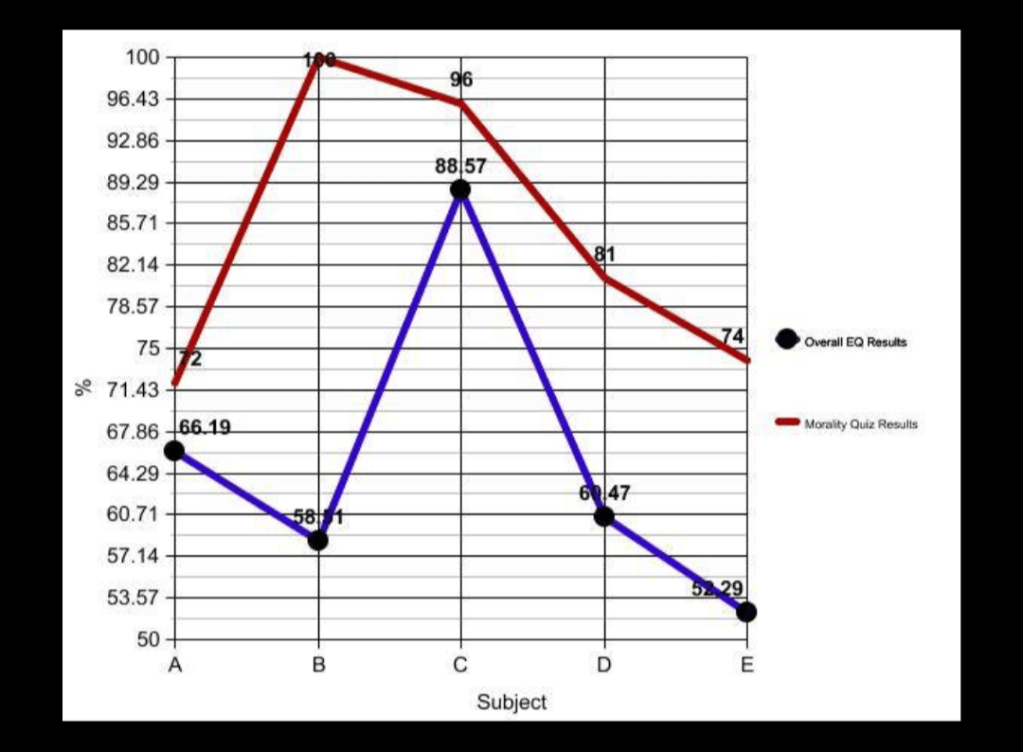

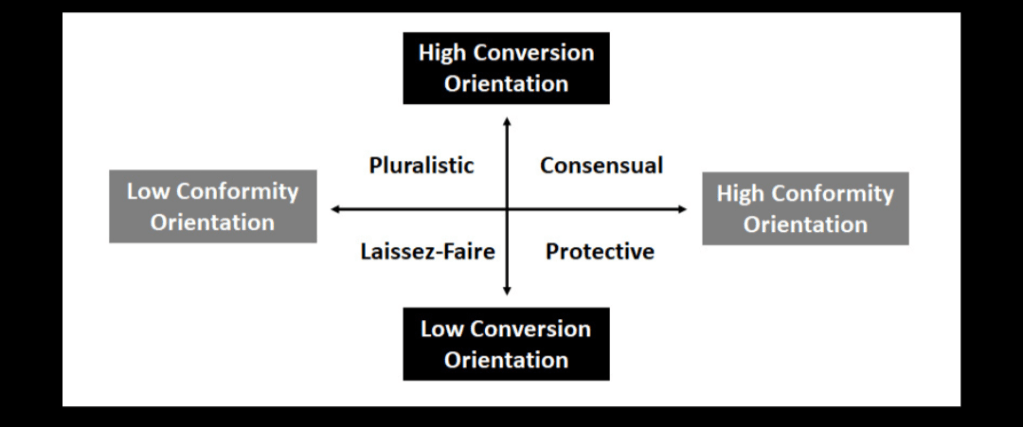
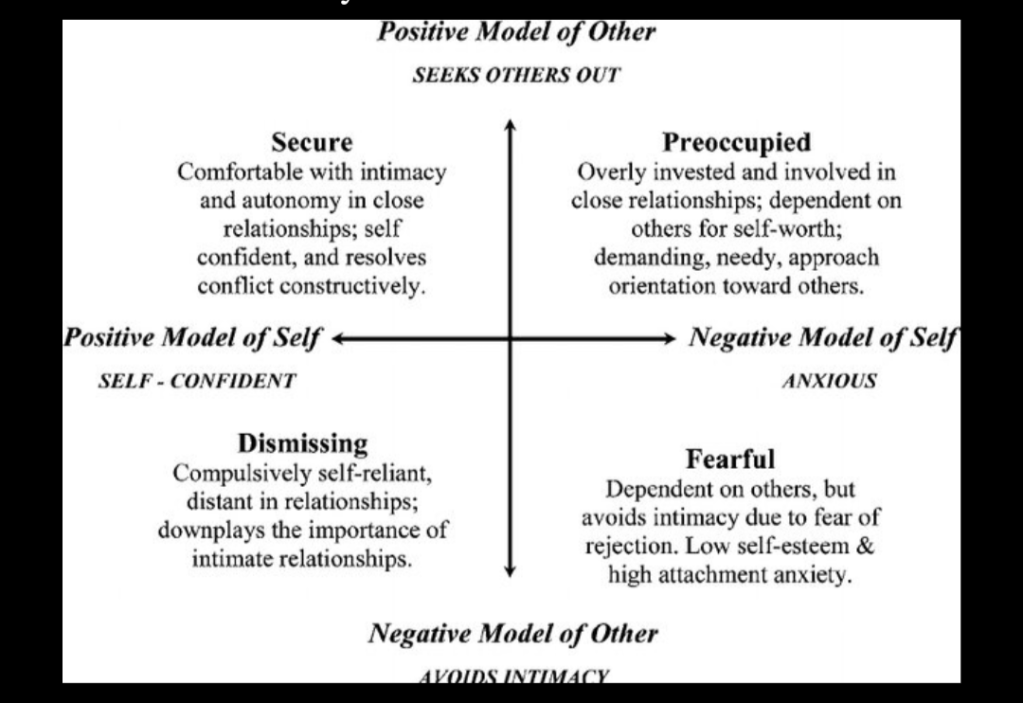


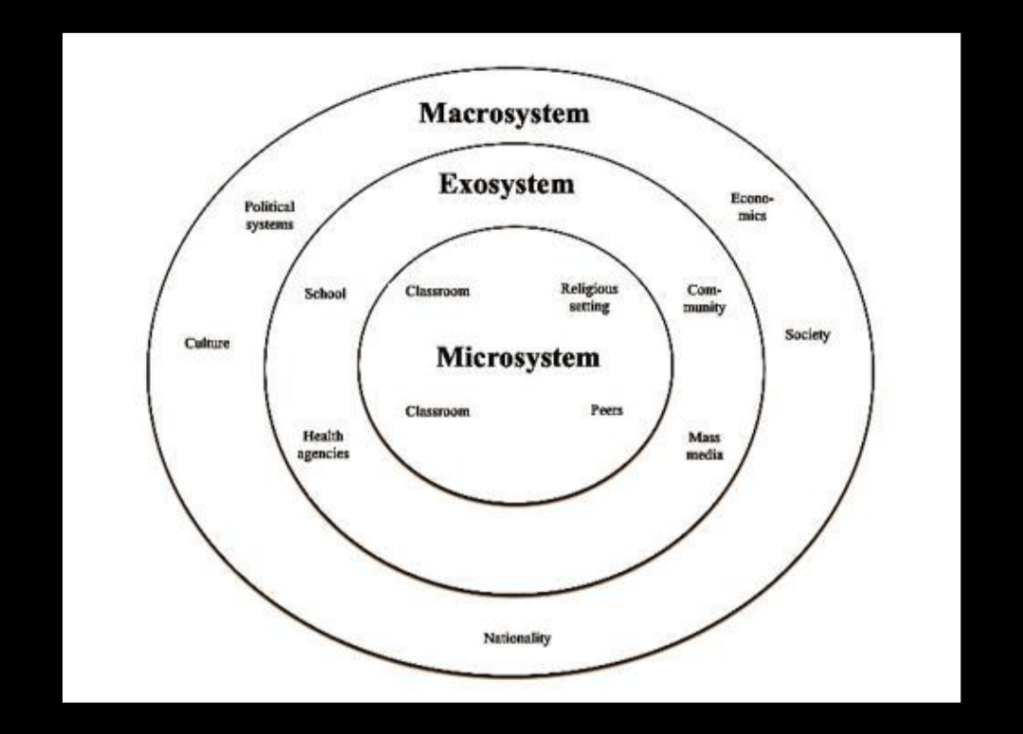

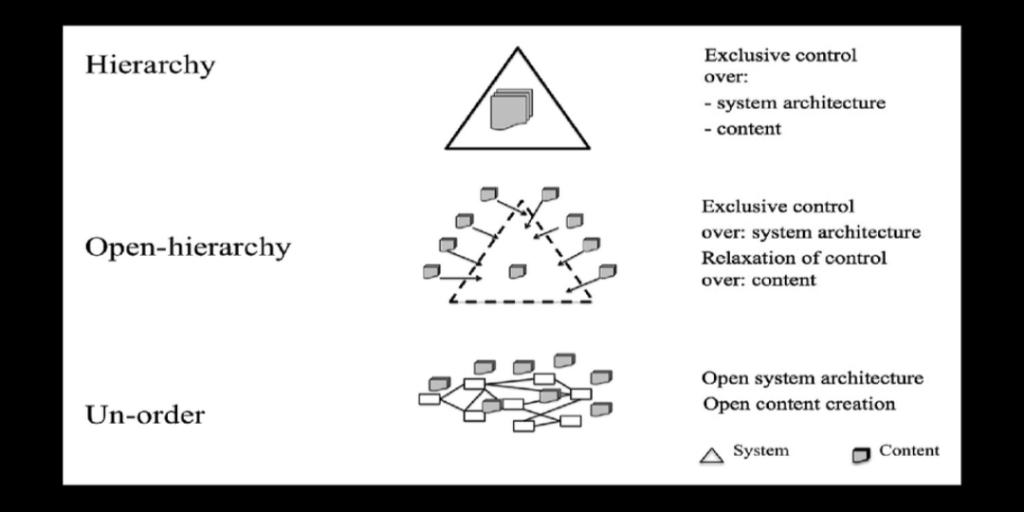
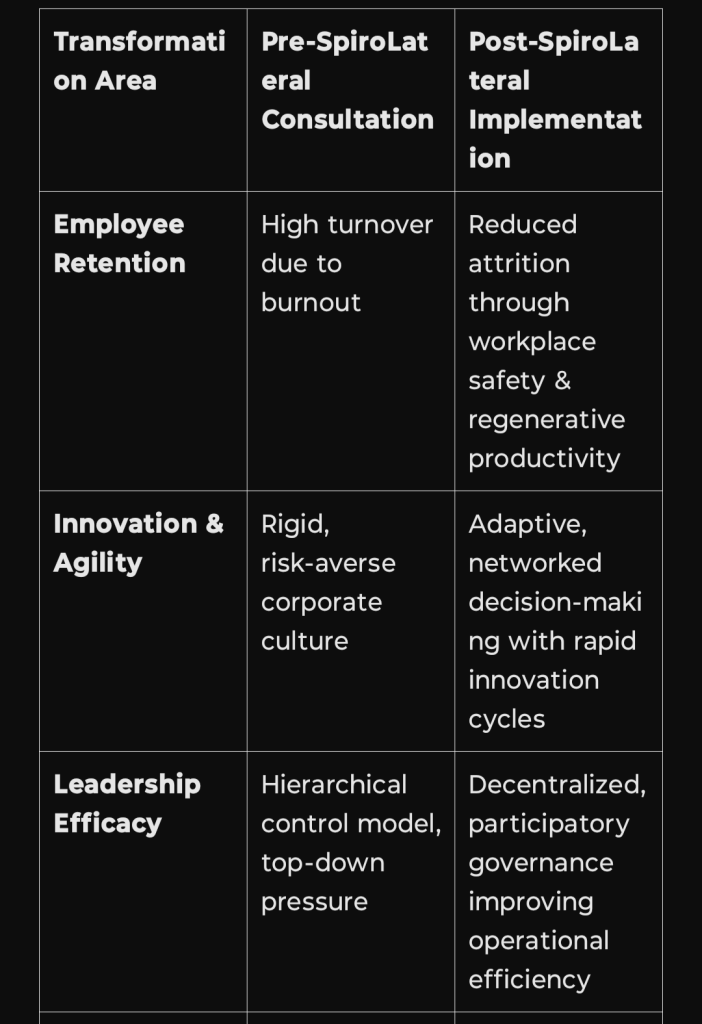

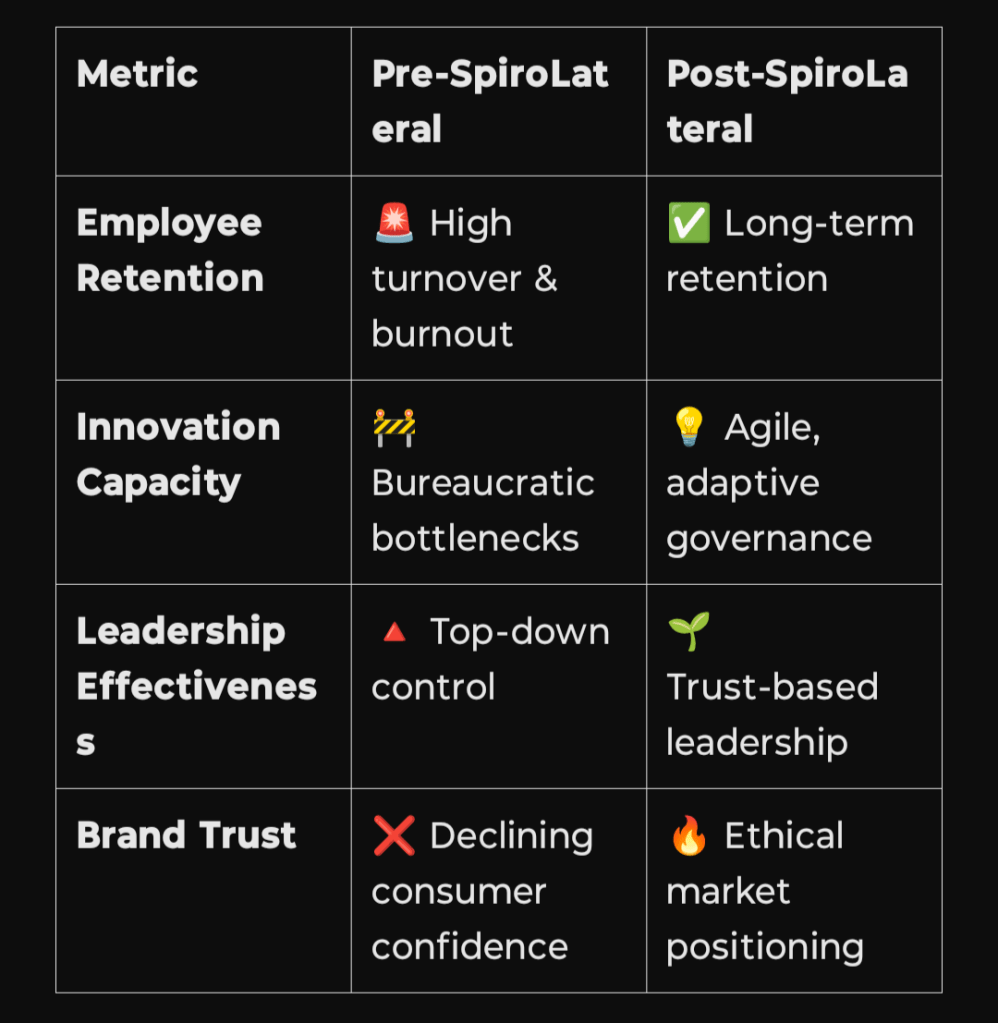
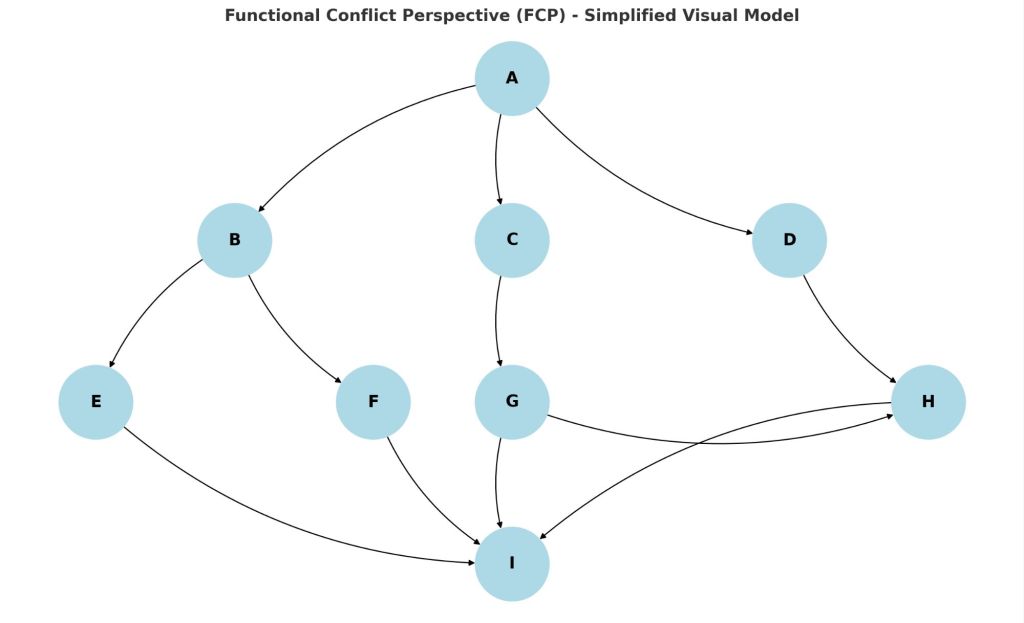
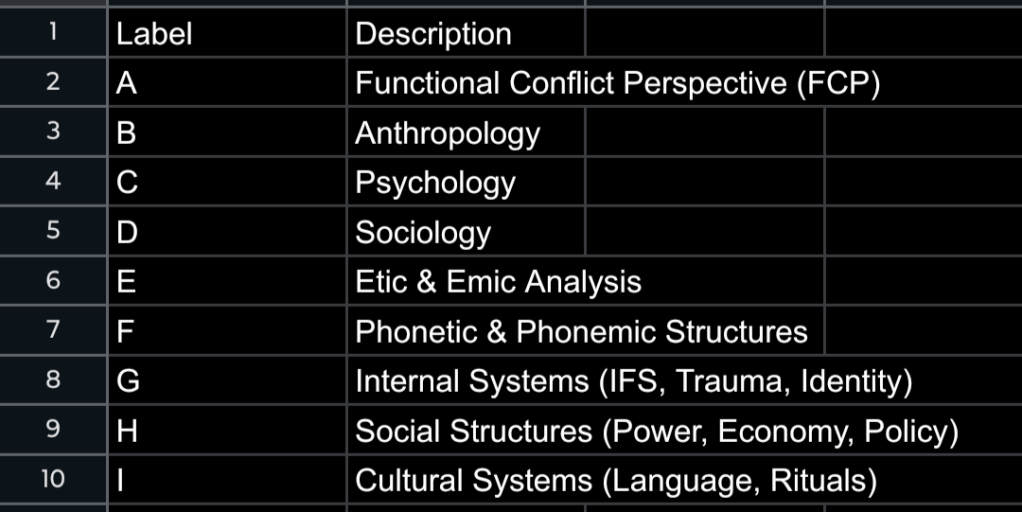


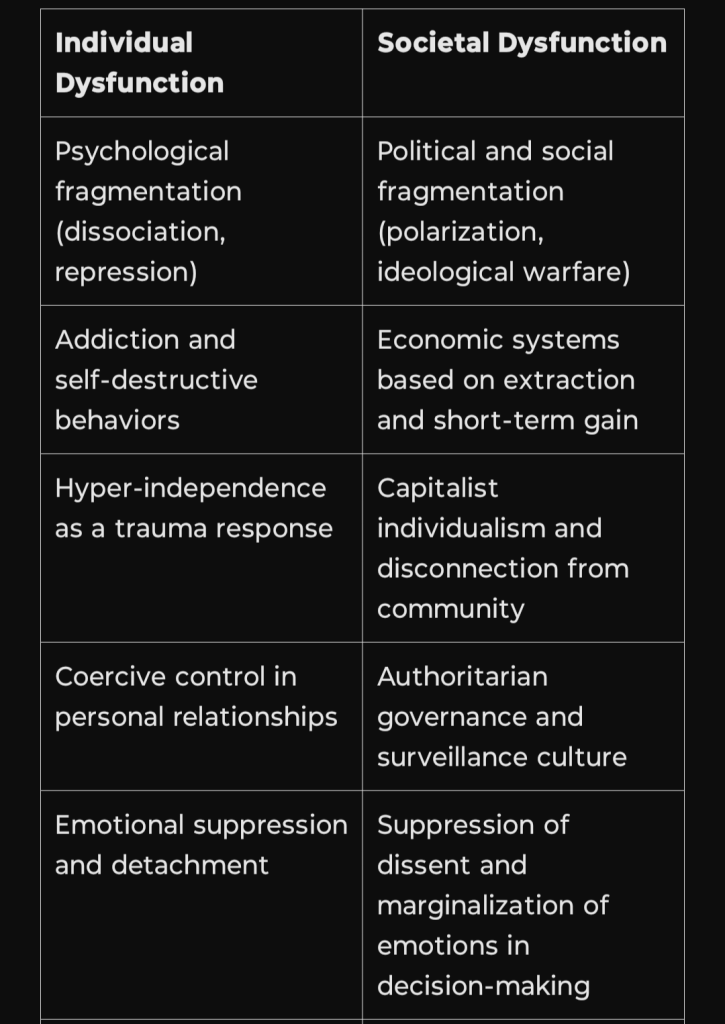
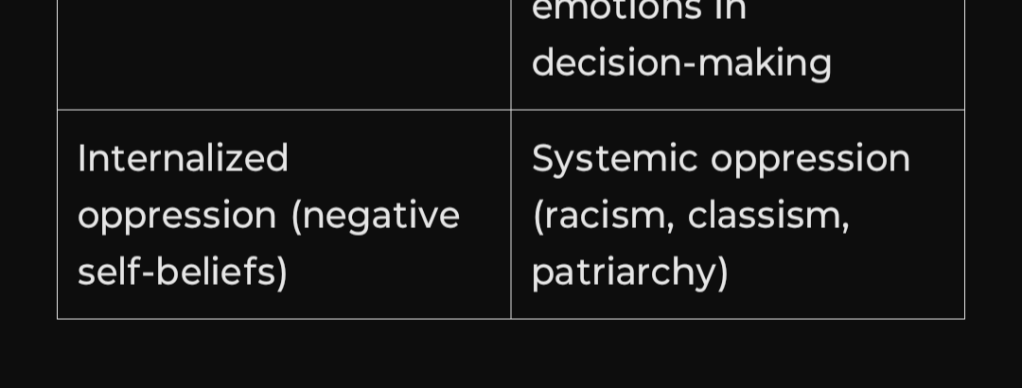
 Spirolateral