These are children’s stories that explain how repeating patterns of conflict can be interrupted and resolved, to be integrated as wisdom and used as opportunities for growth after they are observed and redirected using the FCP method:
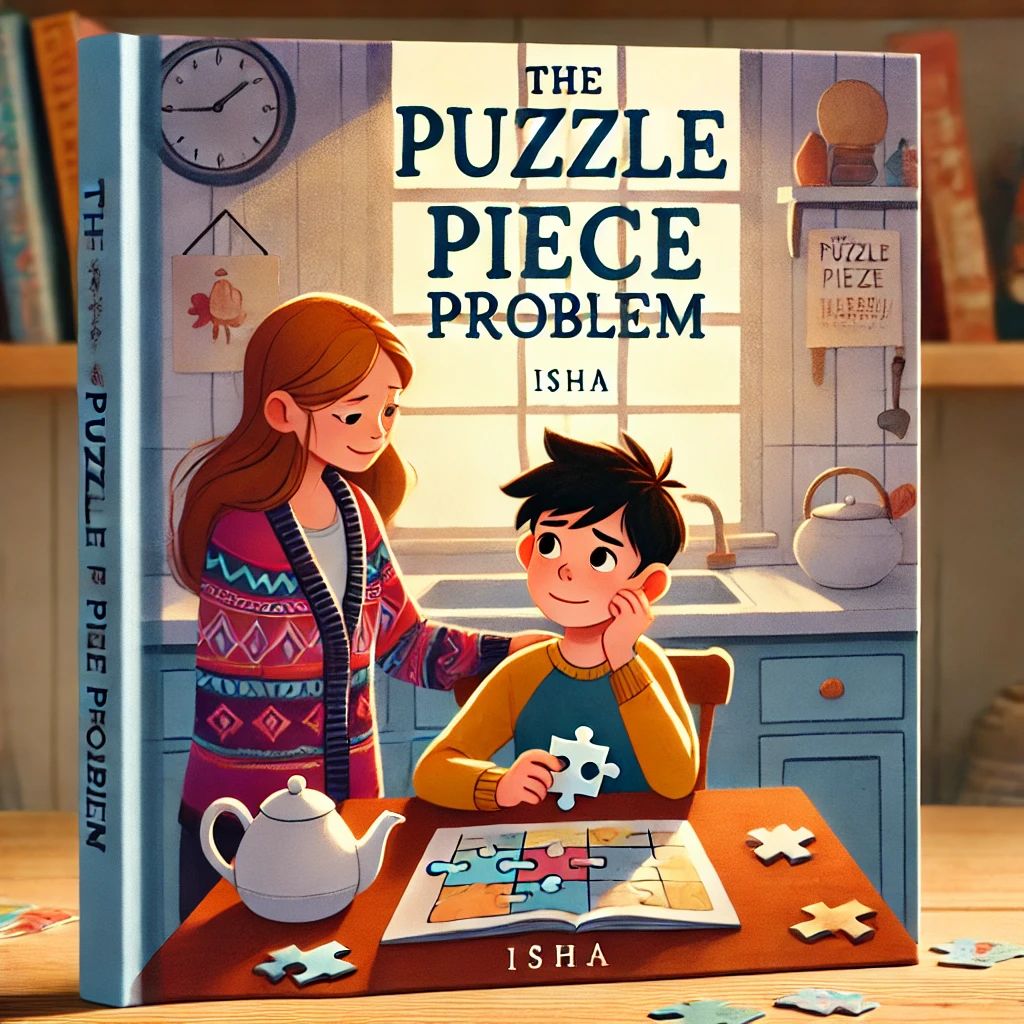
The Puzzle Piece Problem
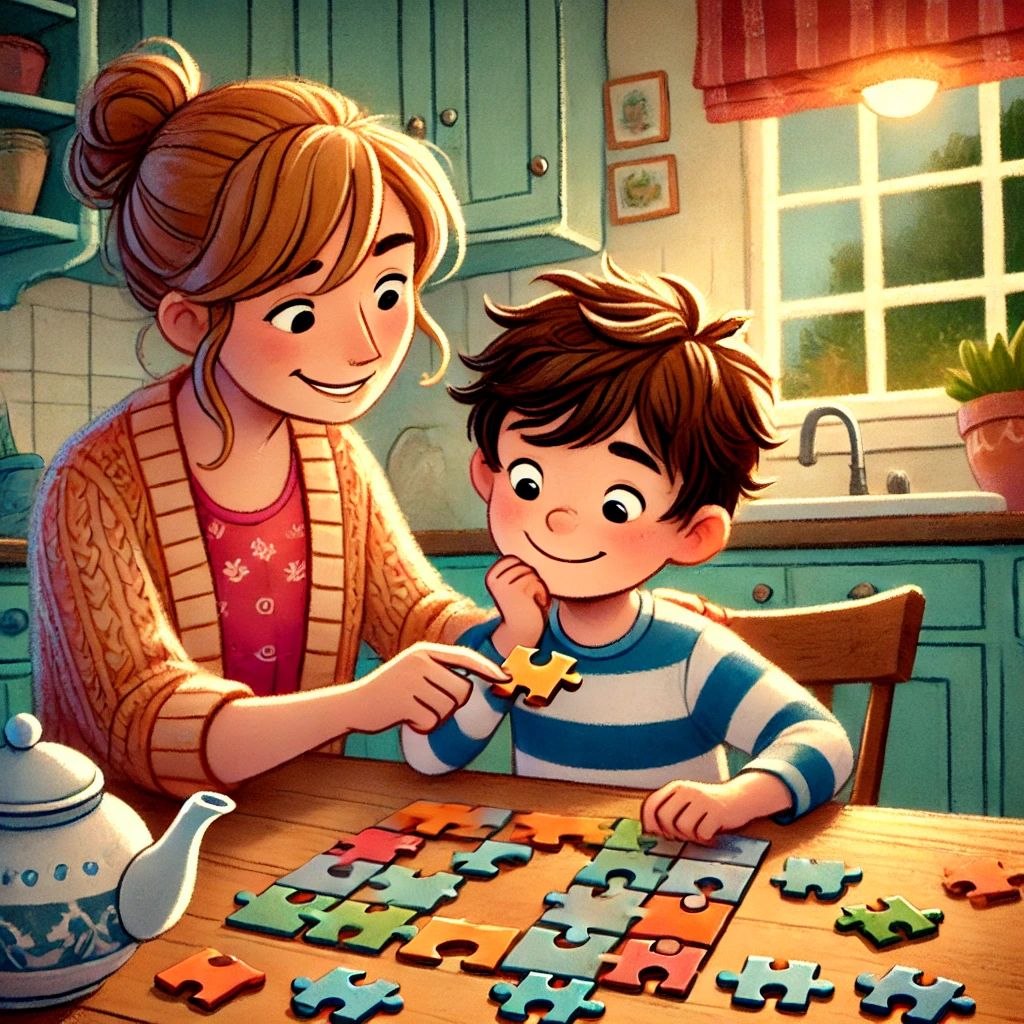
Liam sat at the kitchen table, frowning at his puzzle. Pieces were scattered everywhere, and no matter how hard he tried, they just wouldn’t fit together.
“Ugh! This puzzle is broken!” he huffed, crossing his arms.
His mom, who was making tea, glanced over. “What’s wrong, buddy?”
“These pieces are all wrong!” Liam grumbled. “I keep trying to make them fit, but they won’t go where I want them to!”
His mom smiled and sat down beside him. She picked up two pieces and tried forcing them together. They didn’t fit.
“You’re right,” she said. “These don’t go together.”
“See? That’s what I mean!” Liam said.
But instead of giving up, his mom tried something different. She turned the pieces, looking for new ways they might connect. Then, slowly, she found a match.
“Hmm,” she mused. “Maybe the problem isn’t the pieces… maybe it’s how we’re looking at them.”
Liam blinked. He hadn’t thought of that.
He picked up another piece, turned it a different way, and—click!—it fit!
His mom ruffled his hair. “Sometimes, when something isn’t working, that’s a signal. It tells us to take a step back and take a breath before we try again, because it’s not about pushing harder. It’s about seeing things from another angle. And if we can’t see it any other way, that’s also usually a signal – one to ask for help, and get a second look at the problem using another person’s added perspective.”
Liam sat up straighter, suddenly excited. He grabbed another piece and turned it. Then another. The puzzle was coming together!
As they worked, his mom chuckled. “You know, grown-ups have puzzles too.”
“Really?” Liam asked.
“Yep! Sometimes, we get stuck in arguments or problems because we only see things one way. But if we stop, take a breath, and turn things around, we might find a way to fit together.”
Liam thought about that as he placed the final piece. The puzzle was complete.
“Hey, Mom?” he said. “Next time something doesn’t fit, I’ll try looking at it a different way.”
His mom grinned. “That’s the smartest thing I’ve heard all day.”
And with that, Liam picked up another puzzle—ready to see it in a whole new way.
Moral of the Story:
Conflict, like puzzles, isn’t always about forcing pieces together—sometimes, the answer is changing how we see them.

The Tug-of-War That Never Ended
In the town of Harmony Hill, there was a never-ending game of tug-of-war. On one side, the Pushers pulled with all their might, saying,
“We must move forward, make new rules, and change everything!”
On the other side, the Pullers tugged just as hard, shouting,
“No! We must hold onto the old ways and keep things steady!”
They pulled and pulled, each side determined to win. But no matter how hard they tried, no one ever budged an inch.
One day, a little girl named Mina wandered onto the field. She watched the Pushers and Pullers struggle and asked,
“What are you trying to do?”
“We’re trying to make the world better!” both sides said at once.
Mina tilted her head. “Then why aren’t you moving?”
The teams looked at each other. They had never stopped to think about it!
Mina picked up the rope and walked sideways. The Pushers and Pullers, still holding on, began moving together—side by side.
For the first time, they saw the field from a different angle. They weren’t stuck anymore.
They weren’t winning or losing.
They were moving.
And that’s how Harmony Hill learned that sometimes, instead of pulling against each other, the best way forward is to move together.
Moral: “Sometimes, moving forward isn’t about choosing a side—it’s about finding a new way together.”

Why We Keep Arguing (and Why It’s Actually a Good Thing)
Have you ever played tug-of-war? Two teams pull on a rope, trying to drag the other team over the line. It looks like a battle—like only one side can win. But what if I told you that the struggle itself is what keeps everything balanced?
That’s what Functional Conflict Perspective (FCP) is all about. It’s a way of understanding the world that says conflict isn’t the problem—it’s how we grow, learn, and make things better.
The Mistake Most People Make
A long time ago, a man named René Descartes (fancy name, right?) decided that everything in the world was split into two parts:
Mind vs. Body
Good vs. Bad
Me vs. You
This way of thinking is called Cartesian Dualism (but let’s just call it the “two-box problem”). The idea is that every question has one right answer and one wrong answer—like a math test.
But here’s the thing: the world isn’t a math test. It’s more like a tree.
How a Tree Teaches Us About Conflict
Think about how a tree grows:
Its roots push down into the soil, grabbing nutrients.
Its branches reach up to the sky, stretching toward the sun.
Roots and branches seem like opposites—one goes down, the other goes up. But guess what? They’re part of the same tree! They work together to keep the tree alive.
That’s how conflict works in the world.
Instead of thinking “this side is right and that side is wrong,” FCP teaches us to ask:
What if both sides need each other?
What if the struggle is part of making things stronger?
What if instead of trying to win, we learned how to balance?
The Dance of Conflict
Imagine you and a friend are trying to carry a couch up the stairs.
If you both push at the same time, you’ll smash into the wall.
If you both pull at the same time, you’ll drop the couch.
But if you talk and adjust, you can carry the couch together.
That’s Functional Conflict Perspective in action!
Conflict isn’t a battle to be won—it’s a dance. When we stop seeing things as “us vs. them” and start looking for how we fit together, we can solve problems in a way that helps everyone.
So, What’s the Big Idea?
1. Conflict isn’t bad—it’s how things grow.
2. Life isn’t about picking sides—it’s about learning how different sides work together.
3. The goal isn’t to “win” arguments—it’s to understand how things fit into a bigger picture.
So next time someone disagrees with you, don’t see them as the enemy—see them as part of the puzzle. Because when we stop pulling against each other and start figuring out how we connect, we all move forward together.
The Song with Only One Note
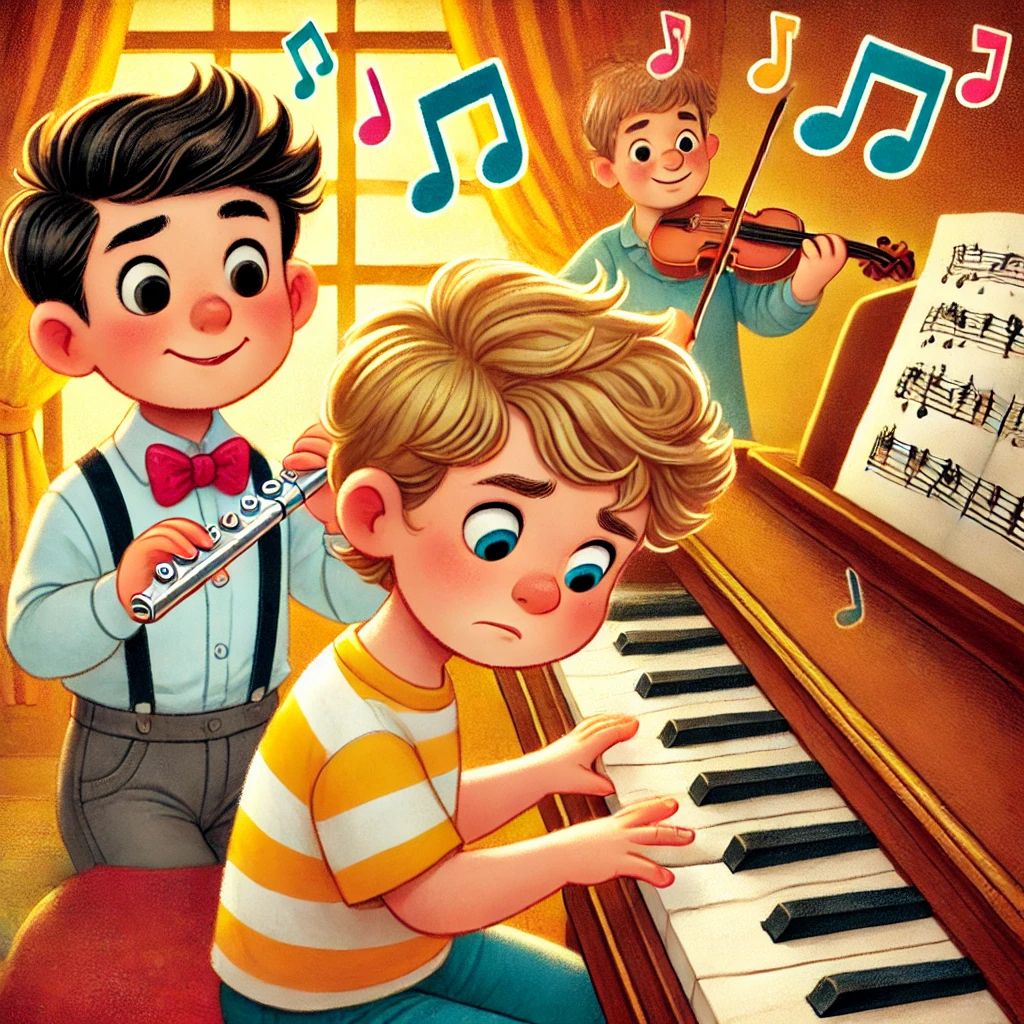
Leo loved music. He played his flute every morning, filling the air with beautiful melodies. But his friend Max? Max had a problem.
Max was learning to play the piano, but he only used one key.
Plink. Plink. Plink.
“Why won’t you play more notes?” Leo asked.
“Because this is the right note!” Max insisted. “All the others sound wrong!”
Leo thought for a moment. Then he picked up his flute and played a different note. Max winced.
“See? That doesn’t match!”
“Not yet,” Leo said with a smile.
Then he played again—this time, adding a second note. Something magical happened. The two sounds didn’t clash. They blended.
Max’s eyes widened.
“That sounded… amazing!”
Leo nodded. “Music isn’t about one perfect note. It’s about how notes work together—even the ones that don’t seem to fit at first.”
Max took a deep breath, stretched his fingers, and tried a new key. Then another. Then another.
And soon, he wasn’t just playing a note.
He was playing a song.
Moral: “Life isn’t about one perfect answer—it’s about how things fit together.”

Why Arguments Are Like Music (and Why We Need Both High and Low Notes)
Imagine you’re listening to your favorite song. It has high notes that soar and low notes that rumble. If the whole song was just one note—only high or only low—it would be boring or even painful to listen to.
Music works because different notes push and pull against each other. They create tension, release, harmony, and rhythm.
That’s exactly how Functional Conflict Perspective (FCP) works in the real world.
Why People Think Conflict Is “Bad”
For a long time, people thought of the world in black and white:
Right vs. Wrong
Order vs. Chaos
Good vs. Bad
This way of thinking comes from Cartesian Dualism (fancy name, simple idea: everything is split into two separate boxes). It’s like trying to play music with only one note—it doesn’t work!
Conflict Is Like a Chord, Not a Single Note
A single note might sound okay, but a chord—where multiple notes are played together—creates depth and movement.
Sometimes, different notes clash for a moment before resolving into something beautiful. That’s called dissonance, and it’s what gives music emotion. If we got rid of every “bad-sounding” note, we’d lose all the moments where a song gets exciting, surprising, or powerful.
This is what FCP teaches us about conflict:
Disagreements aren’t mistakes—they’re movement.
Tension isn’t the problem—it’s part of making something meaningful.
Instead of trying to erase all conflict, we need to learn how to create harmony from it.
How This Changes Everything
Most people think if we just remove all the “wrong” people or ideas, things will finally be peaceful. But that’s like saying, “Let’s remove all the low notes from music.”
Instead, we should be asking:
How do these different perspectives fit together?
What happens when we listen instead of trying to “win”?
What if conflict isn’t noise, but part of the song?
So, What’s the Big Idea?
1. Conflict isn’t bad—it’s like music: the right balance of tension and resolution makes things work.
2. The world isn’t about one side winning—it’s about learning how different voices come together.
3. Instead of thinking in black and white, we should think in melody and harmony—because that’s where real progress happens.
So next time you’re in a disagreement, don’t try to erase the other person’s note. Listen to the song you’re both creating. You might just find a new harmony you never expected.
Carrying the Couch
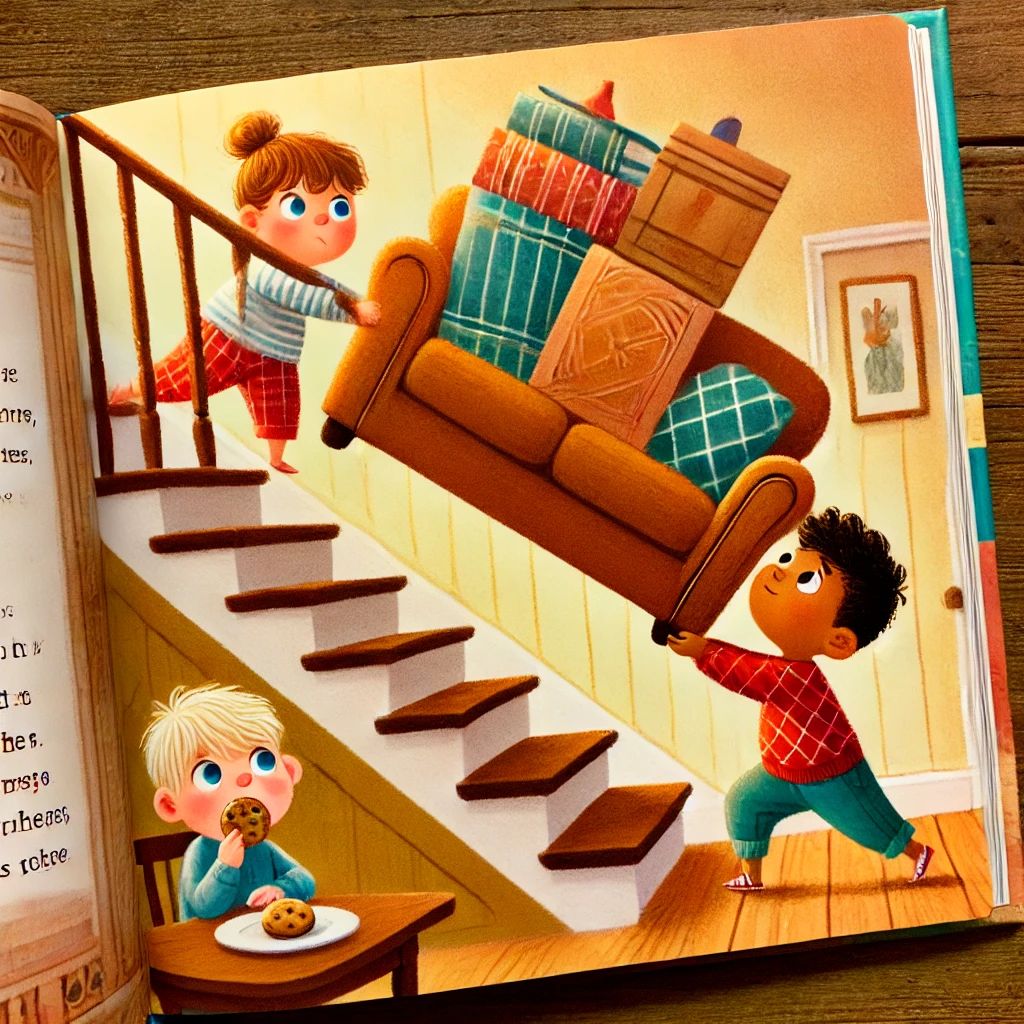
Lena and Jay had a problem. Mom had bought a giant couch, and it needed to go upstairs.
“I’ll lift first!” Lena said, grabbing one end.
“No, I should lift first!” Jay argued, grabbing the other.
They both lifted at the same time—and slammed the couch into the wall.
“Ow!” they groaned.
“You’re doing it wrong!” Lena huffed.
“No, YOU are!” Jay shot back.
They tried again, but Jay pulled while Lena pushed. The couch didn’t move an inch.
That’s when their little brother, Finn, walked by with a cookie in his hand.
“Why don’t you take turns?” he said between bites.
Lena and Jay looked at each other.
“I guess I could lift while you guide,” Jay admitted.
“And I could tell you when to push,” Lena agreed.
So Lena tilted the couch, and Jay guided it up the stairs. Slowly, carefully—step by step—they moved together.
When they finally set the couch down, they both flopped onto it, exhausted.
“Wow,” Jay panted. “I guess we weren’t fighting the couch—we were fighting each other.”
Lena laughed. “Good thing Finn is smarter than both of us.”
Finn shrugged. “That’s why I let you do all the lifting.”
And that’s how Lena and Jay learned that the best way to solve a problem isn’t to fight over who’s right—it’s to figure out how to work together.
Moral: “The best way to solve a problem isn’t to fight about it—it’s to work together.”

 Spirolateral