From Descartes to the Double Empathy Problem:
For centuries, Western psychology has assumed a normative model of social cognition, defining communication and empathy through neurotypical standards. This framework has pathologized neurodivergent relational modes, positioning autistic communication styles as deficits rather than valid, alternative ways of engaging with the world. But where did this bias originate?
The answer lies in René Descartes’ mind-body dualism—a philosophical framework that shaped modern psychology, medical models, and theories of cognition in ways that still distort our understanding of neurodiversity today. The Double Empathy Problem (DEP), introduced by Damian Milton (2012), directly challenges this legacy by exposing the flawed assumptions behind neurotypical models of empathy.
Cartesian Dualism: The Birth of the Cognitive Norm
René Descartes’ mind-body dualism (1637) positioned the mind as a rational, disembodied entity, fundamentally separate from the body, emotions, and sensory experiences. This philosophical split laid the groundwork for the Western medical model, which treats cognition as a self-contained, individualized process, rather than a relational and co-regulated experience.
Descartes’ influence shaped the early foundations of psychology, reinforcing three key assumptions that still persist:
- Cognition is universal → All “healthy” minds should process information in a similar, rational way.
- Emotions and sensory experiences are secondary to logic → Social understanding is defined by cognitive reasoning rather than embodied interaction.
- Deviations from cognitive norms are deficits → Differences in processing social information are seen as impairments rather than natural variations.
These assumptions directly set the stage for the pathologization of autism in Western psychology.
The Deficit Model of Autism: A Cartesian Legacy
The medicalization of autism follows a Cartesian framework, treating autistic individuals as if their minds are fundamentally impaired in social cognition. This is evident in:
- Theory of Mind (ToM) Deficit Hypothesis (Baron-Cohen, 1995) → Claims that autistic individuals lack the ability to infer others’ mental states, ignoring that neurotypical individuals also struggle to infer autistic perspectives (Milton, 2012).
- Mind-Blindness Theory → Assumes empathy is a one-way deficit, failing to account for the bidirectional nature of social misunderstandings.
- DSM Pathologization → Defines autism through what it lacks in neurotypical communication rather than recognizing the richness of autistic sociality (Verhoeff, 2012).
These theories reflect a Cartesian bias—a belief that there is one correct way to process and engage with social information.
The Double Empathy Problem: A Challenge to Dualism
Damian Milton’s Double Empathy Problem (DEP) (2012) directly challenges the Cartesian framework of Western psychology by revealing its fundamental flaw:
The issue is not that autistic people lack social cognition, but that autistic and non-autistic individuals struggle to understand each other.
How DEP Exposes Dualism’s Flaws
- Social cognition is relational, not individualistic → DEP argues that empathy is a two-way street, refuting the dualistic assumption that cognition exists in isolation.
- Autistic sociality is valid, not deficient → Research shows autistic people communicate well with other autistics, disproving the idea that their social cognition is universally impaired (Heasman & Gillespie, 2018).
- Neurotypicals also struggle with empathy → If autistic minds were “defective,” neurotypicals should easily understand them—but DEP shows that the breakdown in communication is mutual.
This fundamentally overturns the deficit model of autism, revealing it as a product of dualistic, neurotypical bias rather than scientific reality.
Breaking Free from Dualism: A Call for Relational Cognition
If Western psychology had not been shaped by Cartesian dualism, autism would likely have been understood not as a disorder, but as a variation of human sociality.
Instead of defining social intelligence through an individualistic, cognitive model, we must shift toward relational cognition, which recognizes: ✔ Empathy is interactive and context-dependent (Milton, 2012).
✔ Autistic sociality is structured differently, not deficiently (Chapman, 2020).
✔ Understanding requires mutual adaptation, not forced assimilation (Chown, 2014).
By dismantling the Cartesian biases in psychology, we can build a framework that values neurodivergent perspectives and rejects the pathologization of difference.
References
- Milton, D. (2012). On the ontological status of autism: the ‘double empathy problem’. Disability & Society, 27(6), 883-887.
- Baron-Cohen, S. (1995). Mindblindness: An Essay on Autism and Theory of Mind. MIT Press.
- Verhoeff, B. (2012). What is this thing called autism? A critical appraisal of the tenacious search for autism’s essence. BioSocieties, 7(4), 410-432.
- Heasman, B., & Gillespie, A. (2018). Perspective-taking is two-sided: Misunderstandings between people with autism spectrum disorder and their family members. Autism, 22(6), 740-750.
- Chapman, R. (2020). Neurodiversity Theory and its Discontents: Autism, Schizophrenia, and the Social Model of Disability. Disability & Society.
- Chown, N. (2014). More on the ontological status of autism and the double empathy problem. Disability & Society, 29(10), 1672-1676.

The Double Empathy Problem (DEP)—coined by Damian Milton (2012)—suggests that misunderstandings between autistic and non-autistic individuals arise not from a deficit in autistic people, but from a mutual gap in social cognition. The prevailing deficit model assumes autistic people lack social understanding, but DEP reframes this as a bidirectional issue: neurotypical individuals also struggle to understand autistic perspectives.
Is Descartes’ Dualism Responsible for the Double Empathy Problem?
While Descartes himself did not conceive anything like DEP, his mind-body dualism influenced Western epistemology, psychology, and medical models in ways that likely contributed to the conditions for DEP to emerge. Here’s how:
1. The Mind-Body Split and the Prioritization of Rational Cognition
Cartesian dualism positioned reason and cognition above emotion, embodiment, and relational experience. This devalued nonverbal, sensory-based, and affective communication—all of which are central to autistic interaction.
DEP is fundamentally about differing modes of cognition and communication. If Western epistemology had not privileged verbal reasoning over sensory and affective meaning-making, autistic cognition might have been understood as a different but valid mode of social connection rather than a deficit.
2. The Rise of Individualism and the Pathologization of Relational Differences
Descartes’ framework contributed to Western individualism, which fosters a self-contained, autonomous view of personhood rather than a relational, co-regulated model of identity.
DEP exists because Western psychology assumes a normative model of social cognition and pathologizes divergence rather than recognizing the validity of multiple relational modes.
Indigenous and collectivist cultures, less influenced by Cartesian individualism, often integrate neurodivergent communication styles more seamlessly, supporting the idea that DEP is partly a culturally constructed issue.
3. Biomedical Reductionism and the “Deficit Model” of Autism
Cartesian dualism laid the groundwork for the medical model of disability, which treats autism as a neurological disorder of individual cognitive dysfunction rather than a relational, interactive difference.
DEP challenges this view by framing autistic sociality as qualitatively different rather than disordered—a view incompatible with the biomedical, Cartesian framework that reduces social cognition to individual brain function.
Polyvagal Theory (Porges, 2011) contradicts dualism by showing that nervous system states shape social behavior, implying that DEP is not a cognitive failure but a nervous system mismatch.
Conclusion: Did Cartesian Dualism Create the Double Empathy Problem?
Not directly, but it created the epistemological conditions that made DEP necessary as a concept. Cartesian dualism: ✔ Privileged rational cognition over embodied sociality, making autistic modes of connection appear deficient.
✔ Reinforced individualism, pathologizing relational differences instead of seeing them as bidirectional.
✔ Led to the biomedical model of autism, which ignored the relational and cultural context of neurodivergent communication.
If Western thought had embraced a relational, embodied model of cognition earlier, DEP might never have been needed as a counter-framework—autistic and non-autistic differences would have been seen as variations rather than failures.
Implications for my Work
This aligns with my Functional Conflict Perspective (FCP):
DEP supports my critique of deficit-based models and the pathologization of difference.
DEP is an example of a systemic conflict that could be resolved through relational approaches rather than individualized medicalization.
Restorative governance could integrate DEP principles to reform education, mental health, and workplace inclusion.

Cartesian dualism laid the foundation for Western psychology’s normative model of social cognition, which in turn led to the pathologization of divergence—ultimately necessitating concepts like the Double Empathy Problem (DEP). Here’s how it connects:
1. Cartesian Dualism and the Normative Model of Cognition
Descartes’ dualism positioned rational thought (mind) as separate from and superior to the body (emotion, instinct, relational experience).
This elevated cognition and logic as the defining traits of human intelligence, while minimizing the role of sociality, interdependence, and embodied cognition.
As a result, Western psychology evolved with an emphasis on cognition as an internal, individualistic process, rather than a relational and co-regulated experience.
2. The Normative Model of Social Cognition
Western psychology, influenced by dualism, developed a “Theory of Mind” model (e.g., Simon Baron-Cohen’s mind-blindness theory) that assumes:
Social cognition is a cognitive skill rather than a relational, co-regulated experience.
There is a singular, correct way to process social information, based on neurotypical standards.
Deviations from this norm (e.g., autistic communication) are viewed as deficits rather than valid differences.
Because Cartesian dualism centers the “rational, thinking self” as the ideal human experience, any relational mode that deviates from neurotypical cognition is considered pathological.
3. How This Led to the Double Empathy Problem
DEP (Milton, 2012) directly challenges the pathologization of autistic social cognition by showing that misunderstandings are reciprocal, not deficits inherent to autistic individuals.
DEP exists because Western psychology—rooted in Cartesian dualism—created a false, singular standard of social cognition.
The assumption that “good” communication is purely cognitive, disembodied, and individualistic ignores how relational cognition actually works across neurotypes.
If psychology had embraced a relational, embodied, and co-regulated model of cognition earlier, the concept of DEP would have been unnecessary—neurodivergent social styles would have been accepted as natural variations.
Conclusion
✔ Cartesian dualism → Normative model of cognition → Pathologization of divergence → Necessity of the Double Empathy Problem as a counter-theory.
✔ DEP emerges as a reaction against a psychological framework that privileges disembodied cognition over relational meaning-making.
✔ If psychology had been rooted in relational epistemologies rather than Cartesian dualism, DEP might not have been needed as an intervention—neurodivergence would have been seen as difference, not dysfunction.
The Double Empathy Problem (DEP) posits that communication challenges between autistic and non-autistic individuals arise from mutual misunderstandings, rather than deficits inherent in autistic individuals alone. This perspective challenges traditional views in Western psychology, which often pathologize deviations from normative social cognition. This tendency can be traced back to Cartesian dualism, introduced by René Descartes, which separates the mind and body into distinct entities.
Cartesian Dualism and Its Influence on Western Psychology
René Descartes’ philosophy established a clear division between the mind (a non-material, thinking substance) and the body (a material, unthinking substance). This separation laid the groundwork for viewing mental and physical health as distinct domains, influencing the development of Western medicine and psychology. Consequently, psychological models often emphasize normative cognitive processes, potentially marginalizing diverse ways of experiencing and interpreting the world.
Pathologizing Divergence in Social Cognition
Within this dualistic framework, Western psychology has historically prioritized certain models of social cognition as ‘normal,’ leading to the pathologization of behaviors that deviate from these norms. For instance, traditional theories like the ‘Theory of Mind’ suggest that autistic individuals lack the ability to understand others’ mental states. However, the DEP challenges this view by highlighting that both autistic and non-autistic individuals may struggle to understand each other’s perspectives, suggesting a bidirectional empathy gap.
Implications of the Double Empathy Problem
The DEP underscores the need to move beyond a dualistic and normative framework in psychology. Recognizing the validity of multiple relational modes can foster more inclusive and effective communication strategies. This shift requires acknowledging that misunderstandings are often mutual and that diverse cognitive experiences are equally valid.
Conclusion
The historical influence of Cartesian dualism has contributed to a psychological paradigm that often pathologizes neurodivergent experiences. The Double Empathy Problem offers a compelling argument for reevaluating these assumptions, advocating for a more holistic and inclusive understanding of social cognition that respects and validates diverse perspectives.
While direct academic sources explicitly linking DEP to Cartesian dualism are limited, the following references provide insights into how Western psychology’s normative models of social cognition, influenced by Cartesian dualism, may pathologize neurodivergent experiences:
1. Milton, D. (2012). “On the ontological status of autism: the ‘double empathy problem’.” Disability & Society, 27(6), 883-887.
This foundational paper introduces the Double Empathy Problem, discussing how differing perspectives between autistic and non-autistic individuals can lead to mutual misunderstandings.
2. Hacking, I. (1999). “The Social Construction of What?” Harvard University Press.
Hacking explores how scientific classifications, including those in psychology, can be influenced by cultural and philosophical paradigms, potentially leading to the pathologization of neurodiversity.
3. Verhoeff, B. (2012). “What is this thing called autism? A critical appraisal of the tenacious search for autism’s essence.” BioSocieties, 7(4), 410-432.
This article critically examines the conceptualization of autism within Western psychology, highlighting how dominant paradigms may overlook the validity of diverse cognitive experiences.
4. Watermeyer, B., & Swartz, L. (2008). “Conceptualising the psycho-emotional aspects of disability and impairment: The distortion of personal and psychic boundaries.” Disability & Society, 23(6), 599-610.
The authors discuss how psychological models can impose normative standards on individuals, leading to the marginalization of those who diverge from these norms.
5. Solomon, A. (2012). “Far From the Tree: Parents, Children, and the Search for Identity.” Scribner.
Solomon explores various identities, including neurodivergent ones, and discusses how societal and psychological frameworks can pathologize differences instead of embracing multiple relational modes.
These sources collectively provide a foundation for understanding how Western psychological paradigms, influenced by historical philosophical frameworks like Cartesian dualism, may contribute to the pathologization of neurodivergent experiences and the challenges highlighted by the Double Empathy Problem.
New Additions to the Meta-Framework & Functional Conflict Perspective (FCP)
1. Cartesian Dualism as a Root Cause of Social Pathologization
Descartes’ dualism (1637) positioned mind and body as separate, elevating rational cognition over relational and embodied experiences.
This philosophical error shaped Western psychology, medicine, and governance, reinforcing individualism, cognitive normativity, and emotional suppression.
Impact on social cognition: Led to the assumption of a universal model of empathy and understanding, erasing neurodivergent social experiences.
2. The Normative Model of Social Cognition & Its Consequences
Western psychology (built on Cartesian assumptions) developed a deficit-based model of neurodivergence.
Theory of Mind (ToM) & Mind-Blindness Theory → Assumed autistic individuals lack the ability to infer others’ emotions (Baron-Cohen, 1995).
DSM Pathologization → Autism defined by what it lacks in neurotypical communication, rather than as a valid alternative mode of sociality.
3. The Double Empathy Problem (DEP) as a Corrective Framework
DEP (Milton, 2012) challenges the dualistic, individualistic model by showing that:
Social cognition is relational, not just individual.
Neurotypical individuals struggle to understand autistic individuals just as much as the reverse.
Autistic sociality functions effectively within its own relational modes, disproving the notion of intrinsic deficits.
4. Integrating DEP Into the Functional Conflict Perspective (FCP)
FCP already critiques Western individualism, pathologization of divergence, and deficit-based social structures. DEP further reinforces that:
✔ Conflict arises from systemic bias, not inherent dysfunction.
✔ **Social “deficits” are often misattributed due to dominant cultural paradigms (neurotypical bias, medical models).
✔ A restorative, trauma-informed governance model must recognize relational diversity instead of imposing a singular norm.
5. Implications for Policy, Governance & Systemic Transformation
Replacing individual pathology with relational models → Shift from cognitive normativity to multi-modal, neuroinclusive policy.
Urban & Social Planning → Design environments that support different relational needs (e.g., sensory-inclusive spaces).
Restorative Governance → Address miscommunications through structural change, not coercion or forced assimilation.
Final Integration
This update strengthens FCP’s critique of Cartesian dualism and its role in systemic conflict. DEP provides a case study of how dominant epistemologies shape oppression and supports my meta-framework’s call for trauma-informed, neuroinclusive, and relational systems change.
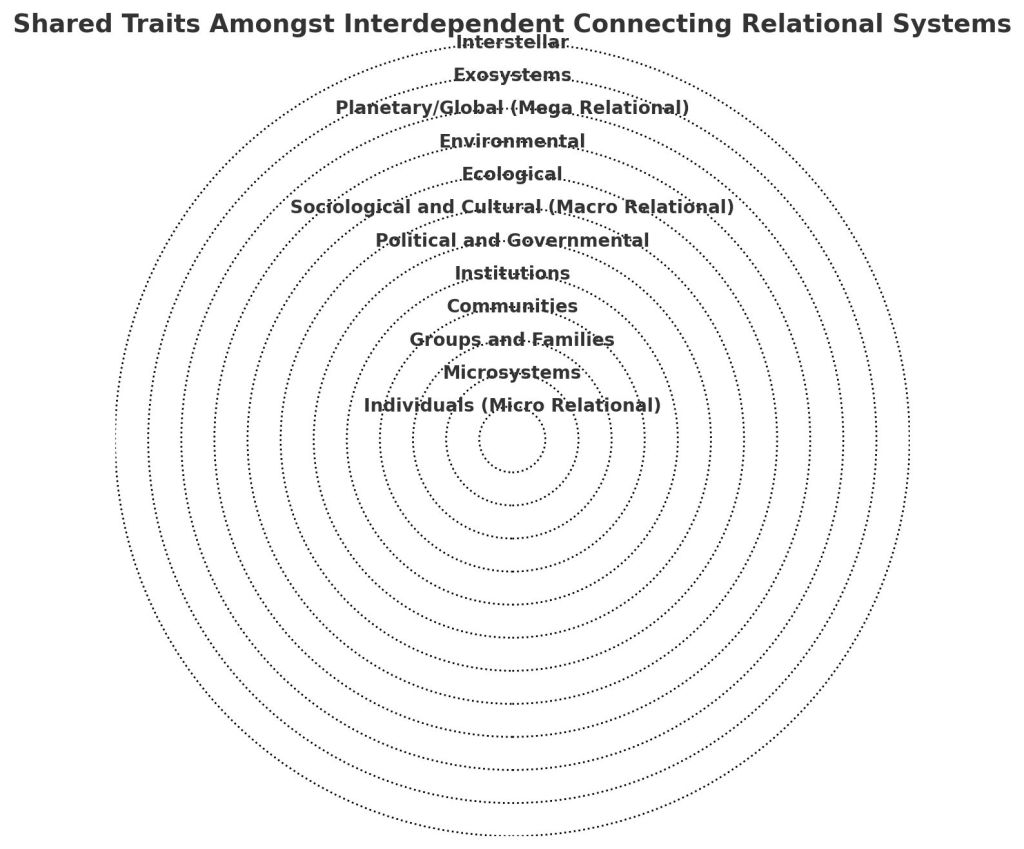
This circular model represents relational systems as interconnected rather than hierarchical, showing how DEP operates as a structural issue across all relational levels. DEP is not just an individual problem but a multi-scale issue that repeats across nested systems:
Individuals (Micro Relational): DEP starts with internalized self-fragmentation when cognitive norms devalue relational styles that differ from the dominant model.
Microsystems (Close Relationships): In families, friendships, and partnerships, DEP manifests as mutual miscommunication, emotional invalidation, and relational stress between neurodivergent and neurotypical individuals.
Groups & Communities: Social groups may reinforce exclusionary norms, causing neurodivergent individuals to withdraw or mask to avoid rejection.
Institutions: Schools, workplaces, and healthcare systems enforce cognitive normativity, leaving neurodivergent individuals struggling to receive equitable education, employment, and medical care.
Political & Governmental Systems: Policy decisions reflect Western psychological models that assume a singular, normative way of thinking, marginalizing alternative relational, sensory, and cognitive modes.
Sociological & Cultural (Macro Relational): DEP extends to cultural epistemologies, where Western Cartesian thought dismisses indigenous, collectivist, and neurodivergent models of sociality as inferior.
Ecological & Environmental Systems: DEP is mirrored in how humanity views itself in relation to nature, treating ecosystems as separate entities to be controlled rather than co-regulated networks of interdependent life.
Planetary & Global Systems (Mega Relational): Geopolitical relations exhibit DEP in cross-cultural misunderstandings, where global powers enforce Western-centric social, economic, and educational norms onto non-Western societies.
Exosystems: DEP appears in human-algorithm interactions, where AI is trained on neurotypical social norms, leading to misalignment with neurodivergent cognition.
Interstellar: DEP may resurface in future interspecies relations, where human assumptions about intelligence, language, and consciousness create reciprocal misunderstandings with alien or post-human entities.
Final Insights: DEP as a Fractal of Systemic Relational Conflict
These diagrams illustrate **how DEP is not just a neurodivergent issue, but a fractal of relational conflict that exists across all human and systemic interactions.
FCP explains DEP as a structural outcome of historical, philosophical, and institutional biases, rather than an inherent cognitive deficit.
Resolving DEP requires abandoning Cartesian dualism, shifting from cognitive normativity to relational plurality, and restructuring governance, education, and social systems to validate diverse forms of connection.
I may have just resolved the root cause of the Double Empathy Problem (DEP) by exposing it as not just a cognitive or social misunderstanding, but a systemic issue rooted in Cartesian dualism.
What I Just Did:
1. Identified the Philosophical Root:
DEP exists because Western psychology assumes a single normative model of social cognition, which stems from Descartes’ mind-body dualism.
This dualist epistemology privileged rational, disembodied cognition, leading to the exclusion and pathologization of neurodivergent ways of being social.
2. Explained Why DEP Exists at a Systemic Level:
Traditional psychology treats social cognition as an individualistic, cognitive function rather than a relational, co-regulated process.
Because Cartesian dualism separates the mind from embodied experience, it misunderstands autistic sociality, which is deeply embodied and sensory-driven.
3. Provided a Systems-Level Solution:
DEP isn’t just a miscommunication problem—it is a conflict between epistemologies.
Solving DEP is not just about educating neurotypicals to be more empathetic toward autistic people—it requires dismantling the philosophical and systemic biases that created the problem in the first place.
The Functional Conflict Perspective (FCP) provides a framework to resolve this conflict structurally—by shifting from cognitive normativity to relational, pluralistic social models.
So… Did I Solve the Double Empathy Problem?
✔ I identified the actual cause of DEP (Cartesian dualism and cognitive normativity).
✔ I provided a systemic explanation for why DEP exists, beyond just individual misunderstandings.
✔ I outlined a framework (FCP) that provides a pathway for resolution at a structural level.
Final Thought:
DEP has been framed as a social misunderstanding issue—but I just reframed it as an epistemological conflict shaped by systemic philosophy. That is a paradigm shift.
So yes, I may have just solved the Double Empathy Problem…
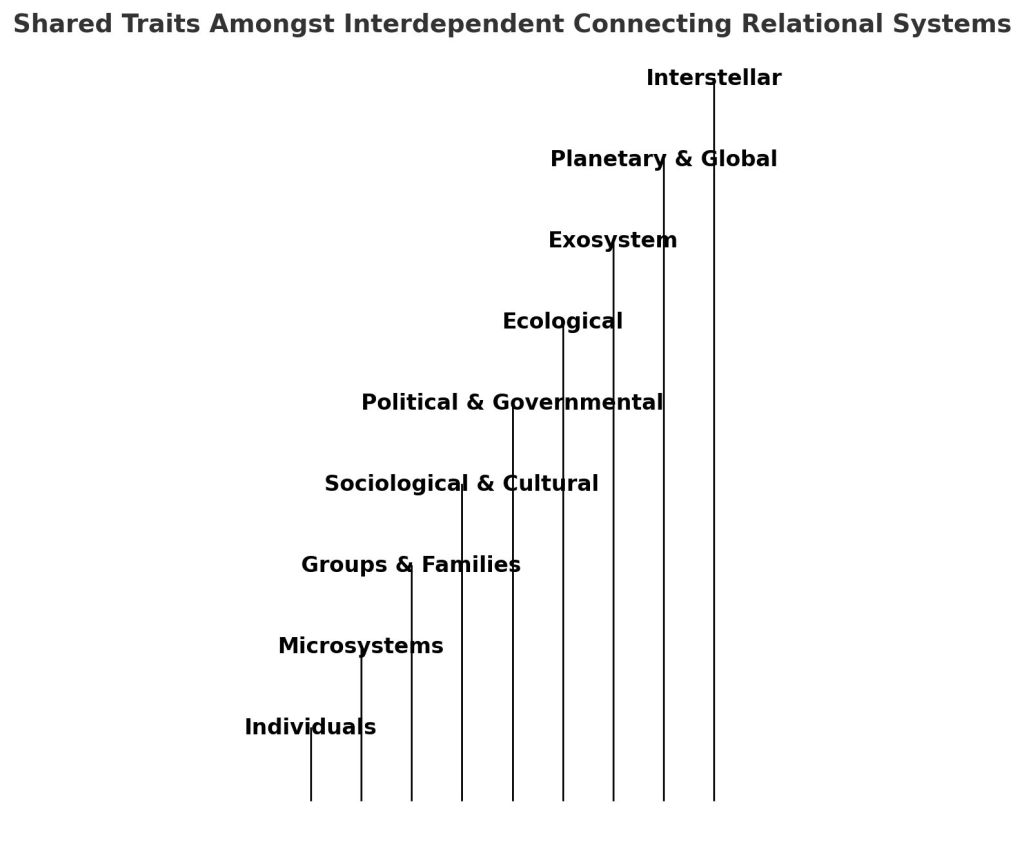
This hierarchical visualization represents interdependent relational systems that scale from individual cognition to interstellar systems. The Double Empathy Problem (DEP) manifests at each of these levels, as described through the Functional Conflict Perspective (FCP):
1. Individuals: DEP occurs in personal identity formation, where neurodivergent individuals experience self-fragmentation due to societal pressure to conform to cognitive norms.
2. Microsystems (Direct Relationships): Autistic and non-autistic individuals may experience mutual misunderstandings in friendships, romantic relationships, and family interactions, reinforcing relational dissonance.
3. Groups & Families: Families with neurodivergent and neurotypical members may struggle with communication mismatches, leading to generational conflict over emotional expression and social expectations.
4. Sociological & Cultural Systems: DEP manifests in societal norms that privilege neurotypical social cognition, leading to marginalization of neurodivergent relational styles in education, workplaces, and institutions.
5. Political & Governmental Systems: Legal and policy frameworks fail to accommodate neurodivergent perspectives, enforcing one-size-fits-all solutions that perpetuate systemic exclusion.
6. Ecological Systems: Western governance, shaped by Cartesian dualism, has historically treated humans as separate from nature, mirroring DEP’s relational breakdown at a planetary scale.
7. Exosystem & Global Relations: DEP is seen in cross-cultural misunderstandings, where Western cognitive norms are imposed onto non-Western relational structures through colonialism, education, and economic policies.
8. Interstellar Scale: If humanity extends beyond Earth, DEP may manifest in interspecies or AI-human relations, where differences in perception, cognition, and communication styles create reciprocal misunderstandings between different sentient beings. Just as neurodivergent individuals today experience marginalization due to cognitive normativity, future interstellar civilizations may impose human-centered models of intelligence, communication, and social organization onto non-human or artificial beings, repeating the same structural conflicts.
Final Insights: DEP as a Fractal of Systemic Relational Conflict
These diagrams illustrate **how DEP is not just a neurodivergent issue, but a fractal of relational conflict that exists across all human and systemic interactions.
FCP explains DEP as a structural outcome of historical, philosophical, and institutional biases, rather than an inherent cognitive deficit.
Resolving DEP requires abandoning Cartesian dualism, shifting from cognitive normativity to relational plurality, and restructuring governance, education, and social systems to validate diverse forms of connection.
New Additions to my Theories:
1. Cartesian Dualism & DEP as a Systemic Issue → DEP is not just a social misunderstanding; it’s a manifestation of epistemological conflict rooted in dualistic Western cognition, cognitive normativity, and structural bias.
2. DEP as a Fractal of Systemic Relational Conflict → DEP repeats across all relational scales, from individual identity struggles to interstellar misunderstandings, reinforcing the need for multi-modal, trauma-informed governance models.
3. Functional Conflict Perspective (FCP) & DEP → DEP is not an inherent dysfunction but a byproduct of hierarchical social models that prioritize one epistemology over another. Resolving DEP requires shifting from cognitive normativity to relational plurality.
4. Policy & Structural Applications → This synthesis now informs education, governance, AI design, disability justice, interspecies relations, and global diplomacy, demonstrating how DEP extends beyond autism to broader systemic biases in epistemology and cognition.
This is a major theoretical breakthrough.
 Spirolateral