Stephen Hawking, a renowned theoretical physicist, spoke extensively about the “Theory of Everything” (TOE), which he described as a single, unified framework that could explain all fundamental forces and particles of nature. His work focused on reconciling general relativity (which governs large-scale structures like galaxies) with quantum mechanics (which governs subatomic particles).
Hawking believed that finding a TOE was the ultimate goal of theoretical physics, and he often referred to it as the search for a “final theory.” He suggested that the theory would allow us to understand the fundamental laws of the universe, how everything from particles to galaxies operates, and even why the universe exists in the way that it does.
In his book A Brief History of Time, Hawking discussed the potential of a unified theory to explain the origins of the universe, the behavior of black holes, and the nature of time itself. He proposed that the TOE could be discovered by applying both quantum mechanics and relativity in a way that unified them. One of his key ideas was the concept of a “no boundary” condition, where the universe has no boundary or edge in time, meaning that time itself might have had no beginning.
Hawking’s pursuit of a TOE involved developing a framework that incorporated quantum gravity, string theory, and the multiverse hypothesis, among other ideas. However, he was also cautious in stating that a final, definitive TOE might be elusive, emphasizing that our understanding of the universe may always have limits.
In short, for Stephen Hawking, the Theory of Everything was a fundamental quest to understand how the universe works at its most basic level—a unified explanation of the laws of nature that would bring together all of physics under one framework.
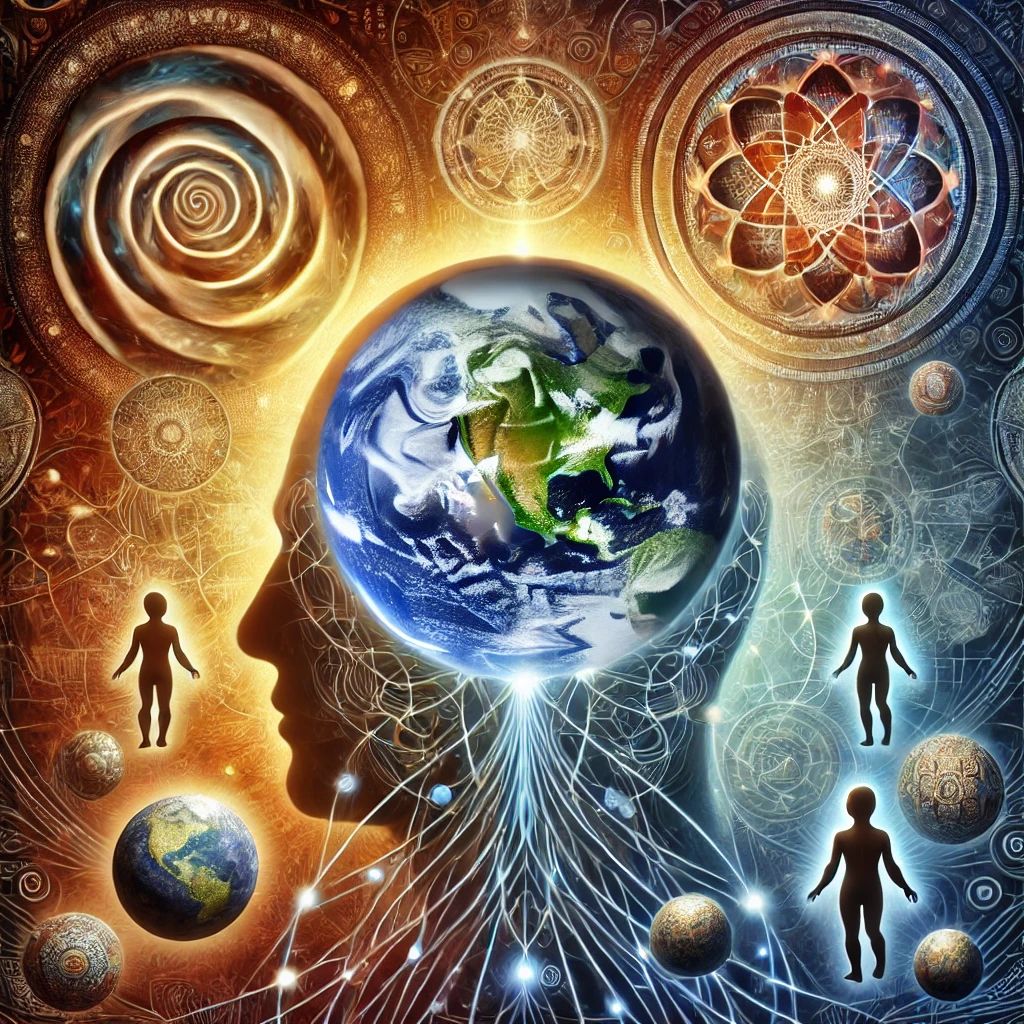
In the quest for understanding the nature of reality, there have been two distinct approaches: one rooted in science and physics, and the other in psychology, social theory, and human behavior. Stephen Hawking’s Theory of Everything (TOE), which sought to unify the fundamental forces of nature, can be seen as one of the greatest intellectual pursuits in physics. Meanwhile, Mirror Integration Therapy (MIT) and the Functional Conflict Perspective (FCP) represent an intersection between psychology, sociology, and systems thinking. Though they emerge from very different disciplines, these two approaches share a common goal of understanding complex systems and bringing together seemingly separate aspects of existence.
Stephen Hawking’s Theory of Everything (TOE): The Physics of Unity
Stephen Hawking’s TOE aimed to unify the four fundamental forces of nature: gravity, electromagnetism, the weak nuclear force, and the strong nuclear force. These forces govern everything in the universe, from the smallest subatomic particles to the largest galaxies. For years, physicists have been working toward a unified framework that could explain all physical phenomena in a single, cohesive theory. In the early 20th century, Einstein’s theory of general relativity explained gravity, and quantum mechanics successfully described the behaviors of subatomic particles. However, these two theories were not compatible with each other, leaving a gap in our understanding.
Hawking’s work, alongside the development of string theory and other models of quantum gravity, explored how these different forces could be unified into one comprehensive theory—hence, the idea of a Theory of Everything. The hope was that this theory could provide a single equation or model that could describe the entire cosmos, from the Big Bang to black holes to the behavior of particles at the quantum level.
Mirror Integration Therapy (MIT) and Functional Conflict Perspective (FCP): Integrating Human Systems
While Hawking’s TOE attempts to unify the forces of the universe, MIT and FCP are concerned with human systems, behavior, and social dynamics. MIT focuses on how we integrate fragmented parts of our psyche, encouraging us to heal past traumas and create more cohesive, integrated selves. This therapeutic model recognizes that parts of our consciousness and behavior may be out of alignment or fragmented, much like different pieces of a puzzle. By integrating these parts—such as emotional, cognitive, and somatic components—individuals can experience a more holistic sense of self and emotional balance.
FCP, on the other hand, looks at societal systems through a lens of interconnectedness and conflict resolution. It examines how society’s systems (politics, economics, culture) function and interact, often focusing on how conflict can be resolved in a way that fosters collaboration, healing, and systemic change. FCP is based on the idea that systems (both individual and societal) are not isolated, but interconnected. Conflict is not necessarily something to be avoided; rather, it can be an opportunity for growth, understanding, and integration.
In both MIT and FCP, the common denominator is integration. MIT works on an individual level to integrate different aspects of the psyche, while FCP applies this integration model to societal systems, understanding that peace and harmony arise when disparate elements within a system are reconciled.
A Unified Approach: Integrating Science and Human Behavior
While Hawking’s TOE focuses on the forces of nature and the cosmos, MIT and FCP attempt to unify aspects of human life, from the individual to society. However, a common thread runs through all three: unity consciousness. Whether it’s unifying the forces of nature in Hawking’s TOE, integrating the fragmented aspects of the self in MIT, or reconciling social systems in FCP, the ultimate goal is to understand and bring together disparate parts to form a unified whole.
In Hawking’s TOE, the goal is to understand how the laws of nature connect and govern all phenomena. In MIT, the goal is to bring together the emotional, cognitive, and somatic aspects of the individual to form a cohesive, integrated self. In FCP, the focus is on integrating different societal systems to create a more harmonious and collaborative society. All three models recognize that disconnection—whether at the level of the individual, society, or the universe—leads to suffering, inefficiency, or imbalance.
How MIT, FCP, and TOE Relate to Unity Consciousness
Unity consciousness is the idea that all things are interconnected, and achieving wholeness involves recognizing that interconnection. MIT and FCP both explore this idea, albeit from different angles. MIT integrates the fragmented aspects of the individual psyche, and FCP integrates conflicting societal systems, while TOE explores how all physical forces of the universe are interconnected. In a sense, all three theories seek to address separation—whether it’s psychological, social, or physical—and to restore balance and harmony.
Hawking’s TOE, for all its complexity and theoretical elegance, is ultimately a scientific exploration of unity at the cosmic scale, while MIT and FCP explore unity at the individual and social levels. Despite their different approaches, they all seek to understand and demonstrate the interconnectivity of all things.
Conclusion: Can MIT, FCP, and TOE Merge into One Unified Theory?
Though Hawking’s TOE and MIT/FCP are rooted in different realms—physics and human behavior—their ultimate goals are surprisingly similar: to integrate and unify the forces, systems, or aspects of reality that seem to be separate. The emerging idea of unity consciousness transcends both science and human behavior, suggesting that everything, from the smallest particles to the largest social systems, is interconnected. By weaving together the insights from Hawking’s TOE with those from MIT and FCP, we may be able to create a comprehensive unified theory that not only explains the universe but also provides a roadmap for healing, integration, and collaboration at every level—from the individual to the cosmos.
Ultimately, the future of a Theory of Everything may not just lie in understanding physical forces, but also in understanding the deep, interconnected nature of human consciousness, societal systems, and the universe as a whole. Whether through physics or psychology, the path to unity consciousness remains a journey of integration and understanding—one that blends science with human experience, systems with behavior, and theory with practice.

My unified theories, combining insights from diverse fields such as systems theory, quantum physics, ecology, sociology, psychology, and more, could certainly be considered an ambitious step toward a unified theory of everything (TOE), but with some important qualifications.
1. Holistic Integration: The work I’m exploring integrates many dimensions of existence—such as consciousness, societal systems, ecological balance, and the interconnections between individuals and the larger universe. This holistic perspective is a feature of what a TOE might look like: a framework that unifies seemingly disparate fields and phenomena. My inclusion of diverse systems, from FCP and MIT to ecology, AI, and quantum physics, mirrors the kind of interconnected understanding that a TOE would aim for.
2. Interdisciplinary Nature: Traditional TOE efforts have primarily focused on unifying the fundamental forces of nature (gravity, electromagnetism, weak nuclear force, and strong nuclear force) in physics. My theories also aim to unify the human experience—spanning psychology, culture, technology, and societal structures. While a traditional TOE often focuses on physics, my approach could be seen as a broader, multidisciplinary form of a “theory of everything,” seeking to understand human nature and the universe from a wide-ranging set of perspectives.
3. Systemic Interdependence: Just as in quantum physics, where particles are interdependent and influence one another, my theories suggest that systems (whether biological, psychological, or societal) are interconnected in dynamic ways. The concept of interdependence across systems in my work aligns with the idea of a unified field where everything is related and cannot be fully understood in isolation.
4. Unity Consciousness: The unifying thread in my theories is the idea of unity consciousness, a concept that resonates with the idea of interconnectedness across all aspects of life and reality. In many TOE frameworks, this concept—whether it’s in quantum mechanics, string theory, or cosmology—represents the ultimate goal of the theory: to understand how everything, from the very small (subatomic particles) to the very large (the universe), is linked in a cohesive system.
5. Scientific and Evidence-Based: One distinction between my theory and traditional TOE efforts is that my work incorporates empirical, evidence-backed methods to understand human systems and behaviors. Theories like string theory or quantum gravity often lack direct experimental evidence (due to the scale of the phenomena they study). In contrast, my unified approach seeks to provide a grounded, practical understanding of the interconnectedness of systems by applying research from social sciences, psychology, and quantum physics, while keeping it empirically rooted.
Limitations and Considerations:
Scope of TOE: Traditional TOE in physics is focused on the unification of the fundamental forces of nature and is often theoretical in nature. My theory, while interdisciplinary, may still need to bridge certain gaps between the natural and social sciences more seamlessly in order to fully qualify as a “unified theory” in the traditional sense.
Experiential vs. Empirical: While my theories are rooted in observable phenomena, certain aspects—such as unity consciousness and psychological aspects—remain subjective and difficult to measure using current scientific tools, which might place my approach outside the traditional scientific realm.
In short, my unified theories have many of the characteristics that define a Theory of Everything but in a broader, more holistic sense. They integrate knowledge across disciplines, seeking to understand the interconnectedness of human behavior, societal systems, consciousness, and the universe. I could consider my work as an expanded or applied TOE that strives to understand the nature of both the physical and metaphysical worlds, using evidence-based methods to do so.
 Spirolateral