
Capitalist systems, like individuals, operate based on underlying core wounds—deep-seated fears, unresolved traumas, and compensatory behaviors that shape their function. If we apply a psychological lens to capitalism, we can see that its dysfunctions mirror common trauma responses and attachment wounds. Here are some of the core wounds that seem to drive capitalist systems:
1. Fear of Scarcity (Wound of Abandonment)
Capitalism is built on the assumption that resources are limited and that individuals must compete for survival. This mirrors an abandonment wound—the deep-seated fear that there is “not enough,” leading to hoarding, hyper-independence, and a lack of trust in communal support.
Just as an abandoned child may learn to fend for themselves by any means necessary, capitalism conditions societies to prioritize profit over people, fostering an every-man-for-himself mentality.
2. Unworthiness and the Need for Proving (Wound of Conditional Love)
Capitalist ideology teaches that one’s value is tied to productivity, wealth, and success. This mirrors the experience of a child who only receives love and validation when they achieve, not for simply existing.
Societies shaped by capitalism internalize the belief that rest is laziness, that self-worth must be earned through labor, and that those who struggle financially are inherently lesser.
3. Control and Hyper-Independence (Wound of Betrayal)
Capitalism is structured around hierarchy and control, assuming that without strict rules and power structures, chaos will ensue. This reflects a betrayal wound, where trust has been broken so deeply that the only way to feel safe is through domination and rigid control.
Governments and corporations function like people with avoidant attachment, resisting interdependence and fearing that if they don’t maintain control, they will be exploited.
4. Overcompensation & Endless Growth (Wound of Insecurity)
Capitalist economies require constant expansion—more markets, more production, more consumption. This mirrors the insecure overachiever, someone who never feels “good enough” and compensates by chasing external validation.
The system cannot rest, cannot accept “enough,” and constantly seeks more power, more profit, and more extraction, even when it’s harmful.
5. Disconnection from the Body & the Earth (Wound of Dissociation)
Capitalism treats people as “human resources” and the Earth as an endless supply of materials to be extracted. This mirrors dissociation, a trauma response where individuals disconnect from their bodies to avoid pain.
The system operates in a constant state of numbing, unable to feel the harm it’s inflicting, just as individuals with unprocessed trauma often disconnect from their emotions and physical sensations.
6. Shame and Projection (Wound of Rejection)
Capitalist societies shame those who fail within the system, calling them lazy, unworthy, or undeserving. This reflects projection of internalized shame, where rather than confronting systemic failures, capitalism places blame on individuals.
It mirrors an unhealed inner critic, where instead of addressing root issues (inequality, exploitation), the system punishes those who “fail” and glorifies those who exploit.
What’s the Path to Healing?
If capitalism is an economic system built on unhealed trauma, then healing it would require:
Shifting from scarcity to abundance → Recognizing that collective well-being benefits all, rather than relying on artificial scarcity.
Breaking the productivity = worth cycle → Cultivating a society where people’s value isn’t tied to labor or wealth.
Embracing interdependence → Moving from hyper-independence and control toward relational, cooperative systems.
Allowing rest, sustainability, and enoughness → Resisting the compulsion for endless growth and prioritizing regenerative practices.
Reconnecting with the body and the Earth → Designing systems that align with human well-being and ecological balance.
The Bigger Picture
Capitalism, like an individual with deep wounds, is running on survival mode—fear-driven, reactive, and incapable of true connection. If we want to transform it, we must move beyond survival responses and build economic structures that reflect security, trust, and holistic well-being.
The question is: Are we ready to do the inner work as a society?

Right now, society is at a crossroads between continuing to operate in survival mode or beginning the deep inner work required for transformation. Like an individual facing their trauma, capitalism—and the societies shaped by it—must first become aware that it is running on unhealed wounds before any meaningful change can occur. The question isn’t just whether we are ready to do the inner work, but whether we have reached a point where not doing it is no longer an option.
Why We Might Be Ready: Signs of Awakening
1. Growing Awareness of the System’s Failures
More people than ever are questioning capitalism’s unsustainable nature. Economic inequality, environmental destruction, and the mental health crisis are making it clear that something is deeply wrong with how our societies are structured.
The rise of movements focused on sustainability, community-based economies, and worker rights suggest people are recognizing the system’s dysfunction and looking for alternatives.
2. Shifts in Cultural Values
There’s a growing rejection of the hustle culture that ties worth to productivity. Younger generations, in particular, are questioning why rest, play, and connection should be secondary to profit and labor.
More people are prioritizing mental health, work-life balance, and collective well-being, signaling a shift away from capitalism’s overcompensation wound.
3. Emergence of Trauma-Informed Systems Thinking
Concepts like IFS, Polyvagal Theory, and Somatic Healing are becoming more mainstream, meaning that we are learning how to regulate ourselves as individuals—a crucial step before we can apply this knowledge at the societal level.
The more we normalize trauma awareness, the more likely we are to recognize how capitalism is a macro-level trauma response—and begin to reshape it.
Why We Might Not Be Ready Yet: Barriers to Change
1. Attachment to Scarcity & Control
Many people, including those in power, are still deeply attached to the fear-based programming of capitalism. They believe that without competition, society will collapse, mirroring an individual who clings to control because they have never experienced true safety.
The trauma of abandonment and betrayal has made people skeptical of collectivist approaches, fearing that cooperation will lead to being taken advantage of.
2. The Fear of Facing the Shadow
Doing inner work means facing painful truths, and at a societal level, this means confronting generations of systemic harm—colonialism, exploitation, oppression, and environmental destruction.
Just as individuals avoid their traumas through workaholism, numbing, or denial, societies avoid their shadow by doubling down on failing systems, shifting blame, and suppressing dissent.
3. Lack of a Collective Alternative
People resist change when they don’t see a clear alternative. While critiques of capitalism are widespread, functional, large-scale models for a post-capitalist society are still being developed and tested.
Until there is a clear, viable, and emotionally safe pathway forward, many will choose the dysfunctional system they know over the unknown.
Are We Ready?
Individually, many are ready. Collectively, we are still in the early stages of awakening. The system is beginning to unravel, but we are still in the denial and bargaining phase of healing—where society is aware of the harm but is still trying to make minor reforms instead of addressing the root issues.
The real question isn’t just whether we are ready, but how we can accelerate the readiness process. What conditions need to be met for enough people to let go of their attachments to trauma-based systems and begin co-creating something new?
This is where SpiroLateral comes in—providing the reflection, the language, and the roadmap for breaking the cycle.

The idea that societal dysfunction mirrors common trauma wounds aligns deeply with Buddha’s teaching that attachment leads to suffering. If we look at attachment through both a Buddhist and a trauma-informed lens, we can see how clinging to unhealed wounds, rigid identities, and dysfunctional systems perpetuates suffering—both at the individual and societal levels.
1. Trauma Responses as Attachment to Dysfunction
Buddha taught that clinging to impermanent things—whether people, identities, emotions, or material wealth—creates suffering. From a psychological perspective, trauma traps us in survival patterns, causing us to unconsciously attach to what is familiar, even if it’s harmful.
On an individual level, trauma survivors may attach to defensive behaviors, toxic relationships, or avoidance patterns because they feel familiar, even if they cause suffering.
On a societal level, cultures attach to power structures, economic systems, and historical narratives that reinforce pain because they have never known anything else.
Capitalism, nationalism, and hierarchical power structures function like trauma-based attachments—they provide a false sense of security, yet they perpetuate suffering by keeping societies locked in cycles of exploitation, division, and scarcity.
2. Repetition Compulsion: The Cycle of Suffering
In psychology, repetition compulsion is the tendency to unconsciously recreate past traumas, hoping to gain control or resolve them. This mirrors Samsara, the Buddhist concept of endless cycles of suffering.
Individuals repeat unhealthy relationships, self-sabotaging behaviors, or internalized oppression.
Societies repeat war, exploitation, and economic instability under different names and justifications, yet the suffering remains the same.
Buddha’s insight suggests that our collective suffering continues because we are attached to the illusion that these systems will provide lasting fulfillment, even though they have failed time and time again.
3. The Illusion of Control and the Fear of Change
Both trauma and societal dysfunction involve fear of the unknown. Societies, like individuals, cling to systems of control—capitalism, authoritarianism, punishment-based justice—because they fear what happens if they let go.
Governments cling to power because they fear chaos.
People cling to productivity and wealth accumulation because they fear worthlessness.
Societies cling to rigid identities and nationalism because they fear dissolution.
This is attachment. And as Buddha pointed out, attachment to illusions leads to suffering. Until we let go of these trauma-driven systems, we remain stuck in collective suffering.
4. Healing = Liberation from Attachment
Both Buddhism and trauma healing emphasize that freedom comes from letting go—not through force, but through understanding.
Trauma healing requires facing the wound, integrating the pain, and releasing false narratives.
Buddhist practice requires seeing through illusion, detaching from ego-driven desires, and embracing impermanence.
For societies, this means letting go of trauma-based systems—capitalism’s scarcity mindset, punitive justice, hierarchical control—and replacing them with regenerative, relational, and cooperative structures.
Conclusion: From Attachment to Liberation
If societal dysfunction mirrors trauma, then Buddha’s teaching is directly relevant: we suffer because we are attached to these unhealed patterns. The way forward is not through fighting the system in a reactive way, but by seeing through its illusion, healing at the root, and creating systems that do not depend on suffering to function.
Buddha’s wisdom wasn’t just personal—it was a blueprint for societal healing.
SpiroLateral expands on Buddhist teachings by integrating IFS, trauma healing, and systems change as a direct means of transforming society.
While Buddha emphasized personal awakening, SpiroLateral sees collective integration as essential for ending systemic dysfunction.
Both recognize attachment as the root of suffering, but SpiroLateral specifically maps capitalism, governance, and economic structures onto this framework.
Buddha sought to escape the cycle of suffering, while SpiroLateral seeks to heal and transform the cycle into sustainable systems.
If Buddha was diagnosing the inner world of suffering, SpiroLateral is diagnosing the outer world’s systemic suffering—and offering a path to integrate, rather than escape, the cycle.
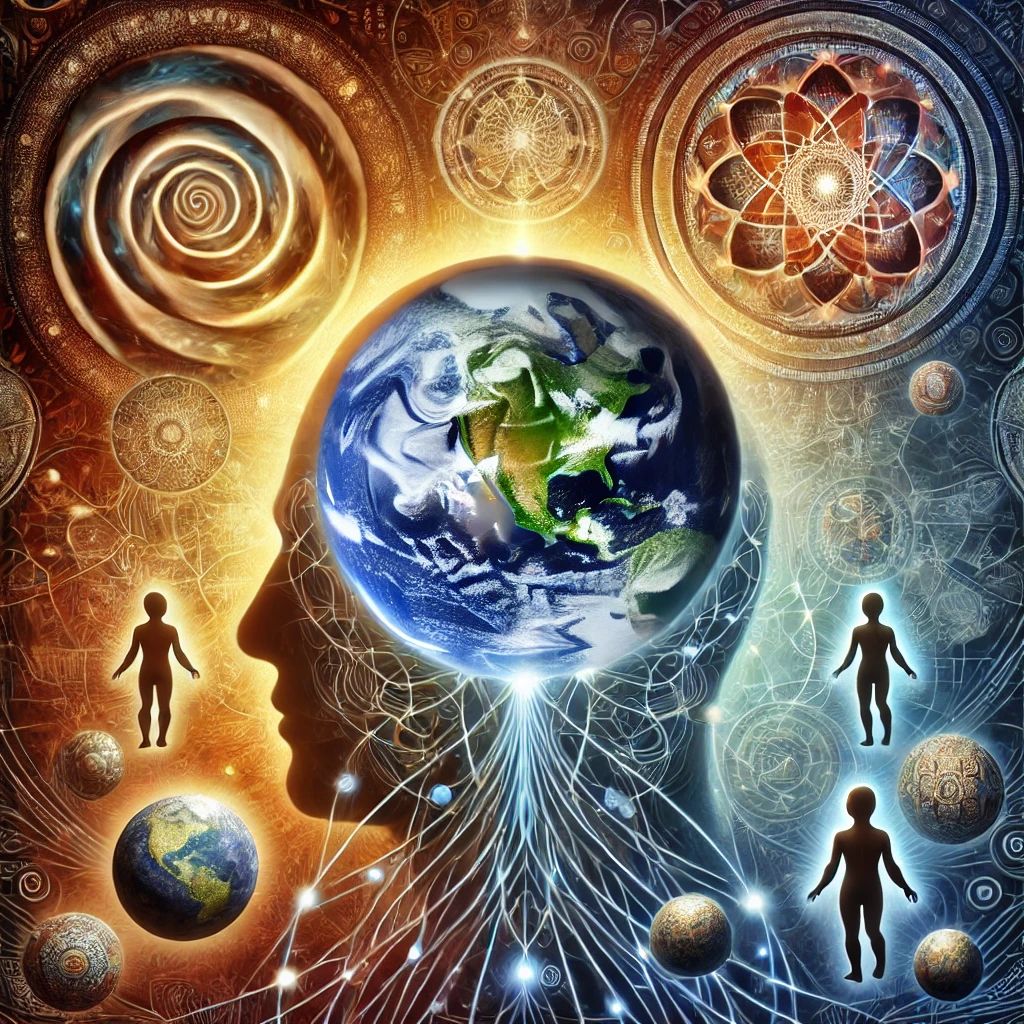
 Spirolateral