The way we treat each other in everyday life is like the building blocks of the whole world. If we build with kindness, honesty, and respect, we create strong, safe places to live. But if we build with fear, anger, and shutting people out, we create walls that trap us and make the world harder for everyone.
Big systems—like governments, schools, and workplaces—are just a reflection of how people act toward each other. If people in charge listen, care, and help, then the system does the same. But if people ignore, hurt, or control others, the system becomes unfair and harsh.
That’s why real change starts with how we relate to one another. If we want a better world, we have to practice listening, understanding, and working together. When we do that, it spreads—just like ripples in a pond. And that’s how we truly change things, not just by fighting the bad, but by building something better in its place.
Imagine you are looking into a pond. When you smile, the water reflects your smile back at you. When you frown, the water frowns too. The world works the same way—how we act, think, and feel gets reflected back to us in the way people treat us, the way our communities feel, and even the way big things like schools, cities, and governments work. If we want to see more kindness, fairness, and understanding in the world, we have to start by growing those things inside ourselves first.
Just like a tree grows from a tiny seed, big changes in the world start small—inside people’s hearts and minds. If we are patient, kind, and honest with ourselves, it becomes easier to be that way with others. And when we treat others with care, it spreads. The way we talk to a friend, the way we listen, the way we help—all of those things create ripples, just like throwing a pebble into water. Those ripples move outward, touching more and more people, until the whole pond changes.
The world is like a living, breathing system made up of people, just like your body is made up of tiny cells. Each cell needs to be healthy for the whole body to feel good. When we take care of ourselves—our thoughts, feelings, and actions—we help the world become healthier too. If enough people start making small changes inside, together we can create something big, just like how a tiny drop of rain joins others to become a rushing river. So if you ever wonder how to make the world better, remember—it starts with you, right where you are.
A living, breathing system isn’t built from the top down—it emerges from the way individuals and groups connect, interact, and influence each other over time. Every relationship, whether between two people, within a small group, or across a larger society, forms a link in a vast network. When these links are healthy, open, and responsive, the system as a whole becomes more adaptive, resilient, and alive. Just like the cells in a body, each part functions individually but is also shaped by its connections to others. If one part is cut off or rigid, the whole system suffers.
The key to a truly living system is mutual responsiveness—each part listens to and influences the others. In nature, ecosystems thrive when different species interact in a balanced way, supporting and adapting to each other’s needs. The same is true in human systems. Communities that prioritize listening, collaboration, and shared problem-solving create structures that can evolve with changing needs. When relationships are built on trust, people become more willing to experiment, take risks, and challenge harmful patterns, allowing the system to heal and grow rather than stagnate or collapse under pressure.
However, if connections become strained—if fear, hierarchy, or coercion replace mutual care—the system starts to break down. When individuals and groups stop listening to each other, rigid divisions form, leading to conflict, oppression, and cycles of harm. But because the system is alive, it can also repair itself. By strengthening relationships, fostering open communication, and creating spaces for shared meaning and understanding, a broken system can regenerate into something more just, more functional, and more aligned with human well-being. Change doesn’t happen all at once—it spreads through the network, from one relationship to another, until the whole system breathes with new life.


Here’s a combined list of key systems theorists across multiple disciplines, integrating both lists for a comprehensive reference:
Foundational Systems Theorists
1. Ludwig von Bertalanffy – Founder of General Systems Theory (GST), emphasized open systems and holistic thinking.
2. Norbert Wiener – Developed Cybernetics, focusing on feedback loops and self-regulation in systems.
3. Ross Ashby – Introduced concepts like the Law of Requisite Variety in cybernetics.
4. Jay Forrester – Created System Dynamics, applied in modeling complex social and ecological systems.
5. Stafford Beer – Developed Management Cybernetics and the Viable System Model (VSM) for organizational structure.
6. Gregory Bateson – Applied systems thinking to psychology, anthropology, and communication theory.
7. Niklas Luhmann – Developed Social Systems Theory, viewing society as self-organizing communication networks.
8. Ilya Prigogine – Studied dissipative structures, explaining how systems evolve through instability.
9. Humberto Maturana & Francisco Varela – Introduced autopoiesis, describing how living systems self-organize and maintain themselves.
10. Heinz von Foerster – Worked on second-order cybernetics, emphasizing the observer’s role in systems.
11. Kenneth E. Boulding – Applied systems thinking to economics and social sciences.
12. Anatol Rapoport – Contributed to game theory, conflict resolution, and general systems theory.
Ecological and Sustainability Systems Theorists
13. James Lovelock – Proposed the Gaia Hypothesis, viewing Earth as a self-regulating system.
14. Fritjof Capra – Integrated systems thinking with sustainability and deep ecology.
15. Donella Meadows – Lead author of Limits to Growth, focused on sustainability and leverage points in systems.
16. Howard T. Odum – Pioneer of ecological energetics and systems ecology.
17. C.S. Holling – Developed Resilience Theory, explaining how ecosystems adapt to change.
Complexity and Chaos Theorists
18. John H. Holland – Studied complex adaptive systems and emergence in biological and social systems.
19. Stuart Kauffman – Explored self-organization and evolutionary complexity.
20. Murray Gell-Mann – Co-founder of the Santa Fe Institute, studied complex systems.
21. Edward Lorenz – Developed Chaos Theory, introducing the Butterfly Effect.
22. Ilya Prigogine & Isabelle Stengers – Worked on non-equilibrium thermodynamics, explaining complexity in nature.
Sociological and Political Systems Theorists
23. Talcott Parsons – Developed Structural Functionalism, viewing society as an interdependent system.
24. Émile Durkheim – Early Functionalist Theory, focused on social cohesion and division of labor.
25. Jürgen Habermas – Explored systems in relation to communication, power, and democracy.
26. Pierre Bourdieu – Studied how social fields function as structured systems.
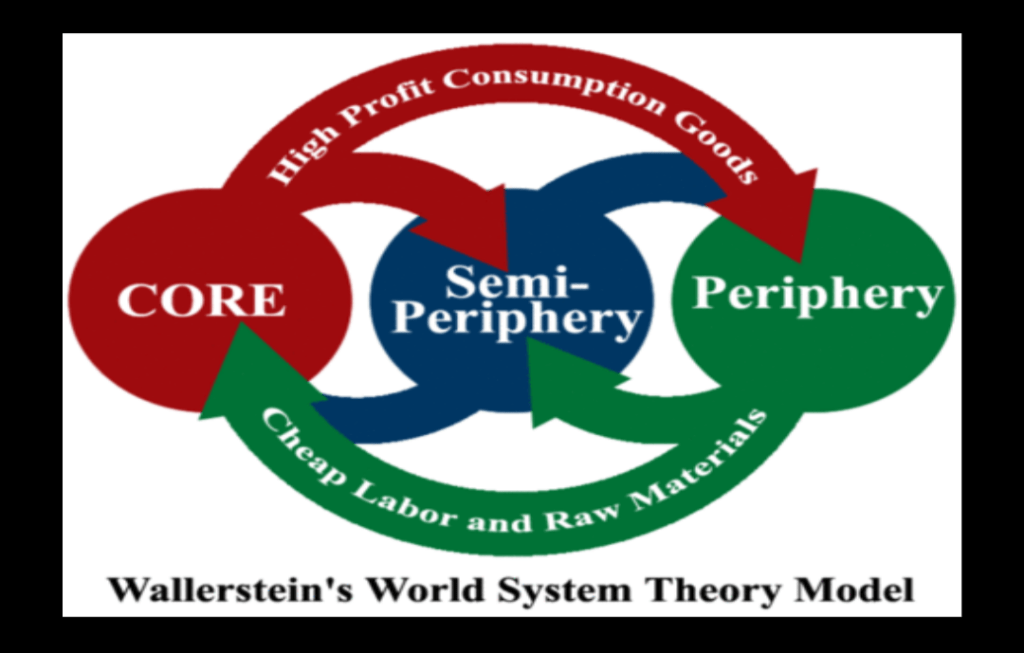
27. Immanuel Wallerstein – Developed World-Systems Theory, analyzing global economic and political networks.
28. Bruno Latour – Co-founded Actor-Network Theory (ANT), integrating human and non-human actors in systems.
29. Anthony Giddens – Developed Structuration Theory, integrating agency and structure.
Cybernetics & Organizational Systems Theorists
30. Stafford Beer – Pioneer of cybernetics in management, developed the Viable System Model (VSM).
31. Peter Senge – Developed Learning Organizations, author of The Fifth Discipline.
32. Russell L. Ackoff – Developed Interactive Planning, a systems-based approach to organizational design.
33. Karl Weick – Known for Sensemaking in Organizations, studied loosely coupled systems.
34. Jay Forrester – Applied systems thinking to industrial and urban modeling.
35. Henry Mintzberg – Studied organizational structures and emergent strategy.
Economic and World Systems Theorists
36. Karl Marx – Developed an early dialectical systems approach to socio-economic structures.
37. Joseph Schumpeter – Introduced Creative Destruction, analyzing economic evolution.
38. W. Edwards Deming – Applied systems thinking to quality management.
39. Friedrich Hayek – Studied self-organizing markets and spontaneous order.
 Spirolateral