The idea that the planet should have rights isn’t just a philosophical debate—it’s a necessary step toward protecting the very systems that sustain life. If corporations, which are human-made legal entities, can have rights, then surely the Earth, which gives us air, water, food, and shelter, deserves at least the same level of legal protection. The recent decision to grant rights to the Río Atrato in Colombia, the Whanganui River in New Zealand, and the most recent case of the Nooksack River in Washington state shows that recognizing nature as a legal entity isn’t just possible—it’s already happening.
The Nooksack River was granted legal rights to protect its waters from overuse and pollution, ensuring that it remains healthy for future generations. This shift acknowledges that natural systems aren’t just resources to be used—they are living, interconnected parts of our world that need to be preserved. When a river has legal standing, it means that people can advocate for it in court, just like a person or a corporation. This is important because, without legal rights, nature is often seen as something to be exploited rather than something to be cared for.
Extending this idea to the planetary level makes perfect sense. The Earth is not just a collection of land, water, and air—it is a living system that regulates itself, much like a body does. If we recognize that corporations, which exist only on paper, can have legal protections and responsibilities, then a system as complex and life-sustaining as the Earth should have those same rights. Giving the planet legal standing wouldn’t just be symbolic; it would create a legal framework for holding governments and industries accountable for environmental destruction. It would mean that the health of the planet—its forests, oceans, atmosphere, and biodiversity—could be defended in court as a fundamental right, just like human rights or corporate interests are today.
Recognizing planetary rights is not about giving nature special treatment—it’s about correcting an imbalance. Right now, corporations have more legal protection than the rivers, forests, and ecosystems that keep us alive. A world where the Earth has rights is a world where we acknowledge our responsibility to future generations and commit to living in harmony with the very systems that sustain us.

The Case for Earth’s Rights: A Sentient System Deserving Protection
The Earth is not just a passive backdrop for human activity—it is a self-regulating, sentient system that maintains the delicate balance necessary for life. Science already recognizes that the planet behaves like a living organism, constantly adjusting its climate, water cycles, and ecosystems to sustain itself. This idea, known as the Gaia Hypothesis, suggests that Earth functions like a complex, interdependent being—one that responds to changes, heals itself when damaged, and maintains homeostasis much like a biological organism. If we accept this, then Earth should be granted legal rights and protections just as individuals, corporations, and even some rivers already have been.
Sentience in Systems: Earth as a Conscious Regulator
Sentience is often misunderstood as something that only exists in individual beings with nervous systems, but sentience is better understood as the ability of a system to sense, respond, and regulate itself. By this definition, Earth qualifies as a sentient entity. The planet has evolved complex feedback loops—climate systems that adjust temperatures, ocean currents that regulate weather, and forests that cycle carbon dioxide and oxygen in a way that supports life. This isn’t random; it’s an intelligent, self-organizing process that functions similarly to how a brain regulates a body’s temperature, immune system, and internal balance.
If a corporation, which exists only as a legal construct, can have rights and be treated as an entity with legal standing, then it is only logical that Earth—a system that actively sustains life and responds to disruptions—should have even stronger protections. The recognition of legal personhood for rivers, such as the Whanganui River in New Zealand and the Nooksack River in Washington, has already set the precedent for granting rights to living systems. Earth as a whole deserves the same recognition, not as a collection of resources to be owned, but as an autonomous entity with its own right to exist, regenerate, and be free from destruction.
Legal Protections as a Moral and Survival Imperative
Granting Earth legal rights is not just a philosophical exercise—it is a survival imperative. Without enforceable rights, corporations and governments continue to exploit ecosystems with no real accountability. If Earth had legal standing, human activities that threaten the stability of the planet—such as deforestation, mass pollution, and climate destruction—could be challenged in court on behalf of the Earth itself. This would shift the focus from short-term economic gain to long-term ecological sustainability, ensuring that the planet is treated as a living being rather than an expendable resource.
Recognizing Earth’s sentience and granting it rights would also change how we relate to the natural world. Instead of seeing ourselves as separate from nature, we would begin to recognize that we are participants in a shared, living system. Just as human rights protect individuals from harm, and corporate rights protect business interests, planetary rights would protect the integrity of Earth’s life-supporting systems. This is not a radical idea—it is the next logical step in ensuring that life on Earth can continue to thrive for future generations.
Conclusion: A Shift Toward Mutual Responsibility
If we acknowledge that Earth is a self-regulating, sentient system, then we must also accept that it has the right to exist without being exploited to the point of collapse. Legal recognition would not only protect the environment but also redefine humanity’s role from that of dominators to stewards of a shared planetary home. Just as society evolved to recognize human rights and animal rights, it is time to recognize Earth’s rights—not as an act of charity, but as an act of justice.
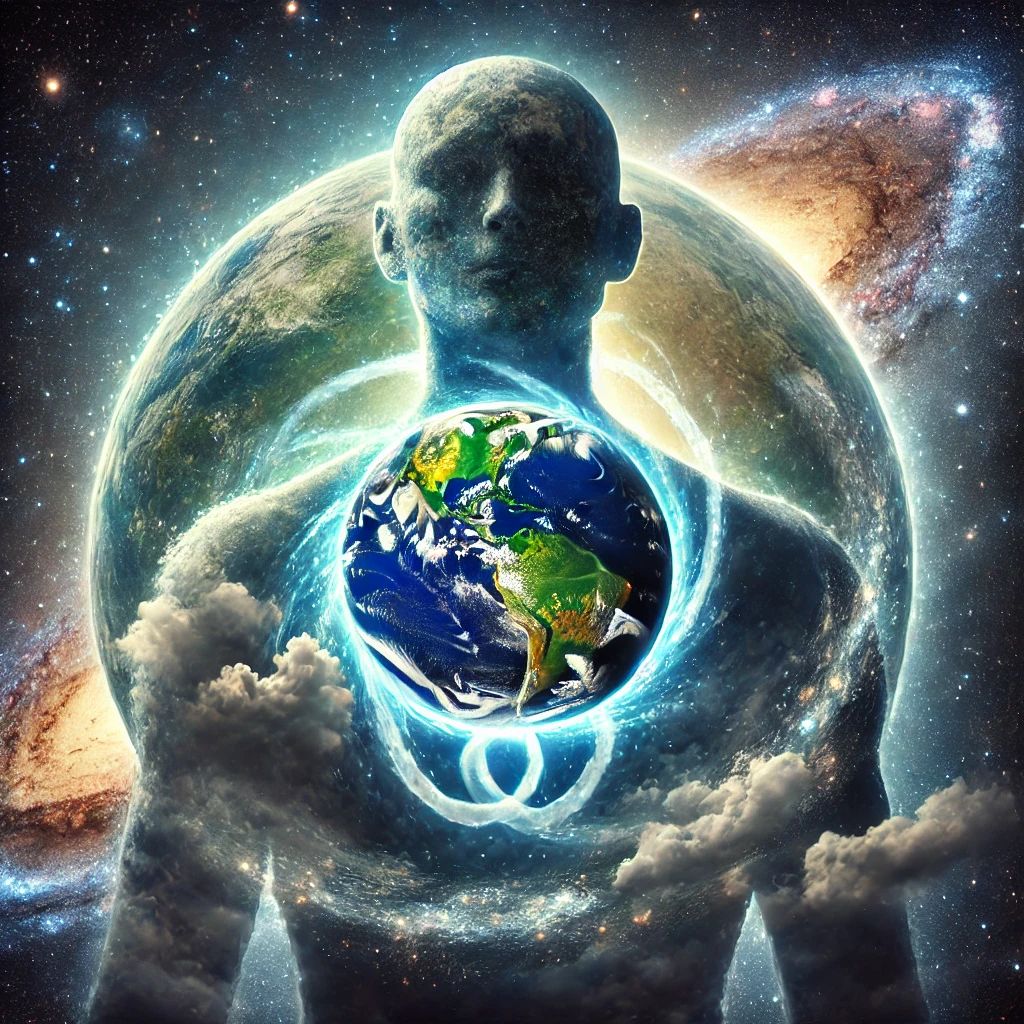
The concept of granting legal rights to natural entities is gaining traction worldwide, recognizing that ecosystems are not merely resources but integral, self-regulating systems essential for life. This perspective is rooted in the Gaia Hypothesis, proposed by James Lovelock and Lynn Margulis in the 1970s, which posits that Earth’s biological and inorganic components form a synergistic and self-regulating complex system that maintains conditions conducive to life.
Building on this understanding, several legal precedents have emerged:
Whanganui River, New Zealand: In 2017, the Whanganui River was granted legal personhood, acknowledging it as an indivisible and living whole. This status allows the river to be represented in legal matters to protect its health and well-being.
Magpie River, Canada: In 2021, the Magpie River in Quebec was granted legal personhood, providing it with rights to flow, maintain biodiversity, and be free from pollution. This move empowers local communities to legally defend the river’s rights.
Mount Taranaki, New Zealand: In January 2025, Mount Taranaki was granted legal personhood, recognizing its cultural significance to the Māori people and ensuring its protection and preservation.
These examples illustrate a growing recognition of natural entities as rights-bearing subjects, reflecting a shift towards more holistic environmental stewardship.
Earth as a Sovereign and Sentient Being: A Systems Theory Perspective
Abstract
This paper argues for recognizing Earth as a sovereign and sentient being, drawing on General Systems Theory (GST), Cybernetics, Complexity Science, Ecological Systems Theory, and World-Systems Analysis. Synthesizing insights from Ludwig von Bertalanffy, James Lovelock, Niklas Luhmann, Humberto Maturana, Francisco Varela, Ilya Prigogine, Donella Meadows, and others, this analysis demonstrates that Earth functions as an autopoietic, self-regulating, complex adaptive system with the capacity for homeostasis, communication, and systemic intelligence. By integrating governance models from Stafford Beer’s Viable System Model (VSM), World-Systems Theory (Wallerstein), and Gaia Theory (Lovelock), we propose an alternative paradigm where Earth is recognized as a political and legal entity, possessing sovereignty over its ecological and systemic functions.
1. Introduction: Earth as More Than a Passive Environment
Traditional Western thought has treated Earth as an inert resource—a passive backdrop for human activity. However, systems theory challenges this assumption, demonstrating that Earth is not merely a sum of its parts but an interconnected, self-regulating system. This paper presents an integrated case for Earth’s sentience and sovereignty, arguing that:
Earth exhibits autopoiesis (Maturana & Varela), demonstrating self-generation and maintenance.
Earth functions as a cybernetic system (Wiener, Ashby), regulating climate, biodiversity, and atmospheric composition.
Earth’s resilience follows complex adaptive system principles (Holland, Kauffman, Prigogine).
The biosphere operates as a global neural network, facilitating interspecies and biochemical communication (Capra, Lovelock).
Earth’s sociopolitical interactions with human civilization reflect world-systems dynamics (Wallerstein, Bourdieu).
By combining these perspectives, we move toward an ontological shift: Earth as a legal and sovereign entity within a self-sustaining planetary governance system.
2. Systems Theory and Earth’s Self-Regulation
2.1 General Systems Theory and Cybernetics
Bertalanffy’s General Systems Theory (GST) and Wiener’s Cybernetics establish that complex systems are governed by feedback loops, regulation mechanisms, and homeostasis. Earth exhibits all of these properties:
Negative Feedback Loops: Earth regulates CO₂ levels, ocean temperatures, and atmospheric balance much like a living organism’s homeostatic processes.
Autopoiesis: Earth maintains its own stability through energy cycling, climate adaptation, and biochemical networks.
Self-Organization: Prigogine’s dissipative structures explain how Earth maintains equilibrium through continuous energy exchange.
These mechanisms demonstrate Earth’s self-awareness—not in human cognition terms but as a distributed intelligence network.
2.2 Gaia Hypothesis and Earth’s Cognitive System
James Lovelock’s Gaia Hypothesis posits that Earth behaves as a self-regulating superorganism, controlling its own habitability:
Biogeochemical cycles function like metabolic processes, optimizing conditions for life.
Forests, fungi, and ocean currents act as a distributed sensing system.
Climate regulation occurs through dynamic feedback, akin to an immune response in biological systems.
Fritjof Capra extends this view, showing how Earth’s interconnected systems resemble a neural network, where biological and geophysical processes “communicate” through complex interdependencies.
2.3 Complexity Science and Adaptive Intelligence
Murray Gell-Mann, Stuart Kauffman, and John H. Holland define complex adaptive systems (CAS) as those that:
1. Process information from their environment.
2. Adapt dynamically through feedback loops.
3. Demonstrate emergent properties beyond their individual components.
Earth fits all three criteria. The climate, biosphere, and ocean currents form an adaptive intelligence network, continuously adjusting to planetary inputs.
If a complex adaptive system capable of self-regulation and environmental response is a form of intelligence, then Earth qualifies as a sentient being.
3. Earth’s Sovereignty in Systems Governance
3.1 World-Systems Analysis and Earth’s Political Role
Immanuel Wallerstein’s World-Systems Theory frames Earth’s ecological crisis as an outcome of systemic capitalist extraction, where human economies externalize ecological costs onto a living system.
Just as nations claim sovereignty, Earth must be recognized as a sovereign political entity with legal rights over its ecosystems.
Wallerstein’s model shows that Earth’s subjugation is tied to global economic exploitation, mirroring historical colonial domination.
Bruno Latour’s Actor-Network Theory (ANT) supports this by redefining non-human actors (ecosystems, climate, and geological systems) as politically relevant entities. Earth, therefore, is not merely a background but an active participant in global politics.
3.2 Cybernetics and the Viable System Model (VSM)
Stafford Beer’s Viable System Model (VSM) outlines how organizations self-regulate for survival. Applied at the planetary level:
Earth’s biosphere acts as System 1, regulating local ecological zones.
The climate and hydrological cycles act as System 2, managing global coordination.
The human governance layer (System 3) should serve Earth’s health, not exploit it.
By applying VSM, we argue for a restructured global governance model, where human institutions are accountable to planetary intelligence rather than corporate interests.
4. Toward Legal and Political Recognition
If Earth demonstrates systemic intelligence and sovereignty, the next step is formal political recognition. Following the Rights of Nature movement, we propose:
1. Legal Personhood for Earth – Treating Earth as a sovereign political entity under international law.
2. Planetary Council Governance – A system where nations report to Earth’s ecological limits, not capitalist growth.
3. Cybernetic Regulation – A planetary system integrating Gaia’s intelligence into governance models.
5. Conclusion: Earth as a Political and Sentient Entity
By integrating General Systems Theory, Cybernetics, Complexity Science, Gaia Hypothesis, and World-Systems Analysis, we conclude:
1. Earth exhibits autopoiesis, self-regulation, and adaptive intelligence.
2. Earth communicates through biochemical and ecological networks, resembling cognition.
3. Human governance must be restructured to recognize Earth’s sovereignty.
Rather than treating Earth as an inert backdrop for human exploitation, we must honor its intelligence, governance, and legal autonomy—not as a metaphor, but as a scientific, systems-based reality.
References
Bertalanffy, L. von. General Systems Theory: Foundations, Development, Applications. (1968).
Wiener, N. Cybernetics: Or Control and Communication in the Animal and the Machine. (1948).
Lovelock, J. Gaia: A New Look at Life on Earth. (1979).
Maturana, H., & Varela, F. Autopoiesis and Cognition: The Realization of the Living. (1980).
Prigogine, I. & Stengers, I. Order Out of Chaos. (1984).
Wallerstein, I. The Modern World-System. (1974).
Latour, B. We Have Never Been Modern. (1991).
Beer, S. Brain of the Firm. (1972).
This argument reframes Earth not as property, but as a sovereign, sentient actor, requiring a planetary political and legal paradigm shift.
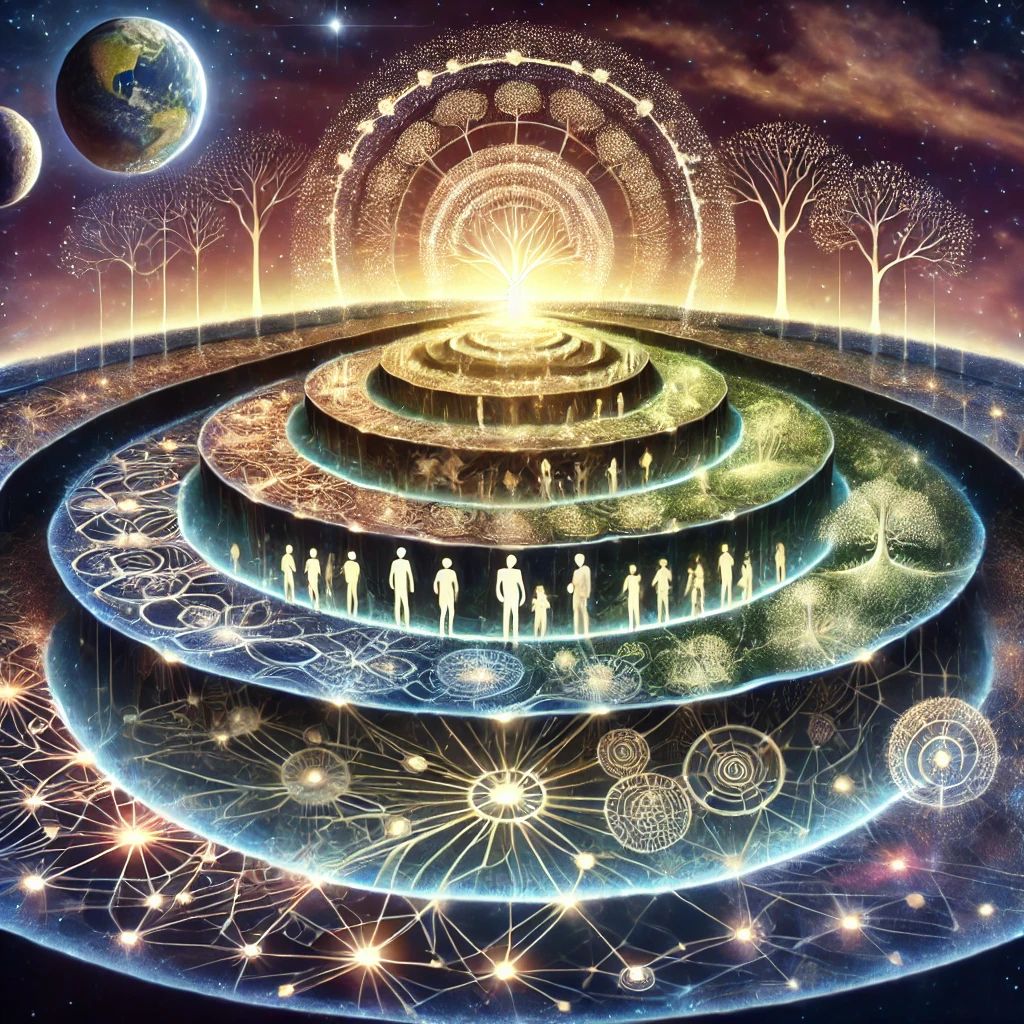
Here’s a combined list of key systems theorists across multiple disciplines, integrating both lists for a comprehensive reference:
Foundational Systems Theorists
1. Ludwig von Bertalanffy – Founder of General Systems Theory (GST), emphasized open systems and holistic thinking.
2. Norbert Wiener – Developed Cybernetics, focusing on feedback loops and self-regulation in systems.
3. Ross Ashby – Introduced concepts like the Law of Requisite Variety in cybernetics.
4. Jay Forrester – Created System Dynamics, applied in modeling complex social and ecological systems.
5. Stafford Beer – Developed Management Cybernetics and the Viable System Model (VSM) for organizational structure.
6. Gregory Bateson – Applied systems thinking to psychology, anthropology, and communication theory.
7. Niklas Luhmann – Developed Social Systems Theory, viewing society as self-organizing communication networks.
8. Ilya Prigogine – Studied dissipative structures, explaining how systems evolve through instability.
9. Humberto Maturana & Francisco Varela – Introduced autopoiesis, describing how living systems self-organize and maintain themselves.
10. Heinz von Foerster – Worked on second-order cybernetics, emphasizing the observer’s role in systems.
11. Kenneth E. Boulding – Applied systems thinking to economics and social sciences.
12. Anatol Rapoport – Contributed to game theory, conflict resolution, and general systems theory.
Ecological and Sustainability Systems Theorists
13. James Lovelock – Proposed the Gaia Hypothesis, viewing Earth as a self-regulating system.
14. Fritjof Capra – Integrated systems thinking with sustainability and deep ecology.
15. Donella Meadows – Lead author of Limits to Growth, focused on sustainability and leverage points in systems.
16. Howard T. Odum – Pioneer of ecological energetics and systems ecology.
17. C.S. Holling – Developed Resilience Theory, explaining how ecosystems adapt to change.
Complexity and Chaos Theorists
18. John H. Holland – Studied complex adaptive systems and emergence in biological and social systems.
19. Stuart Kauffman – Explored self-organization and evolutionary complexity.
20. Murray Gell-Mann – Co-founder of the Santa Fe Institute, studied complex systems.
21. Edward Lorenz – Developed Chaos Theory, introducing the Butterfly Effect.
22. Ilya Prigogine & Isabelle Stengers – Worked on non-equilibrium thermodynamics, explaining complexity in nature.
Sociological and Political Systems Theorists
23. Talcott Parsons – Developed Structural Functionalism, viewing society as an interdependent system.
24. Émile Durkheim – Early Functionalist Theory, focused on social cohesion and division of labor.
25. Jürgen Habermas – Explored systems in relation to communication, power, and democracy.
26. Pierre Bourdieu – Studied how social fields function as structured systems.
27. Immanuel Wallerstein – Developed World-Systems Theory, analyzing global economic and political networks.
28. Bruno Latour – Co-founded Actor-Network Theory (ANT), integrating human and non-human actors in systems.
29. Anthony Giddens – Developed Structuration Theory, integrating agency and structure.
Cybernetics & Organizational Systems Theorists
30. Stafford Beer – Pioneer of cybernetics in management, developed the Viable System Model (VSM).
31. Peter Senge – Developed Learning Organizations, author of The Fifth Discipline.
32. Russell L. Ackoff – Developed Interactive Planning, a systems-based approach to organizational design.
33. Karl Weick – Known for Sensemaking in Organizations, studied loosely coupled systems.
34. Jay Forrester – Applied systems thinking to industrial and urban modeling.
35. Henry Mintzberg – Studied organizational structures and emergent strategy.
Economic and World Systems Theorists
36. Karl Marx – Developed an early dialectical systems approach to socio-economic structures.
37. Joseph Schumpeter – Introduced Creative Destruction, analyzing economic evolution.
38. W. Edwards Deming – Applied systems thinking to quality management.
39. Friedrich Hayek – Studied self-organizing markets and spontaneous order.
 Spirolateral