From Fragmentation to Wholeness: A New Way to Live, Love, and Build Together
I used to believe that healing was an individual journey—something I had to figure out on my own, like assembling a puzzle with missing pieces. But the more I studied attachment theory, nervous system regulation, and the ways trauma embeds itself into culture, the more I realized: healing is relational. And if healing is relational, then the way we design our communities—the very environments that shape our nervous systems, our sense of belonging, our capacity to thrive—must be intentional.
This is why the Spiral City model is more than an architectural experiment. It is the antidote to what has been broken in us.
The Isolation We Were Told Was Freedom
I’ve lived in the world we were told is normal. A world that glorifies independence but breeds isolation. Where families are expected to raise children alone in tiny, disconnected homes, where elders are pushed to the margins, and where “community” means nothing more than a shared zip code.
I’ve seen how this isolation warps relationships—how it makes us defensive, transactional, afraid to depend on one another. I’ve felt the ache of trying to build love in a culture that doesn’t structurally support it, of raising children in a system that values their productivity more than their well-being. I know I’m not alone in this.
Western culture prides itself on individualism, but what we call “success” is often just survival in an artificial ecosystem. The nuclear family model, the economic system, the urban sprawl—none of it was designed for human flourishing. It was designed for efficiency, for labor, for keeping us too exhausted to imagine another way.
But Another Way Exists
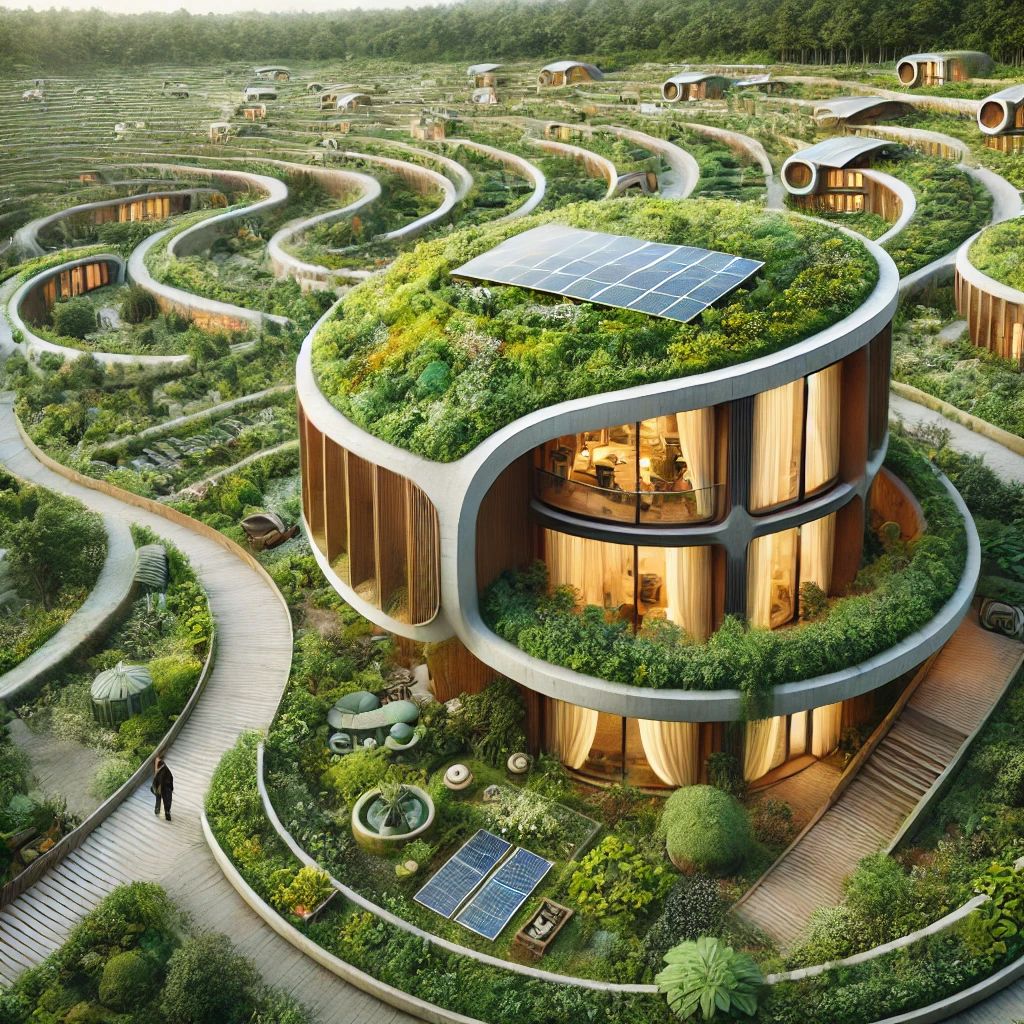
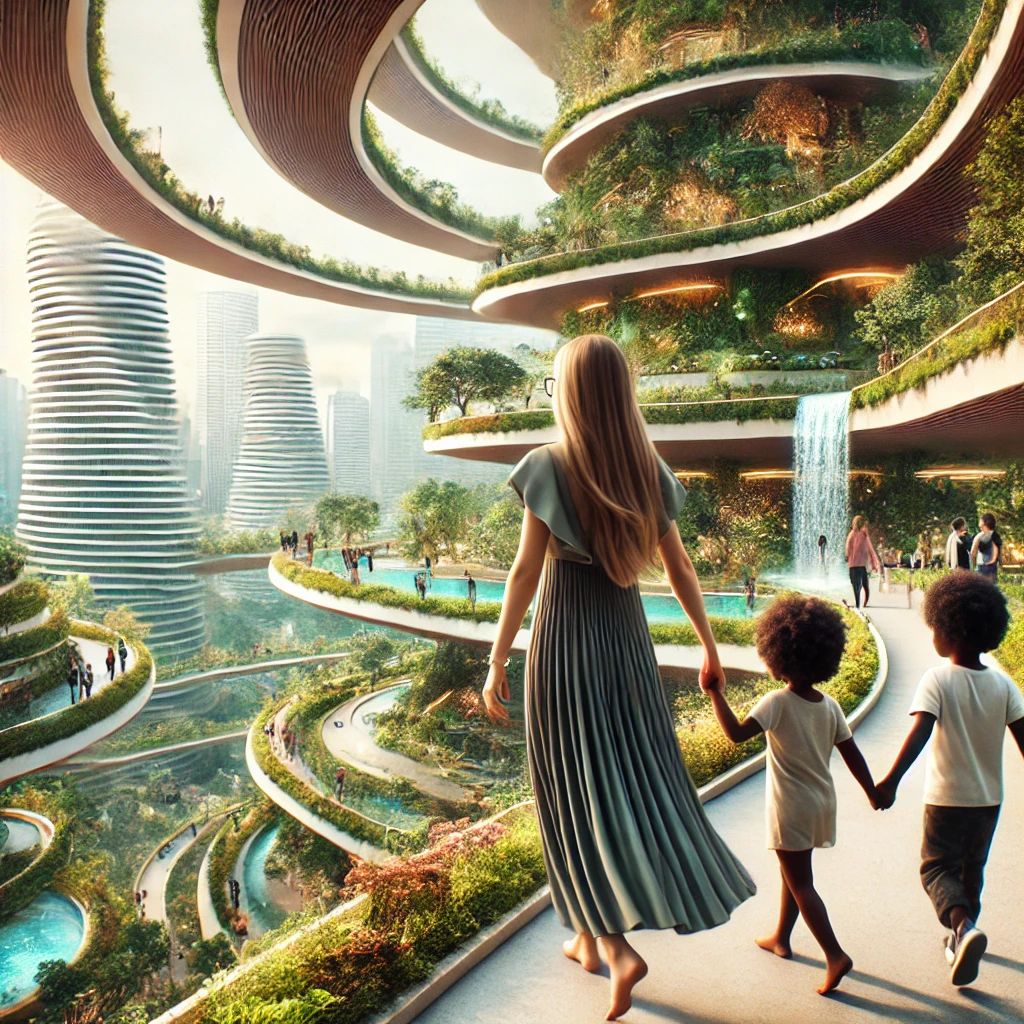
Imagine waking up in a home that curves with the earth, where the walls breathe and the air is rich with life. Imagine stepping outside and seeing your children run freely—not into traffic, not into a fenced backyard, but into a living, thriving community where learning happens in gardens, in workshops, in shared spaces filled with elders and mentors, not just school bells and standardized tests.
Imagine never having to wonder who will catch you if you fall, because your home, your city, your entire way of life is structured for interdependence. Where food, care, and wisdom are communal, not commodities rationed by those with wealth.
This is the Spiral City—an integration of what we know about human psychology, ecological sustainability, and social harmony, designed to nurture, not exploit.
The Science of Belonging
This model is not just a dream. It is grounded in everything we know about human development and well-being:
Attachment Theory tells us that security is built through consistent, available relationships. Our cities should reflect that.
Polyvagal Theory teaches us that safety is not just about the absence of danger, but the presence of connection. Our homes should facilitate that.
Functional Conflict Perspective reminds us that friction is natural—but environments can be designed to channel conflict into growth, not destruction.
Mirror Integration Theory shows us that personal and collective healing are reflections of each other. If we want a healed world, we must build systems that reinforce wholeness.
These principles are embedded in the very structure of Spiral Cities—how they are built, how they function, how they evolve with the people inside them.
From Skepticism to Action: How We Start
People often ask: How do we actually make this happen?
Here’s what I tell them:
1. First, we show them what’s possible.
I am building this story, this vision, not as fiction, but as a blueprint.
We will create prototypes, models, and immersive experiences that let people step into the future before it exists.
2. Then, we invite them to be part of the process.
This is not a project that will be handed down from governments or corporations. It must be built by us, for us.
Land acquisition, cooperative governance models, regenerative economies—these are already being tested worldwide. We connect with those who are ready to build.
3. We challenge the fear of change with the certainty of failure.
People fear new ways of living because they have adapted to dysfunction.
We must remind them: staying in the current system is not safe. It is a slow collapse.
The only way forward is together.
A Personal Invitation
I have spent years untangling how trauma operates at the personal, societal, and political levels. I have watched systems fail those I love. I have learned, through both pain and deep study, what it takes to rebuild trust—in ourselves, in each other, in the possibility of something better.
This is not just about theory. It’s about you. About us. About whether we have the courage to build the world we all needed as children.
So I ask you: What part of you is still longing for home? And what would happen if we built it—together?
Because this time, we are not waiting for permission. This time, we make it real.


Encouraging Adoption of the Spiral City Model: A Strategic Plan
I. Introduction
The Spiral City model presents a revolutionary approach to urban living, integrating sustainability, social cohesion, and regenerative design into a thriving, self-sufficient community. To successfully encourage adoption, we must engage multiple stakeholders—individuals, policymakers, investors, and organizations—by addressing their specific concerns and demonstrating the benefits of this model.
II. Understanding the Barriers to Adoption
Before crafting an outreach strategy, we must recognize the potential barriers:
1. Fear of Change – People resist new paradigms that challenge the status quo.
2. Financial Concerns – Skepticism about affordability and economic viability.
3. Logistical Challenges – Implementation at scale and transitioning from current urban structures.
4. Misconceptions – Perceived as utopian or impractical.
5. Regulatory Hurdles – Zoning laws and real estate policies may not support this structure yet.
III. Strategies for Public Engagement and Buy-In
1. Education & Awareness
Content Creation: Develop engaging materials, including explainer videos, infographics, and interactive virtual tours of Spiral Cities.
Public Speaking & Media Outreach: Host TED-style talks, participate in podcasts, and contribute articles to urban development publications.
Academic Partnerships: Collaborate with universities for research, case studies, and integration into urban planning curricula.
2. Emotional & Psychological Appeal
Storytelling & Narrative Framing: Share personal stories from individuals who would thrive in this model (families, elders, creatives, and professionals).
Virtual & Augmented Reality Experiences: Allow people to ‘walk through’ a Spiral City via VR tours.
Highlight Psychological Benefits: Demonstrate how the built environment affects mental health, well-being, and human relationships.
3. Policy & Institutional Engagement
Pilot Projects & Small-Scale Prototypes: Create model communities within existing cities to showcase proof of concept.
Policy Reform Advocacy: Work with policymakers to introduce zoning reforms, sustainability incentives, and co-housing policies.
Government & NGO Collaboration: Align with environmental, housing, and urban development agencies to push for policy changes.
4. Economic & Investment Justification
Financial Viability Reports: Develop cost-benefit analyses proving long-term affordability.
Investment & Incentive Models: Introduce financial structures that incentivize sustainable urban development.
Business & Entrepreneurial Engagement: Demonstrate how the Spiral City fosters local economies and innovation hubs.
5. Community & Grassroots Mobilization
Cooperative Housing Models: Organize collective ownership structures that empower residents.
Community Design Workshops: Invite people to participate in shaping their neighborhoods.
Social Media & Digital Campaigns: Leverage viral marketing and influencer advocacy to spread awareness.
IV. The Call to Action
To gain traction, we must make the concept accessible and actionable:
1. Engage Early Adopters: Identify individuals and organizations ready to champion the cause.
2. Host Events & Open Houses: Organize immersive experiences within pilot sites.
3. Facilitate Partnerships: Encourage businesses, educators, and policymakers to co-develop aspects of the city.
4. Create a Scalable Roadmap: Develop a phased approach to building Spiral Cities in different regions.
V. Conclusion: A Future of Regenerative Living
The Spiral City model is not just a concept—it is a movement toward a sustainable, emotionally intelligent, and community-driven future. By integrating education, policy reform, investment, and grassroots action, we can shift urban development from extractive to regenerative. The next step is clear: mobilization, demonstration, and advocacy.
Are you ready to be part of the transformation?
 Spirolateral